Have you seen ads promising you can earn hundreds of dollars a week just by reviewing TikTok videos? Maybe you came across a site called TikRegarder.com, claiming to let users become paid TikTok reviewers after completing a few simple steps. The offer sounds irresistible — make money from home, no experience required, just by watching and reviewing short videos. But if it sounds too good to be true, it almost always is.
TikRegarder.com is not an official TikTok opportunity. It’s a deceptive scam built to steal personal data, push affiliate deals, and make money from users who think they’re signing up for a legitimate job. Victims are lured in by professional-looking pages, fake testimonials, and logos that imitate TikTok branding. However, no one actually gets paid for reviewing anything.
In this detailed guide, we’ll break down everything you need to know about the TikRegarder.com TikTok Reviewer Scam — including how it works, what signs to watch for, and what to do if you’ve already fallen for it.
Scam Overview
A Fake TikTok Reviewer Program
The TikRegarder.com TikTok Reviewer Scam is a fraudulent website that pretends to offer a job reviewing TikTok videos. It typically appears as an ad on social media platforms such as Facebook, Instagram, or YouTube, using headlines like:
“Earn $800 weekly reviewing TikTok videos.”
“Get paid to rate TikTok content from home.”
“Join TikTok’s official reviewer team.”
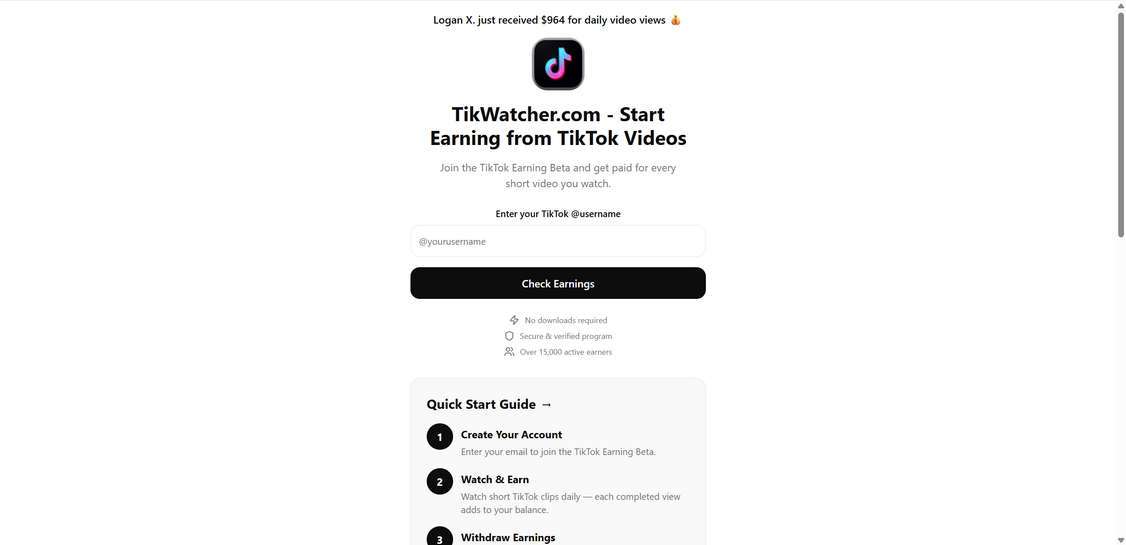
When you click the link, you’re taken to TikRegarder.com, which imitates the look and feel of legitimate job recruitment pages. The page usually displays a TikTok logo, a “Quick Start Guide,” and claims you can begin earning money in minutes.
It often includes fake notifications like:
“Emma V. earned $828 reviewing videos this week.”
These are fabricated to create the illusion of a thriving community of people earning real income. In reality, no one is getting paid — the entire site is structured to generate affiliate revenue for the scammers behind it.
The Illusion of Legitimacy
At first glance, TikRegarder.com looks believable. It uses a clean design, professional typography, and the recognizable TikTok logo to lower your guard. However, there are immediate warning signs:
No official TikTok domain: The real TikTok website uses tiktok.com. TikRegarder.com is an unrelated third-party domain.
No contact information: There’s no email address, company name, or physical office listed anywhere on the site.
Generic text: The same vague instructions appear on multiple scam sites that reuse identical templates.
No privacy policy or terms of service: Legitimate employers always provide clear legal documentation.
Scammers rely on the fact that most users won’t investigate these details. They play on curiosity and the appeal of easy money.
The Promise That Hooks Users
TikRegarder.com promises that users can start reviewing TikTok videos immediately after providing some basic information. The supposed process is outlined as:
Provide your email and basic information.
Complete 2–3 “recommended deals.”
Start reviewing videos and earning money.
It sounds simple, but this process has nothing to do with TikTok or real job opportunities. Those “deals” are affiliate marketing offers that generate income for the scammers every time someone completes one. The scammers make money when users sign up for free trials, download apps, or provide contact details to third-party advertisers.
The Hidden Affiliate Scheme
The scam is structured around affiliate marketing abuse. Instead of promoting real products, scammers push fake job offers that redirect users through affiliate networks.
When you click “Get Started Now,” TikRegarder.com routes you through multiple affiliate tracking links — often hosted on platforms like go2cloud.org or similar networks. Each completed “deal” earns the scammer a commission, usually a few dollars per person.
Meanwhile, users never receive payment, job instructions, or any follow-up communication.
Unauthorized Use of TikTok’s Brand
TikRegarder.com uses TikTok’s logo, name, and imagery without authorization. This is a deliberate tactic to gain credibility and mislead users into believing it’s an official TikTok recruitment site. However, TikTok has no such paid video reviewer program.
This kind of brand misuse is a serious violation of intellectual property rights and a common feature in online scams. The visual similarity convinces people that they’re joining something real, even though TikTok has never run a campaign of this nature.
Fake Social Proof and Testimonials
To strengthen the illusion, the site often displays fabricated “live” notifications like:
“Samantha P. just earned $732 reviewing TikTok videos.”
These pop-ups are fake and automatically generated by scripts to simulate real activity. They create urgency and make users believe they’re missing out on an opportunity that others are already benefiting from.
Why People Fall for It
There are several psychological tricks at play:
Social proof: Fake names and earnings make the offer seem legitimate.
Low barrier to entry: You don’t need experience or qualifications.
Instant gratification: The promise of quick cash triggers emotional decisions.
FOMO (Fear of Missing Out): Countdown timers or “limited positions” make users act fast.
The combination of trust signals and urgency makes TikRegarder.com an effective scam that preys on people looking for easy, remote income opportunities.
Evidence of a Scam
Several red flags confirm TikRegarder.com is fraudulent:
The domain was recently registered, suggesting a short-term scam setup.
The site lacks HTTPS security, meaning user data isn’t encrypted.
Identical design templates appear on other scam websites promoting fake Amazon or Walmart job offers.
There are no verifiable payment proofs or legitimate reviews from real users.
Reports from victims on scam-tracking websites confirm that people who engaged with TikRegarder.com ended up with spam emails, unwanted subscriptions, and even small charges for “trial” offers.
In short, TikRegarder.com is not a job site or a TikTok partner. It is a fraudulent platform built to collect data and generate affiliate commissions. The scammers behind it exploit the popularity of TikTok and people’s desire for remote income to trick them into completing worthless offers.
How the TikRegarder.com Scam Works
Now let’s look at how this scam operates from beginning to end. Understanding the process helps you identify similar schemes in the future.
Step 1: The Lure – Social Media Ads
The scam starts with advertisements on Facebook, Instagram, YouTube, and sometimes even TikTok itself. These ads usually feature attention-grabbing messages like:
“Make $25 per video reviewing TikToks!”
“TikTok is hiring home reviewers – apply now!”
“Earn up to $800/week reviewing videos from your phone!”
They include fake TikTok logos, smiling faces, and fake testimonials. The ads often feature countdown timers or statements like “Limited spots left today!” to pressure people into clicking immediately.
Step 2: Redirection to TikRegarder.com
Once you click, you’re sent to TikRegarder.com, a simple landing page that looks somewhat professional. At the top, you’ll usually see the TikTok logo and a large headline:
“Complete the steps to start reviewing for TikTok.”
The design mimics a real recruitment portal, with a “Get Started Now” button and a “Quick Start Guide” outlining how to begin. The steps seem clear and easy — exactly what most people want in a side hustle.
Step 3: Collecting Personal Data
When you click “Get Started,” the site asks for your email address, name, and sometimes phone number. This is the first major red flag. There’s no verification or job description, just a form asking for contact details.
This data is collected and stored, often sold to third-party marketing companies that will spam you with irrelevant offers and surveys.
Step 4: Redirecting to Affiliate Offers
After entering your details, you’re told to “complete 2–3 recommended deals.” These deals might include:
Downloading specific mobile apps.
Signing up for “free” subscription trials.
Completing surveys.
Providing payment details for product samples.
Every time you complete a deal, the scammers earn a small commission through affiliate networks. You, however, get nothing in return.
Step 5: Continuous Loop of Offers
Once you’ve finished a few offers, the site claims you’re “almost done” and asks you to complete more to “unlock your account.” This loop never ends because the entire goal is to maximize affiliate commissions.
No matter how many offers you complete, there’s no payment or reviewing work waiting at the end.
Step 6: Hidden Subscription Traps
Some of the offers redirect to third-party sites that require credit card information for “trial” memberships. These trials often convert into paid subscriptions automatically, charging your card monthly.
Victims report discovering recurring charges from unfamiliar companies after interacting with TikRegarder.com.
Step 7: Fake Status Updates
To keep you hooked, the site may display fake status bars like “Step 3 of 4 completed” or “You’re now approved as a TikTok reviewer.” These graphics are designed to encourage you to continue completing offers, believing you’re making progress toward the promised job.
Step 8: The Outcome
In the end, victims realize there’s no TikTok reviewer job, no payment, and no confirmation email. Instead, they receive:
Floods of spam emails and calls.
Subscription fees from free trials they forgot to cancel.
Frustration from wasted time and effort.
The scammers, however, profit from every completed deal and data submission.
Step 9: Domain Recycling
Once TikRegarder.com gains negative attention, the scammers usually shut it down and relaunch under a new domain like TikRateReview.com, TikRegarder.comiewJobs.com, or similar. They reuse the same layout, wording, and structure to continue deceiving new victims.
Step 10: The Bigger Picture
TikRegarder.com is part of a wider web of affiliate scams that exploit major brand names like TikTok, Amazon, or Netflix. These operations are often managed by networks of marketers who use fake promotions to harvest leads and earn commissions illegally.
What to Do If You Have Fallen Victim to the TikRegarder.com Scam
If you’ve entered your information, completed deals, or signed up for trials on TikRegarder.com, take immediate action to protect your identity and finances.
1. Stop Using the Site
Exit TikRegarder.com immediately and do not click any additional links or complete more offers.
2. Change Your Passwords
If you used your email and password combination that matches other accounts, change your passwords right away. Enable two-factor authentication for added security.
3. Monitor Your Email and Phone
You’ll likely start receiving spam or scam messages. Do not click any suspicious links or open attachments. Use your email provider’s spam filter to block unwanted messages.
4. Cancel Any Subscriptions or Trials
If you signed up for any “deals” that required credit card information, contact your bank or credit card company. Cancel any subscriptions and dispute unauthorized charges.
5. Run a Device Security Scan
Some of the linked offers might lead to unsafe downloads. Run an antivirus or anti-malware scan on your computer or smartphone to ensure it’s clean.
TikTok’s official support team: to alert them of brand misuse.
7. Remove Installed Apps
If you downloaded any apps from offers promoted on the site, uninstall them immediately. Review app permissions to ensure none are accessing personal data.
8. Watch for Identity Theft Signs
If you provided detailed personal information (like address or birthdate), consider using an identity protection service. Monitor your credit reports for suspicious activity.
9. Educate Others
Warn friends and family about the TikRegarder.com scam. Many victims fall prey after hearing about it through social media. Sharing your experience can help prevent others from losing money or data.
10. Stay Alert for Similar Scams
Scammers often recycle their tactics. Be wary of any site offering unrealistic jobs or rewards involving well-known brands. Always verify the domain and contact details before submitting personal information.
Is Your Device Infected? Scan for Malware
If your computer or phone is slow, showing unwanted pop-ups, or acting strangely, malware could be the cause. Running a scan with Malwarebytes Anti-Malware Free is one of the most reliable ways to detect and remove harmful software. The free version can identify and clean common infections such as adware, browser hijackers, trojans, and other unwanted programs.
Malwarebytes works on Windows, Mac, and Android devices. Choose your operating system below and follow the steps to scan your device and remove any malware that might be slowing it down.
Malwarebytes for WindowsMalwarebytes for MacMalwarebytes for Android
Run a Malware Scan with Malwarebytes for Windows
Malwarebytes stands out as one of the leading and widely-used anti-malware solutions for Windows, and for good reason. It effectively eradicates various types of malware that other programs often overlook, all at no cost to you. When it comes to disinfecting an infected device, Malwarebytes has consistently been a free and indispensable tool in the battle against malware. We highly recommend it for maintaining a clean and secure system.
Download Malwarebytes
Download the latest version of Malwarebytes for Windows using the official link below. Malwarebytes will scan your computer and remove adware, browser hijackers, and other malicious software for free.
(The above link will open a new page from where you can download Malwarebytes)
Install Malwarebytes
After the download is complete, locate the MBSetup file, typically found in your Downloads folder. Double-click on the MBSetup file to begin the installation of Malwarebytes on your computer. If a User Account Control pop-up appears, click “Yes” to continue the Malwarebytes installation.
Follow the On-Screen Prompts to Install Malwarebytes
When the Malwarebytes installation begins, the setup wizard will guide you through the process.
You’ll first be prompted to choose the type of computer you’re installing the program on—select either “Personal Computer” or “Work Computer” as appropriate, then click on Next.
Malwarebytes will now begin the installation process on your device.
When the Malwarebytes installation is complete, the program will automatically open to the “Welcome to Malwarebytes” screen.
On the final screen, simply click on the Open Malwarebytes option to start the program.
Enable “Rootkit scanning”.
Malwarebytes Anti-Malware will now start, and you will see the main screen as shown below. To maximize Malwarebytes’ ability to detect malware and unwanted programs, we need to enable rootkit scanning. Click on the “Settings” gear icon located on the left of the screen to access the general settings section.
In the settings menu, enable the “Scan for rootkits” option by clicking the toggle switch until it turns blue.
Now that you have enabled rootkit scanning, click on the “Dashboard” button in the left pane to get back to the main screen.
Perform a Scan with Malwarebytes.
To start a scan, click the Scan button. Malwarebytes will automatically update its antivirus database and begin scanning your computer for malicious programs.
Wait for the Malwarebytes scan to complete.
Malwarebytes will now scan your computer for browser hijackers and other malicious programs. This process can take a few minutes, so we suggest you do something else and periodically check the status of the scan to see when it is finished.
Quarantine detected malware
Once the Malwarebytes scan is complete, it will display a list of detected malware, adware, and potentially unwanted programs. To effectively remove these threats, click the “Quarantine” button.
Malwarebytes will now delete all of the files and registry keys and add them to the program’s quarantine.
Restart your computer.
When removing files, Malwarebytes may require a reboot to fully eliminate some threats. If you see a message indicating that a reboot is needed, please allow it. Once your computer has restarted and you are logged back in, you can continue with the remaining steps.
Once the scan completes, remove all detected threats. Your Windows computer should now be clean and running smoothly again, free of trojans, adware, and other malware.
If your current antivirus allowed this malicious program on your computer, you may want to consider purchasing Malwarebytes Premium to protect against these types of threats in the future. If you are still having problems with your computer after completing these instructions, then please follow one of the steps:
Malwarebytes for Mac is an on-demand scanner that can destroy many types of malware that other software tends to miss without costing you absolutely anything. When it comes to cleaning up an infected device, Malwarebytes has always been free, and we recommend it as an essential tool in the fight against malware.
Download Malwarebytes for Mac.
You can download Malwarebytes for Mac by clicking the link below.
When Malwarebytes has finished downloading, double-click on the setup file to install Malwarebytes on your computer. In most cases, downloaded files are saved to the Downloads folder.
Follow the on-screen prompts to install Malwarebytes.
When the Malwarebytes installation begins, you will see the Malwarebytes for Mac Installer which will guide you through the installation process. Click “Continue“, then keep following the prompts to continue with the installation process.
When your Malwarebytes installation completes, the program opens to the Welcome to Malwarebytes screen. Click the “Get started” button.
Select “Personal Computer” or “Work Computer”.
The Malwarebytes Welcome screen will first ask you what type of computer are you installing this program, click either Personal Computer or Work Computer.
Click on “Scan”.
To scan your computer with Malwarebytes, click on the “Scan” button. Malwarebytes for Mac will automatically update the antivirus database and start scanning your computer for malware.
Wait for the Malwarebytes scan to complete.
Malwarebytes will scan your computer for adware, browser hijackers, and other malicious programs. This process can take a few minutes, so we suggest you do something else and periodically check on the status of the scan to see when it is finished.
Click on “Quarantine”.
When the scan has been completed, you will be presented with a screen showing the malware infections that Malwarebytes has detected. To remove the malware that Malwarebytes has found, click on the “Quarantine” button.
Restart computer.
Malwarebytes will now remove all the malicious files that it has found. To complete the malware removal process, Malwarebytes may ask you to restart your computer.
After scanning, delete any detected threats. Your Mac should now be free from adware, unwanted extensions, and other potentially harmful software.
If your current antivirus allowed a malicious program on your computer, you might want to consider purchasing the full-featured version of Malwarebytes Anti-Malware to protect against these types of threats in the future. If you are still experiencing problems while trying to remove a malicious program from your computer, please ask for help in our Mac Malware Removal Help & Support forum.
Run a Malware Scan with Malwarebytes for Android
Malwarebytes for Android automatically detects and removes dangerous threats like malware and ransomware so you don’t have to worry about your most-used device being compromised. Aggressive detection of adware and potentially unwanted programs keeps your Android phone or tablet running smooth.
Download Malwarebytes for Android.
You can download Malwarebytes for Android by clicking the link below.
In the Google Play Store, tap “Install” to install Malwarebytes for Android on your device.
When the installation process has finished, tap “Open” to begin using Malwarebytes for Android. You can also open Malwarebytes by tapping on its icon in your phone menu or home screen.
Follow the on-screen prompts to complete the setup process
When Malwarebytes will open, you will see the Malwarebytes Setup Wizard which will guide you through a series of permissions and other setup options. This is the first of two screens that explain the difference between the Premium and Free versions. Swipe this screen to continue. Tap on “Got it” to proceed to the next step. Malwarebytes for Android will now ask for a set of permissions that are required to scan your device and protect it from malware. Tap on “Give permission” to continue. Tap on “Allow” to permit Malwarebytes to access the files on your phone.
Update database and run a scan with Malwarebytes for Android
You will now be prompted to update the Malwarebytes database and run a full system scan.
Click on “Update database” to update the Malwarebytes for Android definitions to the latest version, then click on “Run full scan” to perform a system scan.
Wait for the Malwarebytes scan to complete.
Malwarebytes will now start scanning your phone for adware and other malicious apps. This process can take a few minutes, so we suggest you do something else and periodically check on the status of the scan to see when it is finished.
Click on “Remove Selected”.
When the scan has been completed, you will be presented with a screen showing the malware infections that Malwarebytes for Android has detected. To remove the malicious apps that Malwarebytes has found, tap on the “Remove Selected” button.
Restart your phone.
Malwarebytes for Android will now remove all the malicious apps that it has found. To complete the malware removal process, Malwarebytes may ask you to restart your device.
When the scan is finished, remove all detected threats. Your Android phone should now be free of malicious apps, adware, and unwanted browser redirects.
If your current antivirus allowed a malicious app on your phone, you may want to consider purchasing the full-featured version of Malwarebytes to protect against these types of threats in the future. If you are still having problems with your phone after completing these instructions, then please follow one of the steps:
Restore your phone to factory settings by going to Settings > General management > Reset > Factory data reset.
After cleaning your device, it’s important to protect it from future infections and annoying pop-ups. We recommend installing an ad blocker such as AdGuard. AdGuard blocks malicious ads, prevents phishing attempts, and stops dangerous redirects, helping you stay safe while browsing online.
The Bottom Line
The TikRegarder.com TikTok Reviewer Scam is a clear example of how cybercriminals exploit social media and brand recognition to deceive people. By pretending to offer legitimate jobs reviewing TikTok videos, the scammers behind TikRegarder.com collect user data, generate affiliate income, and sometimes cause victims to incur unwanted charges.
No legitimate company, including TikTok, will ever require you to complete “deals” or “offers” to start working. Real job opportunities are listed through official company channels, not random third-party websites.
If you’ve encountered TikRegarder.com or similar sites, remember: the promise of easy money for minimal effort is a red flag. Always verify any opportunity before submitting personal information.
Staying informed and cautious online is the best defense. Recognize scams like TikRegarder.com for what they are — fake schemes designed to profit off your curiosity and trust. Protect your data, spread awareness, and help others avoid falling into the same trap.
Frequently Asked Questions
What is the TikRegarder.com TikTok Reviewer Scam?
The TikRegarder.com TikTok Reviewer Scam is a fraudulent website that pretends to offer paid opportunities to “review TikTok videos.” It lures users with promises of easy income, claiming you can earn hundreds of dollars per week simply by watching and rating videos. In reality, TikRegarder.com has no connection to TikTok or any legitimate reviewing program. The site collects personal data, directs users through affiliate marketing links, and profits from every completed “deal” or offer. Victims never receive payment or access to any real reviewing jobs.
Is TikRegarder.com officially connected to TikTok?
No, TikRegarder.com is not affiliated with TikTok in any way. TikTok does not have a paid video reviewing program or any job that involves reviewing random content for cash. Scammers behind TikRegarder.com use TikTok’s logo, name, and imagery without permission to create a false sense of legitimacy. This unauthorized use of branding is one of the biggest red flags indicating that the site is a scam. Always verify job offers directly on TikTok’s official website or verified social media pages before sharing any information.
How does the TikRegarder.com scam work?
The TikRegarder.com scam uses deceptive tactics to convince people they can make money online. The process generally follows these steps:
Advertisement lure: Users see social media ads claiming you can earn $25 per TikTok video reviewed.
Landing page deception: Clicking the ad redirects you to TikRegarder.com, which imitates TikTok’s design and branding.
Personal data collection: You’re asked to enter your name, email address, and sometimes your phone number.
Affiliate deal phase: The site then instructs you to complete several “recommended deals” like downloading apps, signing up for free trials, or filling out surveys. Each of these actions earns the scammers a commission.
False progress indicators: You’re shown fake progress bars or messages like “Step 3 of 4 completed” to make it appear as if you’re about to start reviewing videos.
No payment, no job: Once the steps are complete, you never receive any legitimate work or compensation.
Why is TikRegarder.com considered a scam?
TikRegarder.com is considered a scam because it misrepresents its purpose and exploits users for financial gain. The website promises paid work but only exists to harvest personal data and generate affiliate commissions. The scammers benefit every time someone completes a “deal,” while victims are left with spam emails, potential charges from unwanted subscriptions, and no real earnings. There’s no employment verification, no job portal, and no way to contact a legitimate company representative. Everything about the site points to deceptive intent.
What happens if I sign up on TikRegarder.com?
If you sign up on TikRegarder.com, you’ll likely face several consequences:
Spam and unwanted messages: Your email and phone number will be shared with marketers or third parties who bombard you with ads and promotions.
Possible financial charges: Some of the “deals” or “free trials” require payment details and later result in automatic billing.
Data privacy risks: Your personal information could be sold or used for phishing attempts.
No income: Despite completing tasks, you will never receive payment from TikRegarder.com or TikTok.
What kind of information does TikRegarder.com collect?
TikRegarder.com typically asks for personal information such as your full name, email address, and sometimes phone number or ZIP code. In certain cases, the “deals” require entering credit card details to sign up for trials or apps. Once submitted, this data can be stored, sold, or used to spam you with irrelevant offers. This type of data harvesting is one of the main ways online scams make money.
Are the earnings claims on TikRegarder.com real?
No, the claims are completely fake. The notifications that say “Emma V. earned $828 reviewing this week” or similar messages are automatically generated by scripts. They’re designed to make the website appear active and legitimate. These false testimonials play on psychological triggers like social proof and urgency, convincing users that others are successfully earning money when in fact no one gets paid.
What should I do if I already entered my information?
If you have entered personal details on TikRegarder.com, you should take immediate action:
Stop using the site and close the page right away.
Change your passwords on all accounts that use the same email address.
Monitor your bank statements for any unauthorized charges.
Report the scam to the FTC and the Internet Crime Complaint Center (IC3).
Unsubscribe or block spam emails that start appearing in your inbox.
Run antivirus and anti-malware scans on your devices if you downloaded any apps or clicked unknown links.
Can TikRegarder.com steal my money or identity?
Yes, indirectly. While TikRegarder.com itself might not directly take money from you, it can expose you to identity theft and unwanted charges. The “deals” you complete may involve entering payment information for trial services that later begin billing you. Additionally, your data could be sold to companies that use it for phishing or other scams. Always treat sites that request personal or financial details without verification as dangerous.
Are there any real TikTok reviewer jobs?
No, there are currently no official TikTok reviewer jobs available to the public. TikTok employs internal moderation teams to review content, but these positions are handled through formal hiring processes on TikTok’s official website and job boards like LinkedIn. They do not offer easy sign-up roles that pay per video review. Any website claiming you can “earn money reviewing TikTok videos” is fake.
How can I confirm if a TikTok job offer is real?
To verify a TikTok job offer:
Check TikTok’s official careers page at careers.tiktok.com.
Look for contact details linked to official company domains, not random sites like TikRegarder.com.
Search the company name and job title along with the word “scam” to see if others have reported issues.
Avoid any job that asks for payment, trial sign-ups, or completion of deals before work begins.
What should I do if I provided credit card information?
If you entered your credit card details while completing offers from TikRegarder.com:
Contact your bank or credit card provider immediately to cancel or block your card.
Dispute any unauthorized or recurring charges.
Monitor your statements for further suspicious transactions.
Avoid entering card information on unfamiliar websites in the future.
How can I report TikRegarder.com?
You can report TikRegarder.com and similar scams to the following authorities:
TikTok’s official support team to alert them about brand misuse. Providing screenshots, links, and details about the scam helps investigators take action faster.
Thomas is an expert at uncovering scams and providing in-depth reporting on cyber threats and online fraud. As an editor, he is dedicated to keeping readers informed on the latest developments in cybersecurity and tech.