

Three familiar creators seem to announce that ordinary viewers are finally being paid for the time they spend scrolling. The ad says places are limited, the balance is ready, and checking eligibility takes less than a minute.
The TikTok Rewards Scam imitates a real program name while replacing TikTok’s in-app referral system with an unrelated website, fake celebrity videos, invented balances, and a funnel that can collect payment and identity details.
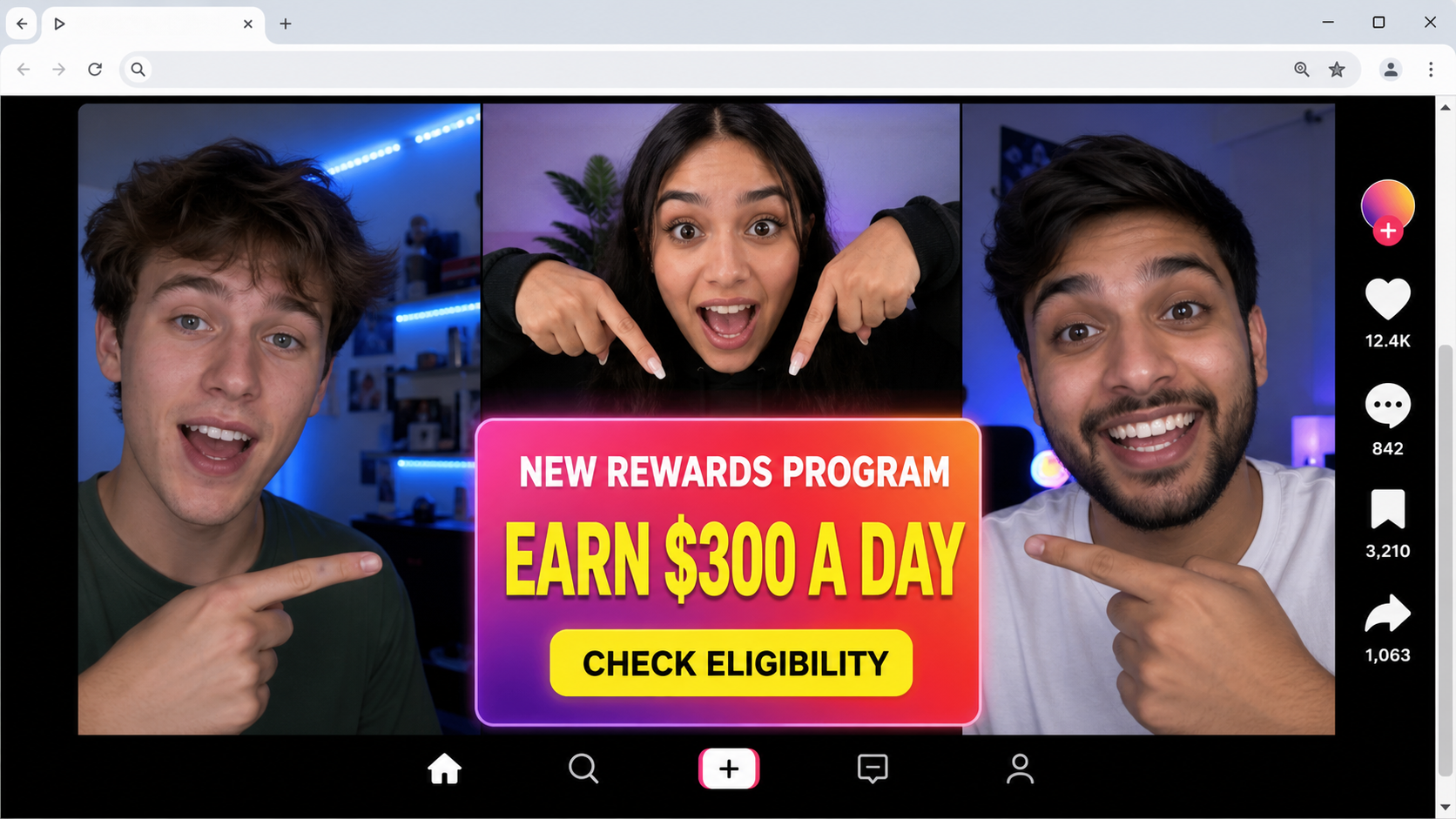
The campaign reportedly used AI-style depictions of MrBeast, Zach King, and Charli D’Amelio. Their faces make the announcement feel native to creator culture, even though none of them provides a verifiable endorsement on an authenticated account.
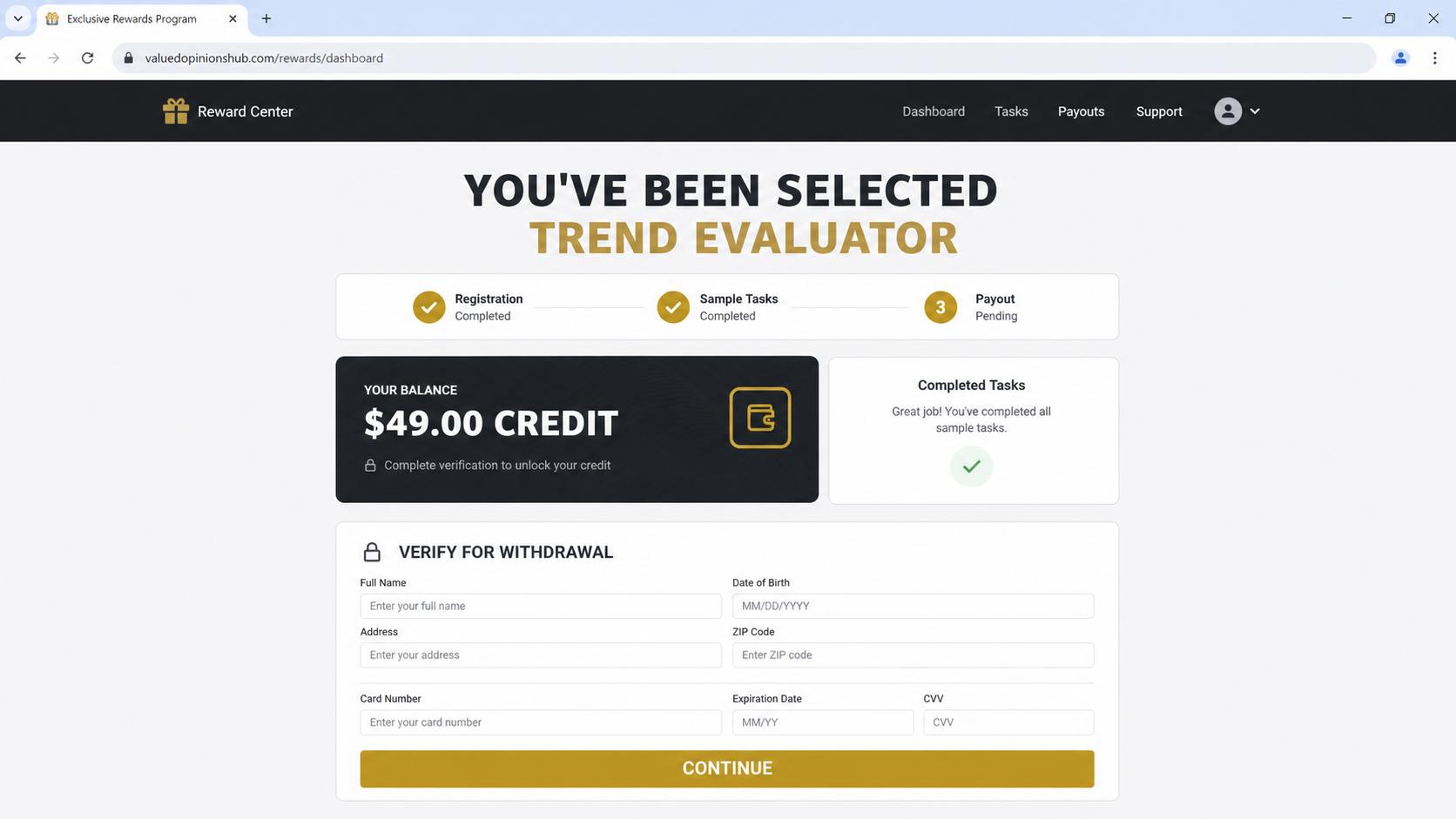
A visitor is sent to a domain such as ttk-silvermember.com and may be told that a $49 credit already exists. Sample viewing or rating tasks create movement on the dashboard and make the balance feel earned rather than invented.
The most important distinction is the destination. TikTok has operated legitimate rewards programs in selected countries, but official terms say participation occurs through the platform, follows country-specific eligibility, and requires no purchase or entrance fee.
Overview
The ad copies a real name but not the real program
TikTok Rewards is not an entirely invented phrase. TikTok’s official pages describe a referral program where eligible users invite new users and may receive points for activities available through the app. That true background gives the fake campaign cover.
The deceptive version is different. It arrives through a celebrity video, directs users to an unrelated domain, promises unusually large daily income, preloads a cash balance, and may request information or payment outside the authenticated TikTok application.
The celebrity endorsements are fabricated
The documented campaign used unauthorized AI depictions of MrBeast, Zach King, and Charli D’Amelio. A face, voice, or vertical-video layout can be generated or edited. Viewers must verify the exact offer through the creator’s real account, not through the ad that makes the claim.
The selection is deliberate. Each creator is closely associated with viral video, large audiences, or online giveaways. Their apparent involvement makes a new viewing-rewards program feel culturally plausible before the visitor sees the outside domain.
The fake $49 balance is a pressure tool
Reports of the campaign describe a page that greets visitors with approximately $49 already credited and offers tasks to unlock more. That number is generated by the website. It is not a bank deposit or a verified entry in TikTok’s own rewards page.
The observed domain now returns 403 Forbidden, which prevents a fresh checkout capture and illustrates how quickly these funnels can disappear or block researchers. We did not confirm one universal downstream fee, so buyers should treat any request for card details, verification money, or paid access as unsafe.
- The ad uses unauthorized AI-style celebrity depictions.
- The fake site has used ttk-silvermember.com.
- Visitors are told they were selected for a new rewards program.
- A fake starting balance of about $49 may appear.
- Tasks involve watching, rating, or evaluating trending videos.
- Daily earnings claims can reach $300 or more.
- The flow occurs outside TikTok's authenticated application.
- The domain currently responds with 403 Forbidden.
The Crucial Difference Between Real TikTok Rewards and the Fake Offer
TikTok’s official rewards material describes a referral program. An existing user shares an invitation code, a genuinely new user joins in an eligible country, and points or rewards may become available through the activity page inside TikTok.
Official terms also describe age, country, new-user, and withdrawal requirements. The program is not a worldwide guaranteed wage for anyone who watches videos. Availability and tasks depend on the user’s location and the current in-app campaign.
Most importantly, TikTok’s published terms state that there is no purchase or entrance fee to participate. A third-party page asking for card details or payment to unlock a reward is therefore not following those terms.
The fake campaign blurs referral rewards with employment. It may call the viewer a trend evaluator, quality reviewer, or selected participant and claim $300 per day. That wording makes casual engagement sound like a high-paying job without identifying an employer.
A real TikTok promotion should be visible after opening the genuine app directly. It should not depend on a celebrity advertisement, a lookalike domain, or a balance that exists only in an external browser page.
The existence of a legitimate program makes verification more important, not less. Scammers frequently copy real names, terms, and interface colors because a wholly invented brand would be easier to dismiss.
What Our TikTok Rewards Scam Investigation Found
The circulating advertisement promotes a new rewards program that supposedly pays people to watch videos, rate content, or act as trend evaluators. Some versions claim earnings of $300 per day or more.
The videos reportedly include AI-generated or heavily edited depictions of MrBeast, Zach King, and Charli D’Amelio. We found no reliable evidence that those creators authorized the external site or the advertised income claims.
The campaign has directed traffic to ttk-silvermember.com. At the time of our current check, the domain returned 403 Forbidden to both a direct request and the screenshot service. A blocked page cannot be treated as a stable, accountable service.
A reported checkout URL included the handle hydenclub, suggesting an affiliate or tracking relationship inside the downstream flow. An affiliate identifier does not prove who owns the fake rewards page or who ultimately receives every payment.
The external page reportedly displayed a $49 credit before meaningful work was completed. That amount is a visual persuasion device unless it can be independently verified in the user’s genuine TikTok account and withdrawn under official program terms.
TikTok’s official rewards overview says users find referral codes and reward activities within the platform. Its terms identify participating countries, explain referral requirements, and say there is no purchase or entrance fee.
Official TikTok material does mention some time-limited video-watching tasks in certain programs. That fact does not authenticate ttk-silvermember.com. The genuine activity must appear inside the app and follow the official terms for the user’s country.
We did not capture a stable public company notice, legal merchant, headquarters, phone number, or complete fee schedule from the fake domain. Because the page is now blocked, any exact downstream price should be established from an individual victim’s receipt rather than guessed.
How the TikTok Rewards Scam Works
Step 1: A celebrity announcement stops the scroll
The ad places recognizable creators in fast vertical clips and says a new program has opened. Excited delivery, large earnings figures, and a limited enrollment message encourage viewers to click before checking the account that published the video.
The apparent endorsement is the campaign’s strongest asset. The operator does not need the deepfake to survive close inspection, only to look convincing for the few seconds before the link opens.
Step 2: An unrelated domain imitates platform language
Instead of opening the genuine TikTok app, the link loads a browser page with words such as silver member, rewards, trend evaluator, or creator program. Familiar colors and icons suggest an official relationship without proving one.
The browser address is the decisive clue. ttk-silvermember.com is not tiktok.com, and a secure padlock only encrypts traffic to that outside domain.
Step 3: The visitor is declared eligible immediately
A short quiz may ask age, device, country, viewing habits, or available time. The user is then congratulated and told that a place has been reserved.
Real eligibility is governed by official country, age, referral, and account rules. A generic external quiz cannot create membership in TikTok’s own program.
Step 4: A $49 credit appears before real work
The page may preload a balance and say it is a welcome reward. The number makes leaving feel like abandoning money, even though no regulated account or official activity page confirms it.
A few sample tasks can increase the amount. Those values are generated locally by the funnel and are not evidence that an advertiser or platform accepted the work.
Step 5: Personal or card details become the real target
Withdrawal can be placed behind identity verification, an activation form, a paid offer, or an outside checkout. The requested information may include full name, address, birth date, phone number, email, and card data.
Official rewards should be managed through the authenticated app and published withdrawal rules. Sending sensitive information to an unrelated domain creates identity, billing, and follow-up fraud risk.
Step 6: Affiliate offers can replace the promised payout
A tracking handle in the checkout path suggests that commissions may be earned when visitors purchase a downstream product. The reward story attracts traffic, while the commercial partner offer generates revenue.
The user may receive a digital product, trial, or membership instead of TikTok wages. Delivery of that separate offer would not turn the celebrity video or fake balance into an official rewards program.
Step 7: The domain blocks access or disappears
When scrutiny grows, the site can return 403, change content, or move to a new domain. Victims are left with a receipt that may name a different merchant and no usable rewards dashboard.
The campaign can then relaunch with new creators and a new URL. Its lasting structure is celebrity impersonation, an off-platform balance, a verification barrier, and a commercial transaction unrelated to genuine TikTok rewards.
Company, Address, and Fulfillment Checks
The fake site does not identify a real TikTok operator
TikTok’s legal terms name the company responsible for the official platform. The external rewards page did not present a comparable legal entity that could explain its relationship with TikTok, the celebrities, and the payment processor.
A program name is not a company. Before sharing data, buyers should be able to match the legal entity across the page footer, privacy policy, checkout, receipt, and card statement.
A blocked domain is not customer support
ttk-silvermember.com currently answers with 403 Forbidden. Cloudflare or access controls can block research for several reasons, but a page that cannot be reached does not provide a reliable place to review terms or request a refund.
Save any earlier emails and checkout URLs. The domain may return later or change, but the card issuer can use the original timestamp, descriptor, and order number even when the website is gone.
Affiliate handles do not reveal the merchant
The reported hydenclub identifier may belong to a promoter or tracking account. It does not necessarily identify the legal seller, the site owner, or the company whose name appears on the statement.
Users should document the entire path. A fake rewards operator, affiliate network, product vendor, and payment processor can each play a different role in one transaction.
There is no legitimate fulfillment chain for the promised job
The offer claims access to paid evaluation work, yet it does not show task buyers, a wage contract, performance standards, tax documents, or an official TikTok payout ledger. A digital dashboard is not employment fulfillment.
If a separate product arrives, inspect its seller and refund terms independently. A course, app, or membership delivered after checkout is not proof that the promised $300-a-day trend evaluator position existed.
Why a Real Rewards Program Does Not Make This Page Legitimate
The strongest defense for the fake page is that TikTok really has used rewards and viewing tasks in some countries. That is precisely why the domain, app location, eligibility rules, and fee structure must be compared carefully.
Official terms say the program is available in specified countries and operates through TikTok’s platform. They describe referrals and activity-page tasks, not a universal celebrity-announced job reached through ttk-silvermember.com.
Official terms also say there is no purchase or entrance fee. Any external card request to activate rewards conflicts with that core condition, regardless of how accurately the page copies colors or reward terminology.
The $49 balance is not credible simply because the number looks modest. A deceptive page can choose a small starting amount to seem realistic, then use the user’s desire to withdraw it to justify collecting much more valuable identity and payment data.
Do not rely on social proof shown inside the same funnel. Recent-withdrawal notices, comments, viewer counts, and payment screenshots can be generated alongside the fake dashboard and do not establish independent customers.
The verification test takes less than a minute: close the advertisement, open the real TikTok app yourself, and look for the reward activity there. If the offer exists only on the outside site, it is not the official program attached to your account.
Warning Signs to Watch For
- Famous creators announce the program only in a paid advertisement.
- The voices or facial movements show AI inconsistencies.
- The link opens a domain unrelated to tiktok.com.
- The page promises $300 per day for casual viewing.
- Eligibility is granted after a meaningless short quiz.
- A $49 balance appears before valuable work is completed.
- The reward does not appear inside the genuine TikTok app.
- Withdrawal requires card or excessive identity information.
- An affiliate tracking handle appears in the payment path.
- The site later returns 403 or becomes inaccessible.
A real TikTok reward should be visible through the official app and should not require an entrance payment. A celebrity video, outside domain, and invented balance cannot override those basic facts.
What to Do if You Have Fallen Victim to This Scam
- Contact the card issuer. If you entered card details or paid through the fake rewards path, explain that the transaction followed an impersonated TikTok program. Ask about blocking future merchant charges and replacing the card if the number may remain stored.
- Dispute the commercial transaction accurately. Provide the social ad, external domain, fake $49 balance, verification request, checkout, receipt, and failure to receive TikTok rewards. Identify what product, if any, was actually delivered.
- Secure the genuine TikTok account. Change the password if it was entered or reused on the fake page, sign out unfamiliar sessions, verify the linked email and phone, remove unknown connected apps, and enable multifactor authentication.
- Protect identity information. If you submitted a birth date, address, phone number, or identity document, monitor financial accounts and credit reports. Consider a fraud alert or credit freeze when the exposure justifies it.
- Save every redirect and descriptor. Preserve the ad account, ttk-silvermember.com URL, hydenclub checkout reference, emails, order number, support messages, and card-statement name. The public page may remain blocked or move elsewhere.
- Report the deepfake campaign. Use the social platform's scam and impersonation controls, then report the incident to the FTC. Mention the creators whose likenesses were used without treating them as participants in the fraud.
- Run Malwarebytes after downloads. If the site installed an app, profile, extension, or file, scan the device with Malwarebytes. Remove detections and revoke notification, camera, microphone, and storage permissions from unknown pages.
- Use AdGuard for rotating clones. AdGuard can block known scam hosts, malicious advertising, pop-ups, and tracking links used to retarget victims. It cannot validate an official reward, so always open the genuine app independently.
Frequently Asked Questions
Is TikTok Rewards a real program?
TikTok has operated legitimate referral and activity rewards in selected countries. Genuine participation appears within the official platform, follows published eligibility rules, and does not require an entrance purchase.
Is ttk-silvermember.com owned by TikTok?
We found no evidence of an official relationship. The domain is not tiktok.com and currently returns 403 Forbidden rather than a stable public program page.
Did MrBeast, Zach King, or Charli D'Amelio endorse this offer?
The documented campaign used unauthorized AI-style depictions. We found no reliable authenticated endorsement of the external rewards site from those creators.
Is the $49 balance real?
Not merely because it appears on the page. A real reward should be visible in the genuine TikTok account and withdrawable under official terms, not only inside an outside website.
Does TikTok pay people for watching videos?
Some official country-specific rewards have included time-limited viewing activities, often connected with referrals. That does not create a $300-a-day job or validate an unrelated domain.
What if I only entered my email address?
Expect targeted follow-up messages and secure any reused password. Be cautious of payout, verification, or recovery emails that reference the fake program and ask for payment or codes.
The Bottom Line
The TikTok Rewards Scam succeeds by copying a real program name and wrapping it in fake MrBeast, Zach King, and Charli D’Amelio videos, unrealistic income claims, and an off-platform balance.
TikTok’s genuine rewards are governed by in-app eligibility and official terms, including no purchase or entrance fee. ttk-silvermember.com is not that program, and its current 403 response offers no accountability to users.
Open TikTok independently and trust only the reward activity attached to the genuine account. If you submitted payment or identity details to the fake site, secure the account, call the issuer, preserve the evidence, and report the impersonation promptly.








