

Torque Ball is promoted as a small handheld gyro device for grip strength, wrist movement, and hand exercise.
The product itself is not unusual. Gyro balls have existed for years and are commonly sold as wrist, grip, and forearm training tools.
The problem is the marketing. Torque Ball has been pushed through ads and fake-news-style pages that appear to connect a basic exercise gadget to serious conditions like memory loss, dementia, and Alzheimer’s disease. That is where the red flags begin.
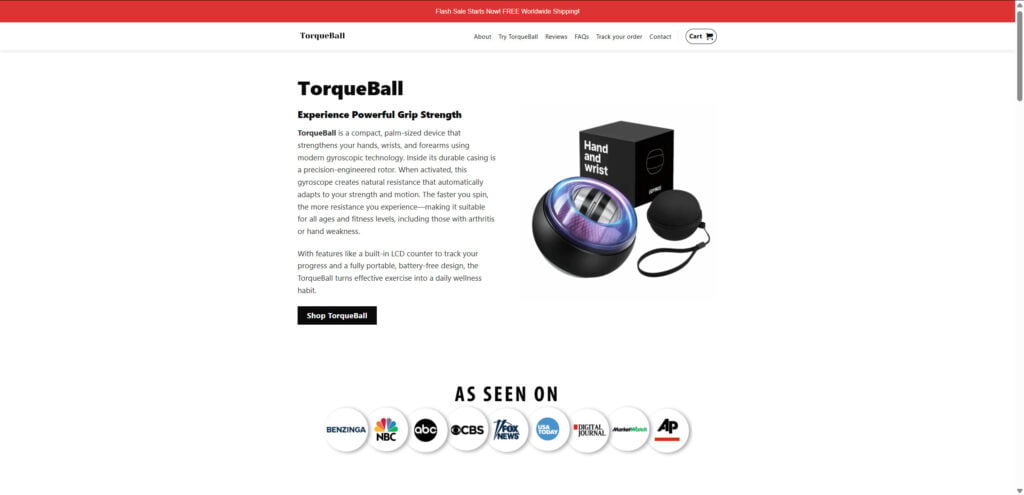
Overview
Torque Ball is advertised as a compact palm-sized gyroscopic device that strengthens the hands, wrists, and forearms. The official-looking sales page says it uses gyroscopic resistance, has an LCD counter, requires no batteries, and can help with grip strength, stiffness, recovery, dexterity, and hand control. It also claims some users notice improvements in grip and reduced pain within 2–3 weeks of daily use. (
Those basic hand-exercise claims are not the biggest issue.
The bigger problem is that Torque Ball has also been promoted through emotional advertorials and fake news-style funnels suggesting the device may help with memory loss, Alzheimer’s, dementia, brain fog, or age-related decline.
That is a completely different type of claim.
A gyro ball may help exercise the hand and wrist. It is not a treatment for Alzheimer’s disease, dementia, or memory loss.
What Torque Ball Actually Is
At its core, Torque Ball is a handheld gyro ball.
These devices usually work by placing a spinning rotor inside a ball-shaped shell. When the user rotates their wrist, the spinning rotor creates resistance. That resistance can make the wrist, forearm, and grip muscles work harder.
A normal gyro ball may help with:
- Grip strength practice
- Wrist movement
- Forearm endurance
- Hand coordination
- Light exercise
- Sports warmups
- General hand training
A normal gyro ball does not treat:
- Alzheimer’s disease
- Dementia
- Memory loss
- Brain fog
- Cognitive decline
- Neurological disease
- Parkinson’s disease
- Stroke damage
- Arthritis as a medical condition
- Carpal tunnel syndrome as a diagnosed condition
The Torque Ball website itself mostly describes the product as a hand, wrist, and forearm exercise device. It says the ball can strengthen fingers, hands, wrists, and forearms and may help users build grip and mobility through daily use.
That is a much more realistic description than the “miracle brain recovery” ads.
The Fake “Memory Loss Recovery” Story
One of the most concerning parts of the Torque Ball promotion is the fake news-style story used in some ads.
The funnel reportedly presents an emotional story about an older man whose brain was “shutting down” until his daughter introduced a small handheld device. The page is designed to look like a legitimate news article, using the same type of layout and emotional storytelling often seen in scam advertorials.
This is a known deceptive marketing format.
The FTC has warned that affiliate marketers and sellers have used fake blogs, bogus news sites, and deceptive article formats to mislead consumers about the source of information and push products with exaggerated claims
These pages usually follow the same pattern:
- A dramatic family story
- A suffering parent or spouse
- A “doctor” or “researcher” character
- A small device presented as a breakthrough
- Claims that mainstream medicine missed the solution
- Fake news-site design
- “As seen on” logos
- A limited-time discount
- A buy button leading to a product checkout
The goal is not education. The goal is conversion.
The Medical Claims Do Not Add Up
The most dangerous part of this funnel is the suggestion that a handheld gyro ball can help with Alzheimer’s, dementia, or serious memory decline.
That claim is not credible.
The Alzheimer’s Association states that there is no cure for Alzheimer’s, although there are treatments that may change disease progression and options that may help manage symptoms. The FDA also warns consumers to watch out for false promises about so-called Alzheimer’s cures and states that no cure or treatment has been shown to stop or reverse the progression of the disease.
A wrist exercise ball is not an Alzheimer’s treatment.
There is no credible evidence that Torque Ball can:
- Reverse dementia
- Restore memory
- Stop Alzheimer’s disease
- Repair brain cells
- Treat neurological decline
- Replace prescribed medication
- Replace medical evaluation
- Improve cognition in the way the ads imply
The product may exercise the hand. That is not the same as treating the brain.
Major Red Flags
1. A Cheap Generic Product Is Being Sold as a Breakthrough
The product shown in Torque Ball ads appears to be a common gyro wrist exerciser.
Similar gyro balls are widely available on wholesale platforms for very low prices. Alibaba listings show wrist gyro balls and power gyro balls commonly priced around $1.50–$3.50 depending on model, order quantity, and supplier.
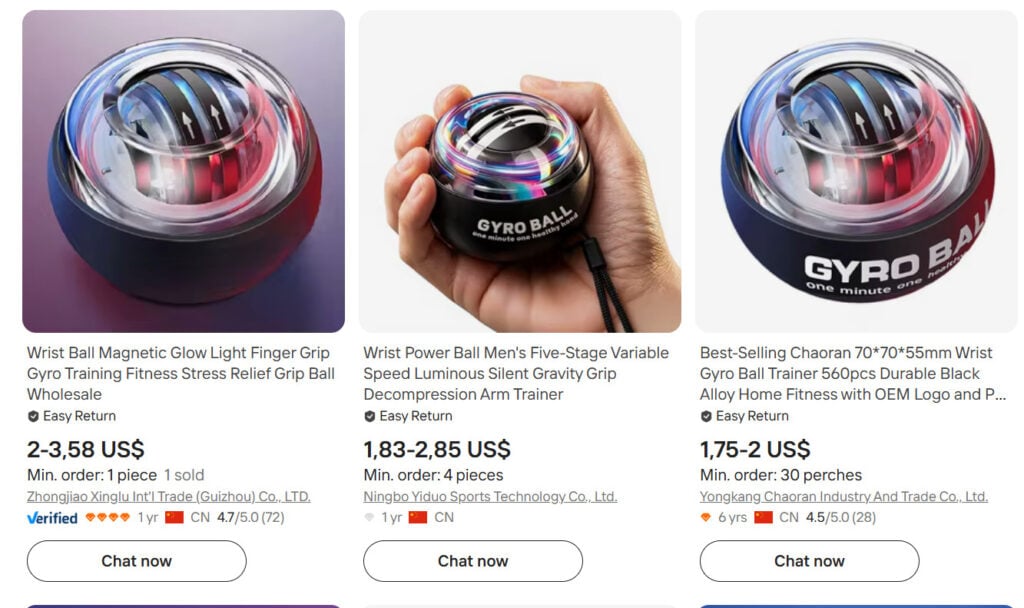
That does not mean every Torque Ball is sourced from a specific listing. But it shows the product category is generic and easy to rebrand.
The business model appears simple:
- Buy or source cheap gyro balls
- Create a premium-looking brand
- Add dramatic marketing
- Use fake-news-style ads
- Sell the same type of product at a much higher price
The product may physically exist. The “breakthrough” story is the problem.
2. The Memory Loss Angle Is Emotionally Manipulative
Ads about dementia and Alzheimer’s hit people hard because families are desperate for hope.
A product funnel that suggests a simple hand device can change the course of memory loss is not just exaggerated. It is exploitative.
People dealing with cognitive decline need real medical evaluation, not an impulse purchase from an advertorial.
3. Fake News-Style Pages Create False Trust
When a sales page looks like a newspaper or health article, many consumers assume it has been investigated by journalists or reviewed by experts.
That is often not the case.
If the page is built to look like The Guardian, NBC, ABC, CBS, or another trusted outlet but links directly into a checkout funnel, that is a major warning sign.
4. The “Doctor” Character Is Hard to Verify
Some Torque Ball-style promotions reference a supposed doctor, researcher, or aging specialist.
In these funnels, the “doctor” often functions as a trust-building character. The page may include credentials, a medical-sounding institute, and quotes that make the product feel legitimate.
But if the person cannot be independently verified, the endorsement should not be trusted.
5. “As Seen On” Logos May Be Fake or Misleading
The Torque Ball website includes an image described as “TorqueBall is featured on large publications.”
That kind of logo strip is common in dropshipping funnels.
The issue is simple: unless the site links to real articles from those outlets, the logos do not prove anything.
6. The Website’s Review Numbers Are Inconsistent
The main Torque Ball page displays customer testimonials and pushes the product as trusted and effective. But the dedicated customer reviews page shows 544 reviews, while the product listing inside those review sections includes repeated buy buttons and pricing blocks.
The review page also shows 0 one-star, 0 two-star, and 0 three-star reviews out of 544 total, which is unusual for a heavily promoted consumer gadget.
That does not prove the reviews are fake, but it does mean buyers should not treat the seller-controlled review page as independent proof.
7. The Product Page Makes Strong Pain and Recovery Claims
The official Torque Ball page claims it can help relieve stiffness and pain, support recovery after injury, and reduce discomfort from joint conditions, repetitive strain, or carpal tunnel syndrome.
Those are health-adjacent claims.
A gyro ball may be useful for general hand exercise, but people with carpal tunnel syndrome, arthritis, injury, nerve symptoms, or chronic pain should not rely on an online gadget without medical advice.
8. The “60-Day Money Back Guarantee” Has Major Limits
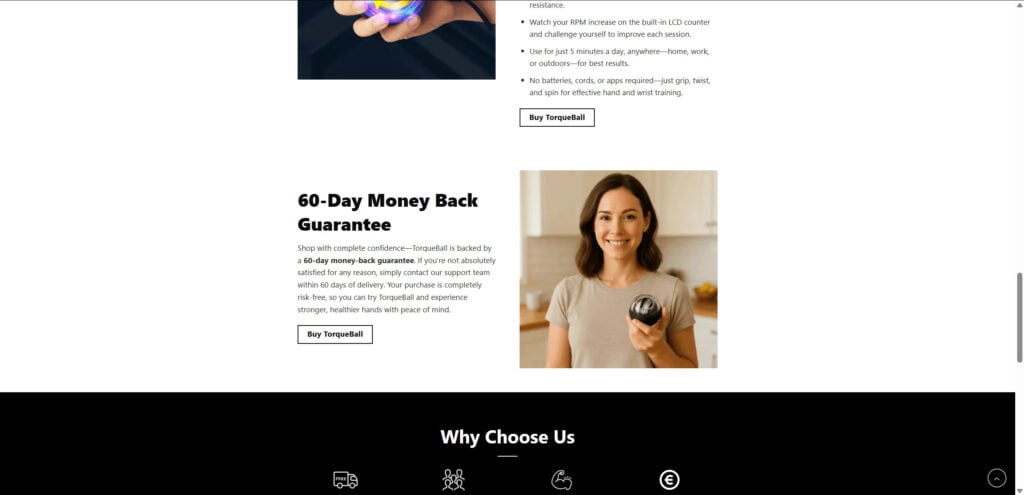
The front page says Torque Ball is backed by a 60-day money-back guarantee and calls the purchase “completely risk-free.”
The actual refund policy is much stricter.
It says:
- Refunds are generally not provided for change of mind
- Only products with proof of functional defects may be refunded
- The item must be in original packaging
- Cancellations are accepted only for full-priced items within 60 minutes of ordering
- Customers pay return shipping
- Shipping costs are non-refundable
- Refunds happen only after the returned item is received and inspected
That is not a simple “try it risk-free” guarantee.
9. Cancellations Are Almost Impossible After One Hour
The refund policy says cancellations are only accepted within 60 minutes after an order is placed.
That is a narrow window.
If you order through an emotional advertorial and regret it later, the site may claim the order is already being processed.
10. Shipping Responsibility Is Shifted to the Customer
Torque Ball’s shipping policy says customers may have to pay import duties and taxes once the order reaches its destination. It also says the company cannot accept responsibility once the item has left the warehouse if the item is lost or damaged due to the carrier.
That matters because many buyers assume “free worldwide shipping” means a low-risk order. It may not.
What Torque Ball Can Realistically Do
A gyro ball can be a legitimate exercise gadget.
It may help with:
- Forearm exercise
- Grip endurance
- Wrist movement practice
- Light hand training
- Coordination
- Sports warmup
- Desk-break movement
If someone buys it as a cheap wrist exerciser and has realistic expectations, the product category itself is not automatically fake.
What Torque Ball Cannot Realistically Do
Torque Ball should not be trusted for any claim that suggests it can treat or reverse medical conditions.
It cannot realistically:
- Reverse Alzheimer’s
- Treat dementia
- Fix memory loss
- Cure brain fog
- Replace physical therapy
- Treat carpal tunnel syndrome
- Heal arthritis
- Repair nerve damage
- Guarantee pain relief
- Deliver medical recovery in weeks
The device may be useful for hand movement. It is not medical treatment.
Why This Funnel Works
It Starts With Fear
Memory loss, aging, Alzheimer’s, and loss of independence are terrifying subjects.
The ad uses those fears to make the product feel urgent.
It Uses a Simple “Discovery” Story
The fake article usually presents the product as something one family discovered after doctors failed.
That is a classic scam structure.
It Makes the Product Look Undervalued
The ad suggests a cheap device has been overlooked by medicine, while the “official” site offers a limited-time discount.
It Pushes Immediate Action
Discounts, flash sales, countdowns, and emotional urgency are used to move people quickly from fear to checkout.
It Hides Behind a Real Product Category
The product is not completely imaginary. Gyro balls exist.
That makes the scam harder to spot. The issue is not the existence of the device. The issue is the exaggerated story wrapped around it.
Is Torque Ball a Scam?
Torque Ball is not necessarily a fake-product scam where nothing arrives.
A buyer may receive a real gyro ball.
But the marketing around it is highly questionable.
The main concerns are:
- Fake-news-style advertorials
- Alzheimer’s and memory-loss implications
- Unverifiable doctor-style authority
- “As seen on” trust signals
- Generic low-cost product category
- Seller-controlled reviews
- Strong pain and recovery claims
- Refund policy that contradicts the “risk-free” pitch
- Short cancellation window
- Customer-paid return shipping
The most accurate verdict is:
Torque Ball appears to be a generic gyro wrist exerciser sold through aggressive and potentially misleading marketing funnels, including fake medical-style stories that exaggerate what the product can do.
Should You Buy Torque Ball?
For most people, caution is warranted.
Reasons to avoid it:
- Similar gyro balls are available elsewhere for much less
- The Alzheimer’s and memory-loss marketing is misleading
- The “risk-free” refund promise has strict conditions
- The product is not a medical device
- Review claims are not independently verified
- The company shifts return shipping costs to customers
If you still want a gyro ball:
Buy one from a reputable retailer with:
- Verified reviews
- Clear return policy
- Transparent seller information
- Realistic product claims
- No Alzheimer’s or dementia marketing
- No fake news-style advertorial
Treat it as a wrist exercise gadget, not a medical solution.
What To Do If You Already Ordered Torque Ball
1. Save the Sales Page
Take screenshots of:
- The memory loss or Alzheimer’s claims
- The fake news article
- Any “doctor” claims
- “As seen on” logos
- Discount timers
- Checkout total
- Refund guarantee
- Product description
- Order confirmation
This evidence may help if you need to dispute the charge.
2. Check Your Order Confirmation
Look for:
- Quantity ordered
- Total charged
- Shipping fees
- Taxes
- Merchant name
- Any upsells
- Any warranty add-ons
- Any recurring billing language
3. Act Fast If You Want to Cancel
Torque Ball’s refund policy says cancellations are only accepted within 60 minutes of placing the order.
Email support immediately if you want to cancel.
4. Do Not Open or Use It If You Plan to Return It
The refund policy says the item must be in original packaging and that refunds generally apply only to functional defects.
If you open, use, or damage the packaging, the seller may reject the return.
5. Request a Refund in Writing
Use a clear message:
I am requesting a refund for order #[number]. The product was marketed with misleading claims and does not match the expectations created by the sales page. Please provide return instructions and the refund timeline in writing.
Keep all replies.
6. Be Prepared for Return Shipping Costs
Torque Ball says customers are responsible for return shipping and that shipping costs are non-refundable.
If return shipping is expensive, document that.
7. Dispute the Charge If Necessary
If the seller refuses a reasonable refund, the product never arrives, you were charged more than expected, or the product was sold through misleading medical claims, contact your payment provider.
Use reasons such as:
- Item not as described
- Misleading advertising
- Unauthorized charge
- Refund policy not honored
- Product sold using deceptive medical claims
FAQ About Torque Ball
Is Torque Ball a scam?
Torque Ball may ship a real gyro ball, so it is not necessarily a fake-product scam. The concern is the marketing. Some ads appear to use fake-news-style stories and exaggerated medical claims that make a basic wrist exercise gadget sound like a breakthrough for memory loss or dementia.
Can Torque Ball help with Alzheimer’s or dementia?
No credible evidence shows that Torque Ball can treat, reverse, or slow Alzheimer’s disease or dementia. The FDA warns that no cure or treatment has been shown to stop or reverse Alzheimer’s progression.
What is Torque Ball really used for?
It is a handheld gyro exercise ball. It may help with grip, wrist, and forearm exercise.
Is Torque Ball a medical device?
The sales page describes it as a hand and wrist exercise tool. It should not be treated as a medical device or a treatment for neurological disease.
Are the “As Seen On” logos real?
The site uses publication-style trust imagery, but unless those logos link to real independent coverage, they should be treated as marketing, not proof.
Why are similar products so cheap elsewhere?
Gyro balls are common wholesale products. Alibaba listings show similar wrist gyro balls priced at only a few dollars per unit, depending on supplier and quantity.
Is the 60-day guarantee really risk-free?
Not exactly. The product page promotes a 60-day guarantee, but the refund policy says change-of-mind refunds are generally not provided, returns usually require proof of functional defect, and customers pay return shipping.
Can I cancel after ordering?
The policy says cancellations are accepted only within 60 minutes of placing the order.
Should I buy Torque Ball?
Only if you want a basic gyro wrist exerciser and understand that similar products may be available elsewhere. Do not buy it for memory loss, dementia, Alzheimer’s, or any medical condition.
The Bottom Line
Torque Ball appears to be a real handheld gyro exercise gadget.
But the marketing surrounding it is the problem.
A small wrist exerciser may help some people train grip strength or forearm endurance, but it cannot reverse memory loss, treat Alzheimer’s, or fix dementia. The fake-news-style advertorials, emotional family stories, unverifiable doctor claims, “as seen on” trust signals, cheap generic product category, and restrictive refund policy all point to a high-risk purchase.
The safest conclusion is simple:
Torque Ball looks like a low-cost gyro wrist exerciser being sold through aggressive marketing funnels that exaggerate its benefits and may mislead consumers into thinking it has medical or cognitive effects it does not have.








