

If you’ve been scrolling through Facebook, TikTok, or Instagram lately, chances are you’ve seen ads that seem too good to be true. They promise massive clearance sales on Torrid plus-size clothing, with discounts of up to 90% off. The ads show familiar branding, polished product images, and enticing phrases like “Store Closing Sale,” “Outlet Blowout,” or “Going Out of Business Sale.”
But here’s the truth: these so-called Torrid Clearance Sales are scams. The websites behind them are not affiliated with Torrid at all. They are fake shopping websites designed to steal your money, personal data, or both. Victims who place orders either receive nothing at all, a random cheap product like a bracelet or sunglasses, or something of such poor quality it’s nowhere near what was advertised.
In this article, we’ll take a deep dive into how the Torrid Clothing Clearance Sale scam works, how scammers trick thousands of shoppers daily, and what you can do if you’ve already fallen victim. We’ll also walk you through the common red flags to look for so you can stay safe when shopping online.
Scam Overview
The Torrid Clearance Sale scam is part of a larger pattern of fraudulent e-commerce schemes that have exploded across social media. These scams take advantage of trusted retail brand names like Torrid, Macy’s, Target, or even Amazon, to lend credibility to their fake online storefronts.
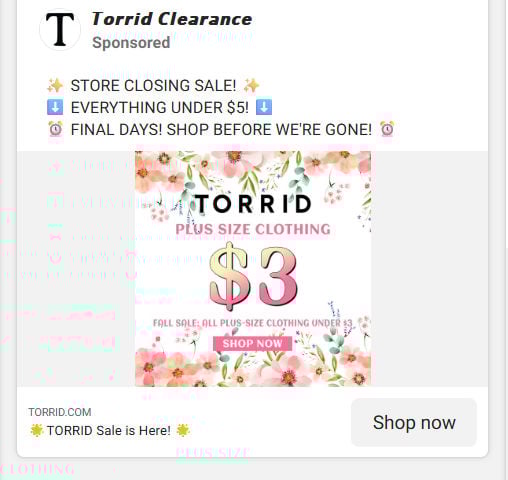
The scam usually begins with an advertisement. Scammers purchase cheap ad space on platforms like Facebook, Instagram, TikTok, or even YouTube Shorts. The ads are visually appealing, featuring well-known Torrid models, professional product photos, and bold text offering deals like:
- “Up to 90% Off Everything”
- “Warehouse Clearance – All Must Go”
- “Closing Sale – Limited Time Only”
- “Free Shipping on All Orders Today”
The prices are unbelievably low, often showing dresses that normally retail for $80 to $100 marked down to $6.99 or $9.99. Jeans might be listed at $4.99, coats at $12.99, and full outfit bundles for less than $30.
For bargain-hunting shoppers, especially those who know Torrid as a reputable plus-size brand, these deals are irresistible. The fake sites also frequently display countdown timers and limited-quantity alerts to pressure shoppers into making an immediate purchase.
But behind the polished facade lies a dark reality. These scam websites are designed solely to extract money from unsuspecting buyers.
Key Red Flags of the Torrid Scam Websites
- Recently Created Domains
Many of the scam websites were registered only weeks or months ago. They often use random strings of letters and numbers, such as GKIPSF.com, to avoid detection and takedown. - Fake Branding
These websites often misuse Torrid’s logo, Macy’s logo, or even both. They may copy Torrid’s official website design or use plagiarized product descriptions to create a sense of legitimacy. - Lack of Contact Information
While a professional retailer like Torrid lists phone numbers, physical addresses, and customer service portals, scam sites provide only a sketchy email address like help@gkipsf.info. Any phone numbers or addresses listed are fake. - Unrealistic Discounts
Offering 90% off is one of the most obvious red flags. Torrid, like most retailers, never sells brand-new inventory at such extreme markdowns across the board. - Opaque Ownership
The websites never disclose who owns or operates the business. There’s no company registration, no transparency, and no accountability. - Stolen Product Images
The photos used on the websites are ripped directly from Torrid’s legitimate website, catalogs, or social media pages. - No Social Media Presence
Unlike Torrid, which maintains active social accounts, these scam sites have no genuine presence outside of paid ads. - Enticing but Generic Slogans
Scammers use catchphrases like:- “Store Closing Sale”
- “Going Out of Business”
- “Warehouse Blowout”
- “Limited Time Offer”
- “Free Shipping”
The Victim’s Experience
Once a victim places an order, a few different scenarios unfold:
- Nothing arrives at all. The tracking information provided is fake, often linked to a bogus tracking service like service@track718.net.
- Random low-value items arrive. Victims often receive sunglasses, costume jewelry, or cheap fabric scraps instead of the clothing they ordered.
- Delivery with strings attached. In some cases, victims are told to pay an additional $10 to $20 “re-shipping fee” if their package allegedly got lost or delayed.
When customers try to reach out for help, the email address provided is unresponsive or sends generic replies designed to stall until the chargeback period expires with their bank or credit card company.
One shopper reported to the Better Business Bureau (BBB) that they ordered from a Torrid “clearance site” and never received their items. Instead, they were strung along with fake shipping updates and eventually asked to pay an extra $15 to have their package “re-sent.”
This scam is not only about stolen money. Victims often unknowingly hand over sensitive information such as:
- Full names
- Shipping addresses
- Phone numbers
- Credit card details
- Email addresses
This data can later be sold on the dark web or used for further fraud, including identity theft.
How the Scam Works
To understand how these Torrid scam websites trick thousands of people, let’s break down the process step by step.
Step 1: Setting up the Fake Website
Scammers start by registering a new domain name. The names are usually gibberish, short-lived, and designed to evade detection. Examples include gkipsf.com, sdgfli.com, or torrid-sale-outlet.shop.
They then create a clone website using stolen images, copied product descriptions, and Torrid’s branding. Many of these sites use the same cookie-cutter template, with banners shouting “Clearance Sale – 90% Off.”
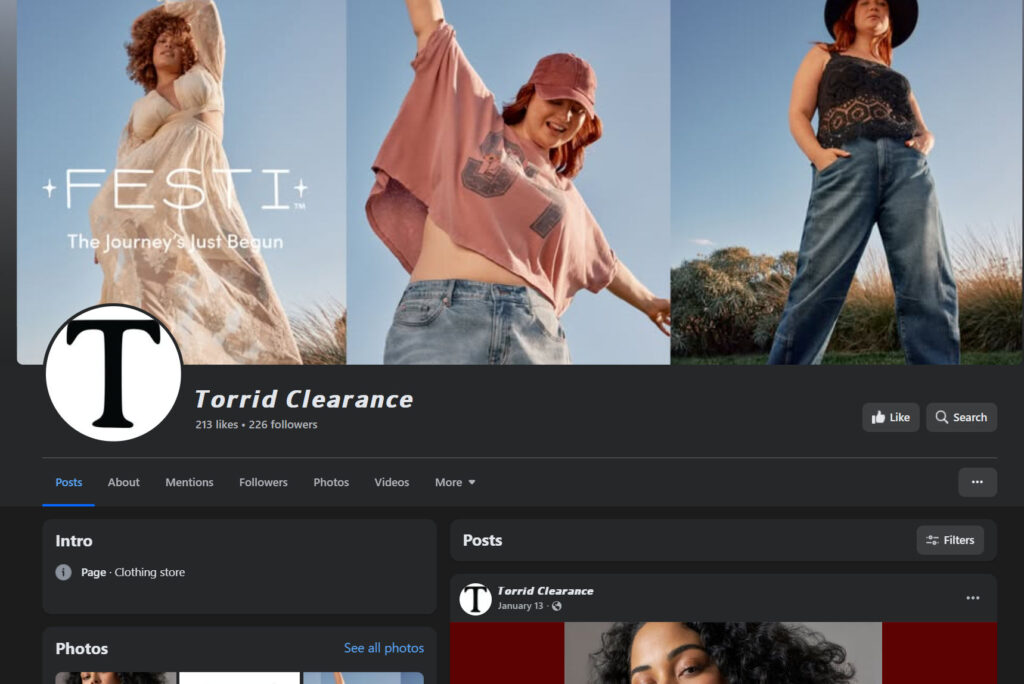
Step 2: Running Paid Ads on Social Media
The scammers rely heavily on Facebook Ads, Instagram Ads, TikTok videos, and YouTube Shorts. They know these platforms have billions of daily users and that paid ads are trusted by many shoppers.
The ads usually show:
- Happy models wearing Torrid clothing.
- Text overlays like “Only $6.99 Today!”
- Fake urgency with “Limited Stock Remaining.”
Since social media platforms don’t fully vet every advertiser, scammers can operate undetected until complaints pile up.
Step 3: Collecting Payments
Victims who click on the ads are redirected to the fake website. The checkout process looks professional, but the payment gateway is often suspicious. Many of these sites:
- Accept only credit cards (no PayPal or secure options).
- May redirect payments through third-party processors in China or Eastern Europe.
- Do not use secure HTTPS encryption.
Step 4: Delivering Fake Tracking Information
After purchase, victims typically receive an email confirming their order. This email contains a tracking number linked to a fake tracking site, such as track718.net, which shows bogus updates.
This tactic is designed to give victims false confidence while the scammers either disappear or send a random package.
Step 5: Delivering Fake or No Items
Victims eventually realize something is wrong when:
- The tracking stops updating.
- The item never arrives.
- A small random package arrives instead of the full order.
Some scammers go the extra mile by sending extremely low-value products (like sunglasses or bracelets) so that the delivery system shows something was delivered, making it harder for victims to dispute the charge.
Step 6: Blocking Customer Complaints
If a victim tries to contact the “company,” the only available option is usually a single email address. Responses are either generic (“please wait 5–7 more days”) or non-existent.
If a phone number or physical address is displayed on the site, they are entirely fake. Victims who try calling will find the number doesn’t work or leads nowhere.
Step 7: Repeating the Scam
Once enough victims catch on and start reporting the site, the scammers shut it down and launch a new domain with a different name. The cycle repeats, targeting fresh victims through new ads.
What to Do If You Have Fallen Victim
If you’ve already made a purchase from one of these fake Torrid Clearance Sale websites, don’t panic. You still have options to protect yourself and potentially recover your money.
Here’s a step-by-step guide:
- Contact Your Bank or Credit Card Company Immediately
- Explain that you have been scammed by a fraudulent website.
- Request a chargeback or dispute the transaction.
- If you used a debit card, ask your bank to block further charges.
- Monitor Your Financial Accounts
- Keep a close eye on your bank and credit card statements for unauthorized charges.
- Report suspicious activity right away.
- Change Your Passwords
- If you used the same email and password on the scam site that you use elsewhere, change them immediately.
- Use strong, unique passwords for every account.
- Report the Website
- File a complaint with the Better Business Bureau (BBB).
- Report the fraudulent website to the Federal Trade Commission (FTC).
- Use Google’s “Report Phishing” tool to flag the domain.
- Warn Others
- Share your experience on social media, forums, or consumer protection websites to help others avoid falling into the same trap.
- Check Your Credit Report
- If you entered personal information, scammers could attempt identity theft.
- Request a credit report to ensure no fraudulent accounts have been opened in your name.
- Install Security Software
- Ensure your device has up-to-date antivirus and anti-malware protection.
- Some scam sites attempt to install tracking cookies or malware.
The Bottom Line
The Torrid Clearance Sale scam is one of many online shopping scams exploiting trusted retail brands and luring shoppers with unbelievable discounts. While the deals look real, the reality is harsh: victims end up with nothing, low-quality junk, or stolen money and personal data.
The best defense is awareness. If you see a Torrid sale advertised at 90% off, especially through a random link on Facebook, TikTok, or Instagram, stop and check before you buy. Look at the website’s domain, verify contact information, and remember that if a deal looks too good to be true, it probably is.
By learning how these scams work and knowing what steps to take if you’ve been targeted, you can protect yourself and help prevent others from falling victim.
Frequently Asked Questions (FAQ) About the Torrid Clearance Sale Scam
1. What is the Torrid Clothing Clearance Sale Scam?
The Torrid Clearance Sale Scam is a fraudulent scheme where scammers set up fake websites pretending to sell Torrid plus-size clothing at massive discounts, often up to 90% off. These sites are not affiliated with Torrid. Instead, they use Torrid’s logo, stolen product images, and phrases like “Store Closing Sale” or “Going Out of Business” to trick shoppers into buying. Victims either receive nothing at all, receive poor-quality knockoffs, or get unrelated items like sunglasses or a cheap bracelet.
2. How can I spot a fake Torrid Clearance Sale website?
There are several red flags that can help you identify a scam site:
- Unrealistic Discounts: Torrid does not sell brand-new items for $6.99 or 90% off.
- Recently Created Domain Names: Scam sites often have random domains like gkipsf.com or torrid-clearance.shop.
- Fake Contact Information: Only a sketchy email address is provided. Phone numbers or addresses listed are usually fake.
- Copied Content and Images: Product photos and descriptions are stolen directly from Torrid’s official site.
- No Social Media Presence: Real businesses maintain active social profiles. These scam sites do not.
- Urgency Traps: Phrases like “Limited Stock” or countdown timers are added to pressure you into buying quickly.
If you see these warning signs, it’s best to avoid purchasing.
3. Are the ads for Torrid Clearance Sales on Facebook, TikTok, and Instagram real?
No. The ads you see on social media promoting Torrid clothing at extreme discounts are fraudulent. Scammers pay for these ads to appear legitimate, but clicking on them takes you to fake websites. Torrid has issued warnings that these ads are not connected to their official store.
4. What happens if I order from one of these fake Torrid websites?
Victims have reported several possible outcomes:
- No Delivery: You never receive anything at all.
- Fake Tracking: You receive a fake tracking link, often via services like track718.net, showing false updates.
- Wrong Item: Instead of clothing, you might receive sunglasses, costume jewelry, or a random cheap product.
- Extra Payment Requests: Some scammers even ask victims to pay an additional fee (such as $15) to “resend” a lost package.
In all cases, the goal is to steal your money and personal data.
5. What should I do if I’ve already placed an order on a scam Torrid site?
If you’ve fallen victim, take immediate action:
- Contact Your Bank or Credit Card Provider: Request a chargeback or dispute the transaction.
- Monitor Financial Accounts: Watch for unauthorized charges.
- Change Passwords: If you used the same login details elsewhere, update them immediately.
- Report the Scam: File complaints with the BBB, FTC, and your local consumer protection agency.
- Warn Others: Share your experience online to help others avoid the same trap.
6. Can I get my money back from the Torrid Clearance Scam?
Yes, but only if you act quickly. Most banks and credit card companies allow you to file a dispute for fraudulent transactions. If you paid with PayPal, you can also open a buyer protection claim. However, if too much time passes, it may be harder to recover your money. Acting fast increases your chances of success.
7. How can I verify if a Torrid sale is legitimate?
To confirm whether a Torrid sale is real, follow these steps:
- Go directly to Torrid’s official website: torrid.com.
- Check Torrid’s verified social media accounts: Official announcements about sales will always appear there.
- Look at the URL carefully: Legitimate Torrid sales will only be hosted on torrid.com or Torrid’s official retail partners.
- Search for reviews: A quick Google search of the scam website’s name often reveals warnings from other shoppers.
8. Why do scammers use Torrid logo on these websites?
Scammers use the logos of well-known retailers like Torrid to build trust. By hijacking recognizable brands, they make their websites appear authentic and trick shoppers into believing they are getting genuine deals. This technique is called brand impersonation fraud and is very common in e-commerce scams.
9. Is Torrid actually going out of business or having a massive clearance sale?
No. Torrid is not closing, nor are they running 90% off clearance events through random websites. Any promotion offering such extreme discounts outside Torrid’s official site is a scam. Always check Torrid’s official channels for current promotions.
10. How do I report a fake Torrid website?
You can report scam websites through several channels:
- Federal Trade Commission (FTC): ReportFraud.ftc.gov
- Better Business Bureau (BBB): File a complaint at bbb.org
- Google Safe Browsing: Use the “Report Phishing” tool to alert Google.
- Social Media Platforms: Report the ad directly on Facebook, Instagram, or TikTok so it can be reviewed and taken down.
11. Can these scams lead to identity theft?
Yes. Since you enter personal details like your name, address, email, and credit card information, scammers can use or sell this data for identity theft. Victims may experience unauthorized charges, spam emails, phishing attempts, or even fraudulent accounts being opened in their name.
12. How can I protect myself from similar online shopping scams?
Here are some proactive tips to avoid scams:
- Never trust ads with extreme discounts. If it looks too good to be true, it usually is.
- Check the domain age. Use tools like Whois to see when the website was created. Newly registered sites are suspicious.
- Look for secure checkout. The site should use HTTPS and show trust indicators.
- Search for reviews. A quick search of the website name plus “scam” often reveals warnings.
- Stick to official channels. Always shop through verified retailers or brand websites.
13. Are there other clothing scams similar to the Torrid Clearance Sale Scam?
Yes. Scammers regularly impersonate popular brands to lure buyers. Similar scams have been reported using Macy’s, Target, Nike, Adidas, and even Amazon. They all follow the same playbook: unbelievable discounts, fake websites, copied logos, and no real customer support.
14. Why doesn’t Facebook or TikTok remove these scam ads right away?
While social media platforms do remove scam ads once they’re reported, the sheer number of fraudulent advertisers makes it difficult to catch them all in real-time. Scammers also create new domains and ads quickly after old ones are taken down, making it a game of “whack-a-mole.”
15. What’s the safest way to shop Torrid online?
The safest way is to always shop directly through:
- Torrid’s official website: www.torrid.com
- Torrid’s verified mobile app
- Torrid’s physical retail stores
Never trust third-party links from random ads, emails, or unfamiliar websites.

Join the discussion
0 commentsShare your experience or ask a question about this article.
Discussion
Start the conversation
Have a question or something useful to share? Add the first comment.