

You finally find the name of a treatment center that feels right. A search result offers an admissions number, and someone answers almost immediately.
Before sharing a family’s most private details, there is one question worth asking: did the call actually reach the center you chose?
Overview
The choice a family thinks it made
A treatment center search ad scam interferes with a specific decision. The caller is not browsing every clinic. They are trying to contact one named provider.
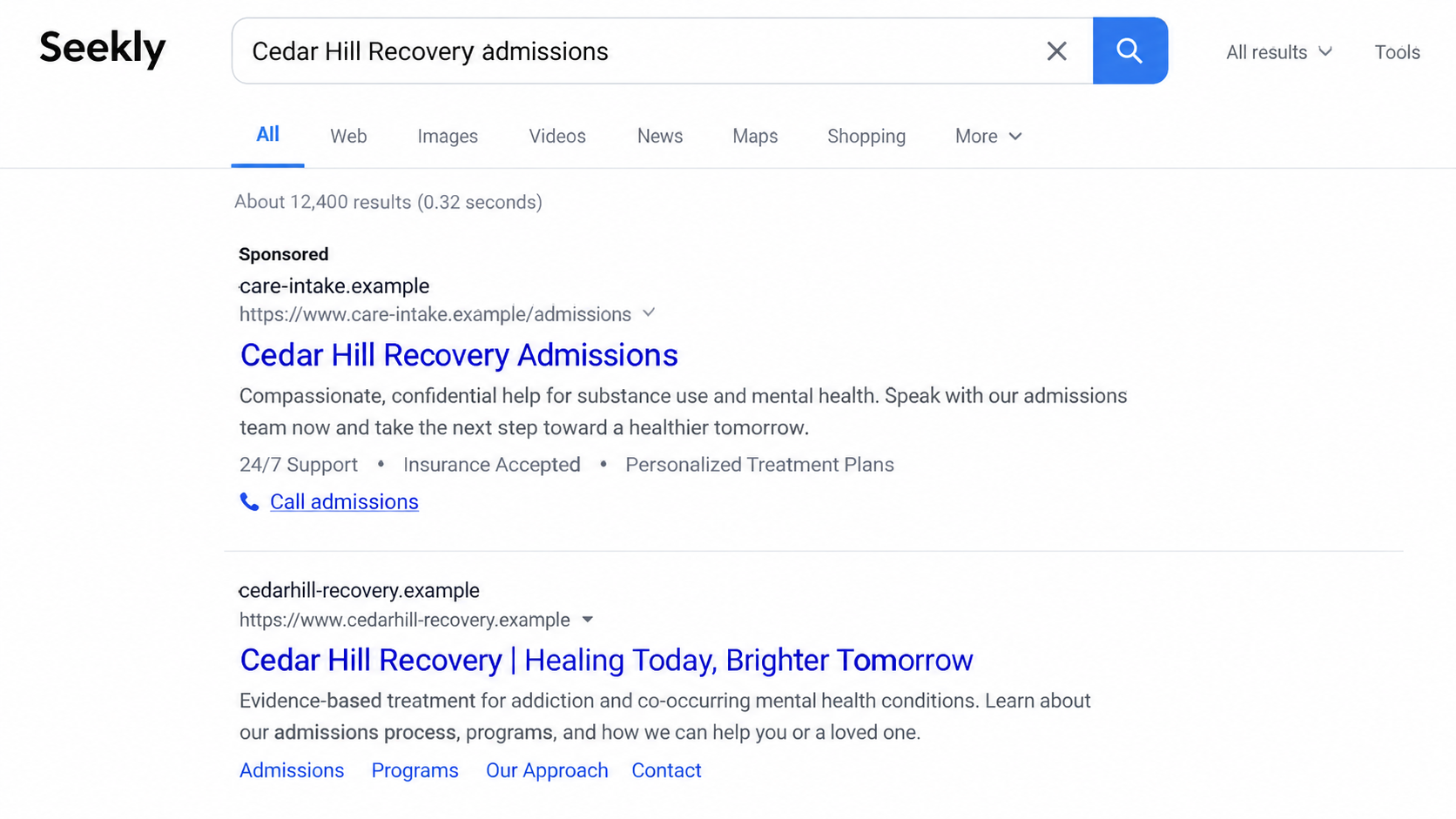
A paid result can display that provider’s name while pointing to another business’s number or website. The person may not notice the difference before calling.
That matters because admissions conversations involve urgency, insurance, location, medical history, and trust. A caller may accept a suggested placement believing it came from the chosen clinic.
What the FTC documented
In a June 2025 case announcement, the FTC said Evoke Wellness and its operators agreed to pay $1.9 million to settle impersonation allegations.
The agency alleged that ads used competitors’ clinic names and directed callers to Evoke’s call center. Staff allegedly reinforced the confusion during conversations.
Evoke operated actual treatment facilities. The case concerns how prospective patients were recruited, not a finding that every treatment service was nonexistent or ineffective.
- The searched-for clinic name and the advertiser’s destination may differ.
- A generic admissions greeting can hide which organization answered.
- Insurance and personal information may be collected before affiliation is clear.
- The safer route is to verify the clinic independently before discussing placement.
What the case does not establish
The FTC’s allegations and proposed settlement are strong evidence of a deceptive advertising pattern. They do not establish that every treatment ad behaves this way.
Nor does a misleading lead path tell us whether a particular patient received appropriate care. Those are separate questions requiring patient-specific records and clinical evidence.
The practical warning is narrower and more useful: an authentic clinic can still be reached through a misleading advertisement for a different clinic.
Why These Calls Are Especially Sensitive
People rarely search for substance use treatment at a relaxed moment. The inquiry may follow an overdose scare, a difficult family conversation, or a decision to seek help.
That urgency gives a search result unusual power. A prominent phone number looks like progress, especially when calling feels harder than choosing a product online.
Callers may reveal medication use, insurance details, where they live, and whether they can travel. Those details can shape a referral before identity is settled.
The person on the line may sound knowledgeable and compassionate. A pleasant manner does not answer the basic question of who employs them.
A genuine admissions team should be able to identify its organization plainly. If someone avoids naming the facility, pause and verify independently.
The FTC’s consumer alert advises people to look beyond paid results and use the center’s known website for contact information.
This is not advice to delay needed treatment. It is a quick identity check that can keep a family from being steered away from its intended provider.
How the Treatment Center Search Ad Scam Works
Step 1: Someone searches for a particular clinic
The search often includes a facility’s exact name and city. That makes the user’s intent clearer than a general query about addiction treatment.
An advertiser can bid on such terms. The ad may appear before the clinic’s own listing, especially on a small screen.
Paid placement is not proof of wrongdoing. The problem begins when the result creates the impression that another company’s contact details belong to the searched-for clinic.
Families may scan the headline and phone number but overlook the destination domain. The shortcut feels harmless because the name on screen looks familiar.
Step 2: The advertisement appears to answer that search
According to the FTC complaint, Evoke ads paired other clinics’ names with a number reaching Evoke’s call center. This was not a random broad advertisement.
The apparent match was the point. A person seeking Clinic A was offered a route to Clinic B without an upfront explanation.
An ad label only tells the reader that placement was purchased. It does not certify the advertiser’s relationship with the named provider.
Check the web address character by character. A broad directory, referral page, or unfamiliar domain should not be assumed to be the clinic’s own site.
Step 3: A neutral greeting keeps the mistake alive
A call can deepen the confusion. The FTC alleged telemarketers typically answered as a centralized admissions office or treatment hotline, not as Evoke’s own call center.
A phrase such as “Admissions” sounds plausible because many real clinics use similar language. Yet it leaves the employer and facility unidentified.
The caller may ask whether they reached the named clinic. The FTC alleged some responses falsely suggested a connection instead of clearly correcting the misunderstanding.
The safest question is direct: “What is your company’s legal name, and are you employed by the center I searched for?”
If the answer is vague, end the call. You can call the selected clinic through a number obtained independently.
Step 4: The conversation turns toward placement
Once the caller stays on the line, an admissions representative can discuss insurance, travel, available beds, or program fit.
Those topics may be legitimate when the caller knows who is answering. They become troubling when the representative is benefiting from a mistaken identity.
The FTC said people were steered toward Evoke facilities rather than the providers they intended to reach. This describes the alleged diversion, not every patient’s outcome.
A caller may be told the original clinic is unavailable, affiliated, or less suitable. Such claims should be checked directly with that clinic.
Do not assume a confident admissions voice has access to another provider’s schedule or contracts. Ask the named center itself.
Step 5: Personal and insurance details can be shared
A family may provide a name, birth date, insurance policy, diagnosis, or contact number while believing the call belongs to the chosen facility.
Even if the receiving organization is a real provider, that mistaken disclosure matters. The person did not knowingly choose whom to tell.
Ask how information will be used, stored, and shared before sending records or policy images. Privacy explanations should identify the actual organization.
If payment is requested, obtain written details about the provider, services, estimated charges, and insurance verification. Do not authorize a charge to resolve confusion.
Step 6: The family may not discover the switch until later
The difference sometimes becomes obvious in a confirmation email, intake form, facility address, or insurer conversation. By then, travel or admission plans may be underway.
Save the original search ad if possible, including its destination and displayed number. The mismatch helps explain what happened when reporting it.
Do not abandon the search for care because of one deceptive route. Reconnect with the clinic you intended to call using independent contact information.
A different provider may still be worth considering on its own merits. It should be a conscious comparison, not the result of an undisclosed switch.
How to Verify a Treatment Provider Without Losing Time
Start with the exact organization you meant to reach. Search for its official website, then compare the name, location, and number across several independent records.
Ask your insurer whether the facility and specific program are in network. Coverage can vary by location, level of care, and individual policy.
Confirm licensing with the appropriate state authority. A business name in an ad is not a substitute for a license or a clear facility address.
If a directory or referral line helps you, ask who operates it and whether it receives payment for placements. Disclosure changes how you interpret recommendations.
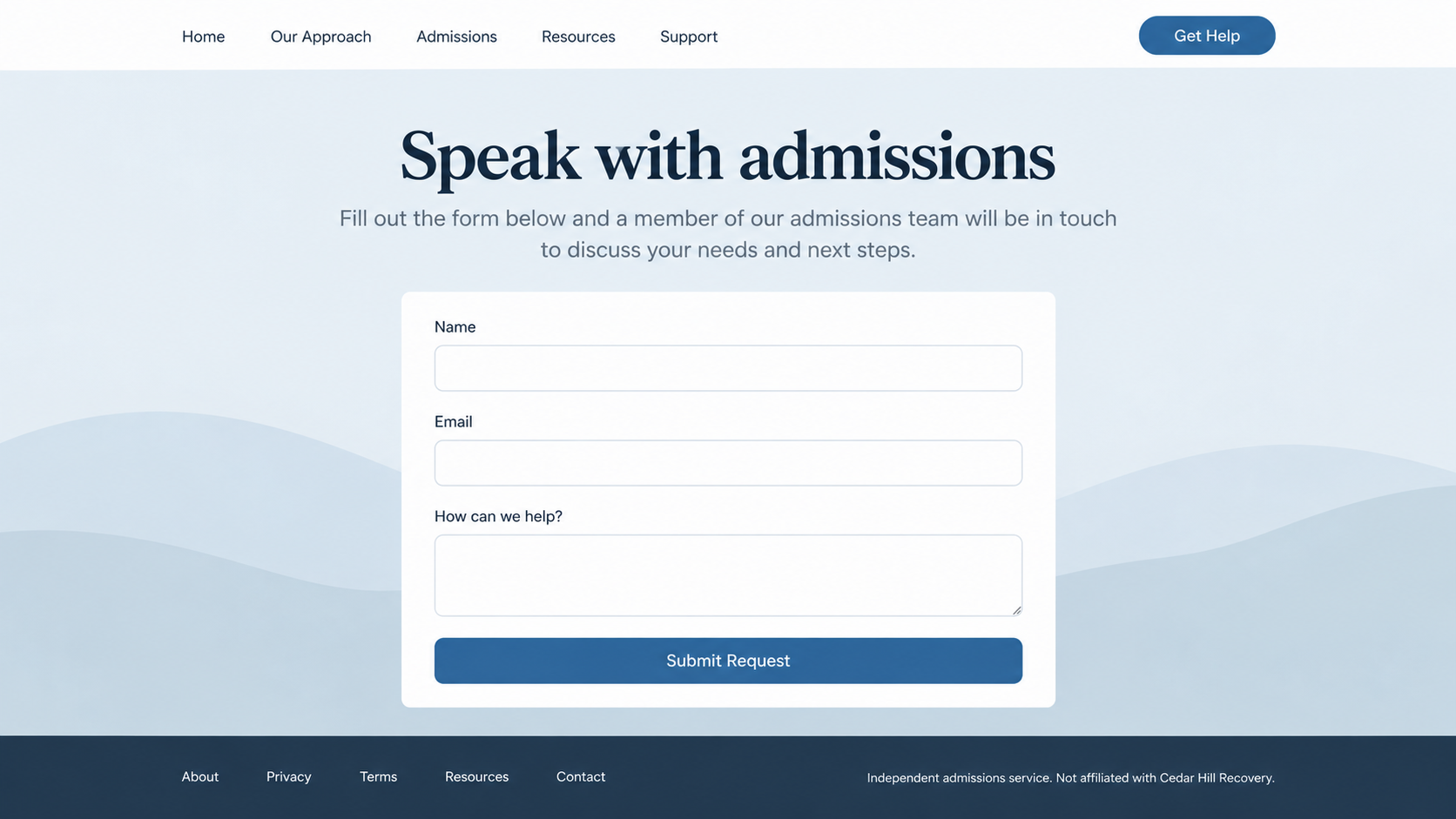
Written intake material should name the provider delivering care. If the name differs from the clinic you searched, ask why before signing anything.
Compare practical details too: medical supervision, detox availability, therapies offered, visiting rules, costs, and how the facility handles emergencies.
No online search can determine whether a program is medically right for one person. A licensed clinician familiar with the person’s needs can help assess care options.
If someone is in immediate danger, seek emergency medical help instead of continuing to compare advertisements or call centers.
The Real Clinic, the Advertiser, and the Phone Number
These three identities can be different. The clinic name is what a family typed. The advertiser bought the result. The number determines who actually answers.
In the FTC case, Evoke was a real provider accused of making its ads resemble other providers’ listings. The other clinics were not accused of causing the switch.
That distinction prevents an important mistake. A genuine treatment business can still market itself deceptively, while an innocent clinic can be impersonated in paid results.
Do not treat a matching logo or headline as proof of affiliation. Confirm the operator using the landing page’s domain, privacy notice, and direct clinic contact.
Call a number found on the intended provider’s own site. During the call, ask the representative to identify the facility and address before describing the patient’s situation.
If a representative says several brands share one admissions desk, request the names and relationship in writing. That lets you check the claim later.
A search engine’s business profile can also contain suggested edits or outdated numbers. Treat it as a clue, then compare it with the facility’s own published information.
If the clinic has several locations, specify the one you meant. A legitimate organization may run different admissions lines for different programs.
Verification is about accuracy, not finding a single perfect source. Agreement among the clinic, licensing record, and insurer is more reassuring than one ad.
Warning Signs During an Admissions Conversation
- The representative answers generically but will not name the employing company.
- The destination website belongs to a different organization from the searched clinic.
- The caller is urged to switch facilities before the original provider is contacted.
- An affiliation is asserted verbally but not shown in official materials.
- Insurance or medical details are requested before the facility is identified.
- Costs, location, and program type change between the ad and intake form.
One item alone does not prove fraud. Together, such inconsistencies justify slowing down and verifying who is responsible for the placement.
Look carefully at the difference between “we can help you find care” and “we are the clinic you searched for.” The second is an identity claim.
When care is urgent, a short verification call can feel like an obstacle. It is often the fastest way to avoid a longer detour.
What to Do if You Were Redirected by a Treatment Ad
- Confirm where the call went. Write down the displayed number, the name given by the representative, and any website or facility mentioned. Save the ad if it remains visible.
- Contact the intended center directly. Use its verified website or a trusted insurer directory. Ask whether it shares an admissions office with the company that answered.
- Protect information already shared. Ask the receiving organization for its privacy notice and whether your information was passed to others. Avoid sending additional records until identity is settled.
- Check any financial authorization. Review intake forms, deposits, card charges, and insurance submissions. Dispute an unauthorized charge with the issuer promptly and keep copies of correspondence.
- Keep treatment decisions moving. If care is needed now, speak with a qualified clinician or the original clinic about timely options. Do not let an ad dispute delay urgent medical attention.
- Report misleading advertising. Send the ad, link, phone number, and call notes to ReportFraud.ftc.gov. You can also report the ad to the search platform.
- Ask for help if placement already changed. Request records and a written cost explanation from the actual facility. An insurer or patient advocate may help clarify coverage and alternatives.
You do not need to prove intent before documenting a mismatch. Preserve what you saw and what you were told, then make the next care decision with clearer information.
Frequently Asked Questions
Are all treatment center search ads scams?
No. Many ads point to the advertiser’s real program. The warning concerns ads that make another clinic’s name or number appear to be their own.
Was Evoke Wellness an imaginary clinic?
No. The FTC case involved an operating treatment provider. Its allegations addressed deceptive search advertising and admissions calls, not the existence of its facilities.
How can I tell who answered my call?
Ask for the legal company name, facility address, and relationship to the clinic you searched. Then verify those answers through the intended clinic’s independent contact details.
Can a treatment hotline refer me elsewhere legitimately?
Yes, if it clearly identifies itself, explains relevant relationships, and lets you make an informed choice. A referral is different from pretending to be one named provider.
What if I already sent insurance information?
Record exactly what was shared, request the recipient’s privacy policy, and contact your insurer about any unfamiliar verification or claims. Continue seeking care through trusted channels.
Does a sponsored label make a clinic listing trustworthy?
No. It identifies advertising placement, not the advertiser’s identity or affiliation. Compare the domain and telephone number with the center’s own verified information.
The Bottom Line
A treatment center search ad scam can redirect a person who chose one clinic toward another provider through a misleading result and admissions conversation.
The FTC’s Evoke case shows why the distinction matters. Verify the center and number before sharing sensitive details, while keeping necessary medical care moving.








