

A sad photograph appears in your Facebook feed with a simple request: “Don’t scroll without typing Amen.” Commenting feels compassionate, harmless, and easier than questioning the page behind it.
But your comment cannot fund medical care, rescue an animal, or trigger a donation. It can, however, help an engagement-farming page reach thousands of new people.

Overview
“Type Amen” Facebook posts are emotionally manipulative engagement-bait posts. They use pictures of children, adults, animals, religious figures, disasters, or supposed emergencies to pressure people into commenting, liking, or sharing.
The requested action is intentionally effortless. A person who would ignore a suspicious link may still type one word. Every interaction signals popularity to the platform, helping the post spread to friends and new audiences.
Not every religious post or request for prayers is fraudulent. The warning applies to pages that make false claims about how comments help, reuse unrelated or stolen images, invent emergencies, threaten bad luck, or repeatedly exploit tragedy to manufacture engagement.
Once a page has accumulated visibility and followers, its operators can change its name, replace the original content, promote dubious products, send spam, publish phishing links, or sell access to the audience. The apparently harmless comment becomes the first step in building a valuable distribution channel.
Facebook advises users to report content they believe is a scam and warns that criminals use fake or compromised accounts to obtain money, personal information, and account access. Independent fact-checkers have also repeatedly confirmed that Facebook does not donate money based on the number of comments or shares a post receives.
- Scam type: Engagement bait, like-farming, and social-media manipulation
- Common request: Type “Amen,” comment “yes,” like, or share to help
- Emotional lure: Sick children, rescued animals, grief, religion, or promised donations
- Immediate goal: Inflate reach, comments, followers, and page credibility
- Later risks: Spam, fake giveaways, phishing, malicious links, or page resale
What “Type Amen” Posts Usually Look Like
A typical post combines a powerful image with an instruction written in large text. Examples include “Don’t scroll without typing Amen,” “Ignore if you have no heart,” or “One comment equals one prayer.”
Other variations claim that Facebook will donate $1 for every share, that a child needs a certain number of likes before surgery, or that an animal will be rescued only if the post becomes viral.
Those platform-funded donation claims are false unless they are attached to a genuine fundraising tool with a named organization, transparent beneficiary, and verifiable transaction process. A normal comment does not cause Facebook to pay money.
The page name may be generic and emotionally appealing, such as “Daily Blessings,” “Hope for Children,” or “Animal Heroes.” It may publish many unrelated tragedies rather than document the work of one identifiable organization.
Images are frequently detached from their original context. An old photo can be reposted with a new location, diagnosis, name, or rescue story. Reverse-image searching may reveal that the same picture has circulated for years under several incompatible claims.
High engagement is part of the persuasion. When a post already has thousands of comments, a new viewer assumes other people verified it. In reality, most commenters may have reacted to the picture without checking the page or claim.
How The Scam Works
1. The operator finds an emotional image
The post begins with a photograph likely to trigger sympathy, faith, anger, or guilt. It may show an animal in a shelter, a person in a hospital, a grieving family, or an inspiring religious scene.
The image may be real while the attached story is false. Emotional impact does not establish who owns the photograph, when it was taken, or whether the named person needs help.
2. A fictional or distorted story is added
The page writes a short narrative that is difficult to verify. Details may be deliberately vague: no hospital, charity, case number, location, family contact, or official fundraising page.
Some posts use a real tragedy but imply it is happening now. Recycling old events lets the operator create urgency without maintaining a consistent story.
3. The post demands a tiny emotional action
Typing “Amen” requires almost no time and feels morally positive. The instruction can also shame people who hesitate by saying that only heartless users will keep scrolling.
This is manipulation, not proof of charitable impact. Genuine organizations explain how an action helps; engagement farmers rely on guilt and vague promises.
4. Comments push the post into more feeds
Every reaction, comment, and share can increase the post’s visibility. Friends may see that someone they trust interacted with it and assume the content is credible.
The operator gains free distribution without paying for normal advertising. A single successful image can attract hundreds of thousands of interactions.
5. The page builds social proof
Large follower and engagement counts make the page appear established. Future posts inherit that credibility, even if the page has no transparent owner or legitimate mission.
Social proof is valuable because users are more likely to click a link, enter a giveaway, or buy a product when thousands of others appear to support the page.
6. More engagement bait keeps the audience active
The page repeats the process with new images, religious messages, quizzes, missing-person claims, or fake prizes. Each post identifies people who respond quickly to emotional prompts.
Those engagement histories help the operator refine future content. Commenters may also receive replies or direct messages that continue the manipulation privately.
7. The page’s purpose changes
After building an audience, the operator can rename the page, delete older posts, and begin promoting unrelated offers. Followers may not notice that the page they originally followed for prayers now advertises products or investments.
A page can also be transferred or sold. The buyer gains an existing audience and apparent history instead of building trust from zero.
8. Followers are exposed to fake giveaways
Common follow-up content promises cash, gift cards, vehicles, or electronics in exchange for completing a survey, sharing a post, or paying a small delivery fee.
The prize does not exist. Forms collect personal data, and small payment requests can enroll victims in recurring subscriptions or expose card details.
9. Phishing links may arrive in comments or messages
A fake page can reply that the user has won and must log in to claim a reward. The supplied link opens a copied Facebook or email sign-in page that captures credentials.
Direct messages feel personal because they reference the user’s earlier comment. That context can make a generic phishing attempt look like a legitimate continuation.
10. Malicious or deceptive websites monetize the traffic
Links may lead to ad-heavy pages, browser-notification traps, unwanted software, affiliate funnels, or sites that ask users to install an app. The operator earns money from traffic or commissions.
In more dangerous cases, a download can contain malware or a browser extension that tracks activity and changes search results.
11. Commenters become targets for impersonation
Public comments reveal active accounts and interests. Scammers can examine profiles, copy photographs, or send friend requests from accounts pretending to belong to a charity representative.
A victim may then be asked for a donation, gift card, bank transfer, or personal information. The original “Amen” comment provided both a target and an emotional theme.
12. The cycle repeats with a new page or image
If Facebook removes a post, the operator can create another page and reuse the same material. Screenshots of viral posts can be uploaded again, making provenance even harder to trace.
Stopping the cycle requires users to avoid rewarding the content with comments or shares and report deceptive pages instead.
Why People Keep Sharing These Posts
The request seems harmless. Most people understand the dangers of entering a password or sending money, but they do not see a one-word comment as something a scammer can monetize.
Compassion also short-circuits skepticism. Pausing to verify a post about a sick child can feel cold, especially when the caption accuses anyone who scrolls past of lacking empathy.
Religious language adds social pressure. A user may worry that ignoring “Type Amen if you believe” signals a lack of faith to friends who can see their activity.
Large comment counts create the impression of legitimacy. People often assume someone else checked the story, even though each participant may have relied on the same assumption.
Finally, the posts are designed for fast mobile consumption. The image, instruction, and comment box appear together, while verification would require leaving the feed and searching for context.
What to Do if You Have Fallen Victim to This Scam
- Do not panic over a simple comment. Typing “Amen” alone does not give someone your password or direct access to your account. The main effect is increasing the post’s reach and identifying your account as active.
- Remove your interaction. Delete the comment, unlike the post, and unshare it from your profile. This reduces further distribution through your activity.
- Report the post and page. Use the menu beside the content and choose the closest option for scam, false information, spam, or another applicable violation. Facebook states that the Report link near content is the preferred method.
- Block or unfollow the page. Do not keep following it merely to watch what happens. Future content may be more dangerous than the original engagement bait.
- Warn friends who reshared it. Explain calmly that comments do not trigger donations and provide the original image source or fact-check when available. Avoid resharing the deceptive post again as a warning.
- Ignore winner messages. A reply or direct message claiming you won because you commented is likely another stage of the scam. Do not follow links or pay a delivery, processing, or tax fee.
- Change your password if you logged in through a link. Use Facebook’s official app or type facebook.com yourself. Replace the password anywhere it was reused.
- Enable two-factor authentication. Review active sessions, remove unfamiliar devices, and confirm that your email address and phone number have not been changed.
- Check your recent activity. Look for posts, messages, page follows, advertising accounts, or friend requests you did not create. Delete unauthorized content and notify affected contacts.
- Contact your bank if you paid. Report any card number or unauthorized transaction immediately. Ask whether the card should be replaced and monitor statements for recurring charges.
- Scan the device if you downloaded anything. Remove suspicious apps or browser extensions and run a full malware scan. A normal Facebook comment does not require an app, plugin, or document.
- Report impersonated charities. Notify the real organization whose name or images were misused. U.S. consumers who lost money can also report the scheme through ReportFraud.ftc.gov.
Is Your Device Infected? Run a Free Malware Scan
Slow performance, constant pop-ups, or strange behavior? These are classic signs of a malware infection. The fastest way to find out is to scan your device with Malwarebytes Free — one of the most trusted malware removal tools available.
The free version detects and removes the most common threats, including:
- Adware — the cause of those annoying pop-ups
- Browser hijackers — unwanted redirects and changed homepages
- Trojans and spyware — hidden programs stealing your data
- Potentially unwanted programs (PUPs) — software you never asked for
👉 Select your device below — Windows, Mac, or Android — then follow the simple steps to download Malwarebytes, scan your system, and remove any threats it finds. The scan usually takes 5 to 20 minutes.
Run a Malware Scan with Malwarebytes for Windows
Malwarebytes is one of the most popular and trusted anti-malware tools for Windows — and it’s completely free for removing infections. It catches threats that many antivirus programs miss, including adware, browser hijackers, and trojans. Follow the steps below to scan and clean your PC in just a few minutes.
Download Malwarebytes
Click the button below to download the latest version of Malwarebytes for Windows from the official source. The free version is all you need — it will scan your computer and remove adware, browser hijackers, and other malicious software at no cost.
Download MalwarebytesOfficial installer for Windows 11 and 10. Your download starts right away.Want real-time protection? See Malwarebytes Premium Malwarebytes Free for WindowsScans and removes malware at no cost
-
Install Malwarebytes
When the download finishes, open your Downloads folder and double-click the MBSetup file. If Windows shows a User Account Control pop-up, click “Yes” to allow the installation.
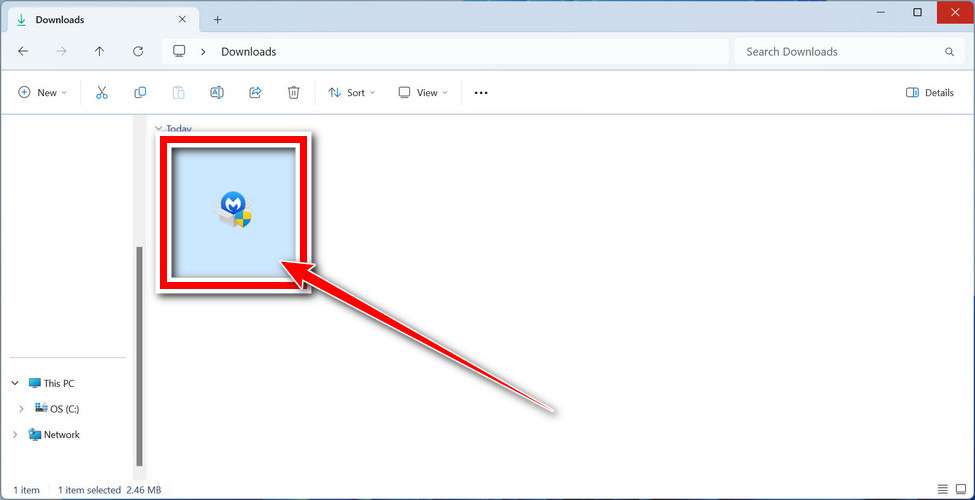
Follow the On-Screen Prompts to Install Malwarebytes
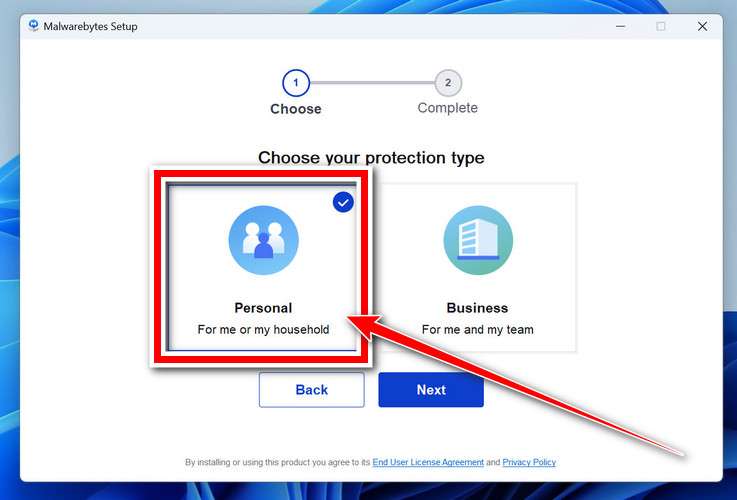
The setup wizard will walk you through a few quick screens:
-
Choose where you’re installing the program — “Personal Computer” or “Work Computer” — then click Next.
-
Malwarebytes will now install on your device. This usually takes under a minute.

-
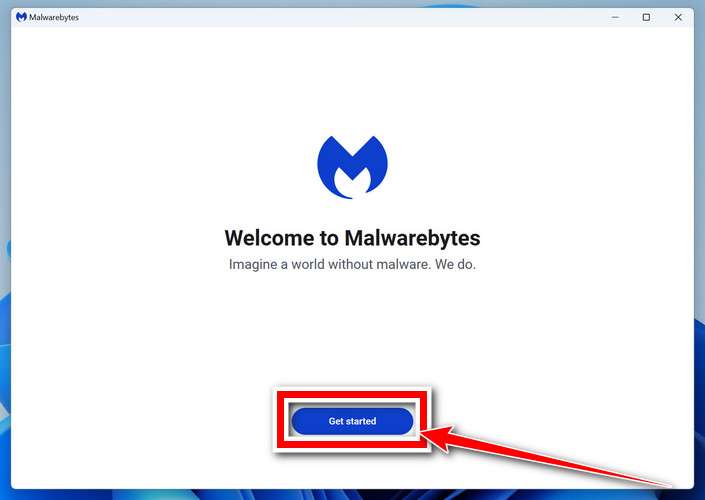
When installation is complete, the “Welcome to Malwarebytes” screen will open automatically.
-
On the final screen, click Open Malwarebytes to launch the program.

-
Enable “Scan for Rootkits”
Before scanning, turn on rootkit detection so Malwarebytes can find even the most hidden threats. Click the Settings gear icon on the left side of the screen.
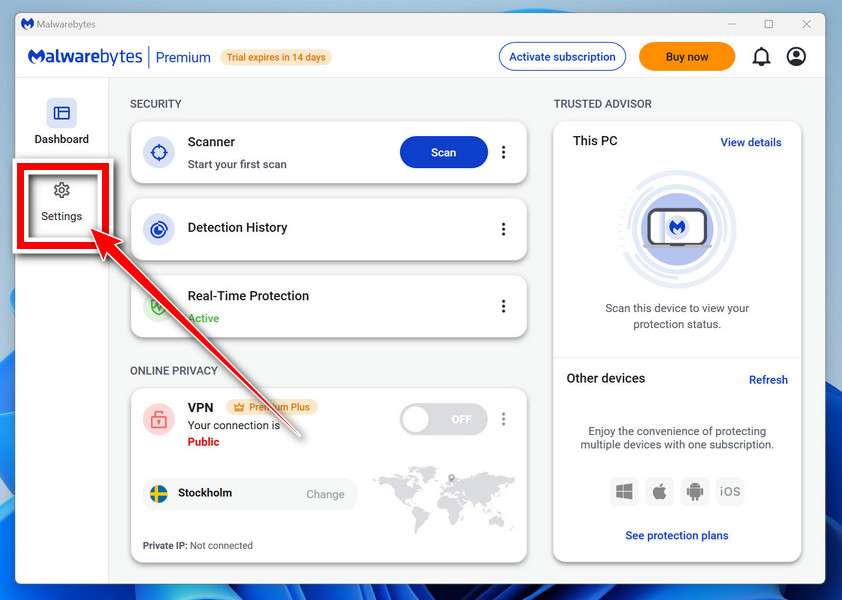
In the settings menu, find “Scan for rootkits” and click the toggle so it turns blue.

Done? Click “Dashboard” in the left pane to return to the main screen.
Start the Scan
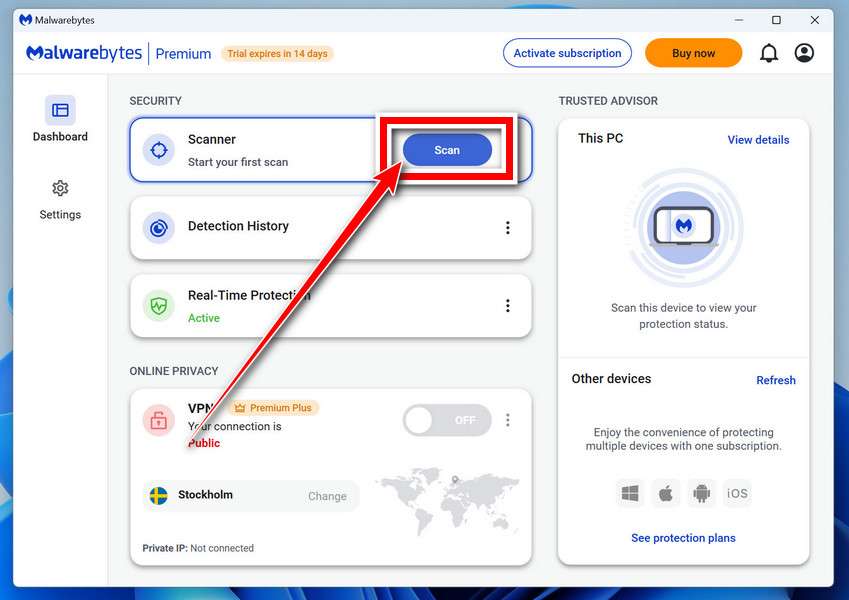
Click the blue Scan button. Malwarebytes will automatically update its virus database and start checking your computer for malware.
-
Wait for the Scan to Finish
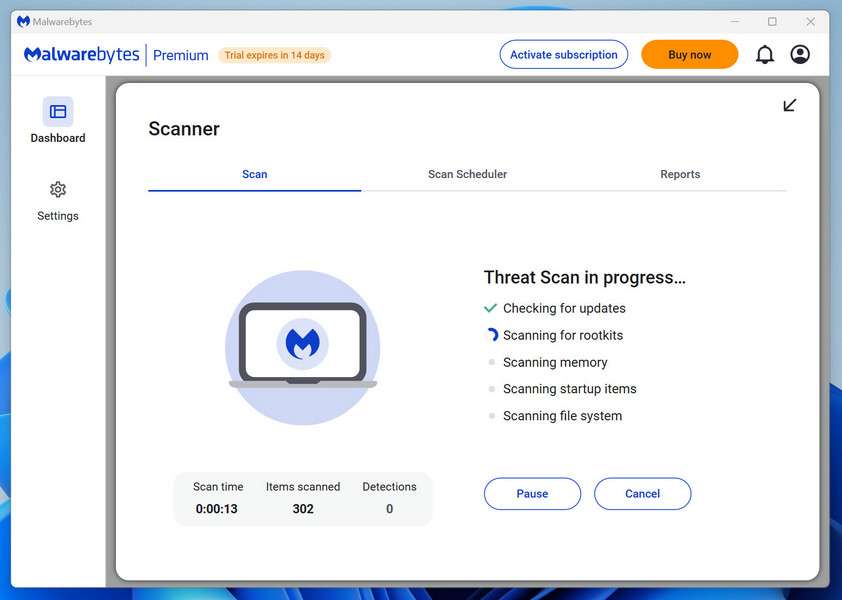
The scan checks your entire system for browser hijackers and other malicious programs, so it can take 5 to 20 minutes depending on your computer. Feel free to do something else — just check back occasionally to see the progress.
-
Quarantine the Detected Threats
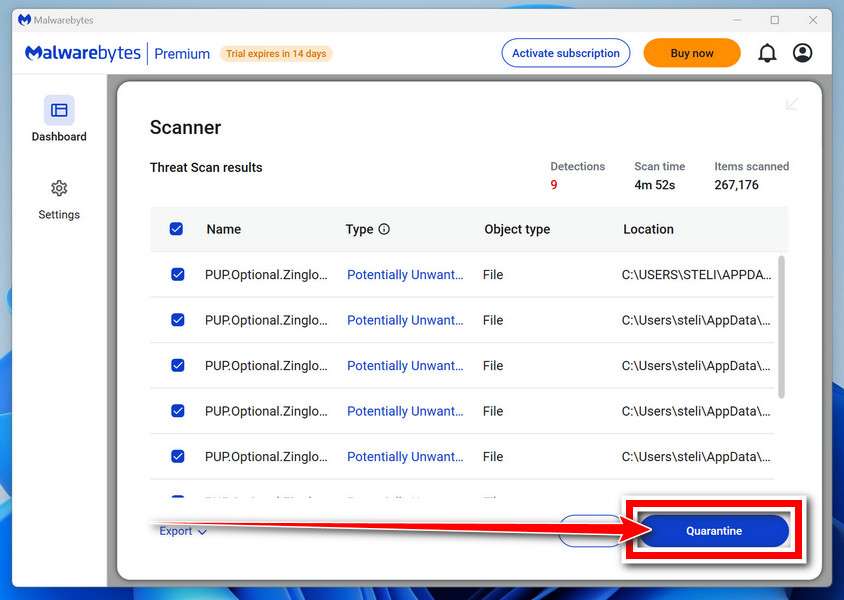
When the scan is done, you’ll see a list of everything Malwarebytes found — malware, adware, and potentially unwanted programs. Click the “Quarantine” button to remove all of them at once.
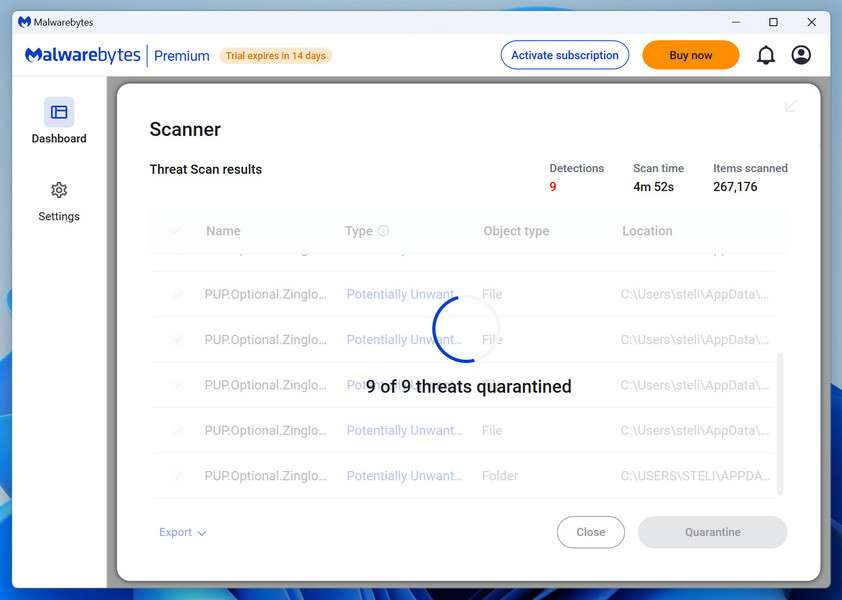
Malwarebytes will now remove the malicious files and registry entries and move them safely into quarantine.
-
Restart Your Computer
Some threats can only be fully removed after a reboot. If Malwarebytes asks you to restart, click Yes. Once you’re logged back in, Malwarebytes has finished removing the threats it found.
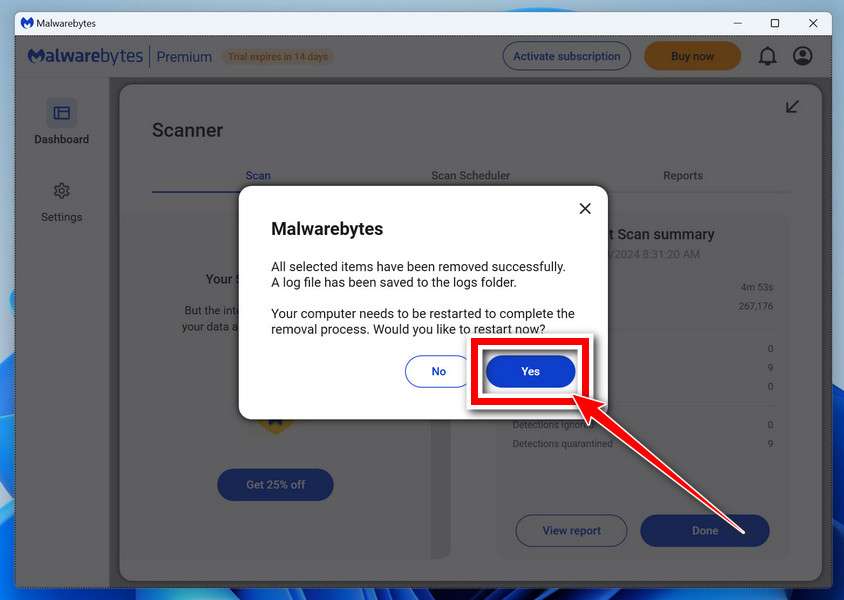
That’s it — your Windows PC is now clean of trojans, adware, and other malware, and should be back to running smoothly.
If you are still having problems with your computer after completing these instructions, then please follow one of the steps:
- Run a computer scan with ESET Online Scanner
- Ask for help in our Windows Malware Removal Help & Support forum.
Run a Malware Scan with Malwarebytes for Mac
Malwarebytes for Mac is a free on-demand scanner that removes the malware other security software tends to miss — adware, browser hijackers, and unwanted programs included. Cleaning an infected Mac with Malwarebytes has always been completely free, and it’s our go-to recommendation. Follow the steps below to scan and clean your Mac in just a few minutes.
-
Download Malwarebytes for Mac
Click the button below to download the latest version of Malwarebytes for Mac.
Download MalwarebytesOfficial installer for macOS. Your download starts right away.Want real-time protection? See Malwarebytes PremiumMalwarebytes Free for MacScans and removes malware at no cost -
Open the Malwarebytes setup file
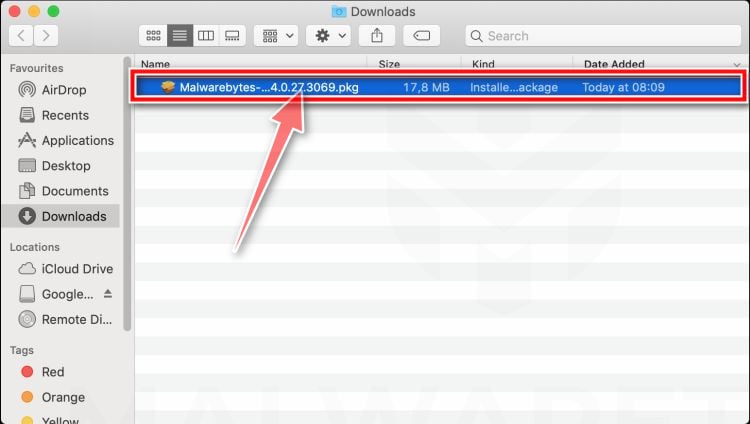
When the download finishes, open your Downloads folder and double-click the setup file to begin the installation.
-
Follow the On-Screen Prompts to Install Malwarebytes
The Malwarebytes for Mac Installer will guide you through a few quick screens. Click “Continue” and keep following the prompts until the installation completes.
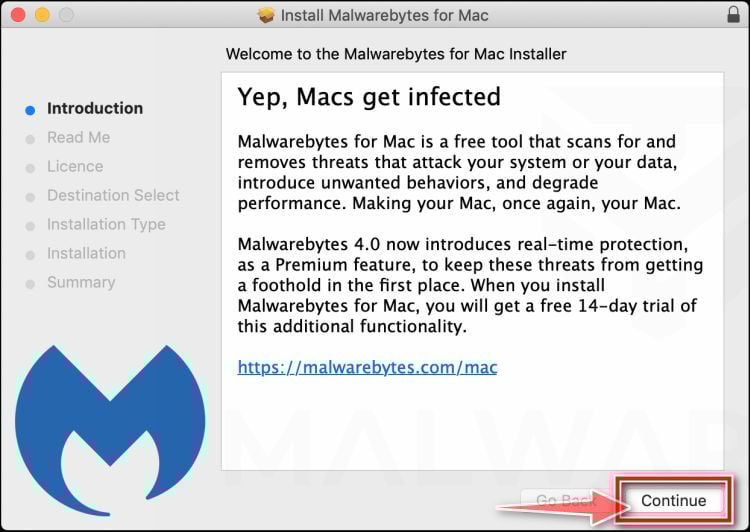
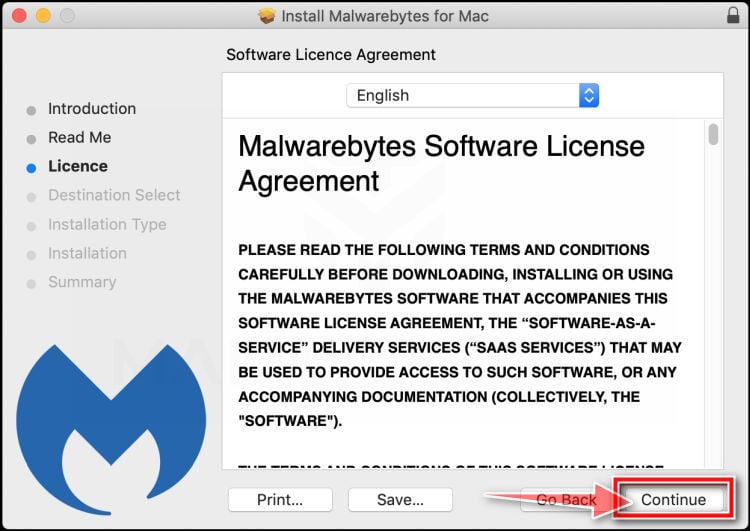
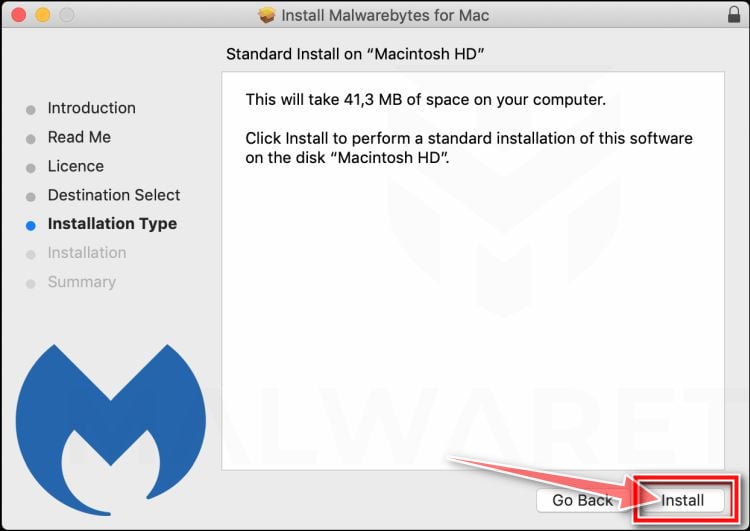
When the installation is complete, Malwarebytes opens to the Welcome to Malwarebytes screen. Click “Get started“.
-
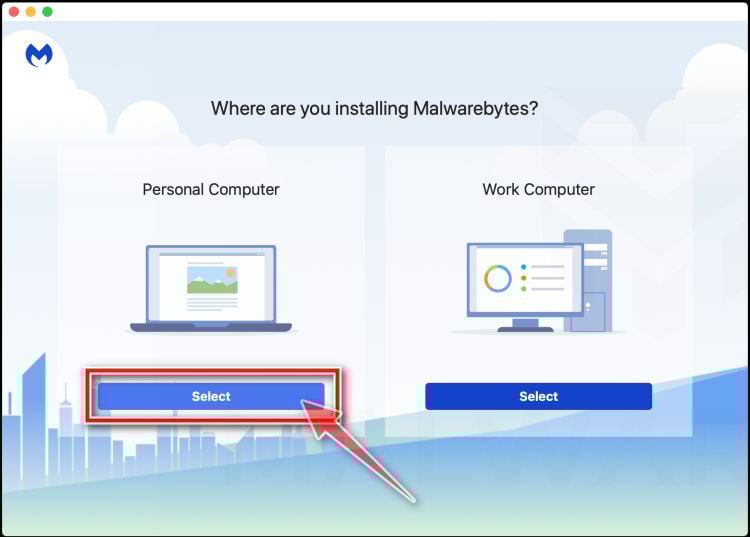
Select “Personal Computer” or “Work Computer”
Malwarebytes will ask what type of computer you’re installing it on. Click either Personal Computer or Work Computer, whichever applies.
-
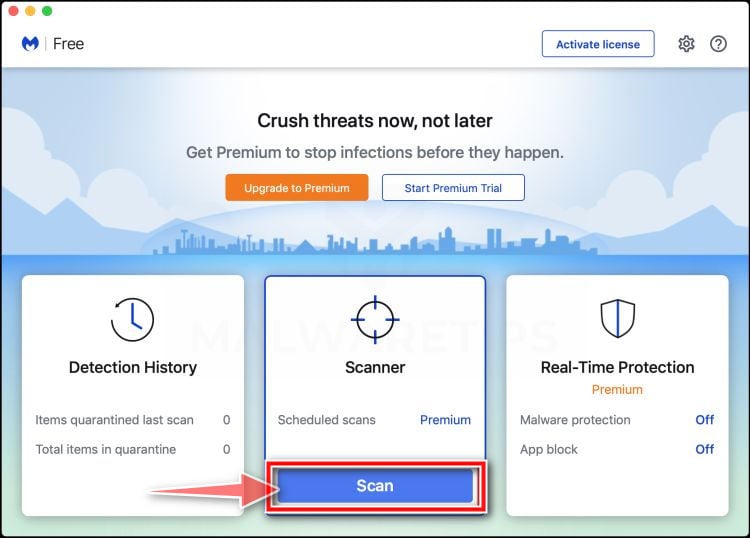
Start the Scan
Click the “Scan” button. Malwarebytes will automatically update its detection database and begin checking your Mac for malware.
-
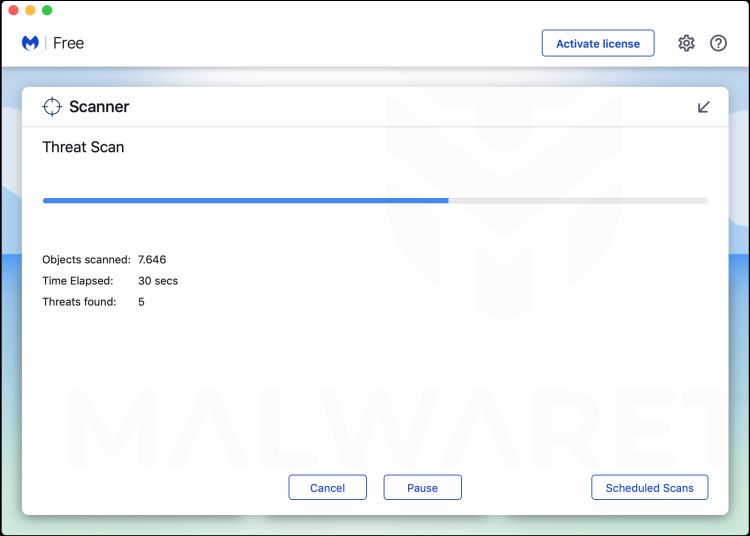
Wait for the Scan to Finish
Malwarebytes will scan your Mac for adware, browser hijackers, and other malicious programs. This can take a few minutes, so feel free to do something else — just check back occasionally to see the progress.
-
Quarantine the Detected Threats
When the scan is done, you’ll see a list of everything Malwarebytes found. Click the “Quarantine” button to remove all the threats at once.
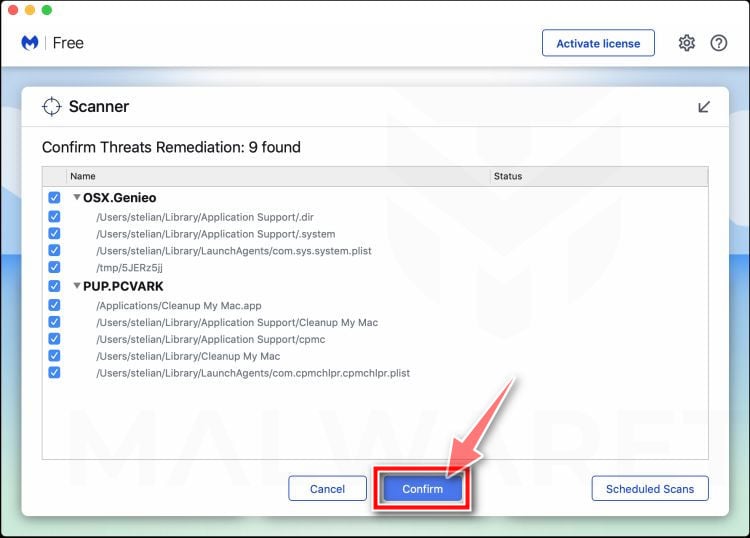
-
Restart Your Mac
Malwarebytes will now remove all the malicious files it found. Some threats can only be fully removed after a reboot — if Malwarebytes asks you to restart, allow it. Once you’re logged back in, your Mac is clean.
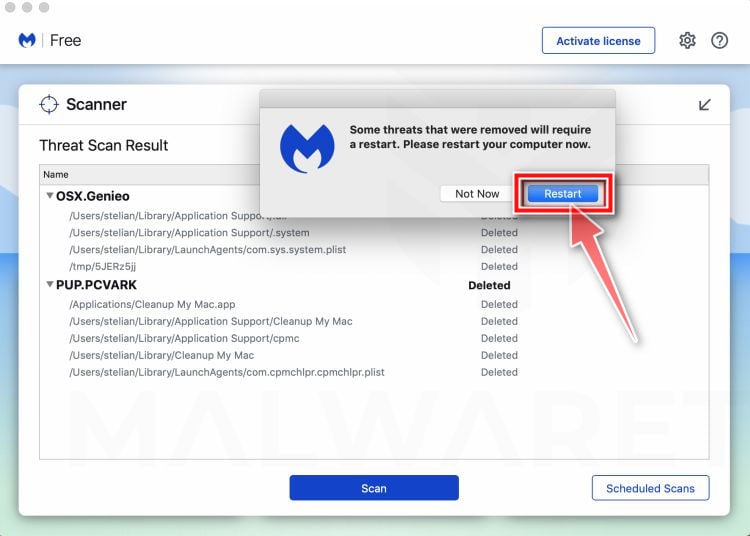
That’s it — your Mac is now free of adware, rogue browser extensions, and other potentially harmful software.
If you are still experiencing problems while trying to remove a malicious program from your computer, please ask for help in our Mac Malware Removal Help & Support forum.
Run a Malware Scan with Malwarebytes for Android
Malwarebytes for Android automatically detects and removes dangerous threats like malware and ransomware so you don’t have to worry about your most-used device being compromised. Aggressive detection of adware and potentially unwanted programs keeps your Android phone or tablet running smooth.
-
Download Malwarebytes for Android.
You can download Malwarebytes for Android by clicking the link below.
Get Malwarebytes for AndroidOpens Google Play in a new tab.Want real-time protection? See Malwarebytes Premium for AndroidMalwarebytes for AndroidScans your phone and removes malware at no cost -
Install Malwarebytes for Android on your phone.
In the Google Play Store, tap “Install” to install Malwarebytes for Android on your device.

When the installation process has finished, tap “Open” to begin using Malwarebytes for Android. You can also open Malwarebytes by tapping on its icon in your phone menu or home screen.

-
Follow the on-screen prompts to complete the setup process
When Malwarebytes will open, you will see the Malwarebytes Setup Wizard which will guide you through a series of permissions and other setup options.
This is the first of two screens that explain the difference between the Premium and Free versions. Swipe this screen to continue.
Tap on “Got it” to proceed to the next step.
Malwarebytes for Android will now ask for a set of permissions that are required to scan your device and protect it from malware. Tap on “Give permission” to continue.
Tap on “Allow” to permit Malwarebytes to access the files on your phone.
-
Update database and run a scan with Malwarebytes for Android
You will now be prompted to update the Malwarebytes database and run a full system scan.

Click on “Update database” to update the Malwarebytes for Android definitions to the latest version, then click on “Run full scan” to perform a system scan.

-
Wait for the Malwarebytes scan to complete.
Malwarebytes will now start scanning your phone for adware and other malicious apps. This process can take a few minutes, so we suggest you do something else and periodically check on the status of the scan to see when it is finished.

-
Click on “Remove Selected”.
When the scan has been completed, you will be presented with a screen showing the malware infections that Malwarebytes for Android has detected. To remove the malicious apps that Malwarebytes has found, tap on the “Remove Selected” button.

-
Restart your phone.
Malwarebytes for Android will now remove all the malicious apps that it has found. To complete the malware removal process, Malwarebytes may ask you to restart your device.
That’s it — your Android phone is now clean — no more malicious apps, adware, or browser redirects.
If you are still having problems with your phone after completing these instructions, then please follow one of the steps:
- Restore your phone to factory settings by going to Settings > General management > Reset > Factory data reset.
- Ask for help in our Mobile Malware Removal Help & Support forum.
Stay Protected: Block Ads and Malicious Sites
Now that your device is clean, keep it that way. Most infections start with a malicious ad or a fake download button — so blocking them at the source is your best defense.
We recommend AdGuard, which blocks malicious ads, phishing pages, and dangerous redirects before they can reach you.
👉 Download AdGuard and browse safely
How to Verify an Emotional Facebook Post
Start with the claim. Ask what specific action supposedly helps and who provides the money. If the explanation is only “Facebook pays for every share,” the claim is false.
Search the page name outside Facebook and examine its About information. A real charity should have a verifiable website, physical or registered presence, consistent contact details, and a documented program connected to the story.
Use a reverse-image search to find older copies of the photograph. A picture that appeared years earlier with another name, country, or diagnosis is strong evidence that the current caption is fabricated.
Look for a genuine fundraising link hosted by the organization or a recognized platform. Confirm the beneficiary and organizer independently rather than relying on a link in the viral post.
Check reputable fact-checking organizations and local news sources. PolitiFact has confirmed that Facebook does not donate money based on the number of shares a photo receives.
Examine the page’s history. Sudden name changes, unrelated topics, repetitive emotional posts, recently created accounts, and large audiences with little organizational information are all reasons to avoid engaging.
Common Questions About “Type Amen” Posts
Does Facebook donate money when I type Amen or share?
No. Ordinary comments, reactions, and shares do not cause Facebook to donate money to the person or animal shown. Legitimate fundraising uses a transparent donation mechanism, not a magic engagement count.
Are all prayer posts scams?
No. People can sincerely ask friends for prayers or support. Warning signs include false donation claims, guilt-based commands, stolen images, unverifiable emergencies, and pages that repeatedly exploit unrelated tragedies.
Can someone hack me just because I commented?
A comment alone does not reveal your password. It can expose your public profile to the page operator, increase the post’s reach, and lead to targeted friend requests, replies, or phishing messages.
Why do scammers want comments instead of money immediately?
Attention is valuable. A page with a large active audience can distribute ads, scams, and links more effectively, appear trustworthy, or be sold to another operator.
Should I comment “scam” to warn others?
Commenting may still increase the post’s engagement. Report it, remove your interaction, and warn friends through a separate message or original post that does not link people back into the engagement trap.
The Bottom Line
“Type Amen” posts turn compassion, faith, and guilt into free distribution. Your comment does not rescue the subject or trigger a donation; it helps the page become more visible and valuable.
Pause before engaging, verify the image and organization, and report deceptive content. If the post led you to a login page, payment form, or download, secure your account and device immediately.








