


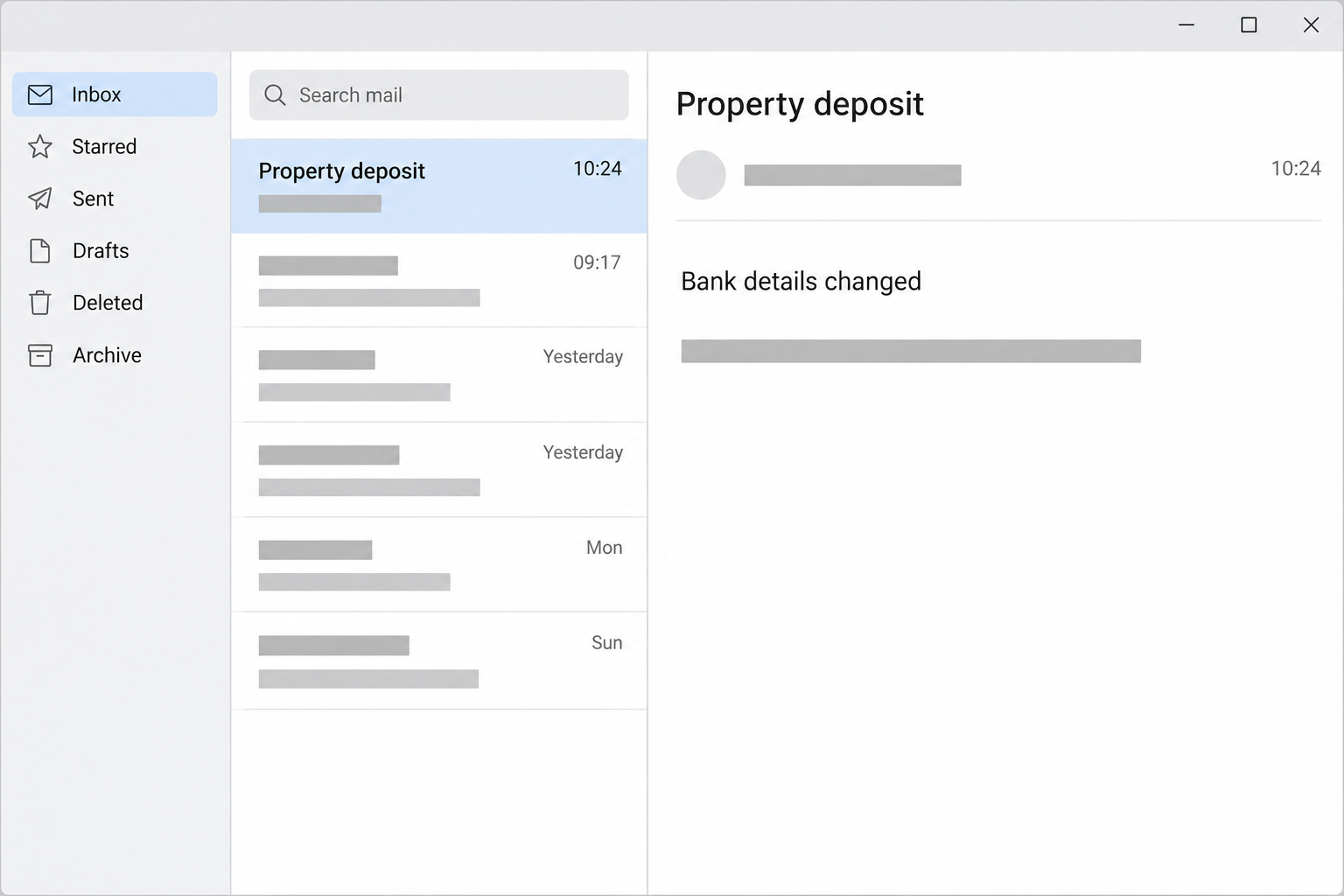
Your solicitor has been emailing about the deposit. Just before you’re due to send it, another message arrives with a different set of bank details.
The amount and property are right, and the sender seems to know where things stand. What you do next shouldn’t depend on whether the message looks familiar.
Overview
The payment is expected, but the recipient isn’t
A UK conveyancing scam can redirect money you already intended to send for a property purchase. The fake instruction borrows the timing and language of the real transaction.
Sometimes the request arrives just before exchange or completion. The nickname Friday afternoon fraud describes that familiar pressure point, not a rule about when the fraud can happen.
The Guardian reported a case in which a homebuyer sent £300,000 to the wrong account. That was the purchase price in one reported case, not a typical loss estimate.
The risk is not limited to forged invoices. An email in a thread you recognize can still contain instructions that nobody at the real firm approved.
One regulator alert makes the mismatch concrete
The Solicitors Regulation Authority documented emails using the name of Harrison Drury & Co Ltd and those of genuine professionals at the firm.
The emails concerned a conveyancing transaction and asked the reader to send deposit money in multiple payments. The regulator said the genuine firm and professionals had no connection to them.
The alert documents a false instruction, not the loss of a particular amount. Keep that case separate from the £300,000 example reported by the Guardian.
The outward signs can line up because the copied details belong to real people. The missing fact is whether your real solicitor gave you this instruction.
Verify these three things before releasing money
- Verify the request with the firm through an established contact that the new email did not supply.
- Confirm the full account details and the exact payment purpose with the real solicitor or an authorized colleague.
- Check what the bank shows about the payee, and stop if any detail remains unresolved.
It’s worth making these checks before you’re under a deadline. On completion day, you want to know whom to contact without searching through the latest thread for a number.
How the UK Conveyancing Scam Works
Step 1: A request arrives just when you expect to hear about money
A purchase brings several instructions close together: deposit, fees, completion funds, and sometimes correspondence about a mortgage. An early payment request may seem like part of that process.
You might receive it in a genuine-looking conversation with the solicitor’s name, file reference, and correct property address. Those details aren’t reliable authentication on their own.
It’s possible for a scam to use a copied address without anyone accessing your mailbox. It’s also possible for an existing thread to be misused.
You don’t have to identify the exact source of the information before taking action. Verify the instruction with the firm away from that conversation.
Step 2: The email gives a reason not to use the details you already have
A message may claim that the firm’s usual account can’t receive the transfer or that a different department is handling your payment. It may make the change sound routine.
Don’t confirm the change by replying to the message. A reply may reach the same person who supplied the new instructions.
Sometimes the email gives a number to call for verification. Use your established number for the firm rather than the one the new message provides.
Check the request with somebody who can confirm the account on behalf of the firm. Switchboard recognition of a person’s name isn’t confirmation of a payment instruction.
Step 3: Pressure makes an irregular payment feel like progress
The caller might say that completion will be delayed unless you transfer quickly. They may ask you to divide the payment so it appears easier to make.
Tell your real solicitor what changed and how much was requested. A request to make several payments deserves the same independent verification as one instruction for the whole balance.
If your bank shows an account name mismatch or can’t check the name, don’t dismiss it. Find out what the bank saw and talk to your solicitor.
Even a match on the name only checks the details the bank was given. It doesn’t tell you whether the solicitor asked you to send this particular payment.
Step 4: The receipt shows a transfer, but the solicitor hasn’t been paid
A transfer confirmation means the bank processed or accepted a payment instruction. It doesn’t mean the intended solicitor received the money.
You may find out when the genuine firm asks why funds haven’t arrived. Call your bank immediately and explain the circumstances before attempting a second payment.
The firm still needs to know you may not be able to complete as planned. Ask what the position is and what it needs while the bank investigates.
Keep communications about the property and recovery of the money separate. Solving the legal deadline and addressing the fraudulent payment may involve different people.
Build a Payment Check Before Exchange or Completion
Agree how you will verify instructions with your solicitor
Ask how the firm provides its payment details and which phone number you should use if something changes. Establish that route before the bank transfer is due.
If you use a secure client portal, reach it the same way you normally do. Don’t follow a link sent in the message that claims your payment has changed.
The National Crime Agency’s guidance recommends verifying changes directly, particularly when someone is asking you to pay a solicitor or other supplier.
If your usual adviser is away, ask for a colleague through the firm’s established contact. Don’t rely on someone offering to stand in through an unfamiliar number.
Use your bank’s name check as a second check
Confirmation of Payee compares the recipient name you enter with details held for the destination account. It can help reveal errors, but it is not a complete authenticity check.
If the bank displays a close match, ask the solicitor to confirm the exact account name and the other details. A believable explanation in the email isn’t enough.
A name check might not be available in every payment scenario. Ask the bank what the message on your screen means rather than treating no result as a pass.
Do not test a suspicious destination with a small amount. Verify the payment instructions independently before sending anything, even a token payment.
Decide which records you will keep without sharing them widely
Store the firm’s original instructions and any changes in a place you can find later. Record the date and route through which you checked each one.
Ask for written confirmation through the genuine channel after a call if that is appropriate. Save the reference for the actual transfer once you’ve made it.
If someone in the purchase chain forwards bank details, confirm with the recipient firm. A person who relayed a message may not have checked it.
Keep complete bank details out of group conversations. You can tell others that a payment is paused without circulating the account information that caused the problem.
After a Transfer, Separate a Recall From a Reimbursement Claim
Ask the bank what steps it can take right away to recover or contain the transfer. Then ask what claim or complaint process applies.
The Payment Systems Regulator describes protections for eligible transfers between UK accounts using Faster Payments or CHAPS. It does not promise full repayment for every case.
The mandatory scheme has conditions and a standard cap. Other payment types follow different rules, and a payment can exceed what the scheme covers.
Don’t wait until the property transaction is resolved to make a bank report. The regulator says to report promptly and within the applicable window for the scheme.
If the bank declines the claim or pays less than expected, ask for its decision in writing. Read the complaints information before deciding how to challenge it.
The Financial Ombudsman Service can consider some complaints after the firm’s process. Its role is different from the police, and its involvement does not guarantee a particular outcome.
When Several People Are Paying Into the Same Purchase
Check what your side has already agreed to send
If you’re buying with someone else, confirm who is responsible for each payment and when it is due. Don’t assume the whole transfer is being handled by one person.
A relative providing part of the deposit may receive forwarded bank details without knowing where they came from. Ask them to wait until the actual solicitor has confirmed the instructions.
If the transaction involves funds from a lender, do not use a surprise email as authority to change where any money goes. Bring the instruction to your legal representative.
Watch instructions sent to both buyers and sellers
A buyer may be asked to move a deposit. A seller might discover that someone has tried to change where their solicitor will send the proceeds.
The SRA’s guidance for firms describes a case involving a false instruction presented as coming from a client. It shows the risk can run in the opposite direction.
If you’re selling, ask how the firm confirms your own destination account. Tell them promptly if an email or phone call claims you changed it when you didn’t.
Make a record people can compare without adding confusion
Share the state of the purchase with your co-buyer, including who has confirmed each instruction. Keep payment references and full bank account details in a secure place.
If two people paid because they saw different versions of an email, collect each person’s separate record. Give the bank and solicitor the timeline without combining the transfers.
When a genuine change is verified, make sure everyone uses the same confirmed instruction. Don’t allow an earlier forwarded copy to remain somebody’s only payment reference.
What to Do if You Have Fallen Victim to This Scam
Contact the bank as soon as you suspect the money went astray.
Contact the bank directly with the transaction and beneficiary details from your receipt. Ask whether the bank can recall the transfer.
Say that you authorized the transfer based on a false instruction if that is what happened. Ask how the bank will record and assess the claim.
Call the real solicitor through the contact you already use.
Ask the firm to confirm what it received and whether other clients could be affected. Tell it when you sent the money and what the message claimed.
Ask how to manage exchange or completion while the payment is investigated. Do not transfer a second amount to an address or payee you haven’t verified.
Keep the original bank instructions and the false ones.
Save the message, any attachments as evidence without reopening them, the bank receipt, and notes from the genuine firm. Keep the date and source of each item clear.
Get a bank reference and a contact at the firm for follow-up. Share full documents only through a verified channel.
Report the fraud to the relevant authorities.
Check Report Fraud’s reporting guidance in England, Wales, and Northern Ireland. In Scotland, report it directly to Police Scotland.
Tell the solicitor if an impostor used its identity. Do not post the account details or a copy of your sales contract publicly.
Check whether the suspect message exposed more than money.
If you entered a password or security code after following its link, tell the relevant provider. Secure the real account and review unfamiliar sessions or recovery changes.
If the message requested a passport or other identification, record what was sent and seek relevant guidance. Don’t give another copy to someone offering a recovery service.
Frequently Asked Questions
Is Friday afternoon fraud limited to Fridays?
No, the name refers to pressure around completion. An instruction to redirect a payment can arrive at any point in a property transaction.
Can the email be fake if the property and solicitor’s names are right?
Yes, copied transaction details do not authenticate the instruction. Contact the genuine firm through the route you set up before the email arrived.
Will a matching payee name prove the transfer is safe?
It is useful but doesn’t prove the instruction came from your solicitor. Confirm the amount, account and timing with the firm independently.
Should I pay in parts to test whether the account belongs to the firm?
Don’t send any amount until the genuine firm confirms the destination. The size of the first payment doesn’t change whether you’ve verified it.
Will the UK reimbursement rules return the full house deposit?
Not necessarily, because eligibility, payment method and limits matter. Get the bank to open the report and explain what rules apply to your transfer.
Does reporting to the police pause completion or recover the money?
No, you still need to speak to the bank and the solicitor. Ask each organization what it can do and keep their reference numbers separately.
The Bottom Line
Don’t send UK property funds to changed bank details you haven’t checked with the real solicitor. A familiar thread and an urgent completion date aren’t enough.
If you’ve transferred money, call your bank and solicitor immediately. Preserve both sets of instructions so they can see what changed and where the payment went.

Join the discussion
0 commentsShare your experience or ask a question about this article.
Community experiences
Did this happen to you?
Your experience could help someone recognize the same scam. Submit a private report for our team to review.
I experienced this tooReports are reviewed before publication. Sharing publicly is always your choice.
Discussion
Start the conversation
Have a question or something useful to share? Add the first comment.