

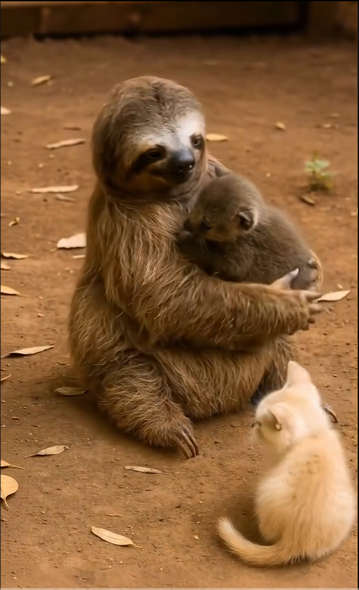
The internet has once again been swept away by a viral video that seems too cute to be real. A short clip showing a sloth gently hugging a small kitten has racked up millions of views across TikTok, Instagram, and YouTube. Captioned with heartwarming lines like “Kitten became part of the sloth’s heart,” the video has melted hearts around the world.
But as with many things online, appearances can be deceiving. Wildlife experts and digital analysts quickly noticed red flags in the video. The movements, interactions, and overall scene don’t align with real animal behavior. Instead, they point to a growing trend in online content: AI-generated videos designed for virality.
In this detailed investigation, we’ll break down the viral “sloth hugging kitten” clip, analyze why it doesn’t match reality, and explore how AI tools like Veo3 are being used to create ultra-realistic fake videos. We’ll also discuss why these kinds of clips go viral, how they manipulate emotions, and what you can do to spot the difference between real wildlife footage and digital creations.
By the end, you’ll know the truth: while the video is undeniably cute, it’s not a miracle of interspecies friendship. It’s a product of advanced editing and artificial intelligence.
The Rise of the Viral Sloth Video
How It Started
The video first gained traction when it was uploaded to several social media accounts dedicated to “cute animal content.” Pages like Entertainment Facts shared the clip with captions designed to pull at heartstrings. Within days, it spread like wildfire, being reposted thousands of times.
Audiences loved the idea of a slow, gentle sloth embracing a vulnerable kitten. The contrast between the two animals seemed almost symbolic—one from the rainforest canopy, the other a common household pet, united in an unlikely moment of affection.
Why It Went Viral
The video tapped into the psychology of virality. Humans are hardwired to share content that evokes strong emotions, especially joy, surprise, or awe. Studies on social media behavior confirm that videos involving cute animals consistently rank among the most shared.
In this case, the imagery of a sloth—a symbol of patience and tranquility—hugging a kitten—an icon of innocence and vulnerability—was almost guaranteed to go viral. But the question remained: was it genuine?
Analyzing the Sloth’s Behavior
Sloths Are Not Built for Hugs
Sloths are fascinating creatures, native to Central and South America. They spend most of their lives hanging upside down in trees, using their long, curved claws to grip branches. These claws are perfectly adapted for climbing, not for wrapping around and cuddling animals.
The viral video shows the sloth gently cradling the kitten as if it were a human giving a hug. This is highly unlikely in reality. A real sloth attempting this kind of motion would struggle due to its anatomy. The claws would make precise, careful hugging movements nearly impossible.
Speed of Movement
One of the biggest giveaways in the video is how fast the sloth moves. In the wild, sloths are famously slow. On average, they move at about 0.24 kilometers per hour. Their sluggishness is a survival strategy, helping them conserve energy and avoid detection by predators.
In the viral clip, however, the sloth’s movements are far quicker and more fluid than nature allows. This discrepancy strongly suggests digital manipulation.
Social Behavior of Sloths
Sloths are solitary animals. They rarely interact closely with other sloths, let alone entirely different species like cats. While some captive sloths may tolerate human handling, the idea of a sloth voluntarily hugging a kitten is far outside normal behavior.
The Kitten’s Role in the Clip
Lack of Realistic Interaction
If you watch closely, the kitten in the video appears surprisingly calm. Real kittens are naturally curious and fidgety. Being held tightly by a large, unfamiliar animal would likely make them squirm, hiss, or try to escape.
Instead, the kitten in the clip sits perfectly still, as if scripted. This is another clue that the footage was artificially generated.
Lighting and Shadows
Some digital analysts have pointed out inconsistencies in the lighting and shadows around the kitten. The way the light falls doesn’t always align with the environment, suggesting compositing or AI generation.
AI Tools Behind the Video
Veo3 and Advanced Generative AI
Experts believe that the viral video was created using tools like Veo3, one of the latest AI video generators. Veo3 and similar platforms can produce hyper-realistic footage by blending real footage with AI-created animations.
These tools allow creators to design scenarios that would be impossible in reality—like a sloth cuddling a kitten—while making them look seamless to the casual viewer.
Why Creators Make These Videos
The motivation behind such creations is simple: attention. Viral videos generate enormous engagement, which translates into advertising revenue, followers, and influence. By using AI to create content that taps into emotions, creators can reach millions without needing access to real animals or elaborate filming setups.
Red Flags That the Video is Fake
- Unnatural Speed of Movement – The sloth moves faster than any real sloth would.
- Hugging Motion – Anatomically improbable for a sloth due to its claws and shoulder structure.
- Kitten’s Calmness – Unrealistic reaction for a real kitten being held by another species.
- Lighting Inconsistencies – Shadows and highlights don’t perfectly match the environment.
- No Original Source – Despite its virality, no credible wildlife source has verified the video.
Why Fake Animal Videos Go Viral
Emotional Manipulation
Cute animal videos are some of the most effective forms of viral content. When people see animals interacting in heartwarming ways, it triggers dopamine release in the brain. This makes viewers more likely to share, comment, and engage.
Believability Factor
While experts can spot the red flags, most casual viewers don’t analyze videos frame by frame. To the average person scrolling through social media, the clip looks believable enough to pass as real.
Algorithmic Boost
Platforms like TikTok and Instagram prioritize content that sparks engagement. Once a few people liked and shared the sloth video, algorithms amplified its reach, making it appear on millions of screens within days.
The Broader Issue: AI and Reality
Blurred Lines Between Real and Fake
The viral sloth video is part of a larger cultural shift. With AI tools becoming more accessible, the internet is filling up with synthetic content. While some of it is harmless fun, it raises serious questions about trust and authenticity.
Risks of AI-Generated Wildlife Videos
- Misinformation – People may believe false information about animal behavior.
- Exploitation – Creators profit from fake content without giving credit to real wildlife.
- Desensitization – Constant exposure to fake animal interactions can make viewers less able to appreciate genuine wildlife footage.
How to Spot Fake Animal Videos
- Check Movement Speeds – Real animals move within certain limits.
- Look for Shadow Inconsistencies – Misaligned lighting often reveals editing.
- Question Unusual Interactions – Rare animal friendships do exist, but extreme cases are often staged.
- Search for Credible Sources – Genuine wildlife clips are usually credited to sanctuaries, zoos, or researchers.
- Reverse Image Search – This can reveal whether a video has been posted on AI or stock footage sites.
The Positive Side: Why People Love the Video
Even though it’s fake, the sloth hugging kitten video demonstrates the universal desire for kindness and connection. It highlights how deeply people crave images of peace, love, and cross-species harmony.
In that sense, while the clip is artificial, the emotions it evokes are real. This duality explains why millions are drawn to it, even after learning the truth.
The Negative Side: Why Fake Content Matters
On the other hand, there are dangers to normalizing fake animal videos. They can spread misinformation, diminish respect for real animals, and encourage unrealistic expectations about wildlife. In extreme cases, people might even attempt to stage dangerous interactions between pets and wild animals, thinking it’s cute.
Conclusion: Cute but Fake
The viral video of a sloth hugging a kitten may be adorable, but it’s not real. Created with advanced AI tools like Veo3, the clip blends fantasy with reality in a way that’s convincing to millions of viewers.
While it’s fine to enjoy such videos for entertainment, it’s essential to approach them with skepticism. By understanding how AI content is made and learning to spot red flags, you can better navigate the online world where truth and fiction often blur.
The bottom line: this is not a rare wildlife miracle—it’s a digital creation. Enjoy the cuteness, but know that you’re watching pixels, not an actual animal friendship.

Join the discussion
0 commentsShare your experience or ask a question about this article.
Discussion
Start the conversation
Have a question or something useful to share? Add the first comment.