

If you’ve been scrolling through TikTok or Instagram lately, you’ve likely come across shocking claims about ice cream trucks in Virginia being linked to missing children. Viral videos with ominous captions, dramatic music, and shaky nighttime footage have racked up millions of views. They allege that dozens—sometimes hundreds—of children have mysteriously disappeared, with “suspicious ice cream trucks” operating late at night somehow involved.
The idea is terrifying. After all, ice cream trucks are normally associated with childhood joy, not sinister plots. But is there any truth to these claims? Have Virginia police uncovered a mass kidnapping operation involving late-night ice cream vendors, or is this yet another example of social media misinformation spiraling out of control?
In this article, we will break down the facts, examine what Virginia State Police have actually said, and uncover how social media creators amplified a rumor into a viral panic. By the end, you’ll understand why the so-called “Virginia missing children ice cream truck” is nothing more than a viral hoax—and how to separate fact from fear in the age of digital misinformation.
The Viral Origins of the Ice Cream Truck Rumor
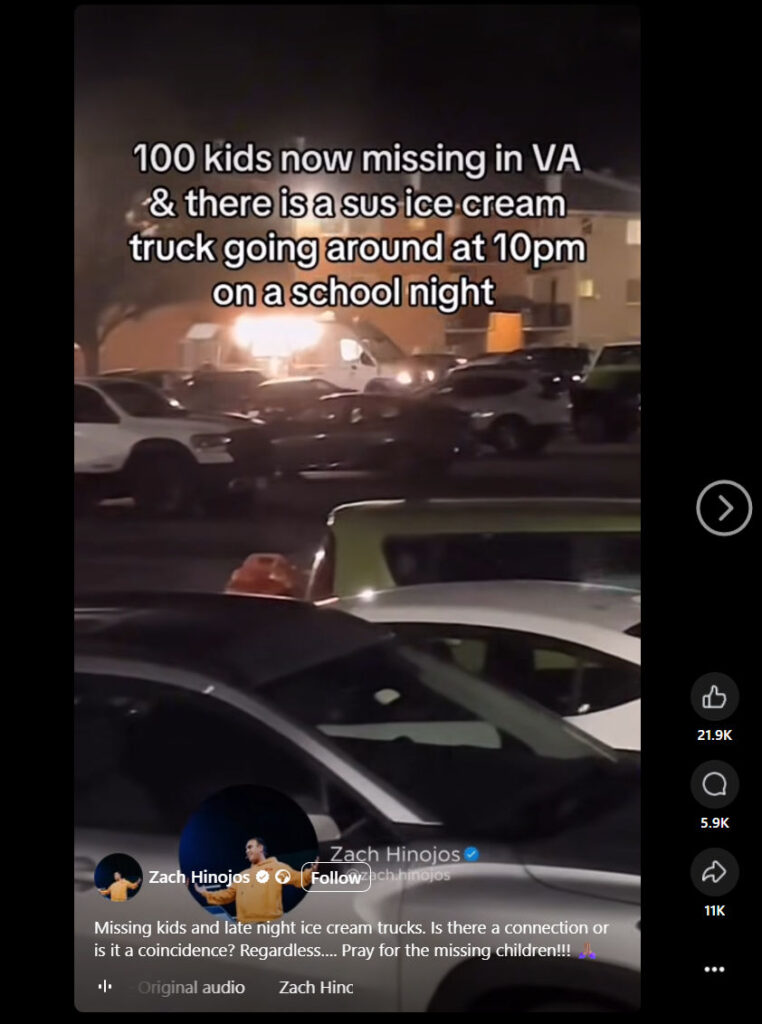
The rumor didn’t come out of nowhere. It began circulating in mid-August 2025, when TikTok videos showing ice cream trucks driving late at night in Virginia started spreading. One clip featured a truck rolling through a dark street at 1:23 a.m., with text overlay asking: “ok who’s creepy idea was an ice cream truck at 1:23am?” The video gained over 196,000 likes and sparked heated debates in the comments.
Creators quickly connected this imagery to ongoing concerns about missing children in Virginia. Posts appeared claiming that 100 kids were missing statewide, with captions suggesting these ice cream trucks were somehow related. Instagram accounts, Facebook posts, and even YouTube compilations started piecing together unrelated clips into a supposed pattern.
But a closer look shows that these claims were built on shaky ground.
The Problem With the Numbers: Constantly Changing Claims
One of the first red flags is the inconsistency in reported numbers. Some videos claimed 30 kids were missing, others said 80, and some stretched it to 100 or more. Real investigations don’t work like this. Official agencies keep precise counts of missing persons, and those numbers don’t fluctuate based on who posts a video.
Virginia State Police later confirmed that between August 3 and August 9, 2025, there were 88 reports of missing children in the state. However, that number was actually lower than the weekly average of 98. Most importantly, as of August 20, only eight children remained missing—most of whom were classified as runaways.
The dramatic claim of “100 kids now missing in Virginia” was not just exaggerated, it was demonstrably false.
What Virginia State Police Actually Said
Virginia State Police (VSP) directly addressed the rumors in a statement. They made three key clarifications:
- No Evidence of Mass Abductions
VSP confirmed there is no evidence of a mass abduction event in Virginia. The number of reported missing children was within the normal range, and the majority of cases involved runaways. - Why Virginia’s Numbers Look Higher
Unlike many states, Virginia automatically forwards every missing child case—including voluntary runaways—to the National Center for Missing and Exploited Children (NCMEC). This makes Virginia appear to have disproportionately high numbers compared to other states, even when the reality is routine. - Amber Alert Criteria Were Not Met
Amber Alerts are only issued when strict criteria are met, including verified evidence that a child has been abducted and is in imminent danger. No such cases were linked to ice cream trucks or mass kidnappings during this period.
In short: there was no connection between ice cream trucks and missing children.
Why Ice Cream Trucks at Night Spark Fear
Part of the reason this story gained traction is that ice cream trucks operating late at night seem inherently suspicious. Normally, they’re associated with daylight hours and neighborhood streets buzzing with kids. Seeing one at 10 p.m. or 1 a.m. naturally feels out of place.
Creators capitalized on this unease. Videos often showed trucks with tinted windows, no menus, or unlit signage—all meant to suggest something sinister. In reality, there are plenty of mundane reasons for trucks to be out late at night:
- Restocking supplies after a day of vending.
- Driving back to a storage facility or commissary.
- Side jobs or rental use, as many ice cream trucks double as generic food trucks.
- Content creators staging scenes to generate viral content.
Without context, late-night footage of an ice cream truck can look suspicious. But that doesn’t mean it’s evidence of a crime.
The Role of Social Media in Amplifying Panic
This is not the first time social media has amplified baseless fears. Platforms like TikTok and Instagram reward content that shocks, scares, or enrages audiences. Algorithms push viral content further, creating the illusion of widespread truth.
Several factors contributed to the wildfire spread of this rumor:
- Dramatic visuals: Dark streets, flashing truck lights, and ominous music set a horror-like tone.
- Unverified statistics: Throwing out numbers like “100 missing kids” without sources creates urgency.
- Celebrity amplification: Even public figures like Chris Brown, a singer from Tappahannock, Virginia, shared posts questioning the situation.
- Echo chamber effect: Each new video referenced the others, reinforcing the false connection.
The result was a digital snowball—what began as a single creepy video became a supposed statewide conspiracy.
Breaking Down the Hoax
Let’s examine how this hoax unfolded in stages:
Step 1: Suspicious Footage
A TikTok showing a late-night ice cream truck goes viral. The strange timing (1:23 a.m.) triggers speculation.
Step 2: Connection to Missing Children
Creators overlay captions about “30 kids missing in Virginia.” Viewers link two unrelated facts.
Step 3: Exaggeration
Numbers quickly grow from 30 to 100, despite no official confirmation. Fear spreads faster than fact-checks.
Step 4: Celebrity Amplification
Chris Brown and other influencers repost the rumors, giving them credibility.
Step 5: Viral Panic
Comment sections flood with warnings, parents panic, and news outlets begin covering the hysteria.
Step 6: Police Clarification
Virginia State Police issue statements debunking the rumors. However, corrections rarely spread as fast as the initial fear.
Why People Believe Viral Hoaxes
Psychologists point to several reasons why such hoaxes take root:
- Fear of child abduction is a deeply emotional trigger for parents.
- Visual evidence (videos of trucks) feels more convincing than statistics.
- Authority figures or celebrities repeating the rumor lend false credibility.
- The missing information effect: When people don’t know why something odd (like a truck at night) is happening, they fill in the blanks with worst-case scenarios.
- Confirmation bias: People already worried about safety are more likely to accept alarming claims without questioning them.
Real Statistics on Missing Children in Virginia
To put things in perspective:
- In 2025, Virginia averaged about 98 missing children reports per week.
- The majority are runaways who return within days.
- Cases of stranger abductions are extremely rare.
- Amber Alerts are issued sparingly, only when criteria are met.
According to the NCMEC, most missing child cases nationwide involve custody disputes or runaways, not kidnappings by strangers. The viral claim of a “mass abduction wave” simply doesn’t align with reality.
Snopes and Other Fact-Checks Weigh In
Fact-checking organizations like Snopes reviewed the viral videos and confirmed many were misleading. Some clips were taken out of context, while others exaggerated or fabricated details. Snopes reported that no evidence links ice cream trucks to child abductions in Virginia, and official police statements back that up.
Lessons Learned: How to Spot a Viral Hoax
This case offers important lessons for digital literacy:
- Check official sources first: Police, Amber Alerts, and NCMEC are reliable.
- Be skeptical of changing numbers: If one post says 30 and another says 100, something’s off.
- Look for context: A late-night truck isn’t automatically a crime scene.
- Remember the algorithm: Viral doesn’t mean true.
What To Do If You’re Concerned About Safety
Even though this story is a hoax, parental vigilance is always important. If you see suspicious activity:
- Report it to local police rather than posting unverified videos online.
- Stay aware of your community through official alerts.
- Educate kids about safety in public spaces.
Conclusion: Real or Fake?
The Virginia Missing Children Ice Cream Truck story is fake—a viral hoax fueled by fear, speculation, and social media amplification. While the videos are eerie, there is no evidence of mass kidnappings or any connection between ice cream trucks and missing children. Virginia State Police have explicitly confirmed this.
At its core, this is a case study in how rumors spread online: a mix of unsettling imagery, exaggerated statistics, and emotional triggers. By examining the facts, we can see through the panic and focus on real issues of child safety.
Frequently Asked Questions (FAQ) About the Virginia Missing Children Ice Cream Truck Hoax
Is the Virginia Missing Children Ice Cream Truck story real or fake?
The story is fake. Despite viral TikTok and Instagram videos claiming that ice cream trucks in Virginia are connected to a wave of missing children, Virginia State Police confirmed there is no evidence of mass abductions. The videos spreading online were based on speculation, exaggerated numbers, and misleading captions. While ice cream trucks operating late at night may look suspicious, authorities have found no link between these vehicles and missing child cases.
How many children actually went missing in Virginia during August 2025?
Between August 3 and August 9, 2025, Virginia reported 88 missing children cases. However, that number was lower than the state’s weekly average of 98 cases. Most of these were classified as runaways, and by August 20, only eight children remained missing. The claim that “100 kids disappeared overnight” was inaccurate and not supported by official data.
Why do the numbers of missing children in Virginia seem so high?
Virginia reports every missing child case—including voluntary runaways and custody disputes—to the National Center for Missing and Exploited Children (NCMEC). Most other states only forward selected cases. This reporting method makes Virginia’s numbers look disproportionately high compared to other states, but it does not mean Virginia has more kidnappings. In reality, most children reported missing are found within a few days.
Were Amber Alerts issued for these missing children?
No. Amber Alerts are only issued when strict criteria are met, including:
- Clear evidence that a child has been abducted.
- Proof the child is in imminent danger.
- Enough descriptive information about the child and suspect to help recovery efforts.
Because the majority of Virginia’s cases were runaways, Amber Alert requirements were not met, which is why no alerts were issued.
Why were ice cream trucks seen driving late at night in Virginia?
Videos showing ice cream trucks at 10 p.m. or 1 a.m. fueled much of the speculation. However, there are ordinary explanations:
- Vendors returning trucks to storage after a day’s work.
- Trucks being restocked for the next business day.
- Vehicles rented for private events or non-ice-cream purposes.
- Content creators intentionally filming trucks at odd hours to spark viral reactions.
Authorities confirmed that there is no evidence connecting these late-night trucks to child abductions.
Did celebrities or influencers spread the rumor?
Yes. The story gained extra traction when public figures like Chris Brown (a singer originally from Tappahannock, Virginia) posted about the situation on Instagram. While he expressed genuine concern, his post amplified the rumor and made many believe it had credibility. This highlights how even well-meaning influencers can unintentionally spread misinformation.
Why did the Virginia ice cream truck rumor go viral so quickly?
The hoax spread rapidly because it tapped into powerful emotional triggers:
- Fear for children’s safety – a universal concern.
- Creepy visuals – trucks at night with no menus or darkened windows.
- Exaggerated statistics – “100 kids missing” sounds urgent, even if false.
- Algorithm amplification – TikTok and Instagram reward shocking, shareable content.
- Celebrity amplification – influencers repeated the rumor, making it seem credible.
All of these factors created a “perfect storm” for a viral panic.

Reviews & discussion
0 commentsShare a firsthand experience, or ask a question.
Community reviews
Virginia Missing Children Ice Cream Truck
Moderated reader experiences, not an editorial verdict.
Start the conversation
Have a question or something useful to share? Add the first comment.