

A hot new online scam promotion exploding across social media promises an unbelievable deal – Walmart practically giving away free Shoprider mobility scooters for just $9.99. Could this viral offer really be legit?
Intrigued mobility aid seekers eager to score a coveted scooter on the cheap may be tempted to click and provide their personal details. But prudent users will want to scrutinize this deal more closely first.
As we dive deeper, it becomes evident this is an elaborately crafted fraud scheme. Let’s uncover the strategic deception tactics deployed at each stage of this scam funnel, so you can avoid getting duped by the $9.99 Walmart Shoprider scooter cons hijacking social feeds.
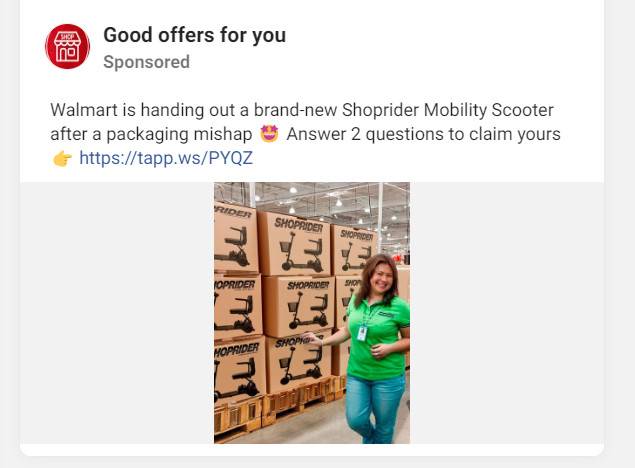
Breaking Down the Walmart Mobility Scooter Promotion Fraud Targeting Consumers
This viral scam starts with sponsored posts on Facebook, Instagram, TikTok and other platforms using Walmart branding and mobility scooter photos. The compelling ads claim Walmart is letting people get a free Shoprider mobility scooter for just $9.99 due to a supposed packaging mistake.
The ads portray this as an unbelievable deal, telling users they need to act fast before supplies of the free scooters run out. They create a sense of urgency and scarcity, enticing consumers with what seems like an amazing opportunity to score a coveted mobility aid for almost nothing.
If users click on the links within these scam social media ads, they are taken to elaborate fake websites dressed up to look like official Walmart registration portals. Here, visitors can supposedly enter to claim their free Shoprider scooter being given away in this special promotion.
The fake portal sites feature Walmart logos and colors to appear authentic. They have forms where users can submit some basic personal details to register for the contest. After entering information, visitors are shown a congratulatory message saying they have “won” a free scooter.
Next, users are prompted to provide additional personal data like name, address, email, phone number and crucially – credit card information. This is purportedly to cover the $9.99 shipping and handling costs of sending out the free mobility scooter prize.
However, unbeknownst to victims, this credit card data enables the scammers to start making unauthorized recurring subscription charges to their cards. The $9.99 shipping fee is a complete fabrication to secure payment details.
In reality, no Shoprider mobility scooters are ever shipped out. The entire giveaway is an elaborate ruse designed solely to harvest user payment information for fraudulent purposes.
Once credit card details are obtained, the foreign scammers begin auto-billing high recurring fees around $80 per month to victims’ cards. These unauthorized subscription charges can go unnoticed for some time before adding up to a large amount.
The recurring fees are made under intentionally vague descriptions to obscure the billing activity from card companies and victims. When no scooter arrives but unexpected charges show up, people realize it was all an elaborate scam.
By using trusted brands like Walmart, showcasing desirable products like mobility scooters, and claiming limited-time specialized promotions, these frauds exploit the psychology of excited users who think they are getting an amazing deal.
In particular, retirees or people with limited mobility can be more vulnerable to these mobility scooter scams, as they represent products that could greatly improve their quality of life. The scammers leverage this strong product appeal.
To avoid getting caught in this specific scam’s web, internet users should be skeptical of unbelievable free offers online and certainly avoid clicking unsolicited links in ads.
Take time to verify special promotions directly through official retailer websites and channels before providing any data. Scrutinize why legitimate retailers would give away high-value products for free or costs that seem unusually low.
Apply critical thinking when assessing deals that appear too good to be true. The old adage holds online too – if it seems too good to be true, it probably is. Maintain vigilance about sharing personal and financial details without verifying. Don’t let excitement over free offers override caution.
This scam has been also investigated by Jordan Liles on his YouTube channel, where he offers a detailed video on the subject. We recommend watching his content for a comprehensive understanding of the scam.
Next, let’s break down exactly how scammers carry out this scam from start to finish.
How the Viral $9.99 Walmart Mobility Scooter Scam Operates to Dupe Victims
The Walmart Shoprider scooter giveaway scam leverages compelling brand familiarity and an unbelievable deal to strategically manipulate and deceive users at every step. Here is how it works:
Step 1: Posting Convincing Social Media Ads
The scammers create Facebook, Instagram and TikTok ads featuring Walmart logos and mobility scooter photos. The copy talks about a special promotion, claiming Walmart wants to practically give away Shoprider scooters for $9.99 because of excess inventory from a packaging mistake. This establishes urgency and scarcity, enticing users with an unbelievable deal.
Step 2: Driving Traffic to Elaborate Fake Portal Sites
The compelling social media ads urge users to click through now before this limited-time opportunity is gone. The “Click Here” links redirect to elaborate fake portal websites dressed up to look like official Walmart registration pages. Convincing branding and imagery maintain the illusion.
Step 3: Asking Users to Complete a “Winning Survey”
On the fake Walmart portal sites, users are prompted to answer a few questions as if they are entering to win. The answers don’t matter since it’s not a real contest. This simply immerses visitors in the scam to maintain the façade.
Example Survey:
- Have you shopped at Walmart in the past year? Y/N
- Do you or anyone you know use a mobility scooter? Y/N
- Are you looking to purchase a mobility scooter? Y/N
- Would you like to win a free Shoprider scooter from this promotion? Y/N
Step 4: Collecting Personal and Payment Information
After finishing the survey, visitors are congratulated and told they have won a scooter. Now the site asks for registration details like full name, address, email, phone number and crucially – credit card information to cover the $9.99 “shipping and handling fee”. Victims believe they are just paying this nominal cost.
Step 5: Charging Recurring Monthly Fees
With credit card data secured, the scammers begin auto-billing high recurring subscription fees around $80 per month from the cards on file under vague descriptions.
Step 6: No Mobility Scooter Ships Out
As unexpected charges accrue but no scooter ever arrives, victims realize the giveaway was completely fabricated. The credit card details enable endless unauthorized billing.
Understanding the strategic scam process demonstrates that this is not a real Walmart promotion. Always verify special offers directly with official branding and retail channels. Never provide personal or payment data without going to the company website yourself first.
What To Do If You Already Fell Victim to the Viral $9.99 Walmart Mobility Scooter Scam
If you provided your information to one of these fraudulent $9.99 Walmart Shoprider scooter giveaways, take these steps right away to limit the damages:
- Contact your credit card company immediately to report unauthorized charges. Have your card cancelled and reissued to prevent further billing.
- Monitor statements closely for strange recurring fees and dispute any charges you didn’t agree to. Don’t ignore small monthly amounts.
- Change passwords on any online accounts you accessed through links in the scam ads as a security precaution.
- Freeze your credit if identity theft is suspected to block scammers from opening new lines of credit.
- Document details about the scam and report it to the FTC, IC3, social networks, Walmart and local authorities.
- Warn others about current mobility scooter cons on social platforms to prevent more victims.
- Learn to scrutinize unbelievable offers and verify directly with retailers before providing data or payment info.
Stay vigilant even if this scam caught you off guard. Reporting fraudulent charges quickly, monitoring accounts diligently, and sharing scam awareness can help limit the fallout. Don’t let excitement about mobility scooters cloud judgement when you encounter suspicious promotions online.
Frequently Asked Questions About the Viral $9.99 Walmart Shoprider Scooter Scam
1. How does the Walmart Shoprider scooter scam work?
This scam starts with Facebook/Instagram/TikTok ads using Walmart logos and scooter images, offering a $9.99 Shoprider mobility scooter due to a packaging mishap. Clicking the link goes to a fake Walmart portal site asking you to complete a “winning” survey. It then requests credit card information to cover $9.99 shipping. In reality, this enables recurring subscription billing around $80/month from foreign scammers. No scooter ever arrives – it was all a fraudulent credit card data harvesting tactic.
2. What are some red flags of the Shoprider scooter scam?
Red flags include unbelievable free offers, high-value products given away for implausibly low costs, urgent limited-time claims, and requests for personal/payment data without verifying. Real promotions don’t need your credit card just for shipping. Scrutinize why a retailer would give away expensive items for free if it doesn’t make sense.
3. What should I do if I already provided my information?
If you entered your details, contact your credit card company immediately to report fraudulent charges. Have your card cancelled/reissued to prevent further billing. Monitor statements closely and dispute any strange charges. Change passwords on accounts you accessed through scam links as a security precaution.
4. How can I avoid mobility scooter scams in the future?
Be skeptical of offers that seem too good to be true and carefully verify promotions through official retailer channels before providing info or payment access. Don’t click unsolicited links. Apply critical thinking when assessing deals, especially those involving free high-value products or implausibly low costs.
5. How should I report if I see these Walmart Shoprider scooter ads?
If you come across these scam ads, report them immediately to Walmart, FTC, social networks, IC3 and local authorities. Share scam warnings online to prevent more victims. Seek takedown of fraudulent accounts to limit reach. Document all details of the promotion for reporting.
6. Who is responsible for these fraudulent Walmart scooter ads?
These scam ads are created by unknown cybercriminals attempting to fraudulently collect user payment details. They often disguise identity and location to avoid legal consequences. Responsible platforms try to quickly remove prohibited scam content when identified. However, con artists find ways around safeguards. Stay vigilant.
7. Why does Walmart’s name get used in these giveaway scams?
Large trusted brands like Walmart have widespread name recognition, which scammers exploit to create convincing promotions that unsuspecting users will think are legitimate. But Walmart itself does not authorize these fraudulent third-party scam ads in any way. Always verify directly with official sources.
8. Are there other versions of mobility scooter scams circulating?
Yes, viral scam ads may claim other well-known retailers like Amazon or Costco are giving away scooters. Different brand names get swapped into essentially the same scam template. Exercise equal caution with unbelievable free scooter offers tied to any major retailer name without proper verification.
9. Who is likely to fall victim to mobility scooter scams?
Retirees and people with mobility limitations in genuine need of scooters are prime targets. Scammers know these demographics will find the product highly appealing. But with vigilance, anyone can avoid being duped. Think critically and verify before engaging. Don’t let strong product interest override caution about unbelievable free offers.
10. What should I do if I see a questionable scooter ad?
If you encounter any suspicious ads involving free scooters or implausible deals, don’t click anything. Note key details about the promotion and report it immediately to the featured brands, social networks, authorities and scam reporting agencies. Promoting scam awareness helps limit victimization.
The Bottom Line
The Walmart $9.99 Shoprider mobility scooter scam provides a stark lesson in the importance of critical thinking when assessing online deals that seem too good to be true. Brand familiarity and product desirability are strategically exploited to convince innocent users to hand over valuable personal and financial data.
But by scrutinizing every online promotion, verifying directly with official sources, and understanding common scam tactics, we can avoid falling victim. Don’t provide information or payment access without going to company sites yourself first. Recognize unbelievable limited-time deals as the strategic fraud funnel they are. And exercise caution sharing data to ensure your security and prevent enabling credit card theft.
Staying vigilant requires work. But preventing online scammers from exploiting excitement over outlandish promotions is absolutely worth the effort. Don’t let viral cons manipulate you – proactively protect yourself and your accounts instead.








