

A new cryptocurrency scam has emerged targeting potential investors with promises of massive returns through a pre-sale of “X Token.” This is a fraudulent scheme designed to steal money, and any mention of support from X (Twitter) or Elon Musk is completely false.
This article will provide an in-depth overview of how this scam works, advice for those who may have fallen victim, and tips to avoid falling for such crypto scams in the future.
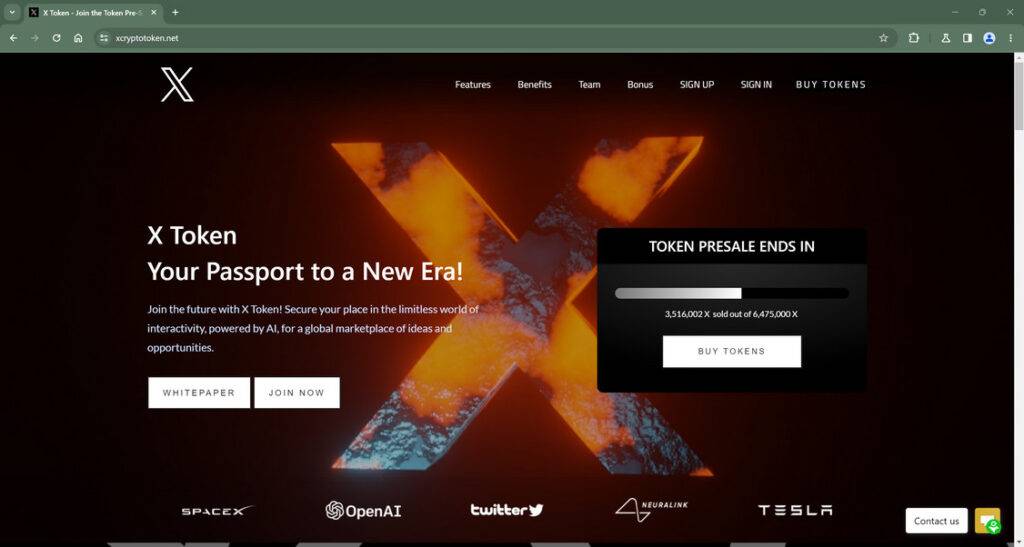
X Token Scam Overview
The X Token scam is a fraudulent cryptocurrency scheme that operates by promoting a fake pre-sale of a token called “X Token” that is falsely claimed to be associated with Elon Musk and X (Twitter).
The scammers have gone to great lengths to make their websites and promotions appear legitimate and trustworthy. They have created professional-looking websites that feature the X logo and images of Elon Musk. The sites utilize deceptive language about a limited pre-sale offer, trying to create a fear of missing out.
False claims are made that X is launching its own exclusive cryptocurrency called X Token, and early investors can purchase tokens at a low pre-sale price before the full launch on exchanges. Scammers tout the potential for massive profits once X Token takes off.
The sites use various unethical techniques to manipulate potential victims, including fake reviews, claims of endorsements by celebrities, countdown timers showing the pre-sale opportunity is expiring soon, and time-limited bonus token offers.
After victims are convinced to send payment in Bitcoin, Ethereum or Tether to the scammers, they never receive any X Tokens in return. The cyber criminals take the money and disappear. No such token or pre-sale actually exists.
To promote the scam at scale, the scammers have leveraged social media platforms like Instagram, Facebook, Twitter, and TikTok. They create fake accounts and pay for sponsored posts to spread hype and direct more traffic to their phony websites.
This cryptocurrency fraud has already resulted in major financial losses, with some victims reporting they lost their entire crypto savings. The anonymity of cryptocurrency enables the scammers to quickly withdraw funds without being tracked down.
It is important to note that neither X nor Elon Musk have endorsed or promoted any new cryptocurrency venture. The pre-sale offers are completely fabricated by scammers to deceive and steal money. Avoid sending any funds to solicitors promoting X Token, and report scam promotions to raise awareness.
How the X Token Scam Works
The X Token pre-sale scam begins with scammers utilizing techniques to spread hype and entice potential investors to their fraudulent websites. This includes:
- Creating pages on social networks like Facebook and Instagram promoting X Token as “the next big thing” in cryptocurrency. These pages utilize fake accounts, bots, and even paid ads to reach more people.
- Publishing YouTube videos filmed in a professional style discussing the potential massive growth of X Token. These help scam websites appear more legitimate when shared.
- Running giveaways, contests, and other promotions offering free X Token to generate hype. These normally require visiting scam sites or sharing posts.
- Promoting referral programs offering bonuses for bringing in new investors. This helps scammers spread their fraudulent offerings.
- Posting about X Token in cryptocurrency forums and communities to start discussion and speculation around the fake asset.
When a victim visits a X Token scam website, they are greeted with professional-looking branding including the X logo, images of Elon Musk, and a countdown timer showing limited time left in the pre-sale.
The website explains that X is releasing “X Token,” which will allow decentralized payments to be made between X owners and for other purposes. Scam websites claim X Token is being pre-sold before launching on exchanges where its value will rise significantly.
Fake terminology is used to make X Token appear to be a real and innovative cryptocurrency. Any technical details on the sites are completely fabricated with no basis in reality.
Once a victim is hooked, they are instructed to send payment in the form of Bitcoin, Ethereum, Tether, or another cryptocurrency to an address controlled by the scammers. The website claims that after sending funds, X Token will be deposited in the victim’s account on the scam website.
In reality, no X Token exist and the victim never gains access to their account on the site after sending payment. The scammers immediately withdraw any funds received to their own wallets.
Victims typically realize they have been scammed when the pre-sale time period ends, and they are unable to access their supposed X Token balance on the scam website. At this point, the scammers have normally already disappeared along with the money sent to them.
What to Do if You Have Fallen Victim to the X Token Scam
If you have fallen victim to the X Token scam and sent cryptocurrency payments, the most important thing is to not panic. Here are the steps you should immediately take:
- Contact Crypto Exchanges: If you recently purchased cryptocurrency from an exchange in order to send funds to the scam website, you may be able to work with the exchange to potentially freeze transfers. Time is of the essence to have any chance of stopping the transactions.
- Notify Your Bank: If you purchased cryptocurrency through your bank account, notify them of the situation immediately and see if there are any options available to cancel transactions. The faster you can act, the better.
- Report the Scam: File reports regarding the X Token scam with the Federal Trade Commission, CFTC, SEC, and FBI using their online reporting tools. Provide all details of how you were defrauded.
- Gather Information: Compile any evidence you have regarding the scam website, transaction IDs, wallet addresses you sent funds to, and communication with scammers. This will help law enforcement in pursuing fraudsters.
- Change Passwords: If you reused the same password on the scam site and other accounts, immediately change your passwords everywhere to protect your identity and security.
- Beware of Recovery Scams: Be on the lookout for any communication offering recovery of your lost funds for an upfront fee. These are normally follow-up scams from the same fraudsters. No legitimate company will guarantee the recovery of lost crypto funds.
- Seek Legal Counsel: Consulting an attorney specializing in cryptocurrency fraud can help assess if there are any potential routes for recovering lost funds through legal methods. An attorney can assist with reporting and investigating the scam as well.
While most victims are unable to recover funds sent to X Token scammers, promptly reporting, gathering evidence, and alerting relevant entities can potentially help law enforcement working to pursue the scammers. Seeking legal counsel is also an option that may open up recovery avenues depending on the circumstances.
Scam Prevention Tips
Avoiding falling victim to the X Token scam requires being able to identify the multiple red flags associated with the fraudulent scheme. Here are tips to help crypto investors detect and prevent scams:
- Ignore Fake Celebrity Endorsements: Scammers routinely fake endorsements from high-profile business leaders and celebrities. Verify any endorsement claims directly through official channels before believing them.
- Check for Scam Warning Signs: Use the scam red flags listed previously to immediately identify if an investment opportunity is likely a scam targeting your money.
- Research Before Investing: Take time to independently research any company and crypto asset before investing money. Search for in-depth insights from trustworthy sources not associated with the offering.
- Avoid “Get Rich Quick” Promises: Investment opportunities legitimately offering absurdly high returns do not exist. Any promise of guaranteed massive earnings in a short timeframe is a scam.
- Exercise Caution on Social Media: Much of the hype around scam cryptocurrencies originates on social networks from fake accounts and paid promotions. Don’t base investment decisions solely on trending topics.
- Use Care with Individuals and Groups: Seek crypto guidance primarily from reputable exchanges, trusted experts, and regulators – not random individuals or groups making promises.
- Protect Your Personal Information: Never provide personal or financial information to crypto-related websites or individuals that you do not know and fully trust. Phishing for data is common.
Exercising extreme caution, always verifying information, and educating yourself on common tactics fraudsters use to manipulate victims can help avoid costly scams like the X Token pre-sale scam. Being aware of major red flags like celebrity endorsements, guaranteed returns, urgency and scarcity tactics, and unsolicited offers is key.
X Token – Frequently Asked Questions
- Is X Token endorsed by X or Elon Musk?
No. X and Elon Musk have not endorsed any cryptocurrency pre-sale scheme called X Token. Any claims otherwise are completely false.
- How do the X Token scammers operate?
The scammers create fake websites claiming a X cryptocurrency pre-sale, promote through social media using bots/fake accounts, and trick victims into sending crypto payments which are stolen.
- What cryptocurrencies do the scammers ask for?
The X Token scam websites request payment in major cryptocurrencies like Bitcoin, Ethereum, and Tether so funds can be easily laundered and converted to cash.
- How can I tell if a crypto offering is a scam?
Red flags of crypto scams include celebrity endorsements, guaranteed high returns, buying urgency tactics, new websites, and requesting personal/financial information.
- What should I do if I sent money to the X Token scam website?
Immediately contact your bank/exchange, report the fraud to authorities, gather evidence, change passwords, and beware of recovery scams.
- Can I get my money back if I was scammed?
It is very rare for victims to recover lost crypto funds sent to scammers. However, promptly reporting and seeking legal counsel may open up options.
- How can I identify social media crypto scams?
Fake accounts, bots, ads, and spammy posts about “hot new” assets often indicate fraudulent schemes trying to create hype.
- Where can I report crypto and cyber fraud?
Report scams to the FTC, CFTC, SEC, FBI, and other authorities using their online reporting tools.
- Why is crypto fraud so common?
The anonymity of blockchain transactions makes it very difficult for authorities to trace and prosecute crypto scammers.
- How can I protect myself from crypto pre-sale scams?
Only invest in assets with transparent details. Research companies, founders, and whitepapers thoroughly before providing funds.
Conclusion
The X Token cryptocurrency scheme exhibits multiple signs of being a pre-sale scam designed to defraud unsuspecting investors. Promises of major returns through a limited pre-sale of X Token associated with X and Elon Musk are completely fraudulent. All indicators point to the assets and websites being fake, created solely to steal money from victims.
Avoid falling for the false hype surrounding X Token on social media and fraudulent websites. With cryptocurrency scams on the rise, always exercise extreme caution when exploring new crypto-investment opportunities. By identifying red flags, performing due diligence, and verifying claims directly through official channels, potential victims can hopefully detect and report the X Token scam before sending funds to scammers.

Join the discussion
0 commentsShare your experience or ask a question about this article.
Discussion
Start the conversation
Have a question or something useful to share? Add the first comment.