


Woodwickhome.com dresses itself up as an established brand’s web store, complete with slick product shots, thorough descriptions and prices that seem impossible to pass up.
Who’s really behind this site, and what usually happens to your money once you pay? Those are worth answering before anything goes in your cart.
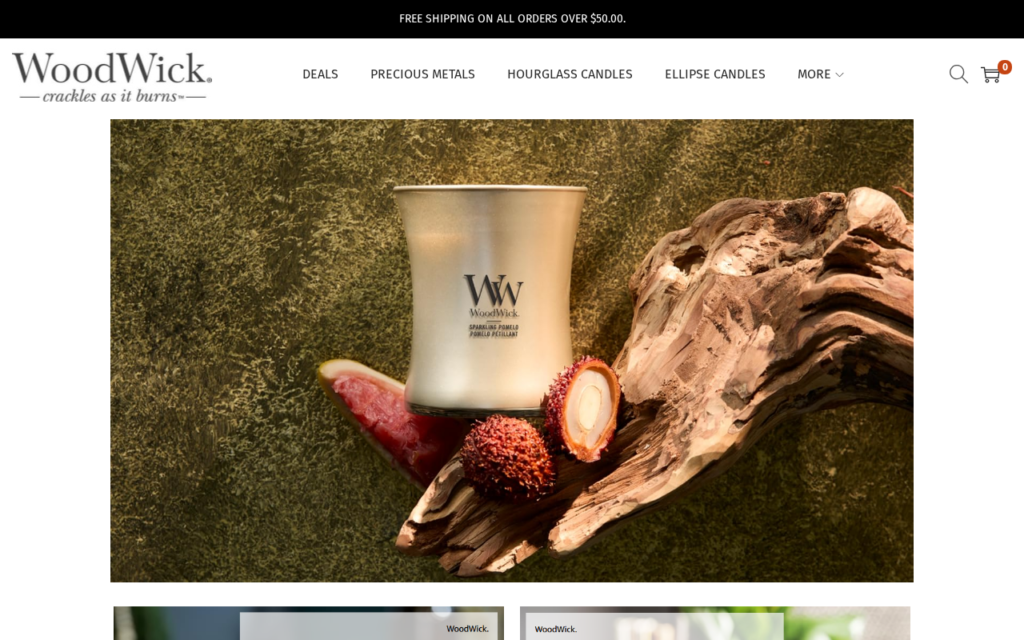
Overview
Borrowed products, unknown address
Woodwickhome.com borrows the catalog, photos and branding of real brands and stores, but it isn’t run by any of them. The genuine sellers do their trading on their own websites.
Scrolling on a phone, you could easily miss it. Nothing looks off, the products are ones you recognize, and the checkout button works.
Copycat stores like this one come from a network with a familiar routine. It buys lots of ads, gathers every order it can, and changes domains once complaints start building.
Why the prices look so good
Think of the discount as bait. A product with a regular $180 price appears at $39, and a countdown timer or “closing sale” banner often sits right next to it.
There’s no clearance behind that number. It’s a pressure tool, and it works by rushing you to pay before you realize the store is faking its identity.
Sure, brands put things on sale. They do it on their own websites and with retailers they name. Slashing a full catalog by 70% from an untraceable store isn’t that.
What actually shows up after you order
Most orders from fake stores like Woodwickhome.com end in one of these ways:
- You get nothing at all. The tracking number sits still, or it’s tied to someone else’s delivery.
- The box holds a cheap imitation. It isn’t the genuine item, and the materials, size and finish don’t match.
- Something else entirely arrives. It’s cheap, it has nothing to do with your order, and its only job is to create a delivery record.
- Unfamiliar charges show up. Payments you never authorized begin hitting the card you used at checkout.
Stay away from Woodwickhome.com. It’s a fake store built from a copied catalog, so don’t buy anything and don’t type your card into its checkout.
What We Found on Woodwickhome.com
Here’s what stands out about Woodwickhome.com:
- Woodwickhome.com was registered on August 1, 2026, only 117 days ago.
- The MalwareTips URL scanner gives Woodwickhome.com a Safety Score of 24/100, rated High Risk (full report).
How the Woodwickhome.com Scam Works
Nothing about this scheme is unique. It’s a reused script running across hundreds of copycat stores, and knowing its steps helps you spot the next one before paying.
Step 1: You see an ad with borrowed photos
A sponsored post shows up in your Facebook, Instagram or TikTok feed. Because its images and videos are borrowed from real stores and brands, it blends right in.
The caption pushes urgency: an anniversary sale, a warehouse clearance, or a “we’re closing our stores” announcement. Comments may be switched off, or packed with short, glowing replies.
Tap once, and Woodwickhome.com loads in front of you, looking like a proper, established shop.
Step 2: A storefront stitched together from copies
The site takes product photos, descriptions and branding from real stores. Menus, guides and “free returns” badges can be identical copies as well.
The one thing it can’t copy is an actual company. With stores like this, the business name, address and customer service are usually missing or go nowhere useful.
The footer and legal pages are where to look. The copy usually thins out there, leaving a generic company name, a missing address, or a free email address.
Step 3: Pay now, think later
Expect countdown timers, “only 3 left” badges and pop-ups saying “12 people are viewing this.” Their job is to keep you moving before you notice the holes.
The basket gets inflated too. Free-shipping thresholds and “buy 2, get 1 free” bundles nudge you to add more, so each card at checkout pays out as much as possible.
Step 4: The email comes, the store goes quiet
Expect a confirmation email after payment. It will look ordinary, because ordinary is reassuring, and that reassurance gives the store time before you start asking questions.
The tracking number, if it comes, may take a week. It often stalls completely, lingers on “label created,” or shows a delivery to a city you’ve never lived in.
Waiting costs you. Every day pushes you nearer to the end of your card’s dispute window, and the delay is planned that way.
Step 5: A counterfeit shows up, or nothing does
If an item arrives, it’s usually a cheap copy from overseas that doesn’t match the photos. It isn’t the product you paid for.
Some shops ship a cheap accessory or another token item to a real address. Why? Because tracking that says “delivered” lets them argue against your refund.
Step 6: The refund you never get
Ask support where your order is, and you’ll get silence or a script saying to wait “a few more days.” Any refund that comes up later has impossible conditions.
What you may hear: take 20% back and keep the item, or ship it to China at your own cost. Either choice leaves the store most of your money.
Red Flags at Woodwickhome.com
A single odd detail won’t prove a store is fake. Stores like Woodwickhome.com stack up several at once, and each one takes you about a minute to check.
Not the brand’s own web address
If a brand is real, its store lives on its own domain, or its official site lists the retailers that carry it. Woodwickhome.com doesn’t fit either case.
Start a fresh search for the brand and open its official site. Then check your browser’s address against it. They should be identical, and if they’re not, you’re elsewhere.
No business behind the branding
Stores like this rarely say who they are: no registered company, tax number or physical address you can check. If something goes wrong, nobody can be held responsible.
On a real brand’s website, you can usually see exactly which company is selling to you, whether in the footer, the terms of service or the imprint page. Check first.
Contact options that lead nowhere useful
Stores like this usually keep support to a contact form or a bland, generic email address, leaving out any phone number, live chat or local return address.
Set that against the real brand, which usually offers phone support, store locations and a returns center. A fake store gains nothing by being easy to find.
Policies that clearly belong to a different store
Sometimes a copycat store’s policy page names a completely different shop, country or currency. That happens because the refund, shipping and privacy pages are often copied from another store.
Take your time with the returns page. Copycat stores often promise something generous up top, then bury the actual rule further down: returns go to China, at your cost.
Deals far deeper than the real brand would go
Established brands rarely put their whole catalog at 70% off or more. Markdowns that hard across every single item mean the sale isn’t real.
The “original” prices shown beside the deals are often made up too. They’re there to make the fake discount look bigger than it really is.
Reviews that lead nowhere
On stores like this, the five-star reviews rarely trace back to real buyers. Outside the site, you usually won’t find any reviews that match.
Here’s a simple test. Search the store’s address followed by “reviews.” A copycat store usually comes up empty, or it comes up with complaints from people waiting on orders.
How to Spot These Scam Websites
Fake brand stores have become harder to spot. Many of them now use AI-generated ads, polished product videos and copied checkout pages that look identical to the real thing.
The good news is that the same few checks still catch almost all of them:
- Check the address, not the logo. Open the brand’s official site yourself and compare addresses. One extra word or an odd ending is enough.
- Scan the site before you pay. Paste the address into the MalwareTips Website Scanner. It shows the domain’s age, security results and known warning signs in seconds.
- Look up who owns the domain. A Whois.com lookup shows when it was registered. A brand’s official shop doesn’t sit on a newly registered domain.
- Find the company behind the store. A real brand names its legal company, address and tax details. A copycat store leaves them out or invents them.
- Be suspicious of “closing down” sales. Store-closure, anniversary and warehouse-clearance stories are the most common hooks in fake brand ads.
- Search for outside reviews. Look the store up on Trustpilot and in search results. No history at all is as telling as a wall of complaints.
- Watch the payment options. A checkout that pushes bank transfers, crypto or a payment page on another domain is a reason to stop.
A browser extension can help. Malwarebytes Browser Guard blocks many known scam and phishing sites, and Malwarebytes ScamGuard checks suspicious links and messages before you click.
How to Buy the Real Thing Safely
If Woodwickhome.com showed you something you’d like to own, you can usually get the genuine article safely:
- Head to the official website. Search for the brand yourself and buy there. A link in an ad or comment isn’t the place to start.
- Check the official retailer list. Plenty of brands publish the sellers they authorize. If a store doesn’t appear there, it isn’t an authorized seller.
- Trust the brand’s own announcements. Real clearances appear on the brand’s website or verified social accounts. A sale you only see in sponsored ads isn’t one of them.
- Shop through a marketplace that protects buyers. When the brand has an official storefront there, you know exactly where to go for a refund.
- Choose a protected payment method. Pay by credit card or PayPal. Never use a bank transfer, gift card or crypto.
Expect that you may pay more than Woodwickhome.com asks. That’s the cost of getting the real product from a seller that honors refunds.
What To Do If You Already Fell For the Scam
If you paid a fake store, move quickly. The sooner you act, the better your chances of getting the money back and stopping further charges.
- Call your bank or card issuer. Say you paid a fake store and ask for a chargeback. Disputes have time limits, often around 120 days, so don’t wait.
- Open a PayPal dispute if you paid that way. Choose “item not received” or “significantly not as described.” PayPal generally accepts claims within 180 days of payment.
- Block or replace your card. If you typed your card details into the site, ask for a new card and turn on transaction alerts.
- Save your evidence. Keep the order email, the tracking number, screenshots of the product page and any messages from the store.
- Watch for follow-up scams. Fake delivery texts asking for a “customs fee” or “address update” often follow these orders. Don’t pay them or click their links.
- Change reused passwords. If you created an account on the store with a password you use elsewhere, change it on those other sites.
- Protect your data. Your name, address and phone number are now in the wrong hands. Malwarebytes Personal Data Remover finds where your details are exposed and helps remove them.
- Cut off the ads. These stores find people through ads. AdGuard blocks many malicious ads and pop-ups in your browser, so fewer of them reach you.
- Report the store. Report the ad on the platform where you saw it. In the US, file a report at ReportFraud.ftc.gov. For cross-border purchases, use econsumer.gov.
If you downloaded anything from the store, such as an “order tracking” app or a file attached to an email, scan your device with Malwarebytes Free.
Frequently Asked Questions
Is Woodwickhome.com a legitimate store?
No. Woodwickhome.com only looks like a store. It’s a fake one, built from a copied catalog of real brands’ photos and descriptions, and those brands don’t run it.
Why does Woodwickhome.com look so convincing?
Almost every piece of it comes from real brands and stores. The product photos, descriptions, menus and guides are copies. What you won’t find is a real business behind them.
Will I receive my order from Woodwickhome.com?
You might, though probably not the item you paid for. Stores like this often leave buyers with nothing, or with a cheap copy that looks nothing like the pictures.
I already paid. Can I get my money back?
In plenty of cases, yes, when you act quickly. Contact your card issuer or PayPal and raise a dispute for “item not received” or “not as described.”
Don’t wait for the store to get back to you first. Save your order email, the tracking number and screenshots of the product page.
Should I replace my card?
Yes, do it if you gave Woodwickhome.com your card details. Ask the bank for a fresh card and keep watching your statements for small test charges.
Where can I report Woodwickhome.com?
Don’t stop at one report. Flag the ad on its platform, warn the brand behind the copied photos, and submit a complaint to your country’s consumer protection agency.
The Bottom Line
The catalog at Woodwickhome.com is borrowed and the discounts are bait. Real brands’ photos and products sell the illusion, while your order probably goes nowhere.
If the product caught your eye, buy it from the brand’s official website or a retailer the brand lists. Do not buy from Woodwickhome.com.
If you’ve already ordered, call your bank or open a PayPal dispute today. Save every email and screenshot, and request a new card if you typed in your details.

Reviews & discussion
0 commentsShare a firsthand experience, or ask a question.
Community reviews
woodwickhome.com
Moderated reader experiences, not an editorial verdict.
Start the conversation
Have a question or something useful to share? Add the first comment.