

A toothpaste that promises stronger enamel can be tempting when a cold drink suddenly hurts or your next dental appointment is already on your mind.
YAYASHI adds a dentist-free repair story to that promise. The tube deserves a closer look before the advertising becomes your treatment plan.
Overview
The advertising moves from oral care to repairing decay
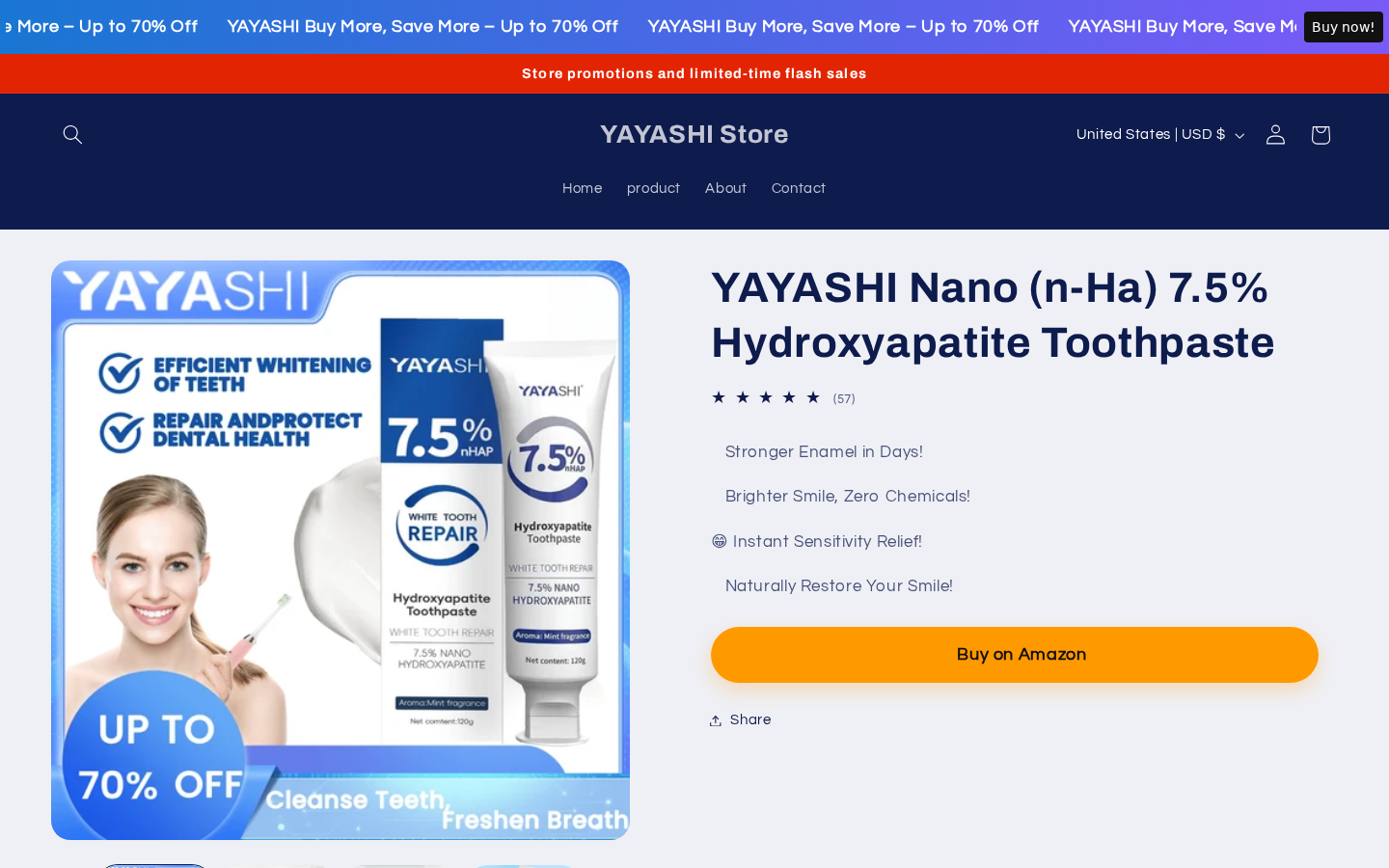
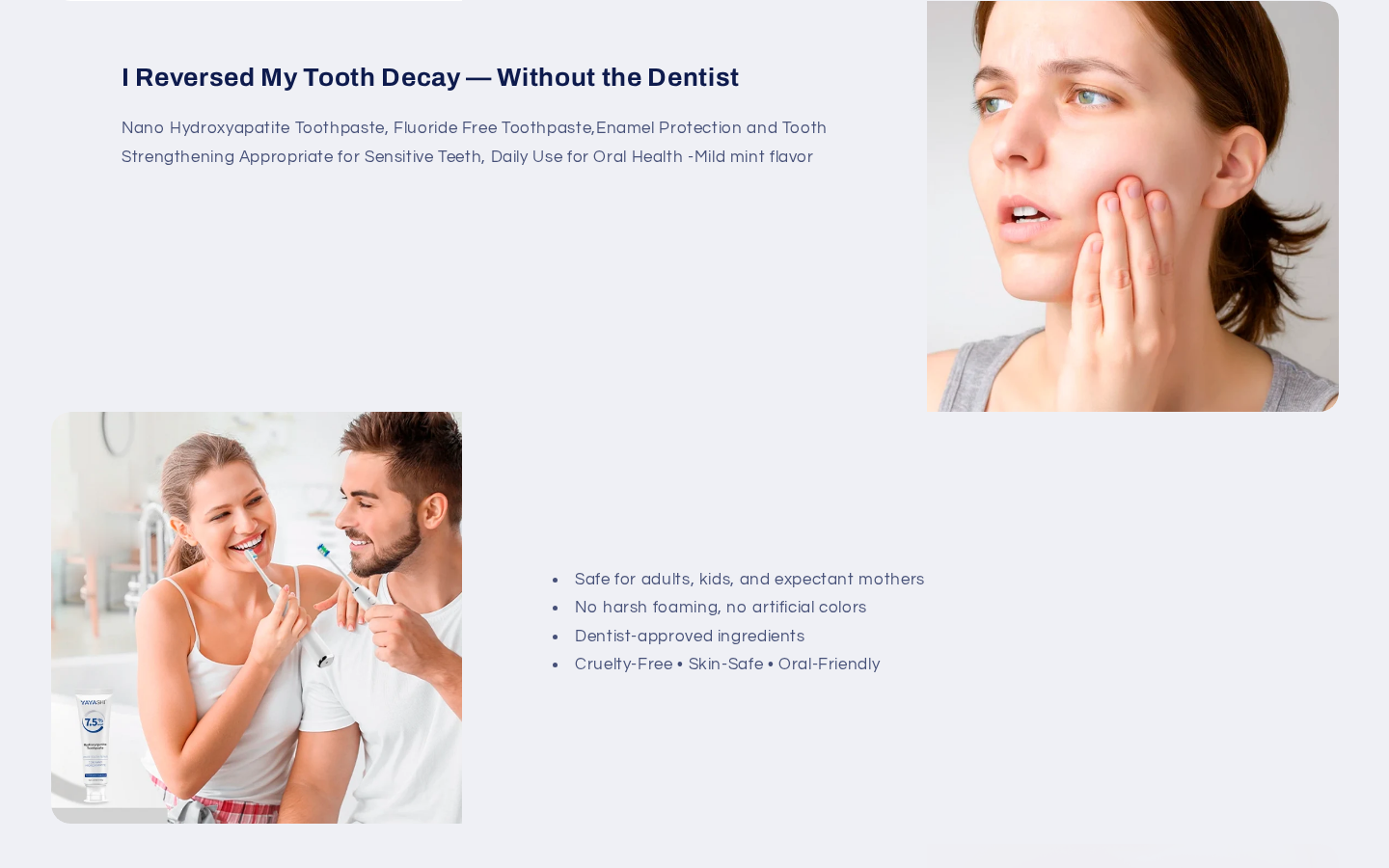
YAYASHI’s storefront promotes a 7.5% nano-hydroxyapatite toothpaste. The homepage pairs it with a story about reversing tooth decay without a dentist.
Its product information also describes repairing small cavities. That wording can blur an important difference between strengthening early weakened enamel and rebuilding a damaged tooth.
Hydroxyapatite is a real ingredient with published research. Its presence does not validate every claim made for a particular toothpaste.
The refund information does not agree
The product page describes a 30-day return service. The separate store return policy gives buyers seven days and includes unused-item and sale-item restrictions.
Those pages do not provide a consistent answer for someone considering a purchase. Ask which terms apply before assuming a month-long trial.
The inspected product page directs buyers to Amazon. For a marketplace order, the seller and order-specific marketplace terms must also be checked.
The useful decision is about claims, not a brand-name accusation
- Do not use this toothpaste as a substitute for examining suspected decay.
- Confirm the exact formula rather than assuming every YAYASHI tube is identical.
- Separate ingredient research from testing of the finished product.
- Keep the actual seller’s return conditions with your receipt.
This is a misleading-claims and purchase-risk review. It does not establish stolen payments, automatic refills, contamination, or that every product carrying the brand is counterfeit.
Can Toothpaste Really Repair a Cavity?
Early enamel damage is not the same as a hole
To understand the problem with the repair promise, picture two different teeth. One has early mineral loss; the other has already lost part of its structure.
The first may have an opportunity for remineralization. That means replacing minerals in weakened enamel before damage progresses.
The second needs a dental assessment. Brushing cannot simply rebuild missing tooth structure because the paste contains a mineral associated with enamel.
The National Institute of Dental and Craniofacial Research explains that early decay can be stopped or reversed, while a cavity represents permanent damage.
That distinction changes the reader’s next step. You cannot safely decide which situation applies from an advertisement or a photograph of your smile.
A tooth that feels better may still need treatment
Less sensitivity is welcome, but it doesn’t necessarily show that the cause has disappeared. Comfort and structural repair are not the same measurement.
A bright surface can also make a toothpaste feel successful without revealing what is happening between teeth or beneath an existing filling.
MedlinePlus describes how cavities are diagnosed and treated, including problems that can be found during an examination before a person notices major symptoms.
Don’t cancel a planned appointment because a few days of brushing feel reassuring. Bring the label and explain what changed.
If you already know a tooth needs treatment, ask your dentist whether anything has changed. A seller’s timeline cannot reassess the tooth.
Whitening is another separate claim
Removing surface stains can make teeth look brighter. It does not establish that decay has reversed or that all causes of discoloration have been addressed.
Someone searching for a whiter smile may have different needs from someone with persistent pain, a broken tooth, or a visible hole.
The advertising brings those goals close together. A careful buying decision keeps them apart so a cosmetic improvement isn’t mistaken for a treatment result.
Hydroxyapatite Research Is Real, but the Product Match Matters
Do not dismiss the ingredient to challenge the offer
Hydroxyapatite is a calcium-phosphate mineral associated with teeth and bone. Researchers have studied toothpaste formulations containing it for oral-care benefits.
An 18-month randomized adult trial compared a hydroxyapatite toothpaste with a fluoride toothpaste and found the tested product met its caries-prevention noninferiority criterion.
That is meaningful research. It is also a specific study with defined participants, formulations, follow-up, and outcomes, not approval for every toothpaste using the ingredient.
It did not establish that any jar or tube containing hydroxyapatite can repair every existing cavity without professional care.
A concentration number is not the whole formula
The YAYASHI page emphasizes 7.5%. A useful comparison still needs the ingredient form, particle characteristics, full formulation, and the way the research product was used.
The finished paste matters because ingredients must work together. A percentage alone does not establish the same performance as a different product used in a study.
If the seller says research proves this tube’s benefits, the supporting paper should identify this finished product or justify a valid comparison.
The inspected offer does not supply a finished-product trial establishing its broad dentist-free cavity-repair promise. That is the gap, not the existence of hydroxyapatite research.
Brand variants need separate labels
YAYASHI appears on several oral-care products, including products described with SP numbers and a separate nano-hydroxyapatite listing.
Those names should not be treated as interchangeable. A review of one variant does not authenticate the ingredients, warnings, or performance of another.
Check the complete product name and packaging photograph on the seller’s listing. Compare them with the tube delivered, including any ingredient panel and lot information.
If a listing changes to a different variant during purchase, stop and clarify the substitution. You should know which formula is actually being ordered.
How the YAYASHI Toothpaste Promotion Works
Step 1: Start with a familiar dental worry
The offer addresses enamel, sensitivity, whiteness, and concern about cavities. These are ordinary problems that make an easy home solution appealing.
The dentist-free story adds another attraction: avoiding the cost, time, or anxiety of an appointment. That is where a routine shopping decision can affect health.
The following screenshot shows the story as it appears on the seller’s homepage. The important issue is what it encourages the shopper to believe.
Step 2: Make improvement seem predictable
A staged timeline takes the reader from smoother-feeling teeth to less sensitivity and stronger enamel. The final stage also reassures readers about new cavities.
A timeline can make uncertain results feel scheduled. Actual oral health depends on more than how many weeks a person has used one tube.
Existing dental problems, brushing technique, diet, and the condition of the teeth all affect what an individual needs.
A progress story should not become permission to ignore symptoms until the final week. Professional assessment doesn’t need to wait for a marketing schedule.
Step 3: Borrow reassurance from scientific terminology
Nano-hydroxyapatite, clinical concentration, and medical-grade language make the explanation sound precise. Precision in wording needs matching precision in the evidence.
The ingredient can have legitimate uses without validating an unrestricted repair claim. Ask what was tested and what outcome the research actually measured.
The phrase chemical-free adds little practical reassurance. Water, minerals, and flavor ingredients are chemical substances too; the useful questions concern identity, suitability, and quality.
Step 4: Add reviews and a purchase destination
The site displays favorable reviews and then offers a route to Amazon. That redirect does not make the site’s claims independently verified by the marketplace.
Check the destination’s seller, variant, pack size, price, and return terms. A familiar checkout platform can host products sold by different merchants.
The current inspected product view did not present a completed payment or subscription agreement. Claims about unwanted recurring charges therefore cannot be attached to this offer.
Step 5: Leave the return question unresolved
The product’s longer return description and the separate policy’s shorter window give shoppers conflicting expectations. The distinction becomes especially important after opening a tube.
If ordering on a marketplace, don’t assume the external store’s refund wording governs that purchase. Read the conditions attached to the actual order.
If a direct offer becomes available, resolve the seven-day versus 30-day discrepancy before paying. An unopened-item restriction is not a satisfaction trial.
Seller Identity, Contact Details, and Product Responsibility
The storefront names a company, but the invoice must match
The site’s footer identifies VitaBloom Naturals INC. Its terms describe the website operator as YAYASHI and specify Hong Kong law.
Those details need clarification when determining who is responsible for a transaction. A US contact address doesn’t automatically answer that question.
For an Amazon order, record the actual marketplace seller. Do not assume it is the same entity as the operator named on the external promotional page.
This review does not establish that the named company is fictitious. The practical point is to identify the party taking your payment and handling your return.
The Denver address is not a confirmed manufacturing site
The footer lists 2301 Blake Street, Suite 100, Denver, Colorado. It does not identify that address as the factory producing the toothpaste.
Neither a street address nor a suite number proves manufacturing quality. The package should identify the responsible business and provide relevant product information.
Ask for the authorized return destination if you need one. Mailing a tube to the footer address without instructions could create another dispute.
Use the published email for a written answer
The listed contact is YAYASHI2022@outlook.com. Ask whether the relevant purchase has seven or 30 days and whether an opened toothpaste can be returned.
Public contact information was checked, but no test email or phone call was made. An Outlook address alone is not evidence that support is fake.
Keep any response and compare it with the order terms. If the purchase was through Amazon, use the marketplace’s order-support process as well.
Trace the delivered tube, not every product with the same name
The actual label should settle the ingredients, net amount, warnings, responsible supplier, and batch identification for your purchase.
If a marketplace image, website panel, and delivered tube disagree, photograph the differences and ask for an explanation before using the product.
If the package doesn’t identify its supplier or batch, ask the seller for those details. Keep the question attached to the tube you actually received.
What the YAYASHI Return Pages Leave Out
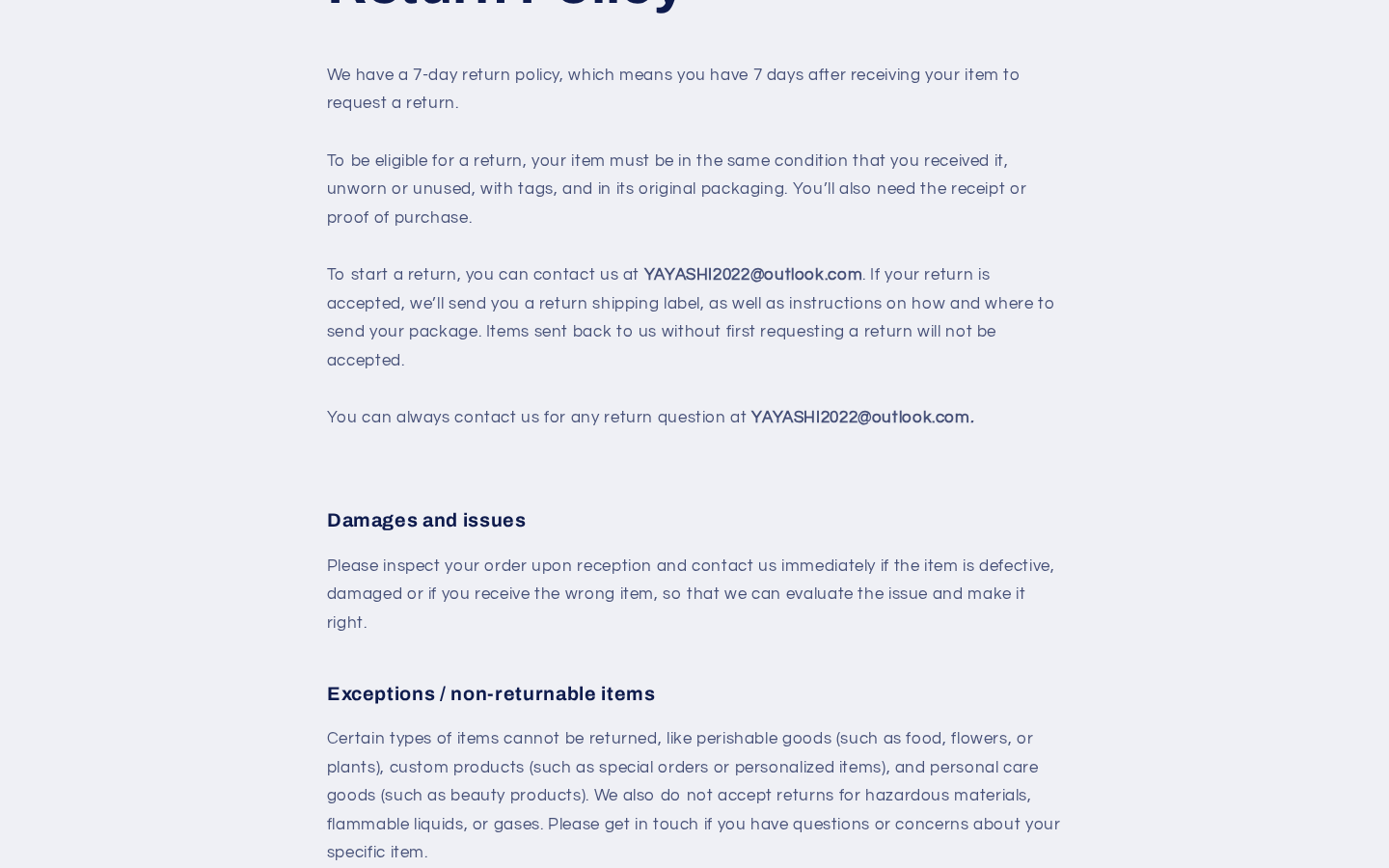
The separate return policy requires an unused item and excludes sale goods. The product’s description instead presents a longer conditional return service.
That difference is substantial when the site also promotes discounts. A buyer should know whether a discounted tube is eligible before relying on either window.
The screenshot captures the shorter policy and the unused-item condition. It does not prove how a particular marketplace seller will handle a different order.
Opening the toothpaste to evaluate sensitivity relief may change return eligibility. Get a clear answer before treating the offer as a risk-free experiment.
A refund policy also differs from protections for a wrong, defective, or misdescribed product. The applicable route depends on where and how you purchased.
A retailer’s posted restriction doesn’t decide every legal right. Equally, a disagreement with marketing doesn’t automatically guarantee a payment dispute will be approved.
What to Do If You Bought YAYASHI Toothpaste
-
Identify the order’s actual seller. Open the receipt or marketplace order page and note the merchant, product variant, quantity, and purchase date.
Keep the external advertisement if it influenced your decision. Don’t confuse the promotional site’s company name with a different merchant shown on your receipt.
-
Inspect the label before relying on a benefit. Photograph the ingredients, warnings, seal, lot, and product name on the tube and box.
Compare these with the listing. If a different formula arrived, contact the order’s seller and keep the packaging intact while the issue is addressed.
-
Request a return promptly if you don’t want the order. Use Amazon’s order process for a marketplace purchase or the published contact for a direct purchase.
Ask for the applicable deadline and condition requirements. For a direct-site dispute, save both the longer product description and shorter policy.
Don’t ship a return without approval and a complete destination. Track the parcel and retain the receipt until the refund has cleared.
-
Arrange care for suspected decay. Explain the symptoms and advertising to a dentist, particularly if you have ongoing pain or a visible damaged area.
Facial swelling, fever, or significant worsening needs prompt professional attention. Don’t wait for the toothpaste’s promotional timeline to finish.
NIDCR describes abscess symptoms. Swelling affecting breathing or swallowing requires emergency care, not another oral-care purchase.
-
Ask for a suitable daily-care plan. Show your dentist the exact ingredient panel and ask whether this formula fits your cavity risk and sensitivity.
If you are choosing products for a child, discuss age-appropriate use rather than accepting an all-ages advertising statement as individualized guidance.
-
Escalate a genuine unresolved order problem. Provide the marketplace or payment provider with your receipt, product differences, return correspondence, and tracking.
Use the actual dispute reason. A merchant refusing a promised refund differs from an unfamiliar charge, and ordinary disappointment differs from non-delivery.
FTC guidance explains how to document disputed charges. Act within your provider’s deadlines and never assume recovery is certain.
Frequently Asked Questions
Can YAYASHI toothpaste replace a filling?
No. A damaged tooth needs a dental assessment. Early mineral loss and a formed cavity are different conditions, and advertising cannot determine which one you have.
Is hydroxyapatite itself a fake ingredient?
No. It is a real mineral with oral-care research. The concern is extending that research into broad promises for an insufficiently documented finished product.
Are SP-numbered YAYASHI products the same as the 7.5% toothpaste?
Do not assume that. Check each variant’s complete label. Shared branding doesn’t establish an identical formula, ingredient amount, warning, or benefit.
Does the website offer seven or 30 days for returns?
Its pages disagree. The separate policy says seven days; the product description says 30. A marketplace order may have its own seller-specific terms.
Is there evidence of automatic toothpaste refills?
No unwanted recurring arrangement was established. An email sign-up or membership slogan is not proof of an automatic product charge.
Should I buy YAYASHI to repair decay at home?
No. Don’t purchase it for that purpose or delay an examination. Choose routine oral care with your dentist rather than treating the promotional story as a diagnosis.
The Bottom Line
Do not buy YAYASHI as a dentist-free cavity repair. Ingredient research doesn’t validate that promise, and the storefront’s conflicting return windows add an avoidable purchase risk.
If you already bought it, confirm the actual seller and return terms, preserve the tube’s label, and request help through the channel handling your order.
Most importantly, get suspected decay examined. The right toothpaste can support daily care; it cannot tell you whether a damaged tooth needs treatment.








