

Online personality and self development platforms are everywhere right now. Yourself First (often branded as “Yourself 1st” and operating at yourselffirst.com) promises something very appealing: a complete “personality blueprint” built from dozens of tests on topics like personality, IQ, EQ, relationships, career fit, mental health, and even neurodiversity.
On the surface it looks polished and friendly, with soft colors, clean design, and quiz questions such as “I feel most loved when my partner…”. It feels like a modern coaching app that just happens to live in your browser.
Once you start looking at real user feedback, terms, and the company behind it, the picture becomes more complex and raises some important questions.
This review walks through how Yourself First works, what users are actually getting, why so many people report billing and cancellation problems, and what you can do if you already signed up.
What Is Yourself First?
Yourself First presents itself as an online self development hub with “hundreds of tests” that help you:
- Discover your personality and strengths
- Explore love styles and relationship patterns
- Look at career fit and work style
- Reflect on mental health topics
- Explore neurodiversity themes such as ADHD and autism
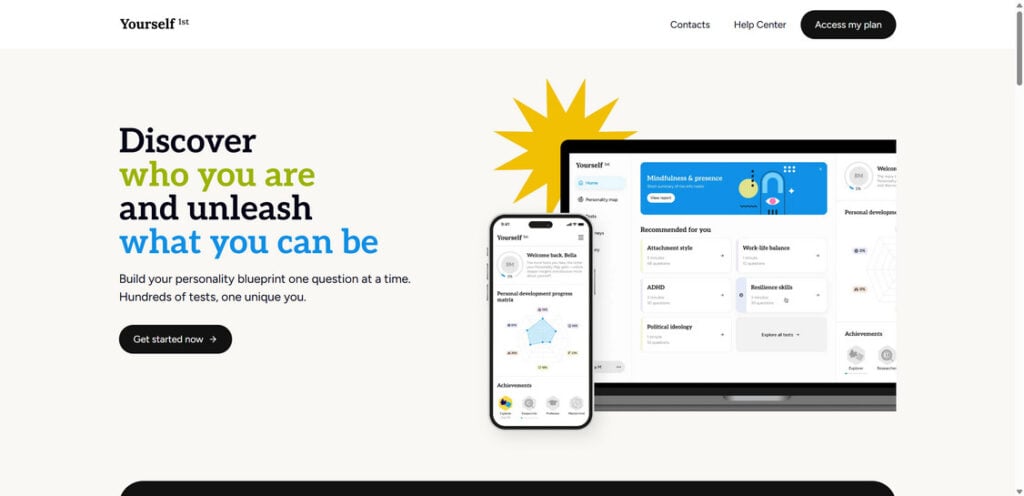
The homepage highlights:
- A “personality blueprint” built over time
- Short, mobile friendly tests
- A dashboard with your scores and “plan”
- An invitation to “get started now” and “unleash what you can be”
Behind the brand is a Lithuanian company called Menesko, UAB, with an address at Perkūnkiemio g. 13-91, Vilnius, Lithuania. This same company and address are also listed as the seller for another online brand, Lymphora, which sells supplements online.
So this is a real registered business that appears to operate multiple digital brands. The main concerns that reviewers raise tend to focus on billing practices, subscription design, and the perceived value of the service rather than on the basic existence of the company.
How Yourself First Works For A New User
While the exact sequence can vary depending on which ad or landing page you click, the general flow looks like this.
1. You start with a quiz
You are invited to answer a series of multiple choice questions about:
- Emotions and stress
- Relationships and attachment
- Work habits and motivation
- Preferences around love, affection, or communication
The interface feels similar to many popular personality tests. There is usually a progress bar at the top that moves slowly, giving the sense that you are building something important and tailored.
2. The platform builds up anticipation
As you answer more questions, micro messages suggest that a detailed “plan” or “blueprint” is being prepared for you. The design uses soft colors and encouraging wording to keep you engaged and emotionally invested.
3. Your results are locked behind an email
Near the end, you reach a screen asking where they should “send your plan”. You must enter your email address to continue and see the full breakdown. This step also allows the company to link your answers to a profile and follow up with marketing and billing messages.
4. A small introductory offer appears
Once your email is entered, many users report being shown a low priced introductory deal, something like a 7 day “Full Access” plan for a small one time fee (often under 3 dollars). This looks like a low risk way to see your full report and explore more tests.
According to the terms and a large number of reviews, the real cost often comes after that first payment.
Pricing, Trials, And Automatic Renewal
Yourself First’s terms explain that they may offer a “discounted introductory subscription” such as “7 Day Full Access”, and unless you cancel at least 24 hours before the end of that introductory period, your payment method will be automatically charged the ongoing price shown at checkout.
If you buy an automatically renewing subscription:
- Your card “will continue to be billed for the subscription until you cancel”
- The subscription will “automatically continue for an additional equivalent period” at the price you agreed to when subscribing
To cancel if you signed up on their website, they instruct you to either:
- Go to Profile → Manage Subscription and follow the on screen steps, or
- Email their support team at least 24 hours before the end of the trial or current period
On paper this is fairly standard subscription language. In practice, many customers say the way these trials and renewals are implemented feels unclear or easy to misunderstand, especially for people who thought they were paying for a one time quiz rather than an ongoing plan.
What Real Users Say About Yourself First
Trustpilot
On Trustpilot, Yourself First has:
- A TrustScore around 1.7 out of 5
- More than 800 reviews
- About 88 percent of all reviews rated 1 star
Trustpilot’s own AI generated summary notes that most unhappy reviewers mention:
- Unexpected charges after an initial low priced test
- Difficulty canceling subscriptions
- Problems obtaining refunds
- Payments being taken without what they felt was clear consent or proper notification
Some recent 1 star reviewers describe:
- Being surprised by ongoing payments after what looked like a cheap one time IQ or personality test
- Finding the “personal plan” generic and repetitive, not customized
- Feeling that customer service replies became defensive or unhelpful once money was mentioned
There are also positive reviews, but the proportion of negative ratings is high enough that it should be taken seriously by potential customers.
ProductReview.com.au
On Australian review site ProductReview.com.au, “Yourself 1st” is listed in the Health Services category with:
- A rating of 1.0 out of 5
- More than 400 reviews, almost all negative
Reviewers there report patterns such as:
- A harmless looking 1.99 dollar quiz that later led to around 30 dollar recurring charges they did not expect
- Very vague cancellation instructions and confirmation pages that, according to them, did not actually stop billing
- Charges continuing under different merchant names even after a card was replaced
- Reports that personality “insights” were very similar between different users, suggesting heavy templating
- Customer support emails that sound empathetic but do not resolve billing problems
Several reviewers say they felt emotionally drawn in by the soft, therapeutic branding while being enrolled in ongoing payments they did not fully expect.
Reddit And Other Community Reports
On Reddit, multiple threads discuss Yourself First, often describing:
- An initial “7 day trial” that turned into a subscription with no obvious way to cancel from the dashboard
- Users having to contact their bank to block charges or replace their card
- Frustration that there was “no option to cancel” visible, or that the only effective solution was a chargeback
One post notes that many Trustpilot complaints mirror this experience, especially around surprise subscriptions and difficulty canceling.
These are individual accounts, not official findings, but the volume and consistency of the stories suggest that many people have had similar problems with billing and cancellation.
Design, Marketing, And Pressure Tactics
Visitors who share screenshots of the site highlight several design choices worth paying attention to:
- Friendly, pastel design that evokes a calm therapeutic space
- Quiz flows that feel personal and supportive, with affirming language
- A progress bar that nudges you forward so you are less likely to abandon the quiz halfway
- A “special offer expires soon” banner and countdown timers that create urgency, making you more likely to pay quickly without reading every line of text
Countdown timers and expiring offers are common in marketing. In the context of recurring subscriptions and sensitive topics like mental health, they can also make it easier for users to accept terms they did not fully digest.
When this kind of urgency is combined with fine print and cancellation paths that some people find confusing, it becomes a setup where users only realize the real cost structure after several charges have gone through.
Who Is Behind Yourself First?
As mentioned earlier, the platform is operated by Menesko, UAB, a Lithuanian company that also appears in the terms of other online brands such as Lymphora, which sells supplements.
What stands out:
- The consumer facing site does not highlight any named founders, psychologists, or clinical advisors.
- The focus is on branding, tests, and “blueprint” language, not on scientific credentials or transparent leadership.
- Menesko, UAB appears to run multiple unrelated online products, which suggests a broader marketing oriented portfolio rather than a single specialist psychology provider.
This does not automatically mean the platform is unreliable, but the lack of visible expert leadership and detailed methodology makes it harder for users to evaluate the quality of the assessments, especially in sensitive areas such as mental health and neurodiversity.
Are The Tests Themselves Any Good?
Users often describe the reports as:
- Generic and flattering
- Easy to relate to regardless of answers
- Lacking clear references to scientific frameworks or validated questionnaires
Some reviews even claim that two different people received nearly identical “deep personality” reports, which undermines the promise of a tailored blueprint.
Without transparent information about which instruments are used, how they are scored, and which professionals designed them, it is difficult to treat the results as clinically meaningful. They might be entertaining or mildly reflective, but they should not replace validated tools or qualified professionals.
By contrast, well known personality assessments such as Big Five questionnaires or MBTI style tests usually:
- Clearly specify which model they use
- Cite academic research or established frameworks
- Explain how scores are calculated and what they mean
That kind of transparency makes it easier for users to understand what they are getting and how seriously to take it.
Is Yourself First “Legit”?
There is an important distinction between a platform that is outright fraudulent and a platform that uses aggressive, confusing, or ethically questionable business practices.
Based on publicly available information and user reviews:
- Yourself First is operated by a real, registered company.
- Thousands of people have used the site and received some form of test results or plan.
- At the same time, there is a very high volume of complaints about:
- Unexpected recurring charges after a cheap introductory offer
- Difficulty canceling within the promised time window
- Charges reappearing under slightly different merchant descriptors
- Customer support that some users see as scripted or unhelpful
- Reports of generic, low value reports that do not feel worth the price
Taken together, this suggests a service that exists and delivers content, but that also carries significant consumer risk, especially for people who do not read every line of the terms or who assume they are making a one time purchase.
For many users who wrote reviews, the problem is not that the site is fake, but that they felt the pricing, renewals, and value were not as clear or fair as they expected.
What To Do If You Already Signed Up
If you have already paid for a trial or subscription with Yourself First, here are practical steps you can take.
1. Try to cancel from your account
- Log in to your account on their site.
- Look for a Profile or Account area.
- Find “Manage Subscription” or “Billing” and follow the steps to cancel.
- Take screenshots of every screen you see, especially any confirmation messages.
Even if many users report that this path does not always work as expected, it is important to show that you attempted to cancel through the official method first.
2. Email support
- Write to them from the email associated with your account.
- Ask for written confirmation that your subscription is canceled and that no further charges will be made.
- Keep copies of every reply.
In your email, be clear:
- Include your full name, email, and last 4 digits of the card (never the full number).
- Mention the date and amount of the last charge and that you did not intend to continue beyond the trial, if that applies.
3. Monitor your bank statements closely
- Check for any further charges from Yourself First or from similar merchant names that might be linked to the same company.
- If you see another charge after canceling, gather your evidence: screenshots, emails, and terms.
4. Ask your bank or card issuer for help
If the company keeps charging you or refuses a refund request that you believe is reasonable:
- Contact your bank’s customer service.
- Explain that you believed you were making a one time purchase or trial and that recurring charges were not clearly understood.
- Provide evidence that you canceled and attempted to resolve it with the merchant.
Banks can sometimes:
- Block future charges from that merchant
- Issue a new card
- Initiate a chargeback if the charges appear unauthorized or not properly disclosed
Reddit users and reviewers on other sites report that in many cases, their bank was the most effective route to stopping charges and recovering recent payments.
5. Consider reporting the experience
Depending on your country, you may be able to:
- Leave an honest review on platforms such as Trustpilot or ProductReview
- File a complaint with a consumer protection agency
- Report misleading ads to platforms where you saw them (social networks, news sites, etc.)
This not only helps others, it also increases the pressure on companies to improve transparency and billing practices.
How To Stay Safe With Online Personality Platforms
Whether you ever use Yourself First or not, the patterns here are useful for spotting riskier platforms in general.
Before entering card details anywhere:
1. Slow down when you see a countdown timer
Urgency is one of the oldest tactics in marketing. If a site pushes you with “offer expires in 10 minutes”, treat that as a signal to pause and read the fine print twice.
2. Search the brand name with words like “reviews”, “billing”, “cancellation”
Doing a quick check of Trustpilot, Reddit, or other review sites can reveal patterns of unexpected subscriptions long before you type in your card number.
3. Look for clear pricing pages and cancellation instructions
A reputable subscription service usually has a straightforward “Plans and Pricing” section and a transparent “How to cancel” FAQ.
4. Check who operates the site
Look for a company name, physical address, and preferably some information about founders or experts. If the company name shows up on many unrelated brands that share similar complaints, that is important context.
5. Use virtual or single use cards for trials
Many banks now let you generate disposable card numbers for online purchases. Using these for trials limits the damage if canceling becomes difficult.
Better Alternatives For Personality And Self Development
If you are curious about your personality, there are many more transparent and often completely free options.
Some examples:
- 16Personalities
A popular free personality test that provides a “freakishly accurate” description based on a 16 type model, taken millions of times worldwide. Paid upgrades exist, but the core test and basic results are free. - Big Five personality tests
Sites such as openpsychometrics.org and BigFive Test offer free questionnaires based on the scientifically accepted Big Five model, with clear explanations of traits and scoring. - IPIP based assessments
Some platforms implement the IPIP NEO scales, which are public domain personality inventories derived from academic research. - Working with a licensed professional
For deeper issues, especially mental health, ADHD, or autism, a qualified psychologist or therapist is a far better route than any automated online quiz.
These alternatives are not perfect, but they generally make their pricing and methods clearer, and many do not involve recurring fees at all.
Final Verdict: Should You Use Yourself First?
Yourself First is marketed as a gentle, modern path to self understanding, packed with tests and insights. The design is slick, the language is supportive, and the promise of a “personality blueprint” is very attractive.
However:
- The company behind it runs multiple online brands and does not clearly foreground psychological expertise.
- Independent review platforms show a very high proportion of 1 star ratings, mostly about billing, unexpected subscriptions, and cancellation difficulties.
- Community discussions repeat the same story: small trial fee up front, much larger recurring charges later, and a frustrating path to stop them.
- The value of the actual reports appears limited for many users, often described as generic and repetitive.
Putting it all together, Yourself First comes across as a higher risk choice for anyone who values straightforward pricing, clear cancellation, and strong transparency about methods.
If you are considering signing up, it is sensible to read reviews, study the terms carefully, and think twice before entering your payment details. If you have already joined, keep a close eye on your statements, cancel as early as possible, and involve your bank promptly if you see charges you did not clearly intend to authorize.
For exploring your personality or working on self growth, there are alternative tools and professionals that offer more open explanations of how they work and more predictable billing, without wrapping sensitive topics in subscription structures that many people later regret.

Join the discussion
0 commentsShare your experience or ask a question about this article.
Discussion
Start the conversation
Have a question or something useful to share? Add the first comment.