

The internet is buzzing with claims about the ZVOEVO SMGT-GLP-1 Nano Microneedle Patch, hailed as a “revolutionary” way to manage blood sugar and lose weight—without injections, diet, or effort. Touted as a painless alternative to Ozempic and other GLP-1 injections, it promises fast fat burning, appetite suppression, and blood glucose stabilization with a tiny wearable patch.
But behind the glowing reviews and scientific jargon lies a growing number of red flags. If you’re wondering whether ZVOEVO™ is a breakthrough or a scam, this in-depth article will give you the full picture.
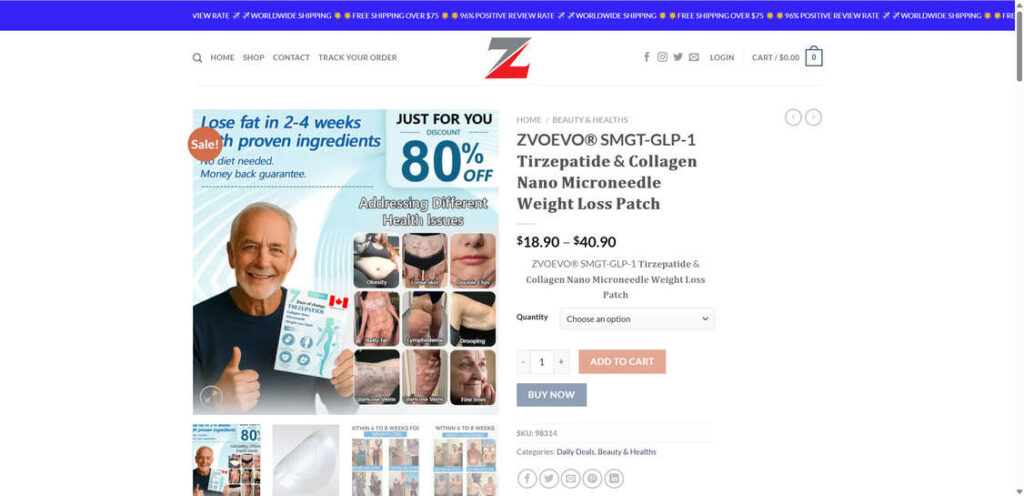
Why ZVOEVO SMGT-GLP-1 Patch Raises Major Concerns
ZVOEVO™ markets itself as a high-tech microneedle patch that mimics the effects of GLP-1 agonists like Semaglutide. According to the product page, it can suppress appetite, regulate blood sugar, and burn fat—all through a single, weekly patch.
The website is packed with bold claims:
- “Endorsed by Stanford professors”
- “Used by over 2.25 million people”
- “Clinically proven and certified by national authorities”
- “Backed by endocrinology experts like Dr. Ralph DeFronzo”
However, when you investigate the details, it becomes clear that these claims don’t hold up.
No Clinical Proof or Peer-Reviewed Research
There is no published scientific study validating this patch’s effectiveness. The FDA has not approved any microneedle patch containing GLP-1 or Semaglutide for over-the-counter weight loss.
Fabricated Doctor Endorsements
The name “Dr. Ralph DeFronzo” is used without his permission. He is a real endocrinologist and renowned expert, but there’s no evidence he has ever endorsed this product. Stanford University also does not recognize any affiliation with the ZVOEVO brand.
Misleading Use of Medical Terminology
Terms like “SMGT-GLP-1,” “nano delivery,” and “patented peptide complexes” are vague and unsubstantiated. GLP-1 drugs are prescription-only and must be carefully dosed under medical supervision. There’s no documentation that a nano patch can safely or effectively replicate these effects.
Vague Manufacturer Details
The website selling ZVOEVO™ lacks basic transparency:
- No registered company name
- No physical address
- No verified customer service contact
All signs point to a generic drop-shipping operation using misleading claims to sell an unregulated product.
How the ZVOEVO SMGT-GLP-1 Scam Works
Scams like this follow a specific pattern designed to manipulate users into making fast purchases. Here’s how the ZVOEVO™ scam is structured.
Step 1: Aggressive Social Media Advertising
You first encounter ZVOEVO™ through ads on Facebook, Instagram, or TikTok. These often feature:
- Stock video testimonials from “patients”
- Claims that injections are outdated
- Promises of painless, fast weight loss
- Fake headlines like “FDA breakthrough now available over the counter”
These ads aim to capture impulse buyers with health concerns like obesity or diabetes.
Step 2: Emotional Testimonials and Pseudo-Science
Once on the product page, you’re hit with:
- Fake user stories (“I lost 10 kg in 4 weeks without exercise”)
- Stock photos passed off as real customers
- Screenshots of charts showing hormone levels dropping
- Mentions of fake studies from major institutions
These tactics are designed to build credibility and override skepticism.
Step 3: FOMO (Fear of Missing Out) Tactics
The page often includes:
- Countdown timers
- “Only 3 boxes left in stock” warnings
- “Buy 3, get 2 free” bulk deals
- Free global shipping if you order in the next 5 minutes
These are psychological tools to force you to buy immediately.
Step 4: The Shady Checkout Process
The checkout page usually:
- Fails to mention recurring billing
- Offers no refund or guarantee policy
- Requests unnecessary personal data
- Redirects to a payment processor with no brand verification
You think you’re buying a one-time product, but you might be subscribing unknowingly.
Step 5: Little to No Product Delivery
If you receive anything at all, it’s usually:
- A generic, unbranded patch
- No ingredient list
- No instructions from a licensed source
- No quality control or safety warnings
Most users report no results, or worse—skin irritation or no absorption.
Step 6: No Refunds, No Support
Attempts to contact the vendor usually fail. The brand may:
- Ignore emails
- Take down the website after a few weeks
- Launch under a different name
This cycle repeats across different product names and sites.
What To Do If You’ve Been Scammed by ZVOEVO
1. Contact Your Credit Card Provider Immediately
- Request a chargeback
- Explain that the product is falsely advertised
- Mention the lack of company contact or return policy
2. Save All Evidence
- Keep screenshots of the product page, order confirmation, and any email exchanges
- Document the date of your purchase and shipping (if applicable)
3. Report the Scam to Authorities
Use the following links:
- FTC – Report deceptive marketing
- BBB – Submit a public warning
- IC3 – Report international internet fraud
- Econsumer.gov – For victims outside the U.S.
4. Leave Reviews to Warn Others
Post your experience on:
- Reddit (e.g., r/scams, r/loseit, r/type2diabetes)
- Trustpilot
- Facebook or YouTube comment sections under ads
- Review blogs or consumer watchdog forums
5. Don’t Use the Product
The patch may contain unknown or unsafe ingredients. GLP-1 mimetics can affect hormone systems and should never be used without a prescription.
If you’ve experienced side effects, consult a licensed physician immediately.
6. Monitor Your Financial Accounts
If you submitted personal data (address, email, phone):
- Watch for suspicious activity
- Consider a credit alert or identity theft monitoring service
- Use a new payment method if possible
Frequently Asked Questions (FAQ)
Is the ZVOEVO SMGT-GLP-1 Patch FDA approved?
No. The ZVOEVO SMGT-GLP-1 Nano Microneedle Patch is not approved by the FDA. Any claims that it is developed in FDA-registered labs or approved for over-the-counter use are misleading.
Does the patch actually contain GLP-1 or Semaglutide?
There is no verifiable proof that this patch contains medically active GLP-1 analogs or Semaglutide. Such compounds require prescription-only use and are not legally available in over-the-counter patches.
Are the medical endorsements real?
No. The endorsements from Stanford professors and endocrinologists like Dr. Ralph DeFronzo appear to be fabricated. There is no evidence that reputable medical professionals are associated with this product.
Can the microneedle patch replace GLP-1 injections?
No. There is no clinical evidence that this patch provides the same therapeutic benefits as injectable GLP-1 agonists like Ozempic or Wegovy. These medications must be prescribed and supervised by licensed healthcare providers.
Are the customer reviews and transformation photos real?
Many of the testimonials appear to be fake, using stock photos and unverifiable user names. Reverse image searches reveal that several before-and-after photos are reused from other unrelated ads.
Why is this product not available from trusted retailers?
Legitimate pharmacies and platforms like Amazon or Walmart require products to meet specific safety, ingredient, and labeling standards. ZVOEVO appears only on pop-up websites to avoid scrutiny and regulation.
Is it safe to use the ZVOEVO patch?
Safety cannot be guaranteed. The ingredients and absorption effects are unverified, and there are reports of skin irritation and no visible results. Use of unregulated hormone-related products poses real health risks.
What should I do if I already bought the patch?
Immediately contact your bank or credit card provider to dispute the charge. Save all communications and report the scam to consumer protection agencies. Avoid using the patch and consult a healthcare professional if you experience side effects.
Can I get a refund?
Most customers report difficulty obtaining refunds. The website typically lacks a clear return policy or responsive customer service. Your best option is to initiate a chargeback through your payment provider.
How can I report this scam?
Report it to the Federal Trade Commission at reportfraud.ftc.gov, the Better Business Bureau at bbb.org/scamtracker, and the Internet Crime Complaint Center at ic3.gov. Posting public reviews also helps warn others.
The Bottom Line
ZVOEVO™ SMGT-GLP-1 Nano Microneedle Patch is not a clinically tested, doctor-endorsed, or FDA-approved treatment for weight loss or blood sugar regulation. It is a highly deceptive product marketed through:
- Fake testimonials
- Unproven science
- Misuse of medical terminology
- Hidden billing and no refunds
If you’re looking for safe, effective solutions for obesity or diabetes, consult your healthcare provider. Do not rely on unregulated products claiming to mimic prescription medications.
Final Advice: Always research before buying. If a product claims to replace a prescription drug with no side effects, little effort, and no clinical proof—it’s almost always a scam.








