App Review Malwarebytes vs Kaspersky: Real Malware Test Will Shock You

It is advised to take all reviews with a grain of salt. In extreme cases some reviews use dramatization for entertainment purposes.
Content created by
NB InfoTech
Malwarebytes is catching up to the big guns!!


Malwarebytes has improved a lot over the years, but it’s worth being careful about what “catching up” means in a single YouTube test.

How to interpret YouTube AV tests safely
  • Many videos are “one scenario” (specific samples, timing, and settings). Results can swing a lot depending on whether cloud lookups were allowed, how long the tester waited, and whether protections were fully enabled.
  • Some tests unintentionally favor products that are tuned for that exact workflow (e.g., heavy reliance on cloud reputation, or blocking at URL level vs. stopping execution).
  • A product can “win” a test but still be weaker in other areas like exploit mitigation, script abuse, LOLBins, persistence techniques, or phishing protection.

Where Malwarebytes typically does well
  • Behavior blocking and “second-opinion” style detections (especially on adware/PUP-type stuff, depending on settings).
  • Good remediation in many common cases.
  • Generally lightweight compared to some full suites (varies by system and modules enabled).

Common limitations to keep in mind
  • No single product is consistently “best” across all independent tests and threat types.
  • Default settings matter: if PUP/PUM detection isn’t set the way you expect, it can look weaker/stronger depending on the test.
  • Protection quality also depends on web protection effectiveness (blocking the download/URL) vs. purely on-execution detection.

Practical takeaway
If you already run Malwarebytes Premium, it can be a solid primary layer for many users, but I’d still treat it as part of a broader setup: fully patched OS/apps, least-privilege habits, browser hardening, and reliable backups. If you want to compare it fairly to the “big guns,” prioritize reputable independent lab results alongside videos, not videos alone.

If you suspect you’re infected (or want meaningful feedback on real protection), posting your exact Malwarebytes settings and a brief description of your use-case on MalwareTips (plus logs if needed) is the fastest way to get a high-confidence recommendation.
 
As usual with NB InfoTech videos, its display of results produced by the execution script is not clear; the recording shifted to the verification of the remaining samples before you can see in cmd the percentage of blockage on both sides.

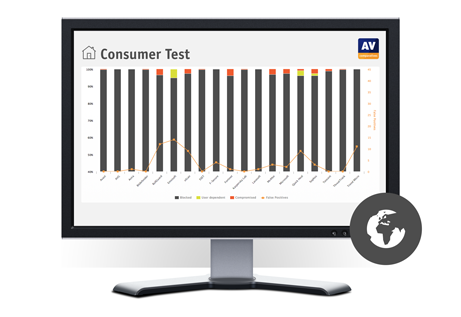
In the latest "real-world test" by AVC, MB had a score less than all the major AVs, inspite of its very high FP rate.

If we tried to eliminate the statisitical confounder (high FP) for the detection rate, we will end with even lower "actual" detection rate.

High detection rate means it nonspecifically flagging files to get higher than the true detection rate.

 
As usual with NB InfoTech videos, its display of results produced by the execution script is not clear; the recording shifted to the verification of the remaining samples before you can see in cmd the percentage of blockage on both sides.

In the latest "real-world test" by AVC, MB had a score less than all the major AVs, inspite of its very high FP rate.

If we tried to eliminate the statisitical confounder (high FP) for the detection rate, we will end with even lower "actual" detection rate.

High detection rate means it nonspecifically flagging files to get higher than the true detection rate.

MB main strength is its web protection
Back in the day both @Nightwalker and I shared the same opinion about MB.
 
I had with MB, and several other extensions including Symantec browser protection, Norton safe web, and McAfee webadvisor; all make mistakes.
I was not talking about the extension. I was talking about the web protection component in Malwarebytes which is different from the extension.
 
Even well-established antivirus vendors are not immune to mistakes, and I encountered a good example of this recently. While working on another system, I was submitting a malware sample through the official Avast/AVG sample submission portal. During the process, AVG flagged Avast’s own submission portal as malicious. In my opinion a vendor flagging it's own service was a bad hit and was surprised in AVG but It's still one of the best products and that wont keep me from using it. They did quickly fix the issue. All in All we know all products will fail at one point protection/false positives will always be a thing no product will ever be perfect not Avast not Kaspersky or even Bitdefender. Most of us can be without antivirus and not be infected just using an adblocker and sandboxie.
 
Last edited:
Even well-established antivirus vendors are not immune to mistakes
Agree regarding all AVs are susceptible to mistakes, whatever the name.
Disagree about MB is well-established, if you are including; only K, ESET, Norton/Avast/AVG, B, and McAfee could be considered well-establised, the rest are under-construction.
 
Even well-established antivirus vendors are not immune to mistakes, and I encountered a good example of this recently. While working on another system, I was submitting a malware sample through the official Avast/AVG sample submission portal. During the process, AVG flagged Avast’s own submission portal as malicious. In my opinion a vendor flagging it's own service was a bad hit and was surprised in AVG but It's still one of the best products and that wont keep me from using it. They did quickly fix the issue. All in All we know all products will fail at one point protection/false positives will always be a thing no product will ever be perfect not Avast not Kaspersky or even Bitdefender. Most of us can be without antivirus and not be infected just using an adblocker and sandboxie.
AVG flagged it's own blood is bad.
Eset on the other hand flagged other AV files based on my experience. Liveguard/Livegrid is too sensitive to the competition. Lols