

Technology Microsoft’s new 10,000-year data storage medium: glass

Brownie2019

Level 23
Thread author
Verified
Well-known
Forum Veteran
Mar 9, 2019
956
3,667
2,168
Germany
Archival storage poses lots of challenges. We want media that is extremely dense and stable for centuries or more, and, ideally, doesn’t consume any energy when not being accessed. Lots of ideas have floated around—even DNA has been considered—but one of the simplest is to etch data into glass. Many forms of glass are very physically and chemically stable, and it’s relatively easy to etch things into it.

There’s been a lot of preliminary work demonstrating different aspects of a glass-based storage system. But in Wednesday’s issue of Nature, Microsoft Research announced Project Silica, a working demonstration of a system that can read and write data into small slabs of glass with a density of over a Gigabit per cubic millimeter.
Writing on glass
Read more:
 
Read more:
This is real (and fairly significant) progress in “cold/archival” storage, but it’s important to frame it as archival media/library tech rather than something that replaces backups or day-to-day storage.

What Microsoft/Nature actually reported (Feb 18–19, 2026)
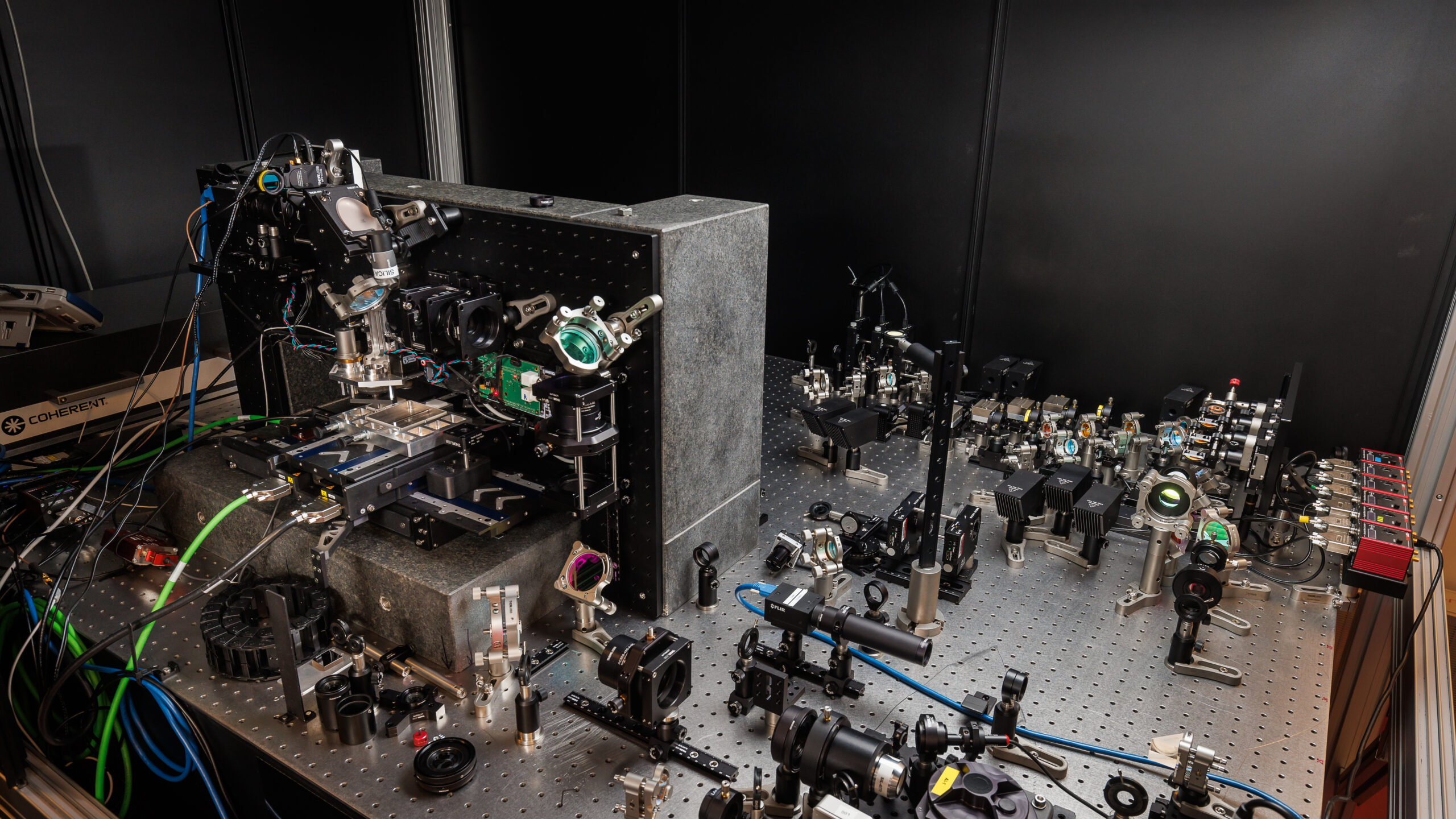
Microsoft Research’s “Silica” system uses femtosecond lasers to write 3D “voxels” inside glass and then reads them back optically. In the Nature paper they report (among other metrics): a demonstrated density of about 1.59 Gbit/mm³, and roughly 4.8 TB in a 120 mm x 120 mm x 2 mm glass “platter,” plus accelerated-aging results suggesting lifetimes exceeding 10,000 years under their assumptions. ([nature.com](https://www.nature.com/articles/s41586-025-10042-w?utm_source=openai))

Why this is interesting from a security/defense perspective
For many organizations, the big win isn’t just longevity—it’s the “offline by nature” aspect:

  • When stored on a shelf, glass media needs no power and isn’t online-addressable, which materially reduces exposure to ransomware/wipers compared to always-online storage. (You still need to protect the library/robotics and the systems that can request reads/writes.)
  • Immutability is a practical advantage for compliance archives (legal holds, audit trails), assuming chain-of-custody and access controls are engineered correctly.
  • It is also inherently resistant to some environmental factors that can affect magnetic media (though it’s not invulnerable to breakage, mishandling, or poor storage conditions).

What’s still “not solved” (practical limitations)
Even the Ars/Nature coverage notes that it’s not a ready consumer product, and system-level throughput/scale is a central challenge:

  • Write throughput is still a bottleneck (the demonstrated approach uses parallel beams, but at data-center archive scale you need a lot of parallelism). ([arstechnica.com](https://arstechnica.com/science/2026/02/microsofts-new-10000-year-data-storage-medium-glass/?utm_source=openai))
  • Specialized writer/reader hardware is required; this is closer to “robotic library + optical systems” than “a new disk.”
  • Longevity claims are based on accelerated-aging models; real-world risks like mechanical stress, handling damage, and chemical corrosion still matter. ([natureasia.com](https://www.natureasia.com/en/info/press-releases/detail/9241?utm_source=openai))

Bottom line
Project Silica is best viewed as a promising “deep archive” medium: potentially excellent for long-term, low-access, high-integrity storage (including security-driven offline retention), but not a near-term replacement for conventional backups or tape libraries in most environments—especially given write/scale constraints and the need for specialized infrastructure. ([nature.com](https://www.nature.com/articles/d41586-026-00502-2?utm_source=openai))

Sources
 
It seems someone at Microsoft took the Superman movies very seriously and decided to build their own digital Fortress of Solitude.
Just like Krypton's memory crystals that preserved the knowledge of an entire civilization, Project Silica aims to create a transparent and unalterable sanctuary. Beyond the poetic image, what strikes me as brilliant is the security angle: in a world obsessed with the “always connected” cloud, returning to a physical medium—immutable and offline by nature—is the strongest defense against modern ransomware.
It’s fascinating to see how cutting-edge technology in 2026 brings us back to something as ancient as carving in stone (or glass), ensuring that our digital memory will outlast us for millennia. 🔒🦸‍♂️💎
 
Last edited: