


silversurfer
Super Moderator
Thread author
Verified
Top Poster
Staff Member
Malware Hunter
Forum Veteran
- Aug 17, 2014
- 12,729
- 123,838
- 8,399
As the adoption of cryptographic protocols for secure website communication increased, cybercrooks also moved to HTTPS to keep their operation floating.
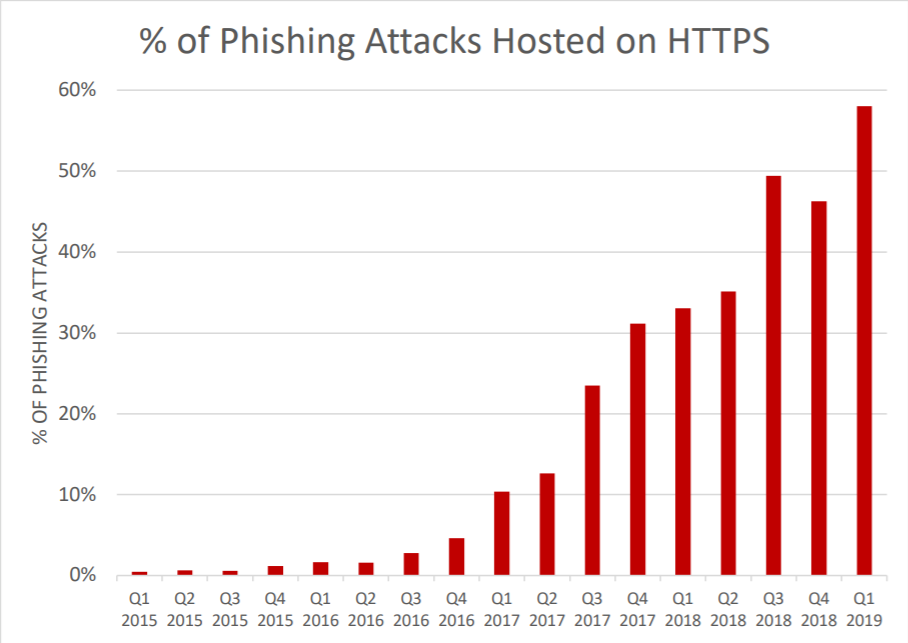
Over half of the phishing websites detected in the first quarter of the year used digital certificates to encrypt the connections from the visitor. This is a trend that kept growing since mid-2016.
HTTPS is designed to protect user privacy by encrypting the traffic between a website and the browser. This prevents third parties from viewing the data that's exchanged. It started as a defense against snooping traffic on pages with forms for sensitive information (payment card details, logins) and soon became a communication standard for the entire website.
Statistics from PhishLabs - a company that monitors phishing activity at a large scale, show that up to 58% of the phishing websites in the first months of 2019 were using the secure HTTP protocol. This is a 12% jump compared to the last quarter of 2018.

homepage
Fortra Brand Protection breaks the attack by detecting and mitigating lookalike domains, phishing sites, fake social profiles, and other external threats.


