

A worrying new scam involving fake $750 Amazon gift cards has been targeting social media users and spreading through SMS spam. This detailed guide will uncover everything you need to know about how the Amazon gift card scam works, what to do if you’ve fallen victim, and most importantly, how to protect yourself from this brazen fraud.
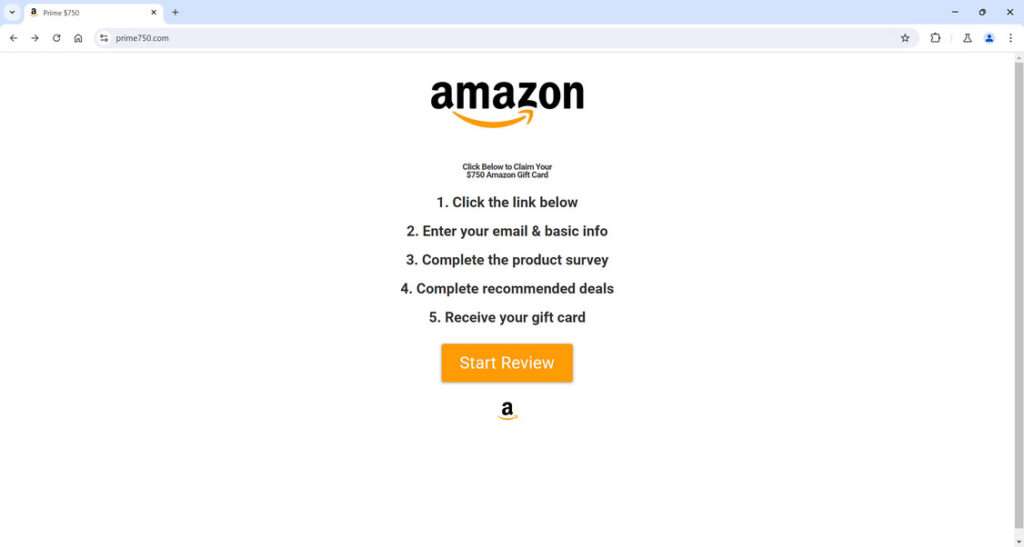
Scam Overview: How Criminals Are Impersonating Amazon to Steal Money and Personal Data
Scammers are using carefully crafted social media ads and SMS spam messages to lure unsuspecting users into providing their personal information under the false pretense of receiving a lucrative $750 Amazon gift card.
The scam works like this:
- Scam ads and messages typically appear on platforms like Facebook, Instagram, WhatsApp, and Telegram. They’ll often use Amazon branding and claim the user has been selected to receive a $750 gift card.
- If the user clicks on the link, they are redirected to a fake website impersonating Amazon. The scam site will have a similar look and feel to the real Amazon site in order to appear legitimate.
- The fraudulent site prompts the user to complete a series of surveys, download malware-infected apps, sign up for free trials of products, or share personal information to allegedly receive the $750 gift card.
- In reality, no gift card exists. The scammers are simply trying to harvest personal data for identity theft purposes, install malware on devices, or sign victims up for services they don’t want.
This highly deceptive scam has already affected thousands of users around the world, causing many to hand over sensitive information or download dangerous files onto their devices.
By impersonating Amazon and using their reputation to deceive users, these fraudsters gain the trust element needed to trick unsuspecting people. It is a prime example of how fraud tactics evolve over time to maximize success.
How the $750 Amazon Gift Card Scam Actually Works Step-by-Step
To fully protect yourself, it’s critical to understand the elaborate methods scammers use in this Amazon gift card scam. Here is a step-by-step breakdown of exactly how the fraud works:
Step 1 – Scam Ads and Messages Go Viral Across Social Media
The scammers begin by posting scam ads and messages on popular social networks and messaging apps. Platforms frequently targeted include:
- Telegram
- TikTok
- Text messages/SMS
The scam content often claims the user has been specially selected to receive a $750 Amazon gift card for free. Some examples read:
“Congrats Amazon user! You’ve been selected to take part in a brief survey about your shopping habits and receive a $750 Amazon gift card!”
“Click below now to claim your $750 Amazon gift card! Limited time offer for chosen Amazon customers.”
“Amazon awards! We are giving away $750 gift cards to a few lucky users. Check if you have won!”
The messages use Amazon branding, such as their logo, name, and gift card imagery, to appear credible. Links in the ads and posts redirect to outside websites.
Step 2 – Users Are Led to Fake Websites Pretending to be Amazon
When users click on the links in the scam ads or messages, they are redirected away from social media to external websites. These fraudulent sites are carefully designed to mimic the real Amazon site, often using an extremely similar layout and web address.
For example, instead of “amazon.com”, it may use a deceiving domain along the lines of “amazon-rewards.com”. Some signs it’s a scam site:
- The URL is not the official Amazon domain
- Spelling errors, grammatical mistakes, and other typos
- Asks for personal info like bank account details
- Images may be slightly blurry or pixelated
The fake sites are well-made enough to convince many users they are on the legitimate Amazon website. This tricks them into believing the offer is real.
Step 3 – Users Are Prompted to Complete Tasks and Input Personal Information
Once on the fraudulent website, users are prompted to complete a range of tasks and input personal information to allegedly claim their $750 gift card. Typical requests include:
- Filling out surveys about shopping habits
- Downloading and installing mobile apps
- Signing up for free trials of products or services
- Entering personal info like full name, date of birth, address
- Providing bank account or payment details
- Submitting a government ID scan
The scammers pose as Amazon, claiming these tasks are a necessary verification process for handing out the gift cards. In reality, they are simply trying to harvest data and take advantage of users.
Step 4 – No Gift Card is Provided, But the Damage is Already Done
After submitting personal information and completing scam tasks, victims eventually realize they are not getting an Amazon gift card. The whole thing is an elaborate ruse designed to trick users while keeping them on the hook as long as possible.
But by this point, it’s too late – the scammers have already gained access to their data. Consequences can include:
- Identity theft – Full name, birthdate, address are stolen. This can allow criminals to open bank accounts and credit cards in the victim’s name.
- Account compromise – Banking details obtained can give scammers access to your accounts and funds.
- Email/password access – Email addresses and passwords provided can be used to access your other online accounts.
- Malware downloads – Fake apps downloaded infect devices with data-stealing malware, spyware, and viruses.
- Unwanted charges – Signing up for free trials and offers will convert into monthly charges from shady third parties.
The scammers profit off this stolen data and unwarranted charges, while victims are left to deal with the aftermath.
How to Spot This Scam on Social Media and Fraudulent Websites
The $750 Amazon gift card scam relies on impersonation and deception to trick users. Here are some red flags to watch out for:
Suspicious Social Media Ads and Posts
- Ads or posts promising free Amazon gift cards, especially for high values like $750.
- Messages claiming you were specially “selected” to receive a gift card or participate in a contest you didn’t enter.
- Posts using official Amazon logos and gift card graphics without being posted from Amazon’s actual social media accounts.
- Links in the posts sending you to unrelated outside websites instead of Amazon.com.
Scam Website URL Warning Signs
Fake scam pages imitating Amazon often use deceptive website addresses. Watch for:
- Misspelled or altered Amazon domain names like “amazon-win.com”.
- URLs containing “amazon” but from completely unrelated sites.
- Non-secure HTTP links instead of HTTPS protected sites.
- Domains registered very recently instead of long-standing sites.
Suspicious Behaviors and Requests
Other red flags include sites that:
- Ask you to complete questionable surveys before receiving the gift card.
- Make you download apps from outside sources or app stores.
- Require excessive personal information beyond just a name and email.
- Request financial information like bank account and credit card numbers.
- Use poor grammar, typos, spacing errors and other mistakes.
- Feature blurry, low-res images or generally unprofessional design.
Stay vigilant for these signs across social media ads and scam websites. If anything seems suspicious, avoid engaging and steer clear. Only enter your information on amazon.com directly to stay secure.
What to Do If You Have Fallen Victim to the $750 Amazon Gift Card Scam
If you suspect you have fallen prey to the fake $750 Amazon gift card scam, here are the key steps to take right away:
1. Contact your bank and card providers immediately.
If you entered any financial information, call your bank and credit/debit card companies. Report what happened and request that they monitor your accounts for fraudulent activity. Ask to cancel any cards that may have been compromised.
2. Place a fraud alert and consider freezing your credit.
Contact one of the three major credit bureaus – Experian, TransUnion or Equifax – to place an initial 90 day fraud alert. Also consider freezing your credit with each bureau to lock down your credit reports and prevent scammers from opening new accounts in your name.
3. Reset all account passwords and enable two-factor authentication where possible.
If you provided any usernames, passwords or other account access, change your credentials across every account that could be impacted. Enable multi-factor authentication for an added layer of security on accounts like email, social media and financial services.
4. Scan all devices with antivirus software and update apps/operating systems.
Download and perform full scans using trusted antivirus software like Norton, McAfee or BitDefender to remove any malware, spyware or viruses. Also make sure to update your devices’ apps, operating systems and security patches.
5. Watch for any suspicious activity in all accounts.
Carefully monitor bank and credit card statements, credit reports, online accounts and health insurance records for any transactions or activity you don’t recognize. Report anything suspicious to the relevant providers.
6. Submit a complaint with the FTC and your local authorities.
File a scam report with the Federal Trade Commission (FTC) and your local police department so these authorities can investigate the criminals behind it.
7. Warn friends and family about the scam.
Let your friends and family know how the Amazon gift card scam works so they can avoid it. Share this article and spread awareness about this fraud on your own social media channels.
By taking these steps, you can limit the damage inflicted by this scam and prevent further misuse of your information. But it’s critical to act fast once you realize you’ve been targeted. The longer criminals have access to your data, the higher the risk of identity theft and account abuse.
Is Your Device Infected? Run a Free Malware Scan
Slow performance, constant pop-ups, or strange behavior? These are classic signs of a malware infection. The fastest way to find out is to scan your device with Malwarebytes Free — one of the most trusted malware removal tools available.
The free version detects and removes the most common threats, including:
- Adware — the cause of those annoying pop-ups
- Browser hijackers — unwanted redirects and changed homepages
- Trojans and spyware — hidden programs stealing your data
- Potentially unwanted programs (PUPs) — software you never asked for
👉 Select your device below — Windows, Mac, or Android — then follow the simple steps to download Malwarebytes, scan your system, and remove any threats it finds. The scan usually takes 5 to 20 minutes.
Run a Malware Scan with Malwarebytes for Windows
Malwarebytes is one of the most popular and trusted anti-malware tools for Windows — and it’s completely free for removing infections. It catches threats that many antivirus programs miss, including adware, browser hijackers, and trojans. Follow the steps below to scan and clean your PC in just a few minutes.
Download Malwarebytes
Click the button below to download the latest version of Malwarebytes for Windows from the official source. The free version is all you need — it will scan your computer and remove adware, browser hijackers, and other malicious software at no cost.
Download MalwarebytesOfficial installer for Windows 11 and 10. Your download starts right away.Want real-time protection? See Malwarebytes Premium Malwarebytes Free for WindowsScans and removes malware at no cost
-
Install Malwarebytes
When the download finishes, open your Downloads folder and double-click the MBSetup file. If Windows shows a User Account Control pop-up, click “Yes” to allow the installation.
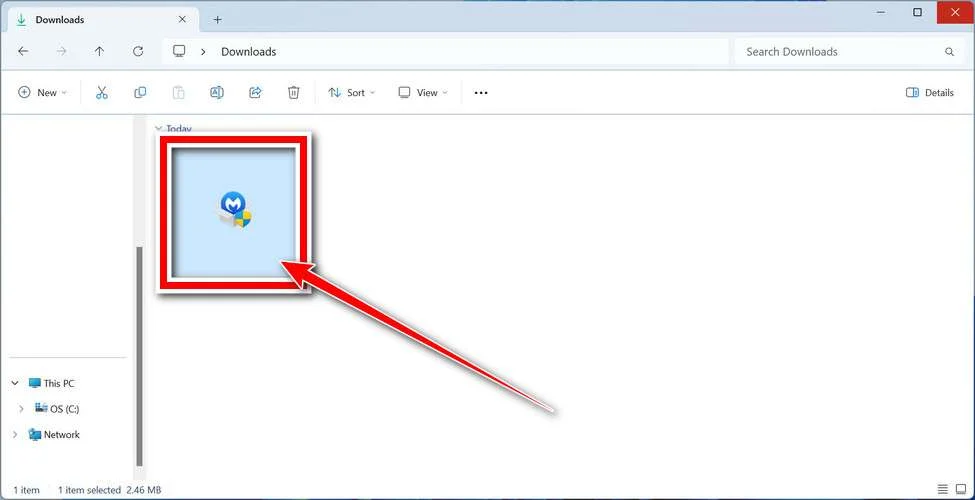
Follow the On-Screen Prompts to Install Malwarebytes
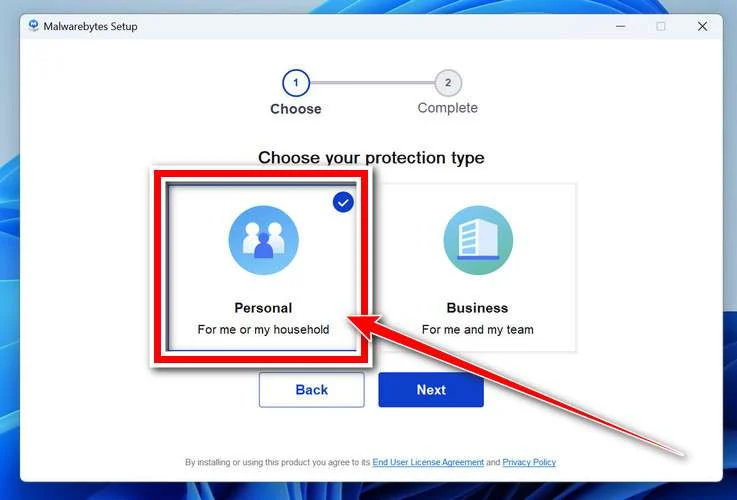
The setup wizard will walk you through a few quick screens:
-
Choose where you’re installing the program — “Personal Computer” or “Work Computer” — then click Next.
-
Malwarebytes will now install on your device. This usually takes under a minute.

-
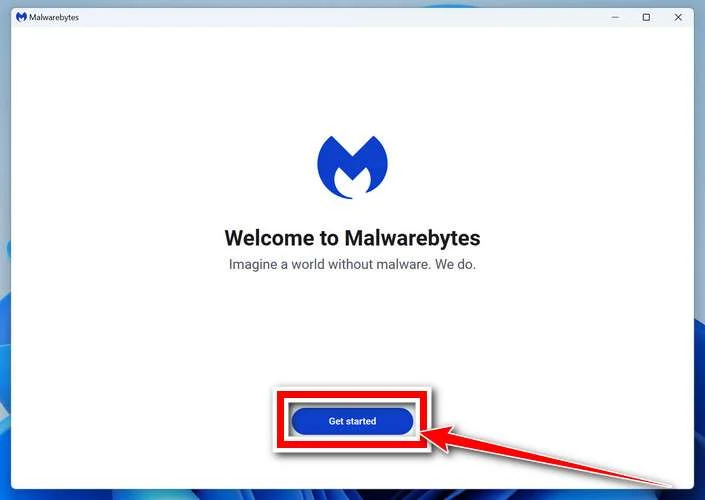
When installation is complete, the “Welcome to Malwarebytes” screen will open automatically.
-
On the final screen, click Open Malwarebytes to launch the program.

-
Enable “Scan for Rootkits”
Before scanning, turn on rootkit detection so Malwarebytes can find even the most hidden threats. Click the Settings gear icon on the left side of the screen.
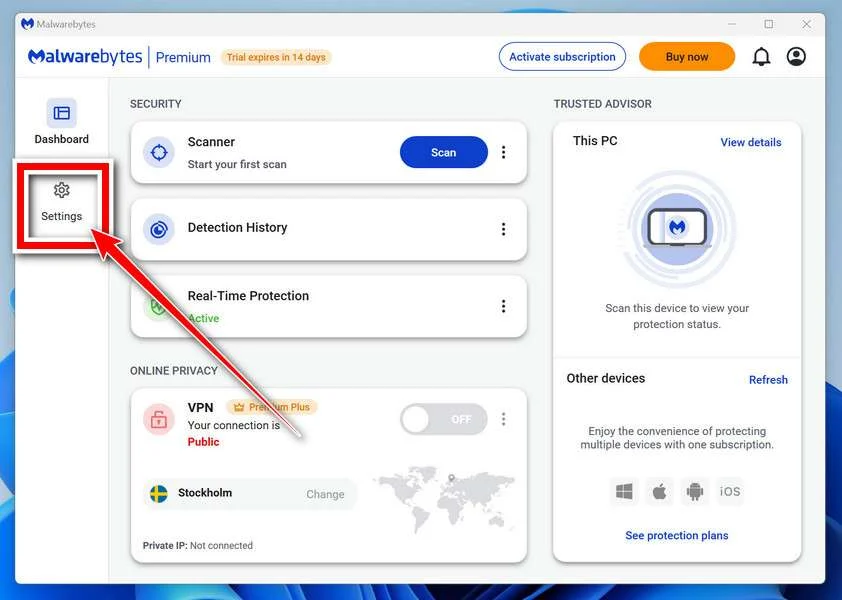
In the settings menu, find “Scan for rootkits” and click the toggle so it turns blue.

Done? Click “Dashboard” in the left pane to return to the main screen.
Start the Scan
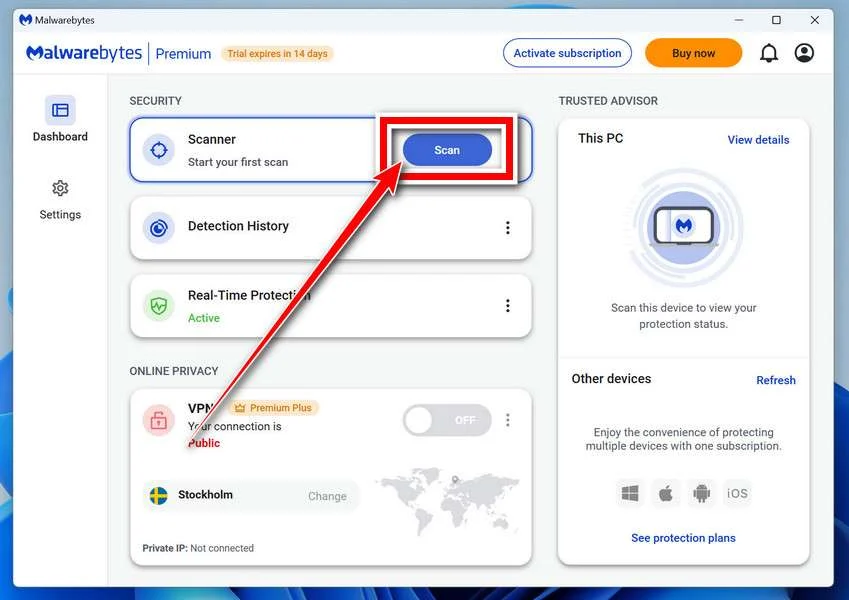
Click the blue Scan button. Malwarebytes will automatically update its virus database and start checking your computer for malware.
-
Wait for the Scan to Finish
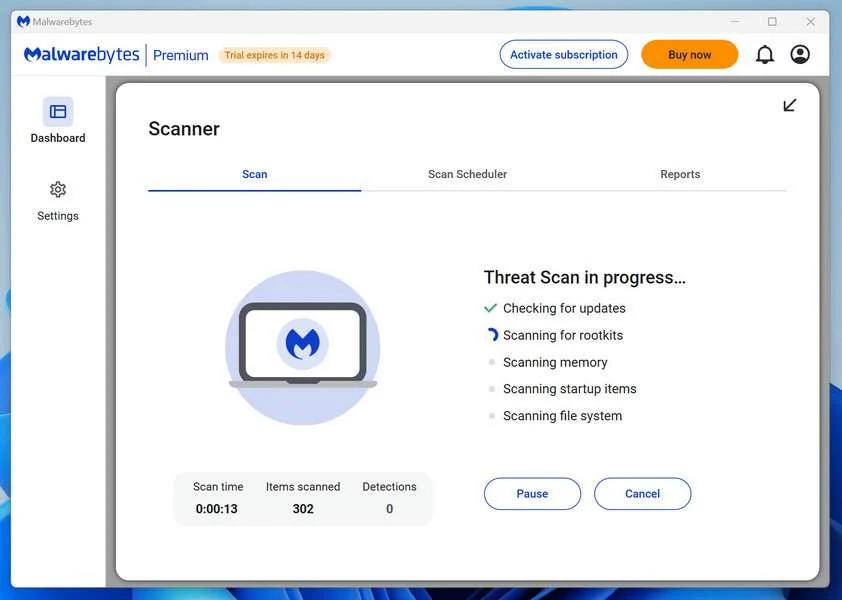
The scan checks your entire system for browser hijackers and other malicious programs, so it can take 5 to 20 minutes depending on your computer. Feel free to do something else — just check back occasionally to see the progress.
-
Quarantine the Detected Threats
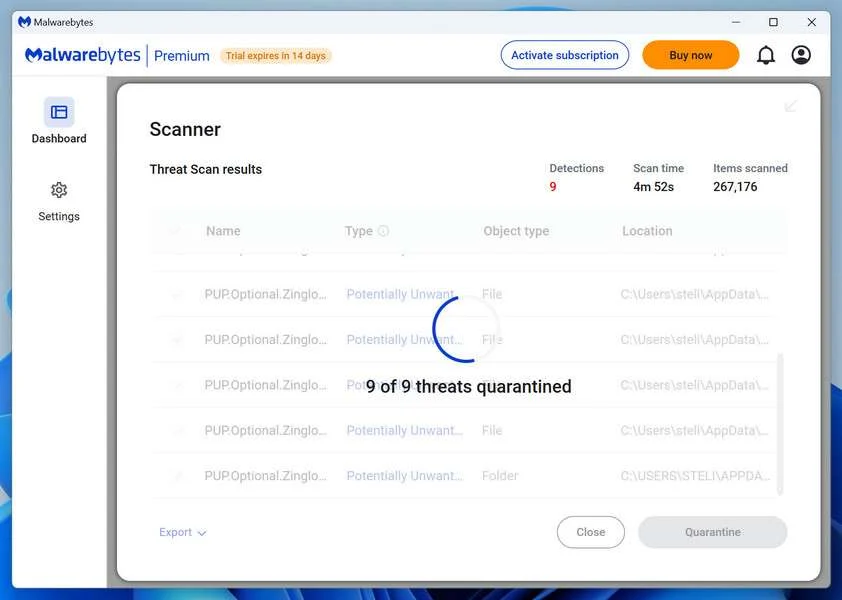
When the scan is done, you’ll see a list of everything Malwarebytes found — malware, adware, and potentially unwanted programs. Click the “Quarantine” button to remove all of them at once.
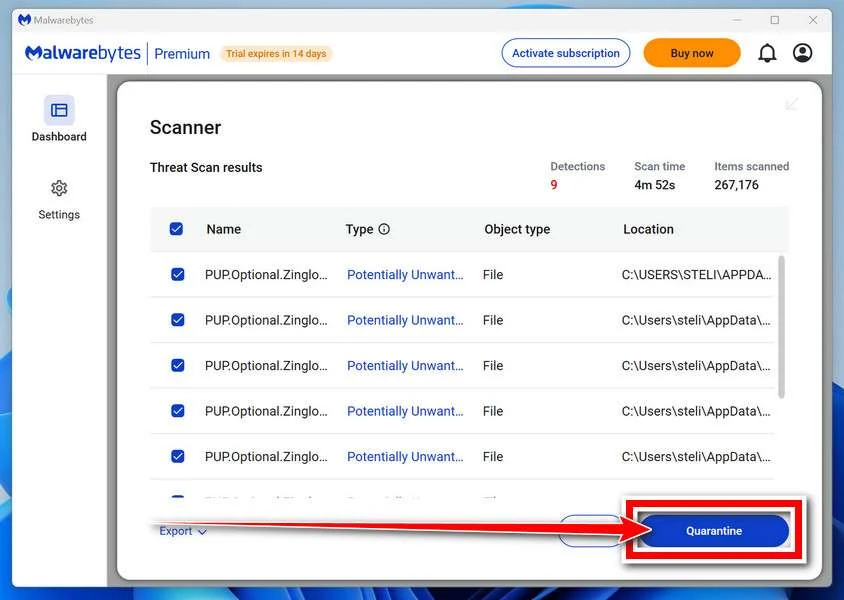
Malwarebytes will now remove the malicious files and registry entries and move them safely into quarantine.
-
Restart Your Computer
Some threats can only be fully removed after a reboot. If Malwarebytes asks you to restart, click Yes. Once you’re logged back in, Malwarebytes has finished removing the threats it found.
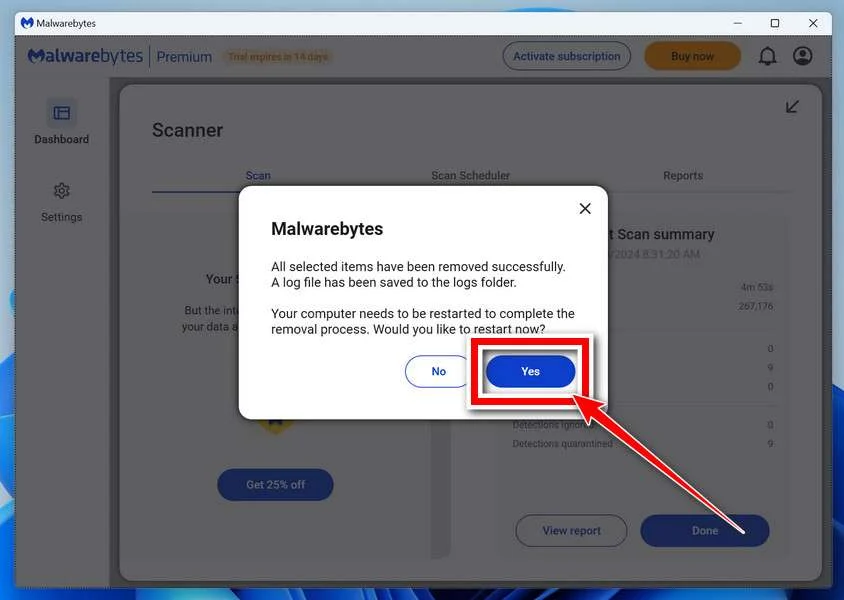
That’s it — your Windows PC is now clean of trojans, adware, and other malware, and should be back to running smoothly.
If you are still having problems with your computer after completing these instructions, then please follow one of the steps:
- Run a computer scan with ESET Online Scanner
- Ask for help in our Windows Malware Removal Help & Support forum.
Run a Malware Scan with Malwarebytes for Mac
Malwarebytes for Mac is a free on-demand scanner that removes the malware other security software tends to miss — adware, browser hijackers, and unwanted programs included. Cleaning an infected Mac with Malwarebytes has always been completely free, and it’s our go-to recommendation. Follow the steps below to scan and clean your Mac in just a few minutes.
-
Download Malwarebytes for Mac
Click the button below to download the latest version of Malwarebytes for Mac.
Download MalwarebytesOfficial installer for macOS. Your download starts right away.Want real-time protection? See Malwarebytes PremiumMalwarebytes Free for MacScans and removes malware at no cost -
Open the Malwarebytes setup file
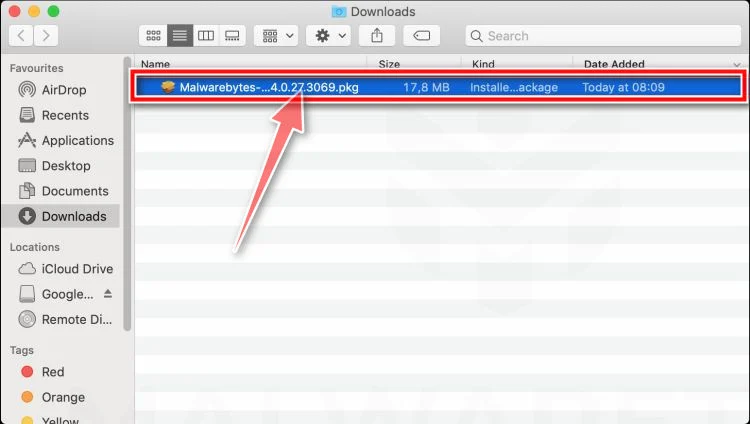
When the download finishes, open your Downloads folder and double-click the setup file to begin the installation.
-
Follow the On-Screen Prompts to Install Malwarebytes
The Malwarebytes for Mac Installer will guide you through a few quick screens. Click “Continue” and keep following the prompts until the installation completes.
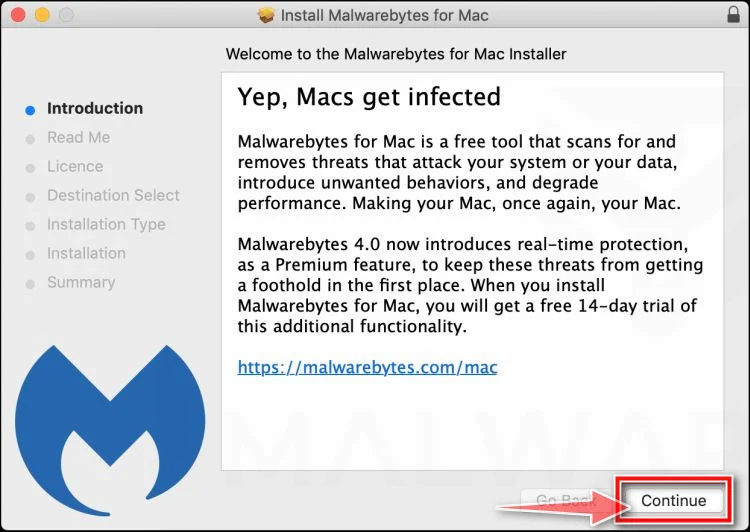
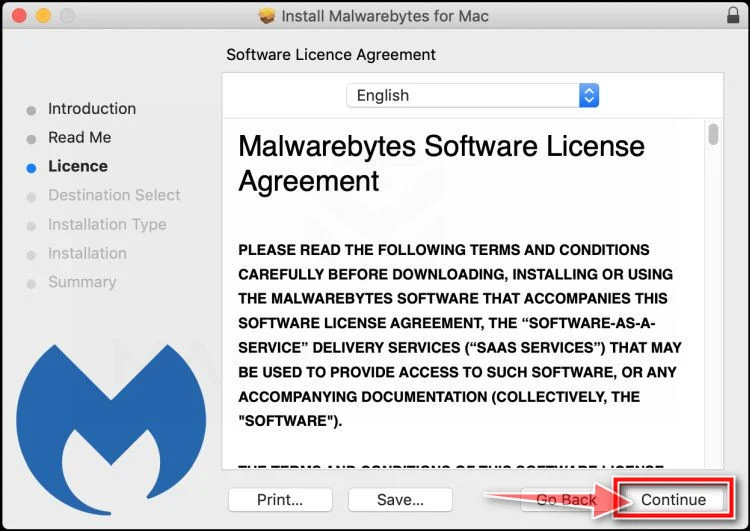
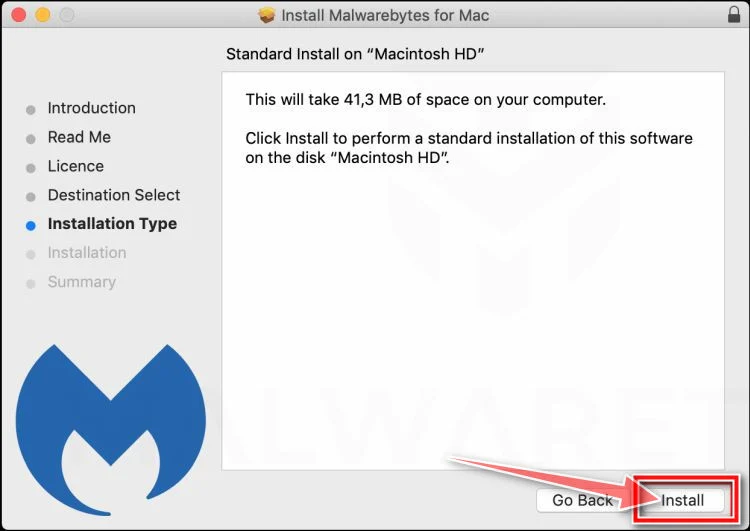
When the installation is complete, Malwarebytes opens to the Welcome to Malwarebytes screen. Click “Get started“.
-
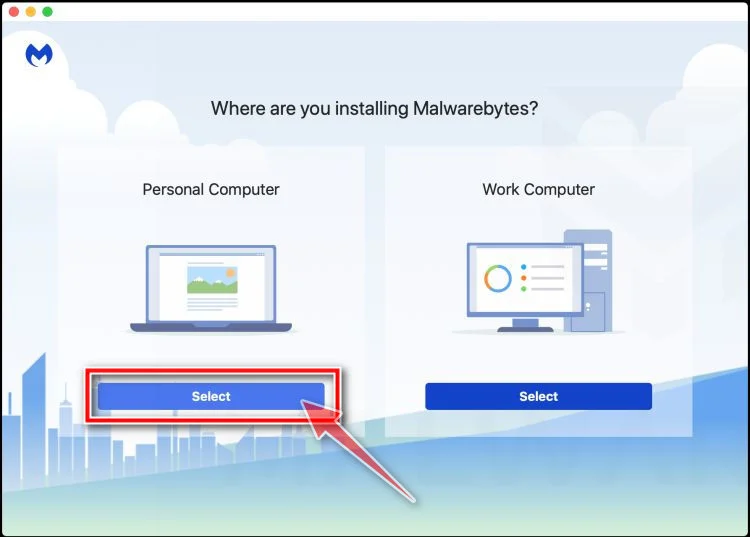
Select “Personal Computer” or “Work Computer”
Malwarebytes will ask what type of computer you’re installing it on. Click either Personal Computer or Work Computer, whichever applies.
-
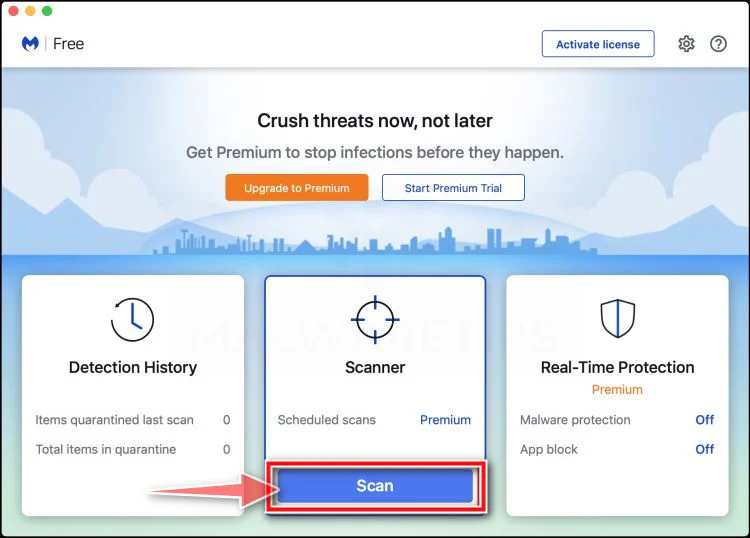
Start the Scan
Click the “Scan” button. Malwarebytes will automatically update its detection database and begin checking your Mac for malware.
-
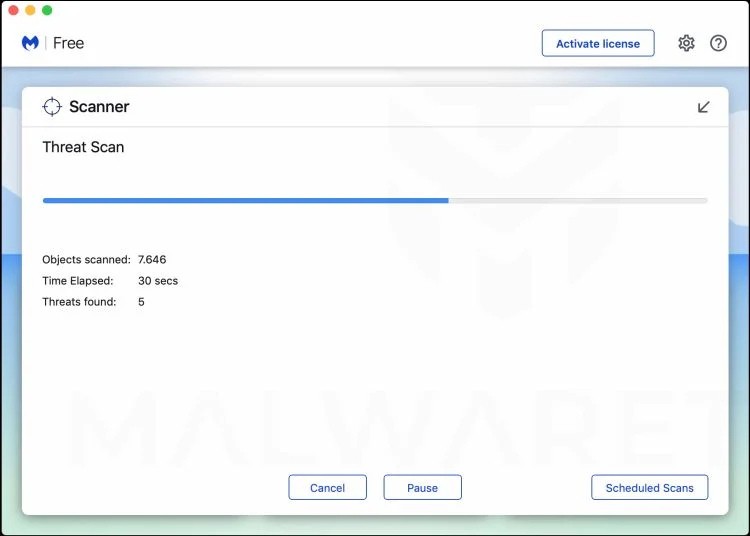
Wait for the Scan to Finish
Malwarebytes will scan your Mac for adware, browser hijackers, and other malicious programs. This can take a few minutes, so feel free to do something else — just check back occasionally to see the progress.
-
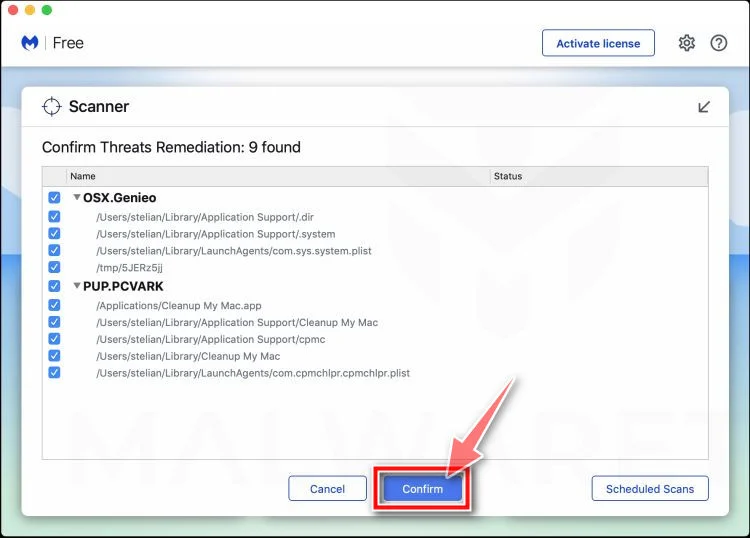
Quarantine the Detected Threats
When the scan is done, you’ll see a list of everything Malwarebytes found. Click the “Quarantine” button to remove all the threats at once.
-
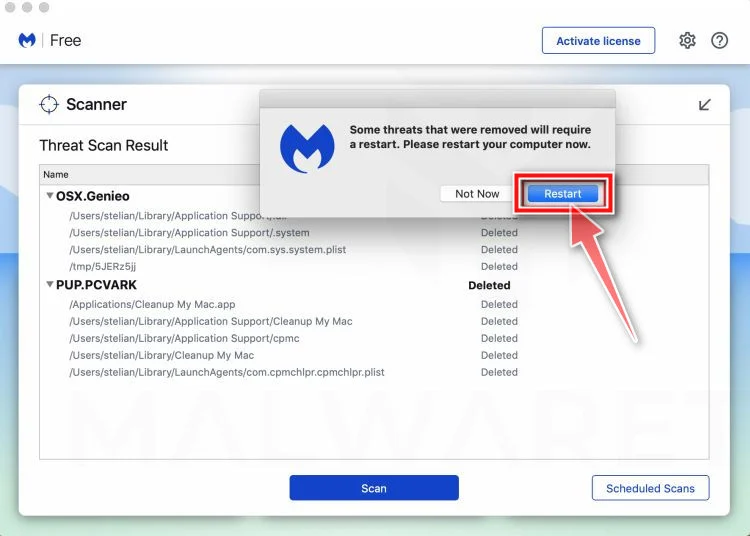
Restart Your Mac
Malwarebytes will now remove all the malicious files it found. Some threats can only be fully removed after a reboot — if Malwarebytes asks you to restart, allow it. Once you’re logged back in, your Mac is clean.
That’s it — your Mac is now free of adware, rogue browser extensions, and other potentially harmful software.
If you are still experiencing problems while trying to remove a malicious program from your computer, please ask for help in our Mac Malware Removal Help & Support forum.
Run a Malware Scan with Malwarebytes for Android
Malwarebytes for Android automatically detects and removes dangerous threats like malware and ransomware so you don’t have to worry about your most-used device being compromised. Aggressive detection of adware and potentially unwanted programs keeps your Android phone or tablet running smooth.
-
Download Malwarebytes for Android.
You can download Malwarebytes for Android by clicking the link below.
Get Malwarebytes for AndroidOpens Google Play in a new tab.Want real-time protection? See Malwarebytes Premium for AndroidMalwarebytes for AndroidScans your phone and removes malware at no cost -
Install Malwarebytes for Android on your phone.
In the Google Play Store, tap “Install” to install Malwarebytes for Android on your device.

When the installation process has finished, tap “Open” to begin using Malwarebytes for Android. You can also open Malwarebytes by tapping on its icon in your phone menu or home screen.

-
Follow the on-screen prompts to complete the setup process
When Malwarebytes will open, you will see the Malwarebytes Setup Wizard which will guide you through a series of permissions and other setup options.
This is the first of two screens that explain the difference between the Premium and Free versions. Swipe this screen to continue.
Tap on “Got it” to proceed to the next step.
Malwarebytes for Android will now ask for a set of permissions that are required to scan your device and protect it from malware. Tap on “Give permission” to continue.
Tap on “Allow” to permit Malwarebytes to access the files on your phone.
-
Update database and run a scan with Malwarebytes for Android
You will now be prompted to update the Malwarebytes database and run a full system scan.

Click on “Update database” to update the Malwarebytes for Android definitions to the latest version, then click on “Run full scan” to perform a system scan.

-
Wait for the Malwarebytes scan to complete.
Malwarebytes will now start scanning your phone for adware and other malicious apps. This process can take a few minutes, so we suggest you do something else and periodically check on the status of the scan to see when it is finished.

-
Click on “Remove Selected”.
When the scan has been completed, you will be presented with a screen showing the malware infections that Malwarebytes for Android has detected. To remove the malicious apps that Malwarebytes has found, tap on the “Remove Selected” button.

-
Restart your phone.
Malwarebytes for Android will now remove all the malicious apps that it has found. To complete the malware removal process, Malwarebytes may ask you to restart your device.
That’s it — your Android phone is now clean — no more malicious apps, adware, or browser redirects.
If you are still having problems with your phone after completing these instructions, then please follow one of the steps:
- Restore your phone to factory settings by going to Settings > General management > Reset > Factory data reset.
- Ask for help in our Mobile Malware Removal Help & Support forum.
Stay Protected: Block Ads and Malicious Sites
Now that your device is clean, keep it that way. Most infections start with a malicious ad or a fake download button — so blocking them at the source is your best defense.
We recommend AdGuard, which blocks malicious ads, phishing pages, and dangerous redirects before they can reach you.
👉 Download AdGuard and browse safely
The Bottom Line: Protecting Yourself from the Fake $750 Amazon Gift Card Scam
Avoiding this brazen scam comes down to spotting and stopping it before any damage is done. Use these proactive tips to keep yourself and your information safe:
- Verify offers carefully – Scrutinize social media posts, texts and emails offering free gift cards. Confirm messages actually come from official Amazon channels.
- Analyze links closely – Inspect URLs to ensure they go to amazon.com directly, not copycat sites. Use URL preview tools if unsure.
- Never enter personal information on third-party websites or in response to social media offers. Amazon does not need your data to provide gift cards.
- Do not download files from unfamiliar sites or ads. They may contain malware or viruses. Only use the official Amazon app from your device’s app store.
- Avoid “limited time” offers designed to pressure you into acting irrationally. Take time to assess legitimacy before providing info.
- Secure your accounts with strong passwords and two-factor authentication. Make it harder for scammers to access your data.
- Monitor accounts closely and review statements for any unauthorized activity. Report suspicious transactions immediately.
Ultimately, critically evaluating any gift card offers and treating them with skepticism is key. If an opportunity seems questionable, it’s best to simply avoid engaging altogether.

Join the discussion
0 commentsShare your experience or ask a question about this article.
Discussion
Start the conversation
Have a question or something useful to share? Add the first comment.