Carmen Russo Has Sent You $0.02 USD PayPal Scam EXPOSED – Investigation
Written by: Thomas Orsolya
Published on:
A PayPal notification about a $0.01 or $0.02 payment does not seem like the start of a serious scam. That is exactly why this trick catches people off guard.
In this scheme, scammers send a tiny amount of money and hide an alarming message inside the transaction note. The note tells the recipient to call a supposed PayPal support number right away if they did not authorize the payment.
What happens next is where the real danger begins.
Instead of reaching PayPal, victims are connected to fake support agents who try to create panic, gain remote access to the victim’s device, steal financial information, and pressure them into sending money or buying gift cards.
This article breaks down how the PayPal $0.02 scam works, why the message can look convincing, and what to do if you have already interacted with it.
Scam Overview
The “Carmen Russo has sent you $0.02 USD” PayPal scam is a modern variation of a broader tactic known as payment baiting combined with tech support fraud.
Instead of sending phishing emails that look fake, scammers exploit something far more convincing: real PayPal transactions.
That single detail changes everything.
Why This Scam Feels Legitimate
Most scams fail because they rely on poorly written emails or fake websites. This one is different.
Victims often receive:
A real PayPal notification email
A legitimate small payment in their account
A note attached to the transaction that appears urgent
The message typically reads something like:
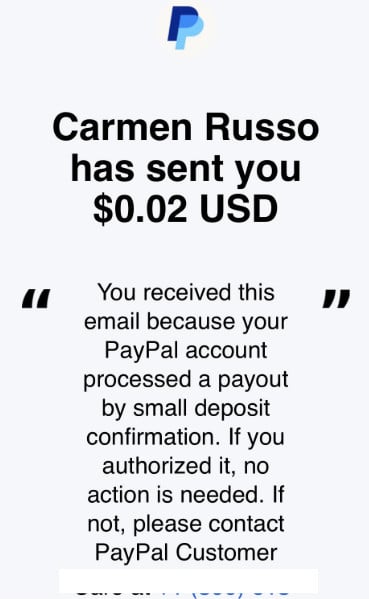
“You received this email because your PayPal account processed a payout by small deposit confirmation.”
“If you did not authorize this, contact PayPal Customer Care at [phone number] immediately.”
Everything looks authentic because:
The email may actually come from PayPal’s system
The transaction exists in your account history
The sender name, such as “Carmen Russo,” appears like a normal user
This removes the usual red flags people rely on.
The Psychological Hook
The scam works because it triggers a specific reaction: confusion mixed with urgency.
People think:
“Why did I receive money?”
“Is someone testing my account?”
“Is this the beginning of fraud?”
That uncertainty pushes victims to act quickly.
And when a phone number is provided, many people call without thinking twice.
The Role of the Tiny Payment
The $0.01 or $0.02 amount is not random.
It serves several purposes:
It avoids suspicion since it is too small to seem like theft
It ensures the transaction goes through without triggering fraud systems
It acts as a delivery mechanism for the scam message
This technique is similar to something called “microtransaction phishing”, where attackers use legitimate systems to deliver malicious instructions.
Why Names Like “Carmen Russo” Are Used
Scammers often use realistic names to make the transaction look normal.
These names may be:
Randomly generated
Taken from real people
Rotated frequently to avoid detection
The goal is simple: make the payment look like a regular peer-to-peer transfer.
The Fake Support Number
The most dangerous part of the scam is not the payment.
It is the phone number embedded in the message.
Victims are instructed to call what appears to be PayPal customer support.
In reality, the number connects to a fraudulent call center.
These operations are often:
Organized
Script-driven
Designed to sound professional
Once the victim calls, the scam escalates rapidly.
Why This Scam Is Increasing
This tactic has become more common for several reasons:
People trust notifications from platforms like PayPal
Email security has improved, making traditional phishing less effective
Voice scams are harder to detect and easier to personalize
By combining a real transaction with a fake support channel, scammers bypass many traditional defenses.
Real-World Reports
Numerous users have reported receiving these micro-payments with suspicious notes.
In online communities such as Reddit, victims describe nearly identical experiences:
Receiving $0.01 or $0.02
Seeing a message urging them to call a number
Realizing later it was a scam
This consistency shows that the scam is not isolated. It is part of a coordinated campaign.
How The Scam Works
To understand the risk, it helps to break the scam down step by step.
Step 1: The Small Payment Arrives
The process begins when the scammer sends a tiny amount to your PayPal account.
You receive:
A notification email
A visible transaction in your account
Attached to the transaction is the key element: a fraudulent message.
This message includes:
A warning about unauthorized activity
A phone number to call
At this stage, nothing has been stolen yet.
The scam is still in its early phase.
Step 2: The Victim Calls the Number
This is the turning point.
The victim calls the number listed in the message, believing it is legitimate support.
The call is answered by someone who:
Sounds professional
Uses scripted language
Identifies themselves as PayPal support
The scammer’s goal is to build trust quickly.
They may say:
“We see suspicious activity on your account”
“Your account may be compromised”
“We need to secure your device immediately”
The tone is calm but urgent.
Step 3: Fear and Urgency Are Amplified
Once the call begins, the scammer escalates the situation.
They may claim:
Your account has been hacked
Multiple transactions are pending
Your funds are at risk
This creates pressure.
Victims are pushed into a state where they are more likely to follow instructions without questioning them.
Step 4: Remote Access Is Requested
Next, the scammer asks the victim to install remote access software.
Common tools include:
AnyDesk
TeamViewer
They explain it as:
“We need to secure your account”
“We will help you process a refund”
“We need to check your system for threats”
This is the most dangerous step.
Once access is granted, the scammer can:
See everything on your screen
Control your device
Access sensitive information
Step 5: The Fake Refund or Security Process
After gaining access, scammers often run a scripted scenario.
They may:
Open your bank account page
Display fake transactions
Manipulate the screen to show errors
One common trick is the “refund scam”:
The scammer claims they accidentally refunded too much
They ask you to send the extra money back
Another variation involves:
Claiming your device is infected
Offering to “fix” it for a fee
Step 6: Extraction of Money
At this stage, the scam becomes direct financial theft.
Scammers may instruct victims to:
Transfer money via bank or PayPal
Purchase gift cards and share the codes
Send cryptocurrency
Gift cards are especially common because:
They are hard to trace
Transactions are irreversible
Victims are often told:
“This is the fastest way to secure your account”
“We need this to complete the refund process”
Step 7: Data Theft
Beyond money, scammers also collect sensitive information.
This may include:
Banking credentials
Email logins
Personal identification details
With this information, they can:
Access other accounts
Commit identity theft
Launch additional scams
Step 8: Disappearance
Once the scammer has extracted value, they disappear.
The phone number may stop working
Emails go unanswered
No refunds are issued
Victims are left to deal with the consequences.
What To Do If You Have Fallen Victim to This Scam
If you have interacted with this scam, act quickly. The faster you respond, the better your chances of limiting damage.
1. Disconnect Immediately
If you granted remote access:
Disconnect your internet
Close the remote software
Power off your device if necessary
This stops further access.
2. Remove Remote Access Software
Uninstall any tools like:
AnyDesk
TeamViewer
Then:
Restart your device
Run a full security scan
3. Contact PayPal Directly
Reach out to PayPal using official channels only.
Log in through the official website
Use contact options inside your account
Do not use phone numbers from emails or transaction notes.
4. Secure Your Financial Accounts
Immediately:
Change your PayPal password
Update your email password
Enable two-factor authentication
Then:
Check for unauthorized transactions
Contact your bank if needed
5. Contact Your Bank or Card Provider
If money was transferred:
Report the transaction as fraud
Request a reversal or chargeback
Act quickly. Timing is critical.
6. Monitor Your Accounts
For the next weeks:
Watch for unusual activity
Review statements regularly
Set up alerts if available
7. Report the Scam
Report the incident to:
PayPal
Your local authorities
Consumer protection agencies
You can also share your experience on platforms like Reddit to warn others.
8. Be Cautious of Follow-Up Scams
Victims are often targeted again.
Be alert for:
“Recovery services” asking for fees
Calls claiming to fix the problem
These are usually scams as well.
Is Your Device Infected? Run a Free Malware Scan
Slow performance, constant pop-ups, or strange behavior? These are classic signs of a malware infection. The fastest way to find out is to scan your device with Malwarebytes Anti-Malware Free — one of the most trusted malware removal tools available.
The free version detects and removes the most common threats, including:
Adware — the cause of those annoying pop-ups
Browser hijackers — unwanted redirects and changed homepages
Trojans and spyware — hidden programs stealing your data
Potentially unwanted programs (PUPs) — software you never asked for
👉 Select your device below — Windows, Mac, or Android — then follow the simple steps to download Malwarebytes, scan your system, and remove any threats it finds. The whole process takes about 5 minutes.
Malwarebytes for WindowsMalwarebytes for MacMalwarebytes for Android
Run a Malware Scan with Malwarebytes for Windows
Malwarebytes is one of the most popular and trusted anti-malware tools for Windows — and it’s completely free for removing infections. It catches threats that many antivirus programs miss, including adware, browser hijackers, and trojans. Follow the steps below to scan and clean your PC in just a few minutes.
Download Malwarebytes
Click the button below to download the latest version of Malwarebytes for Windows from the official source. The free version is all you need — it will scan your computer and remove adware, browser hijackers, and other malicious software at no cost.
(The link opens in a new page where your download will start)
Install Malwarebytes
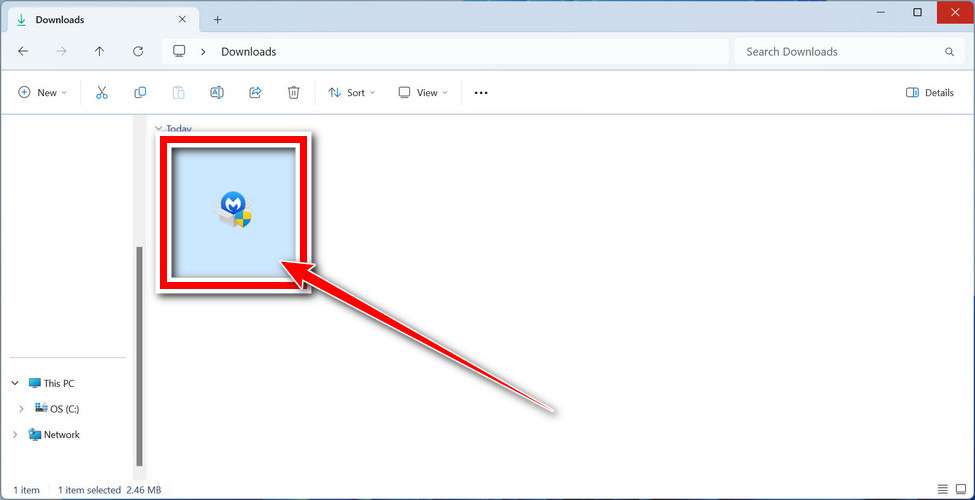
When the download finishes, open your Downloads folder and double-click the MBSetup file. If Windows shows a User Account Control pop-up, click “Yes” to allow the installation.
Follow the On-Screen Prompts to Install Malwarebytes
The setup wizard will walk you through a few quick screens:
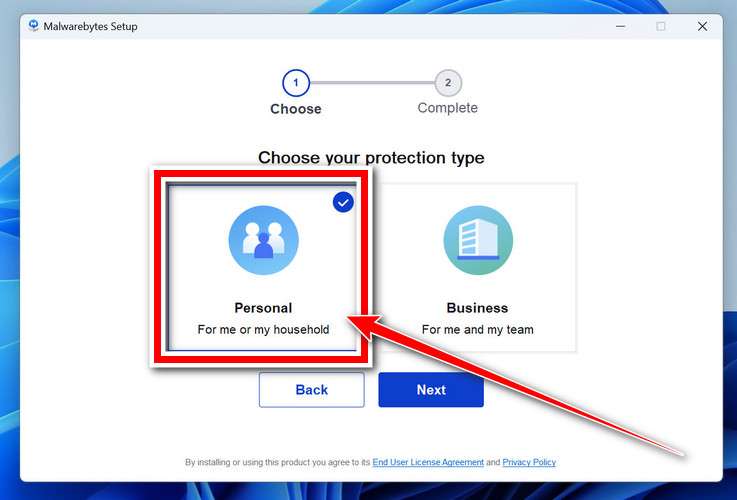
Choose where you’re installing the program — “Personal Computer” or “Work Computer” — then click Next.
Malwarebytes will now install on your device. This usually takes under a minute.
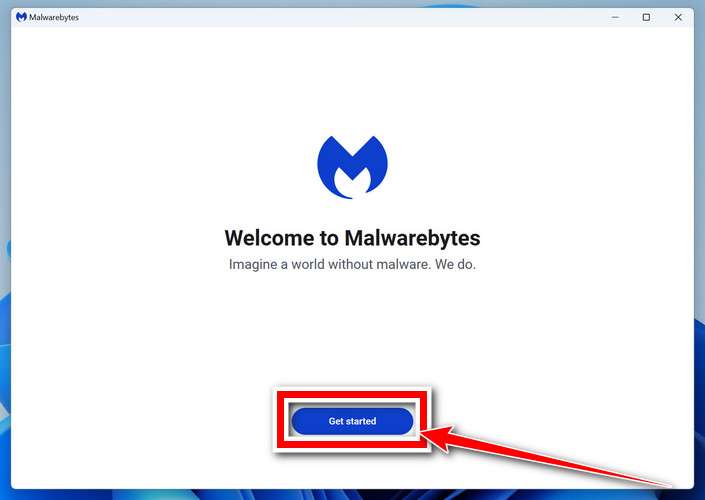
When installation is complete, the “Welcome to Malwarebytes” screen will open automatically.
On the final screen, click Open Malwarebytes to launch the program.
Enable “Scan for Rootkits”
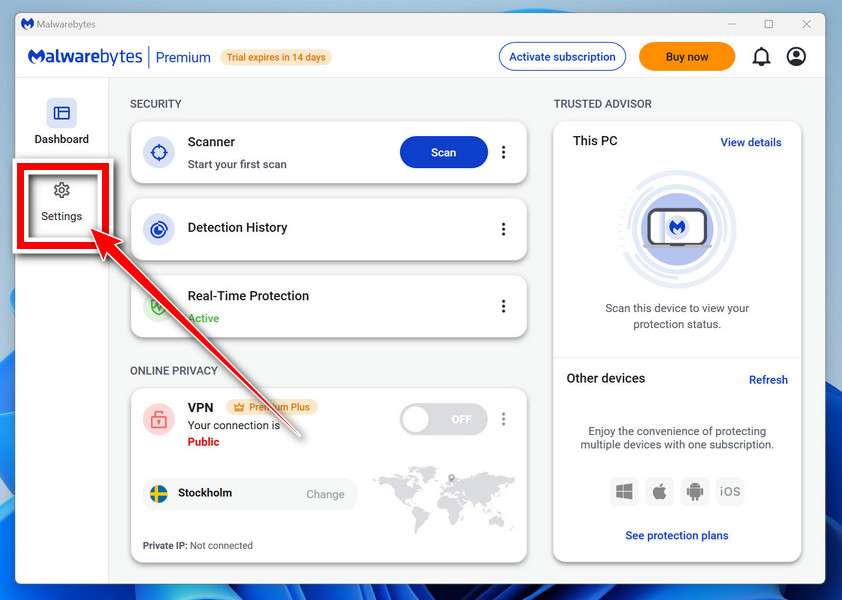
Before scanning, turn on rootkit detection so Malwarebytes can find even the most hidden threats. Click the Settings gear icon on the left side of the screen.
In the settings menu, find “Scan for rootkits” and click the toggle so it turns blue.
Done? Click “Dashboard” in the left pane to return to the main screen.
Start the Scan
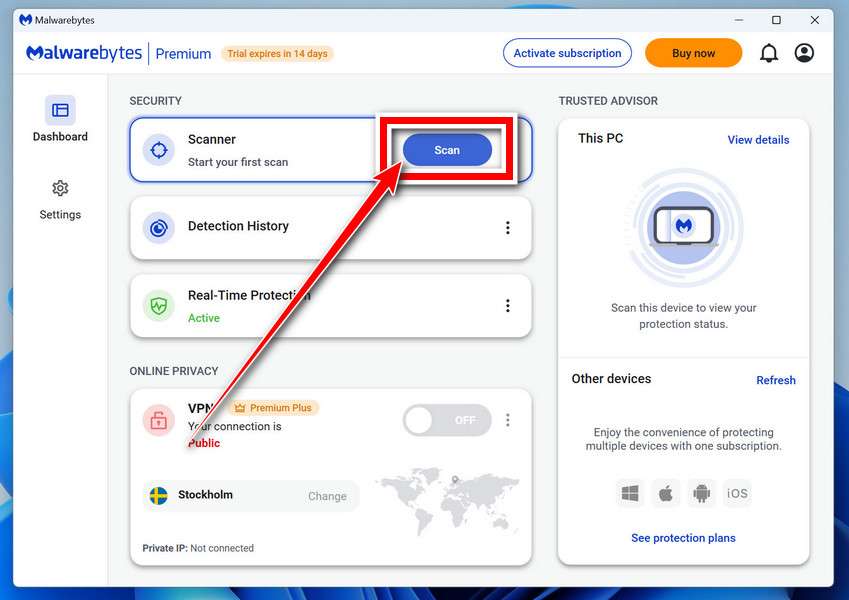
Click the blue Scan button. Malwarebytes will automatically update its virus database and start checking your computer for malware.
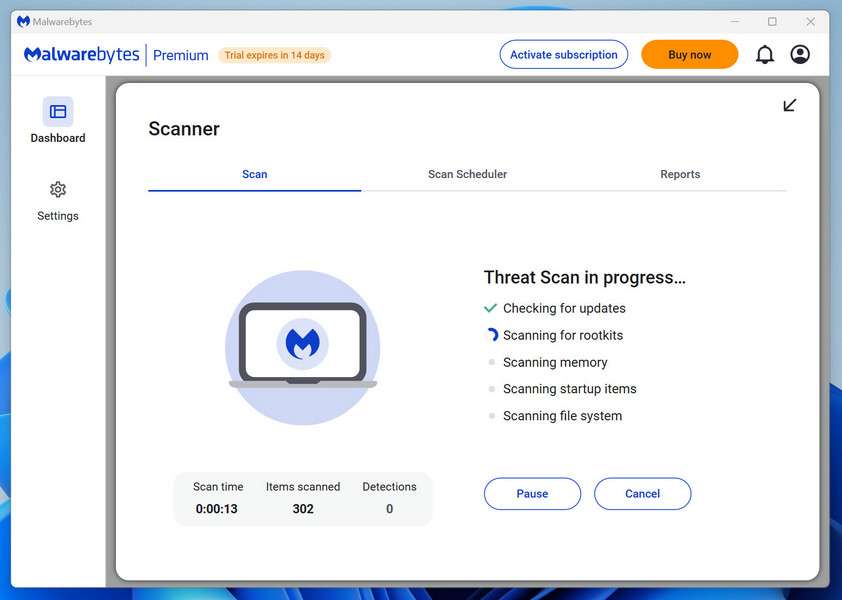
Wait for the Scan to Finish
The scan checks your entire system for browser hijackers and other malicious programs, so it can take several minutes. Feel free to do something else — just check back occasionally to see the progress.
Quarantine the Detected Threats
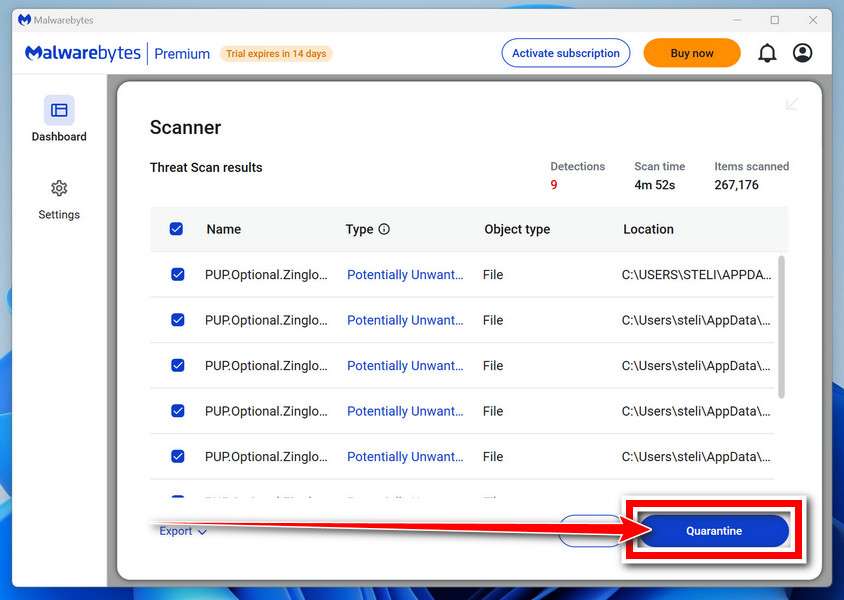
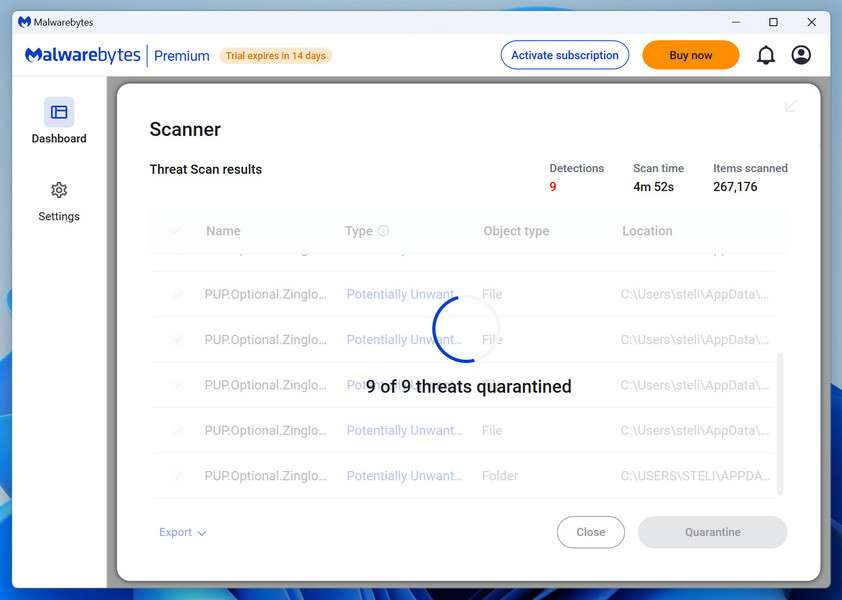
When the scan is done, you’ll see a list of everything Malwarebytes found — malware, adware, and potentially unwanted programs. Click the “Quarantine” button to remove all of them at once.
Malwarebytes will now remove the malicious files and registry entries and move them safely into quarantine.
Restart Your Computer
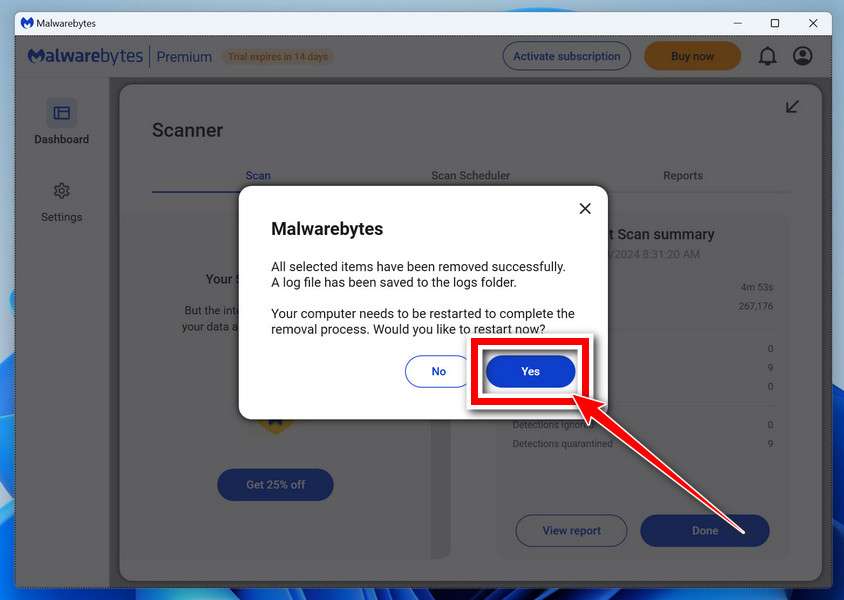
Some threats can only be fully removed after a reboot. If Malwarebytes asks you to restart, click Yes. Once you’re logged back in, your PC is clean and you can continue with the next steps in this guide.
When the scan finishes, click Quarantine to remove everything Malwarebytes found. That’s it — your Windows PC is now clean of trojans, adware, and other malware, and should be back to running smoothly.
If your current antivirus allowed this malicious program on your computer, you may want to consider purchasing Malwarebytes Premium to protect against these types of threats in the future. If you are still having problems with your computer after completing these instructions, then please follow one of the steps:
Malwarebytes for Mac is a free on-demand scanner that removes the malware other security software tends to miss — adware, browser hijackers, and unwanted programs included. Cleaning an infected Mac with Malwarebytes has always been completely free, and it’s our go-to recommendation. Follow the steps below to scan and clean your Mac in just a few minutes.
Download Malwarebytes for Mac
Click the button below to download the latest version of Malwarebytes for Mac.
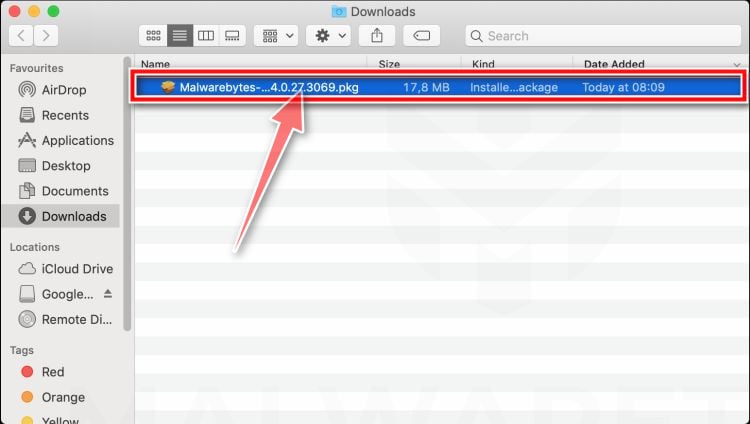
When the download finishes, open your Downloads folder and double-click the setup file to begin the installation.
Follow the On-Screen Prompts to Install Malwarebytes
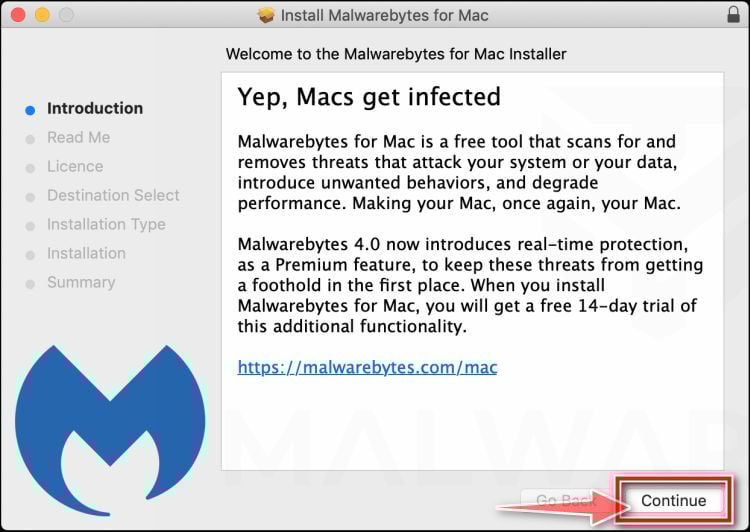
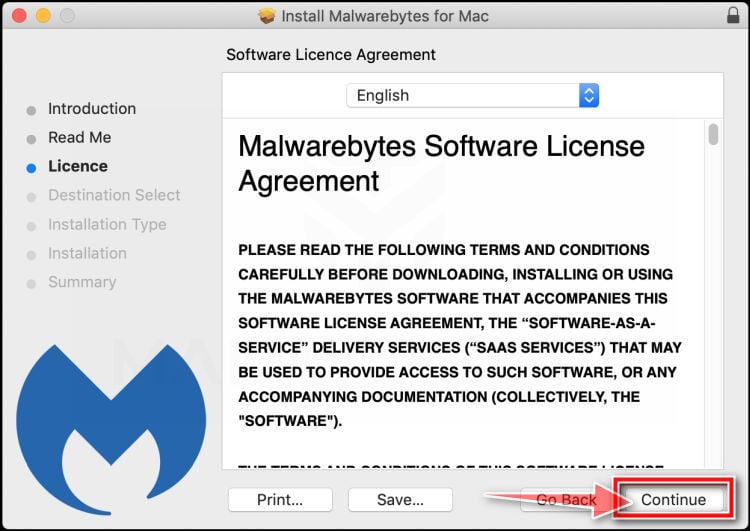
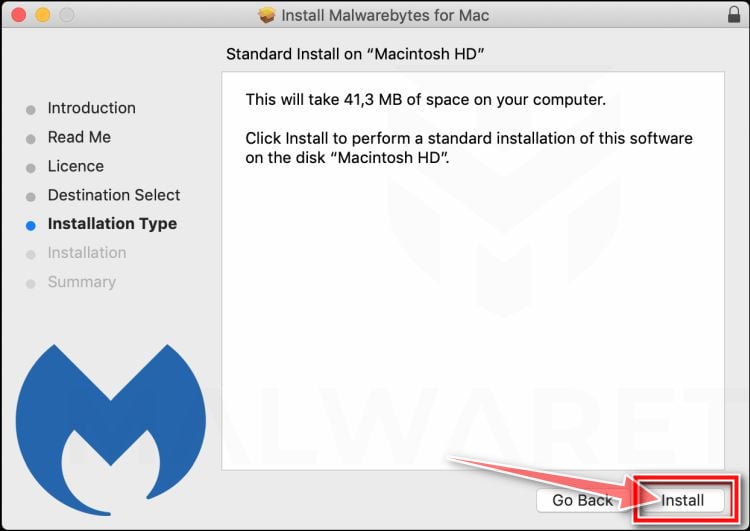
The Malwarebytes for Mac Installer will guide you through a few quick screens. Click “Continue” and keep following the prompts until the installation completes.
When the installation is complete, Malwarebytes opens to the Welcome to Malwarebytes screen. Click “Get started“.
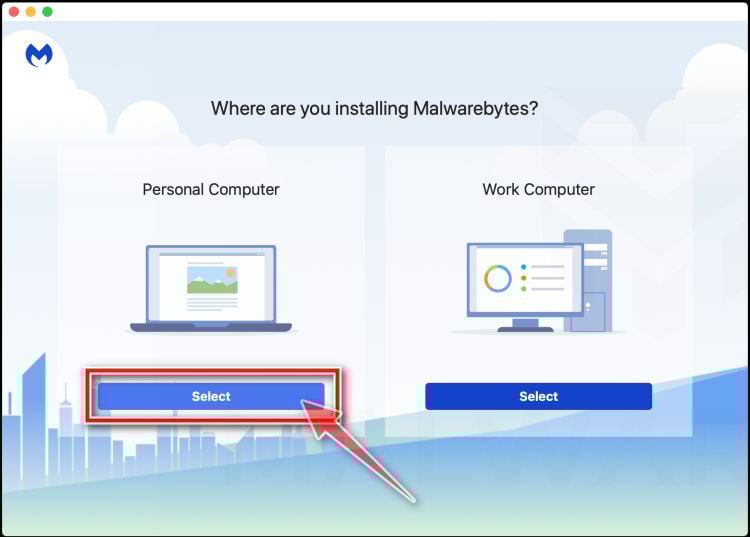
Select “Personal Computer” or “Work Computer”
Malwarebytes will ask what type of computer you’re installing it on. Click either Personal Computer or Work Computer, whichever applies.
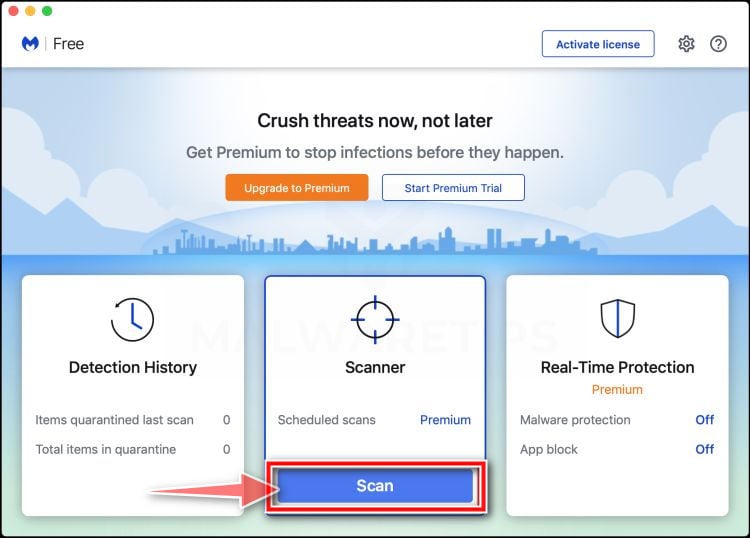
Start the Scan
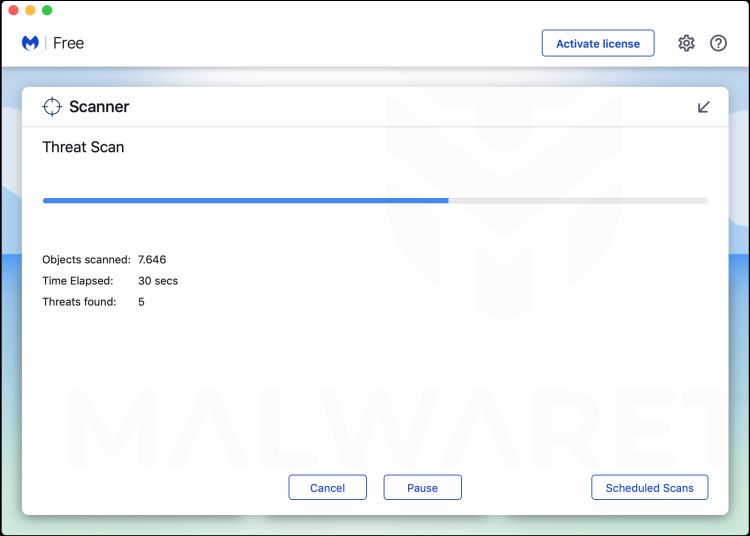
Click the “Scan” button. Malwarebytes will automatically update its detection database and begin checking your Mac for malware.
Wait for the Scan to Finish
Malwarebytes will scan your Mac for adware, browser hijackers, and other malicious programs. This can take a few minutes, so feel free to do something else — just check back occasionally to see the progress.
Quarantine the Detected Threats
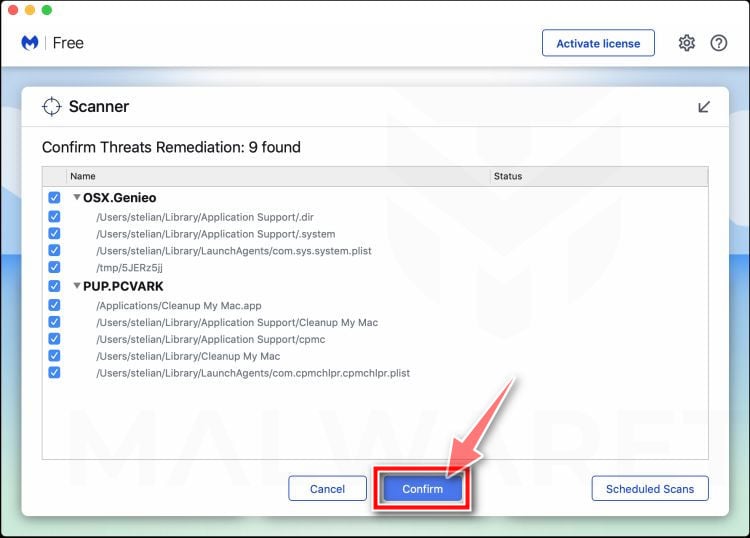
When the scan is done, you’ll see a list of everything Malwarebytes found. Click the “Quarantine” button to remove all the threats at once.
Restart Your Mac
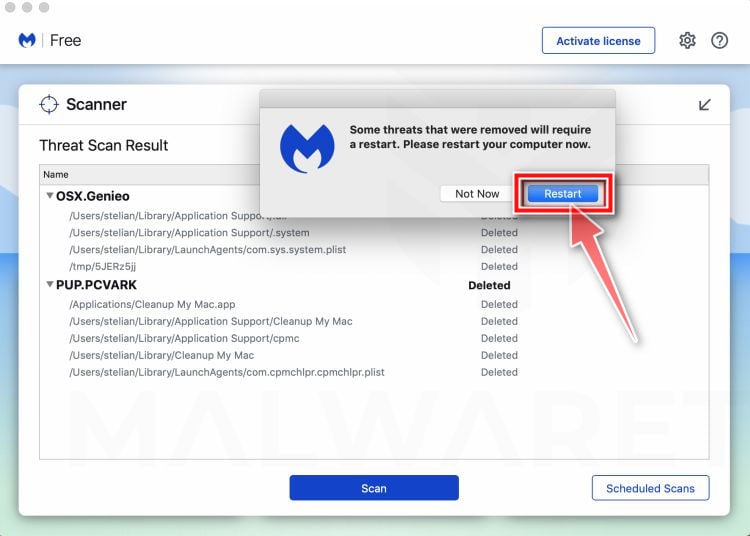
Malwarebytes will now remove all the malicious files it found. Some threats can only be fully removed after a reboot — if Malwarebytes asks you to restart, allow it. Once you’re logged back in, your Mac is clean.
Once the scan is done, remove every threat it detected. Your Mac is now free of adware, rogue browser extensions, and other potentially harmful software.
If your current antivirus allowed a malicious program on your computer, you might want to consider purchasing the full-featured version of Malwarebytes Anti-Malware to protect against these types of threats in the future. If you are still experiencing problems while trying to remove a malicious program from your computer, please ask for help in our Mac Malware Removal Help & Support forum.
Run a Malware Scan with Malwarebytes for Android
Malwarebytes for Android automatically detects and removes dangerous threats like malware and ransomware so you don’t have to worry about your most-used device being compromised. Aggressive detection of adware and potentially unwanted programs keeps your Android phone or tablet running smooth.
Download Malwarebytes for Android.
You can download Malwarebytes for Android by clicking the link below.
In the Google Play Store, tap “Install” to install Malwarebytes for Android on your device.
When the installation process has finished, tap “Open” to begin using Malwarebytes for Android. You can also open Malwarebytes by tapping on its icon in your phone menu or home screen.
Follow the on-screen prompts to complete the setup process
When Malwarebytes will open, you will see the Malwarebytes Setup Wizard which will guide you through a series of permissions and other setup options. This is the first of two screens that explain the difference between the Premium and Free versions. Swipe this screen to continue. Tap on “Got it” to proceed to the next step. Malwarebytes for Android will now ask for a set of permissions that are required to scan your device and protect it from malware. Tap on “Give permission” to continue. Tap on “Allow” to permit Malwarebytes to access the files on your phone.
Update database and run a scan with Malwarebytes for Android
You will now be prompted to update the Malwarebytes database and run a full system scan.
Click on “Update database” to update the Malwarebytes for Android definitions to the latest version, then click on “Run full scan” to perform a system scan.
Wait for the Malwarebytes scan to complete.
Malwarebytes will now start scanning your phone for adware and other malicious apps. This process can take a few minutes, so we suggest you do something else and periodically check on the status of the scan to see when it is finished.
Click on “Remove Selected”.
When the scan has been completed, you will be presented with a screen showing the malware infections that Malwarebytes for Android has detected. To remove the malicious apps that Malwarebytes has found, tap on the “Remove Selected” button.
Restart your phone.
Malwarebytes for Android will now remove all the malicious apps that it has found. To complete the malware removal process, Malwarebytes may ask you to restart your device.
After the scan, tap Remove Selected to delete all detected threats. Your Android phone is now clean — no more malicious apps, adware, or browser redirects.
If your current antivirus allowed a malicious app on your phone, you may want to consider purchasing the full-featured version of Malwarebytes to protect against these types of threats in the future. If you are still having problems with your phone after completing these instructions, then please follow one of the steps:
Restore your phone to factory settings by going to Settings > General management > Reset > Factory data reset.
Now that your device is clean, keep it that way. Most infections start with a malicious ad or a fake download button — so blocking them at the source is your best defense.
We recommend AdGuard, which blocks malicious ads, phishing pages, and dangerous redirects before they can reach you.
The “Carmen Russo has sent you $0.02 USD” PayPal scam is a sophisticated trap built on trust, confusion, and urgency.
It does not rely on fake emails or obvious tricks. Instead, it uses real transactions to create credibility and guide victims toward a fake support line.
The key takeaway is simple:
PayPal will never ask you to call a random number in a transaction note
Legitimate companies do not request remote access to secure your account
Urgency is often a sign of manipulation
If you receive an unexpected small payment with a message telling you to call a number, treat it as suspicious.
Ignore the note, verify everything through official channels, and avoid engaging with the phone number.
FAQ
What is the “Carmen Russo Has Sent You $0.02 USD” PayPal scam?
It is a scam where fraudsters send a tiny payment, often $0.01 or $0.02, through PayPal and include a note telling the recipient to call a supposed PayPal support number.
The goal is not the payment itself. The goal is to get you on the phone with fake support agents who will try to scare, manipulate, and steal from you.
Is the PayPal payment real?
Yes, in many cases the payment is real.
That is what makes the scam convincing. The money may actually appear in your PayPal account, and the email notification may look legitimate because it is tied to a real transaction. The scam is hidden in the note attached to that payment.
Is “Carmen Russo” always the name used in this scam?
No.
“Carmen Russo” is just one of many names scammers may use. The sender name can vary from case to case. What matters is the pattern: a tiny payment, an alarming note, and a phone number that claims to be PayPal support.
Why do scammers send only $0.01 or $0.02?
They use a very small amount because it gets your attention without making you think of it as a major theft.
A tiny payment feels unusual and confusing. That confusion makes people more likely to read the note and call the number. It is a low-cost way for scammers to start a much bigger fraud attempt.
Is the phone number in the note really PayPal customer service?
No.
That number is part of the scam. It connects you to fake support agents pretending to work for PayPal. They may sound professional, but they are not legitimate.
Always contact PayPal through its official website or app, not through a number placed in a payment note.
What happens if I call the number?
Once you call, the scam usually turns into a tech support or refund scam.
The person on the phone may claim your account was hacked, your device is infected, or your money is at risk. They may then pressure you to install remote access software like AnyDesk or TeamViewer.
From there, they may try to steal account information, move money, or convince you to buy gift cards.
Can scammers steal money just by sending me $0.02?
Not directly from that payment alone.
The payment is usually the bait. The real danger begins if you call the number, share personal information, install remote access software, or follow their payment instructions.
Should I refund the $0.02 payment?
Do not rush to do anything.
Do not call the number, do not reply to the note, and do not follow any instructions inside the message. Instead, log in to your PayPal account directly through the official site or app and review the transaction there. If needed, contact PayPal through its verified support channels.
How can I tell this is a scam and not a real security alert?
There are several red flags:
The warning appears inside a payment note
It tells you to call a phone number immediately
It creates urgency and fear
It claims unauthorized activity without using official support channels
Legitimate account security alerts should be verified directly through your PayPal account, not through contact details supplied by a stranger in a transaction note.
Does PayPal put customer support numbers inside transaction notes?
No.
Transaction notes can be written by the sender. That means scammers can place whatever message they want there. Just because the note appears in a real PayPal transaction does not make the message trustworthy.
What should I do if I already called the number?
Take action immediately.
Stop all communication with the caller
Disconnect your device from the internet if you gave remote access
Uninstall any remote access software
Change your PayPal, email, and banking passwords
Enable two-factor authentication
Contact PayPal and your bank through official channels
Review your accounts for suspicious activity
The faster you respond, the better your chances of reducing the damage.
What if I installed AnyDesk or another remote access app?
Treat that as a serious security issue.
If scammers had remote access, they may have seen sensitive information, entered your accounts, or changed settings on your device. Remove the software, run a full security scan, change your passwords from a clean device, and contact your financial institutions.
Why do scammers ask for gift cards?
Gift cards are one of the scammer’s favorite payment methods because they are hard to trace and hard to recover.
Once a victim reads the gift card codes over the phone or sends pictures of them, the money is usually gone. Legitimate companies do not ask customers to solve security issues with gift cards.
Can this scam lead to identity theft?
Yes.
If you shared personal information, banking details, login credentials, or gave remote access to your device, scammers may use that information for further fraud. That can include account takeovers, unauthorized payments, or identity theft.
How do I report this PayPal scam?
You should report it through official channels.
Report the suspicious transaction to PayPal
Contact your bank if any financial information was exposed
Report the phone number and scam details to consumer protection or fraud reporting agencies in your country
Keep screenshots of the payment note, emails, and phone number for evidence
Can I recover money lost in this scam?
Sometimes, but not always.
Your chances depend on how you paid, how quickly you act, and what information was shared. Bank transfers, PayPal payments, and card transactions may sometimes be disputed. Gift card losses are usually much harder to recover.
That is why speed matters. Report everything as soon as possible.
What is the safest response if I receive one of these payments?
The safest response is simple:
Do not call the number
Do not click links in related messages
Do not send money back without verifying through PayPal
Log in to PayPal directly through the official website or app
Contact PayPal using verified support options if you are unsure
That one step can keep a strange $0.02 payment from turning into a much larger loss.
10 Rules to Avoid Online Scams
Here are 10 practical safety rules to help you avoid malware, online shopping scams, crypto scams, and other online fraud. Each tip includes a quick “if you already got hit” action.
Stop and verify before you click, log in, download, or pay.
Most scams win by creating urgency. Verify using a trusted method: type the website address yourself, use the official app, or call a known number (not the one in the message).
If you already clicked: close the page, do not enter passwords, and run a malware scan.
Keep your operating system, browser, and apps updated.
Updates patch security holes used by malware and malicious ads. Turn on automatic updates where possible.
If you saw a scary “update now” pop-up: close it and update only through your device settings or the official app store.
Use layered protection: antivirus plus an ad blocker.
Antivirus helps block malware. An ad blocker reduces scam redirects, phishing pages, and malvertising.
If your browser is acting weird: remove unknown extensions, reset the browser, then run a full scan.
Install apps, software, and extensions only from official sources.
Avoid cracked software, “keygens,” and random downloads. During installs, choose Custom/Advanced and decline bundled offers you do not recognize.
If you already installed something suspicious: uninstall it, restart, and scan again.
Treat links and attachments as untrusted by default.
Phishing often impersonates delivery services, banks, and popular brands. If it is unexpected, do not open attachments or log in through the message.
If you entered credentials: change the password immediately and enable 2FA.
Shop safely: research the store, then pay with protection.
Be cautious with brand-new stores, “closing sale” stories, and prices that make no sense. Prefer credit cards or PayPal for dispute options. Avoid wire transfers, gift cards, and crypto payments.
If you already paid: contact your card issuer or PayPal quickly to dispute the transaction.
Crypto rule: never pay a “fee” to withdraw or recover money.
Common patterns include fake profits, then “tax,” “gas,” or “verification” fees. Another is a “recovery agent” who demands upfront crypto.
If you already sent crypto: stop paying, save evidence (wallet addresses, TXIDs, chats), and report the scam to the platform used.
Secure your accounts with unique passwords and 2FA (start with email).
Use a password manager and unique passwords for every account. Enable 2FA using an authenticator app when possible.
If you suspect an account takeover: change passwords, sign out of all devices, and review recent logins and recovery settings.
Back up important files and keep one backup offline.
Backups protect you from ransomware and device failure. Keep at least one backup on an external drive that is not always connected.
If you suspect infection: do not connect backup drives until the system is clean.
If you think you are a victim: stop losses, document evidence, and escalate fast.
Move quickly. Speed matters for disputes, account recovery, and limiting damage.
Stop payments and contact: do not send more money or respond to the scammer.
Call your bank or card issuer: block transactions, replace the card if needed, and start a dispute or chargeback.
Secure your email first: change the email password, enable 2FA, and remove unfamiliar recovery options.
Secure other accounts: change passwords, enable 2FA, and log out of all sessions.
Scan your device: remove suspicious apps or extensions, then run a full malware scan.
Save evidence: screenshots, emails, order pages, tracking pages, wallet addresses, TXIDs, and chat logs.
Report it: to the payment provider, marketplace, social platform, exchange, or wallet service involved.
These rules are intentionally simple. Most online losses happen when decisions are rushed. Slow down, verify independently, and use payment methods and account controls that give you recourse.
Thomas is an expert at uncovering scams and providing in-depth reporting on cyber threats and online fraud. As an editor, he is dedicated to keeping readers informed on the latest developments in cybersecurity and tech.