

Curalona Microneedle Clear Patches are being sold as at-home patches for scars, wrinkles, cellulite, skin tags, varicose veins, and other skin concerns. The products are promoted with strong claims about deep delivery, collagen remodeling, skin repair, vein improvement, and visible results in as little as 14 days.
Before ordering, buyers should review the claims, return policy, business details, and product category carefully. The offer raises multiple concerns, including broad medical-adjacent promises, generic private-label product similarities, bundle pressure, inconsistent guarantee language, and return conditions that may make refunds difficult after the patches are opened or used.

What Are Curalona Microneedle Clear Patches?
Curalona sells several microneedle-style patch products through its “Micro-Needle” collection. The collection includes products such as:
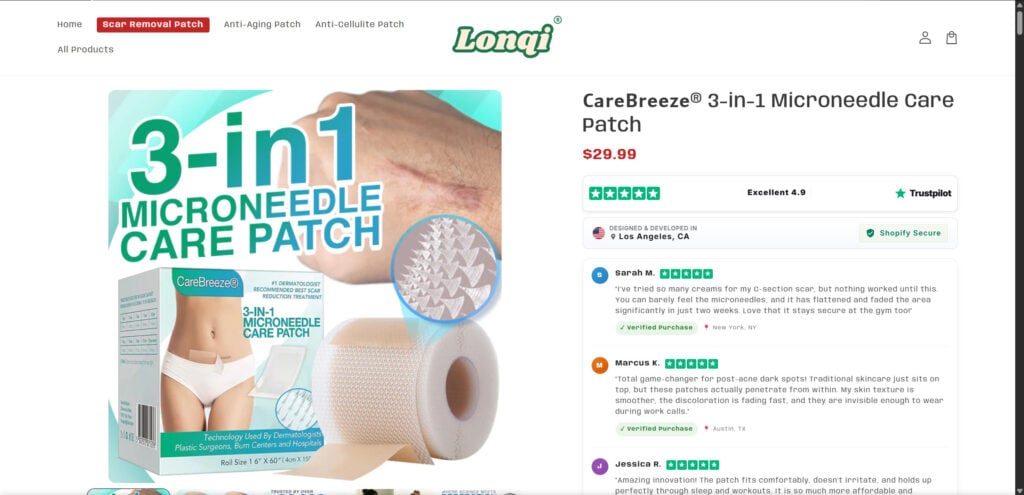
- 3-in-1 Microneedle Care Patch
- CareBreeze 3-in-1 Microneedle Anti-Aging Patch
- CareBreeze Anti-Cellulite Microneedle Patch
- VenaRestore MicroNeedle Vein Repair Patch
- Skin Tag Removal Microneedle Patch
- Varicose Veins Treatment Microneedle Patch
- Microneedle Herbal Infusion Hair Stimulation Set
- Comprehensive Microneedle Patch
The products are priced around $15.99 to $59.99 depending on the item and bundle. Several pages promote multi-box offers such as 2 boxes, 4 boxes, 8 boxes, or larger bundle options.
The basic sales pitch is that microneedles can bypass the skin barrier and deliver ingredients deeper than ordinary creams. Curalona’s product pages describe this as professional-grade, medical-grade, or deep-layer technology.
That sounds advanced. The issue is that the claims go far beyond basic skincare support. Some Curalona pages imply that these patches can flatten scars, fill wrinkles, smooth cellulite, treat varicose veins, remove skin tags, and stimulate hair growth. Those are serious claims for low-cost at-home adhesive patches.
Why Curalona Raises Red Flags
1. The product range makes too many broad claims
Curalona is not selling one simple cosmetic patch. The brand has microneedle products for several unrelated problems:
- scars
- wrinkles
- dark spots
- cellulite
- sagging skin
- varicose veins
- skin tags
- hair stimulation
That is a red flag because these conditions have different causes and different treatments.
A wrinkle patch is not the same as a scar treatment. A cellulite patch is not the same as a varicose vein treatment. A skin tag remover is not the same as a hair growth product. Yet the sales pages use the same core idea: microneedles deliver ingredients deeper, so the product can create visible change.
That broad approach is common in dropshipping-style skincare funnels. A generic product concept is adapted into multiple versions, each targeting a different insecurity.
2. “Medical-grade innovation” language is used without enough proof
Curalona’s product pages use phrases like “medical-grade innovation,” “professional-grade repair,” “dermal layers,” “structural remodeling,” “collagen remodeling,” and “deep tissue infusion.”
This language makes the products sound close to professional dermatology treatments.
But the visible pages do not provide the kind of evidence buyers should expect for those claims, such as:
- independent clinical trials on the exact product
- full ingredient concentrations
- dermatologist-authored study data
- safety testing documents
- manufacturing certification
- sterile packaging details
- regulatory clearance documents
- adverse event information
- realistic use limitations
Ingredient names and before-and-after style claims are not enough. If a product claims to remodel scar tissue, shrink veins, remove skin tags, or fill wrinkles from beneath, buyers should expect strong proof.
3. The scar and anti-aging claims are exaggerated
Curalona’s 3-in-1 scar and skin rejuvenation patch claims it can deliver nutrients to dermal layers, flatten raised tissue, restore youthful elasticity, and leave no marks or traces within 14 days.
The anti-aging patch claims it stimulates fresh collagen, fills wrinkles from beneath, and provides visible transformation in 14 days. One page claims users experienced a 94% improvement in firmness and reduced wrinkle depth in under two weeks.
That is extremely aggressive skincare marketing.
Microneedle patches may help deliver certain cosmetic ingredients into the upper skin layers. Some may temporarily hydrate, plump, or smooth the skin. But claims about flattening scars, filling wrinkles from beneath, and visible transformation within two weeks should be treated cautiously unless backed by independent clinical data on the exact finished product.
Scars and wrinkles do not usually disappear in days. Deep wrinkles, surgical scars, acne scars, and raised scar tissue often require months of treatment, professional procedures, laser therapy, microneedling, silicone therapy, retinoids, fillers, or other medical-grade approaches.
A patch sold online should not be marketed like it can replace those treatments.
4. The cellulite claims are unrealistic
Curalona’s anti-cellulite patch claims to smooth stubborn dimples, restore elasticity, create a lifting effect, and target fat metabolism beneath the skin.
Cellulite is complex. It involves skin structure, connective tissue, fat distribution, circulation, hormones, genetics, and skin thickness. There is no simple patch that permanently removes cellulite.
A topical or patch product may temporarily hydrate skin or make texture look smoother for a short time. But buyers should not expect a microneedle gel patch to reshape fat, rebuild connective tissue, or create lasting cellulite reduction.
When a page claims a small patch can address cellulite at the “root” level, it is using classic beauty-ad exaggeration.
5. The varicose vein claims are especially concerning
Curalona sells VenaRestore MicroNeedle Vein Repair Patch and other varicose vein-related patches. The page discusses weakened vein walls, poor circulation, aching, swelling, heaviness, and deep tissue infusion.
This is more concerning than a basic wrinkle product because varicose veins are not only cosmetic. They can involve faulty vein valves, circulation problems, swelling, pain, skin changes, and sometimes complications that require medical evaluation.
A microneedle patch cannot repair vein valves or close abnormal veins. Real varicose vein treatment may involve compression stockings, lifestyle changes, sclerotherapy, laser treatment, ablation, or other medical procedures.
A patch may create a cooling or soothing sensation. It may contain botanicals like horse chestnut, butcher’s broom, arnica, or witch hazel. But it should not be treated as a real vein treatment.
If someone has leg swelling, pain, skin discoloration, ulcers, sudden swelling, warmth, redness, or one-sided leg pain, they should speak with a medical professional instead of relying on a patch.
6. The skin tag removal claims are high-risk
Curalona’s skin tag removal patch claims to use plant-based microneedles to deliver botanicals to the root of a skin tag, helping it dry out and fall off without pain, scarring, or harsh chemicals.
This is a major red flag.
Skin tags are usually benign, but not every bump on the skin is a skin tag. Moles, warts, seborrheic keratoses, and even some skin cancers can be mistaken for harmless growths. At-home removal may delay proper diagnosis.
The product page also claims the patch is registered with the FDA as a Class I medical device. Even if a product is listed or registered, that does not mean the FDA has approved it as safe and effective for removing skin tags. Sellers often use FDA-related wording in a way that makes products sound more officially validated than they are.
Buyers should be careful with any at-home product claiming to remove skin growths.
7. The refund guarantee conflicts with the actual return policy
Several product pages promote strong guarantee language, including 90-day or 180-day money-back guarantees. Some pages say “100% no questions asked” and “risk-free.”
But Curalona’s return policy says something much more restrictive. It gives customers 60 days from delivery to request a return, but the item must be unused, in the same condition, and in original packaging.
That is a serious mismatch.
A customer cannot know whether a microneedle patch works unless they open and use it. But once used, the product may no longer qualify under the written return policy.
This is one of the biggest buyer risks. The sales page gives the impression of a broad try-it-and-refund guarantee. The actual policy appears to require unused products.
8. The return address is in Hong Kong
Curalona lists a return/business address in Fo Tan, Hong Kong. The shipping page also says the store uses a direct-fulfillment model with products dispatched from global partners and fulfillment hubs.
This matters because returns may not be as simple as buyers expect. If a customer is in the United States, Canada, Australia, or Europe, sending products back internationally can be slow, expensive, and inconvenient.
Even if a return label is provided, the process still requires approval, inspection, and waiting for refund processing. If the product has already been opened or used, the buyer may be denied.
9. The site says “designed in Los Angeles,” but the business details point elsewhere
Several product pages display “Designed & Developed in Los Angeles, CA.” However, Curalona’s terms say the site is operated by Curalona and lists its principal place of business in Hong Kong. The site’s contact/address details also point to Hong Kong.
That does not automatically prove wrongdoing. A brand can design products in one location and operate from another. But when a page uses Los Angeles branding while the legal and return information point to Hong Kong, buyers should pay attention.
This kind of geographic positioning is common in dropshipping funnels. The marketing presents a local or premium identity, while fulfillment and returns are handled elsewhere.
10. The “Who We Are” page does not match the products being sold
Curalona’s “Who We Are” page describes the brand as a small startup selling household essentials, storage solutions, space-saving tools, and hygienic home products.
That is strange because the current collection includes microneedle patches for wrinkles, scars, cellulite, skin tags, varicose veins, and hair stimulation.
The return policy also refers to “home essentials” and “household items,” not skincare or medical-adjacent products.
This looks like template copy that was not properly updated. It weakens trust because a skincare brand making microneedle claims should have policy pages written specifically for skincare, hygiene, medical-adjacent use, and opened personal-care products.
11. Similar microneedle patches are widely available from suppliers
Microneedle patches are not unique to Curalona. Alibaba and other supplier platforms list many private-label and OEM microneedle patches, including:
- acne microneedle patches
- hyaluronic acid patches
- anti-wrinkle patches
- eye patches
- body firming patches
- slimming patches
- varicose vein patches
- skin tag removal patches
- wellness patches
Some supplier listings offer low minimum orders, custom labels, custom packaging, and formulas designed for resale under new brand names.
That supports the dropshipping/private-label concern. A seller can source generic microneedle patches, rename them, create multiple product pages, add aggressive claims, and sell them at a markup.
The product may exist. The problem is whether it performs as advertised.
12. The site uses bundle pressure and live-viewing tactics
Curalona’s product pages show bundle offers such as 2 boxes, 4 boxes, and 8 boxes. Some pages show “Most Popular,” “Best Value,” “Live Viewing,” “Limited Stock,” and “Only 11% left in stock” messaging.
These are classic direct-response tactics.
They push buyers to order quickly and buy more than one box before testing the product. If the patches do not work or irritate the skin, a multi-box order increases the loss.
For skincare products, buying a large bundle before testing one patch is risky.
How the Curalona Microneedle Patch Funnel Appears to Work
Step 1: The ad targets a specific insecurity
Each product targets a different concern:
- scars
- wrinkles
- cellulite
- veins
- skin tags
- hair thinning
These are emotional issues. People want a private, painless, affordable solution they can use at home.
Step 2: Microneedle technology is framed as the breakthrough
The page says ordinary creams fail because they sit on the surface, while microneedles create micro-channels and deliver ingredients deeper.
That explanation sounds scientific and persuasive. It makes the patch feel more advanced than a serum or cream.
Step 3: The product is positioned as an alternative to professional care
Curalona pages compare the patches to expensive laser sessions, fillers, surgery, freezing, or clinical procedures.
This makes the product feel like a low-cost substitute for dermatology care.
But that comparison is risky. At-home patches are not the same as professional microneedling, laser treatments, vein procedures, skin tag removal, or scar revision.
Step 4: Testimonials and percentages build confidence
The pages include dramatic testimonials and result-style claims, such as visible transformation in 14 days or high improvement percentages.
These are seller-controlled claims. They should not be treated as clinical proof.
Step 5: Bundles push the order value higher
The customer is offered multi-box deals, often with larger discounts for more boxes.
This is common in dropshipping. The seller increases revenue upfront before the buyer has tested the product.
Step 6: The return policy creates friction later
If the buyer opens the product and finds it ineffective or irritating, the written policy may require the item to be unused and in original packaging. The return address also points to Hong Kong.
That makes the advertised guarantee much less reassuring.
Main Red Flags
- Broad claims across scars, wrinkles, cellulite, varicose veins, skin tags, and hair growth.
- Uses medical-style language such as dermal layers, tissue repair, collagen remodeling, and vein repair.
- Claims visible results in 14 days.
- Claims high improvement percentages without clear independent clinical proof.
- Skin tag removal claims are especially risky.
- Varicose vein claims may mislead people with real vein disease.
- Product pages promote 90-day or 180-day guarantees.
- Return policy says products must be unused and in original packaging.
- Return/business address is in Hong Kong.
- Product pages say “Designed & Developed in Los Angeles.”
- About page describes household essentials, not skincare patches.
- Similar microneedle patches are widely available from private-label suppliers.
- Bundle offers push buyers to buy multiple boxes.
- Live-viewing and low-stock messages create urgency.
- At-home microneedle products may cause irritation, infection, pigment changes, or scarring if used improperly.
Is Curalona a Scam?
Curalona may ship physical microneedle patches, so this may not be a simple “pay and receive nothing” scam.
The bigger issue is the marketing.
A fair conclusion is this: Curalona Microneedle Clear Patches appear to be a high-risk dropshipping-style skincare offer because they combine broad medical-adjacent claims, generic product-category signals, bundle pressure, inconsistent guarantee language, Hong Kong return logistics, and a return policy that may exclude used products.
Some users may experience temporary hydration, smoothing, or mild cosmetic improvement from certain patches. But buyers should not expect at-home patches to remove skin tags, repair varicose veins, flatten scars, erase cellulite, or fill wrinkles from beneath.
Safety Concerns Buyers Should Consider
Microneedle products create tiny openings in the skin. That means hygiene matters.
Do not use microneedle patches on:
- infected skin
- inflamed skin
- open wounds
- active eczema
- active psoriasis
- severe acne
- sunburn
- rashes
- moles
- suspicious skin growths
- varicose veins with ulcers or skin breakdown
- areas with bleeding, pain, warmth, or swelling
Stop using the product if you notice:
- burning
- severe redness
- swelling
- itching
- rash
- pain
- pus
- bleeding
- dark marks
- scarring
- worsening of the treated area
If a skin growth changes color, bleeds, grows quickly, looks irregular, or does not clearly look like a skin tag, see a dermatologist.
What To Do Before Buying
1. Do not buy multi-box bundles first
If you still want to test the product, buy only one box. Do not buy 4 or 8 boxes before knowing how your skin reacts.
2. Screenshot the guarantee and return policy
Before ordering, save screenshots of:
- product claims
- 14-day result claims
- improvement percentages
- guarantee wording
- bundle offer
- final checkout total
- shipping policy
- return policy
- return address
This helps if you need to dispute the charge.
3. Ask support questions before buying
Ask Curalona:
- Are opened patches refundable?
- Does the 180-day guarantee override the unused-product return policy?
- Where must returns be sent?
- Who pays return shipping?
- Are these patches sterile?
- Are they FDA-cleared or only listed/registered?
- Can you provide clinical testing on the exact product?
- Can you provide ingredient concentrations?
- Can you provide safety testing?
If the answers are vague, consider that a warning sign.
4. Be careful with skin tag and vein products
Do not use a patch to self-treat a skin growth you are unsure about. Do not use vein patches to treat painful, swollen, or worsening varicose veins.
5. Compare similar products
Search for:
- private label microneedle patch
- microneedle skin tag patch
- microneedle anti wrinkle patch
- microneedle cellulite patch
- varicose vein microneedle patch
- OEM microneedle patch
- CareBreeze microneedle patch alternative
If similar items are available cheaply under other names, that supports the generic product concern.
What To Do If You Already Ordered
1. Check your order confirmation
Confirm:
- product name
- number of boxes
- total amount charged
- shipping fee
- shipping insurance
- merchant name
- delivery estimate
- return window
2. Save all evidence
Save:
- product page screenshots
- guarantee claims
- before-and-after claims
- checkout page
- order confirmation
- return policy
- shipping policy
- support emails
- product packaging photos
3. Do not open every box
If you bought multiple boxes and may request a refund, keep extra boxes sealed.
4. Patch test first
Apply one patch to a small area only if the skin is healthy and unbroken. Do not start on the face, near eyes, varicose veins, or suspicious growths.
5. Stop if irritation occurs
If redness, burning, swelling, rash, bleeding, or pain occurs, stop using the product and document the reaction.
6. Request a refund in writing
If the product does not match the advertised claims, email support and cite the guarantee shown on the product page.
Use clear wording:
“I am requesting a refund under the advertised money-back guarantee. The product does not perform as advertised. Please confirm whether opened products are eligible and provide return instructions.”
7. Dispute if necessary
Contact your bank, credit card company, or PayPal if:
- the product never arrives
- you were charged for more boxes than ordered
- the seller refuses the advertised guarantee
- the return policy contradicts the product page
- the patches cause injury or irritation
- the product is not as advertised
- support does not respond
Use clear wording such as:
- “item not as described”
- “merchant refuses advertised refund”
- “return policy contradicts sales page”
- “misleading skin treatment claims”
- “unauthorized quantity charged”
- “product caused irritation”
FAQ
What are Curalona Microneedle Clear Patches?
Curalona Microneedle Clear Patches are adhesive skincare patches marketed for wrinkles, scars, cellulite, skin tags, varicose veins, and other skin concerns.
Is Curalona a scam?
Curalona may ship real products, but the offer has several red flags: broad treatment claims, generic product similarities, bundle pressure, guarantee contradictions, and Hong Kong return logistics.
Do Curalona Microneedle Clear Patches really work?
They may provide temporary cosmetic effects for some users, such as hydration or slight smoothing. However, buyers should be skeptical of claims about scar remodeling, wrinkle filling, cellulite smoothing, vein repair, and skin tag removal.
Can Curalona patches remove skin tags?
Be very cautious. At-home skin tag removal products can be risky, and not every skin growth is a harmless skin tag. A dermatologist should evaluate suspicious or changing growths.
Can Curalona patches treat varicose veins?
No patch should be treated as a real varicose vein treatment. Varicose veins may require compression, medical evaluation, or clinical procedures.
Why is the refund policy concerning?
Some product pages advertise 90-day or 180-day guarantees, but Curalona’s return policy says items must be unused and in original packaging. That may make refunds difficult after testing the patches.
Where is Curalona based?
Curalona’s terms and contact information list a Hong Kong address, while some product pages say the products are designed and developed in Los Angeles.
Are Curalona products from China?
The exact manufacturer is not clearly disclosed on the visible pages. However, Curalona uses global fulfillment partners, lists a Hong Kong address, and similar microneedle patches are widely available from Chinese private-label suppliers.
Are microneedle patches safe?
They can irritate the skin and may carry infection risk if used improperly. Do not use them on infected, inflamed, broken, or suspicious skin.
Should I buy Curalona Microneedle Clear Patches?
Be cautious. Avoid bundles, read the return policy carefully, ask whether opened products are refundable, and do not use these patches as a substitute for dermatology care.
The Bottom Line
Curalona Microneedle Clear Patches are marketed as advanced at-home treatments for scars, wrinkles, cellulite, skin tags, varicose veins, and other skin concerns. The products may ship, but the claims are broad and often unrealistic.
The main concerns are the medical-style marketing, generic private-label product signals, bundle offers, inconsistent guarantee language, Hong Kong return logistics, and a written return policy that appears to require unused products.
Curalona patches may provide minor cosmetic effects for some users, but they should not be treated as proven solutions for scars, veins, skin tags, cellulite, or deep wrinkles. Buyers should compare alternatives, avoid multi-box offers, document the checkout, and consult a healthcare professional for skin growths, vein problems, or persistent skin concerns.








