

Shepherd Outsourcing calls about a balance you do not recognize and asks you to resolve it before the file moves forward. The caller may know a creditor or old address, which makes the demand difficult to dismiss.
Shepherd Outsourcing is a real debt collection and account-resolution company. That does not prove a particular call, validate the balance or mean the account belongs to you. Verification must happen before payment.
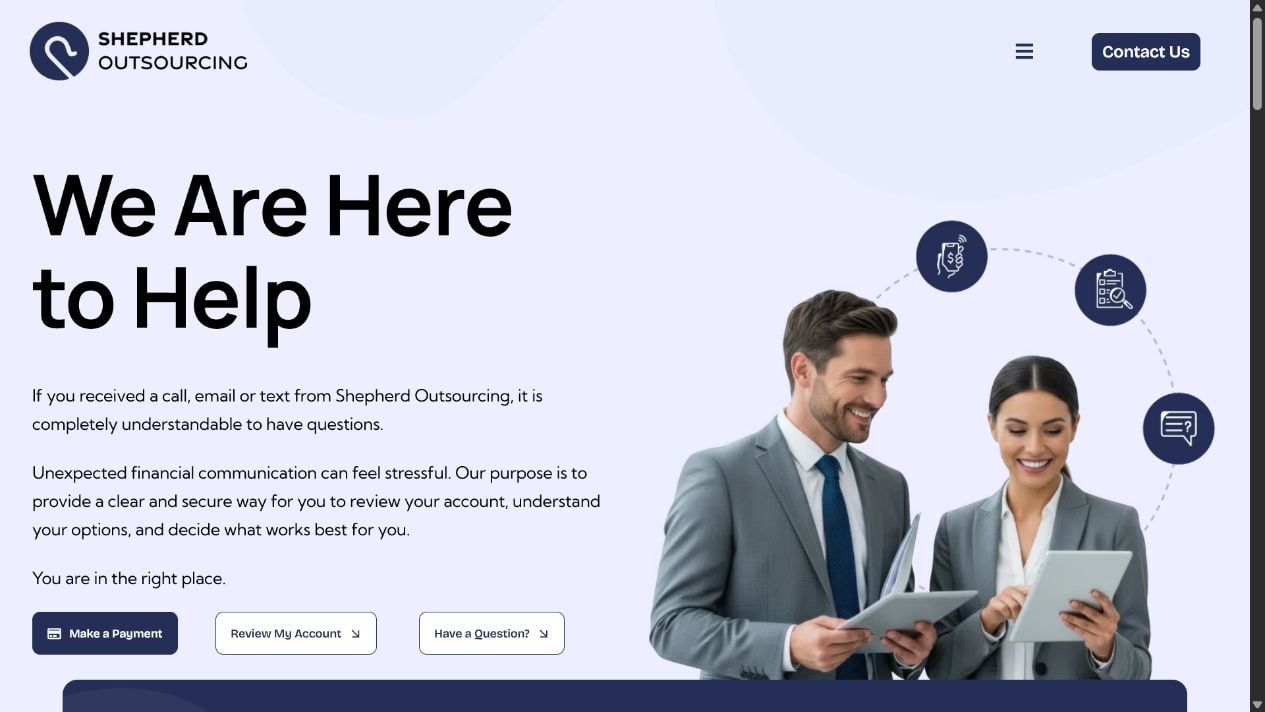
Shepherd Outsourcing Overview and Verification Guide
The company is real, but the account can still be wrong
Shepherd Outsourcing publishes an official website, contact information and licensing details. A creditor may place an account with a collector whose name the consumer has never seen. That unfamiliarity alone does not make the contact fraudulent.
However, real collection files can contain old telephone numbers, mixed identities, disputed charges or identity-theft accounts. A consumer should receive enough written information to identify the creditor, amount and dispute process. Do not confirm a full Social Security number simply to make an inbound caller stop.
Impostors hide behind the real company
A criminal can copy Shepherd Outsourcing’s name and threaten court, arrest or workplace embarrassment. Caller ID can show the company or an official-looking number even when the call came from elsewhere. The impostor then demands immediate payment through a method that cannot be reversed.
- Legitimate business: Shepherd Outsourcing operates as a collection and account-resolution company.
- Unknown account: the caller still must connect the balance to you and a creditor.
- Independent check: use shepherdoutsourcing.com and its published telephone number.
- Consumer right: request validation and dispute inaccurate information.
- Scam behavior: arrest threats, secrecy and gift card or cryptocurrency demands.
A settlement deadline does not remove the need for proof. Before accepting a discount, understand who owns the debt, whether the balance is accurate and how payment will be reported. Old accounts can raise location-specific legal issues, so consider qualified advice before acknowledging or paying them.
The official site publishes a Greenville, South Carolina mailing address and NMLS identification, but copied registration data does not authenticate a caller. Criminals quote correct public details precisely because they know a search will make the demand look legitimate.
Warning Signs of a Shepherd Outsourcing Impostor
The caller tries to make independent verification impossible
A genuine collector may request payment, but it should not need a gift card, cryptocurrency transfer or threat of jail.
End any call that refuses written validation or punishes you for contacting the original creditor.
Red Flags at a Glance
- Police action is threatened. Immediate arrest over ordinary consumer debt is a scam tactic.
- The creditor remains vague. The caller will not identify the company, dates or account.
- Only instant payment is accepted. Gift cards, crypto and person-to-person transfers remove normal protections.
- A full Social Security number is required. The caller collects identity data instead of proving the debt.
- Caller ID is treated as authentication. Displayed names and numbers can be spoofed.
- The official number must not be called. The impostor fears that the real company will expose the fraud.
- A lawsuit has no verifiable case. No court, filing or served document can be produced.
How To Validate a Shepherd Outsourcing Account
Request the written notice first
Ask for the account details in writing and avoid debating during the initial call. The notice should identify the creditor, amount and dispute instructions. Compare names, addresses and dates with your own statements.
Do not call a number solely because it appears in the letter. Type shepherdoutsourcing.com yourself and use the published contact information, including the official 855-410-6059 number. Ask whether the reference and representative are genuine.
Confirm the creditor relationship
Contact the original creditor through an old statement, official app or manually located website. Ask whether it assigned or sold the account and which agency currently handles it. A criminal may know the creditor from leaked data, so recognition alone is insufficient.
If the creditor names another collector or has no matching account, dispute the contact and do not pay. If it confirms Shepherd Outsourcing, continue checking the balance, dates and identity.
Resolve mistakes in writing
A wrong telephone number can be corrected, but do not provide excessive identity information to prove that you are not someone else. State the problem clearly, request cessation or correction as appropriate, and keep delivery and response records.
If identity theft created the debt, obtain an identity-theft report, freeze credit and dispute the account with the collector, creditor and credit bureaus. Repeatedly telling callers by telephone may not correct the underlying file.
How To Handle Repeated Shepherd Outsourcing Calls
Keep a call log before the details blur
Record the date, time, number, representative, creditor, amount and statements during every contact. Save voicemail and letters. A clear timeline helps distinguish one official account from multiple impostors and supports a complaint when calls ignore a correction or dispute.
Do not let repetition push you into confirming sensitive data. Give information only through the verified official channel and ask what safer verification options are available. A persistent caller does not become more authentic with each attempt.
A wrong number should not become your identity burden
If the agency seeks another person, state that the number does not belong to them and request correction. You should not need to provide a Social Security number or identity document merely to prove you are not a stranger in its file.
If contact continues, repeat the request in writing and retain proof. Review local consumer rights and consider qualified legal advice when persistent calls ignore formal notices or cause measurable harm.
Payment plans need complete written terms
Before authorizing drafts, obtain the balance, schedule, fees and consequences of a missed payment. Confirm which business will withdraw funds and what descriptor will appear on the statement. Review the first transaction immediately for a wrong date or amount.
Keep the plan and receipts until the account is conclusively resolved. A verbal payment arrangement can be misunderstood, while written terms let both parties compare what was authorized with what occurred.
Credit reporting is not a telephone threat
Review your credit reports independently and dispute inaccurate entries through documented channels. Do not provide online-banking credentials to someone who claims they are needed to repair a score.
No collector can guarantee a specific score change. Account status, accurate reporting and scoring models are separate matters, so a pressure promise should not replace written settlement terms.
If the account is already paid, keep the final statement and payment proof. Send copies through the verified dispute route rather than reading card or bank details to a caller.
How a Shepherd Outsourcing Impersonation Scam Works
Step 1: Basic identity data is acquired
The criminal starts with a name, number, address or creditor from a leak or lead list.
One accurate detail makes the call appear tied to a real account.
Step 2: A real agency name is copied
The caller uses Shepherd Outsourcing and may quote information from its website.
A quick internet search confirms the company exists but not the caller.
Step 3: An urgent collection story is presented
The account is described as a final notice, pre-legal file or settlement opportunity.
The victim is told that delay will create severe consequences.
Step 4: Validation is replaced by pressure
Requests for a written notice are dismissed as too late or impossible.
The caller claims the victim already waived the right to question the debt.
Step 5: Unusual payment is demanded
Gift cards, cryptocurrency, wires or payment apps are framed as the only acceptable resolution.
The criminal stays on the line to prevent outside advice.
Step 6: More identity data is harvested
The fake collector asks for bank credentials, a full Social Security number or one-time code.
The information supports account theft even if the payment fails.
Step 7: New fees follow the first loss
Court, processing and release charges appear because the original balance was invented.
Later recovery callers target the victim with another advance-fee promise.
How To Verify Shepherd Outsourcing Safely
Use the official company and original creditor as separate checks
Collect the representative name, creditor and reference, then end the inbound call without sharing sensitive information.
Contact Shepherd Outsourcing through its official site and separately confirm the placement with the creditor.
A Safer Verification Sequence
- Request written validation. Do not negotiate an unidentified balance.
- Use the official 855-410-6059 number. Do not trust caller ID or redial.
- Call the creditor separately. Confirm who currently handles the account.
- Review statements and credit reports. Look for dates and balances that do not match.
- Verify alleged lawsuits. Contact the court independently using public records.
- Reject pressure payments. No legitimate collector needs gift cards or cryptocurrency.
What To Do If You Paid a Shepherd Outsourcing Impostor
Protect the payment, identity and any genuine account
Save messages, receipts, telephone numbers, payment destinations and names. Contact real Shepherd Outsourcing through its official website and ask it to confirm the impersonation.
Notify the bank or payment provider immediately. Recovery is not guaranteed, but speed can matter for transfers and card payments.
If credentials or identity documents were shared, treat them as compromised even if no money left the account.
Recovery Checklist
- Request a fraud review, transfer recall or card dispute from the payment provider.
- Report gift card numbers immediately to the card issuer.
- Tell Shepherd Outsourcing and the named creditor about the impersonation.
- Change exposed passwords and secure email, banking and payment-app accounts.
- Freeze credit if sensitive identity information was disclosed.
- Report the incident to consumer authorities and law enforcement when appropriate.
- Keep checking for new collectors using the same account story.
- Reject recovery companies that demand money before providing help.
Do not ignore a real debt because a scammer used it
After securing the loss, verify whether a genuine balance exists. Money sent to an impostor normally does not satisfy the creditor, so resolve the real account only through a confirmed channel.
If the account is not yours, dispute it in writing and preserve the identity-theft or mixed-file evidence. Clear documentation is stronger than repeated telephone explanations.
Frequently Asked Questions
Is Shepherd Outsourcing a legitimate company?
Yes. It is a real debt collection and account-resolution company, but that does not authenticate every caller using its name.
What is the official Shepherd Outsourcing number?
The company publishes 855-410-6059. Type its official website yourself to confirm current contact details.
Must I pay during the first call?
No. Request written validation and verify the agency, creditor and balance before discussing payment.
Can a collector demand gift cards or cryptocurrency?
That demand is a scam sign. Stop the call and contact the company and creditor independently.
The Bottom Line
Shepherd Outsourcing is legitimate, but the company name is not proof that the person calling you is an employee or that the debt is accurate.
Request validation, call the official number and confirm the creditor. Pressure, secrecy and irreversible payment are reasons to stop immediately.








