

Ocuvana Complete Liver Support looks like a carefully developed wellness formula. The page surrounds a small dropper bottle with clinical language, dramatic customer stories, large discounts, and warnings that liver damage can progress silently.
Our investigation found a much less impressive reality. Ocuvana uses the same formula, claims, and testimonials sold under several unrelated names, while its store publishes no company address or phone number and contradicts itself about stock, guarantees, and even which product its refund policy covers.
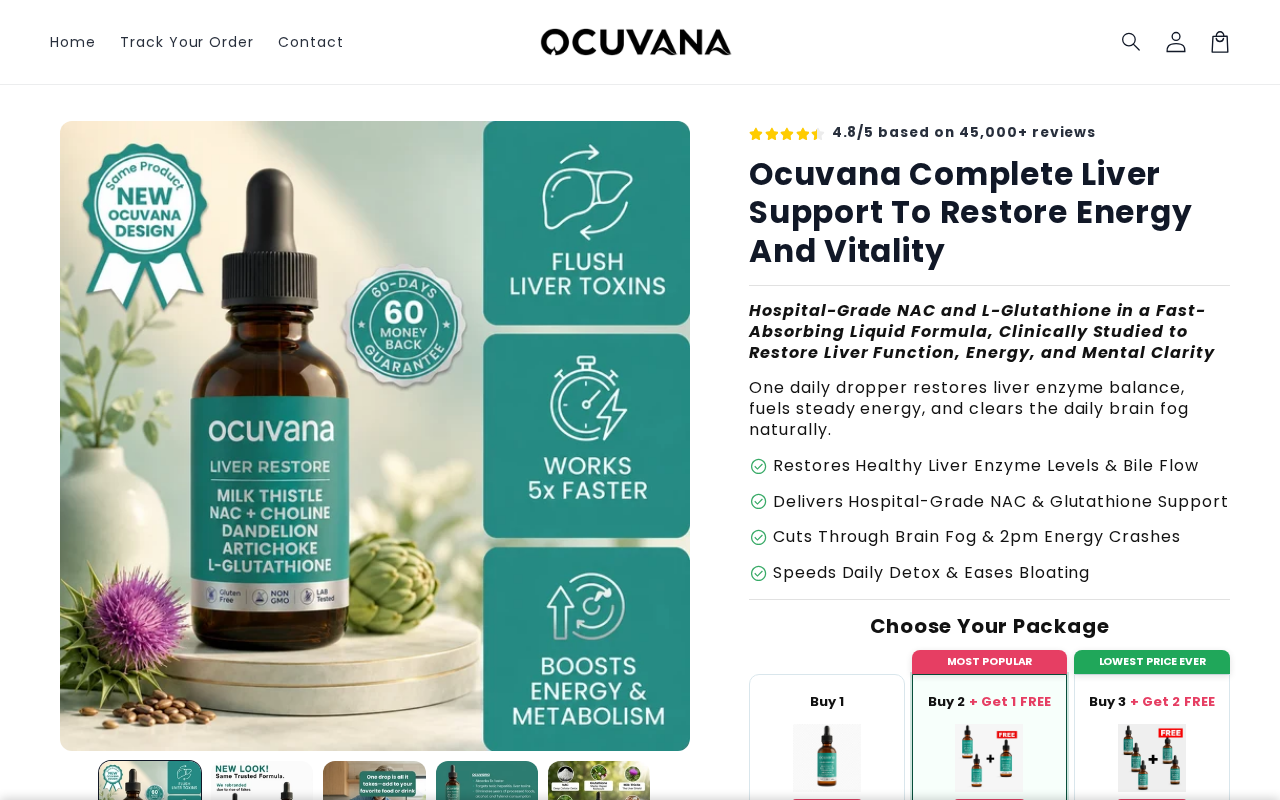
Ocuvana Complete Liver Support Overview
Ocuvana is a liquid dietary supplement offered through ocuvana.com. Its page advertises one bottle for $29.99, three for $59.97, and five for $89.95, with claimed savings of 25%, 50%, and 55%. Those bundle discounts are designed to make the largest order appear safest and most economical.
The listed formula contains glutathione 50 mg, NAC, milk thistle extract 200 mg, dandelion root 200 mg, artichoke 100 mg, beet root 100 mg, choline citrate 50 mg, and a 100 mg blend of Chanca Piedra, astragalus, ginger, burdock, turmeric, and schisandra. The NAC amount is not clearly disclosed in the main ingredient list.
At the time of review, the page simultaneously displayed “In stock” and a disabled “Sold out” purchase button. We found no active subscription selector or recurring selling plan on this product. Therefore, Ocuvana cannot fairly be called a live subscription trap based on the current checkout alone.
Who is behind Ocuvana?
The terms say Ocuvana LLC operates the store, and the only direct support detail we found was support@ocuvana.com. The contact-information page does not publish a street address, mailing address, customer-service telephone number, company-registration number, state of formation, or names of responsible officers.
Because “Ocuvana LLC” is not paired with a jurisdiction or registration number, we could not reliably match the merchant to a specific official corporate record. A similarly named company somewhere in the United States would not prove it owns this website. We also found no disclosed factory, laboratory, return warehouse, or fulfillment center.
This does not prove the company name is fake. It means the site withholds the information a customer would need to verify it. A legitimate online seller may use third-party fulfillment, but it should still identify the contracting business and provide an address for notices and returns.
Why Ocuvana Raises So Many Red Flags
- The formula matches products sold as Purelia, Purella, Dovi, Aloura, Livora, and Rosalyssa.
- Testimonials and transformation stories are repeated across unrelated stores.
- The page shows conflicting stock messages and inconsistent review totals.
- A different Ocuvana product page contains liver-supplement text that does not belong there.
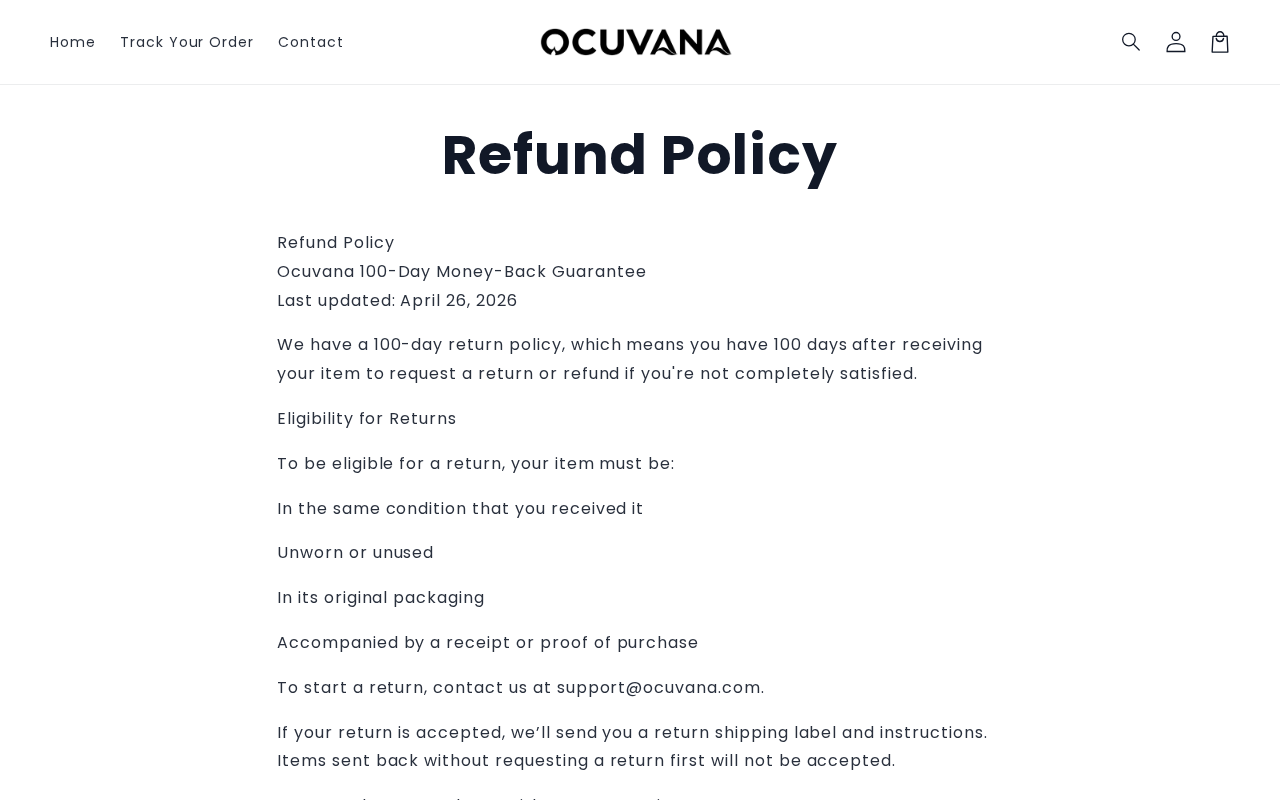
- The 60-day sales promise conflicts with a 100-day policy containing strict return conditions.
- The formal policy unexpectedly discusses an “Ocuvana 4-in-1 CO Detector,” not liver drops.
- No public address, phone number, legal jurisdiction, manufacturer, or fulfillment location is disclosed.
How The Ocuvana Scam Works
The word “scam” should be used carefully. Ocuvana appears to advertise a physical product, and we did not place an order to test delivery. The deceptive pattern is the way a generic formula is transformed into an apparently unique, medically persuasive solution without transparent evidence or business accountability.
1. The advertisement turns common symptoms into liver fear
A shopper may arrive after seeing an advertisement about fatigue, bloating, brain fog, weight gain, poor sleep, or difficulty processing alcohol. These symptoms are common and can have many causes, but the sales story encourages readers to connect them to a sluggish or damaged liver.
The page then introduces fibrosis, fatty liver, toxins, and worsening blood tests. This escalation changes an ordinary supplement decision into an urgent health decision. A worried reader is less likely to pause and ask whether the merchant has evidence for the finished bottle.
2. A white-label formula is presented as an Ocuvana breakthrough
Ocuvana explains each ingredient as if the blend were designed for a special multi-stage liver reset. Yet the ingredient order, extract ratios, doses, and 100 mg proprietary blend match numerous stores nearly word for word.
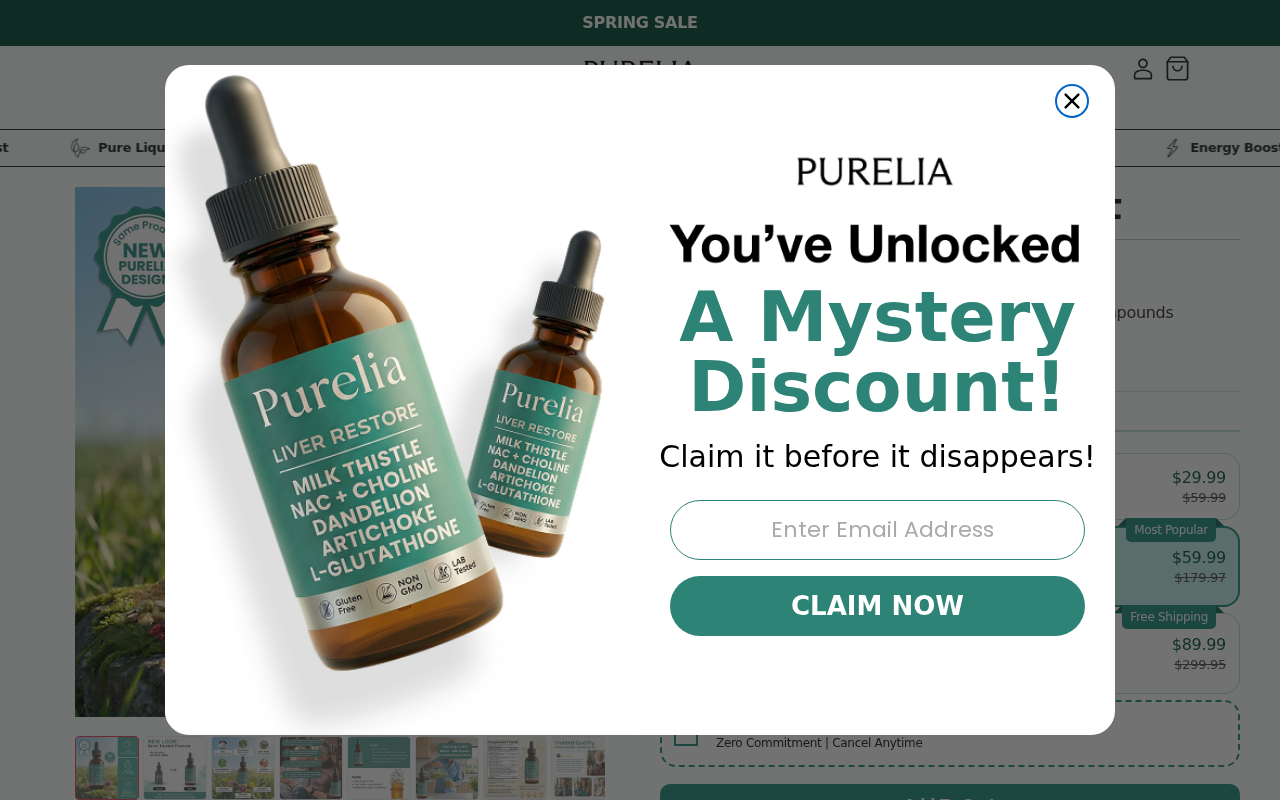
White-label supplements are not automatically unlawful. The concern is that the branding suggests independent formulation and testing while buyers are not told who actually manufactures the product, whether the stores share a supplier, or which quality controls apply to the finished batch.
3. Ingredient research is stretched into product proof
Milk thistle, NAC, glutathione, and choline all sound scientifically credible. Ocuvana uses that familiarity to imply the complete mixture will improve enzymes, reduce liver fat, restore energy, and support damaged tissue. Studies on individual ingredients do not demonstrate that this exact product produces those outcomes.
NCCIH says research on milk thistle for liver diseases is conflicting or too limited for firm conclusions. A randomized study of NAC in metabolic dysfunction-associated steatotic liver disease used 600 mg three times daily and found no significant improvement in liver fat, AST, or ALT compared with placebo. Ocuvana does not prominently disclose a comparable NAC dose.
4. Recycled testimonials manufacture social proof
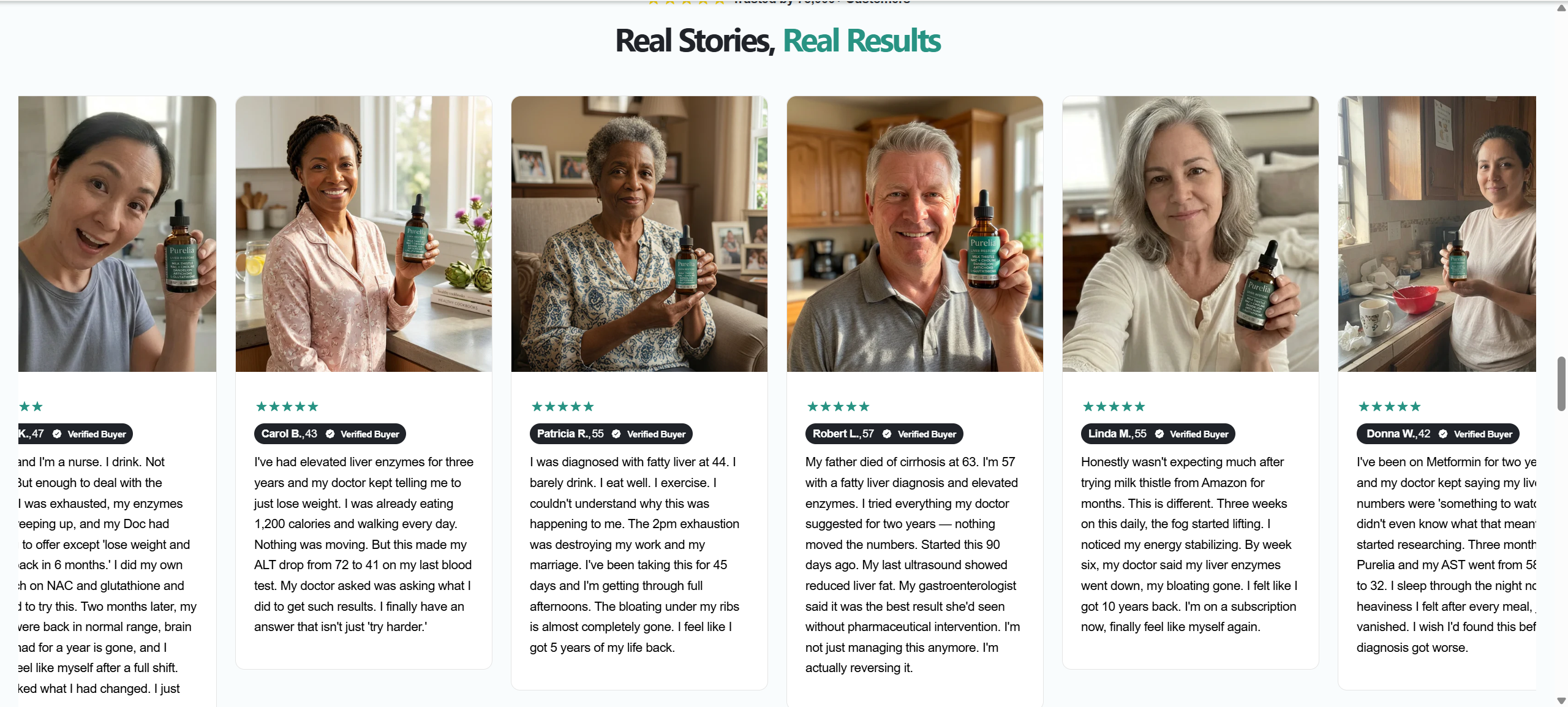
The photo evidence is even more direct. Ocuvana’s own Shopify asset URLs name the six portraits ChatGPT_Image_Jun_23_2026. The same people, rooms, poses, and stories are reused on Purelia after the bottle label is changed digitally. These are not documentary photographs supplied by independent Ocuvana buyers.
The images also contain familiar generation artifacts: tiny label text becomes meaningless, typography changes between bottles, and product proportions are not perfectly consistent. The file names provide the strongest proof; visual anomalies alone would justify only a probability judgment.
Detailed stories about doctors, laboratory values, alcohol tolerance, energy, and visible transformation make the offer feel personal. However, substantially identical testimonials appear on other brands using the same template. A story cannot be an independent Ocuvana review when another store presents it as a review of a different product.
The page also moves between review and customer totals that do not fit together. Numbers such as 1,319 reviews, 45,000 reviews, and hundreds of thousands of customers can create authority at a glance, but the store does not provide a verifiable review platform or audit trail for those claims.
5. Large bundle discounts increase the amount at risk
The pricing pushes buyers toward three or five bottles by making the per-bottle cost look dramatically lower. This is a common direct-response tactic: the shopper believes a longer supply is necessary for results and that choosing one bottle wastes the discount.
A bigger order also makes a return harder. If the buyer opens a bottle while testing the product, a strict unused-and-original-packaging policy can be used to exclude part of the order. Sale-item exclusions are especially important when almost every offer is displayed as a discount.
6. The guarantee headline lowers resistance
The product page promises a 60-day refund and uses reassuring “no questions asked” language. The formal refund page leads with a 100-day guarantee, but then says items generally must be unused, in original packaging, and approved for return. It also excludes sale items.
More strangely, the policy later refers to an Ocuvana 4-in-1 carbon monoxide detector and says the physical product must be returned. That looks like text copied from a different product or store. Customers cannot know which promise will govern until a refund is requested.
7. Template contamination reveals weak store controls
Ocuvana’s Kombucha Probiotic Gummies page contains liver-support claims and formula language unrelated to gummies. The site also shows French interface fragments in an English-language storefront. These are not merely cosmetic errors when customers are evaluating a supplement and return rights.
Such mistakes suggest pages were assembled quickly from reused templates without a careful legal, medical, or editorial review. If product names and policies are not controlled, shoppers have little reason to trust undisclosed testing or exact health claims.
8. Limited company information makes disputes harder
If an order is delayed, a refund is refused, or the card statement shows an unfamiliar descriptor, the buyer has only an email address and the Ocuvana LLC name. There is no published telephone path, service address, or clearly identified jurisdiction.
That does not show where parcels originate. They could be shipped by a third-party U.S. fulfillment center, sent from another country, or handled by a supplier. Ocuvana does not provide enough evidence to decide. The lack of disclosure is itself the relevant warning.
Is Ocuvana a Subscription Trap?
We found no selectable subscription on the current sold-out product and no recurring plan we could add to a cart. Calling the present Ocuvana page a proven subscription trap would therefore go beyond the evidence.
It remains a high-risk supplement offer because of cloned materials, opaque ownership, policy contradictions, and exaggerated health framing. Buyers should inspect every future version of the checkout because these Shopify stores can add selling plans or change purchase controls without changing the surrounding article.
What to do if you have fallen victim to this Scam
- Save the complete order record. Preserve the advertisement, product page, stock message, bundle selected, checkout, confirmation, card descriptor, tracking page, and every guarantee statement.
- Contact Ocuvana in writing. Email support@ocuvana.com with the order number and a clear request. If canceling, say you revoke authorization for any future shipment or charge and require written confirmation.
- Request the return address before shipping. Do not send a parcel to an address found on an unrelated directory. Ask for an RMA and the exact authorized return destination, then use tracked delivery and photograph the contents.
- Quote the promise shown when you bought. If the product page offered 60 days and no questions asked, attach that screenshot. Ask the merchant to explain why the formal policy mentions 100 days, unused items, sale exclusions, and a carbon monoxide detector.
- Check for recurring charges anyway. Even though no current subscription was visible, review the confirmation and card statement for a recurring-purchase notice or future date. Monitor at least two billing cycles.
- Dispute an unresolved charge. If goods never arrive, differ materially from the description, or a promised refund is refused, contact the payment provider within its deadline. Supply a concise timeline and supporting files.
- Report misleading advertising. U.S. consumers can report deceptive marketing to the FTC and their state attorney general. Serious supplement reactions can be reported through the FDA’s safety reporting channels.
- Get medical help for real liver concerns. Stop using the product and seek care for a reaction. Abnormal liver tests, jaundice, severe pain, swelling, vomiting, or confusion require medical evaluation rather than another bottle.
How to Protect Yourself From White-Label Supplement Offers
- Search a full ingredient sentence in quotation marks to find cloned stores.
- Demand the manufacturer’s identity, country of manufacture, lot number, and a batch-specific certificate of analysis.
- Verify that the test covers the finished product, not a generic raw ingredient.
- Compare the sales guarantee with the actual refund policy before paying.
- Never treat testimonials as a diagnosis or substitute for liver testing.
- Choose one-time billing and screenshot the final cart when a subscription is offered.
Frequently Asked Questions About Ocuvana
How Ocuvana is connected to Purelia and the other liver drops
Ocuvana has the strongest visual link to Purelia: the stores use the same AI-generated people, rooms, poses, and medical stories, changing the label from Ocuvana to Purelia. Its formula also matches Purella, Livora, and Aloura.
The shared assets establish a common marketing kit or source material, not necessarily common corporate ownership. See the full clone-network investigation for the company and address comparison.
Is Ocuvana LLC a confirmed fake company?
No. The site uses that name, but it does not provide the state, registration number, address, or officers needed to identify the correct entity. We could not verify the operator from the seller’s disclosures, which is different from proving that no company exists.
Does Ocuvana ship from China?
The live website does not provide evidence strong enough to answer. A cloned Shopify page and generic bottle are compatible with overseas dropshipping, domestic contract manufacturing, or U.S. third-party fulfillment. The actual parcel label, country-of-origin statement, lot code, and customs information would be needed.
Can a sold-out product still be risky?
Yes. Old advertisements may continue circulating, another URL may accept orders, or stock can return. A sold-out state protects the current visitor from completing that purchase but does not correct the copied medical claims or policy defects.
What testing should Ocuvana publish?
A useful certificate should identify the finished product, lot number, laboratory, test date, ingredient or marker results, and screening for contaminants such as heavy metals and microbes. A generic badge, raw-material sheet, or document without a matching batch is not enough.
Even good laboratory results would establish composition and safety checks, not the claimed ability to reverse liver disease. Clinical benefit requires appropriate studies of the complete formula in the population for whom the claim is made.
A serious seller should also explain who handles adverse-event reports and product recalls. Without a traceable manufacturer, lot system, and responsible company address, customers may not know whom to notify if several people receive damaged, mislabeled, or contaminated bottles.
Ocuvana’s missing phone is not decisive by itself; many online stores use email support. In combination with the missing jurisdiction, absent address, copied policy, and undisclosed fulfillment chain, however, it removes another practical route for resolving an urgent order or safety problem.
The Bottom Line
Ocuvana is not a proven active subscription trap in its current sold-out state. It is, however, a deeply questionable white-label supplement offer whose cloned evidence, contradictory policies, and missing company details make an informed purchase unnecessarily difficult.
We recommend avoiding Ocuvana Complete Liver Support. A seller asking customers to trust liver claims should identify its legal business, manufacturer, testing, address, phone, and return process clearly. Ocuvana does not meet that standard.








