

Livora Complete Liver Support did not simply disappear. Search results captured the product on ourvitality.org under the Livora name, but the same domain now presents the offer as Purelia. The formula, layout, promises, and subscription machinery remain strikingly familiar.
The rebrand matters because the current funnel is one of the clearest subscription traps in this supplement family. A shopper can press a prominent “RESET LIVER” button without seeing a normal one-time-versus-subscribe selector. In our test, that click placed a monthly recurring purchase in the cart with a 15% discount.
Livora Complete Liver Support Overview
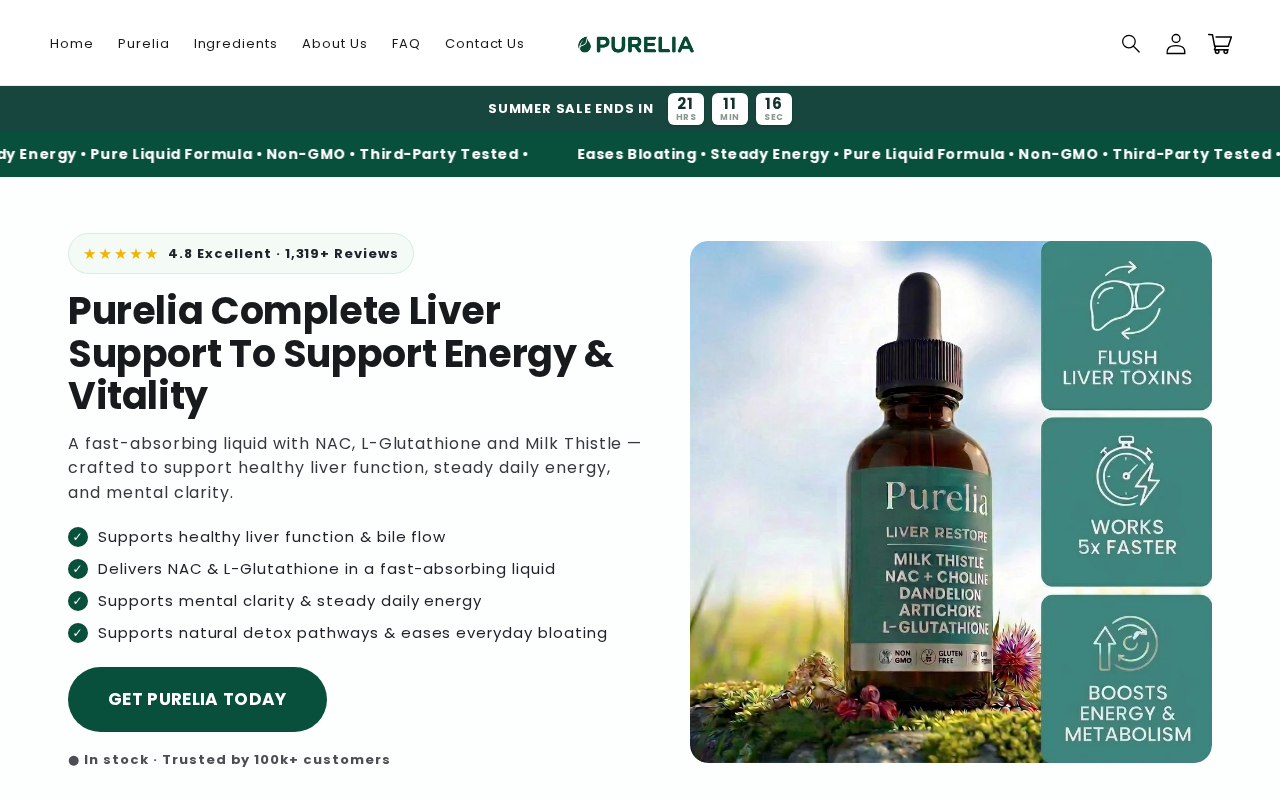
Livora was advertised on ourvitality.org as a liquid liver-support supplement containing glutathione 50 mg, NAC, milk thistle 200 mg, dandelion root 200 mg, artichoke 100 mg, beet root 100 mg, choline citrate 50 mg, and a 100 mg proprietary herbal blend.
Search-engine copies of the page described 1,319+ reviews, more than 20,000 customers, a 60-day guarantee, and a customer who said she was “on a subscription now.” When we opened the site, Livora had been replaced by Purelia, and the customer count had changed to more than 100,000.
Who operates ourvitality.org?
The legal pages do not identify a corporation or LLC. The terms direct mail to “Purelia, PO Box 45210, Los Angeles, CA 90045” and use Thermatech@wholebodycollective.com. The contact page instead uses support@purelia.com. No customer-service phone number or physical street address is published.
A post-office box is useful for receiving mail, but it is not evidence of a factory, office, return warehouse, or fulfillment center. “Purelia operates this store” is a brand statement, not a legal-entity disclosure. Searching the two support identities did not reveal a verifiable U.S. company that clearly accepts responsibility for this exact store.
That opacity matters because a buyer may need the merchant’s legal name and service address for a charge dispute or consumer complaint. We cannot prove the operator is fictitious, yet we also cannot independently verify who owns the store, where orders are fulfilled, or why Livora was replaced by Purelia without a transparent notice.
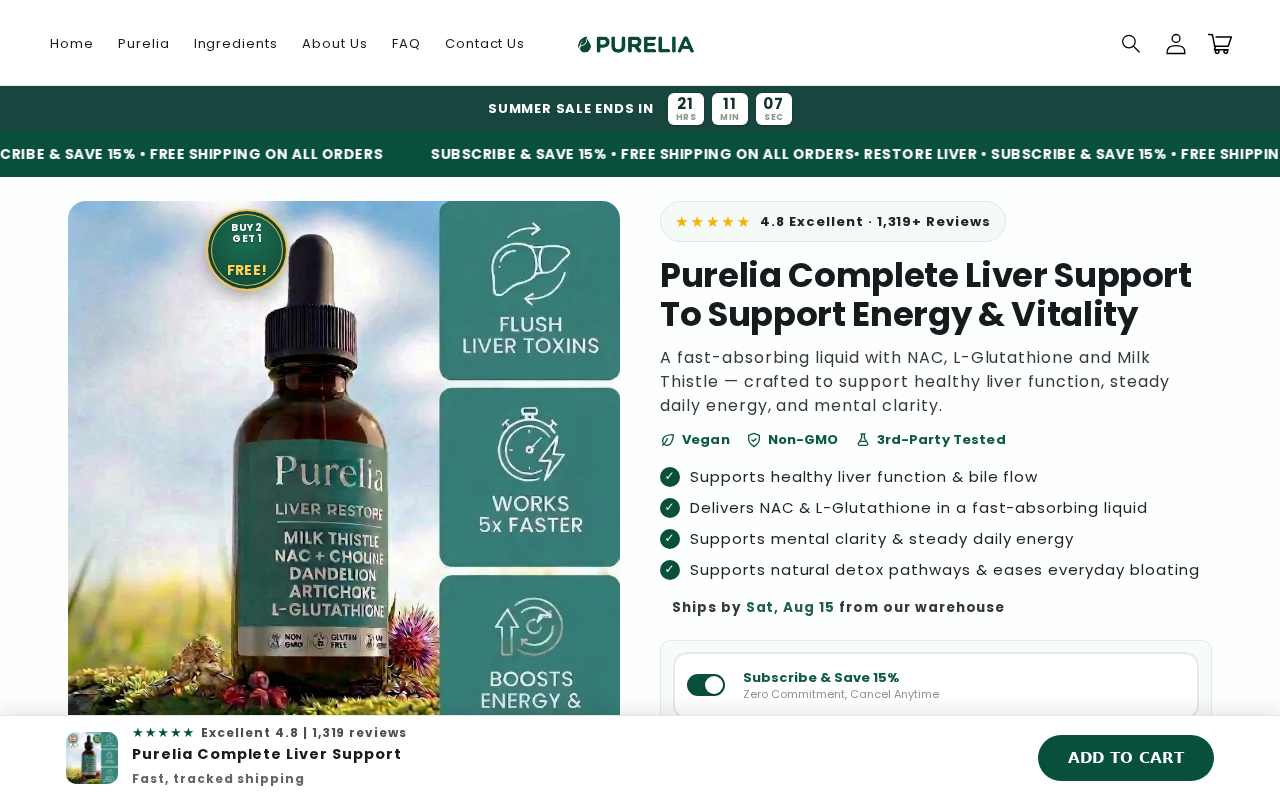
The current product page promotes “Subscribe & Save 15%” but does not display a conventional purchase-option control in the main order form. The store’s subscription configuration says shouldPreselectSubscription: true and describes monthly delivery and monthly billing.
Our verdict on Livora
Livora/Purelia on ourvitality.org behaves like a subscription trap and should be avoided. The name changed, recurring billing is preselected behind a custom purchase button, the cart confirms a subscription only after the product is added, and the site gives contradictory guarantee periods and support addresses.
- Original name: Livora Complete Liver Support.
- Current name on the same domain: Purelia Complete Liver Support.
- Subscription state: Preselected by the store configuration; the cart contained a recurring purchase after one click.
- Billing interval: Monthly, according to the selling-plan configuration.
- Displayed discount: 15% off in the cart.
- Guarantee conflict: 60 days on the contact page, 90 days in the refund policy and checkout messaging.
How The Livora Liver Support Scam Works
This funnel combines two separate tactics: a health-scare narrative that makes long-term use sound necessary and a purchase design that quietly converts a simple button click into monthly billing. The product may be shipped, but receiving a bottle does not make the enrollment clear or the claims true.
1. The product is repeatedly renamed
Only weeks before our review, the indexed page called the product Livora. The live page now uses Purelia throughout. Search titles, review counts, customer totals, and guarantees have not changed in a clean, documented way; different versions remain visible depending on where the shopper enters.
A legitimate rebrand can happen, but it should be explained. Customers need to know which legal entity accepted the order, which brand will appear on the card statement, which support address handles the subscription, and whether old Livora guarantees still apply. The site provides no clear transition notice.
2. Health anxiety creates pressure to start immediately
The Livora version promised to restore liver enzyme balance, support bile flow, clear brain fog, and improve daily energy. It described “hospital-grade” NAC and glutathione and encouraged at least 60 days of continuous use.
The current Purelia version tells much the same story with cleaner wording. Ordinary fatigue becomes a sign that the body’s filter needs support, while a daily dropper is presented as the simple action a worried person can take right now. The prominent button says “RESET LIVER,” a phrase that sounds therapeutic rather than nutritional.
3. The order button skips a clear purchase choice
On many subscription pages, customers see two radio buttons: one-time purchase and subscribe. The product form we inspected contained a product ID, quantity, and the “RESET LIVER” button, but no visible one-time purchase option and no visible selling-plan field.
Behind the page, the subscription app was configured to preselect a subscription. It also defined a monthly delivery interval, monthly billing, and a 15% discount plan. The technical state matters because it determines what the button adds even when the choice is not presented plainly beside the button.
4. One click adds recurring billing to the cart
We clicked the primary purchase button once. The resulting cart showed Purelia Complete Liver Support with “15% off” and a Shopify notice stating that one or more items were a deferred, subscription, or recurring purchase. The notice authorized future charges until cancellation.
The cart total was $75.98 and included a multi-bottle arrangement. The most important disclosure appeared after the product had already been added. A shopper moving quickly from a health promise to checkout could read the discount and total but miss the recurring authorization below.
5. A monthly plan is framed as healthy consistency
The page says liver support works when it is taken daily and encourages customers to stock up so they do not run out before their next checkup. This makes a recurring plan sound like responsible self-care rather than an ongoing financial commitment.
There is nothing inherently wrong with choosing repeat deliveries. The problem is consent. A customer should make an affirmative, informed choice after seeing the renewal price, frequency, quantity, cancellation method, and timing next to the order button. A hidden default reverses that sequence.
6. Conflicting refund promises make cancellation uncertain
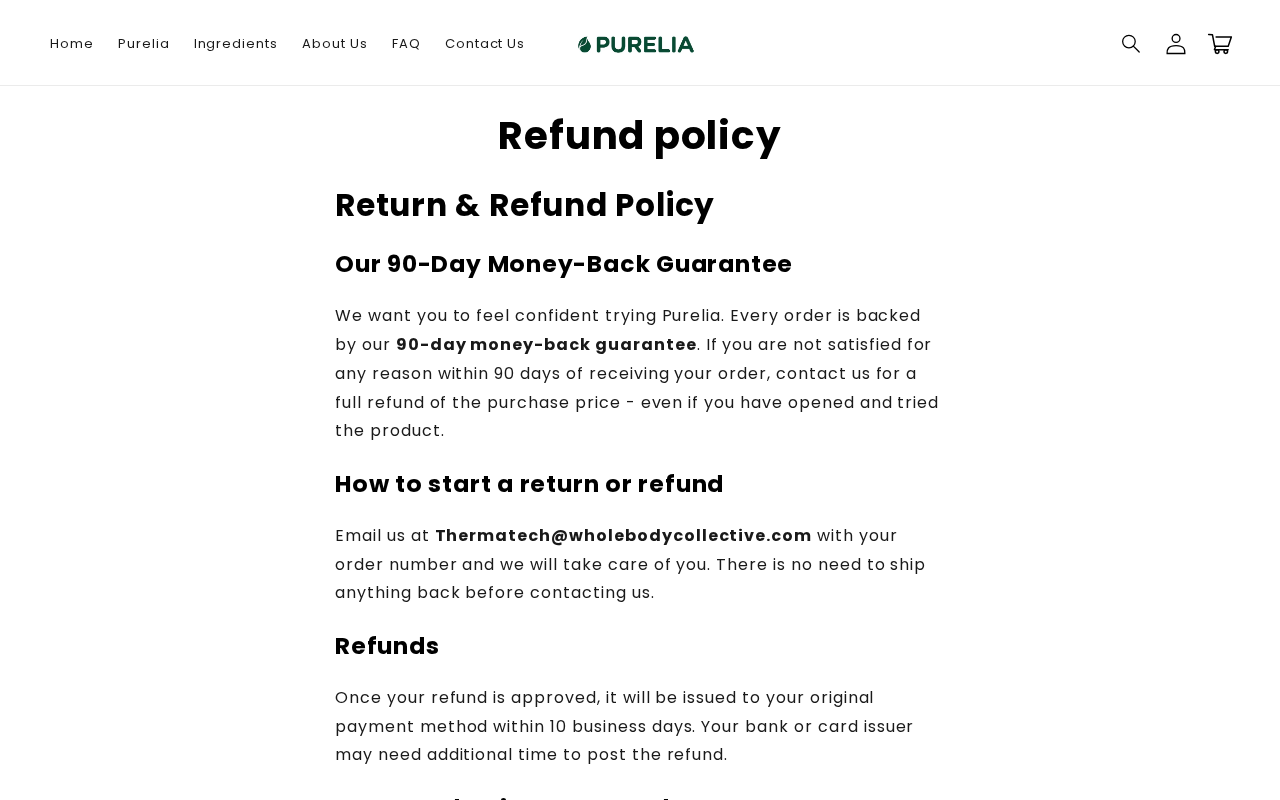
The contact page says every purchase has a 60-day money-back guarantee and directs subscription questions to support@purelia.com. The formal refund policy says 90 days, promises refunds even on opened product, and tells customers to write to Thermatech@wholebodycollective.com.
Checkout messaging also promotes a 90-day guarantee. These contradictions leave basic questions unanswered: Which email controls a cancellation? Is the window 60 or 90 days? Does the entity behind “Thermatech” operate the current store, the old Livora offer, or both?
7. The same success stories migrate with the brand
Livora reviews described reduced bloating, steadier energy, easier afternoons, and repeat orders. Closely matching names and stories appear on other liver-drop sites. When the branding changes but the same characters and outcomes remain, the reviews cannot be treated as independent validation of one seller.
The page also displayed survey blocks with 0% values in indexed text while surrounding copy claimed strong satisfaction. That kind of unfinished template output is another sign that marketing components were deployed faster than they were checked.
Are the Livora and Purelia Medical Claims Credible?
The formula contains ingredients that are commonly sold for liver wellness, but the seller provides no clinical trial of Livora or the rebranded Purelia product. Identical milligram amounts on other storefronts suggest a shared supplier, not a unique medical protocol.
NCCIH states that trials of milk thistle for liver diseases have been conflicting or too limited for firm conclusions. A recent randomized trial of high-dose NAC in MASLD found no significant improvement in liver enzymes or liver fat compared with placebo, even though some metabolic and inflammatory markers improved.
The FDA does not approve dietary supplements for effectiveness before sale. Claims that a product restores liver function, reverses fat, changes laboratory values, or acts like hospital treatment require far more evidence than a list of ingredient studies and customer stories.
Anyone with concerning symptoms or abnormal results should seek proper medical assessment. NIDDK explains that liver disease diagnosis can involve history, examination, blood tests, ultrasound or other imaging, elastography, and sometimes biopsy. A checkout funnel cannot perform that work.
What to do if you have fallen victim to this Scam
- Confirm every item and plan in the order. Look for Livora, Purelia, ourvitality.org, 15% off, monthly delivery, deferred purchase, or recurring purchase. The brand on the email may differ from the name in the advertisement.
- Send cancellation to both published support addresses. Write to support@purelia.com and Thermatech@wholebodycollective.com. State that you cancel the subscription, revoke authorization for future charges, and want written confirmation. Include only the order number and necessary account details.
- Save evidence of the hidden default. Keep screenshots of the “RESET LIVER” button, the absence of a one-time selector, the cart’s recurring-purchase notice, the 15% line, and the monthly plan language. Also preserve both 60-day and 90-day guarantee statements.
- Ask for a complete refund and cancellation record. Cite the guarantee that was displayed when you paid. Request a transaction reference for the refund and confirmation that no future order remains scheduled.
- Watch the payment account. Review statements for at least the next two billing cycles. Merchant descriptors may not exactly match Livora or Purelia. If another charge appears, contact the card issuer immediately and provide the written cancellation.
- Dispute charges you did not knowingly authorize. Tell the issuer that the product was added through a button without a clear one-time-versus-recurring choice and that the recurring disclosure appeared in the cart. Ask whether future merchant charges can be blocked.
- Report the subscription design. U.S. customers can report misleading negative-option billing to the FTC and their state attorney general. Include dates, URLs, screenshots, amounts, and the two support addresses.
- Seek medical advice for health concerns. Stop the supplement and get help if you experience a reaction. Do not delay liver tests or treatment while waiting for a promised 60-day reset. Bring the label to a clinician or pharmacist so possible interactions can be assessed.
How to Spot a Rebranded Subscription Funnel
- The domain, brand name, support email, and company identity do not match.
- Search results show an old product name while the live page silently uses a new one.
- A discount appears, but no visible purchase-frequency selector sits beside the button.
- The cart suddenly describes a deferred, recurring, or subscription purchase.
- Customer totals and review counts change drastically between page versions.
- Guarantee durations differ between product, contact, policy, and checkout pages.
- The exact formula and review stories appear under unrelated brands.
What the Livora Rebrand Means for Customers
How Livora is connected to Purelia and the other brands
Livora has the most direct brand connection: ourvitality.org was indexed with the Livora name and now sells the same product as Purelia. The formula also matches Purella, Ocuvana, and Aloura, while the surrounding claims and testimonial pattern follow the same white-label kit.
The live domain transition is evidence of a rebrand, not proof that the separate companies disclosed by other stores are one owner. The network overview explains which connections are direct and which remain unverified.
A brand change does not automatically cancel a contract. Anyone who previously ordered Livora should search statements and email for ourvitality.org, Purelia, Thermatech, Whole Body Collective, Shopify recurring-purchase notices, and unfamiliar merchant descriptors connected to the same amount.
The switch also makes warranty evidence important. A support agent may see only the current Purelia page, while the customer relied on a Livora guarantee. Archived emails, browser screenshots, and the exact order confirmation can show what was promised under the previous name.
Is the Los Angeles PO box a warehouse?
No. A PO box can receive correspondence but does not identify where staff, inventory, or returns are located. Customers should obtain an authorized return address in writing instead of sending a package to the box automatically.
Can the operator be verified through Whole Body Collective?
Not from the disclosures we found. The terms use an email at that domain but do not say Whole Body Collective is the contracting corporation. A support-domain name is not a substitute for a registered legal name, jurisdiction, and service address.
Until those details are supplied, a buyer cannot tell whether Thermatech is a product line, customer-service contractor, fulfillment partner, or another label. That ambiguity should be resolved before, not after, a recurring purchase.
Customers should also compare the date on each policy. The privacy page was updated after the Livora search listing had been replaced, while the contact and refund statements still disagree. A recently edited legal page does not automatically describe the terms accepted by an earlier buyer.
If support answers under the Purelia name, ask it to confirm in writing that it is handling the original Livora order and subscription. That sentence can prevent a later claim that cancellation was sent to the wrong brand or account.
The Bottom Line
Livora has been replaced by Purelia on the same domain without a clear explanation, but the subscription funnel survived the rename. The current page preselects recurring billing, hides the normal purchase choice from the main form, and adds a monthly plan when the prominent health-reset button is clicked.
Combined with conflicting support emails, 60-day versus 90-day guarantees, copied formula, and recycled reviews, that is enough for a firm recommendation: do not buy Livora or its Purelia replacement from ourvitality.org. If you already ordered, cancel in writing, monitor the card, and keep every piece of evidence.








