

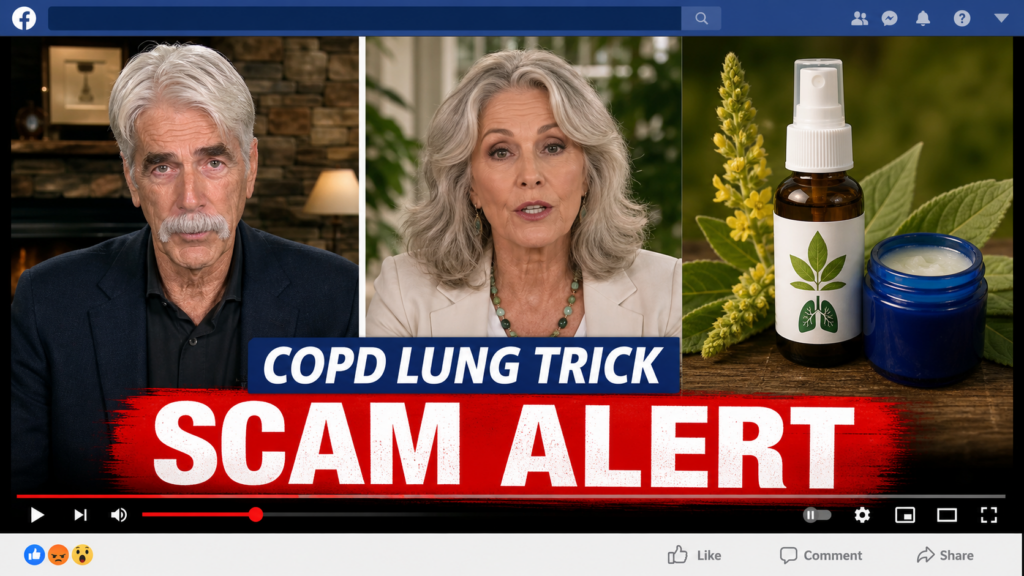
The video looks like a health report, not an advertisement. A familiar face appears to discuss COPD, a natural-health personality seems to explain a simple household remedy, and the viewer is promised an answer that doctors somehow missed.
That presentation is persuasive because it mixes a frightening diagnosis with recognizable people and an ordinary ingredient. The reality behind the link is much less reassuring.
Overview
What the mullein leaf and Vicks advertisement promises
The campaign claims that a simple mullein leaf and Vicks “trick” can restore damaged lungs, clear mucus, or make COPD symptoms disappear in as little as 17 days. Some versions go further and suggest that patients are throwing away their inhalers after discovering it.
That is an extraordinary medical claim. COPD is a chronic lung disease that requires proper diagnosis and individualized management. A social-media video cannot establish that an herbal spray or household mixture can reverse it.
How famous faces make the pitch feel legitimate
Recent ads have used unauthorized AI versions of Barbara O’Neill and actor Sam Elliott. The presentation may be framed as a Fox News segment, a leaked interview, or a personal confession that conventional medicine supposedly tried to suppress.
There is no credible evidence that either person endorsed BreatheEaseX as a COPD treatment. The video’s polished appearance is part of the persuasion, not proof that the people shown agreed to participate.
Where the story actually leads
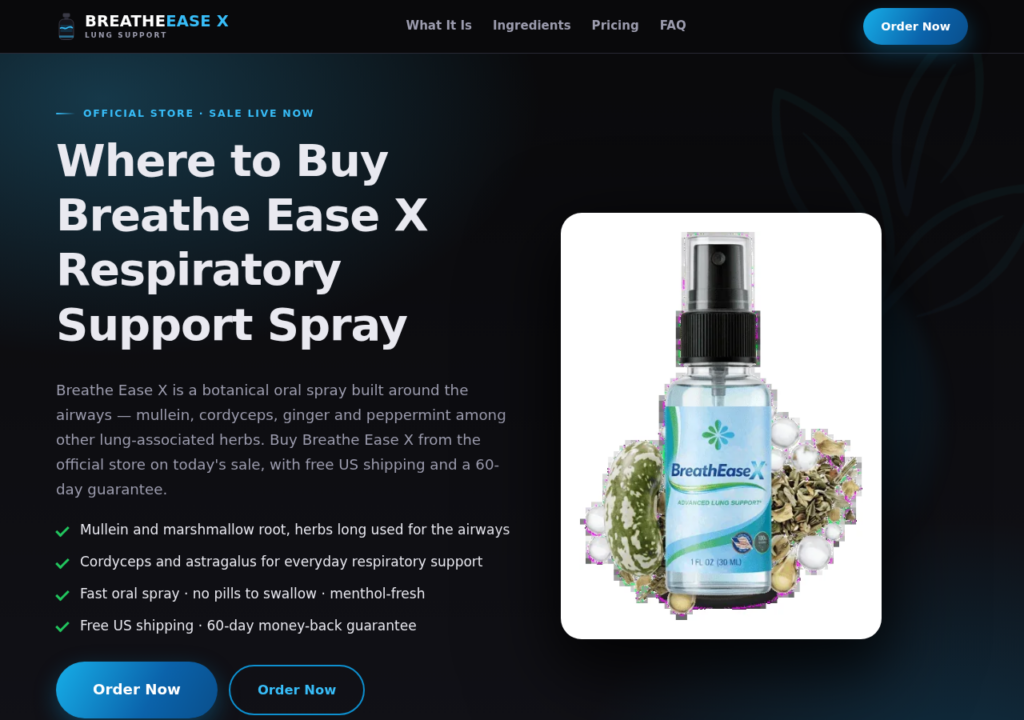
The “recipe” is a bridge into a supplement funnel. In the version reviewed, the destination promotes BreatheEaseX, a botanical oral spray described with ingredients such as mullein, cordyceps, and ginger.
- The ad presents a dramatic COPD cure or lung-restoration story.
- The fake news format borrows credibility from a trusted broadcaster.
- The supposed home trick becomes a proprietary commercial product.
- The sales page uses testimonials, urgency, and package discounts.
- The site’s own disclaimer retreats from the strongest claims in the ad.
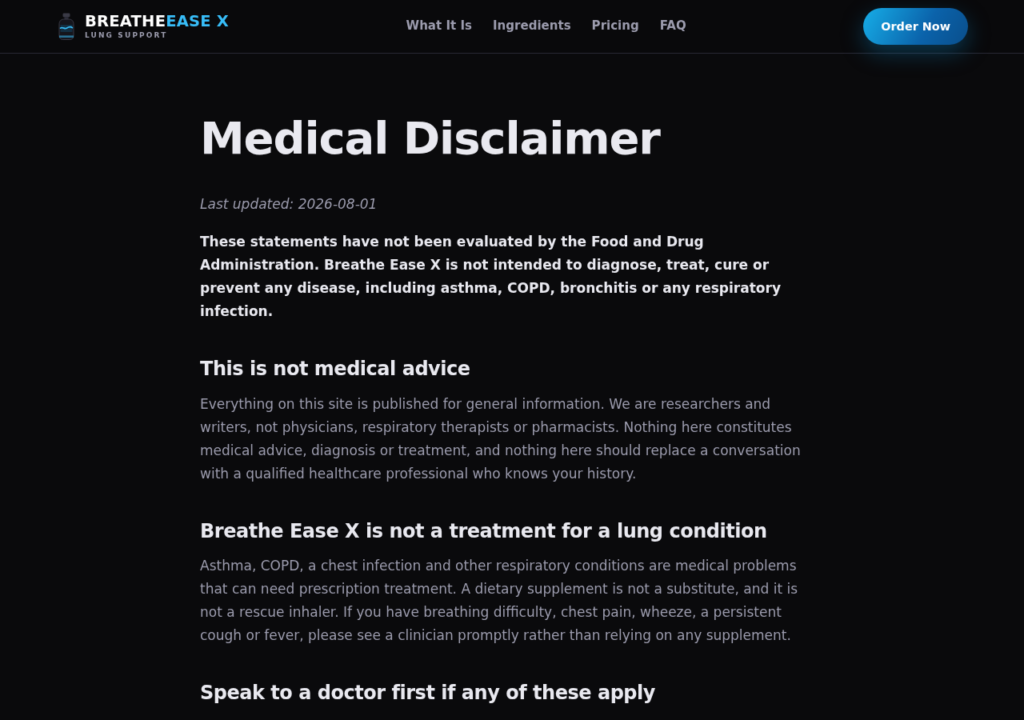
That last point is crucial. A disclaimer on the BreatheEaseX site says the product is not intended to diagnose, treat, cure, or prevent COPD, asthma, bronchitis, respiratory infection, or another disease. That conflicts with an ad telling patients their lungs can be restored in 17 days.
The Medical Claim Is More Serious Than an Ordinary Bad Advertisement
A misleading ad for a gadget may waste money. A misleading COPD ad can influence a person’s treatment decisions. Someone who is frightened, short of breath, or frustrated with daily medication may be especially vulnerable to the promise of a quick natural fix.
The American Lung Association explains that COPD medicines can include short-acting and long-acting treatments, inhaled therapies, and other options chosen according to the patient’s condition. These medications are used to control symptoms and reduce complications. They should not be discarded because of an online sales video.
There is also no single “COPD toxin” that can be flushed from the lungs by adding Vicks to an herbal formula. COPD can involve airway inflammation, damaged lung tissue, excess mucus, and reduced airflow. Treatment depends on the individual and can include medication, pulmonary rehabilitation, oxygen, and lifestyle changes.
Mullein has a history of traditional use, but traditional use is not the same as clinical proof that a finished oral spray reverses COPD. Ingredient-level discussion cannot substitute for trials on the actual product, at the actual dose, in people with the condition being targeted.
Vicks products also have labeled directions and warnings. The appearance of a familiar household brand in a viral “recipe” does not make the new use safe or medically validated.
How the Scam Works
Step 1: The ad targets fear and treatment fatigue
The opening speaks directly to people who are tired of inhalers, coughing, mucus, breathlessness, or expensive appointments. It may claim doctors manage symptoms because a permanent answer would threaten the medical industry.
That framing is deliberate. It turns understandable frustration into distrust, then positions the advertiser as the only source willing to reveal the truth.
Step 2: AI versions of familiar people deliver the message
The video may show Barbara O’Neill explaining a natural method and Sam Elliott describing a personal recovery. Voice cloning, lip-sync technology, recycled interview footage, and synthetic visuals can make the performance look surprisingly authentic on a phone screen.
Listen for unnatural pacing, repeated mouth movement, mismatched lighting, vague statements, or cuts that never show a continuous verified interview. More importantly, look for independent confirmation. A real endorsement should exist outside the sales page.
Step 3: A fake Fox News page acts as the bridge
The click opens an advertorial made to resemble a Fox News health report or another trusted publication. The page may contain logos, anchor images, broadcast graphics, comments, and a headline claiming that COPD patients are abandoning inhalers.
The domain is the giveaway. It is not owned by the news organization, and the page normally lacks real newsroom navigation, a genuine publication archive, corrections information, and an independently verifiable reporter.
Step 4: The promised household recipe becomes BreatheEaseX
The viewer expects instructions involving mullein and Vicks. Instead, the long presentation gradually argues that the ingredients must be prepared in a special way and that the easiest solution is a product called BreatheEaseX.
This is the bait-and-switch at the center of the funnel. The simple recipe earns the click, while the branded bottle captures the payment.
Step 5: Testimonials replace clinical evidence
The sales page may feature people who say they sleep better, breathe freely, walk farther, or no longer need medication. A testimonial cannot show what caused an improvement, whether the person exists, or whether other treatment continued.
For a claim as serious as restoring lungs or reversing COPD, buyers should expect published evidence on the finished formula, transparent study methods, meaningful outcomes, and independent review. Before-and-after stories are not a substitute.
Step 6: Urgency pushes the buyer toward a larger order
Package comparisons, countdowns, “low stock” notices, and claims that several bottles are needed for the full effect encourage a quick commitment. The cheapest per-bottle price is usually attached to the largest upfront payment.
Before clicking, calculate the entire total. Confirm quantity, shipping, tax, guarantee conditions, post-purchase offers, and whether the checkout includes recurring deliveries.
Step 7: The disclaimer protects the seller, not the patient
After the forceful cure language in the advertisement, the legal pages may say the product does not diagnose, treat, cure, or prevent disease and that customers should consult a healthcare professional.
That contradiction tells you which language the seller is prepared to stand behind. The dramatic ad creates the expectation. The disclaimer tries to narrow it after the viewer has already been persuaded.
What the BreatheEaseX Pages Reveal
The BreatheEaseX landing page presents a respiratory-support spray built around botanical ingredients. A supplement can be sold for general support, but that does not validate the separate claim that it restores lungs or replaces COPD treatment.
The site’s medical disclaimer is more cautious than the viral campaign. It states that BreatheEaseX is not intended to diagnose, treat, cure, or prevent COPD and specifically warns that respiratory illnesses can require prescription treatment.
Buyers should read that disclaimer before the testimonials. It directly undermines the impression created by an ad claiming that patients can throw away inhalers after 17 days.
Warning Signs Inside the COPD Sales Presentation
The campaign uses a familiar collection of health-fraud signals. It claims a rapid result, says a broad group of patients can benefit, suggests the medical system hides the answer, and relies on emotional stories instead of product-specific clinical evidence.
Be especially cautious when a presentation tells viewers to ignore or distrust their doctors. A responsible supplement seller can discuss general wellness without instructing people with a chronic lung disease to abandon professional care.
Another warning is the lack of measurable medical endpoints. Words such as “cleans,” “restores,” and “detoxifies” sound impressive but do not explain whether lung function, exacerbation rates, oxygen levels, or quality of life changed in a controlled study.
The timeline deserves scrutiny as well. A claim that damaged lungs are restored in 17 days should be supported by unusually strong evidence. If the seller provides only testimonials, animated diagrams, or ingredient citations, the proof does not match the promise.
Finally, compare every version of the page. Affiliates may make claims that the formal product site avoids. The customer experiences the entire funnel, so a careful review must include the original ad, advertorial, product page, checkout, and disclaimer.
Company, Address, and Fulfillment Checks
A product page is not a transparent company profile
Find the legal entity that accepts the order. The brand name BreatheEaseX may identify the product, but customers need to know the company responsible for billing, support, manufacturing, and refunds.
Compare the terms, privacy policy, checkout merchant, receipt, shipping label, and card statement. If different names appear, the relationship should be clearly explained.
A returns address may be only a fulfillment center
Search any address in the refund policy. A warehouse can legitimately ship and receive products for many brands, but it is not automatically the manufacturer or company headquarters.
If the website presents a warehouse as proof of a large medical company, that is misleading. Ask who manufactures the spray, who owns the formula, and which entity is legally responsible for an adverse event.
Support should answer direct questions before an order
Call the listed number and ask whether the representative supports the exact product, whether refills are automatic, how an order is canceled, where returns go, and whether opened bottles must be included.
An unanswered phone, generic mailbox, or agent who cannot identify the merchant is a serious warning. If support is confusing before payment, it rarely becomes clearer during a refund dispute.
Unknown sourcing makes cure claims even more reckless
Look for a readable Supplement Facts panel, precise amounts, warnings, lot number, manufacturer or distributor, and adverse-event contact. “Natural” does not mean risk-free, and botanical ingredients can interact with medications.
Do not repeat an unsupported claim that every bottle was mass-produced in China. Focus on what can be proven. If the seller will not disclose who made the product, where it was made, or how quality was verified, the uncertainty itself is a reason not to use it for a serious lung condition.
What to Do if You Have Fallen Victim to This Scam
- Do not stop prescribed COPD treatment. Contact your doctor, pulmonologist, or pharmacist before changing an inhaler or other medicine. If breathing is suddenly worse or severe, seek urgent medical help.
- Keep the advertisement and order evidence. Save the AI video, fake news page, promised result, checkout total, guarantee, receipt, card descriptor, and all messages with support.
- Request cancellation and a refund in writing. Include the order number and clearly state that you do not authorize future shipments. Ask for the return procedure and a written response.
- Contact the card issuer. Explain any misleading medical claim, unauthorized amount, quantity difference, or recurring charge. Ask whether the merchant can be blocked from making another charge.
- Report side effects. Stop using the product and seek medical advice if you experience a reaction. Keep the bottle, lot number, ingredient panel, and packaging for the clinician and any FDA report.
- Check the device used to order. If the page caused downloads, redirects, or notification prompts, scan the device with Malwarebytes and remove unknown extensions or apps.
- Reduce future exposure. AdGuard can block many malicious ad domains, pop-ups, and tracking links used by these campaigns. Still verify every health claim independently.
- Report the ad and seller. Use the social platform’s impersonation or scam-report option, report deceptive marketing to the FTC, and submit health-product concerns to the FDA.
Frequently Asked Questions
Can mullein and Vicks cure COPD?
There is no credible evidence that a mullein and Vicks recipe cures COPD or restores damaged lungs in 17 days. COPD treatment should be planned with a qualified healthcare professional.
Did Barbara O’Neill endorse BreatheEaseX?
No credible evidence confirms that she endorsed this product. The campaign uses an unauthorized AI depiction, so the appearance should not be treated as consent or medical advice.
Did Sam Elliott appear in a real Fox News report about the product?
No credible evidence shows that Sam Elliott participated in a genuine Fox News report endorsing BreatheEaseX. The news-style presentation is part of the sales funnel.
Why does the site say the product does not treat COPD?
Dietary supplements are not FDA-approved COPD treatments. The disclaimer narrows the seller’s claims even though the external advertising may create a much stronger cure impression.
Is BreatheEaseX automatically unsafe?
The available evidence does not justify declaring every bottle harmful. The problem is that the advertising makes unverified disease claims and uses fake endorsements. Anyone considering the ingredients should first show the label to a doctor or pharmacist.
What is the safest response to the ad?
Do not buy from the social-media link, do not change medication, and do not rely on the video. Discuss symptoms with a healthcare professional and verify any product through independent medical and company information.
The Bottom Line
The fake COPD mullein and Vicks trick combines AI celebrity impersonation, a counterfeit news report, and a dramatic household recipe to sell a supplement. The site’s own disclaimer does not support the cure impression created by the ad.
COPD deserves real medical care, not a disappearing social-media promise. Keep the inhaler, close the sales page, and take the claim to a qualified clinician before it takes money or time away from effective treatment.








