

The buyer sounds organised, supplies a delivery address, and even sends a mobile-banking screen that appears to show the money leaving their account. An identity document seems to remove the final doubt.
The parcel is posted, the balance never changes, and the reassuring evidence becomes the mechanism that made the loss possible.
Overview
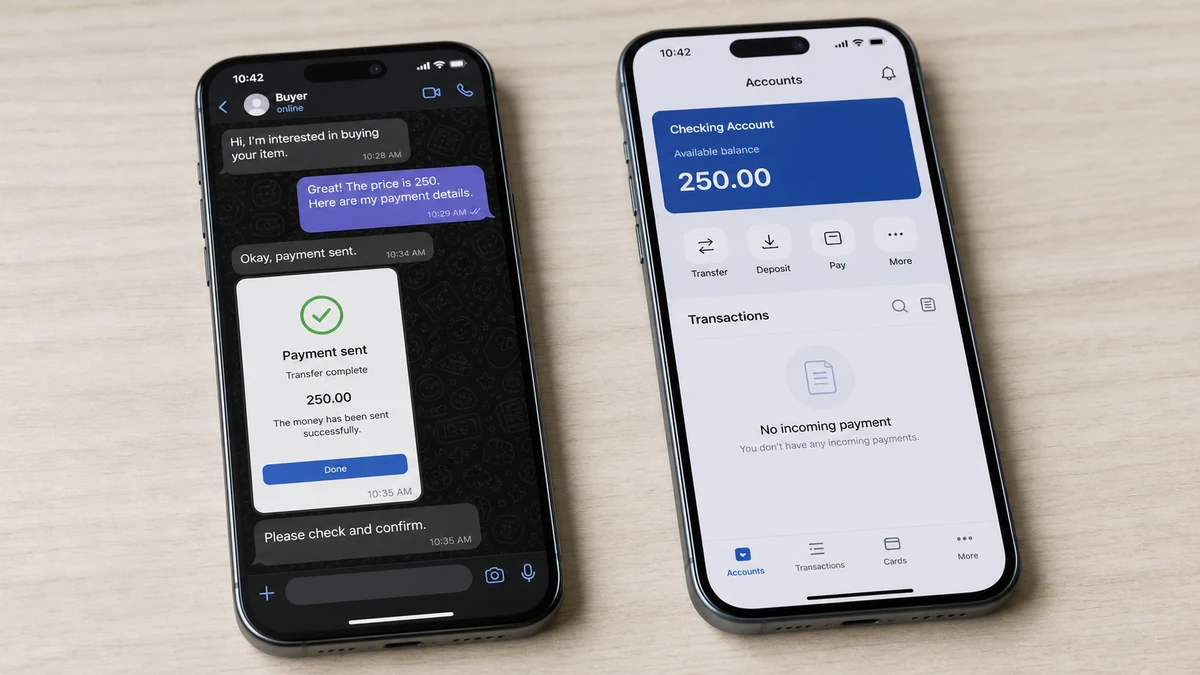
The screenshot replaces the only proof that matters
A recent seller report described a Gumtree buyer who allegedly used different aliases and sent mobile-banking screenshots showing transactions that had not reached the seller.
The buyer reportedly wanted the item posted and stopped communicating after delivery. According to the post, the same person used more than one London delivery address and tried a similar approach with the seller’s friend.
The central trick is simple: the victim is encouraged to verify the image instead of verifying their own account. A convincing screenshot, email, receipt, or pending-payment message cannot move money.
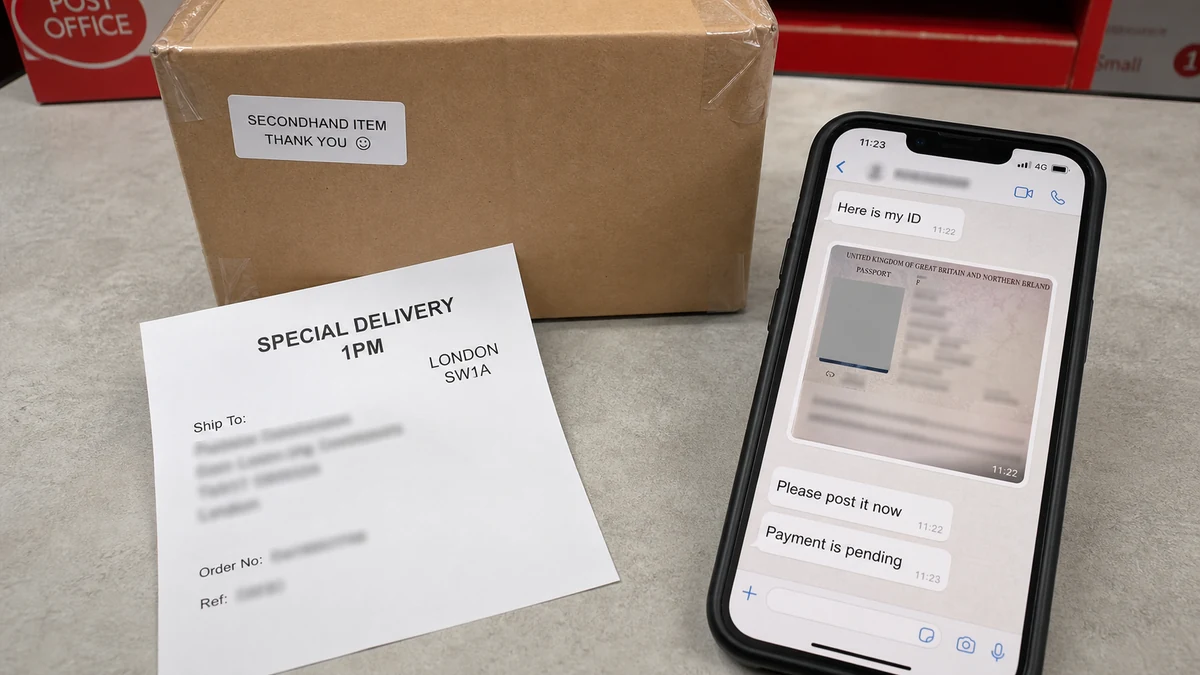
A passport photo creates confidence without identifying the buyer
The report said the buyer supplied a passport image and a photo that appeared to show the document holder. The poster later claimed to have contacted the named person and concluded that the identity belonged to an earlier victim.
That identity-theft detail is a consumer allegation, not a finding independently verified by MalwareTips or Gumtree. It still illustrates an important rule: possession of an ID image does not prove possession of the identity.
Scammers collect passports, driving licences, selfies, proof-of-address files, and verification videos from previous victims. They can reuse those materials to reassure the next seller while sending the parcel to a different address.
Gumtree’s own guidance says to wait for cleared funds
Gumtree’s safe-trading guidance states that payment confirmation documents can be forged and advises sellers to wait until the money is in their account.
Before shipping, ask:
- Can I see the payment inside my own banking app?
- Is the balance available, not merely pending?
- Does the payer name match the buyer’s explanation?
- Is the buyer rushing me to post before funds arrive?
- Did the buyer move the conversation away from Gumtree?
- Is an ID image being used to distract from missing payment?
- Does the destination differ from the claimed identity?
- Would I still ship if the screenshot did not exist?
If the last answer is no, do not let the screenshot change it.
Why a Banking Screenshot Is Not a Payment
A screenshot is a static image. It can be edited, recreated in a design tool, generated by a fake banking app, taken from another transaction, or captured before a transfer is cancelled.
Even an authentic screen recording does not prove final settlement. A recording can show a payment form being completed without proving that the transfer cleared into the seller’s account.
The scammer may explain the delay as a banking hold, weekend processing window, new-payee check, business-account restriction, international transfer, or Gumtree verification. Each explanation moves attention away from the seller’s real balance.
A fake confirmation email can reinforce the image. The message may claim funds are reserved until a tracking number is supplied or until the seller upgrades an account. That is a classic route into a second scam where the seller is asked to pay a release fee.
Do not follow links in a payment email. Open the bank or payment provider through its known app or a manually entered address. Check the transaction there.
A legitimate buyer does not need the seller to pretend money arrived. If a genuine transfer is delayed, both parties can wait. The item should remain with the seller until the funds are available.
How the Fake Bank Transfer Screenshot Scam Works
Step 1: The buyer targets an item that can be shipped quickly
Electronics, phones, games, collectibles, tools, and other resalable goods are attractive because they can be moved or sold soon after delivery.
The buyer may accept the asking price immediately and show little interest in condition. That enthusiasm feels convenient but removes the normal negotiation and inspection that would slow the transaction.
Step 2: Distance becomes the reason for delivery
The buyer says they live elsewhere, are working away, want the item for a relative, or cannot collect. A London address, parcel locker, forwarding location, short-term rental, or third-party recipient is supplied.
Distance prevents an in-person handover and makes the seller depend on digital proof.
Step 3: The conversation leaves the platform
The buyer asks to use WhatsApp, text, or email because it is easier to send screenshots. Moving away from the listing weakens the platform’s evidence trail and exposes the seller’s personal contact details.
Gumtree recommends keeping communications on its service where possible. Private channels make blocking and account rotation easier for the fraudster.
Step 4: A fake transfer appears
The buyer sends a banking screenshot with the seller’s name, the agreed amount, a success tick, and a plausible timestamp. The image may look tailored because the scammer entered the information into a mock interface.
The seller checks messages rather than their bank. No cleared transaction exists.
Step 5: Identity material reduces hesitation
When the seller asks for reassurance, the buyer sends a passport, driving licence, selfie, utility bill, or photo holding an ID.
The document may belong to someone whose identity was stolen in an earlier job, rental, banking, marketplace, or account-verification scam.
Step 6: Posting becomes urgent
The buyer claims the payment will expire, the item is a birthday gift, the post office is closing, or the bank needs the tracking number. The seller is encouraged to ship before checking cleared funds.
Urgency is essential because a simple delay would expose the missing payment.
Step 7: The parcel is collected and contact ends
After delivery, the buyer stops responding. The username, phone number, payment image, and destination may all be disposable or connected to intermediaries.
The seller now faces two problems: no money and a carrier record showing that the parcel was delivered as addressed.
The Stolen-ID Layer Makes the Scam Look Safer
Most sellers know that strangers can lie about names. A passport appears stronger because it is a government document and contains a photograph, date of birth, and document number.
But the question is not whether the document looks real. The question is whether the person controlling the marketplace account is the person named on it and whether that person authorised this transaction.
A scammer can obtain ID files through fake job applications, rental enquiries, loan offers, crypto verification, romance scams, account-recovery fraud, or a previous marketplace deal.
They may pair the document with a stolen selfie. Image-editing tools can place a passport into another picture, and real victims can be manipulated into recording a video or holding an ID next to a handwritten note.
Do not request more sensitive documents from the buyer as a home-made verification system. Collecting copies creates privacy and security risks for you and may still fail to authenticate the transaction.
Payment confirmation and safe fulfillment should carry the decision. If funds are not present, an ID image does not improve the deal.
If someone sends an ID that may be stolen, preserve it securely for the platform, bank, carrier, and police. Do not publish the document or contact addresses publicly.
Why the Delivery Address May Lead to Another Victim
A shipping address is useful evidence, but it does not automatically identify the organiser. Parcels can be sent to a vacant property, short-term rental, workplace, parcel shop, reshipping mule, or an innocent person persuaded to receive packages.
Some fraud networks recruit “parcel processors” through fake jobs. The recipient believes they are inspecting or forwarding goods for a legitimate company while helping move stolen items.
Other scammers monitor tracking and collect a parcel from a communal entrance before the named resident sees it. A correct delivery scan therefore proves location, not control.
Do not travel to the address or confront the occupant. The person there may be uninvolved, and the situation can become unsafe.
Give the full destination, tracking history, listing, messages, and payment evidence to Gumtree, the carrier, your bank, and Report Fraud. Investigators can connect repeated addresses more safely than an individual seller can.
Ask the carrier whether an intercept or return-to-sender request remains possible. Speed matters most before delivery, but a report can still preserve account and scan data afterwards.
Safer Ways to Sell on Gumtree
For an in-person sale, meet in a safe public location when practical and do not hand over the item until payment is verified. Large transactions deserve extra time, not less.
For eligible delivery items, Gumtree now describes a platform payment flow where funds are held by its payment partner and released after buyer confirmation or a delivery period. Use the Buy now and order features shown inside the real Gumtree account rather than instructions received in messages.
Not every category or amount is eligible for that flow. Gumtree’s current delivery payment guidance explains the supported process and says bank transfers are not part of its protected checkout for eligible items.
If a direct bank transfer is used, verify the credit in your own account. Do not treat a “pending” image, transfer reference, SMS, or buyer’s account balance as settlement.
Keep the original listing, serial number, item photographs, packing photographs, weight receipt, label, and tracking. These records can help distinguish an undelivered-item claim from seller fraud.
Photograph the parcel without exposing the buyer’s private address publicly. Retain the high-resolution original for a dispute.
Use a carrier service appropriate to the item’s value, with tracking, insurance where available, and a signature option. Carrier protection does not replace payment verification.
Trust friction. A buyer who refuses to wait for funds, insists on a different address, or becomes angry when asked to use the platform process is giving you information about the deal.
Build a Proof Chain Before the Parcel Leaves
A safe sale connects four events: the buyer agreed to the listing, the receiving account obtained cleared funds, the correct item entered the parcel, and the carrier accepted that parcel for the agreed destination. A screenshot supplied by the buyer proves none of those events on its own.
Record the item’s serial number or distinguishing marks before packing. Photograph it beside the open box, then photograph the sealed parcel and label. Keep the carrier receipt showing weight and acceptance time. These records help if the buyer later claims the box was empty or contained another item.
Keep personal data private. The purpose of the record is to support a platform, bank, carrier, or police report, not to expose the buyer online. Store ID files and labels securely and redact them from public warnings.
If the payer, Gumtree account, and recipient are different people, pause. There may be an innocent gift or family explanation, but it should be clear before shipment. A confusing chain is easier for a fraudster to deny and harder for a seller to prove.
Finally, record the moment funds became available in your own account. Do not reveal your full balance or account number. A transaction reference and timestamp retained privately are enough to show why you shipped.
If the buyer claims a bank employee can confirm the transfer, do not call a number supplied in chat. Find the institution independently. Your own bank is the party that can confirm whether your account received usable funds.
Allow ordinary settlement time without surrendering the item. Waiting is not rude, and a legitimate buyer loses nothing when the agreed goods remain safely packed until payment clears.
Company, Address, and Fulfillment Checks
Confirm the transaction inside Gumtree
A Gumtree username and chat do not make an external bank-transfer screenshot part of Gumtree’s payment system. Look for the order and payment state inside your own account.
Report any buyer who sends a fake receipt or claims that Gumtree requires an external release fee.
Verify money at the receiving bank
Open your bank independently and confirm that the amount is credited and available. Do not use a link, phone number, or app supplied by the buyer.
If the transaction is unclear, call the bank using a verified number and keep the item.
Treat identity and address as separate evidence
The payer name, passport name, marketplace profile, delivery recipient, and address may all differ. Ask for a coherent explanation, but do not ship solely because documents were provided.
Never post an alleged victim’s ID or home address as a warning.
Control fulfillment until payment clears
Choose the label, carrier, service, and destination through the agreed process. Reject last-minute reroutes and requests to supply tracking before funds arrive.
If the parcel has left, contact the carrier immediately about interception and preserve the case number.
Warning Signs of a Fake Buyer Payment
- The buyer accepts the price without normal questions.
- Collection is impossible and posting is urgent.
- The conversation moves to WhatsApp, email, or text.
- A screenshot is presented as proof of payment.
- Your own account shows no cleared funds.
- The buyer says tracking is needed to release money.
- A business-account upgrade or release fee appears.
- A passport or selfie is used to overcome payment doubts.
- The delivery name differs from the claimed identity.
- Multiple addresses or aliases appear.
- The buyer resists the platform’s payment flow.
- Pressure increases when you say you will wait.
Gumtree’s payment guidance warns that confirmation emails can be faked and says sellers should confirm funds independently. That one check defeats the core of this scam.
Our Facebook Marketplace fake buyer guide covers the same pressure points across another platform: instant agreement, screenshots, courier stories, overpayments, and requests to release goods before money clears.
What to Do if You Have Fallen Victim to This Scam
- Contact the carrier immediately. Ask whether the parcel can be intercepted, held, or returned. Record the case number.
- Check the real bank account. Confirm that no payment arrived and ask the bank to document any related fraudulent contact.
- Preserve the listing and chat. Save message links, usernames, phone numbers, emails, aliases, receipts, screenshots, timestamps, and the original advert.
- Save fulfillment evidence. Keep the label, tracking, weight receipt, parcel images, serial number, delivery scan, and destination details.
- Report the Gumtree account. Use the platform’s safety and support routes before the profile or advert disappears.
- Do not confront the address. The occupant may be an innocent identity victim or parcel mule.
- Protect the ID material. Do not publish the passport. Tell investigators that it may belong to another victim.
- Report the fraud. In England, Wales, or Northern Ireland, use Report Fraud. In Scotland, contact Police Scotland on 101.
- Warn your contacts. If the buyer approached a friend, share the profile and script privately without circulating personal documents.
- Secure accounts. Change reused passwords and review sessions if you opened a payment link or supplied banking login details.
- Scan the device. Run a full Malwarebytes scan if a buyer sent a file, app, or browser extension.
- Block malicious destinations. AdGuard can reduce exposure to known phishing pages, but it cannot confirm whether a banking screenshot is genuine.
Frequently Asked Questions
Can a real banking app screenshot be fake?
Yes. The image may be edited, copied from another transfer, created in a fake app, or captured before cancellation. Check only the account receiving the money.
Does a passport photo prove the buyer’s identity?
No. ID files are frequently stolen and reused. A document can be genuine while the person sending it is an impostor.
Should I post while a bank transfer is pending?
No. Keep the item until funds are credited and available. A genuine buyer can wait for normal settlement.
Can Gumtree release a bank transfer after I add tracking?
An external bank-transfer screenshot is not proof of a Gumtree-held payment. Check the actual order inside Gumtree and follow only the platform’s documented process.
Is the delivery address definitely the scammer’s home?
No. It may belong to a mule, innocent resident, short-term rental, forwarding service, or location used for collection. Give it to investigators rather than confronting anyone.
Can the carrier recover a delivered parcel?
Recovery is difficult after delivery, but report it immediately. The carrier may preserve scans, delivery images, account data, or other evidence for an investigation.
The Bottom Line
The fake bank transfer screenshot scam succeeds when a seller treats a picture as money. A passport image, plausible London address, and urgent buyer story add confidence, but none changes the receiving account.
Do not post until funds are genuinely available. Keep the conversation and fulfillment trail, report the account quickly, and let the bank, carrier, platform, and police investigate the identities behind the screen.








