

A stranger says they lost their wallet and need cash for the journey. They offer to send you a bank transfer first.
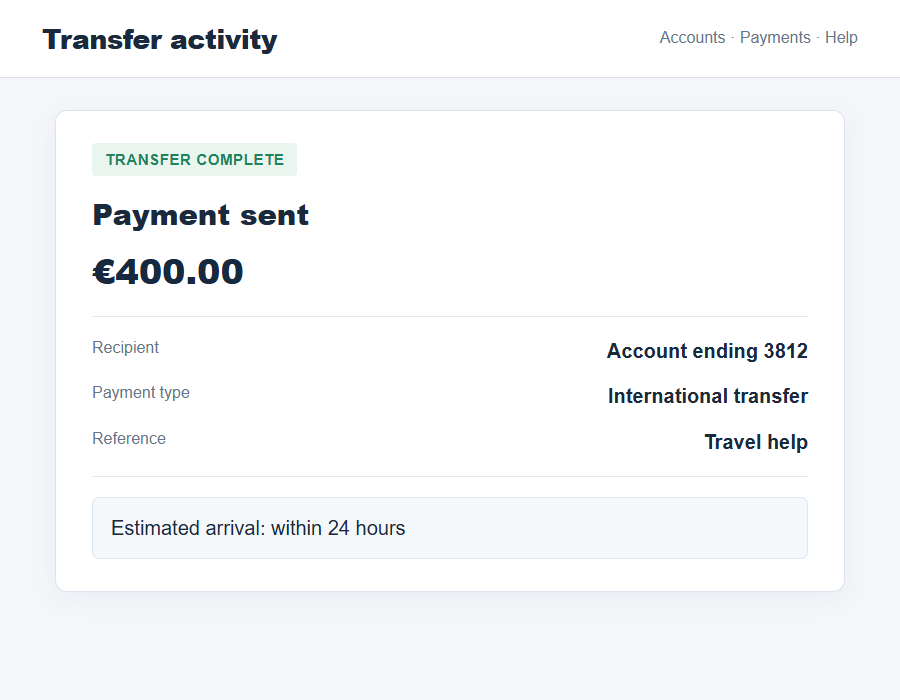
You watch a successful payment appear on their screen. It feels like proof, until you check what arrived in your own account.
Overview
The story that starts the encounter
London police described a scam in which people were approached alone by someone claiming to be visiting from Ireland and unable to access their money.
The person said their wallet or luggage was lost and asked for cash. In exchange, they offered to transfer money into the helper’s account.
The offer turns a request for help into what looks like a balanced exchange. The stranger gets immediate cash; you expect a bank payment shortly afterward.
- The approach happened near transport hubs and cash machines.
- The stranger displayed an apparent banking application.
- Victims were shown a supposed successful transfer.
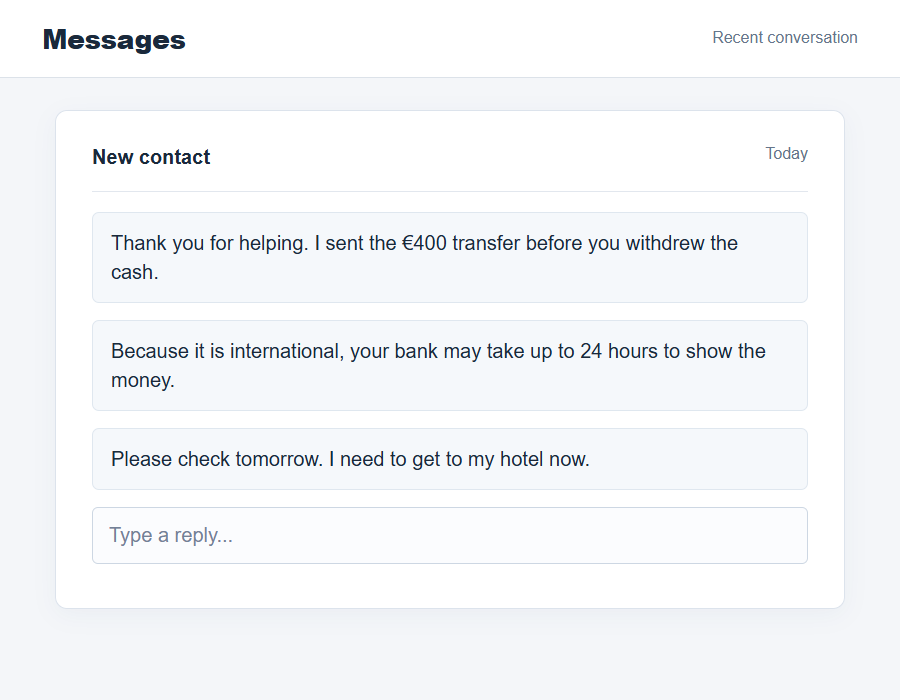
- They were told an international payment could take up to 24 hours.
- No money had actually been sent.
What the Metropolitan Police established
According to the Metropolitan Police, two men pleaded guilty in linked frauds against 10 victims across London between November 2025 and March 2026.
The victims handed over more than £5,000 in total after seeing fake online transfer confirmations. The largest reported loss from one victim was £1,000.
The police said one person was shown a screen displaying a successful transfer of euros before withdrawing £400. The transfer never reached their account.
Investigators linked incidents through phone evidence, forensic work, and CCTV. The case was reported in September 2026; sentencing was scheduled for later.
Why the screen was not proof
A transfer screen on someone else’s device is controlled by that person. It can be a fake application, a manipulated page, or a transaction that was never completed.
The only useful confirmation is money actually showing in your own account, checked through your banking app or directly with your bank.
Even then, be cautious if a stranger asks you to reverse or redirect funds. This case turned on the gap between their display and the recipient’s actual balance.
How a Small Favor Became a Cash Loss
Most people do not expect a request for help at a station to involve digital fraud. The person in front of them seems more real than an anonymous email.
The story also has a built-in explanation for why funds are missing. An international transfer can sound slower than a local payment.
That delay gives the person asking for cash a reason to leave before you can verify anything. It turns an absence of money into a supposedly normal wait.
Police said victims were often approached while alone. That matters because a second person might notice the gap or urge a quick bank check.
The suspects were described as using what appeared to be a legitimate banking application. Its visual familiarity made the story harder to challenge.
The official account does not identify the app’s exact construction. You do not need to know its software to understand the risk.
If the screen is not inside your own authenticated banking session, it is not evidence that you have received spendable funds.
One victim was told the money was needed to reach a hotel after luggage went missing. That extra detail made the request feel situational rather than rehearsed.
Such details can be true in real life, which is why this is uncomfortable. The safe decision is about the proposed exchange, not your ability to judge a stranger’s sincerity.
How the Fake Bank Transfer Scam Works
Step 1: A person approaches you at a convenient location
The reported incidents occurred around London, often near places where a traveler might plausibly be stranded and where cash could be withdrawn.
The person asks for a modest favor, not a grand investment. That ordinary scale can make the request feel safe enough to consider.
They may mention Ireland, lost belongings, or the need to reach a hotel, as the Met’s case describes. The exact story can vary.
At this stage, the objective is to earn a brief conversation before you walk away. A calm appeal can be more effective than obvious pressure.
Step 2: The stranger offers a bank transfer first
The promise of payment changes the moral equation. You are no longer simply giving cash; you are supposedly exchanging it for money already on its way.
The person may ask for your bank details needed to receive a transfer. Never provide passwords, security codes, or app access for that purpose.
In the Met case, victims entered their bank details into what seemed to be a legitimate application on the suspect’s device.
That gesture made the payment process look participatory. But typing details into another person’s screen does not establish that any bank instruction was sent.
Step 3: A success screen is shown as evidence
The application displays a completed transfer. The visual signal does the persuasive work: a check mark, amount, and confirmation can seem conclusive.
Police said the transfer was not real. The screen was enough to persuade victims to withdraw cash despite the absence of an incoming payment.
Do not confuse a sender-side confirmation with your own bank’s independent record. Even a genuine sender-side screen may not answer every question about final receipt.
The person controlling the screen is also the person asking for your cash. That conflict is why independent verification matters.
Step 4: A delay explains away the missing money
When the payment is not visible in your account, the person says it can take up to 24 hours because it is international.
That explanation creates an opening for you to hand over cash now and check later. The fraud only needs that short window.
The Met said a victim was shown a successful euro transfer before withdrawing £400. No corresponding payment had been made.
The currency detail helped the delay story sound plausible. It did not change the fact that the recipient had no confirmed funds.
Step 5: Cash is withdrawn and the contact disappears
Victims handed over cash from their accounts. In several reported cases, they were later blocked on the phone number the stranger had supplied.
Cash withdrawal is the point where the loss becomes immediate. A supposed transfer that might arrive tomorrow is no protection against handing over money today.
The Met tracked similarities across incidents, including the apparent banking application and the way victims were persuaded that payment had been made.
For someone approached now, the simple defense is not to enter that sequence at all. Offer directions to official help without making a private cash exchange.
What to Check Before Giving Anyone Cash
Open your own bank app yourself. Navigate from the home screen, not from a link or display provided by the person asking for cash.
Look for an actual incoming transaction. A screenshot, pending claim, or statement that a transfer has been “sent” is different from confirmed receipt.
If the payment is not there, do not withdraw cash on trust. You are not required to accept the stranger’s explanation for the delay.
Even if funds appear, unusual requests deserve care. A stranger might later ask you to send money elsewhere, which could expose you to a different scam.
For a person who seems genuinely stranded, consider nonfinancial help. Direct them to station staff, a transport operator, their bank, or police assistance.
You can be kind without becoming an informal currency exchange. Declining a cash transfer does not make you responsible for solving their travel problem.
Why This Is Different From a Fake Marketplace Screenshot
Online sellers have long faced buyers who send forged payment screenshots. This London case added an in-person story and a live-looking app display.
The buyer and seller roles were reversed. The victim was asked to give cash while a stranger claimed to be paying them electronically.
The physical meeting did not reduce risk. It made the displayed confirmation feel more credible because the person was standing there, explaining each step.
The location mattered too. Near a cash machine, the request could be fulfilled before the hesitation that might arise after going home.
Police did not say every incident happened in precisely the same way. The shared lesson is the same: check your own account, not the other person’s screen.
If an actual transfer is delayed, the person can wait or seek help elsewhere. There is no reason your cash must leave before your funds arrive.
If Someone Approaches You Near an ATM
Move a short distance from the machine before deciding anything. You do not need to discuss your balance, withdrawal limit, or available cash with a stranger.
If the person remains close, go toward station staff or another staffed area. A genuine request for directions can be handled there.
Do not let the person take over your phone to “help” check your bank. Keep control of your device and your account.
A bank’s incoming-payment screen should be opened by you, through your normal app. A browser page or screenshot held up by someone else is not the same.
If you feel hurried, pause. An urgent story about a missed train or hotel booking does not change the status of an unreceived transfer.
You can say, “I cannot give cash, but the station desk may be able to help.” That is a complete answer and does not require debate.
In the Met’s case, some victims were blocked afterward on the contact number they were given. An offered phone number is therefore a weak safeguard.
If you are with a friend, discuss the request separately. A second person can notice inconsistencies that are hard to spot under social pressure.
Do not photograph or challenge someone if doing so feels unsafe. Your safety matters more than collecting perfect evidence during the encounter.
If you believe the same person is repeatedly approaching others, tell staff or police the location and description. Leave any confrontation to them.
One reason this trick works is that the requested amount may seem manageable. Losing £40 or £100 still matters, and repeated small losses add up.
The case also included larger sums. Police reported one victim lost £1,000, showing how far the exchange could go when the display looked convincing.
The central boundary is simple: no money visible in your own account means no cash leaves your hands. A story about processing time does not change it.
That rule is not unkind. It prevents a request for help from becoming an irreversible transfer of risk to you.
Even a small test payment is not proof that a second, larger payment will arrive. Judge each proposed exchange by the funds actually credited to you.
What to Do if You Have Fallen Victim to This Scam
- Report the encounter promptly. Give police the time, location, description, phone number supplied, and the story the person used.
- Tell your bank what happened. Explain what details you entered on the stranger’s device and whether any unauthorized account activity followed.
- Save your transaction record. Keep the cash withdrawal entry, messages, call log, and any image you took of the supposed transfer.
- Review your account security. Change credentials if you disclosed more than basic receiving details, and ask the bank whether extra monitoring is appropriate.
- Do not send further funds. A later offer to complete the transfer or repay you may introduce another payment request.
- Warn nearby staff when safe. Station or venue staff may be able to identify a repeated approach without you confronting the person yourself.
Cash cannot usually be recalled like a digital transfer. Reporting quickly still matters because location records and nearby cameras may help an investigation.
If you gave only ordinary account details for receiving a payment, ask your bank what specific precautions apply. Do not assume an account is compromised without evidence.
Security software cannot reverse the cash exchange itself. Your bank and police need the location, withdrawal record, and contact details to assess what happened.
Frequently Asked Questions
Was the banking application genuine?
The Met said it appeared legitimate, but no payment was made. The public report does not establish exactly how the display was produced.
Does a successful transfer screen mean the money is mine?
No. Check your own authenticated bank account. Another person’s screen is not independent proof that you received money.
Can an international transfer really take time?
Some transfers do take time. That possibility is not a reason to hand over cash before funds arrive in your account.
Were the victims targeted only at train stations?
No. The police said incidents occurred across London, often near transport hubs and cash machines, but not exclusively at one site.
Should I give a stranger my bank account number to receive payment?
Only share details when you have a reason to trust the transaction. Never enter passwords, PINs, or one-time codes into their device.
What if I already withdrew cash?
Contact police and your bank, preserve the withdrawal record, and provide the encounter’s location and time while the details are fresh.
The Bottom Line
The London fake bank transfer scam used a believable lost-wallet story and an apparent success screen to turn a stranger’s need into your cash loss.
You can help someone find official assistance without handing over money. If payment is offered, verify it in your own account before considering any exchange.

Join the discussion
0 commentsShare your experience or ask a question about this article.
Discussion
Start the conversation
Have a question or something useful to share? Add the first comment.