


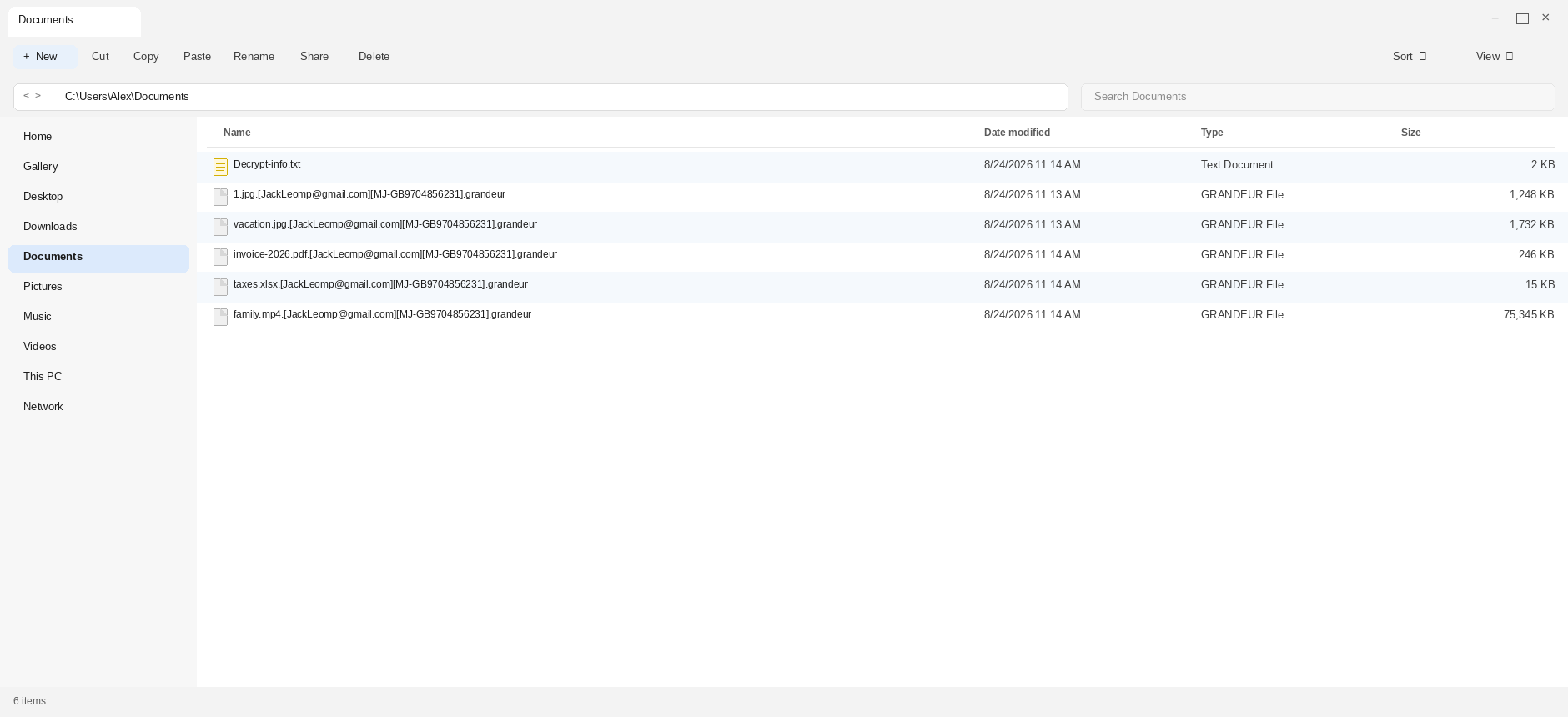
You open Documents the way you did yesterday, looking for the photo that should still be 1.jpg, the vacation shot that should still be vacation.jpg, and the invoice that should still be invoice-2026.pdf. The familiar words are still sitting in the listing, yet each name now carries extra brackets and a second ending you never typed.
A small text file named Decrypt-info.txt is sitting in the same folder, as if it has always belonged there, and it is the first English you can still read after the photos stop opening. That file talks like a recovery desk that already decided the next hour for you, which is why a panicked first click feels like help instead of a demand.
This page is for the hour those names appear, and it is a map of the trap rather than a miracle key, so the note does not become your incident plan while the listing is still staring back at you.
Overview
Grandeur ransomware, a VoidCrypt-family locker, locks the files first, then keeps the old name and the old type, hangs an inbox and a victim serial in brackets, and finishes the string with .grandeur. In the sample used for this page, 1.jpg becomes 1.jpg.[inbox][MJ-GB9704856231].grandeur, after which the locker drops Decrypt-info.txt and talks like a recovery desk.
If you are staring at a pile of .grandeur files and that text note, you are in a ransom incident, not a broken disk and not a Windows pop-up. The folder is the evidence and the note is a checkout, which is why you should stay with the listing rather than with the script that wants a reply.
The first tell is the rename, and in the sample used for this page 1.jpg becomes 1.jpg.[inbox][MJ-GB9704856231].grandeur while vacation.jpg becomes vacation.jpg.[inbox][MJ-GB9704856231].grandeur. The same pattern turns invoice-2026.pdf into invoice-2026.pdf.[inbox][MJ-GB9704856231].grandeur, taxes.xlsx into taxes.xlsx.[inbox][MJ-GB9704856231].grandeur, and family.mp4 into family.mp4.[inbox][MJ-GB9704856231].grandeur. You can still read what each file used to be, but you cannot open it. Windows may call the type a GRANDEUR File and offer a useless choose-an-app box that cannot talk locked bytes back into a JPEG.
The second tell is the note, because after the files are locked the malware drops Decrypt-info.txt into the same folders. Decrypt sounds like a fix and info sounds like paperwork, so the first English you can still read after the photos break is a sales flyer meant to be opened rather than trusted.
The body of that sample is short on purpose, and it opens with All Your Files Has Been Encrypted and You Have to Pay to Get Your Files Back. It then tells you to go to C:ProgramData or your other drives and send the prvkey*.txt.key file, where the asterisk might be a number, like prvkey3.txt.key. It says you can send some file little than 1mb for a decryption test, but the test file should not contain valuable data, and that payment should be with Bitcoin. It warns that changing Windows without saving prvkey.txt.key will cause permanent data loss, in the note’s own spelling, and then prints two attacker inboxes. The documented note contacts are JackLeomp@gmail.com, with jackleomp@tuta.io printed as the fallback if that first inbox stays quiet.
There is no printed dollar figure, no Bitcoin wallet on the page, no onion site, and no Session ID, and this page will not invent them. A missing price is not a puzzle you solve by mailing those inboxes, and a test under 1 MB is not a gift. The note already named the only steps it wants, which are finding the key file, attaching a sample, paying in Bitcoin, and writing the printed inbox.
That is the whole pitch: a locked folder of names that end in .grandeur, each tagged with a bracketed inbox and a unique ID such as MJ-GB9704856231, plus Decrypt-info.txt. The flyer demands Bitcoin with no amount printed, points you at two attacker inboxes, asks for a key file mailed from ProgramData, offers a 1 MB test that is really a sample, and scares you away from reinstalling Windows. There is no public free decryptor known for this strain, and there is no reason to mail that inbox today because a text file told you to.
The .grandeur name is the first warning
Most lockers pick an extension so you notice the change in seconds, and this one uses .grandeur while also writing the contact inbox and a victim serial into the filename. That is why 1.jpg becomes 1.jpg.[inbox][MJ-GB9704856231].grandeur instead of a short extra ending, and why the listing stays readable enough that you can still see the invoice year and the word taxes. The familiar words are still in the folder, even though the files themselves are not familiar anymore.
Do not treat that readable name as a fix, and do not strip .grandeur off the end or delete the bracketed inbox and expect Photos or Excel to open the file. Do not run a bulk extension fixer you found in an ad, because the name is a label and the lock is in the content. Editing the label can make a later trusted tool have a harder time matching the file to what it was. Leave the locked copies as they are until you have a clean machine and a plan that does not start in a criminal inbox.
The extra ending also does advertising, because anyone who sees vacation.jpg.[inbox][MJ-GB9704856231].grandeur next to Decrypt-info.txt can pretend they already have your case. A later fake helper will quote the extension, the inbox in the filename, and the serial back to you as if that were expertise, even though those marks are public and sitting in the folder. Quoting them proves nothing except that the speaker can read a listing.
Decrypt-info.txt is a sales floor, not a help file
The ransom note is a plain text file with a name that sounds like documentation, and Decrypt-info.txt wants the first click after the panic. Plenty of real software drops an info file, and this locker uses that habit against you so the first English you can still read when the photos will not open feels like paperwork instead of a threat.
Double-clicking it opens Notepad, which is why a panicked first click feels like opening the help page even though the file is the demand, written so it looks official enough to follow. The filename is built to look like paperwork, pairing Decrypt with Info and a .txt ending Windows already trusts, because paperwork is easier to obey than a threat.
Keep the file on disk and then close it, rather than treating it as a set of steps you should follow or tidying the filename so it looks less alarming. Copy Decrypt-info.txt the way you would copy a serial off a stolen laptop, because that string is how a responder matches this locker rather than a coupon you redeem by mailing the printed inbox.
The printed inbox is checkout, not support
The printed contact is an attacker inbox with a second mailbox as fallback if the first stays quiet, and that pair is the aisle. A private inbox puts you in a room they own, on an account they can delete, with a thread they can screenshot and reuse. Email would feel like a ticket, but this email is how a locked photo becomes a negotiation.
Do not write those inboxes, do not create a throwaway account just to see, and do not send a screenshot of Explorer to prove the lock. They already chose the extension, they already chose the note name, and they already wrote an inbox into the filename. A photo of Decrypt-info.txt sitting next to 1.jpg.[inbox][MJ-GB9704856231].grandeur does not make you a verified customer, and it only proves you are still following the flyer.
If someone later says they will talk to Grandeur for you through that same address, that is a broker pitch, because brokers need you in the same funnel. You do not owe them a seat, so report the incident through official desks and let counsel decide if contact is ever required for a specific legal reason. That decision is not yours to make from the Documents folder at midnight.
The prvkey file is bait they want mailed
The first numbered line in the sample tells you to go to C:ProgramData, or to your other drives, and send a prvkey*.txt.key file. The asterisk might be a number, and the note even gives an example in prvkey3.txt.key, which makes you hunt a file that sounds technical while also making you attach something from the infected machine to a stranger.
A key-looking filename is not a key in your hand, because it is a file they want in their mail, and sending prvkey3.txt.key from ProgramData does not open vacation.jpg.[inbox][MJ-GB9704856231].grandeur. It hands them a blob from a machine they already reached, plus a confirmation that you are still reading the flyer. Keep that file on disk as evidence if you find it, and do not attach it or move it onto a USB stick you still plan to plug into a clean PC before the infected machine is handled.
The note also warns that changing Windows without saving prvkey.txt.key will cause permanent data loss, and that line is a scare rather than a technician. It is there so you will copy the file into mail before you do anything adult, even though a reinstall does not magically invent a decryptor either. The scare exists to keep you in their queue.
A file under 1 MB is a sample request, not a gift
The second numbered line offers a decryption test for a file little than 1mb, in the note’s own wording, and then tells you the test file should not contain valuable data. That offer is a request for a sample dressed as trust-building, because anyone can open one junk file they already control and anyone can send back a picture that looks unlocked.
A demo that unlocks one throwaway file is not proof they can unlock vacation.jpg, and it is only proof they can run a shop. Do not send a file under 1 MB to the printed inbox to test honesty, because that test is how a locked folder becomes an attachment in a thread they own.
Bitcoin with no printed amount keeps you in the thread
The third numbered line says payment should be with Bitcoin, and it does not name a figure or print a wallet. Plenty of lockers hide the number until you write, and this one hides the number and the address so the only remaining step is mail. You are supposed to feel that waiting is already a mistake, and that the inbox is how you learn the price.
This page will not invent a Bitcoin address to finish their sentence, and it will not invent a dollar sticker either. If a later message quotes Decrypt-info.txt and then pastes a long string, treat that string as a new demand, not as a missing line from the original flyer. A wallet that arrives after you write the printed inbox is still a ransom ask rather than a repair, even if it quotes the note.
Changing Windows is a scare line, not a repair plan
The fourth numbered line warns that changing Windows without saving prvkey.txt.key will cause permanent data loss, and the spelling in the sample is messy on purpose or by habit. Either way, the job of the sentence is fear, because you are supposed to stop thinking about a clean machine and start thinking about mailing a file from ProgramData.
Do not take a criminal flyer as your reinstall policy, and do not wipe the disk because a text file told you the key would vanish. Do not delay a real incident plan because you are hunting prvkey3.txt.key at midnight, since the locked files already end in .grandeur. The scare line does not change that fact, and it only tries to put you in their mail.
How The Ransomware Works
The shop is simple once you stop reading it as a rescue: arrive through a lure, lock the files, and brand the names with an inbox, a serial, and .grandeur. Then drop Decrypt-info.txt, demand Bitcoin with no amount printed, and point the scared person at the two attacker inboxes. Ask for a key file from ProgramData, offer a 1 MB test, scare them away from changing Windows, and wait for someone else to sell a missing wallet.
1. A lure shows up in mail, a crack, or a download you already meant to run
Grandeur does not need a famous brand on a landing page to start, because it needs you to open something that already looks like work, a patch, or a free installer. Documented paths for this class of locker include infected email attachments, malicious documents with macros, PDF files, ZIP or RAR archives, JavaScript files, executables, Trojans, pirated software, illegal activation tools, torrent sites, and untrustworthy download pages. The lure is the part that feels ordinary, and the lock is what happens after the ordinary click.
A crack that promises to unlock a program you already paid for is doing the same sales job as a ransom note, only earlier in the day. A surprise invoice attachment from a name you almost recognize is doing it too. Do not treat the later .grandeur names as a separate mystery if the last new thing you ran was a crack, a fake update, or a document you enabled because a mail said it was urgent. The lure is the door, and the folder of locked photos is the room.
2. The drop copies a trusted document or installer
When the lure works, the file on disk still looks like something you meant to open, wearing an Office icon, a PDF icon, an archive icon, or the name of a tool you already wanted. That costume is the copy, and it is not a clone of a famous product page so much as a clone of the kind of file a tired person already clicks. Macros, archives, and fake activators survive because they borrow the look of work you already do on a Monday.
Opening that file is the install, and you do not get a labeled Grandeur setup wizard. You get a document that asks you to enable content, an archive that unpacks an executable, or a crack that wants administrator rights, and those prompts feel like the last step of a download you chose. They are the permission, and after they run the machine is no longer yours in the way a Documents folder is supposed to be yours.
3. The lock brands every file with an inbox, an ID, and .grandeur
Once it is running, Grandeur encrypts the files it wants as leverage, then appends the victim ID, the attackers’ email address, and .grandeur. That is why 1.jpg is still readable as 1.jpg.[inbox][MJ-GB9704856231].grandeur. The operators want you to inventory the damage in seconds and see the vacation photo, the invoice, the tax sheet, and the family video in one glance. A coded filename can confuse you, while a readable filename makes you feel the theft.
If only one folder looks wrong, do not assume the rest of the disk is safe, because ransomware walks trees through Documents, Desktop, Pictures, Downloads, and any drive letter it can reach. That walk includes a USB stick you forgot was plugged in. Do not plug in a copy just to check, since checking is how the extra copy gets the same inbox, the same serial, and the same .grandeur ending.
4. Decrypt-info.txt turns the break-in into a ticket
Once the names are branded, the malware needs a voice, and Decrypt-info.txt is that voice, sitting in the same folders as the locked files so the first sort puts help next to harm. On many machines a text file sorts near the top, especially with a name that sounds like paperwork, so you open it because it looks like the only thing that still speaks English.
The body is short enough to finish before a relative walks into the room, moving from the encrypted shout to pay, send the key file, send a small test, pay with Bitcoin, skip changing Windows, and write the two inboxes. Each beat closes a door, because the shout closes maybe Windows just glitched, the key-file hunt closes maybe there is a local tool, and the 1 MB test plus the two inboxes close maybe I should wait overnight.
5. Bitcoin and two inboxes are the checkout
The recovery step in the sample is mail plus coin: contact the printed inbox, and if there is no answer contact the fallback mailbox, with payment in Bitcoin. That is the whole door, and it looks like support because support uses email. Criminal shops use email too, because a thread is where a missing price becomes a negotiation and a locked photo becomes a sample they asked you to attach.
Do not write those inboxes, do not send prvkey3.txt.key, do not send a file under 1 MB as a test, and do not ask what the Bitcoin amount is. They already chose the extension and already wrote an inbox into the filename, so a photo of Explorer does not make you a verified customer. If someone later says they will talk to Grandeur for you through those same addresses, that is a broker pitch, because brokers need you in the same funnel.
6. The files do not come back
Stopping the locker, if it is still running, stops new files from getting the .grandeur ending, and it does not rebuild a JPEG. There is no public free decryptor known for this strain, and the sample note does not print a working key. The 1 MB test is not a decryptor you keep, the prvkey file is not a decryptor you run, and a later wallet string is not a decryptor either.
What the note is actually selling is helplessness, because if the lock is impossible without their key then their mail is the only aisle. The same aisle opens again if changing Windows without mailing prvkey.txt.key supposedly causes permanent loss. Naming Bitcoin does not put a key on your desk, does not prove they still have a key, and does not prove they will send one if you write the printed inbox. Leave 1.jpg.[inbox][MJ-GB9704856231].grandeur named as it is, leave Decrypt-info.txt where it is, and treat the restore they are selling as a checkout.
7. A second crew hunts the same locked folder
After a ransomware incident, search results fill up with companies that say they can decrypt Grandeur or all .grandeur files. Some of those shops are ordinary overpriced consultants, and plenty are a second scam that will quote Decrypt-info.txt so they sound close to the case. They will mention the printed inboxes, the ProgramData key file, and the 1 MB test as if they already called the original crew, then ask for a sample file, a remote-access session, or a deposit.
A demo that unlocks one file is not proof they can unlock the vacation photo, because anyone can open one junk file they control and anyone can send you a wallet string that makes an exchange window appear. An exchange window is not Photos opening vacation.jpg again. If a later message skips the original inboxes and asks for coin over ordinary mail, that is still the same market or a copycat standing in the same doorway. Do not answer, and do not help them set a wallet the original flyer never printed. A real public decryptor, when one exists, shows up on an official project page that already existed before your incident and does not need Bitcoin or those inboxes.
What To Do If Your Files End in .grandeur
Do not pay in Bitcoin, do not mail the printed inboxes, and do not send prvkey*.txt.key from ProgramData. Do not send a file under 1 MB as a decryption test, and do not invent a Bitcoin address to finish Decrypt-info.txt. Do not type a wallet from a later reply into an exchange, a wallet checker, or a form a stranger sends back. If you already sent a message before you found this page, stop there, and do not pay a deposit to hold the original deal for anyone who quotes the note.
- STEP 1: Use Rkill to terminate suspicious programs.
- STEP 2: Use Malwarebytes to remove Ransomware and Unwanted Programs
- STEP 3: Use HitmanPro to remove Trojans and other Malware
- STEP 4: Use AdwCleaner to remove Malicious Browser Extensions and Adware
- STEP 5: Perform a final check with ESET Online Scanner
- STEP 6: Restore the files encrypted by ransomware
STEP 1: Use Rkill to terminate suspicious programs.
In this first step, we will download and run Rkill to terminate suspicious programs that may be running on your computer.
RKill is a program that was developed at BleepingComputer.com that attempts to terminate known malware processes so that your normal security software can then run and clean your computer of infections. When RKill runs it will kill malware processes and then removes incorrect executable associations and fixes policies that stop us from using certain tools.
-
Download Rkill.
You can download RKill to your computer from the below link. When at the download page, click on the Download Now button labeled iExplore.exe. We are downloading a renamed version of Rkill (iExplore.exe) because some malware will not allow processes to run unless they have a certain filename.
Download RKillOpens the BleepingComputer download page in a new tab. RKillStops malware processes so other tools can run
-
Run RKill.
After downloading, double-click the iExplore.exe icon to kill malicious processes. In most cases, downloaded files are saved to the Downloads folder.
The program may take some time to search for and end various malware programs.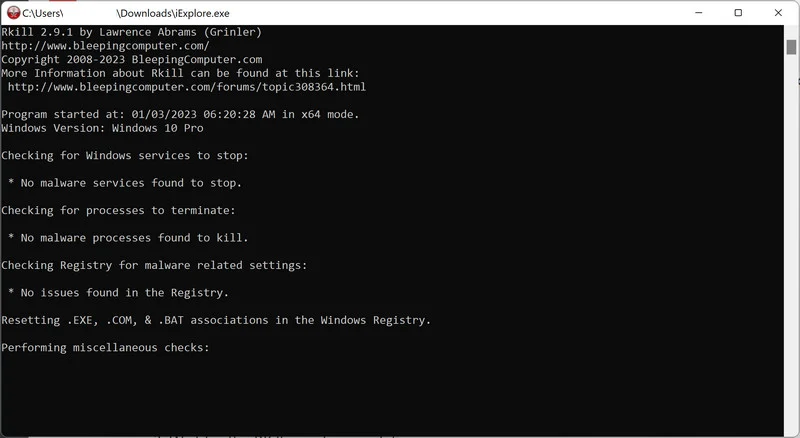
When it is finished, the black window will close automatically and a log file will open. Do not restart your computer. Proceed to the next step in this guide.
STEP 2: Use Malwarebytes to remove Ransomware and Unwanted Programs
In this second step, we will install Malwarebytes to scan and remove any infections, adware, or potentially unwanted programs that may be present on your computer.
Malwarebytes is one of the most popular and trusted anti-malware tools for Windows — and it’s completely free for removing infections. It catches threats that many antivirus programs miss, including adware, browser hijackers, and trojans. Follow the steps below to scan your PC and remove what Malwarebytes finds.
Download Malwarebytes
Click the button below to download the latest version of Malwarebytes for Windows from the official source. The free version is all you need — it will scan your computer and remove adware, browser hijackers, and other malicious software at no cost.
Download MalwarebytesOfficial installer for Windows 11 and 10. Your download starts right away.Want real-time protection? See Malwarebytes Premium Malwarebytes Free for WindowsScans and removes malware at no cost
-
Install Malwarebytes
When the download finishes, open your Downloads folder and double-click the MBSetup file. If Windows shows a User Account Control pop-up, click “Yes” to allow the installation.

Follow the On-Screen Prompts to Install Malwarebytes
The setup wizard will walk you through a few quick screens:
-
Choose where you’re installing the program — “Personal Computer” or “Work Computer” — then click Next.

-
Malwarebytes will now install on your device. This usually takes under a minute.

-
When installation is complete, the “Welcome to Malwarebytes” screen will open automatically.

-
On the final screen, click Open Malwarebytes to launch the program.

-
Optional: Check for rootkits with a Custom Scan
You don’t need to change any settings for a normal scan. The standard Threat Scan in the next step is enough for most problems, so you can go straight to it.
If you also want to check for rootkits, use a Custom Scan. In current versions of Malwarebytes, rootkit scanning is only available there:
- On the Scanner tile, click the three-dot menu and select Advanced Scan.
- Choose Custom Scan. In its options, check Scan for rootkits.
- Select your system drive (usually C:\) as the location to scan, then start the scan. It takes longer than a Threat Scan.
- When it finishes, review and quarantine the results as described in the steps below.
Rootkit scanning isn’t available on Windows devices with ARM processors.
Start the Scan
Click the blue Scan button. Malwarebytes will automatically update its virus database and start checking your computer for malware.

-
Wait for the Scan to Finish
The scan checks your entire system for browser hijackers and other malicious programs, so it can take 5 to 20 minutes depending on your computer. Feel free to do something else — just check back occasionally to see the progress.

-
Quarantine the Detected Threats
When the scan is done, you’ll see a list of everything Malwarebytes found — malware, adware, and potentially unwanted programs. Click the “Quarantine” button to remove all of them at once.

Malwarebytes will now remove the malicious files and registry entries and move them safely into quarantine.

-
Restart Your Computer
Some threats can only be fully removed after a reboot. If Malwarebytes asks you to restart, click Yes. Once you’re logged back in, Malwarebytes has finished removing the threats it found.

STEP 3: Use HitmanPro to remove Rootkits and other Malware
In this third step, while the computer is in normal back, we will download and run a scan with HitmanPro to remove Trojans, rootkits, and other malicious programs.
HitmanPro is a second-opinion scanner — it’s designed to catch what your main antivirus might have missed. Instead of relying on a single detection engine, it checks the behavior of files in the locations where malware usually hides. Anything suspicious is checked online, where it’s analyzed by several antivirus engines in HitmanPro’s Scan Cloud.
Good news: scanning is completely free, with no limits. You only need a license when it’s time to remove what was found — and even then, you can activate a free one-time 30-day trial to remove what it finds at no cost. The trial works once per computer. After that, removal needs a paid license, and the purchase screen shows the current price.
-
Download HitmanPro
Click the button below to download HitmanPro. Remember — the scan is free, so you have nothing to lose by checking your PC.
Download HitmanProFree scan. Removing threats needs the free 30-day trial. Opens the official HitmanPro page in a new tab. HitmanProSecond-opinion malware scanner from Sophos
-
Install HitmanPro
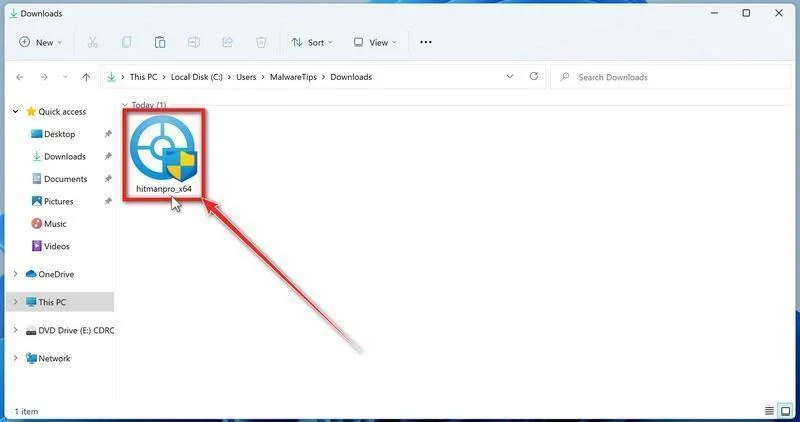
When the download finishes, open your Downloads folder and double-click the file “hitmanpro_x64.exe”. (On 32-bit Windows 10, the file is named “hitmanpro.exe”.)
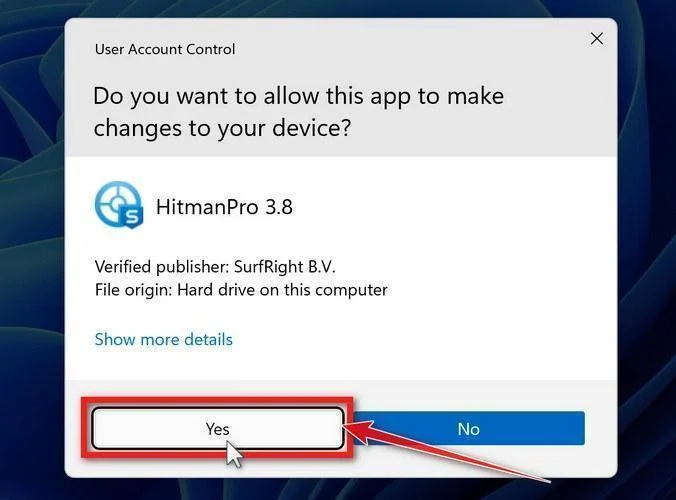
If a User Account Control pop-up asks whether HitmanPro can make changes to your device, click “Yes” to continue.
-
Follow the On-Screen Prompts
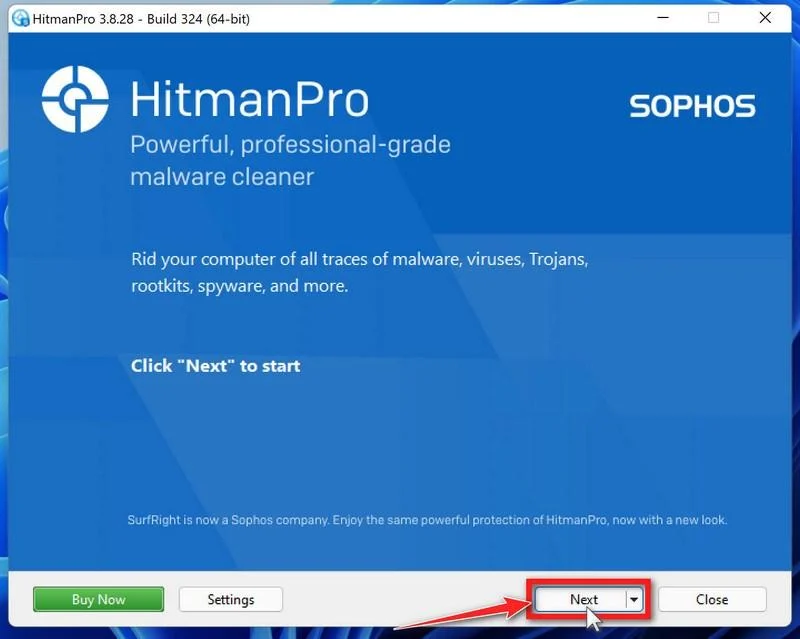
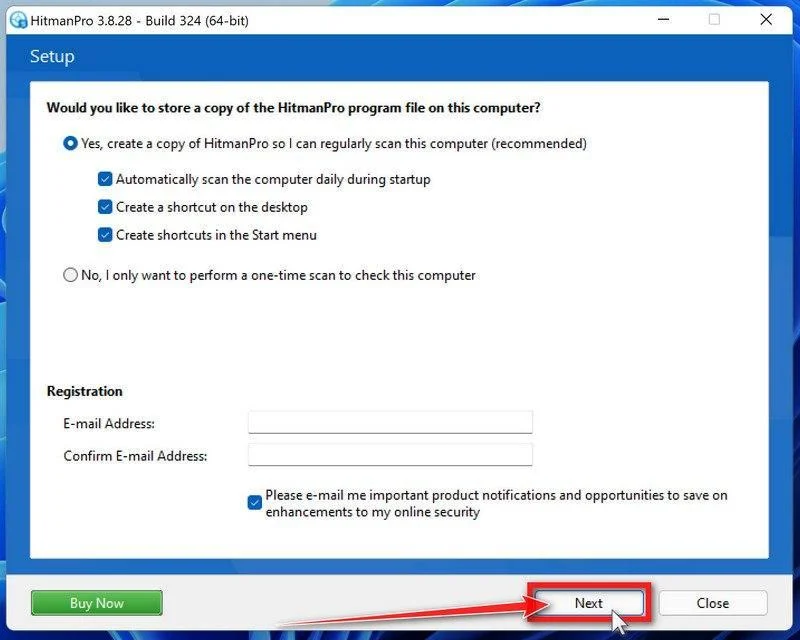
On the HitmanPro start screen, click “Next” to begin the system scan. No lengthy setup required — it goes straight to work.
-
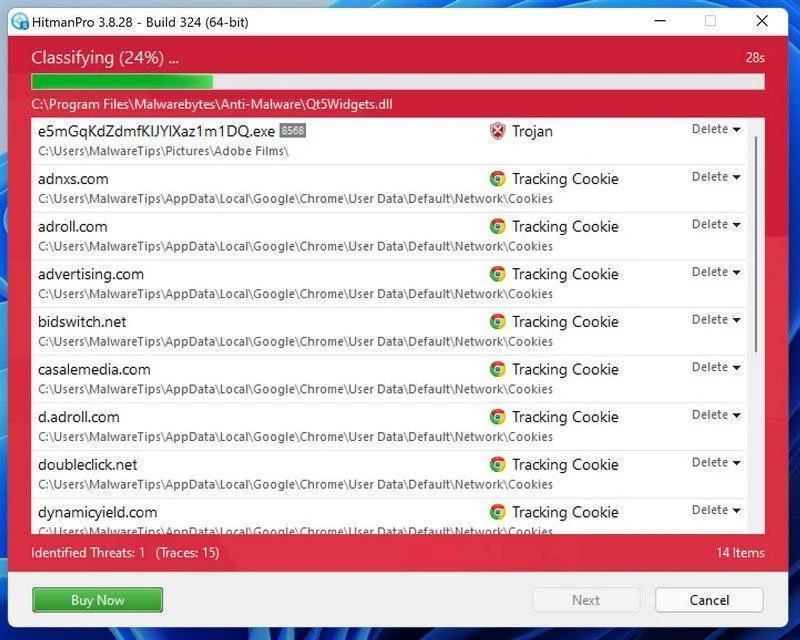
Wait for the Scan to Finish
HitmanPro will now check your computer for malicious programs. This usually takes just a few minutes thanks to its cloud-based scanning.
-
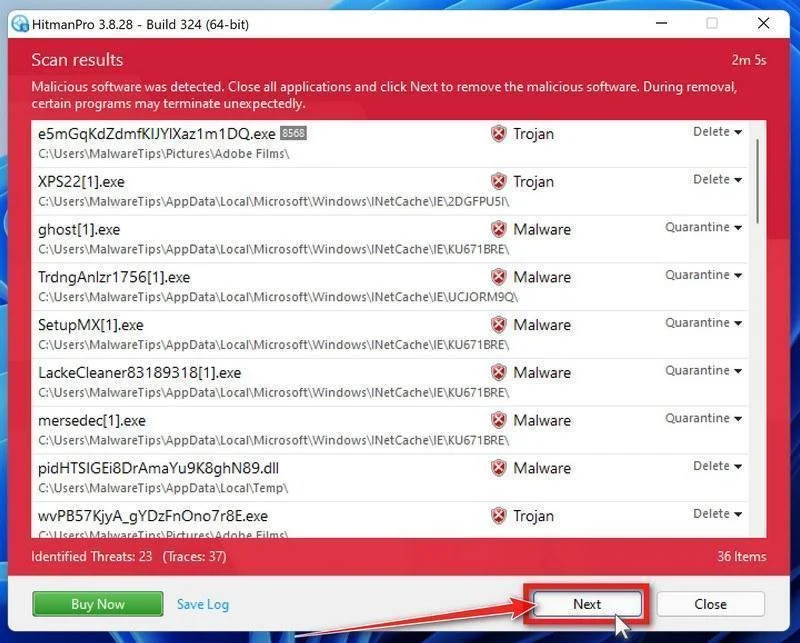
Review the Results and Click “Next”
When the scan is done, HitmanPro will show you everything it found. Click “Next” to remove the detected threats.
-
Click “Activate Free License”
To remove the malicious files, click the “Activate free license” button. This starts your free 30-day trial — no payment details needed — and unlocks the full cleanup.
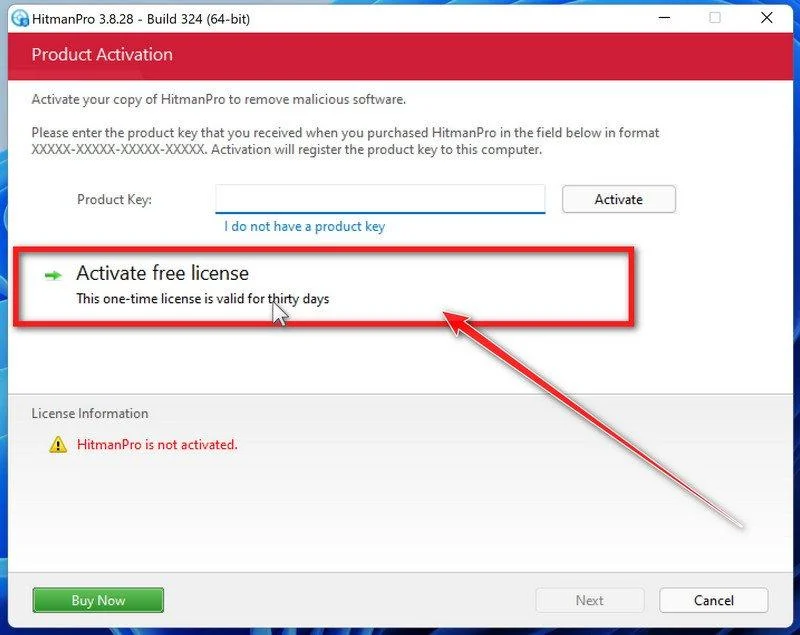
When the removal is complete, HitmanPro will show a summary of everything it cleaned. Click Next, then click Reboot if prompted. If there’s no reboot prompt, click Close. Then check whether the problems you noticed have stopped. If they come back, save the HitmanPro log and ask for help in our forum.
STEP 4: Use AdwCleaner to remove Malicious Browser Extensions and Adware
In this next step, we will use AdwCleaner to remove malicious browser policies and unwanted browser extensions from your computer.
AdwCleaner is a free on-demand scanner that specializes in adware, browser hijackers, and unwanted toolbars — the exact threats that mainstream antivirus programs often miss. It also includes tools that repair the damage malware leaves behind, like hijacked browser settings and malicious policies. It’s a quick scan that’s well worth running.
-
Download AdwCleaner
Click the button below to download AdwCleaner — it’s free, portable, and requires no installation.
Download AdwCleanerOpens the official download page in a new tab. Malwarebytes AdwCleanerRemoves adware and unwanted programs at no cost
-
Run AdwCleaner
Open your Downloads folder and double-click the file named “adwcleaner.exe“. There’s no installation — the program starts right away.
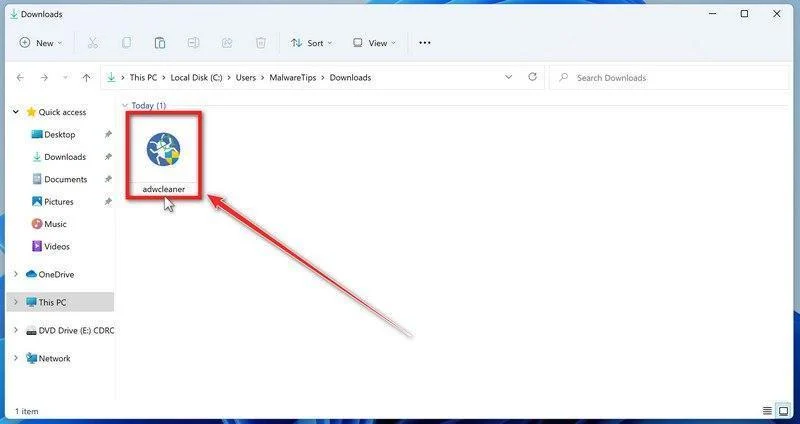
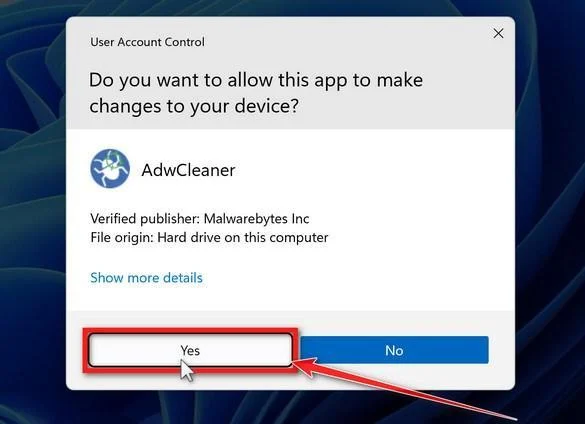
If Windows asks whether you want to allow AdwCleaner to run, click “Yes“. When the license agreement appears, click I agree to continue.
-
Leave “Reset Chrome policies” off unless you need it
AdwCleaner can reset Chrome policies, the settings that malware sometimes uses to lock your browser so you can’t change it back. This option removes every Chrome policy, including legitimate ones set by an employer, a school, or parental-control software, so leave it off for a normal scan.
AdwCleaner applies this option only if you run Basic Repair at the end of the cleanup. Malwarebytes advises running Basic Repair only when a support agent asks you to, and it also runs every other repair action that is turned on in the same list. If this is your own personal PC and chrome://policy in Chrome lists policies you didn’t set, ask for help in our forum instead. On a work or school computer, ask the IT administrator.
-
Start the Scan
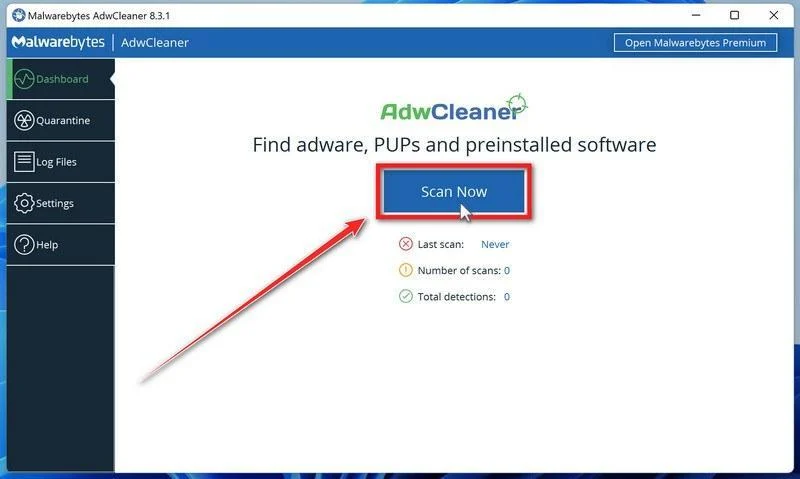
Click “Dashboard” on the left side of the window, then click the “Scan Now” button.
-
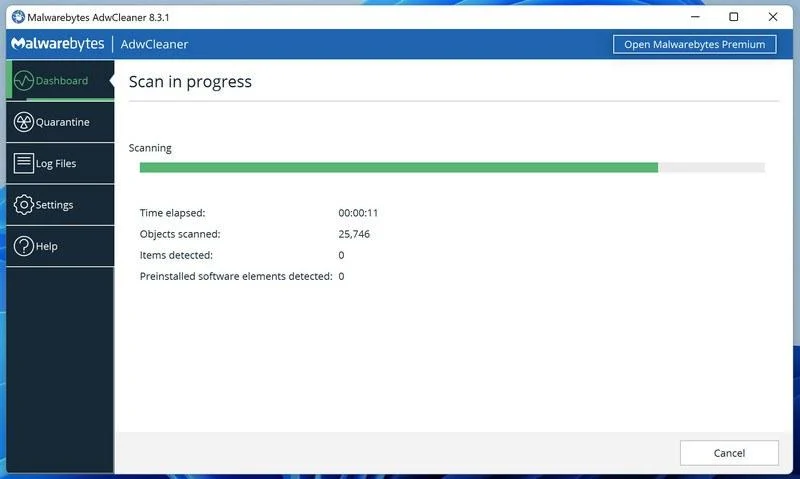
Wait for the Scan to Finish
AdwCleaner will now check your computer for adware and other malware. This usually takes only a few minutes — it’s one of the fastest scanners around.
-
Quarantine the Detected Threats
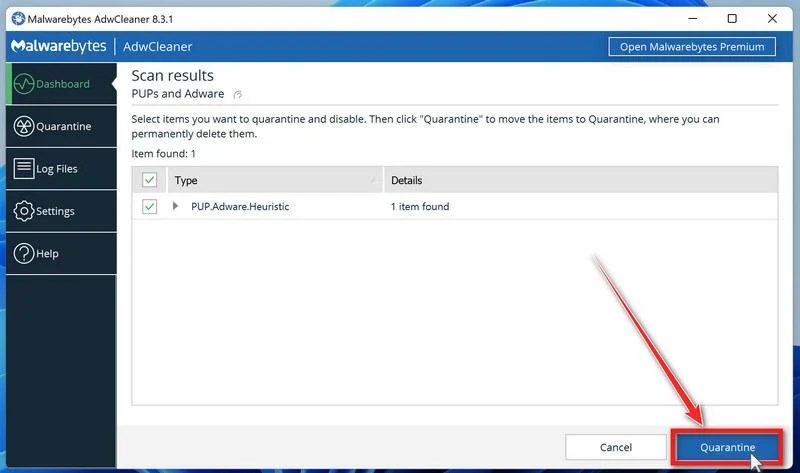
When the scan finishes, AdwCleaner lists everything it found. Review the list and uncheck any program you installed on purpose and want to keep, then click Next. If AdwCleaner also found preinstalled software, it shows that list next. Review it the same way, then click “Quarantine“. Older versions show the Quarantine button on the first list, as in the image below.
-
Click “Continue” to Finish the Cleanup
Save any open work first — AdwCleaner needs to close your open programs before it can clean. When you’re ready, click the “Continue” button.
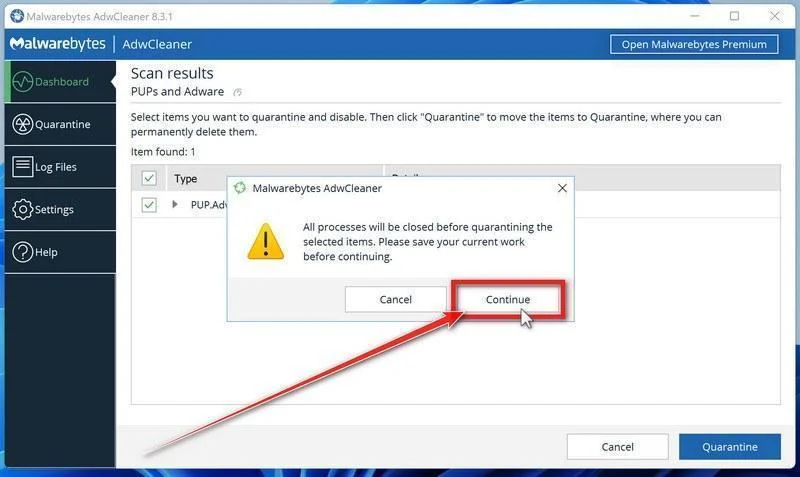
AdwCleaner will now move the selected items to quarantine. If it asks you to restart your PC, allow it. When you’re back in Windows, AdwCleaner may offer a Basic Repair. Click Skip Basic Repair. Malwarebytes recommends running Basic Repair only when a support agent asks you to. Then check whether the problems you noticed have stopped.
STEP 5: Perform a final check with ESET Online Scanner
This final step involves installing and running a scan with ESET Online Scanner to check for any additional malicious programs that may be installed on the computer..
ESET Online Scanner is a free second-opinion scanner that performs a deep, full-system check for viruses, trojans, rootkits, and other malware. We use it as the final step because it’s thorough and can catch threats the earlier scans missed. A clean result is a good sign, but no scanner can guarantee that a computer is malware-free.
-
Download ESET Online Scanner
Click the button below to download ESET Online Scanner.
Download ESET Online ScannerOpens the official download page in a new tab. ESET Online ScannerFree one-time malware scan from ESET
-
Run the Installer
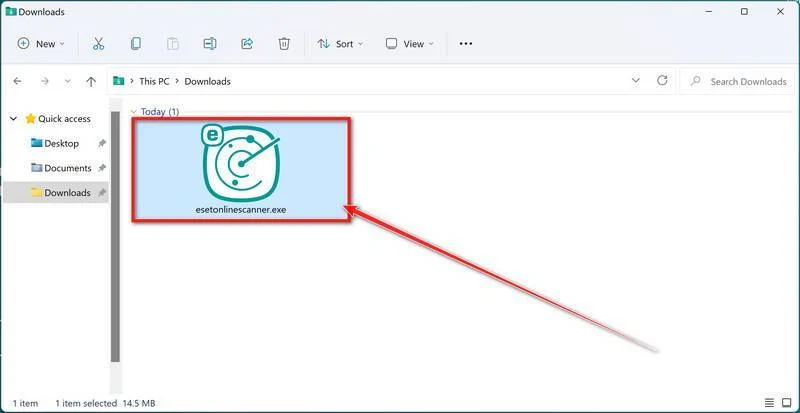
When the download finishes, open your Downloads folder and double-click “esetonlinescanner.exe“.
-
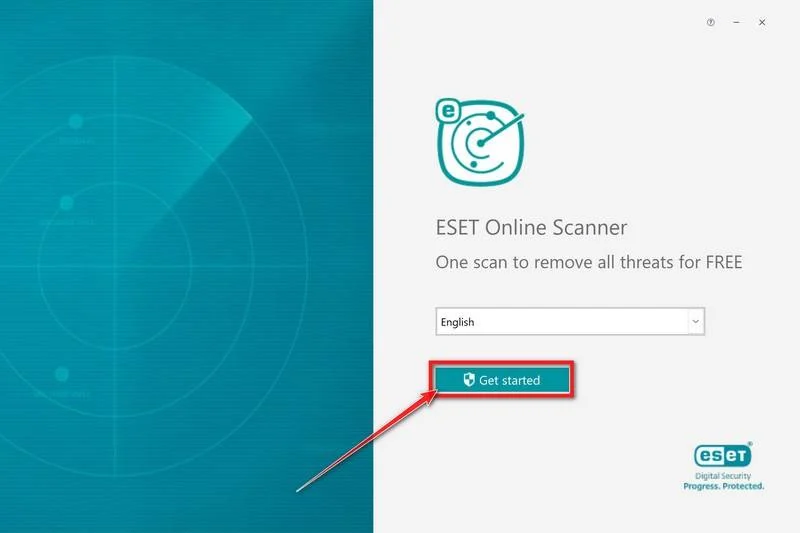
Install ESET Online Scanner
On the start screen, select your language from the drop-down menu and click Get started.
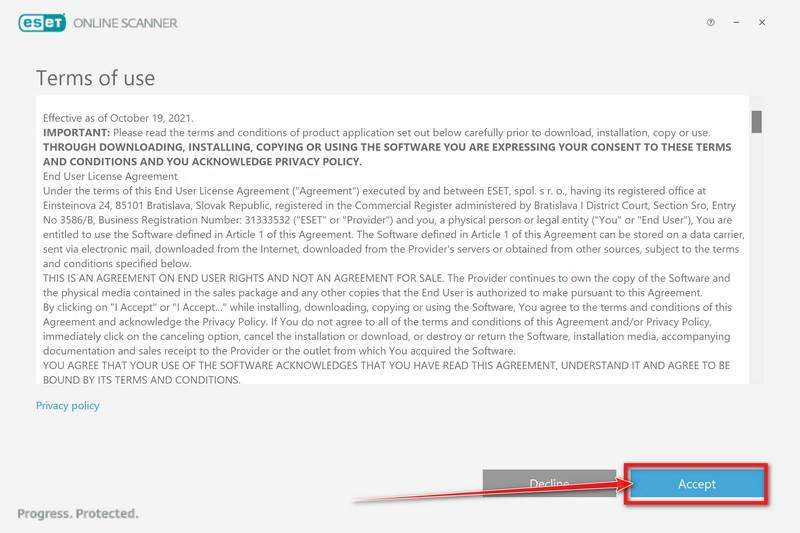
On the Terms of use screen, click Accept.
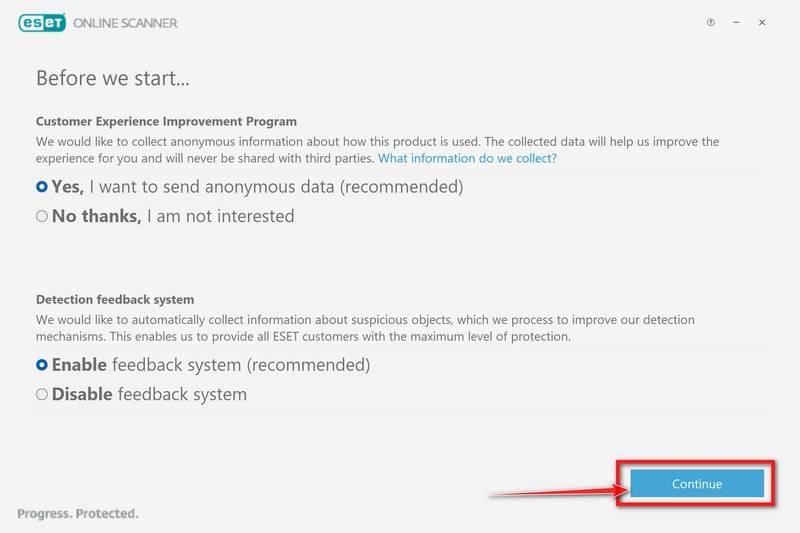
Choose your preferences for the Customer Experience Improvement Program and the Detection feedback system (either choice is fine), then click Continue.
-
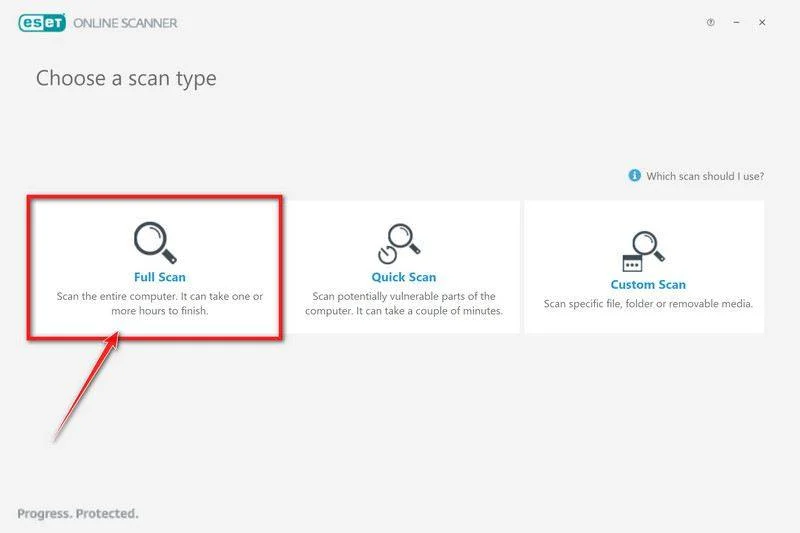
Start a Full Scan
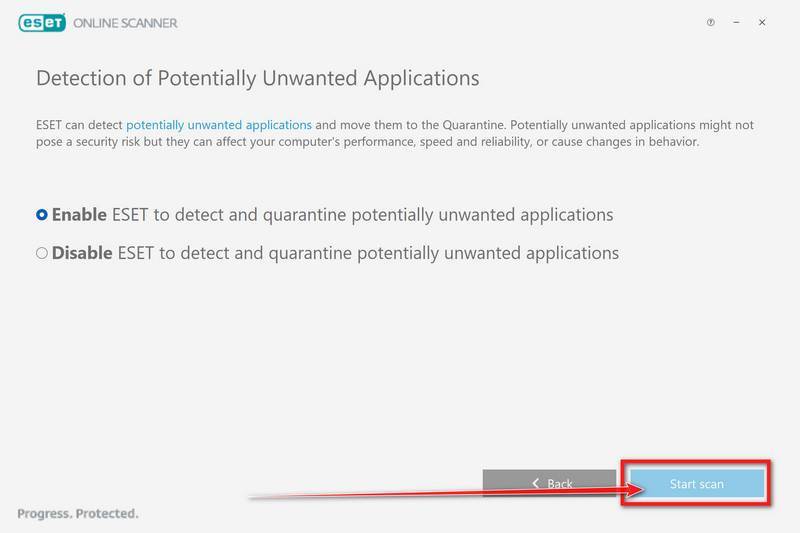
Click Full Scan — this checks your entire computer, not just the common hiding spots.
Select Enable for Detection of Potentially Unwanted Applications — this lets ESET catch adware and bundled junk programs, not just viruses. Then click Start scan.
-
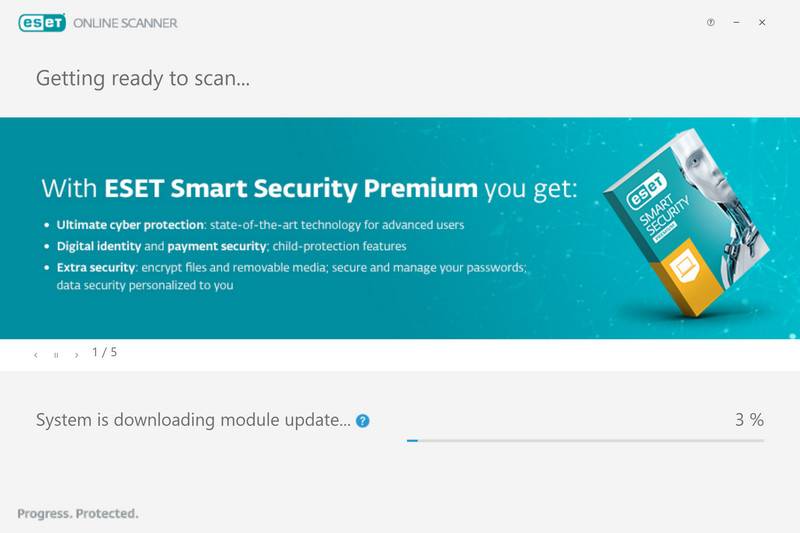
Wait for the Scan to Finish
ESET will now check every file on your computer. Because it’s a full scan, this can take a while — often an hour or more, depending on how much data you have. Leave it running in the background and check on it from time to time.
-
Review the Results
When the scan completes, the Found and resolved detections screen appears. Detected threats are usually cleaned and quarantined automatically. Click View detailed results to see exactly what was removed, and ask for help in our forum if any item could not be cleaned.
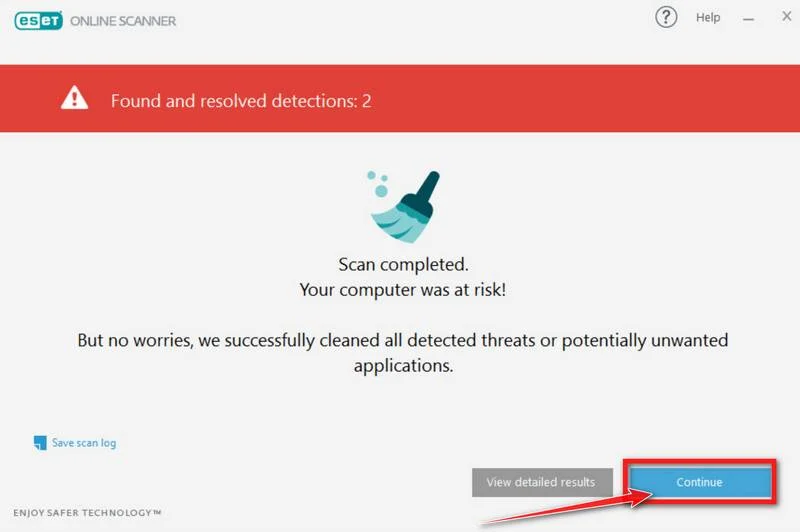
If ESET found nothing, restart your computer and check whether the problems you noticed have stopped. If they continue, ask for help in our forum.
STEP 6: Restore the files encrypted by ransomware
Unfortunately, in most cases, it’s not possible to recover the files encrypted by this ransomware virus because the private key which is needed to unlock the encrypted files is only available through the attackers. However, below we’ve listed three options you can use to try and recover your files.
Option 1: Search a decryption tool for this ransomware
The cybersecurity community is constantly working to create ransomware decryption tools, so you can try to search these sites for updates:
- https://id-ransomware.malwarehunterteam.com/
- https://decrypter.emsisoft.com/
- https://noransom.kaspersky.com/
- https://www.avast.com/ransomware-decryption-tools
Option 2: Use EaseUS Data Recovery Wizard Free to recover the encrypted files
EaseUS Data Recovery Wizard Free can restore files and repair corrupted files with simple clicks. Its powerful scanning algorithms can identify and retrieve huge file type library, including all of the popular video files, audio files, photos, and document formats.
While the free version only allows you to recover 2 GB of data, this can be helpful to see if the recovery is possible and restore back the most important files from your computer.
-
Download EaseUS Data Recovery Wizard Free.
You can download EaseUS Data Recovery Wizard Free by clicking the link below.
Download EaseUS Data Recovery WizardOpens the download page in a new tab. EaseUS Data Recovery WizardFile recovery tool with a free version
-
Double-click on the EaseUS Data Recovery Wizard Free setup file.
When EaseUS Data Recovery Wizard Free has finished downloading, double-click on the setup file to install EaseUS Data Recovery Wizard on your computer. In most cases, downloaded files are saved to the Downloads folder.
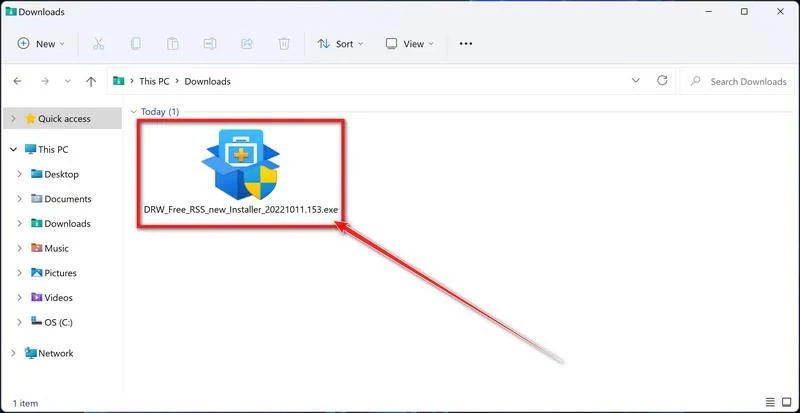
You may be presented with a User Account Control pop-up asking if you want to allow EaseUS to make changes to your device. If this happens, you should click “Yes” to continue with the EaseUS Data Recovery Wizard Free installation.
-
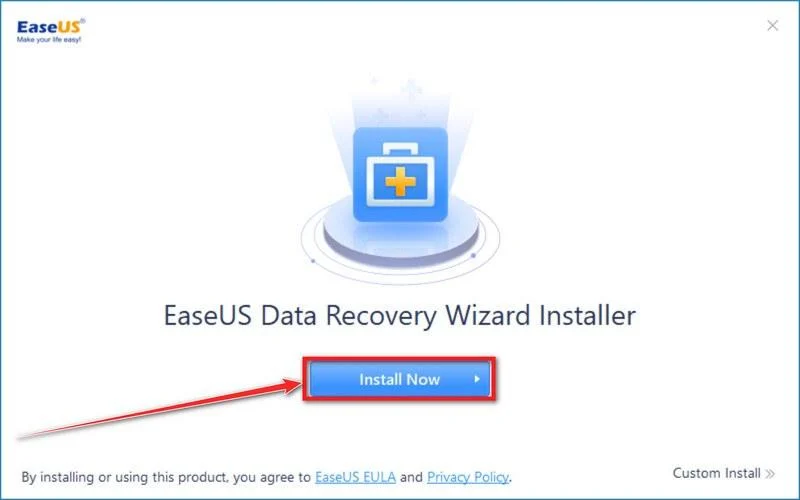
Follow the on-screen prompts to install EaseUS Data Recovery Wizard.
When the EaseUS Data Recovery Wizard installation begins, click on the “Install Now” as seen in the image below.
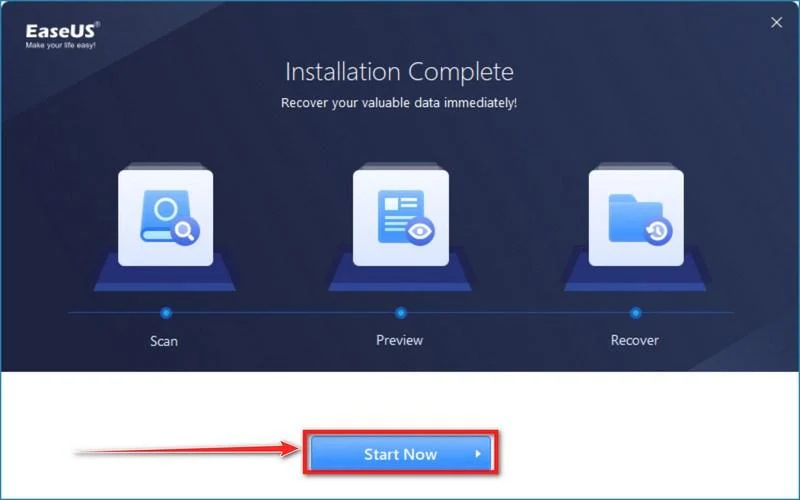
When your EaseUS Data Recovery Wizard installation completes, click the “Start Now” button to start the program.
-
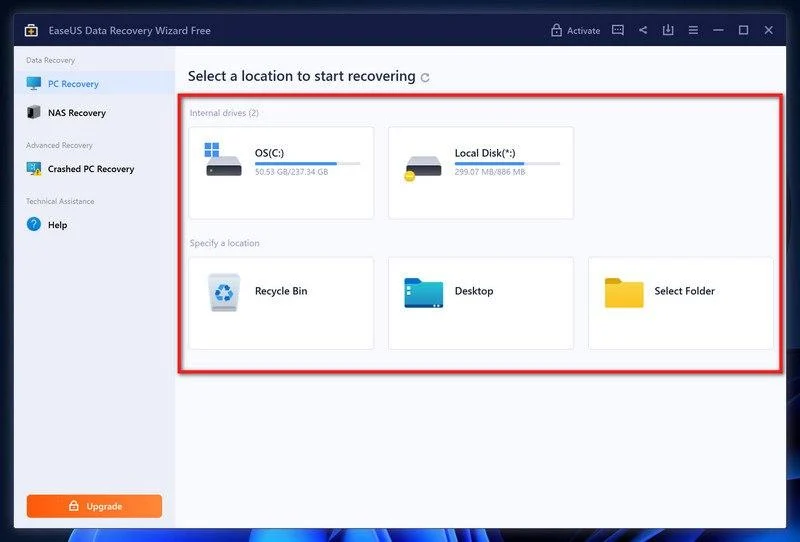
Select a location to start recovering the encrypted files.
Choose the drive or folder where you are the encrypted files that you want to recover and click “Scan“.
-
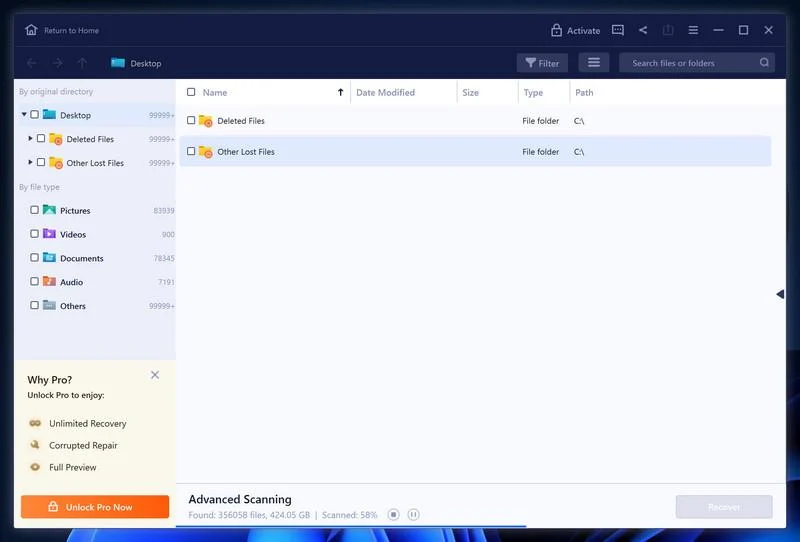
Wait for the EaseUS Data Recovery Wizard scan to complete.
EaseUS Data Recovery Wizard will now scan your computer files that can be restored. This process can take a few minutes, so we suggest you do something else and periodically check on the status of the scan to see when it is finished.
-
Find the files you want to recover.
When the EaseUS Data Recovery Wizard scan is finished scanning it will show a screen that displays the files that can be recovered. This tool can recover a lot of data, use the “Filter” button to quickly filter specific file types and find the files that you want to recover.
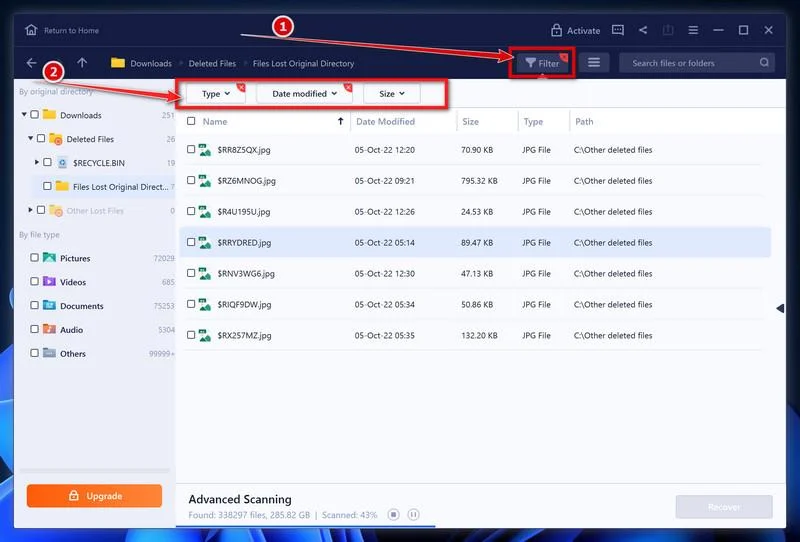
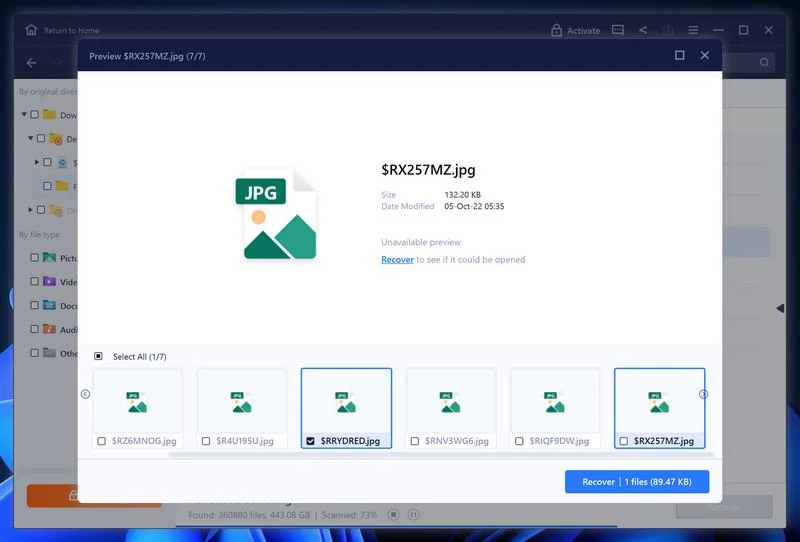
Click the “Preview” button or double-click on a file for a full preview.
-
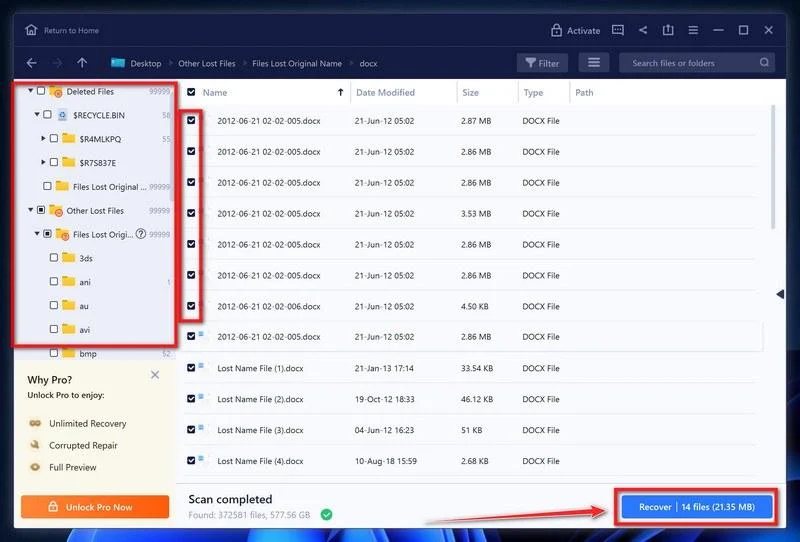
Select your files and click “Recover”.
Finally, select the the files you want to recover and click “Recover“.
Choose a safe location to save all the files.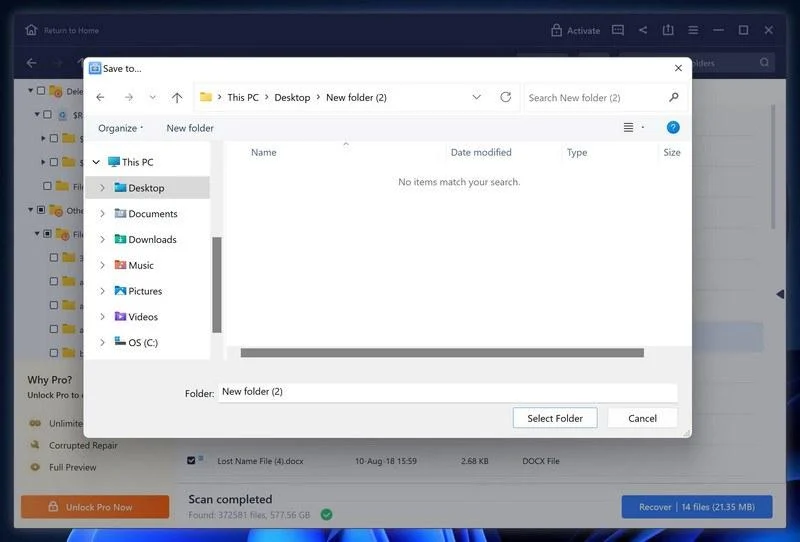
The free version only allow you to recover 2 GB of data, however, this will allow you to recover the most important files and see if EaseUS Data Recovery Wizard can correctly recover them.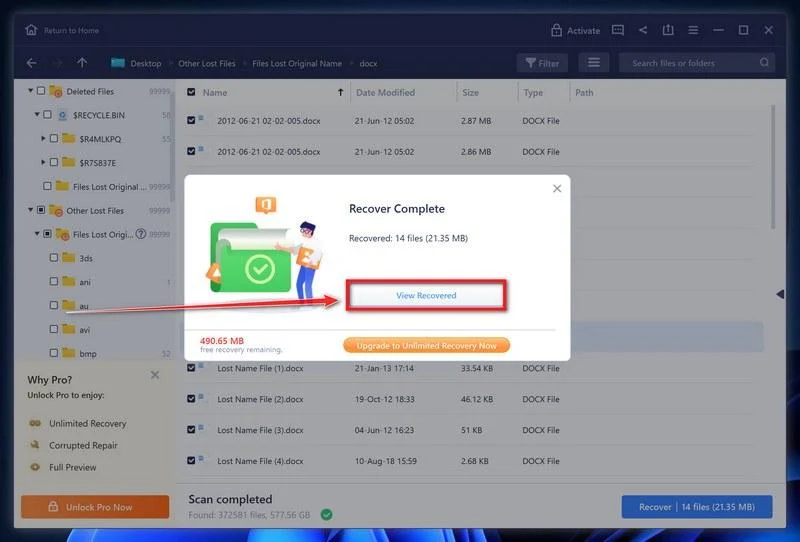
Option 3: Try to restore your files with ShadowExplorer
This ransomware will attempt to delete all shadow copies when you first start any executable on your computer after becoming infected. Thankfully, the infection is not always able to remove the shadow copies, so you should continue to try restoring your files using this method.
-
Download ShadowExplorer.
You can download ShadowExplorer from the below link.
Download ShadowExplorerOpens the official download page in a new tab.ShadowExplorerRestores files from Windows Shadow Volume Copies -
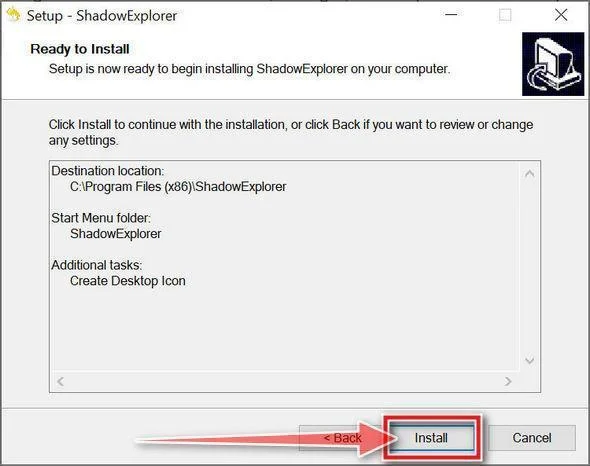
Install ShadowExplorer.
Double-click on the ShadowExplorer-x.x-setup file to start the installation process, then follow the on-screen promts to install this program.
-
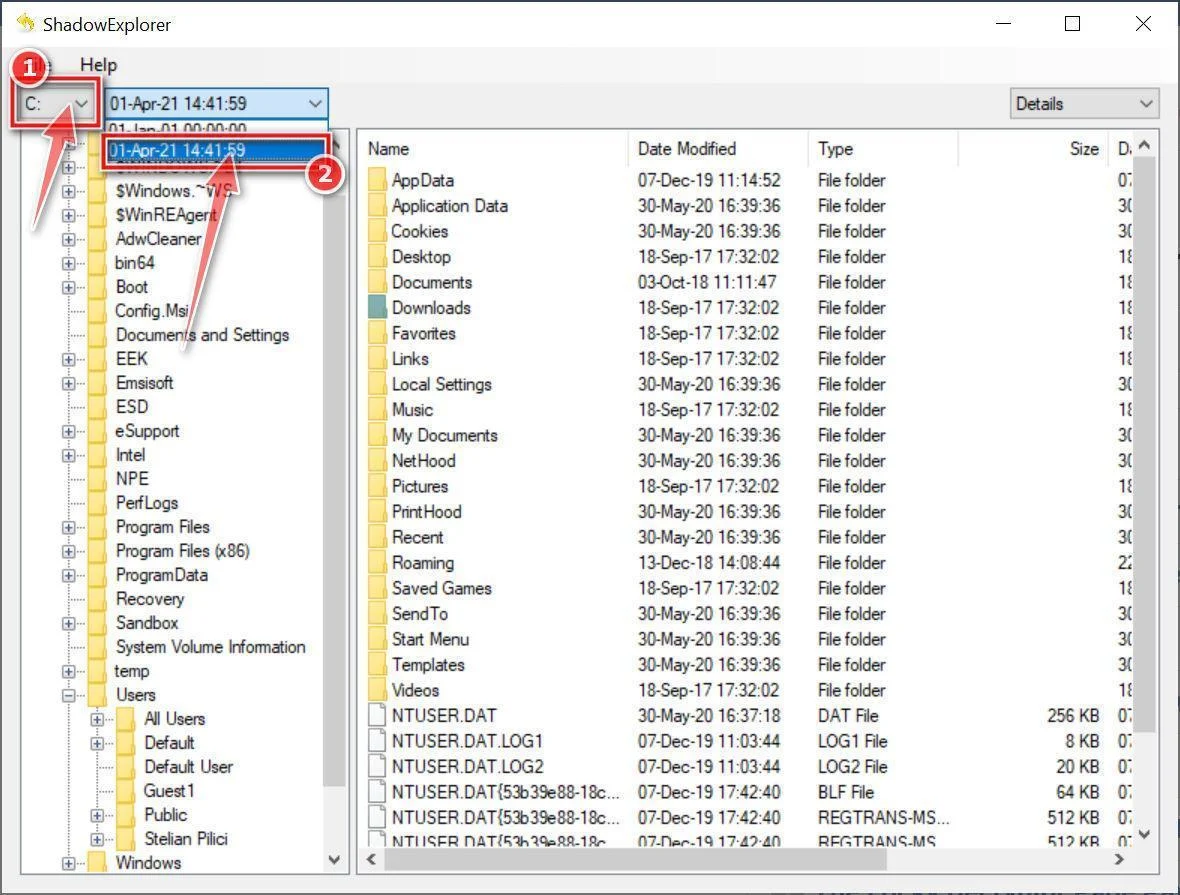
Select snapshot date.
Open ShadowExplorer and then from the top bar select the drive where the files that you want to save are located, then select from the snapshot available one previous to this infection.
-
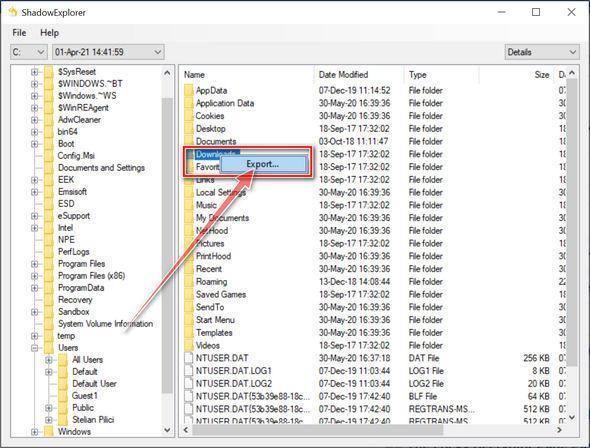
Export the files that you want to recover.
Once you have found a copy of the original file or folder, right-click on it and the select “Export”. A window will prompt you where you want to save the file or folder.
Keep every .grandeur name exactly as it is, and do not bulk-rename 1.jpg.[inbox][MJ-GB9704856231].grandeur back to 1.jpg or vacation.jpg.[inbox][MJ-GB9704856231].grandeur back to vacation.jpg. Leave invoice-2026.pdf.[inbox][MJ-GB9704856231].grandeur as a tagged PDF, taxes.xlsx.[inbox][MJ-GB9704856231].grandeur as a tagged sheet, and family.mp4.[inbox][MJ-GB9704856231].grandeur as a tagged video. Stripping the extra ending, the inbox, or the serial is not a repair, and it can make a later trusted tool worse rather than better. The original name is already sitting in front of .grandeur, so you do not need to edit it to know what you lost.
Keep Decrypt-info.txt with the locked files, and do not tidy every copy of the note or fill in a wallet so the flyer looks complete. The wording, the two inboxes, and the ProgramData key instruction are part of how you prove this was this strain and not a different locker that only sounds similar. Keep the contact marks as identifiers, including the printed inboxes, the 1 MB test line, the Bitcoin line with no amount, and the Windows scare, because those artifacts are evidence rather than steps to follow.
If you find a prvkey*.txt.key file such as prvkey3.txt.key in C:ProgramData or on another drive, leave it there as evidence. Do not attach it to mail, do not send it to the printed inbox because the note numbered that step first, and do not treat the filename as a decryptor you can run. Do not hand it to a stranger who quotes the note and asks you to upload keys for analysis.
Do not pay in Bitcoin, do not mail those inboxes, and do not ask a friend to write them just to see. A missing price is still a ransom, and a calm address is still the people who locked the files. If a later message quotes Decrypt-info.txt and offers the real wallet, that is still the same shop. If a later message skips the original inboxes and asks for Bitcoin over a different address, that is still the same shop or a copycat standing in the same doorway.
If someone claims they can already decrypt Grandeur files for a fee because they can recite the printed inbox and the 1 MB test, they are selling a report rather than a key. If they mention MJ-GB9704856231 as proof they already called the crew, they read a filename the locker printed on every file. Do not answer those pitches, do not complete their checkout, and do not help them finish a flyer the original locker left incomplete.
If Windows still offers to pick an app for the .grandeur type, decline it, because there is no player for that ending. Do not reinstall Windows because the note said the key file would vanish, and do not let a remote helper dictate a Bitcoin amount while they watch. The original flyer never printed a wallet and never printed a figure, so leave those fields empty.
The Bottom Line
Grandeur ransomware is a locker with a readable filename, a decrypt-info flyer, and a checkout that names Bitcoin without naming a price. It keeps the old name, writes a bracketed inbox and a unique ID such as MJ-GB9704856231 into the string, and appends .grandeur, so 1.jpg becomes 1.jpg.[inbox][MJ-GB9704856231].grandeur. The note is Decrypt-info.txt, and it tells you to mail a prvkey*.txt.key file from ProgramData, send a file under 1 MB as a test, pay with Bitcoin, and avoid changing Windows without saving that key file. There is no printed wallet, no printed dollar figure, and no public free decryptor known for this strain.
Do not pay in Bitcoin, do not mail those inboxes, do not send the key file, do not send a test file, do not invent a wallet, and do not rename the pile in bulk. If you take one sentence with you, take this one: a folder of names ending in .grandeur, plus Decrypt-info.txt that points at a ProgramData key file, is ransomware on the first sighting. Treat it that way before anyone offers to fill the missing Bitcoin line.

Join the discussion
0 commentsShare your experience or ask a question about this article.
Discussion
Start the conversation
Have a question or something useful to share? Add the first comment.