Pigeon Drop Scam: How the Found Money Trick Steals Your Cash in Person
Written by: Lapain Epuran
Published on:
A stranger says she has just found an envelope filled with cash. Another friendly person appears, and within minutes you are being offered a share of money that seems to belong to nobody.
The story feels like an unexpected opportunity. Its real purpose is to make your own cash leave the bank.
Overview
The pigeon drop is a carefully rehearsed confidence trick
A pigeon drop scam usually begins in person, often near a store, parking lot, bus stop, bank, or ATM. One stranger befriends the target while another appears with a wallet, bag, or envelope supposedly containing a large amount of money.
The pair offers to share the discovery, but first the victim must produce “good faith” money. The cash supposedly proves that everyone can be trusted while a lawyer, employer, bank officer, or other authority arranges the division.
There is no windfall. The strangers leave with the victim’s cash, switch the package for worthless paper, or send the victim to a fictitious address.
Two or more people make the story feel independent
The second scammer behaves like another surprised bystander. That person may appear cautious, contribute money first, or claim to contact a respected employer for advice.
Common warning signs include:
A stranger suddenly showing you found cash or valuables
An offer to split property that has not been reported
A second stranger who quickly supports the plan
A request to withdraw cash as proof of good faith
Instructions to keep the arrangement secret
A package you are told not to open until later
A meeting point controlled by the strangers
The target is left with paper instead of money
The apparent cash may be counterfeit, a few genuine bills placed around paper, or a package switched while the victim is distracted. The criminals create activity and conversation so the exchange is difficult to follow.
Older adults are frequent targets because the scammers may assume they have savings and will be reluctant to challenge a polite stranger. Anyone can be deceived when the encounter moves quickly and several people appear to confirm the same story.
The safest response is simple: do not withdraw money, hand over valuables, or accompany the strangers. Move to a safe place and contact local police.
Why the Found Money Story Can Feel So Convincing
The encounter begins with conversation, not a demand. The first person may ask for directions, comment on the weather, or mention family before the money appears.
The supposed discovery then creates a shared secret. The target is made to feel included in a small group solving an unusual problem rather than evaluating an offer from a stranger.
The second scammer provides social proof. If another ordinary person is willing to contribute cash, visit the bank, or trust the package, the victim may assume the risk has already been considered.
Greed is not the only emotion involved. Some scripts say the finder cannot deposit the money because of immigration status, religious rules, or fear of police. The target may believe that helping is compassionate.
How the Pigeon Drop Scam Works
Step 1: A friendly stranger selects and approaches the target
The first participant starts a casual conversation in a public place. The chosen location often provides easy access to a bank and enough foot traffic for the approach to seem natural.
The scammer watches for someone alone, patient, and willing to engage. Personal questions may reveal where the victim banks, whether family is nearby, and how much time is available.
Step 2: An accomplice presents the supposed windfall
A second person arrives with an envelope, wallet, purse, or bag. The package appears to contain cash, a winning ticket, valuable documents, or evidence of illegal gambling proceeds.
The accomplice acts uncertain about what to do. The target is invited into the discussion, which creates the impression that the discovery happened by chance.
Step 3: An invisible authority approves sharing the money
One scammer claims to consult an employer, lawyer, church official, banker, or accountant. The person leaves briefly or pretends to make a telephone call.
The authority supposedly says the money can be divided after each participant demonstrates honesty. Because the authority never appears independently, the criminals can invent any condition they need.
Step 4: The victim is asked for good-faith cash
The target must withdraw several thousand $ or show savings before receiving a share. The explanation may involve taxes, security, legal compliance, or proof that nobody intends to steal the found money.
The other scammer may display a bundle first. That money can be fake, borrowed for the performance, or immediately returned behind the scenes.
Step 5: The bank visit is controlled through pressure
The scammers may accompany the victim, wait outside, or provide a false reason for the withdrawal. They warn against telling bank staff because an employee might claim the windfall.
Secrecy prevents a teller from recognizing the scam. If a bank employee asks questions, tell the truth and request a private conversation.
Step 6: The cash or package is switched
The victim’s withdrawal is placed into a bag or envelope with the supposed found money. During a distraction, the package is exchanged for one containing newspaper, cut paper, or another worthless filler.
In another version, one stranger simply takes the good-faith cash to an office for counting. The victim is given an address or instructed to wait while both criminals disappear.
Step 7: A second impersonation may delay the report
A supposed police officer or bank investigator may contact the victim after the theft. The caller claims the original suspects are being watched and asks for another withdrawal to help catch them.
This “badge comeback” variation exploits embarrassment and hope of recovery. Contact real police through an independently located number instead.
What to Do During a Suspicious Street Encounter
Do not touch the package or debate ownership. Say you are not interested, move toward employees or other people, and call police if the strangers continue following you.
If property genuinely appears to be lost, report it to the business or local law enforcement. Honest finders do not need a stranger’s bank withdrawal before turning over lost money.
Do not get into a vehicle or travel to another location. The public setting offers protection, while a second site gives the group more control and fewer witnesses.
If the encounter reaches a bank, tell the teller exactly what happened. Criminals rely on secrecy, so involving an employee can end the scheme.
How the Bag Switch Happens
The exchange may occur during a handshake, telephone interruption, counting exercise, or request to sign a document. Identical envelopes make the movement difficult to notice.
Visible bills may be wrapped around blank paper. The victim sees genuine currency at the edge and assumes the entire stack is real without inspecting it.
The scammers may tell the victim not to open the final package until reaching a lawyer’s office. That delay provides time to leave the area before the loss is discovered.
Do not rely on holding the bag as protection. The criminals designed the encounter around replacing it.
Variations of the Pigeon Drop Story
The object may be a winning lottery ticket instead of cash. A stranger claims a legal or citizenship problem prevents redemption, then offers the ticket for less than its supposed value.
Another version uses jewelry, foreign currency, gambling winnings, or charitable funds. The valuable item changes, but the victim must always produce real money before receiving it.
A fake bank examiner can claim employees are stealing from accounts and need marked cash for an investigation. Real investigators do not recruit customers through secret withdrawals.
Some groups use a religious appeal. The finder says personal beliefs prevent keeping the money and chooses the victim as an honest person who can distribute it.
The criminals may pretend not to speak English well, encouraging the target to feel protective. Apparent confusion is used to keep the victim explaining rather than questioning.
Modern versions can begin online and end in person. A new acquaintance arranges a meeting, displays cash or a valuable package, and directs the target to a bank.
Whatever the story, found property should go to police or the responsible business. A demand for secrecy, cash, or proof of wealth identifies the trap.
If strangers claim that a deadline makes official reporting impossible, leave. Legitimate ownership questions do not require an instant private division.
Remember that you owe the strangers no explanation. A firm refusal followed by movement toward security, staff, or other people is safer than trying to expose inconsistencies in their story.
Make a mental note of identifying details only from a safe distance. Protecting yourself comes before photographing suspects or recovering the package.
Report the attempt even when no money was lost. The same team may approach another shopper nearby within minutes.
Company, Address, and Fulfillment Checks
The claimed lawyer or employer must be contacted independently
Do not call a number supplied by the strangers. A real professional can be reached through a verified office listing and will not require street cash to divide found property.
The meeting address should not control your decision
A business name on a card may lead to an empty office, unrelated company, or address that never existed. Do not travel there with the group.
The cash cannot be treated as verified property
A visible bundle may contain counterfeit notes or paper. Found property belongs with authorities, not in a private division arranged by strangers.
The promised handoff has no enforceable protection
A verbal promise to return good-faith money offers no receipt, contract, verified identity, or legitimate custodian. Once cash changes hands, recovery becomes difficult.
How Families Can Reduce the Risk
Discuss this scam without suggesting that only gullible people fall for it. The technique uses teamwork, urgency, politeness, and practiced distraction.
Agree that any unusual request to withdraw cash deserves a call to a trusted relative. The rule should apply even when a stranger says the opportunity is confidential.
Encourage older relatives to speak openly with bank staff. A teller’s questions are protective, not an attempt to interfere with a legitimate reward.
Never withdraw money to prove honesty to a stranger
Never accept secrecy as a condition of receiving money
Report found property through official channels
Leave when a second stranger reinforces the same unusual story
Call family or police before moving to another location
What to Do if You Have Fallen Victim to This Scam
Call police immediately. Report the location, direction of travel, descriptions, vehicle, license plate, accents, clothing, and every object handled.
Alert the bank. Explain that the withdrawal resulted from a confidence scam. Ask the bank to preserve lobby, ATM, and exterior surveillance footage.
Do not return to the meeting point alone. The address may be false, or an accomplice may be waiting. Let police handle follow-up.
Preserve physical evidence. Avoid unnecessary handling of the envelope, bag, paper, business card, or note. Place items aside for police.
Write down the timeline. Record exact words, roles, telephone calls, bank locations, amounts, and distractions while the memory is fresh.
Secure exposed devices. If a stranger handled your phone or directed you to a site, run a Malwarebytes scan and review accounts for unfamiliar activity.
Block later malicious contact. AdGuard can reduce access to phishing pages if the criminals also send links, but street-scam recovery still requires police and bank reports.
Watch for a fake investigator. Do not provide more cash to someone promising a sting operation or guaranteed recovery. Verify every officer through the department’s official number.
Tell someone you trust. Shame helps the criminals. Sharing the experience supports recovery and may prevent the same team from targeting another person.
Is Your Device Infected? Run a Free Malware Scan
Slow performance, constant pop-ups, or strange behavior? These are classic signs of a malware infection. The fastest way to find out is to scan your device with Malwarebytes Anti-Malware Free — one of the most trusted malware removal tools available.
The free version detects and removes the most common threats, including:
Adware — the cause of those annoying pop-ups
Browser hijackers — unwanted redirects and changed homepages
Trojans and spyware — hidden programs stealing your data
Potentially unwanted programs (PUPs) — software you never asked for
👉 Select your device below — Windows, Mac, or Android — then follow the simple steps to download Malwarebytes, scan your system, and remove any threats it finds. The whole process takes about 5 minutes.
Malwarebytes for WindowsMalwarebytes for MacMalwarebytes for Android
Run a Malware Scan with Malwarebytes for Windows
Malwarebytes is one of the most popular and trusted anti-malware tools for Windows — and it’s completely free for removing infections. It catches threats that many antivirus programs miss, including adware, browser hijackers, and trojans. Follow the steps below to scan and clean your PC in just a few minutes.
Download Malwarebytes
Click the button below to download the latest version of Malwarebytes for Windows from the official source. The free version is all you need — it will scan your computer and remove adware, browser hijackers, and other malicious software at no cost.
(The link opens in a new page where your download will start)
Install Malwarebytes
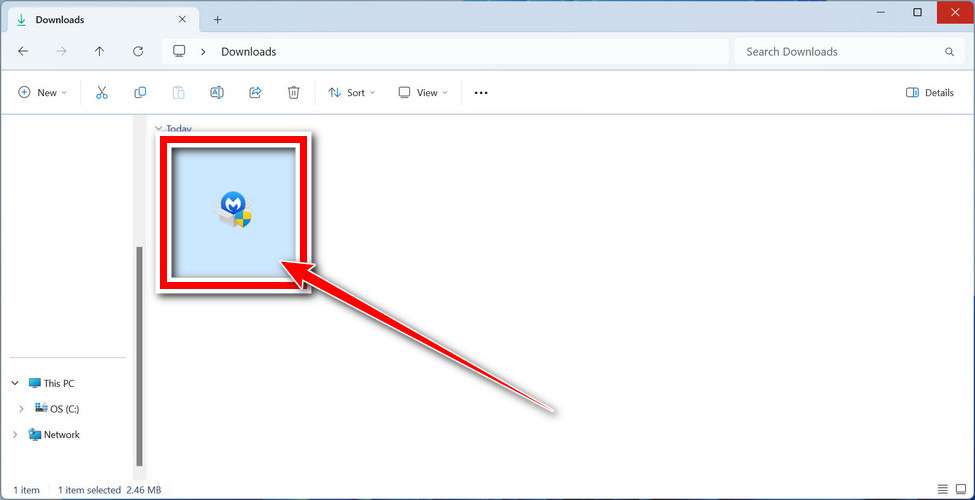
When the download finishes, open your Downloads folder and double-click the MBSetup file. If Windows shows a User Account Control pop-up, click “Yes” to allow the installation.
Follow the On-Screen Prompts to Install Malwarebytes
The setup wizard will walk you through a few quick screens:
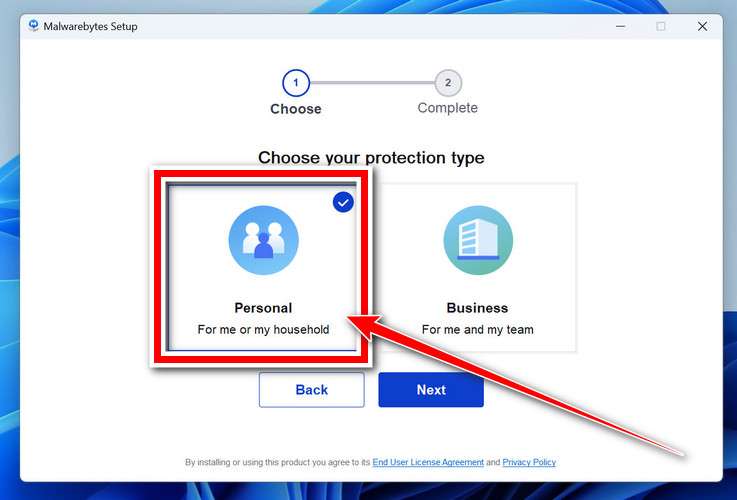
Choose where you’re installing the program — “Personal Computer” or “Work Computer” — then click Next.
Malwarebytes will now install on your device. This usually takes under a minute.
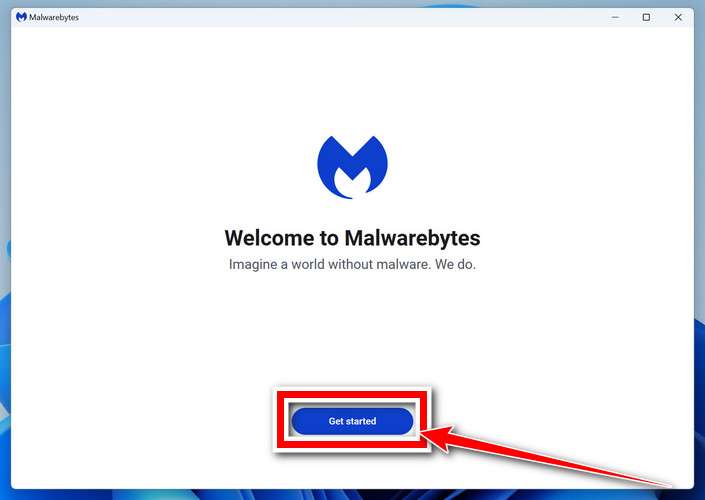
When installation is complete, the “Welcome to Malwarebytes” screen will open automatically.
On the final screen, click Open Malwarebytes to launch the program.
Enable “Scan for Rootkits”
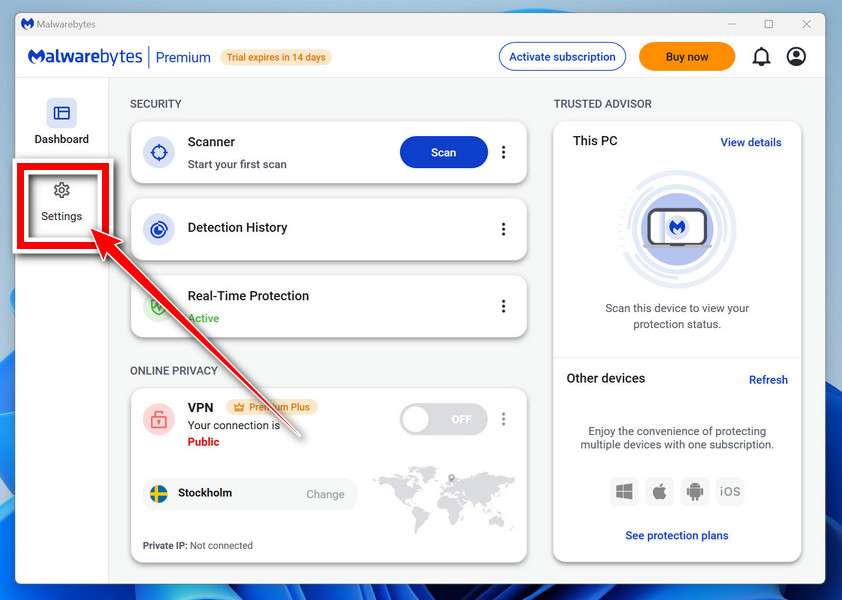
Before scanning, turn on rootkit detection so Malwarebytes can find even the most hidden threats. Click the Settings gear icon on the left side of the screen.
In the settings menu, find “Scan for rootkits” and click the toggle so it turns blue.
Done? Click “Dashboard” in the left pane to return to the main screen.
Start the Scan
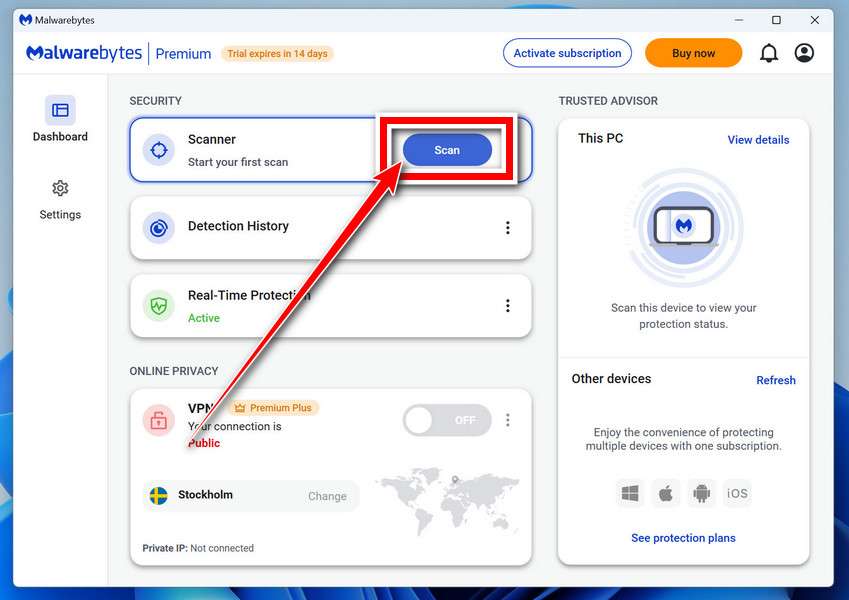
Click the blue Scan button. Malwarebytes will automatically update its virus database and start checking your computer for malware.
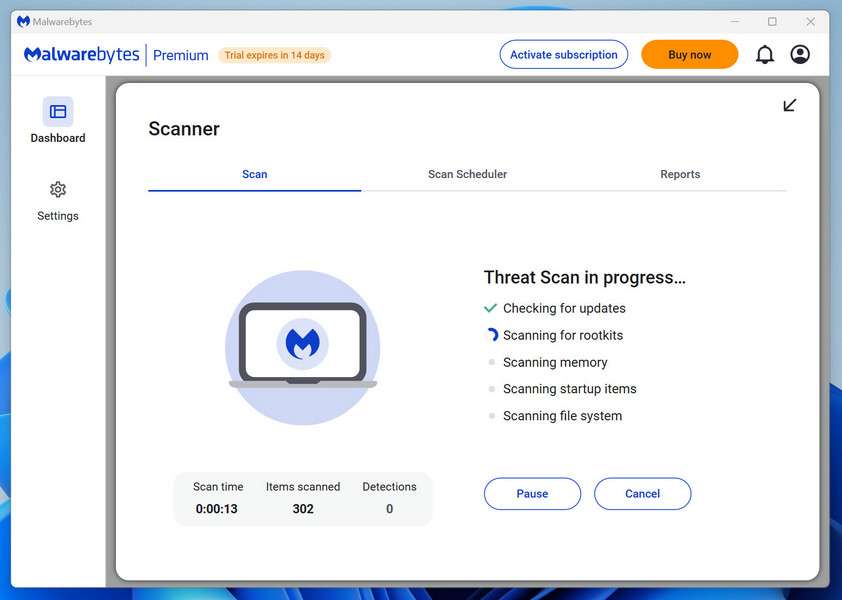
Wait for the Scan to Finish
The scan checks your entire system for browser hijackers and other malicious programs, so it can take several minutes. Feel free to do something else — just check back occasionally to see the progress.
Quarantine the Detected Threats
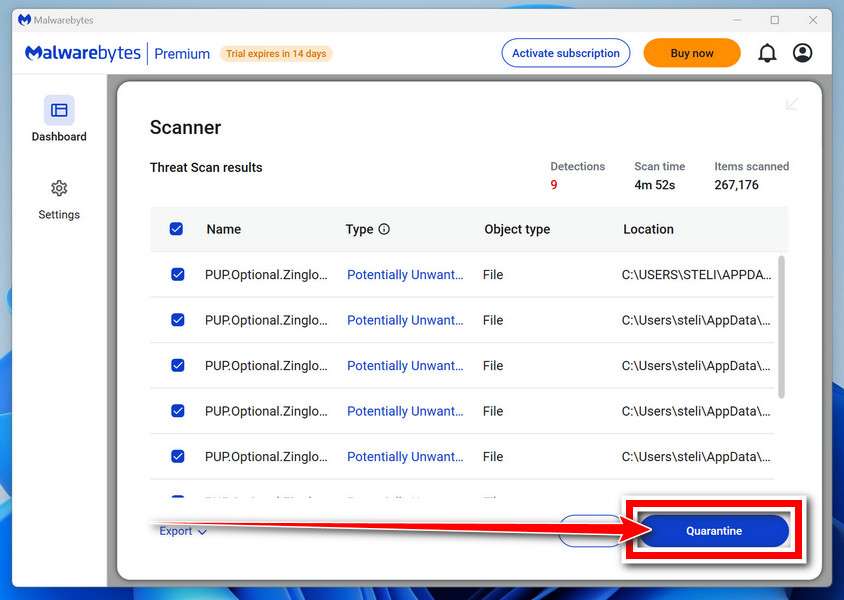
When the scan is done, you’ll see a list of everything Malwarebytes found — malware, adware, and potentially unwanted programs. Click the “Quarantine” button to remove all of them at once.
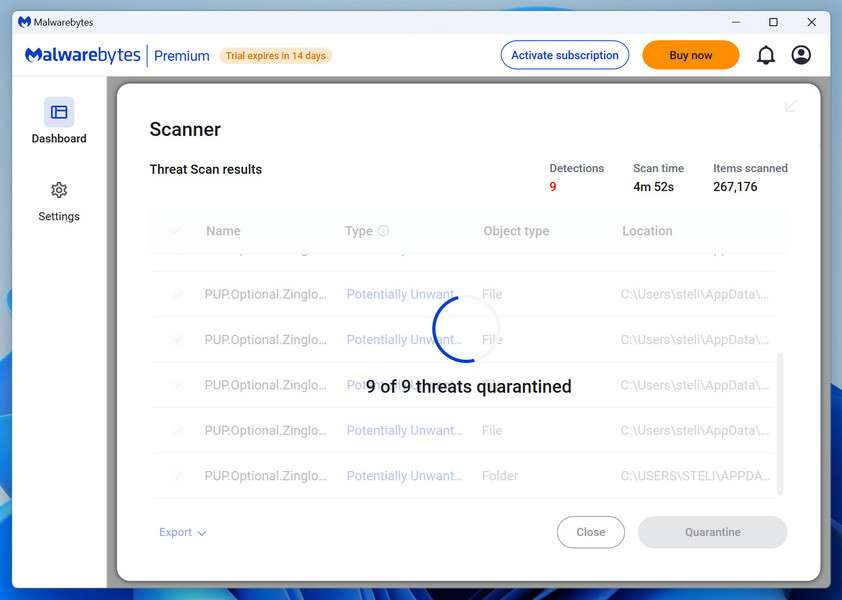
Malwarebytes will now remove the malicious files and registry entries and move them safely into quarantine.
Restart Your Computer
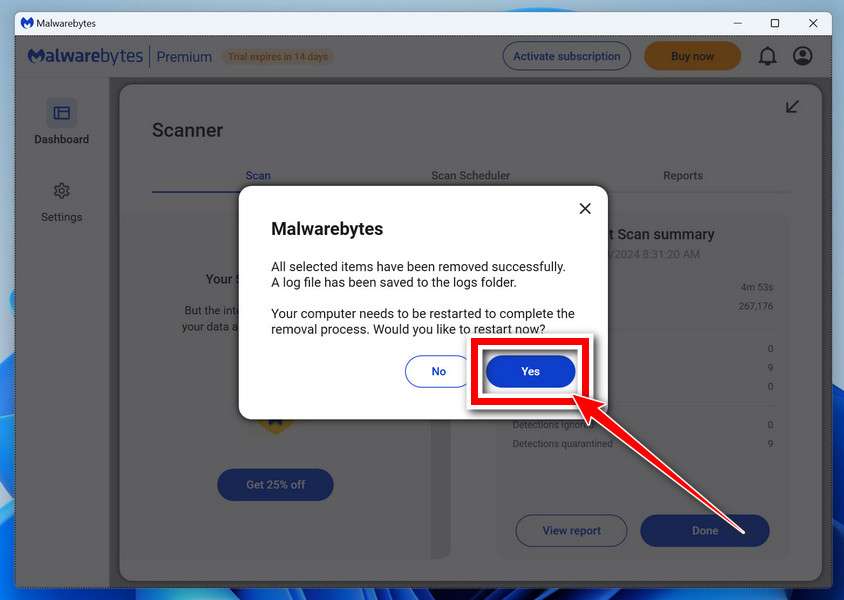
Some threats can only be fully removed after a reboot. If Malwarebytes asks you to restart, click Yes. Once you’re logged back in, your PC is clean and you can continue with the next steps in this guide.
When the scan finishes, click Quarantine to remove everything Malwarebytes found. That’s it — your Windows PC is now clean of trojans, adware, and other malware, and should be back to running smoothly.
If your current antivirus allowed this malicious program on your computer, you may want to consider purchasing Malwarebytes Premium to protect against these types of threats in the future. If you are still having problems with your computer after completing these instructions, then please follow one of the steps:
Malwarebytes for Mac is a free on-demand scanner that removes the malware other security software tends to miss — adware, browser hijackers, and unwanted programs included. Cleaning an infected Mac with Malwarebytes has always been completely free, and it’s our go-to recommendation. Follow the steps below to scan and clean your Mac in just a few minutes.
Download Malwarebytes for Mac
Click the button below to download the latest version of Malwarebytes for Mac.
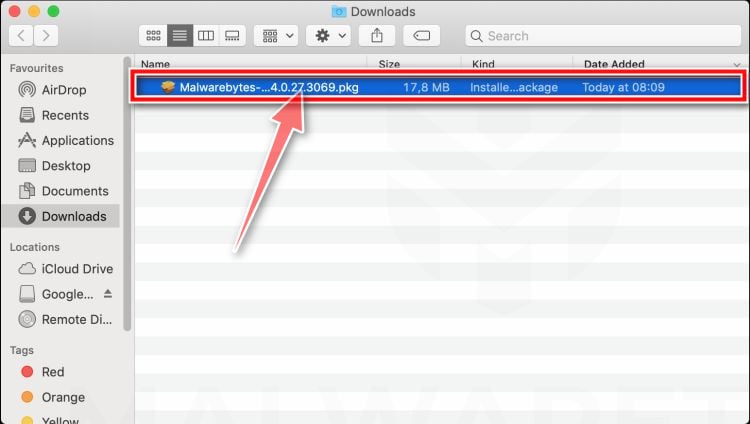
When the download finishes, open your Downloads folder and double-click the setup file to begin the installation.
Follow the On-Screen Prompts to Install Malwarebytes
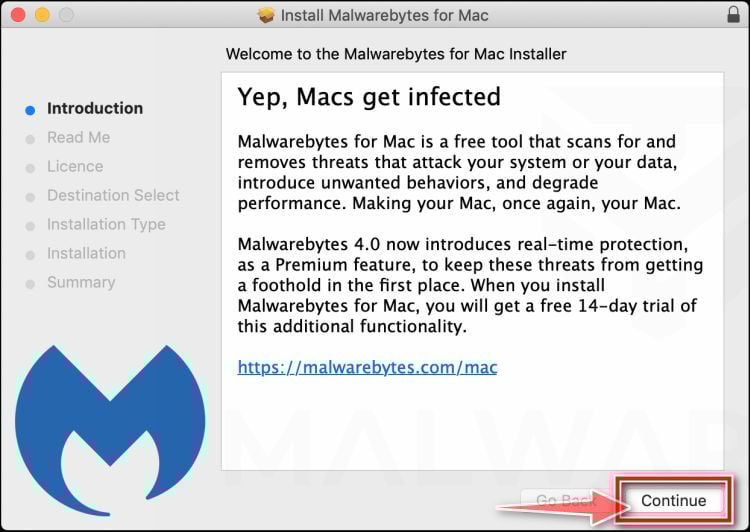
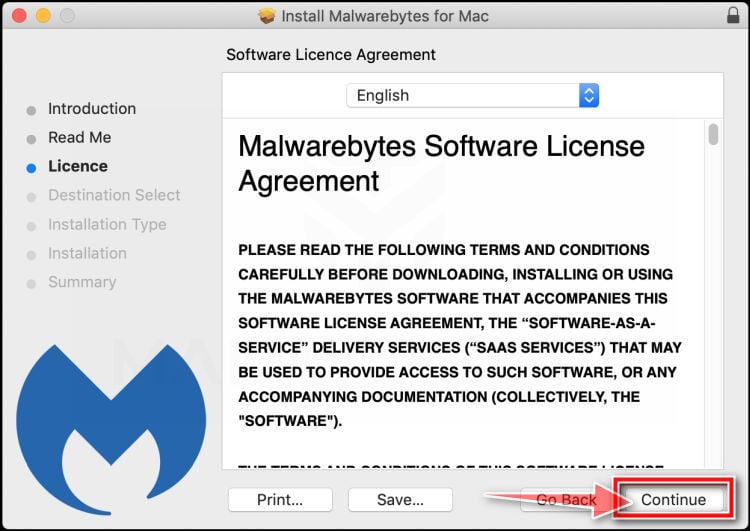
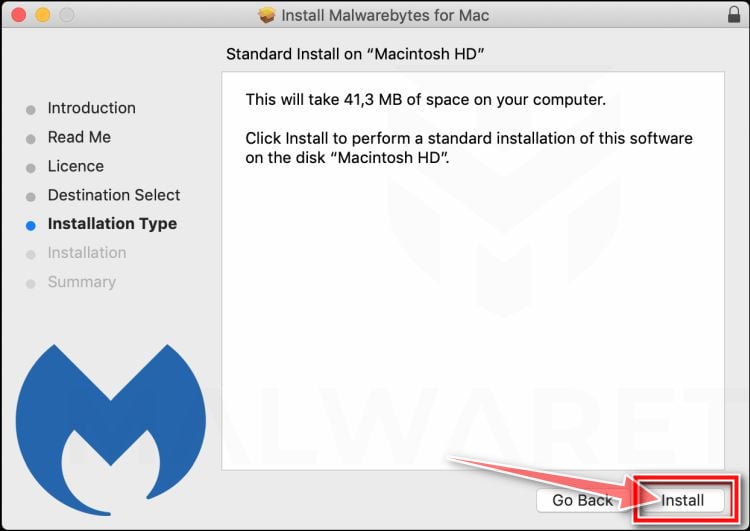
The Malwarebytes for Mac Installer will guide you through a few quick screens. Click “Continue” and keep following the prompts until the installation completes.
When the installation is complete, Malwarebytes opens to the Welcome to Malwarebytes screen. Click “Get started“.
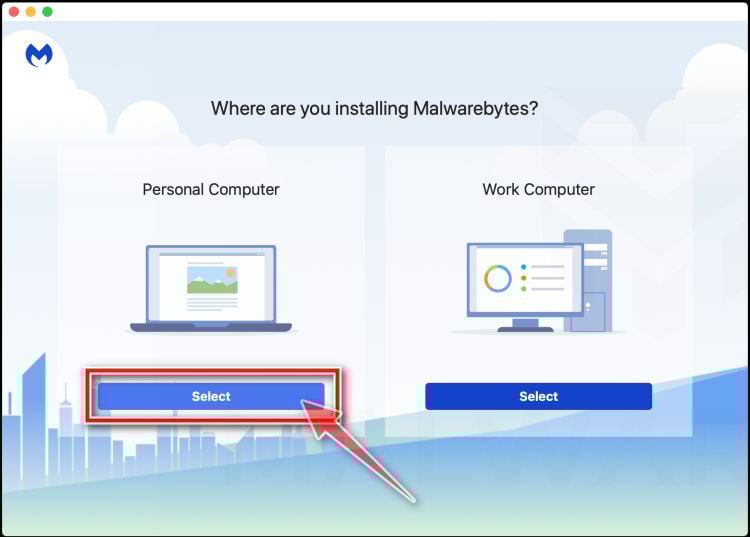
Select “Personal Computer” or “Work Computer”
Malwarebytes will ask what type of computer you’re installing it on. Click either Personal Computer or Work Computer, whichever applies.
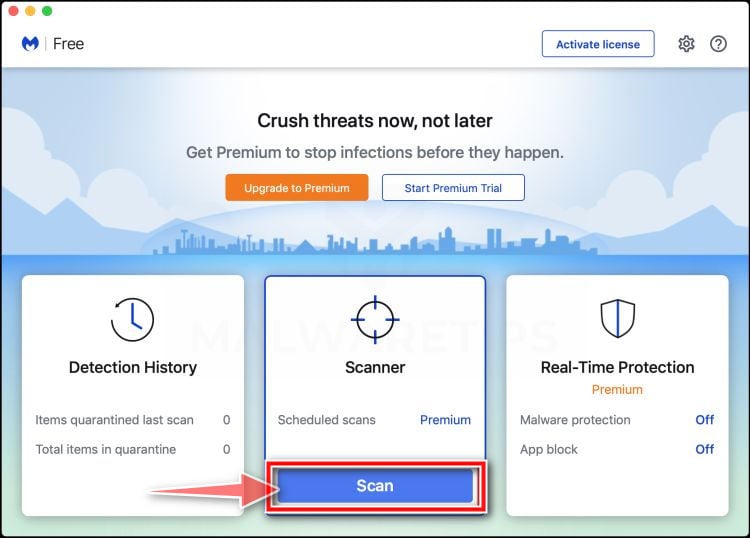
Start the Scan
Click the “Scan” button. Malwarebytes will automatically update its detection database and begin checking your Mac for malware.
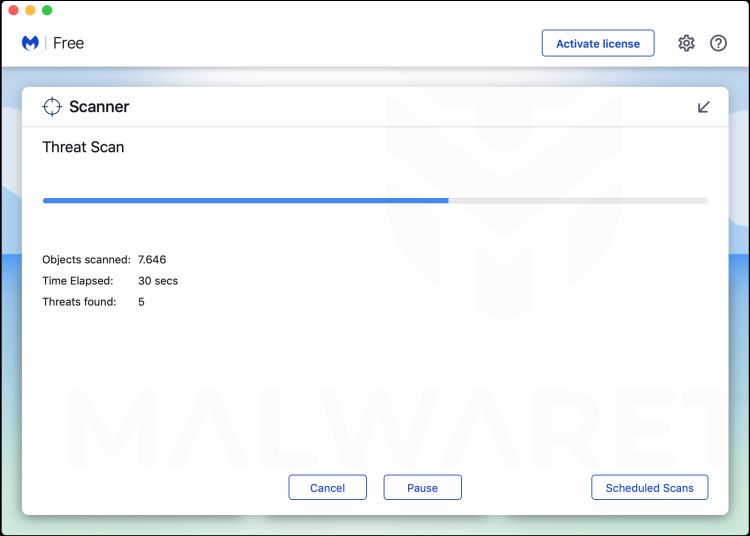
Wait for the Scan to Finish
Malwarebytes will scan your Mac for adware, browser hijackers, and other malicious programs. This can take a few minutes, so feel free to do something else — just check back occasionally to see the progress.
Quarantine the Detected Threats
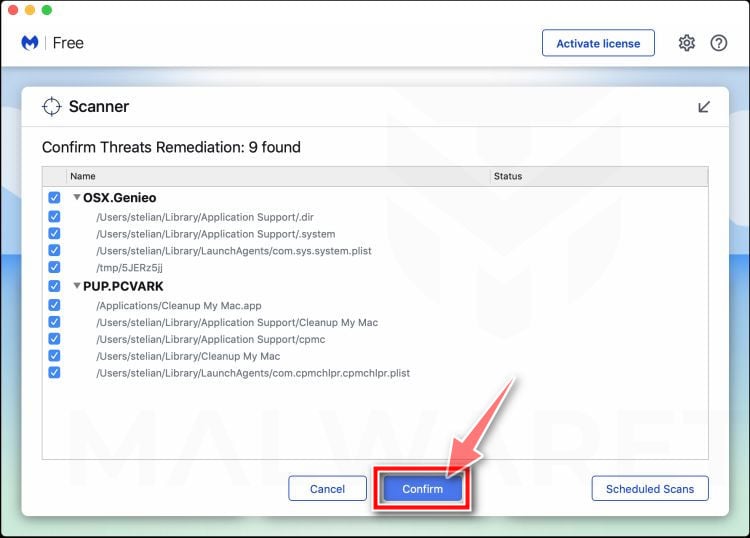
When the scan is done, you’ll see a list of everything Malwarebytes found. Click the “Quarantine” button to remove all the threats at once.
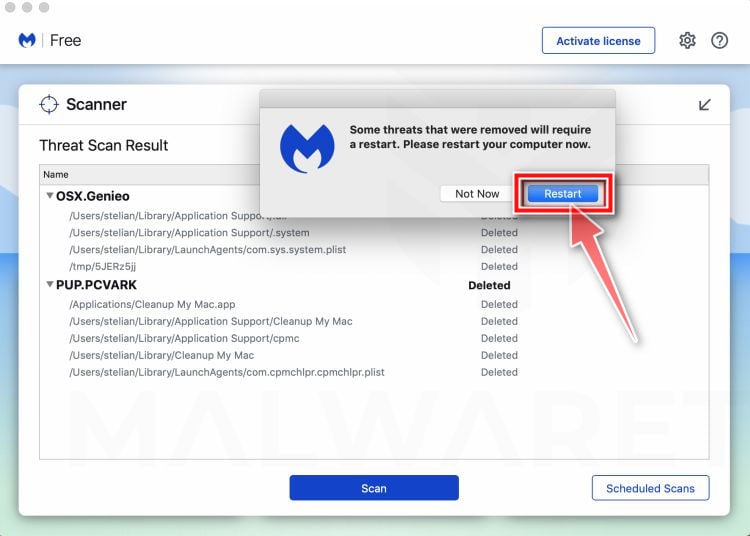
Restart Your Mac
Malwarebytes will now remove all the malicious files it found. Some threats can only be fully removed after a reboot — if Malwarebytes asks you to restart, allow it. Once you’re logged back in, your Mac is clean.
Once the scan is done, remove every threat it detected. Your Mac is now free of adware, rogue browser extensions, and other potentially harmful software.
If your current antivirus allowed a malicious program on your computer, you might want to consider purchasing the full-featured version of Malwarebytes Anti-Malware to protect against these types of threats in the future. If you are still experiencing problems while trying to remove a malicious program from your computer, please ask for help in our Mac Malware Removal Help & Support forum.
Run a Malware Scan with Malwarebytes for Android
Malwarebytes for Android automatically detects and removes dangerous threats like malware and ransomware so you don’t have to worry about your most-used device being compromised. Aggressive detection of adware and potentially unwanted programs keeps your Android phone or tablet running smooth.
Download Malwarebytes for Android.
You can download Malwarebytes for Android by clicking the link below.
In the Google Play Store, tap “Install” to install Malwarebytes for Android on your device.
When the installation process has finished, tap “Open” to begin using Malwarebytes for Android. You can also open Malwarebytes by tapping on its icon in your phone menu or home screen.
Follow the on-screen prompts to complete the setup process
When Malwarebytes will open, you will see the Malwarebytes Setup Wizard which will guide you through a series of permissions and other setup options. This is the first of two screens that explain the difference between the Premium and Free versions. Swipe this screen to continue. Tap on “Got it” to proceed to the next step. Malwarebytes for Android will now ask for a set of permissions that are required to scan your device and protect it from malware. Tap on “Give permission” to continue. Tap on “Allow” to permit Malwarebytes to access the files on your phone.
Update database and run a scan with Malwarebytes for Android
You will now be prompted to update the Malwarebytes database and run a full system scan.
Click on “Update database” to update the Malwarebytes for Android definitions to the latest version, then click on “Run full scan” to perform a system scan.
Wait for the Malwarebytes scan to complete.
Malwarebytes will now start scanning your phone for adware and other malicious apps. This process can take a few minutes, so we suggest you do something else and periodically check on the status of the scan to see when it is finished.
Click on “Remove Selected”.
When the scan has been completed, you will be presented with a screen showing the malware infections that Malwarebytes for Android has detected. To remove the malicious apps that Malwarebytes has found, tap on the “Remove Selected” button.
Restart your phone.
Malwarebytes for Android will now remove all the malicious apps that it has found. To complete the malware removal process, Malwarebytes may ask you to restart your device.
After the scan, tap Remove Selected to delete all detected threats. Your Android phone is now clean — no more malicious apps, adware, or browser redirects.
If your current antivirus allowed a malicious app on your phone, you may want to consider purchasing the full-featured version of Malwarebytes to protect against these types of threats in the future. If you are still having problems with your phone after completing these instructions, then please follow one of the steps:
Restore your phone to factory settings by going to Settings > General management > Reset > Factory data reset.
Now that your device is clean, keep it that way. Most infections start with a malicious ad or a fake download button — so blocking them at the source is your best defense.
We recommend AdGuard, which blocks malicious ads, phishing pages, and dangerous redirects before they can reach you.
The term refers to a confidence trick in which the chosen target is persuaded to put up cash before receiving a share of supposedly found money.
Is the found money ever real?
A few genuine bills may be visible, but the promised bundle is not a legitimate windfall. It may contain counterfeit notes or worthless paper.
Why do scammers ask for good-faith money?
The explanation makes the withdrawal sound like proof of honesty. In reality, the victim’s cash is the only valuable money the group intends to take.
What if the strangers know a real lawyer or business?
Public names and addresses can be copied. Contact the professional independently and do not hand over money while verifying the story.
Should I confront the scammers after noticing the switch?
No. Move to safety and call police. The group may include additional people, and physical confrontation can create more danger.
Can the bank reverse a cash withdrawal?
Cash voluntarily withdrawn and handed to a stranger is difficult to recover. Report quickly so video and transaction evidence can be preserved.
The Bottom Line
The pigeon drop scam turns supposedly found money into a reason for the victim to withdraw real savings. The friendly strangers, invisible authority, and good-faith test are parts of one rehearsed performance.
Walk away, involve bank staff, and call police. No legitimate windfall requires you to prove honesty by handing cash to people you just met.
10 Rules to Avoid Online Scams
Here are 10 practical safety rules to help you avoid malware, online shopping scams, crypto scams, and other online fraud. Each tip includes a quick “if you already got hit” action.
Stop and verify before you click, log in, download, or pay.
Most scams win by creating urgency. Verify using a trusted method: type the website address yourself, use the official app, or call a known number (not the one in the message).
If you already clicked: close the page, do not enter passwords, and run a malware scan.
Keep your operating system, browser, and apps updated.
Updates patch security holes used by malware and malicious ads. Turn on automatic updates where possible.
If you saw a scary “update now” pop-up: close it and update only through your device settings or the official app store.
Use layered protection: antivirus plus an ad blocker.
Antivirus helps block malware. An ad blocker reduces scam redirects, phishing pages, and malvertising.
If your browser is acting weird: remove unknown extensions, reset the browser, then run a full scan.
Install apps, software, and extensions only from official sources.
Avoid cracked software, “keygens,” and random downloads. During installs, choose Custom/Advanced and decline bundled offers you do not recognize.
If you already installed something suspicious: uninstall it, restart, and scan again.
Treat links and attachments as untrusted by default.
Phishing often impersonates delivery services, banks, and popular brands. If it is unexpected, do not open attachments or log in through the message.
If you entered credentials: change the password immediately and enable 2FA.
Shop safely: research the store, then pay with protection.
Be cautious with brand-new stores, “closing sale” stories, and prices that make no sense. Prefer credit cards or PayPal for dispute options. Avoid wire transfers, gift cards, and crypto payments.
If you already paid: contact your card issuer or PayPal quickly to dispute the transaction.
Crypto rule: never pay a “fee” to withdraw or recover money.
Common patterns include fake profits, then “tax,” “gas,” or “verification” fees. Another is a “recovery agent” who demands upfront crypto.
If you already sent crypto: stop paying, save evidence (wallet addresses, TXIDs, chats), and report the scam to the platform used.
Secure your accounts with unique passwords and 2FA (start with email).
Use a password manager and unique passwords for every account. Enable 2FA using an authenticator app when possible.
If you suspect an account takeover: change passwords, sign out of all devices, and review recent logins and recovery settings.
Back up important files and keep one backup offline.
Backups protect you from ransomware and device failure. Keep at least one backup on an external drive that is not always connected.
If you suspect infection: do not connect backup drives until the system is clean.
If you think you are a victim: stop losses, document evidence, and escalate fast.
Move quickly. Speed matters for disputes, account recovery, and limiting damage.
Stop payments and contact: do not send more money or respond to the scammer.
Call your bank or card issuer: block transactions, replace the card if needed, and start a dispute or chargeback.
Secure your email first: change the email password, enable 2FA, and remove unfamiliar recovery options.
Secure other accounts: change passwords, enable 2FA, and log out of all sessions.
Scan your device: remove suspicious apps or extensions, then run a full malware scan.
Save evidence: screenshots, emails, order pages, tracking pages, wallet addresses, TXIDs, and chat logs.
Report it: to the payment provider, marketplace, social platform, exchange, or wallet service involved.
These rules are intentionally simple. Most online losses happen when decisions are rushed. Slow down, verify independently, and use payment methods and account controls that give you recourse.
Hello! I'm Lapain Epuran, your go-to source for detailed and honest product reviews. From tech gadgets to miracle cures, I provide insights to help you make informed choices. Join me as we discover what's truly worth your time and money.