An email announces a major Zoho server upgrade, a short deadline, and several attractive improvements. For a busy team, clicking may seem completely routine.
The message becomes more troubling when its sender, destination, and unusual login request are examined together. Those details expose what the polished design conceals.
Overview
The message invents an administrator-level emergency
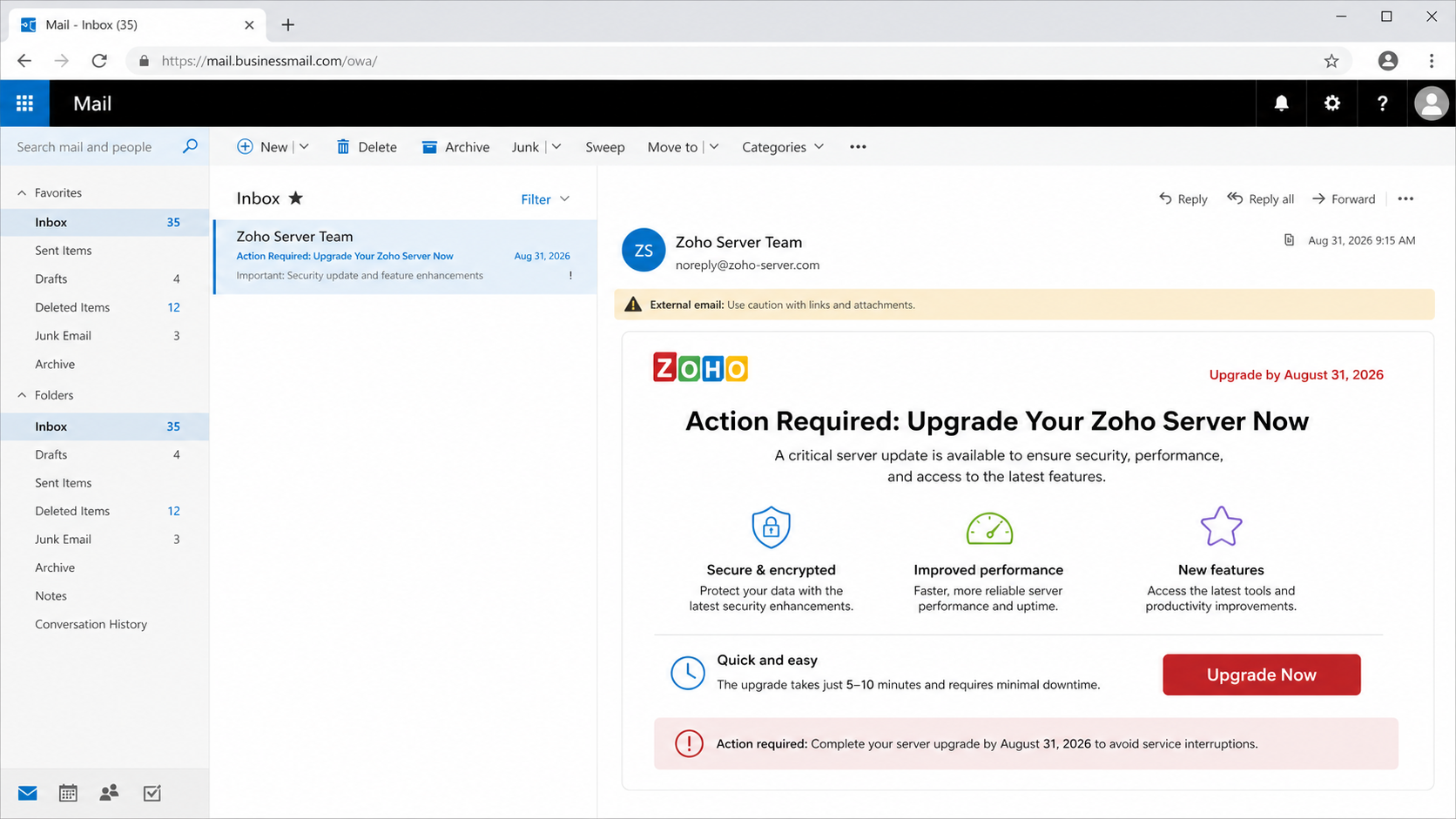
The Zoho Server Update email scam claims a major upgrade is available. It presents the change as necessary for performance, security, and new features.
One analyzed sample promised faster API responses, advanced patches, automation, reporting improvements, and real-time analytics. The abundance of benefits makes the notice sound planned.
A deadline raises the stakes. Recipients are warned that delaying could produce limited support, reduced performance, or service interruption.
The message says the process requires only 5 to 10 minutes and includes automatic backup. These reassurances are designed to remove operational objections.
The button does not perform a Zoho upgrade
The “Upgrade Now” button sends the visitor away from Zoho’s infrastructure. The sample inspected in August 2026 redirected to a craftum.io subdomain.
That address had no legitimate relationship with Zoho Corporation. The mismatch matters more than logos, colors, or claims printed inside the email.
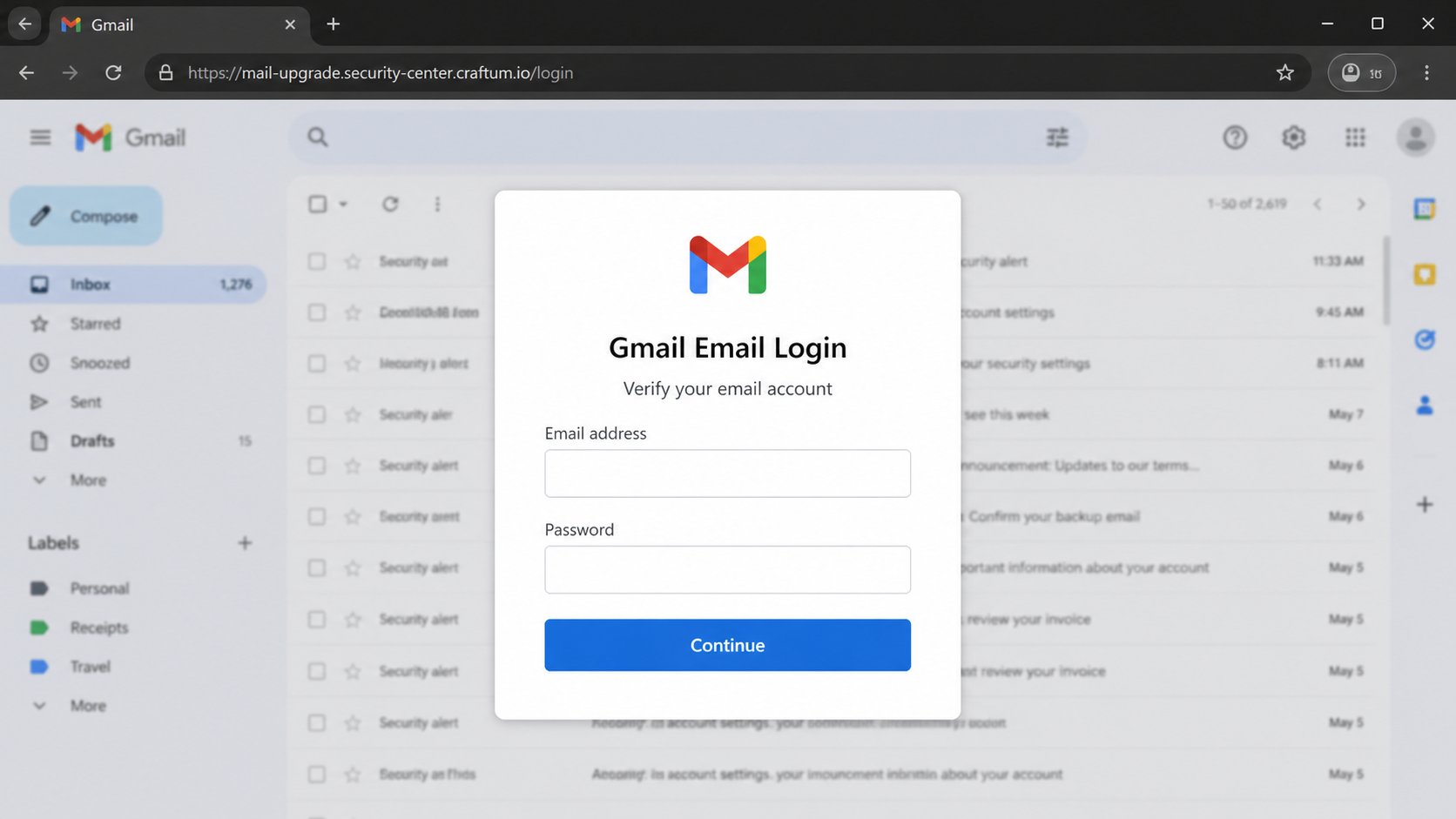
The destination reportedly identified the visitor’s email provider and displayed a matching sign-in panel. A Gmail address could therefore produce a Gmail-themed form.
This adaptive design prevents every target from seeing the same counterfeit page. The brand changes, but the requested credential remains the objective.
Email access is the valuable prize
A stolen mailbox gives attackers more than messages. It can contain invoices, contracts, password resets, customer records, cloud links, and internal conversations.
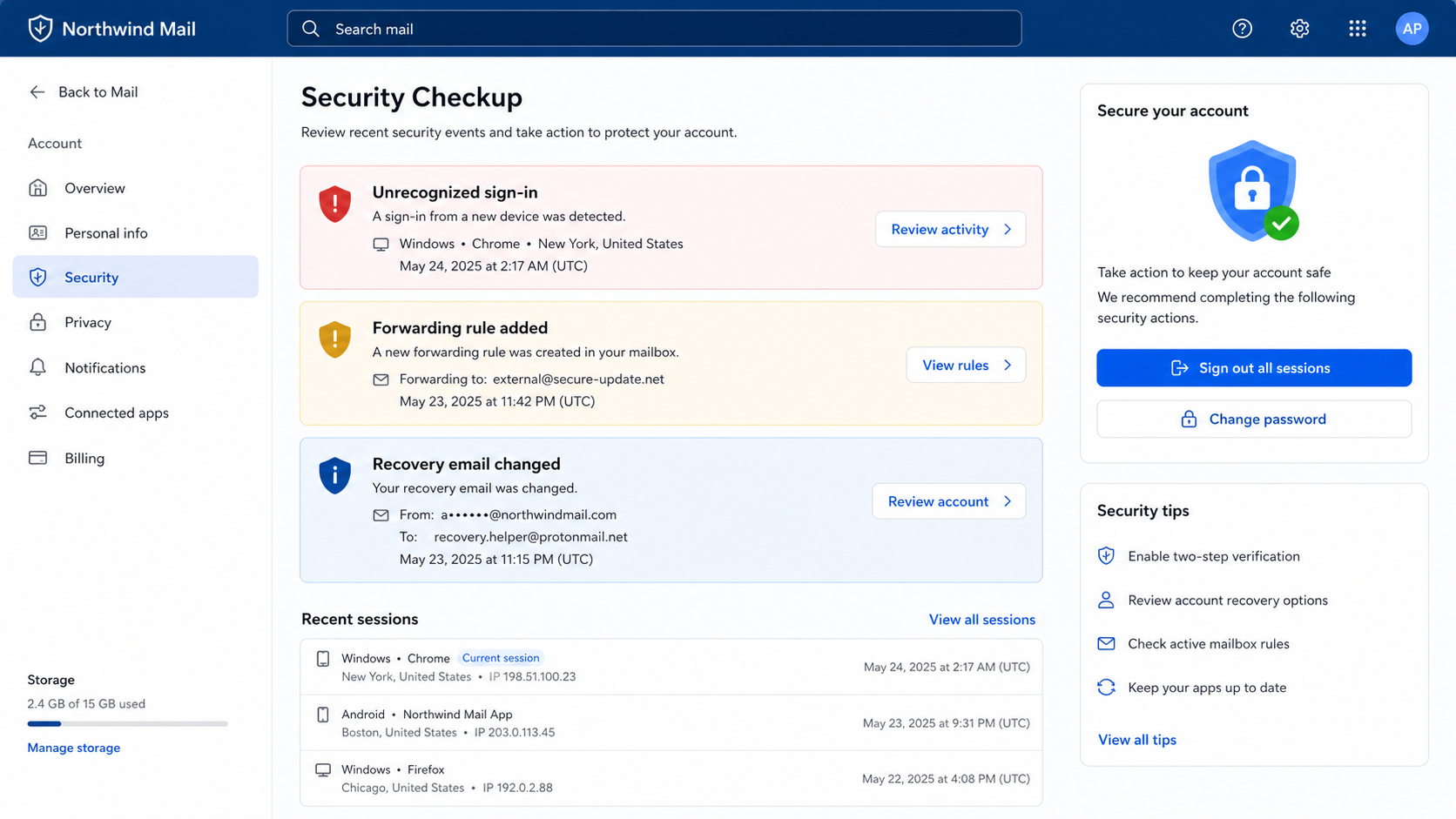
Criminals may add forwarding rules, register recovery methods, or create application passwords. Those changes let them watch the account after the owner changes one password.
Business mailboxes also support convincing follow-up fraud. An intruder can reply inside genuine threads and redirect a payment using familiar names and context.
Zoho is not responsible for this campaign. The company’s identity is being copied to make an unrelated credential-harvesting operation feel trustworthy.
The subject says immediate server action is required.
Technical benefits make the email sound administrative.
A deadline creates fear of reduced service.
The sender and linked domain do not match Zoho.
The destination adapts to the recipient’s mail provider.
The form asks for an existing mailbox password.
Submitted credentials can enable broader account takeover.
Zoho’s own security guidance says it never asks customers to send passwords through email. Unexpected links should be inspected before any account information is entered.
Legitimate administrators can verify changes from the normal Zoho console, a saved bookmark, or their organization’s documented support route.
There is no reason to let a surprise message choose the login page for an important business mailbox.
How The Scam Works
Step 1: A bulk phishing email reaches workplace inboxes
Attackers distribute the same upgrade story across many addresses, hoping to reach businesses that use Zoho Mail, Zoho CRM, or another Zoho service.
Even recipients outside Zoho may click because their employer uses several cloud products. The message’s broad “Hello Team” greeting supports mass delivery.
The display name can read “Zoho Server Team” while the underlying address belongs to an unrelated domain. Mail clients emphasize the friendly name first.
Some gateways add an external-sender banner. Employees accustomed to vendor messages may dismiss that warning without comparing the domain.
Spam filtering reduces exposure but cannot remove every well-formatted lure. The campaign relies on one person treating the email like routine maintenance.
Step 2: Technical language manufactures credibility
The body lists plausible improvements such as security fixes, analytics, automation, and faster database queries. Each phrase resembles normal software release language.
Specific numbers, including “50% faster,” create a false impression of testing. No release note, tenant identifier, administrator ticket, or official documentation supports them.
“Secure and encrypted” appears beside the button as if it certifies the destination. Text inside an email cannot authenticate the website it links to.
Automatic backup is another calming detail. It answers a concern before the recipient raises it, making the fictional process feel carefully designed.
The message does not explain why an ordinary user must upgrade a provider-managed server. That conceptual mismatch is easy to miss under time pressure.
Step 3: The deadline narrows the reader’s options
A date near the message’s arrival creates artificial urgency. The recipient is encouraged to act before checking with IT or opening the actual administration portal.
The threatened consequence remains vague. “Limited support” and “reduced performance” sound serious without identifying a service, subscription, region, or affected feature.
Legitimate enterprise changes normally include documentation, account context, staged rollout information, and an administrative notice visible after direct sign-in.
Phishing replaces that context with a single prominent button. The easiest action on the page is also the only path the attacker controls.
Slowing down breaks this design. A separate browser visit can confirm whether any genuine alert exists inside the account.
Step 4: The upgrade button redirects through an unrelated host
Clicking does not install a server patch. It opens infrastructure selected by the attacker, sometimes after intermediate tracking or redirection pages.
In the analyzed campaign, the reported destination used craftum.io. Readers should not assume that address remains active or that future copies reuse it.
Campaign operators rotate pages after reports, takedowns, or filtering. Blocking one indicator helps, but recognizing the behavior protects against replacements.
The browser padlock only means the connection uses encryption. It cannot certify that the operator is Zoho or that the request is honest.
Before entering anything, compare the registrable domain with Zoho’s documented regional login domains and the organization’s approved custom domains.
Step 5: The page selects a familiar sign-in costume
An adaptive phishing kit can read the email address or domain supplied through the link. It then chooses a matching brand for the login form.
A Microsoft user may see a Microsoft-style panel, while a Gmail user receives Google colors. This personalization makes the transition feel coherent.
The form may display a blurred inbox behind the fields. That backdrop suggests the account is already recognized and only needs quick verification.
The login is not being processed by the real provider. The form sends the typed username and password to infrastructure controlled by criminals.
A failed-login message can request the password twice. Repetition helps attackers distinguish a typing mistake from the victim’s actual credential.
Step 6: Attackers test the stolen mailbox
Submitted credentials may be used immediately or passed to another operator. Automated tools can test common webmail endpoints before the victim notices.
If multifactor authentication is enabled, the criminal may prompt for a code, ask the victim to approve a notification, or steal an active session.
Successful access allows review of sent mail, vendor relationships, upcoming payments, shared files, and password-reset opportunities.
The attacker may search for words like invoice, wire, payroll, tax, contract, DocuSign, or bank. Those searches identify profitable conversations quickly.
Deleting security notices from the inbox can delay detection. A forwarding rule silently copies new mail to another address.
Step 7: The compromised account attacks trusted contacts
A hijacked mailbox carries the reputation of its real owner. Messages sent from it can pass ordinary familiarity checks and appear inside existing threads.
Suppliers may receive a changed bank account, colleagues may receive another fake document, and customers may be asked to confirm confidential information.
Because the conversation history is genuine, grammar and context can be unusually convincing. The original phishing victim becomes the next campaign’s trusted sender.
That expansion explains why workplace incidents require immediate reporting. Securing one password without notifying administrators may leave rules, sessions, and downstream victims unaddressed.
A complete response contains the breach, reviews activity, warns affected contacts, and checks whether financial instructions changed during the access window.
Red Flags Inside the Zoho Upgrade Message
A cloud provider does not need every employee to patch its central servers through an emailed password form. Provider infrastructure is managed through controlled administrative processes.
The generic greeting also conflicts with the importance of the claimed change. A major tenant upgrade should identify the customer, service, and account context.
Benefits are unusually broad, covering speed, security, AI, reporting, and analytics simultaneously. Marketing abundance replaces concrete release information.
The deadline threatens consequences without linking to a release note inside Zoho’s official domain. Urgency is doing work that documentation should perform.
Most importantly, the final page asks for email credentials on a non-Zoho host. That alone is sufficient reason to close it.
Sender, Domain, and Account Checks
Expand the complete sender address
Do not trust “Zoho Server Team” as proof. Open the message details and examine the address after the @ symbol.
Check Reply-To, return path, and authentication results when available. A mismatch between those fields can reveal impersonation or an abused sending service.
Forward suspicious messages to the internal security team as an attachment so technical headers remain available for investigation.
Inspect the destination without visiting it
Hover over the upgrade button on a computer, or long-press it on a phone, to preview the actual destination.
Read from the final slash backward toward the domain. Attackers place trusted words inside long subdomains to distract from the site owner.
If uncertainty remains, open Zoho from a known bookmark. Never use the email’s convenient route as a verification shortcut.
Confirm whether an upgrade belongs to your role
Ask who manages the organization’s Zoho tenant. Most employees do not perform provider server upgrades, database migrations, or platform security patches.
Administrators should check the official console, service status, vendor documentation, and internal change calendar. A real notice should have supporting context.
Call a known colleague or support number when the request affects production access. Do not reply to the suspicious sender for confirmation.
Review mailbox persistence after exposure
A password change is essential but incomplete. Inspect forwarding, filters, delegates, recovery addresses, application passwords, connected apps, and active sessions.
Revoke unfamiliar OAuth grants and sign out other devices. Confirm multifactor methods still belong to the authorized user.
Search sent and deleted folders for messages created during the suspected compromise, then warn recipients through a separate trusted channel.
What to Do if You Have Fallen Victim to This Scam
Disconnect from the phishing page. Close the tab and do not submit another password, verification code, recovery answer, or approval prompt.
Contact workplace IT immediately. Provide the email, link, approximate click time, submitted information, device, and any multifactor action you completed.
Change the password from a clean route. Use the genuine provider site, choose a unique credential, and replace it anywhere reused.
End unauthorized access. Revoke sessions, remove unknown devices, delete malicious forwarding rules, and restore recovery details.
Strengthen sign-in protection. Enable multifactor authentication, preferably with an authenticator or security key rather than easily intercepted methods.
Examine business activity. Review sent mail, deleted messages, cloud files, invoices, and financial conversations for tampering.
Scan the affected device. Update the system and run Malwarebytes if a file downloaded, an extension appeared, or other suspicious behavior followed.
Block malicious advertising and redirects. AdGuard can reduce exposure to hostile pages, although account recovery remains the immediate priority.
Warn contacts selectively. Notify people who received messages or changed instructions from the compromised account without broadcasting sensitive incident details.
Report the infrastructure. Submit the phishing message to Zoho, the email provider, domain host, organizational security team, and FTC.
Is Your Device Infected? Run a Free Malware Scan
Slow performance, constant pop-ups, or strange behavior? These are classic signs of a malware infection. The fastest way to find out is to scan your device with Malwarebytes Anti-Malware Free — one of the most trusted malware removal tools available.
The free version detects and removes the most common threats, including:
Adware — the cause of those annoying pop-ups
Browser hijackers — unwanted redirects and changed homepages
Trojans and spyware — hidden programs stealing your data
Potentially unwanted programs (PUPs) — software you never asked for
👉 Select your device below — Windows, Mac, or Android — then follow the simple steps to download Malwarebytes, scan your system, and remove any threats it finds. The whole process takes about 5 minutes.
Malwarebytes for WindowsMalwarebytes for MacMalwarebytes for Android
Run a Malware Scan with Malwarebytes for Windows
Malwarebytes is one of the most popular and trusted anti-malware tools for Windows — and it’s completely free for removing infections. It catches threats that many antivirus programs miss, including adware, browser hijackers, and trojans. Follow the steps below to scan and clean your PC in just a few minutes.
Download Malwarebytes
Click the button below to download the latest version of Malwarebytes for Windows from the official source. The free version is all you need — it will scan your computer and remove adware, browser hijackers, and other malicious software at no cost.
(The link opens in a new page where your download will start)
Install Malwarebytes
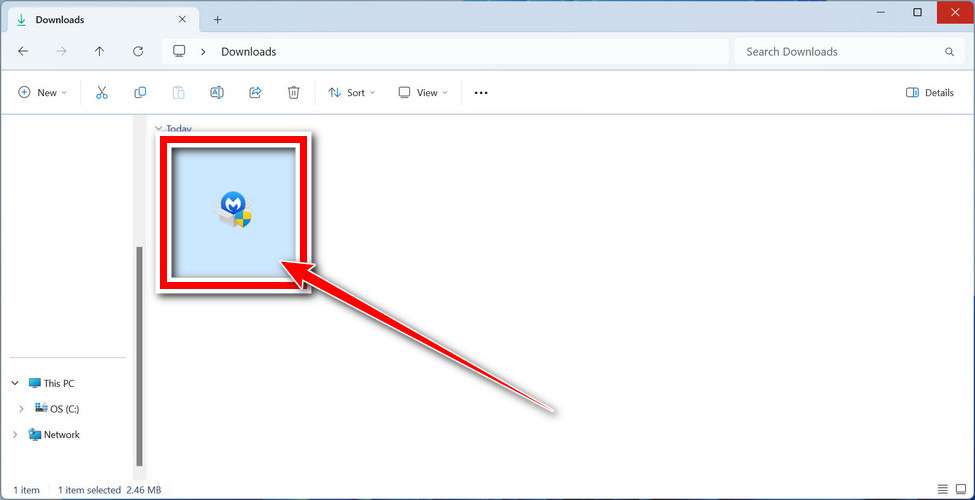
When the download finishes, open your Downloads folder and double-click the MBSetup file. If Windows shows a User Account Control pop-up, click “Yes” to allow the installation.
Follow the On-Screen Prompts to Install Malwarebytes
The setup wizard will walk you through a few quick screens:
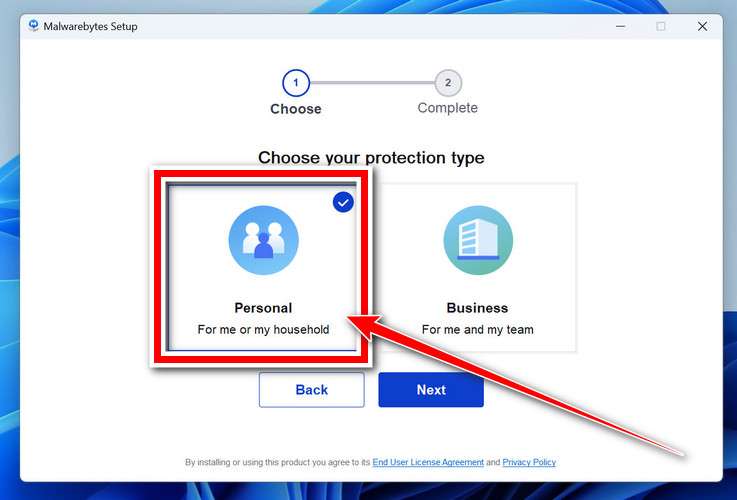
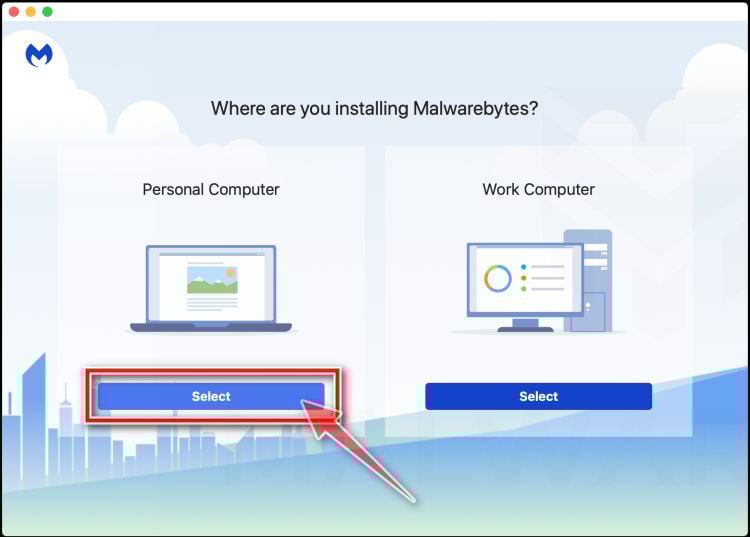
Choose where you’re installing the program — “Personal Computer” or “Work Computer” — then click Next.
Malwarebytes will now install on your device. This usually takes under a minute.
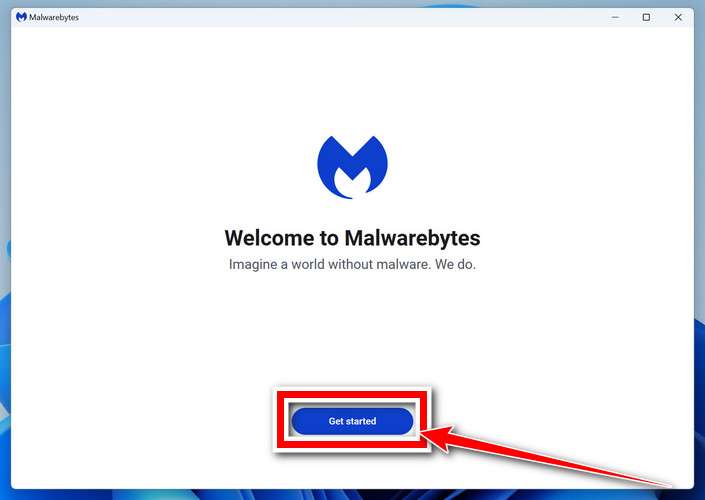
When installation is complete, the “Welcome to Malwarebytes” screen will open automatically.
On the final screen, click Open Malwarebytes to launch the program.
Enable “Scan for Rootkits”
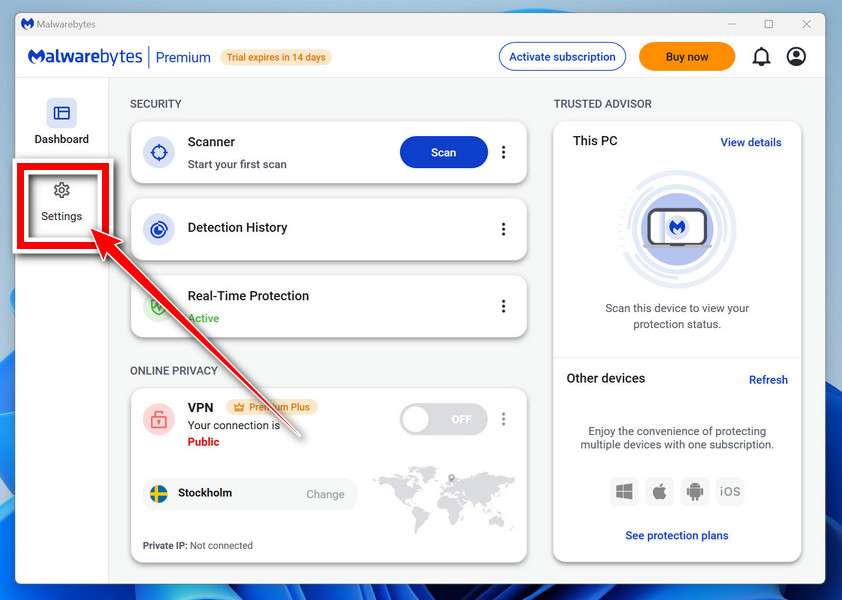
Before scanning, turn on rootkit detection so Malwarebytes can find even the most hidden threats. Click the Settings gear icon on the left side of the screen.
In the settings menu, find “Scan for rootkits” and click the toggle so it turns blue.
Done? Click “Dashboard” in the left pane to return to the main screen.
Start the Scan
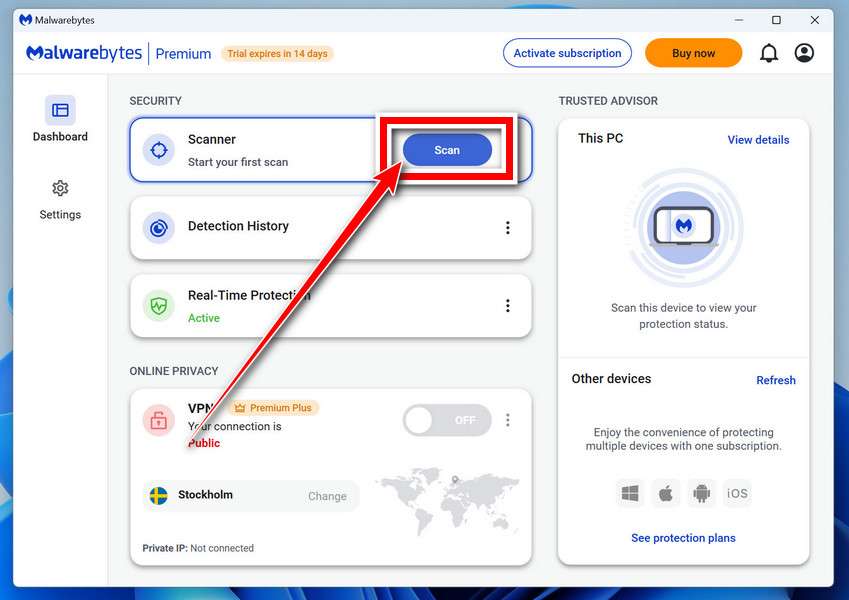
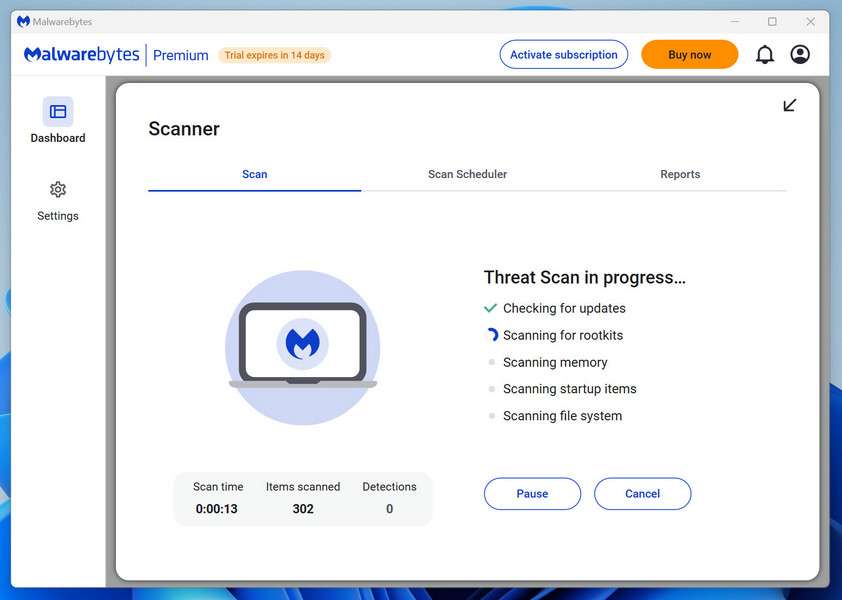
Click the blue Scan button. Malwarebytes will automatically update its virus database and start checking your computer for malware.
Wait for the Scan to Finish
The scan checks your entire system for browser hijackers and other malicious programs, so it can take several minutes. Feel free to do something else — just check back occasionally to see the progress.
Quarantine the Detected Threats
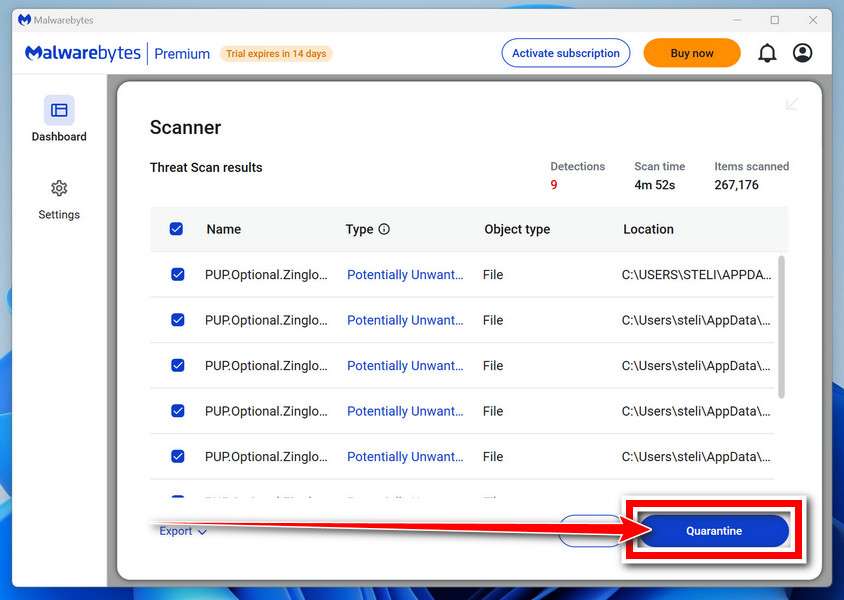
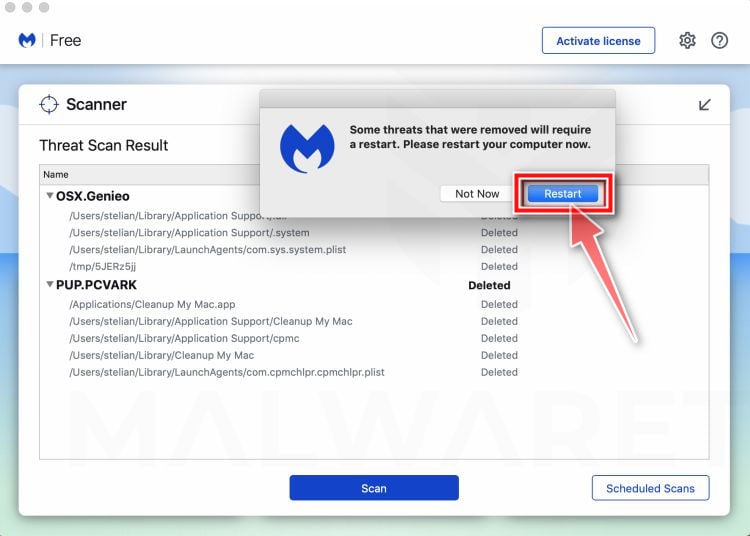
When the scan is done, you’ll see a list of everything Malwarebytes found — malware, adware, and potentially unwanted programs. Click the “Quarantine” button to remove all of them at once.
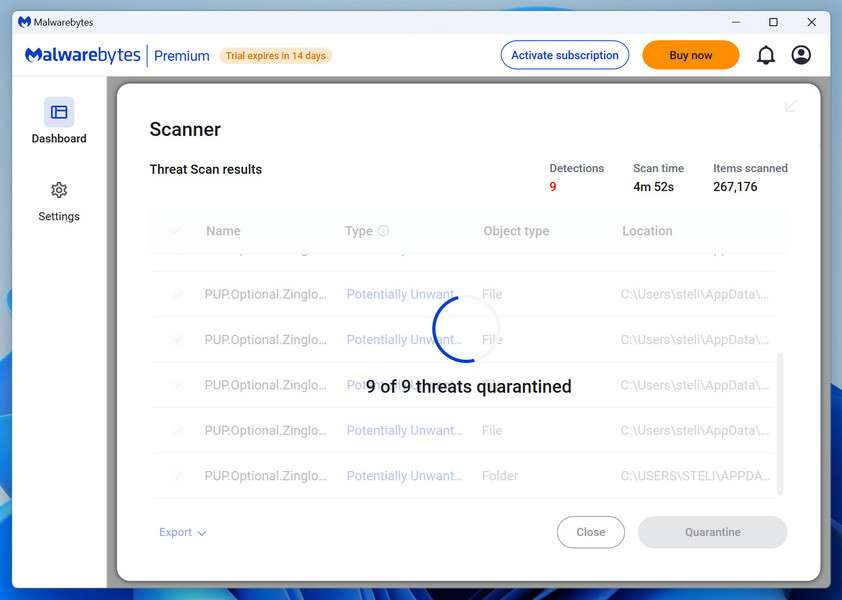
Malwarebytes will now remove the malicious files and registry entries and move them safely into quarantine.
Restart Your Computer
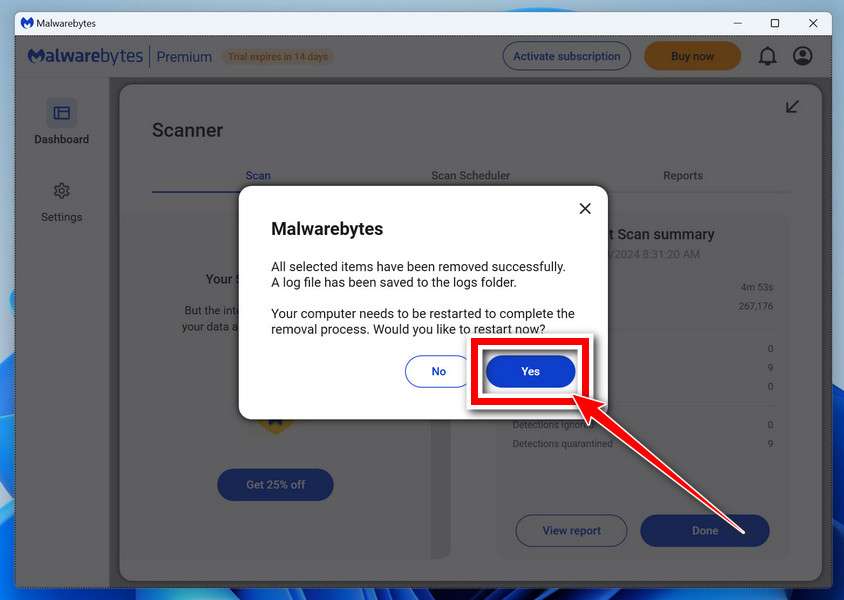
Some threats can only be fully removed after a reboot. If Malwarebytes asks you to restart, click Yes. Once you’re logged back in, your PC is clean and you can continue with the next steps in this guide.
When the scan finishes, click Quarantine to remove everything Malwarebytes found. That’s it — your Windows PC is now clean of trojans, adware, and other malware, and should be back to running smoothly.
If your current antivirus allowed this malicious program on your computer, you may want to consider purchasing Malwarebytes Premium to protect against these types of threats in the future. If you are still having problems with your computer after completing these instructions, then please follow one of the steps:
Malwarebytes for Mac is a free on-demand scanner that removes the malware other security software tends to miss — adware, browser hijackers, and unwanted programs included. Cleaning an infected Mac with Malwarebytes has always been completely free, and it’s our go-to recommendation. Follow the steps below to scan and clean your Mac in just a few minutes.
Download Malwarebytes for Mac
Click the button below to download the latest version of Malwarebytes for Mac.
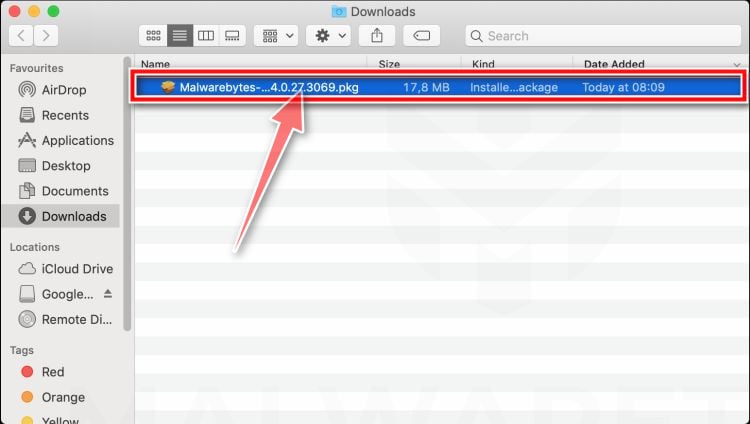
When the download finishes, open your Downloads folder and double-click the setup file to begin the installation.
Follow the On-Screen Prompts to Install Malwarebytes
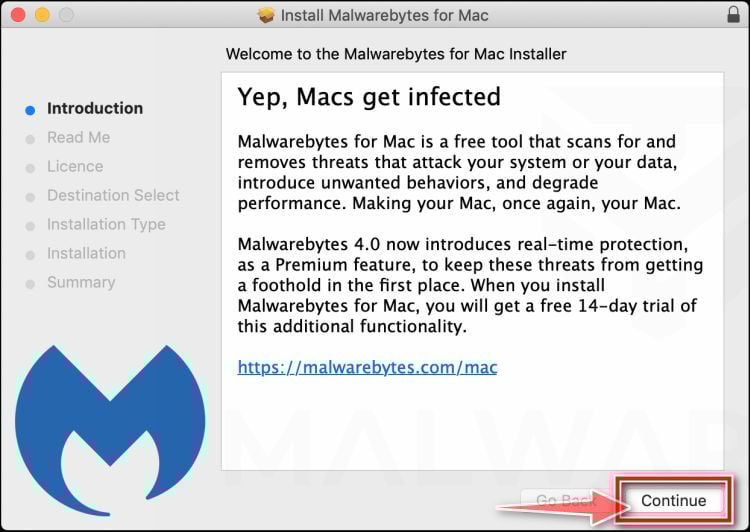
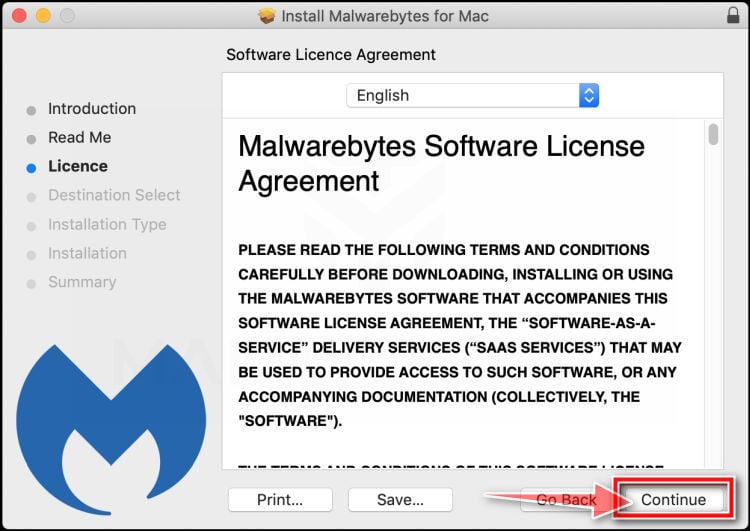
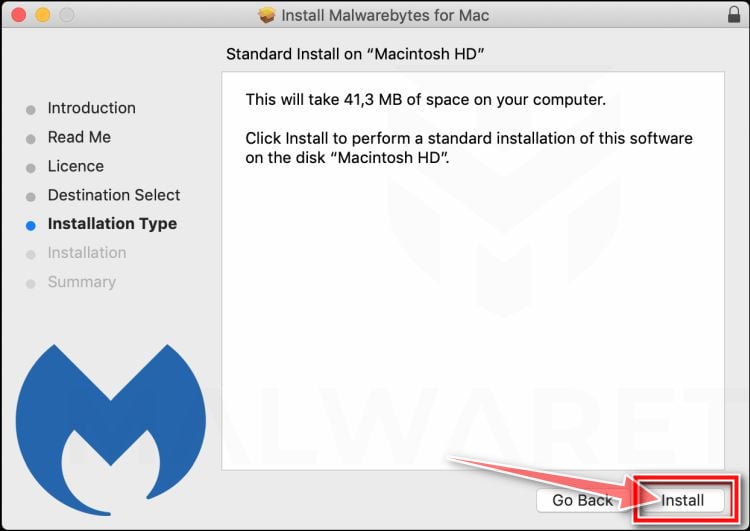
The Malwarebytes for Mac Installer will guide you through a few quick screens. Click “Continue” and keep following the prompts until the installation completes.
When the installation is complete, Malwarebytes opens to the Welcome to Malwarebytes screen. Click “Get started“.
Select “Personal Computer” or “Work Computer”
Malwarebytes will ask what type of computer you’re installing it on. Click either Personal Computer or Work Computer, whichever applies.
Start the Scan
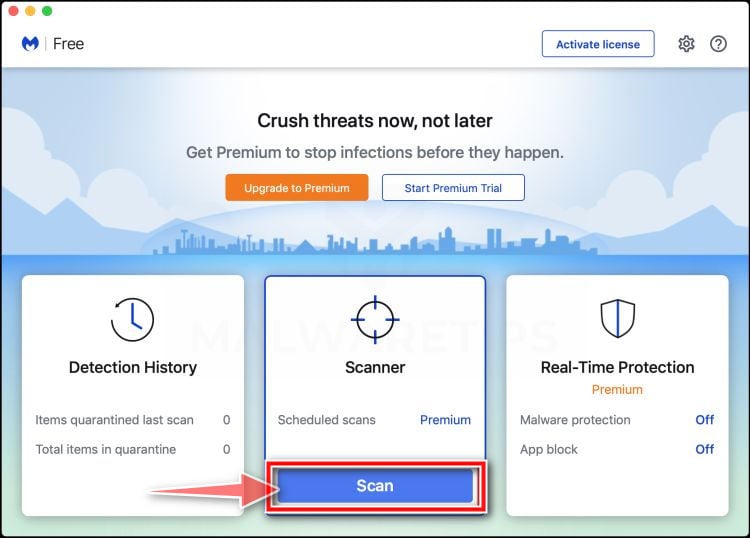
Click the “Scan” button. Malwarebytes will automatically update its detection database and begin checking your Mac for malware.
Wait for the Scan to Finish
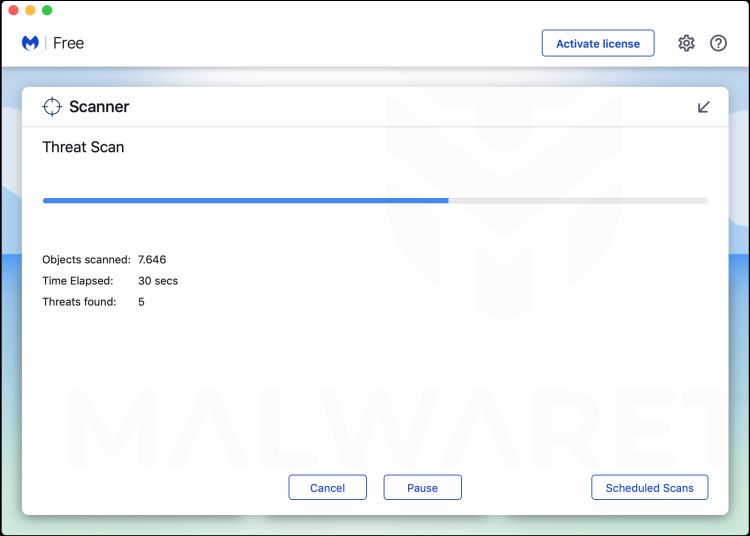
Malwarebytes will scan your Mac for adware, browser hijackers, and other malicious programs. This can take a few minutes, so feel free to do something else — just check back occasionally to see the progress.
Quarantine the Detected Threats
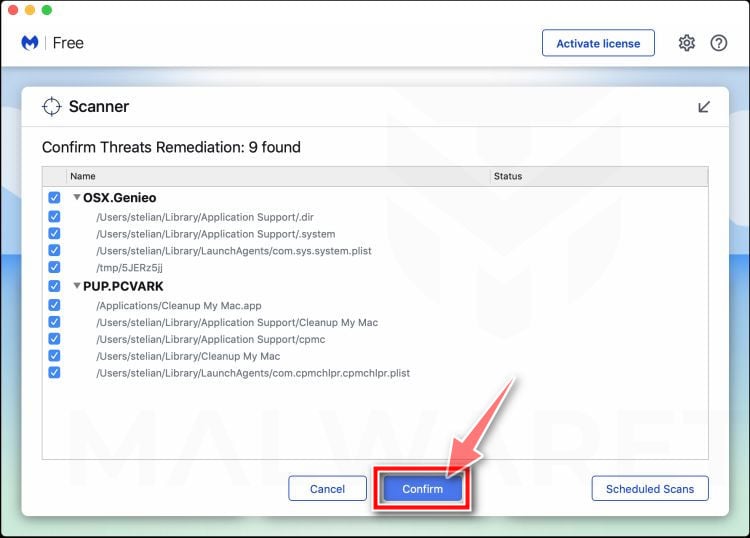
When the scan is done, you’ll see a list of everything Malwarebytes found. Click the “Quarantine” button to remove all the threats at once.
Restart Your Mac
Malwarebytes will now remove all the malicious files it found. Some threats can only be fully removed after a reboot — if Malwarebytes asks you to restart, allow it. Once you’re logged back in, your Mac is clean.
Once the scan is done, remove every threat it detected. Your Mac is now free of adware, rogue browser extensions, and other potentially harmful software.
If your current antivirus allowed a malicious program on your computer, you might want to consider purchasing the full-featured version of Malwarebytes Anti-Malware to protect against these types of threats in the future. If you are still experiencing problems while trying to remove a malicious program from your computer, please ask for help in our Mac Malware Removal Help & Support forum.
Run a Malware Scan with Malwarebytes for Android
Malwarebytes for Android automatically detects and removes dangerous threats like malware and ransomware so you don’t have to worry about your most-used device being compromised. Aggressive detection of adware and potentially unwanted programs keeps your Android phone or tablet running smooth.
Download Malwarebytes for Android.
You can download Malwarebytes for Android by clicking the link below.
In the Google Play Store, tap “Install” to install Malwarebytes for Android on your device.
When the installation process has finished, tap “Open” to begin using Malwarebytes for Android. You can also open Malwarebytes by tapping on its icon in your phone menu or home screen.
Follow the on-screen prompts to complete the setup process
When Malwarebytes will open, you will see the Malwarebytes Setup Wizard which will guide you through a series of permissions and other setup options. This is the first of two screens that explain the difference between the Premium and Free versions. Swipe this screen to continue. Tap on “Got it” to proceed to the next step. Malwarebytes for Android will now ask for a set of permissions that are required to scan your device and protect it from malware. Tap on “Give permission” to continue. Tap on “Allow” to permit Malwarebytes to access the files on your phone.
Update database and run a scan with Malwarebytes for Android
You will now be prompted to update the Malwarebytes database and run a full system scan.
Click on “Update database” to update the Malwarebytes for Android definitions to the latest version, then click on “Run full scan” to perform a system scan.
Wait for the Malwarebytes scan to complete.
Malwarebytes will now start scanning your phone for adware and other malicious apps. This process can take a few minutes, so we suggest you do something else and periodically check on the status of the scan to see when it is finished.
Click on “Remove Selected”.
When the scan has been completed, you will be presented with a screen showing the malware infections that Malwarebytes for Android has detected. To remove the malicious apps that Malwarebytes has found, tap on the “Remove Selected” button.
Restart your phone.
Malwarebytes for Android will now remove all the malicious apps that it has found. To complete the malware removal process, Malwarebytes may ask you to restart your device.
After the scan, tap Remove Selected to delete all detected threats. Your Android phone is now clean — no more malicious apps, adware, or browser redirects.
If your current antivirus allowed a malicious app on your phone, you may want to consider purchasing the full-featured version of Malwarebytes to protect against these types of threats in the future. If you are still having problems with your phone after completing these instructions, then please follow one of the steps:
Restore your phone to factory settings by going to Settings > General management > Reset > Factory data reset.
Now that your device is clean, keep it that way. Most infections start with a malicious ad or a fake download button — so blocking them at the source is your best defense.
We recommend AdGuard, which blocks malicious ads, phishing pages, and dangerous redirects before they can reach you.
Is Zoho requiring users to upgrade a server through email?
The analyzed message is fraudulent. Its button leads away from Zoho and requests credentials on unrelated infrastructure.
Verify genuine platform notices after navigating directly to the approved Zoho administration area.
What subject line does the scam use?
One observed subject was “Action Required: Upgrade Your Zoho Server Now.” Attackers can change wording, deadlines, and promised benefits.
Detection should focus on the unexpected request, sender domain, destination, and password form rather than one exact sentence.
What happens after clicking Upgrade Now?
The sample redirected to a non-Zoho domain and displayed a fake mail-provider login. Future destinations may differ.
Clicking alone does not always compromise an account, but submitted credentials or downloaded files require an immediate response.
Why does the page show my real email provider?
Phishing kits can use an email address or domain embedded in the link to select matching branding automatically.
Personalization makes the form look relevant. It does not establish that the provider owns the website.
Is changing the password enough?
Not necessarily. Attackers may retain sessions, forwarding rules, delegates, connected applications, or altered recovery methods.
Review the entire security configuration and involve administrators when a workplace account was exposed.
Can the email install malware?
This observed campaign focused on credential theft through a link. A separate variant could include files or additional malicious redirects.
If anything downloaded or executed, run a trusted security scan and tell IT exactly what occurred.
The Bottom Line
The Zoho Server Update email scam is a credential phishing operation disguised as routine cloud maintenance. Its technical polish cannot authenticate the sender.
The decisive warning is the off-domain login request. Close the page, reach Zoho independently, and let administrators verify any genuine change.
If credentials were submitted, act beyond a password reset. Remove persistence, inspect business activity, and warn contacts before the stolen mailbox causes wider harm.
10 Rules to Avoid Online Scams
Here are 10 practical safety rules to help you avoid malware, online shopping scams, crypto scams, and other online fraud. Each tip includes a quick “if you already got hit” action.
Stop and verify before you click, log in, download, or pay.
Most scams win by creating urgency. Verify using a trusted method: type the website address yourself, use the official app, or call a known number (not the one in the message).
If you already clicked: close the page, do not enter passwords, and run a malware scan.
Keep your operating system, browser, and apps updated.
Updates patch security holes used by malware and malicious ads. Turn on automatic updates where possible.
If you saw a scary “update now” pop-up: close it and update only through your device settings or the official app store.
Use layered protection: antivirus plus an ad blocker.
Antivirus helps block malware. An ad blocker reduces scam redirects, phishing pages, and malvertising.
If your browser is acting weird: remove unknown extensions, reset the browser, then run a full scan.
Install apps, software, and extensions only from official sources.
Avoid cracked software, “keygens,” and random downloads. During installs, choose Custom/Advanced and decline bundled offers you do not recognize.
If you already installed something suspicious: uninstall it, restart, and scan again.
Treat links and attachments as untrusted by default.
Phishing often impersonates delivery services, banks, and popular brands. If it is unexpected, do not open attachments or log in through the message.
If you entered credentials: change the password immediately and enable 2FA.
Shop safely: research the store, then pay with protection.
Be cautious with brand-new stores, “closing sale” stories, and prices that make no sense. Prefer credit cards or PayPal for dispute options. Avoid wire transfers, gift cards, and crypto payments.
If you already paid: contact your card issuer or PayPal quickly to dispute the transaction.
Crypto rule: never pay a “fee” to withdraw or recover money.
Common patterns include fake profits, then “tax,” “gas,” or “verification” fees. Another is a “recovery agent” who demands upfront crypto.
If you already sent crypto: stop paying, save evidence (wallet addresses, TXIDs, chats), and report the scam to the platform used.
Secure your accounts with unique passwords and 2FA (start with email).
Use a password manager and unique passwords for every account. Enable 2FA using an authenticator app when possible.
If you suspect an account takeover: change passwords, sign out of all devices, and review recent logins and recovery settings.
Back up important files and keep one backup offline.
Backups protect you from ransomware and device failure. Keep at least one backup on an external drive that is not always connected.
If you suspect infection: do not connect backup drives until the system is clean.
If you think you are a victim: stop losses, document evidence, and escalate fast.
Move quickly. Speed matters for disputes, account recovery, and limiting damage.
Stop payments and contact: do not send more money or respond to the scammer.
Call your bank or card issuer: block transactions, replace the card if needed, and start a dispute or chargeback.
Secure your email first: change the email password, enable 2FA, and remove unfamiliar recovery options.
Secure other accounts: change passwords, enable 2FA, and log out of all sessions.
Scan your device: remove suspicious apps or extensions, then run a full malware scan.
Save evidence: screenshots, emails, order pages, tracking pages, wallet addresses, TXIDs, and chat logs.
Report it: to the payment provider, marketplace, social platform, exchange, or wallet service involved.
These rules are intentionally simple. Most online losses happen when decisions are rushed. Slow down, verify independently, and use payment methods and account controls that give you recourse.
Hello! I'm Lapain Epuran, your go-to source for detailed and honest product reviews. From tech gadgets to miracle cures, I provide insights to help you make informed choices. Join me as we discover what's truly worth your time and money.