

The Fake Dropshipping Store did not arrive as a business advertisement. It began with a friendly TikTok conversation that gradually moved into private messages.
By the time a website appeared, the stranger had already supplied a personal success story, a wealthy mentor, and a reason to act quickly.
Overview
A TikTok introduction became a WhatsApp business pitch
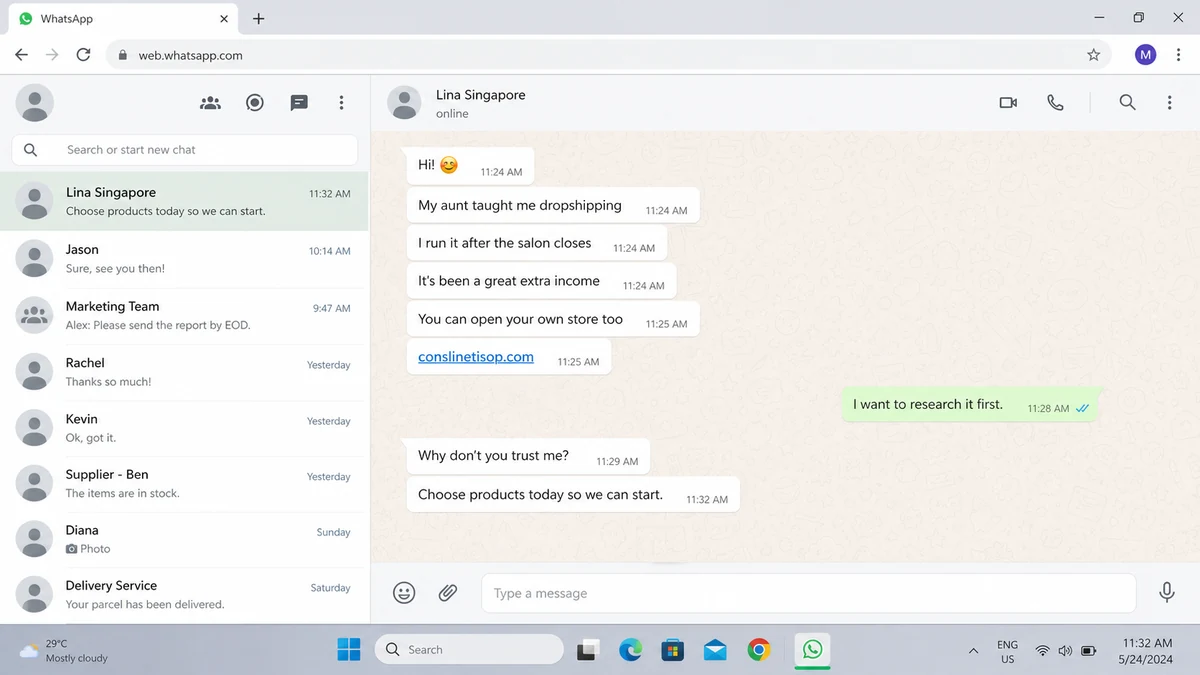
A recent consumer account describes a stranger from China who said she lived in Singapore. The conversation began on TikTok and then moved to WhatsApp.
The contact said she ran a beauty salon and had learned dropshipping from a successful aunt. The story framed the business as a proven side income shared by someone who appeared personally interested in the recipient.
The stranger eventually supplied conslinetisop.com and encouraged the recipient to register. Some personal information was entered, but the source says no bank details were provided and no money was deposited.
The pressure appeared when the recipient stopped
A real friend can tolerate research. In this story, the tone changed when the recipient refused to select products or continue toward payment.
The stranger became angry and questioned the hesitation. That reaction is a powerful clue because it reveals the real priority: progress through the platform mattered more than the relationship.
The source does not prove who operated the site, where the contact lived, or what would have happened after a deposit. It does document a classic sequence of social grooming, platform migration, a guided business opportunity, data collection, and pressure.
The website was part of a relationship-led money funnel
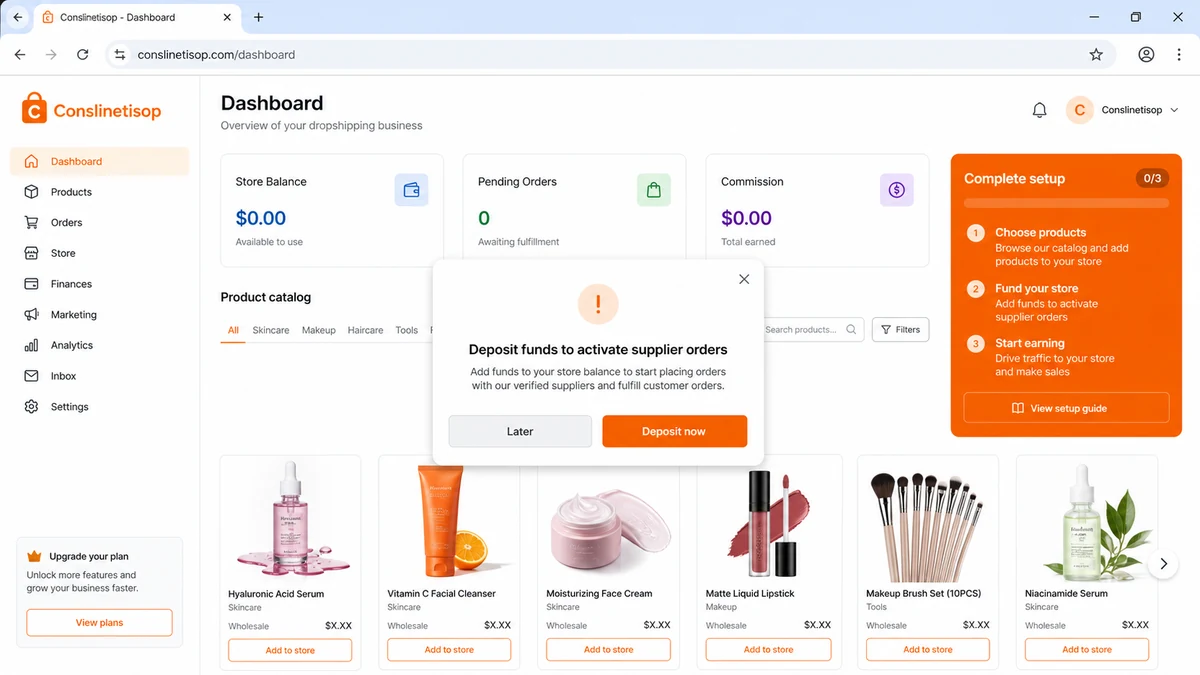
Conslinetisop presented itself as a dropshipping route rather than an obvious investment. That label can make the risk sound practical: choose products, fund orders, earn margins, and withdraw profits.
But a dashboard does not prove there are real suppliers, customer orders, or withdrawable earnings. Numbers inside a private platform can be generated by the same operator asking for the deposit.
Warning signs in the Fake Dropshipping Store story included:
- An unsolicited TikTok contact quickly moved the conversation to WhatsApp.
- The stranger used a salon and wealthy-aunt story to establish credibility.
- A personal connection became a guided money-making opportunity.
- The recipient was directed to the unfamiliar conslinetisop.com domain.
- Registration collected personal information before the business was independently verified.
- The contact wanted the recipient to select products and continue immediately.
- Questions and hesitation triggered anger instead of transparent answers.
- No independently verifiable supplier, company, or customer demand was established.
The Relationship Is the Sales Funnel
People normally treat a business opportunity differently from a romance. They ask for contracts, registrations, fees, refund terms, supplier identities, and audited results.
A warm personal connection changes that standard. The recipient may feel that demanding proof insults the person sharing a supposed secret. Every small conversation creates a little more emotional cost for walking away.
The contact’s background story also anticipates reasonable objections. A beauty salon explains product knowledge. A wealthy aunt explains access to an opportunity. Singapore suggests an international business center. Dropshipping explains why the operator does not hold inventory.
None of those details is difficult to say. Unless verified outside the chat, they remain narrative components, not evidence.
The move from TikTok to WhatsApp gives the contact a quieter environment. There are fewer platform warnings, no public comments challenging the pitch, and a direct channel for daily pressure.
The FTC warns that online love interests who offer to teach someone how to make money are a common fraud pattern. Its guidance on romance contacts who introduce investments applies even when the product is described as a store rather than crypto.
MalwareTips’ report on the AI-assisted Brad Pitt romance scam shows the same underlying lesson: warmth, photos, and sustained attention do not verify the identity or financial story behind a chat.
How the Fake Dropshipping Store Scam Works
Step 1: A stranger creates an easy social opening
The approach begins on TikTok, Instagram, Facebook, a dating app, or a wrong-number chat. The profile looks successful but not impossibly famous, and the first messages avoid money.
The contact asks about work, family, goals, or daily routines. Frequent casual conversation makes the account feel like a person rather than a lead generator.
Step 2: The conversation moves to WhatsApp
The stranger suggests a private app because it is easier, more personal, or better for sharing photos. This move also takes the conversation away from the original platform’s moderation and reporting tools.
A WhatsApp profile name, photograph, phone prefix, or video clip is not reliable proof of identity. Images can be stolen, numbers can be rented, and live video can be limited or manipulated.
Step 3: A success story introduces dropshipping
The contact casually mentions a profitable side business. The income is presented as routine and teachable, not as a risky speculative bet.
A mentor such as an aunt, uncle, professor, or business partner explains how the stranger supposedly gained special knowledge. The recipient is invited to benefit because the relationship now feels close.
Step 4: The recipient is guided to one private platform
The stranger provides a specific site and offers to help with registration. The platform may show product catalogs, store balances, commissions, tasks, customer orders, and support chat.
Those features are controlled by the platform. A green balance or completed order is not independent proof that a real customer paid or that funds can be withdrawn.
Step 5: Personal data is collected before money
Registration may request a name, email, phone number, address, identity document, or referral code. The process creates commitment even if no card is entered.
The collected information can support follow-up phishing, account-recovery attempts, or a more convincing call from fake platform support. The person who reported the case stopped before sharing banking data, which limited the immediate exposure.
Step 6: Store funding becomes necessary
The dashboard may claim that supplier orders must be prepaid. A small first deposit unlocks products, fulfills a test order, or activates withdrawals.
Later, larger orders can push the displayed store balance negative. The user is told to add more money or lose the original deposit and expected commission.
Step 7: Withdrawal barriers replace the relationship
When the user asks to cash out, the platform may demand tax, insurance, verification, a credit-score repair, another order, or a security deposit. Each fee is framed as the final obstacle.
The friendly contact may become angry, worried, or temporarily unavailable. Any balance still shown on the site can disappear when the domain closes or the account is blocked.
Why a Dropshipping Dashboard Proves Very Little
Legitimate dropshipping is a real retail model. A merchant markets products, accepts customer orders, pays suppliers, handles consumer law obligations, and earns only if revenue exceeds product, advertising, refund, and platform costs.
A private site can imitate the surface of that model without performing any commerce. Product photographs can be copied from catalogs. Orders can be rows in a database. Commissions can be numbers created by a script.
Ask where shoppers find the store, who owns the customer relationship, which supplier ships each product, what invoice proves the wholesale cost, and which payment processor collected the sale.
If the only answers come from the same stranger and the same dashboard, there is no independent transaction chain. A real sale should leave records across separate parties.
The platform should also explain returns, chargebacks, taxes, delivery failures, privacy obligations, and customer support. Promises of effortless margins while an unknown mentor handles every difficult part are not a business plan.
MalwareTips has documented a similar relationship-to-platform shift in the wrong-number text scam. The screen may change from a crypto exchange to a store dashboard, but the trust-building and blocked-withdrawal mechanics remain recognizable.
What Personal Information May Already Be at Risk
Stopping before a deposit is a strong outcome, but the registration details still matter. An email and phone number can be linked to the person’s interest in online business and their willingness to use WhatsApp.
That makes later approaches more believable. A caller can claim to be Conslinetisop support, a supplier, a payment verifier, or an investigator responding to the original registration.
If a password was created on the site and reused elsewhere, change it everywhere immediately. Assume the platform operator can see the submitted password even if the page displayed a padlock.
If an identity document was uploaded, the risk is broader. The image can be used for account verification, impersonation, or targeted recovery attempts. A credit freeze may be appropriate in the United States.
Review WhatsApp linked devices and privacy settings. Blocking the contact stops direct messages, but it does not undo information already shared or remove copies of photographs.
Expect a recovery approach. Someone may claim the platform has been investigated and offer compensation if a processing fee is paid. A person who never deposited has nothing to recover from the platform.
Why Stopping Before a Deposit Still Requires Action
The recipient avoided the most obvious loss, but the contact learned valuable things: which social account was active, which phone number reached WhatsApp, which language worked, and which business story held attention.
That information can be reused. A different account may return weeks later with a job, supplier, grant, customs refund, or platform-investigation story tailored to the earlier conversation.
Registration also confirms that the email and phone number belong to someone willing to explore online income. Lead lists built from partial victims can be sold to other fraud groups.
If the same password was used elsewhere, the risk becomes immediate. Criminals routinely test email-and-password pairs against popular mail, social, shopping, and cloud services.
A fake dashboard may also request browser notifications, location access, camera access, or an app installation. Review browser permissions and remove anything granted to the domain.
Check downloads for mobile configuration profiles, Android packages, browser extensions, remote-access tools, or compressed files. A site can collect money and deliver malware in the same sequence.
Write down exactly which fields were submitted. “Some personal information” is hard to assess later. A list of name, birth date, address, identity document, bank, or tax identifier makes the recovery plan concrete.
If only a name and disposable email were used, the practical response may be limited to password changes and monitoring. If a passport or national identity card was uploaded, file an identity-theft report and ask the issuing authority about replacement or fraud flags.
Do not ask the contact to delete the data. That confirms continued attention and gives the operator another chance to demand a fee. Preserve the evidence, block the accounts, and use formal platform or privacy complaint routes.
Finally, tell friends who may have been introduced. Relationship-led operators sometimes ask one target to invite others or create a team. A warning can stop the funnel before the first deposit.
Report the site even if no money was sent. Hosting providers, registrars, and social platforms can compare multiple reports and identify infrastructure that one victim cannot see.
Be cautious with new contacts who already know the dropshipping story. The original operator may return under another name and claim to be a regulator, former employee, or victim organizing a refund.
Do not send screenshots that reveal account recovery codes, identity numbers, or full addresses to strangers offering help. Redact sensitive fields while keeping unedited originals for investigators.
Stopping early is a success, not an overreaction. A legitimate business opportunity remains available after independent research; a scammer’s opportunity usually depends on immediate momentum.
Questions a Real Business Opportunity Should Answer
A legal company name should be visible before registration, along with jurisdiction, registration number, physical address, and accountable support channel. Verify each item through official registries, not logos on the site.
The agreement should state every fee, refund rule, withdrawal condition, and party handling customer payments. Terms copied from another company or missing entirely are serious warnings.
Supplier relationships should be verifiable without depositing. Ask for sample invoices, shipping regions, tracking providers, and written responsibility for damaged or undelivered goods.
A real operator should not object when a prospective merchant consults a lawyer or accountant. Urgency and emotional punishment are not substitutes for due diligence.
Search the exact domain, legal company, phone, address, and distinctive phrases from the terms. A brand with no independent history may be new; a new brand asking strangers for deposits deserves extra caution.
Finally, test whether the opportunity still makes sense without the relationship. If the website would look unconvincing when sent by a stranger in an advertisement, affection should not raise its credibility.
Company, Address, and Fulfillment Checks
Conslinetisop’s legal company was not independently established
The public account identified a domain and a social contact, not a verified legal entity responsible for customer funds. A brand name in a dashboard does not identify directors, jurisdiction, or recourse.
Public searches at the time of review did not provide a reliable independent company history for the exact brand. That absence does not prove fraud, but it leaves the operator’s claims unverified.
The Singapore story was a chat claim, not an address check
The stranger allegedly said she lived in Singapore and ran a salon. The source did not establish a salon name, business registration, lease, or independently verified location.
A country reference in a personal story should not be treated as proof that the website is regulated or based there.
No accountable warehouse or supplier was verified
Dropshipping can involve overseas suppliers, but a real merchant still needs contracts, invoices, return routes, and tracking responsibility. None was independently established before registration.
Product photos and wholesale prices inside the platform cannot verify inventory. They can be copied from marketplaces in minutes.
No real customer fulfillment was demonstrated
The source stopped before product selection and payment. There is no confirmed customer order, supplier purchase, shipment, commission, or successful withdrawal.
Claims about later funding and withdrawal barriers describe the common scam model and the risk of continuing. They are not presented as events the person who reported the case personally experienced.
What to Do if You Have Fallen Victim to This Scam
- Stop all contact and deposits. Block the TikTok and WhatsApp accounts after preserving the conversation, profile, phone number, and site links.
- Save the platform evidence. Capture balances, deposit instructions, support messages, transaction IDs, withdrawal errors, terms, and the full domain.
- Contact the payment provider immediately. Report the transfer as fraud and ask whether a recall, dispute, or receiving-account alert is possible.
- Do not pay an unlocking fee. Taxes, insurance, negative balances, verification deposits, and account upgrades are common ways to extract more money.
- Change reused passwords. Start with email, banking, and social accounts, then enable two-factor authentication and review active sessions.
- Protect exposed identity data. If an ID or Social Security number was submitted, use IdentityTheft.gov and consider credit freezes.
- Report the accounts and domain. Use TikTok and WhatsApp reporting tools, then file with the FTC and the FBI’s IC3 in the United States.
- Scan devices used on the site. If you installed an app, extension, or file, run a full scan with Malwarebytes.
- Reduce malicious follow-up pages. AdGuard can help block known phishing and malicious ads, but it cannot recover a transfer.
- Reject recovery agents. Anyone promising guaranteed recovery for an upfront fee is likely attempting a second theft.
Tell a trusted person what happened. The operator’s leverage weakens when the relationship and business claims are evaluated outside the private chat.
Frequently Asked Questions
Is dropshipping itself a scam?
No. It is a legitimate retail fulfillment model, but it does not make an unknown private platform, supplier, or mentor trustworthy.
Did the person who reported the case lose money?
The source says personal information was entered, but no banking data was supplied and no deposit was made. That limit should not be exaggerated.
Why did the contact become angry?
Pressure after hesitation suggests that moving the recipient forward mattered more than providing verifiable answers. It is a strong reason to stop.
Can a WhatsApp video call prove the person is real?
It may show a person, but it does not prove the name, location, business, website ownership, or promised returns.
What if I only created an account?
Change any reused password, secure your email, review the data submitted, block the contact, and watch for targeted phishing.
Can I recover money shown in the dashboard?
A displayed balance is not proof of real funds. Do not pay another fee to release it. Work only through the original payment provider and law enforcement.
The Bottom Line
The Fake Dropshipping Store worked because the website arrived after a relationship had been built. TikTok supplied the introduction, WhatsApp supplied privacy, and the aunt-and-salon story supplied borrowed credibility.
Judge the opportunity without the messenger. If the company, suppliers, customer payments, and withdrawals cannot be verified independently, do not register, deposit, or let affection turn an unfamiliar dashboard into evidence.








