

A message arrives out of the blue. It looks harmless, someone apologizing for texting the wrong number. You reply politely. That small interaction is exactly what scammers are counting on.
The “wrong number” text scam has become one of the fastest-growing fraud tactics worldwide. Behind the casual tone is often a highly organized operation designed to build trust over time and eventually steal large amounts of money.
This article breaks down how the scam works, why it’s so effective, and what to do if you’ve been targeted.

What Is the Wrong Number Text Scam?
The wrong number text scam is a type of social engineering fraud that starts with an unexpected message sent to your phone. The sender pretends they contacted you by mistake.
Common opening messages include:
- “Hi Sarah, are we still meeting tomorrow?”
- “Hello, is this John? I have an update for you.”
- “Sorry, I think I texted the wrong number.”
Once you respond – even just to say “wrong number” – the scam begins.
These scams are frequently linked to “pig butchering” schemes, where victims are gradually manipulated over weeks or months before being financially exploited.
Scam Overview
The wrong number text scam may look casual on the surface, but it is often the opening move in a much larger fraud operation. What makes this scam especially dangerous is that it does not begin like a typical scam. There is no obvious threat, no aggressive sales pitch, and no immediate request for money. Instead, it starts with a simple message that appears to have been sent by mistake.
That harmless appearance is what gives the scam its power.
Scammers send out large volumes of these texts, hoping a percentage of recipients will respond. The message may mention a dinner plan, a business meeting, a friend’s name, or a personal detail that makes it sound like part of a real conversation. When the recipient replies with something like “wrong number,” the scammer does not end the exchange. Instead, they smoothly turn the mistake into an opening for conversation.
From there, the scam becomes a relationship-building exercise.
The person on the other end may present themselves as friendly, polite, successful, attractive, or emotionally warm. They often claim the accidental text was fate or joke that perhaps they have made a new friend. This is not random small talk. It is a deliberate tactic designed to lower suspicion and create the impression of a genuine personal connection.
In many cases, these scams are tied to organized criminal operations running scripted fraud campaigns. The people behind them may work from detailed playbooks that tell them how to keep a victim engaged, what type of personality to present, how quickly to introduce personal topics, and when to shift toward money. Some operations are highly sophisticated, using fake identities, stolen photos, fabricated job titles, and carefully rehearsed stories to appear credible.
A key part of the scam is patience.
Unlike older scams that try to steal money quickly, the wrong number text scam often unfolds slowly. The scammer may chat for days or weeks before introducing any financial angle. During that time, they work to build trust by asking about your family, your work, your hobbies, and your daily life. They may send “good morning” messages, talk about meals, mention travel, or discuss business success to make the interaction feel natural and ongoing.
Once that trust is established, the real objective begins to emerge.
In many cases, the scammer eventually introduces a supposed investment opportunity, usually involving cryptocurrency, foreign exchange trading, or another high-risk financial platform that the victim has never heard of. The scammer may claim they have insider knowledge, a wealthy relative in finance, or a proven strategy that has made them a large amount of money. They may offer to help the victim get started and even encourage a small first deposit to build confidence.
Sometimes the scam takes a different path. Instead of fake investments, the scammer may eventually create an emotional crisis and ask for money directly. They may claim they are stuck somewhere, dealing with an emergency, unable to access funds, or facing a sudden problem that only the victim can help solve. By that point, the victim may feel emotionally connected enough to believe the request is real.
What makes the wrong number scam especially effective is that victims often do not realize they are being manipulated until much later. Because the conversation develops gradually, it does not trigger the same warning signs as a fake invoice, lottery scam, or threatening robocall. The victim feels like they are making their own choices in a real relationship, when in fact every stage of the interaction is being guided toward financial exploitation.
In its most damaging form, this scam becomes part of a pig butchering scheme. That term refers to a long-con approach in which victims are “fattened up” with trust, attention, and false success before being financially drained. By the time the money requests begin, the scammer has often spent considerable time creating a sense of familiarity and dependence.
At its core, the wrong number text scam is not really about a mistaken text. It is about using an innocent opening to identify responsive targets, build trust, and eventually steal money. The first message is just the bait. The real scam begins the moment the conversation continues.
How the Wrong Number Scam Works
1. The Initial Message
The scammer sends a message designed to feel natural and non-threatening.
Examples:
- “Are you still coming to dinner tonight?”
- “Hi! Long time no see 😊”
- “Oops, I think I have the wrong number”
If you reply, you confirm:
- Your number is active
- You are willing to engage
That’s all they need.
2. The Friendly Pivot
After you say it’s a wrong number, the scammer responds politely:
- “Oh, I’m so sorry!”
- “You seem kind, maybe we can be friends?”
This is where the manipulation begins. The tone is:
- Friendly
- Respectful
- Non-pushy
It lowers your guard.
3. Building a Relationship
Over days or weeks, the scammer develops a connection.
They may:
- Share fake personal stories (successful business owner, investor, etc.)
- Send photos (often stolen or AI-generated)
- Ask about your life, work, and interests
The goal is to create:
- Trust
- Emotional familiarity
- Routine communication
At this stage, many victims no longer suspect anything.
4. Introducing the Opportunity
Once trust is established, the scam shifts.
Common angles:
- Cryptocurrency investment “tips”
- Exclusive trading platforms
- Business opportunities
- Emergency financial help
You might hear:
- “I made $10,000 last week using this platform”
- “I can teach you step by step”
- “This is a safe investment, I’ll help you”
They may even:
- Show fake profits
- Guide you through small “successful” transactions
5. The Financial Trap
Eventually, the scammer pushes for larger amounts of money.
This can include:
- Depositing funds into fake crypto platforms
- Sending money for a fabricated emergency
- Paying “fees” to withdraw fake profits
Once the money is sent:
- It becomes extremely difficult or impossible to recover
- The scammer may disappear or continue asking for more
Why This Scam Is So Effective
Unlike traditional scams, this method is slow and psychological.
Key reasons it works:
- Low suspicion
The conversation starts casually, not with a sales pitch. - Emotional manipulation
Victims feel like they’re talking to a real friend. - Time investment
Weeks of communication build trust and reduce skepticism. - Perceived opportunity
Victims believe they are gaining access to insider knowledge.
This combination makes it one of the most financially damaging scams today.
Warning Signs to Watch For
If you receive a message like this, watch for these red flags:
Early-stage signs:
- Message clearly sent to the wrong name or person
- Stranger quickly tries to continue the conversation
- Overly friendly tone from someone you don’t know
Mid-stage signs:
- Talks about success, wealth, or investments early
- Avoids phone calls or video chats
- Uses polished but generic photos
Late-stage signs:
- Encourages crypto or online trading
- Directs you to unfamiliar platforms or apps
- Asks for money, deposits, or “fees”
If any of these appear, disengage immediately.
What to Do If You Receive a Wrong Number Text
Do not engage
- Do not reply, even to correct them
- Any response confirms your number is active
Block the number
- Use your phone’s built-in blocking feature
Report the message
- In the U.S.: forward to 7726 (SPAM)
- Report through your carrier or messaging app
Delete the conversation
- Avoid the temptation to continue out of curiosity
What to Do If You’ve Already Engaged
If you’ve been talking to the scammer:
Stop communication immediately
- Do not try to “win” or confront them
Do not send money
- Any payment will likely be lost
Secure your accounts
- Change passwords
- Enable two-factor authentication
Monitor financial activity
- Check bank and crypto accounts for unusual transactions
Report the incident
- Local authorities
- Consumer protection agencies
- Your bank (if money was sent)
What If You Already Sent Money?
Act quickly:
- Contact your bank or payment provider immediately
- Report crypto transactions to exchanges (if applicable)
- File a report with fraud authorities in your country
Recovery is difficult, but early action improves your chances.
Is Your Device Infected? Run a Free Malware Scan
Slow performance, constant pop-ups, or strange behavior? These are classic signs of a malware infection. The fastest way to find out is to scan your device with Malwarebytes Free — one of the most trusted malware removal tools available.
The free version detects and removes the most common threats, including:
- Adware — the cause of those annoying pop-ups
- Browser hijackers — unwanted redirects and changed homepages
- Trojans and spyware — hidden programs stealing your data
- Potentially unwanted programs (PUPs) — software you never asked for
👉 Select your device below — Windows, Mac, or Android — then follow the simple steps to download Malwarebytes, scan your system, and remove any threats it finds. The scan usually takes 5 to 20 minutes.
Run a Malware Scan with Malwarebytes for Windows
Malwarebytes is one of the most popular and trusted anti-malware tools for Windows — and it’s completely free for removing infections. It catches threats that many antivirus programs miss, including adware, browser hijackers, and trojans. Follow the steps below to scan and clean your PC in just a few minutes.
Download Malwarebytes
Click the button below to download the latest version of Malwarebytes for Windows from the official source. The free version is all you need — it will scan your computer and remove adware, browser hijackers, and other malicious software at no cost.
Download MalwarebytesOfficial installer for Windows 11 and 10. Your download starts right away.Want real-time protection? See Malwarebytes Premium Malwarebytes Free for WindowsScans and removes malware at no cost
-
Install Malwarebytes
When the download finishes, open your Downloads folder and double-click the MBSetup file. If Windows shows a User Account Control pop-up, click “Yes” to allow the installation.
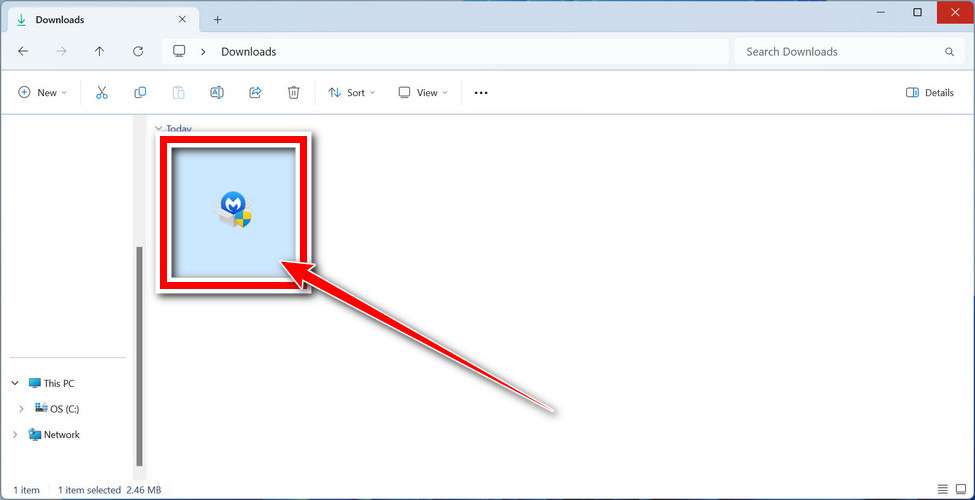
Follow the On-Screen Prompts to Install Malwarebytes
The setup wizard will walk you through a few quick screens:
-
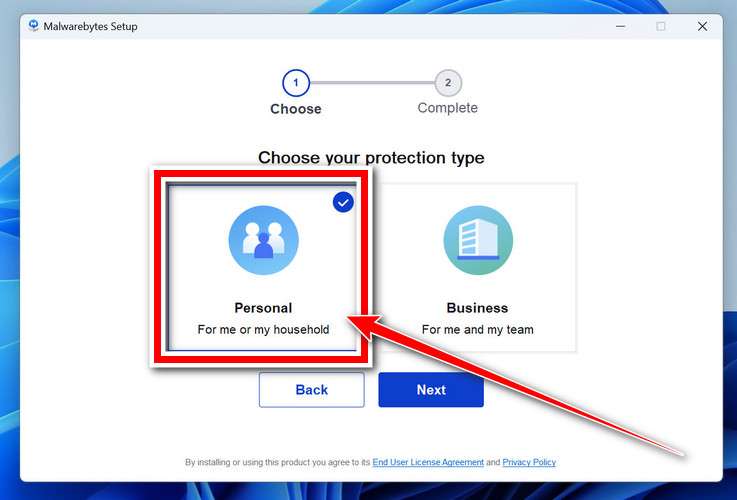
Choose where you’re installing the program — “Personal Computer” or “Work Computer” — then click Next.
-
Malwarebytes will now install on your device. This usually takes under a minute.

-
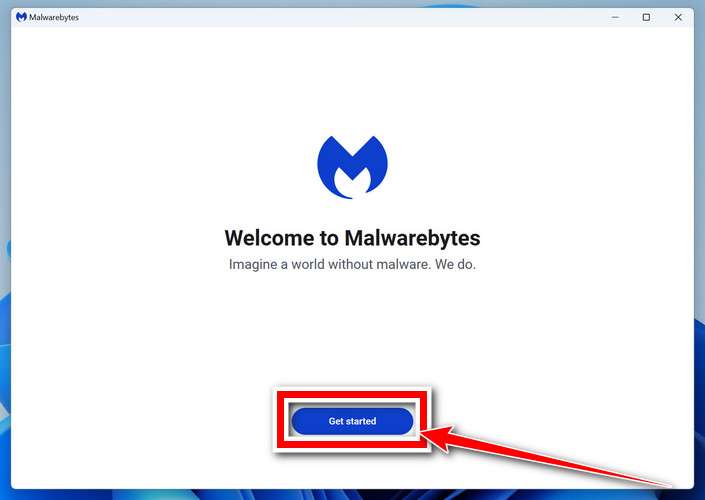
When installation is complete, the “Welcome to Malwarebytes” screen will open automatically.
-
On the final screen, click Open Malwarebytes to launch the program.

-
Enable “Scan for Rootkits”
Before scanning, turn on rootkit detection so Malwarebytes can find even the most hidden threats. Click the Settings gear icon on the left side of the screen.
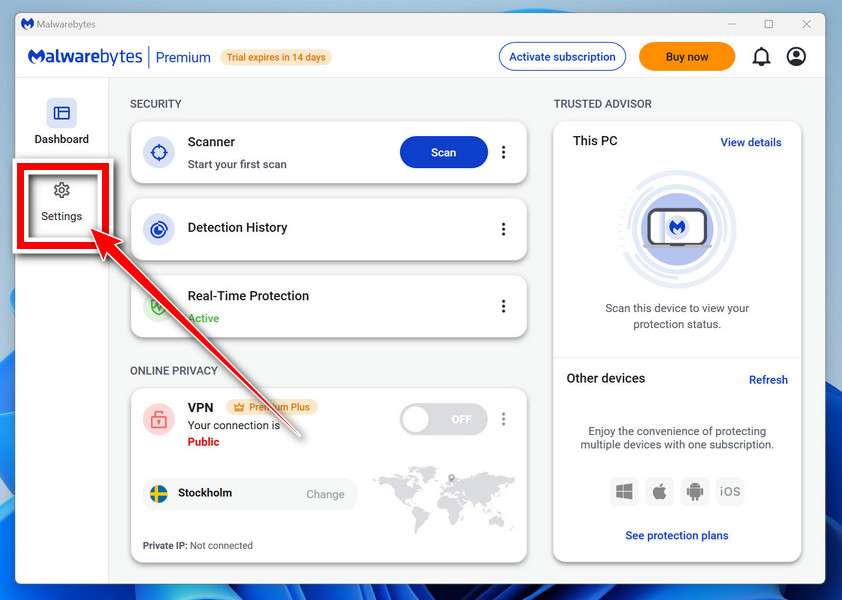
In the settings menu, find “Scan for rootkits” and click the toggle so it turns blue.

Done? Click “Dashboard” in the left pane to return to the main screen.
Start the Scan
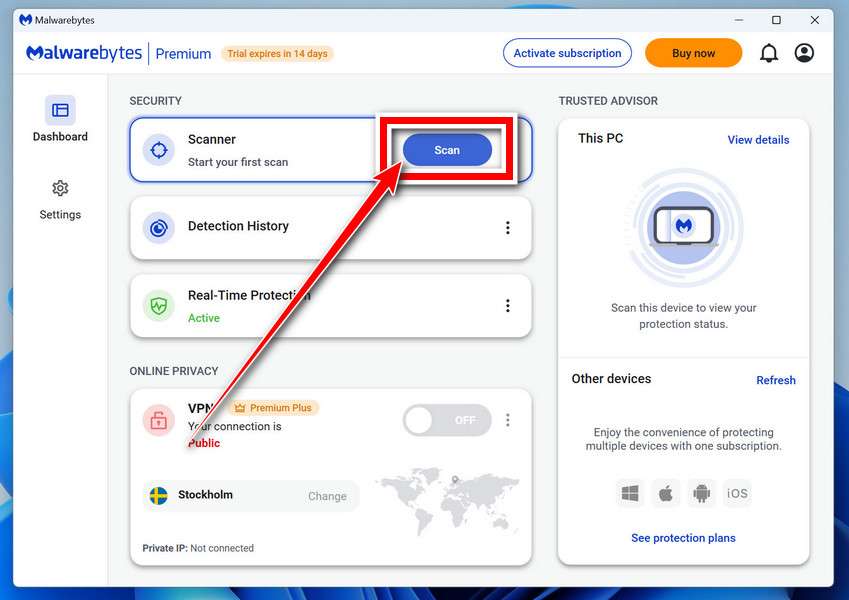
Click the blue Scan button. Malwarebytes will automatically update its virus database and start checking your computer for malware.
-
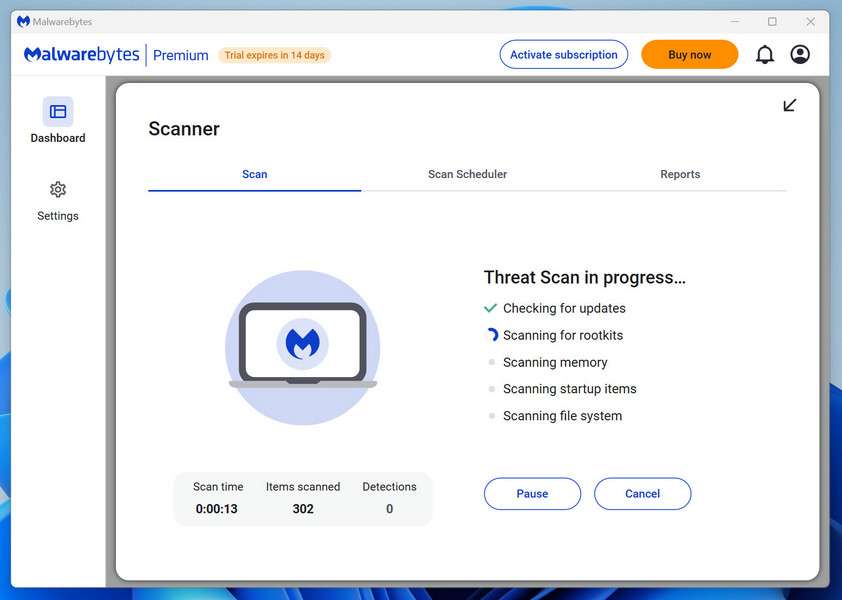
Wait for the Scan to Finish
The scan checks your entire system for browser hijackers and other malicious programs, so it can take 5 to 20 minutes depending on your computer. Feel free to do something else — just check back occasionally to see the progress.
-
Quarantine the Detected Threats
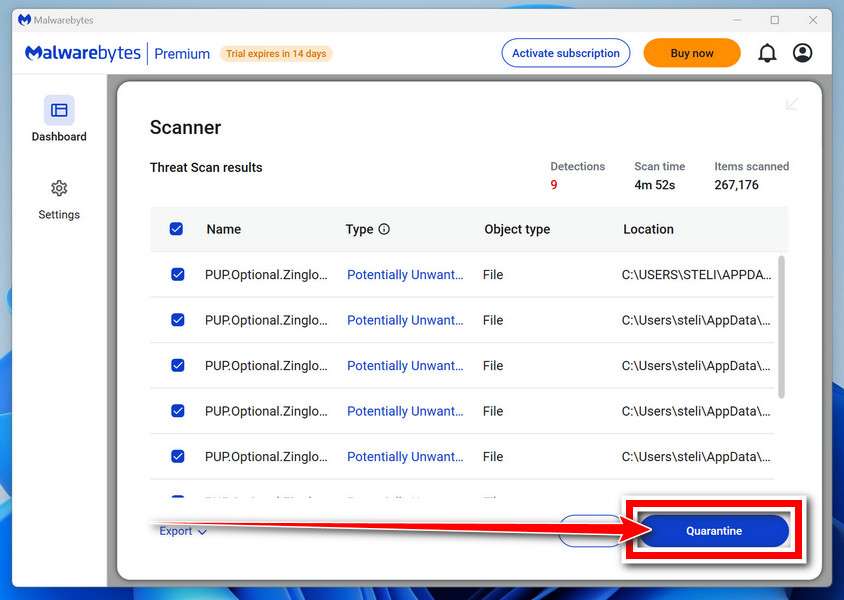
When the scan is done, you’ll see a list of everything Malwarebytes found — malware, adware, and potentially unwanted programs. Click the “Quarantine” button to remove all of them at once.
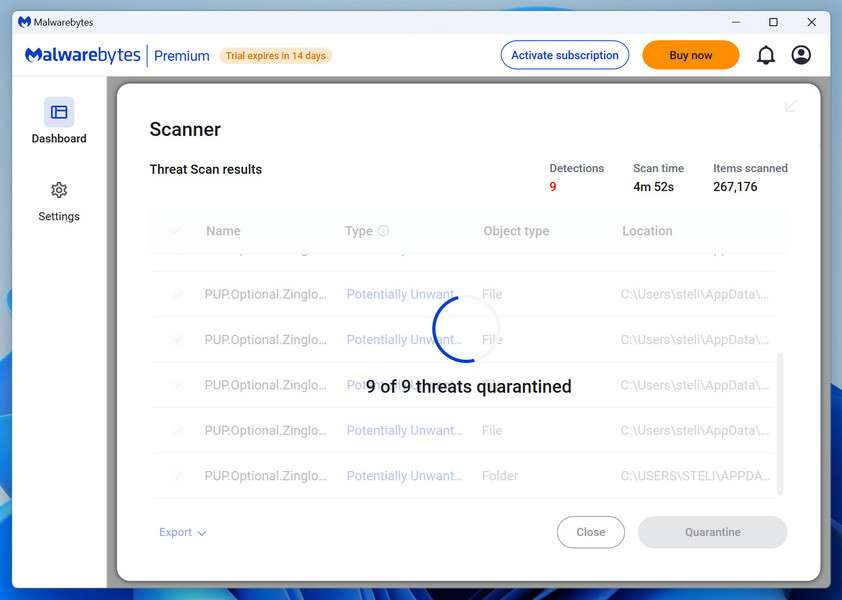
Malwarebytes will now remove the malicious files and registry entries and move them safely into quarantine.
-
Restart Your Computer
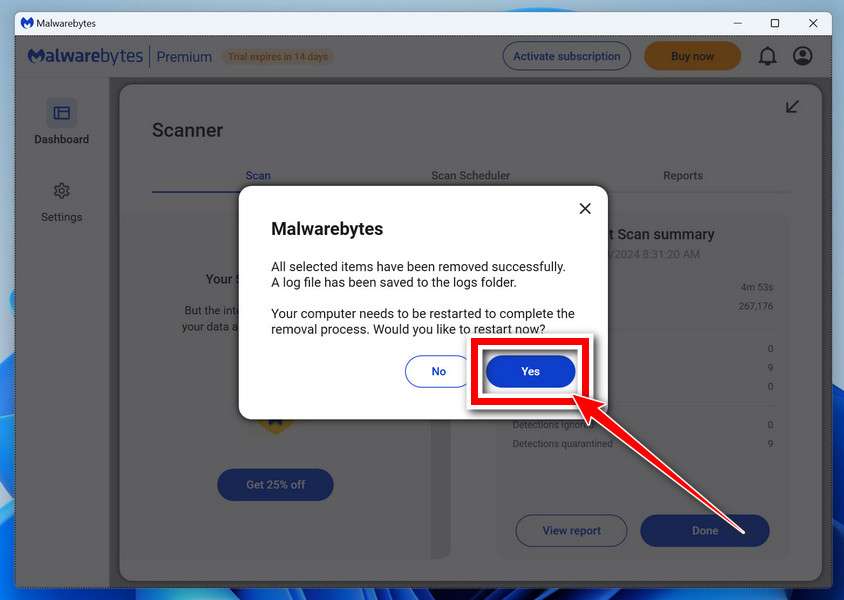
Some threats can only be fully removed after a reboot. If Malwarebytes asks you to restart, click Yes. Once you’re logged back in, Malwarebytes has finished removing the threats it found.
That’s it — your Windows PC is now clean of trojans, adware, and other malware, and should be back to running smoothly.
If you are still having problems with your computer after completing these instructions, then please follow one of the steps:
- Run a computer scan with ESET Online Scanner
- Ask for help in our Windows Malware Removal Help & Support forum.
Run a Malware Scan with Malwarebytes for Mac
Malwarebytes for Mac is a free on-demand scanner that removes the malware other security software tends to miss — adware, browser hijackers, and unwanted programs included. Cleaning an infected Mac with Malwarebytes has always been completely free, and it’s our go-to recommendation. Follow the steps below to scan and clean your Mac in just a few minutes.
-
Download Malwarebytes for Mac
Click the button below to download the latest version of Malwarebytes for Mac.
Download MalwarebytesOfficial installer for macOS. Your download starts right away.Want real-time protection? See Malwarebytes PremiumMalwarebytes Free for MacScans and removes malware at no cost -
Open the Malwarebytes setup file
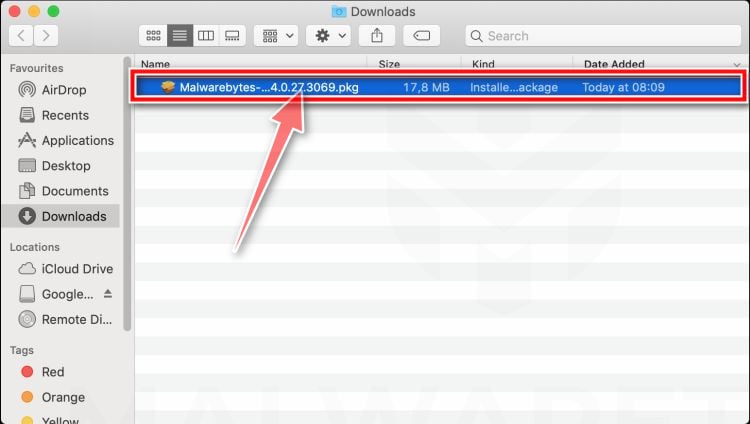
When the download finishes, open your Downloads folder and double-click the setup file to begin the installation.
-
Follow the On-Screen Prompts to Install Malwarebytes
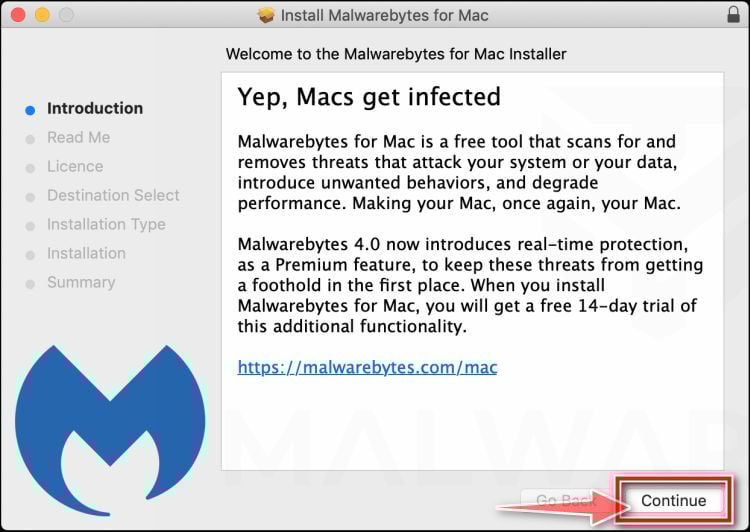
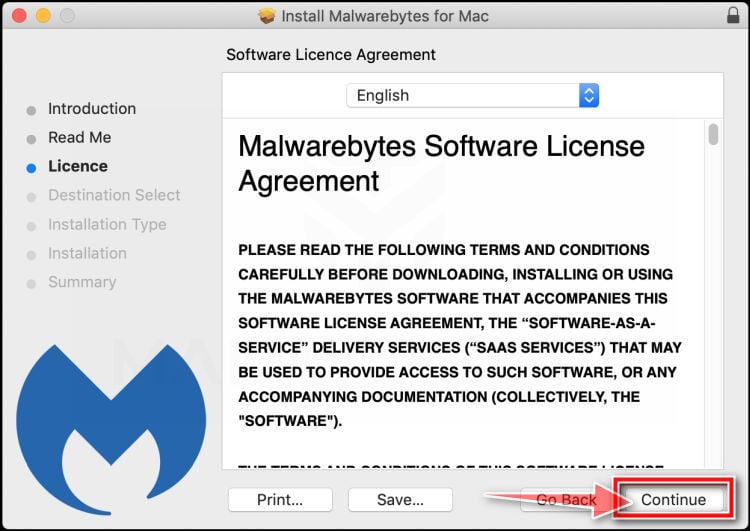
The Malwarebytes for Mac Installer will guide you through a few quick screens. Click “Continue” and keep following the prompts until the installation completes.
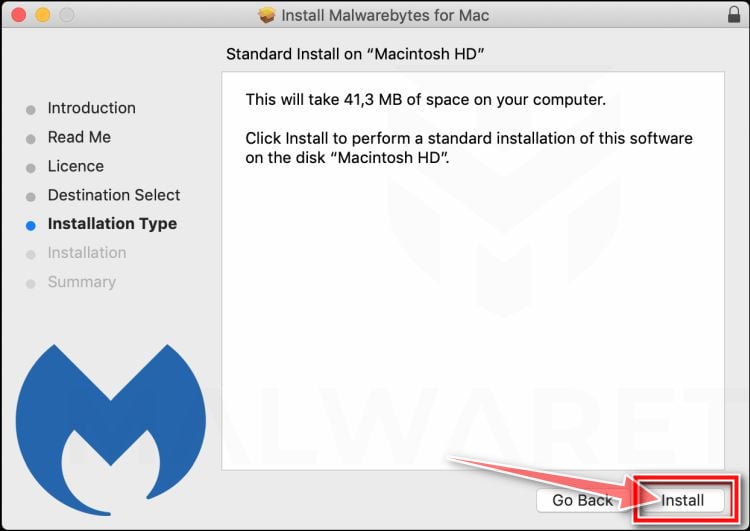
When the installation is complete, Malwarebytes opens to the Welcome to Malwarebytes screen. Click “Get started“.
-
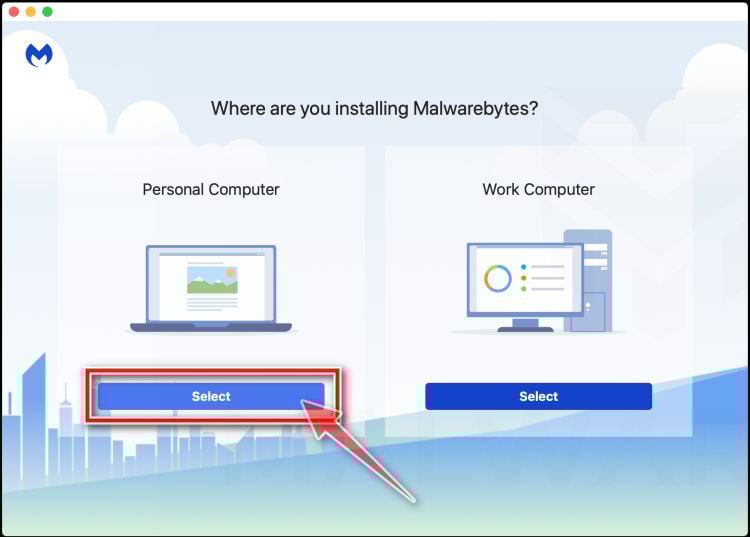
Select “Personal Computer” or “Work Computer”
Malwarebytes will ask what type of computer you’re installing it on. Click either Personal Computer or Work Computer, whichever applies.
-
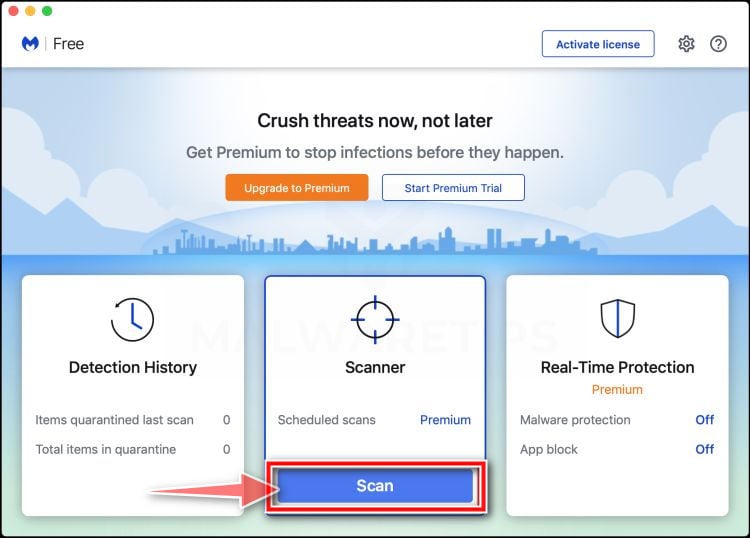
Start the Scan
Click the “Scan” button. Malwarebytes will automatically update its detection database and begin checking your Mac for malware.
-
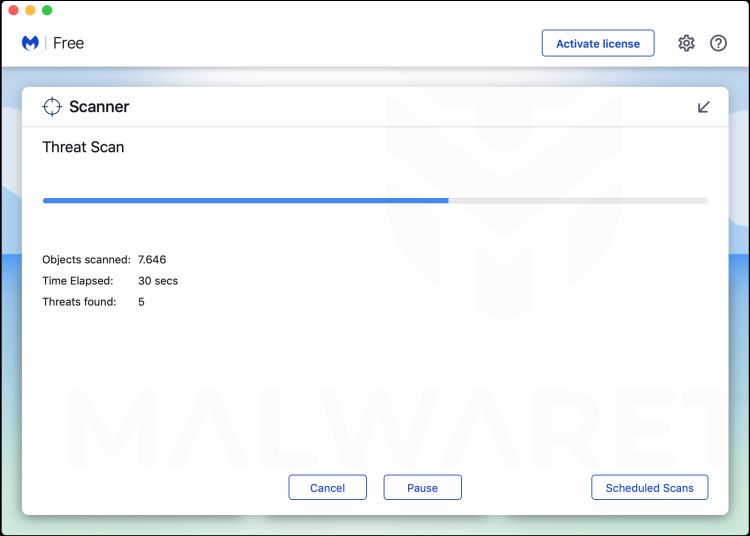
Wait for the Scan to Finish
Malwarebytes will scan your Mac for adware, browser hijackers, and other malicious programs. This can take a few minutes, so feel free to do something else — just check back occasionally to see the progress.
-
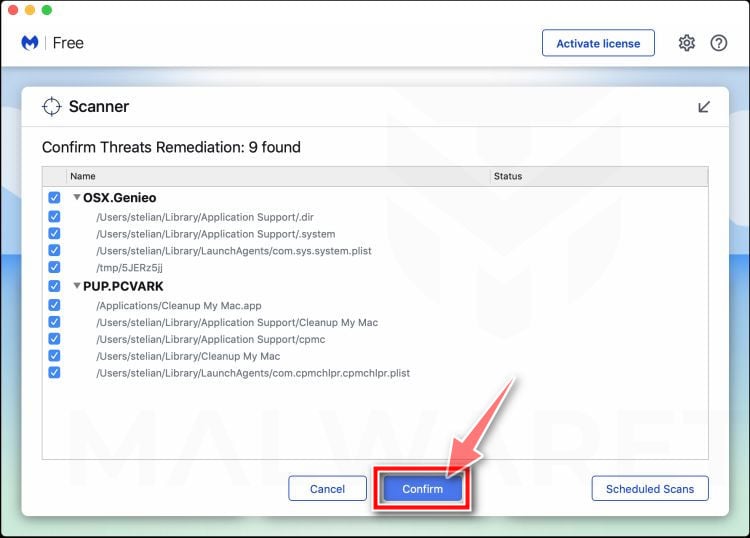
Quarantine the Detected Threats
When the scan is done, you’ll see a list of everything Malwarebytes found. Click the “Quarantine” button to remove all the threats at once.
-
Restart Your Mac
Malwarebytes will now remove all the malicious files it found. Some threats can only be fully removed after a reboot — if Malwarebytes asks you to restart, allow it. Once you’re logged back in, your Mac is clean.
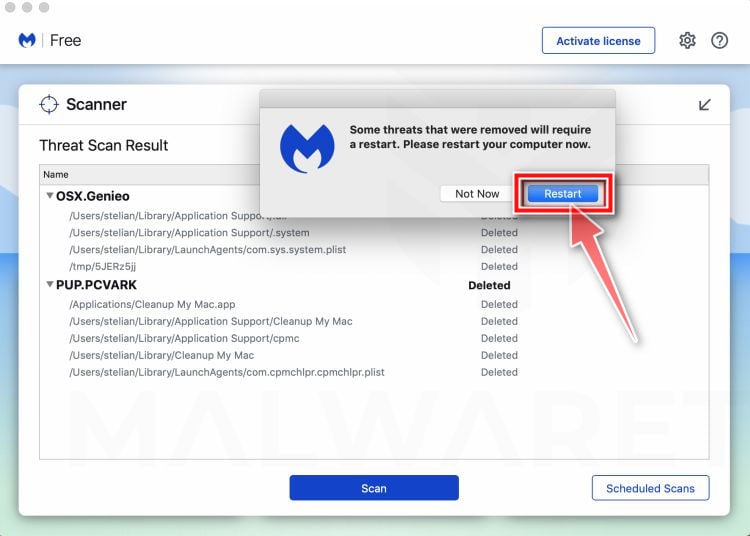
That’s it — your Mac is now free of adware, rogue browser extensions, and other potentially harmful software.
If you are still experiencing problems while trying to remove a malicious program from your computer, please ask for help in our Mac Malware Removal Help & Support forum.
Run a Malware Scan with Malwarebytes for Android
Malwarebytes for Android automatically detects and removes dangerous threats like malware and ransomware so you don’t have to worry about your most-used device being compromised. Aggressive detection of adware and potentially unwanted programs keeps your Android phone or tablet running smooth.
-
Download Malwarebytes for Android.
You can download Malwarebytes for Android by clicking the link below.
Get Malwarebytes for AndroidOpens Google Play in a new tab.Want real-time protection? See Malwarebytes Premium for AndroidMalwarebytes for AndroidScans your phone and removes malware at no cost -
Install Malwarebytes for Android on your phone.
In the Google Play Store, tap “Install” to install Malwarebytes for Android on your device.

When the installation process has finished, tap “Open” to begin using Malwarebytes for Android. You can also open Malwarebytes by tapping on its icon in your phone menu or home screen.

-
Follow the on-screen prompts to complete the setup process
When Malwarebytes will open, you will see the Malwarebytes Setup Wizard which will guide you through a series of permissions and other setup options.
This is the first of two screens that explain the difference between the Premium and Free versions. Swipe this screen to continue.
Tap on “Got it” to proceed to the next step.
Malwarebytes for Android will now ask for a set of permissions that are required to scan your device and protect it from malware. Tap on “Give permission” to continue.
Tap on “Allow” to permit Malwarebytes to access the files on your phone.
-
Update database and run a scan with Malwarebytes for Android
You will now be prompted to update the Malwarebytes database and run a full system scan.

Click on “Update database” to update the Malwarebytes for Android definitions to the latest version, then click on “Run full scan” to perform a system scan.

-
Wait for the Malwarebytes scan to complete.
Malwarebytes will now start scanning your phone for adware and other malicious apps. This process can take a few minutes, so we suggest you do something else and periodically check on the status of the scan to see when it is finished.

-
Click on “Remove Selected”.
When the scan has been completed, you will be presented with a screen showing the malware infections that Malwarebytes for Android has detected. To remove the malicious apps that Malwarebytes has found, tap on the “Remove Selected” button.

-
Restart your phone.
Malwarebytes for Android will now remove all the malicious apps that it has found. To complete the malware removal process, Malwarebytes may ask you to restart your device.
That’s it — your Android phone is now clean — no more malicious apps, adware, or browser redirects.
If you are still having problems with your phone after completing these instructions, then please follow one of the steps:
- Restore your phone to factory settings by going to Settings > General management > Reset > Factory data reset.
- Ask for help in our Mobile Malware Removal Help & Support forum.
Stay Protected: Block Ads and Malicious Sites
Now that your device is clean, keep it that way. Most infections start with a malicious ad or a fake download button — so blocking them at the source is your best defense.
We recommend AdGuard, which blocks malicious ads, phishing pages, and dangerous redirects before they can reach you.
👉 Download AdGuard and browse safely
The Bottom Line
The wrong number text scam is not a harmless mistake—it is often the first step in a long-term, high-stakes fraud operation.
These scams rely on patience, psychology, and trust-building to extract money from victims. The safest response is simple:
- Do not reply
- Do not engage
- Block and report
A single message may seem insignificant, but responding can open the door to a carefully planned scam designed to cost you far more than you expect.
Frequently Asked Questions
What is a wrong number text scam?
A wrong number text scam is a fraud that starts with a message that appears to have been sent to you by mistake. The sender may pretend they meant to contact someone else, then use your reply as an opening to start a conversation. The real goal is often to build trust and eventually steal money.
Is a wrong number text always a scam?
No. Some wrong number texts are genuine mistakes. The problem starts when the stranger keeps the conversation going, becomes unusually friendly, or tries to move the discussion toward money, investments, or personal details. That is when it becomes suspicious.
Why do scammers use wrong number texts?
They use them because the approach feels harmless. A casual message lowers your guard more effectively than an obvious scam. It helps scammers identify active phone numbers and find people willing to engage in conversation.
What happens if I reply to a wrong number text?
A reply confirms that your number is active and that you may be willing to engage. From there, the scammer may continue chatting, try to build a relationship, and later introduce a fake crypto investment, a fake emergency, or another money-related trap.
What is the connection between wrong number texts and pig butchering scams?
Many wrong number text scams are the first step in a pig butchering scheme. In these scams, fraudsters spend time building trust before persuading the victim to send money, often into fake cryptocurrency platforms or fraudulent investment apps.
What are the red flags of a wrong number text scam?
Common red flags include:
- The stranger keeps talking after you say they have the wrong number
- They become friendly very quickly
- They claim to be wealthy, successful, or involved in investing
- They ask personal questions early on
- They eventually mention crypto, trading, or easy profits
- They ask for money, deposits, or fees
Should I reply and tell them they have the wrong number?
It is safer not to reply at all. Even a polite response tells the sender that your number is active. The best approach is usually to block the number and report the message as spam.








