

A scratched table or faded countertop can make a dramatic restoration video feel irresistible. One quick wipe appears to erase years of wear.
UltraCut Polishing Compound arrives through exactly that kind of polished promise. Before buying, however, several details deserve a much closer look.
Overview
UltraCut is presented as an all-purpose surface restorer
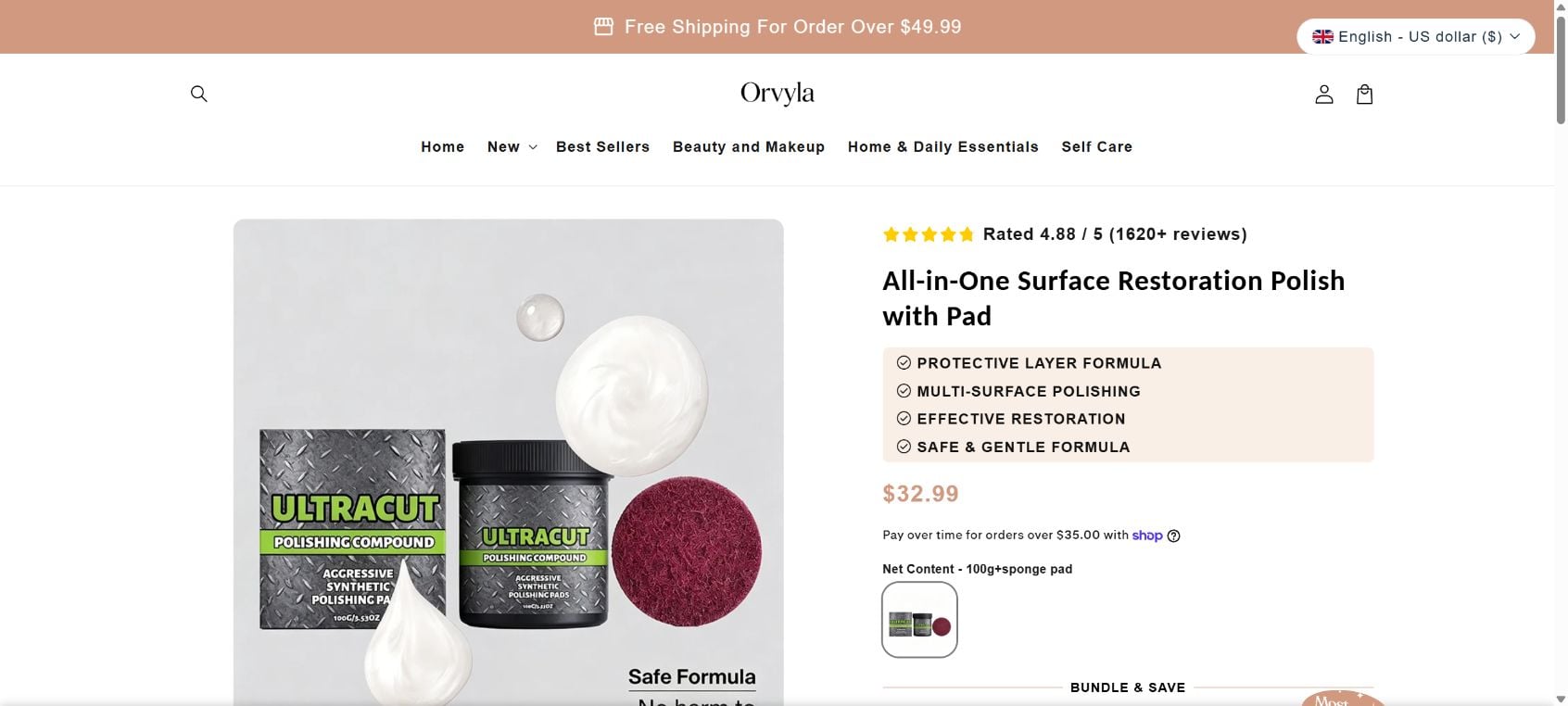
UltraCut is sold on Orvyla.com as an “All-in-One Surface Restoration Polish with Pad.” The current product page lists a single 100g jar for $32.99.
The offer says one compound works on metal, stone, and other household materials. It promises polishing, protection, easier cleaning, and a renewed shine.
Videos promoting products like this often show cloudy, scratched surfaces becoming mirror-smooth within seconds. The effect resembles an eraser passing over damage.
The real product page leaves important questions unanswered
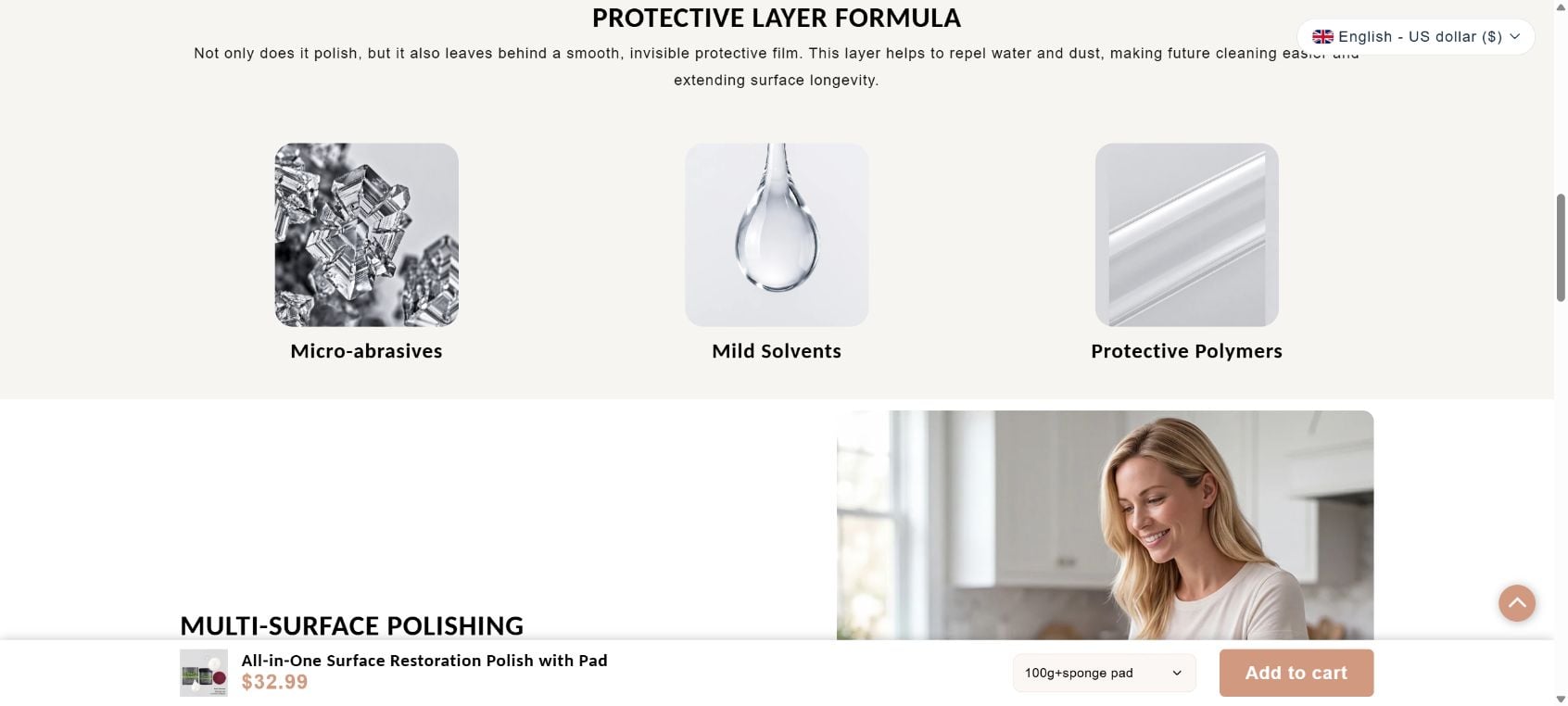
The page identifies micro-abrasives, mild solvents, and protective polymers. It does not provide a complete ingredient list, safety sheet, manufacturer, or country of origin.
Those omissions matter because different surfaces need different treatments. A compound safe for stainless steel may damage clear coat, plated metal, acrylic, or sealed stone.
The store also uses large review counts, bundle pressure, and a preselected “Unlock 49% off” option. Shoppers should verify exactly what that selection changes.
- The advertised transformations are much larger than ordinary polishing usually delivers.
- The formula is described broadly, without concentrations or a safety data sheet.
- The seller’s policies contain copied names and unrelated beauty-product language.
- The listed address appears residential, not an obvious headquarters or factory.
- Returns can involve approval, shipping costs, item limits, and a restocking fee.
Our verdict is caution, not blind trust
We cannot confirm that every jar is counterfeit or that every buyer loses money. We also found no reliable basis for the extraordinary restoration shown in promotional clips.
The confirmed concerns are the aggressive visual claims, incomplete formula disclosure, questionable store identity, and restrictive return conditions. Together, they create substantial purchasing risk.
UltraCut may behave like an ordinary polishing paste on suitable materials. That would still be very different from reversing deep scratches, missing finish, corrosion, or structural damage.
Consumers should treat the UltraCut Polishing Compound scam discussion as a warning about the sales funnel. The evidence does not support the magical-looking results.
What UltraCut Claims to Do
The product page leads with four confident promises: protective layer formula, multi-surface polishing, effective restoration, and a safe, gentle formula.
Farther down, the seller says UltraCut removes minor scratches, oxidation, tarnish, and dullness. It supposedly returns worn items to their original brilliant shine.
The application sounds effortless. Buyers are told to spread the compound, polish in circles, then wipe away the excess and inspect the result.
Nothing about that basic method is unusual. Abrasive polishing compounds genuinely can remove surface contamination and very shallow imperfections under the right conditions.
The problem is scale. An advertisement can make a modest improvement look like complete restoration through lighting, wet surfaces, editing, or an undisclosed replacement.
A coating can temporarily deepen color and hide fine marks. Once it dries or washes away, the original damage may become visible again.
Deep scratches extend beneath the layer that polishing can safely remove. Corrosion, missing plating, burned finish, and cracked stone require repair, refinishing, or replacement.
That distinction is absent from the sales story. “Minor scratches” appears in the text, while the imagery encourages a much broader interpretation.
Why the Restoration Videos Look So Convincing
Wet surfaces can hide scratches for a few moments
Fine scratches scatter light because air fills their tiny grooves. Oil, water, or polish changes that optical boundary and can make marks appear dramatically fainter.
That temporary visual improvement does not prove material was restored. A fair demonstration should show the surface clean, dry, and under unchanged lighting.
Viewers rarely receive that control shot. The camera moves, the angle changes, and the final surface reflects a brighter light source.
Editing removes the slow and imperfect parts
A short social video can skip sanding, repeat applications, cleaning, and curing. It can also combine footage from different objects without making the change obvious.
Accelerated footage creates another illusion. A treatment requiring careful preparation can look like a five-second wipe that anyone can repeat safely.
Before-and-after videos are advertising, not controlled tests. They do not reveal pressure, surface composition, prior damage, or products applied off camera.
Artificial scenes manufacture social proof
Some UltraCut promotions use people, workshops, or household scenes that appear synthetic. Odd textures, overly smooth materials, and impossible transformations are common clues.
AI-generated advertising is not automatically fraudulent. It becomes misleading when invented visuals stand in for real evidence of how a purchased product performs.
A trustworthy seller can show unedited testing, close package photographs, directions, warnings, and honest limitations. UltraCut’s strongest material is promotional rather than verifiable.
What a Real Polishing Compound Can and Cannot Do
Polishing works by removing an extremely thin surface layer or filling microscopic irregularities. Either method changes how light reflects from the material.
An abrasive must be matched to the surface. Too coarse, and it creates haze or new scratches. Too fine, and it may accomplish almost nothing.
Clear-coated automotive paint needs different products from bare aluminum. Natural stone may be etched by chemicals that seem harmless on metal or glass.
Plated fixtures create another risk. Aggressive rubbing can remove the decorative layer, exposing a different metal that cannot be restored with more polish.
Protective polymers may leave a water-repellent film. That film can improve appearance, yet it is not equivalent to replacing clear coat or sealing damaged stone.
Consumers should test any unknown compound on a hidden area. Wear gloves, ventilate the space, and stop immediately if color transfers onto the pad.
Never use a mystery abrasive on screens, lenses, nonstick coatings, antiques, food-contact surfaces, or valuable finishes without manufacturer-specific guidance.
The seller should provide those exclusions clearly. A vague “multi-surface” label shifts the testing risk from the marketer to the buyer.
How the UltraCut Polishing Compound Scam Works
Step 1: A spectacular restoration video stops the scroll
The funnel usually begins with a damaged object everyone recognizes. A cloudy headlight, scratched pan, dull countertop, or stained fixture looks ready for disposal.
One swipe produces a flawless strip. The contrast is designed to trigger relief: an expensive replacement apparently has a cheap, immediate alternative.
Short-form ads leave no room for careful testing. By the time doubt appears, the video has already shown several impossible-looking transformations.
Step 2: The ad redirects to a polished general store
The landing page looks professional and uses familiar checkout design. Badges, ratings, payment icons, and shipping language create the atmosphere of an established retailer.
Orvyla is not a specialist restoration company. Its catalog contains hundreds of unrelated beauty, household, self-care, and novelty items.
A broad catalog can be legitimate. Here, it makes technical expertise harder to verify because no identifiable surface-care manufacturer stands behind the formula.
Step 3: Broad claims replace measurable specifications
The page names ingredient categories rather than a complete formulation. It promises protection and safe polishing without defining surfaces, hardness, abrasive grade, or chemical compatibility.
That language sounds informative while remaining difficult to test. “Effective restoration” has no measurable threshold, and “safe” depends entirely on the material.
Customers receive confidence, not the technical details needed to judge whether the paste belongs on a particular item.
Step 4: Ratings and urgency reduce careful comparison
The page displays a 4.88 rating and more than 1,620 reviews. It also highlights bundles, savings, limited offers, and an order button before meaningful limitations.
On-site review numbers are controlled by the seller. Without transparent verification, they should not carry the same weight as independent, purchase-confirmed feedback.
Urgency matters because buyers comparing established compounds might notice clearer labels, recognizable manufacturers, and surface-specific instructions elsewhere.
Step 5: The buyer selects a discounted bundle
Bundle offers make the unit price appear unusually low. The shopper starts calculating savings instead of asking whether one jar has been independently tested.
Large percentage-style discounts can be created from an inflated reference price. The important number is the total charge, including shipping, taxes, and optional services.
Before paying, buyers should inspect every checkbox and expanded line. A discount control may change quantity, recurring delivery, warranty, or another order condition.
Step 6: Delivery and performance disappointments meet restrictive terms
A customer who receives an ordinary paste may discover that the result looks nothing like the video. That is when the refund policy becomes more important than the ad.
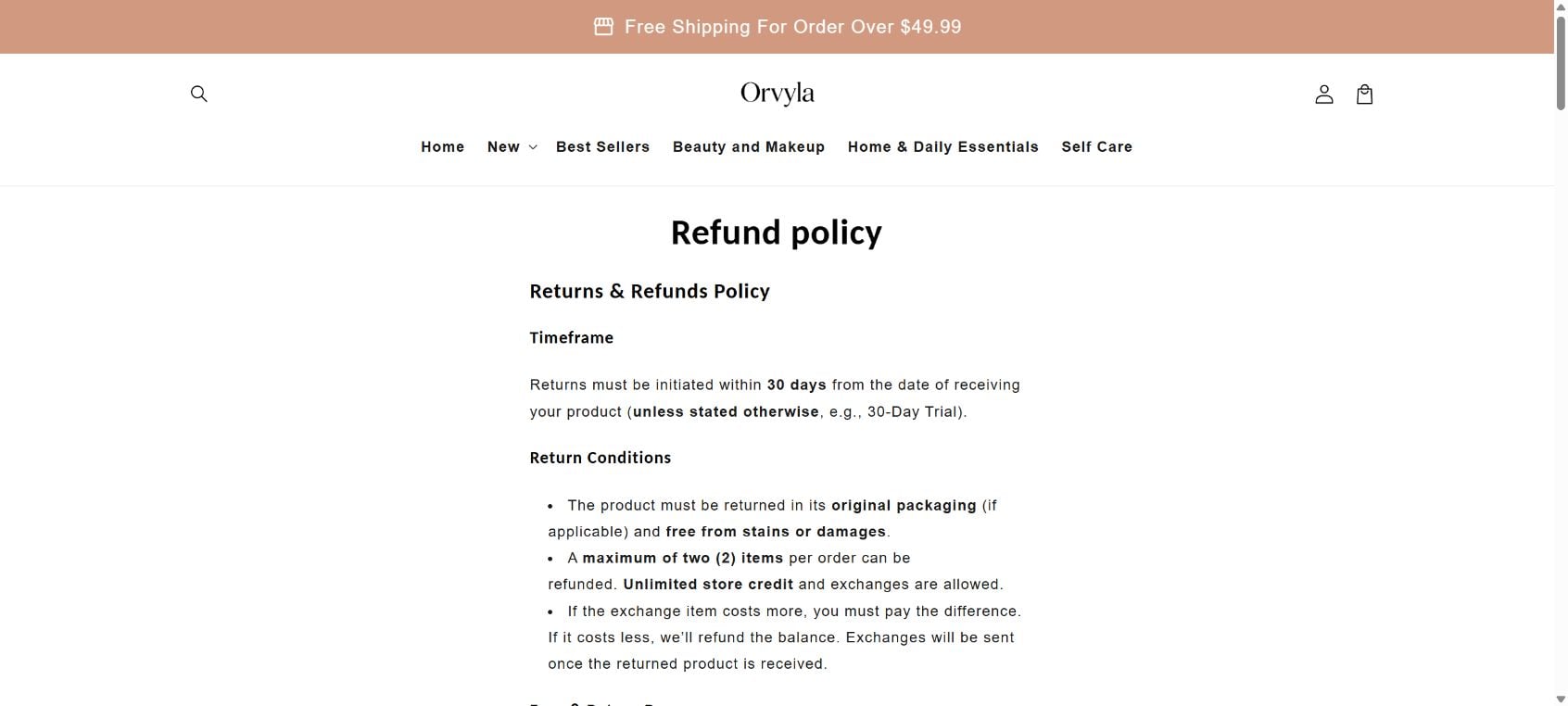
Orvyla requires return approval and original packaging. Customers generally pay return shipping, and the policy limits refunds to two items per order.
The policy also mentions a 15% restocking fee and says orders cannot be canceled after placement. These conditions can make a small purchase costly to unwind.
Step 7: The store can replace the product while preserving the funnel
General stores can rename products, replace pages, or move campaigns between domains. The next advertisement may feature another jar while using the same restoration footage.
That is why recognizing the story matters more than memorizing UltraCut. Miraculous wipes, huge review counts, vague formulas, and urgent bundles are the reusable pattern.
A future name change does not make the evidence obsolete. Consumers can judge the next offer by the same transparency tests.
Company, Address, and Fulfillment Checks
The terms name an unrelated beauty brand
Orvyla’s terms say purchases include items sold through “Meylora,” specifically magnetic lashes and beauty accessories. That language does not match a surface-polish order.
The same document says the business mission is innovative beauty solutions. It later discusses synthetic fibers, adhesives, and eyelash care.
Copied policies do not prove every order is fraudulent. They show the seller did not carefully align its legal document with the products currently promoted.
The listed address appears to be a residence
The contact information lists 987 Tulip Tree Lane in West Des Moines, Iowa. Public property records describe a large single-family home at that location.
A home address can belong to a lawful online business. It does not establish a laboratory, factory, warehouse, returns department, or surface-care headquarters.
The store does not identify another operating location. Buyers therefore cannot verify where UltraCut is formulated, packaged, inspected, or shipped.
The support details do not create real accountability
The site provides an email address and a telephone number. Some policy pages contain spacing errors or inconsistent contact presentation, which can complicate written disputes.
Before ordering, call and ask who manufactures UltraCut, where returns go, and whether the support agent can identify the exact product.
Do not treat a working phone menu as proof. Record the date, representative, promises, and any cancellation number supplied.
The supply chain remains opaque
The public page does not name a manufacturer, factory, contract packer, importer, or country of origin. No batch certificate or safety data sheet is offered.
We found no reliable evidence proving UltraCut is manufactured in China. Making that claim without records would be speculation, not investigation.
The supportable conclusion is still serious: customers cannot trace the formula from the seller to an accountable producer.
For a chemical product used on valuable surfaces, that missing chain makes damage complaints and safety questions much harder to resolve.
Warning Signs to Check Before Buying a Restoration Product
- The demonstration changes lighting, camera angle, or surface moisture.
- Deep damage disappears after one light wipe.
- The seller calls one formula safe for almost every material.
- No full ingredient list or safety data sheet is available.
- No identifiable manufacturer appears on the page.
- Reviews exist only inside the seller-controlled storefront.
- A large discount is already selected at checkout.
- The legal terms discuss another brand or product category.
- The return policy adds shipping costs, limits, or restocking fees.
- The address cannot be matched to a visible operating business.
One clue may result from sloppy marketing. Several independent clues together should change the buying decision.
A credible seller should welcome questions about ingredients, material compatibility, test methods, returns, and manufacturer identity.
If clear answers never arrive, the safest experiment is the one you do not perform on your countertop, car, jewelry, or appliance.
What to Do if You Have Fallen Victim to This Scam
- Stop using the compound. Seal the container, preserve its label, and photograph any damage before attempting another cleaner or repair.
- Save the original offer. Capture the ad, product page, selected options, checkout total, receipt, tracking details, and refund promises.
- Contact the seller in writing. Describe the problem precisely, request cancellation or refund, and ask for the approved return address.
- Do not ship blindly. Obtain authorization first, use tracking, photograph the package, and retain the carrier receipt.
- Watch for additional charges. Review the card or payment account for warranties, duplicate orders, memberships, or recurring transactions.
- Call the payment provider promptly. If the seller ignores a valid request, explain the mismatch and ask about dispute deadlines.
- Get professional restoration advice. A surface specialist can document damage and prevent an unsuitable home remedy from making it worse.
- Secure the device if needed. If an ad installed software or opened suspicious redirects, scan with Malwarebytes and remove unknown extensions.
- Reduce future exposure. AdGuard can block many aggressive advertisements and malicious redirects, although it cannot reverse an existing purchase.
- Report deceptive advertising. Send the evidence to the FTC, your state attorney general, or the appropriate consumer agency.
Frequently Asked Questions
Is UltraCut Polishing Compound a proven scam?
We cannot prove every transaction is fraudulent. The marketing, incomplete disclosure, policy mismatches, and unverified restoration results justify strong caution.
Can UltraCut really remove scratches?
An abrasive paste may reduce extremely shallow marks on compatible surfaces. It cannot reliably replace missing finish, repair deep grooves, or reverse structural damage.
Is UltraCut safe on every surface?
No universal answer is possible without complete formula and compatibility data. Test secretly first, and avoid valuable, coated, antique, or food-contact items.
Does Orvyla automatically enroll buyers in refills?
The store has a subscription policy and recurring products. Confirm every checkbox and checkout line, because the exact UltraCut offer can change.
Where is UltraCut manufactured?
The reviewed page did not identify a manufacturer or country of origin. We found no reliable evidence supporting a specific country claim.
What is the safest alternative?
Choose a surface-specific product from an identifiable manufacturer. Follow the material maker’s instructions or consult a professional for valuable items.
The Bottom Line
UltraCut is promoted with the language of a professional restoration system, yet shoppers receive few technical details needed to use it safely.
The dramatic videos, opaque supply chain, copied terms, and restrictive returns outweigh the appeal of a $32.99 shortcut.
Assume the polish is ordinary until independent evidence proves otherwise. Never risk an expensive surface because a perfect five-second video made repair look effortless.








