

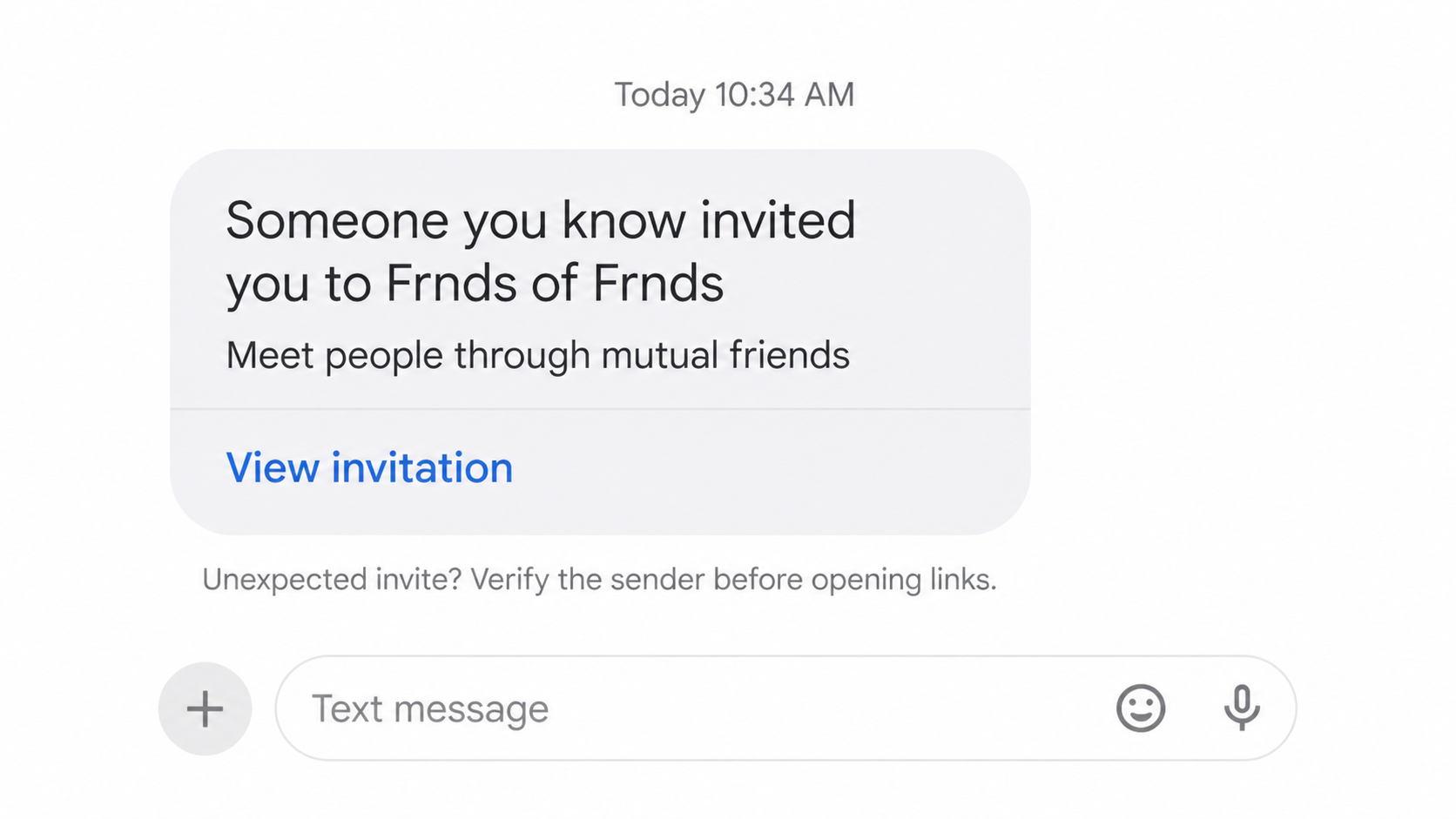
An anonymous text saying someone wants to introduce you through mutual friends can feel flattering and unsettling at the same time.
The name “Frnds of Frnds” offers just enough context to invite curiosity. Before tapping, it helps to understand what the invitation actually represents.
Overview
Frnds of Frnds appears to be a real dating application
Frnds of Frnds has an official website and a live Apple App Store listing under developer Frnds LLC.
The application is designed around introductions through mutual contacts rather than entirely random matches.
That business model explains why someone may receive an invite without previously hearing about the service.
An authentic referral can still feel intrusive
The app’s marketplace disclosure says contacts may be collected and linked to a user’s identity for personalization and app functionality.
A current member can therefore involve another person’s telephone number in the service’s referral system.
The recipient may not know which acquaintance initiated the invitation, creating the same uncertainty exploited by phishing campaigns.
Copycats can imitate the invitation
A real app does not make every text using its name legitimate. Scammers routinely copy genuine brands, messages, and referral language.
A forged link could lead to credential theft, a malicious application, an advance-fee dating scheme, or data collection unrelated to Frnds LLC.
The safest verdict depends on the destination, not only the words displayed in the text.
- The official service markets mutual-friend dating for adults.
- Apple identifies Frnds LLC as the listed app provider.
- The app offers optional purchases for credits and additional matches.
- Its privacy disclosures include contacts, location, contact details, and user content.
- The public website provides limited corporate and support detail.
- An unexpected link should be verified independently before opening.
Our investigation found evidence of a functioning service, not proof that every unsolicited invitation is a scam. Privacy, consent, and impersonation concerns remain important.
Frnds of Frnds Is a Real Service, Not the Scam
The official Frnds of Frnds service is not the scam described in this article. We found a functioning application, an App Store listing, and active product updates.
The danger begins when someone copies its name, invitation style, or mutual-friend premise to make an unrelated message appear trustworthy.
That distinction matters. A genuine referral should lead to the verified app, while an impersonation message may open a lookalike login, payment, or data-harvesting page.
Scammers abuse real companies because recognition lowers suspicion. The existence of the authentic service gives a copied invitation a believable explanation.
- The official app and a message claiming to represent it are not automatically the same thing.
- A legitimate brand can be impersonated without participating in the fraud.
- The destination URL and requested information determine whether an invitation is dangerous.
- Privacy concerns about the real app should be assessed separately from criminal impersonation.
What Frnds of Frnds Is
The service describes itself as modern dating conducted the old-fashioned way. Its “golden rule” is not talking to strangers.
Instead, the app says every match comes through extended social circles. Friends can also recommend potential matches.
This approach depends on mapping relationships between users and people in their address books.
The App Store lists it as an iPhone-only social-networking application for users aged 18 or older.
The application is free to download but includes in-app purchases.
Current examples include credit packages from $2.99 to $24.99 and an additional-matches option priced at $3.99.
Those purchases are not evidence of fraud. They are costs prospective users should understand before creating a profile.
The App Store says the application lacks enough ratings or reviews to display an overview. That limits independent reputation evidence.
The listing has received multiple version updates, including a recent update. Ongoing maintenance is a positive operational signal.
Why You May Have Received the Text
The most ordinary explanation is that a friend uploaded contacts, recommended you, or used an invitation function.
Your number may have appeared in someone else’s address book even if you never supplied it directly to the app.
The sender may also have selected the wrong contact or entered an outdated number now assigned to you.
A marketing partner could deliver referral notifications on the application’s behalf, although the visible text should still identify its destination clearly.
Another possibility is spoofing. A scammer can insert any brand name into a text and choose a similar-looking domain.
That is why guessing the sender’s motive is less useful than examining the URL safely.
Do not reply with personal details to discover who sent it. A response confirms that your number is active.
Ask likely friends through an existing conversation if they sent an invitation. Do not use contact information supplied by the unexpected message.
What the App Says It Collects
Apple’s privacy panel says contacts may be collected and linked to identity for personalization and application functionality.
It also lists precise location, email, name, telephone number, photos, support content, user identifiers, sensitive information, and crash data.
Most of those categories are described as not linked to identity, while contacts are listed separately as linked.
Apple notes that these statements come from the developer and have not been independently verified by Apple.
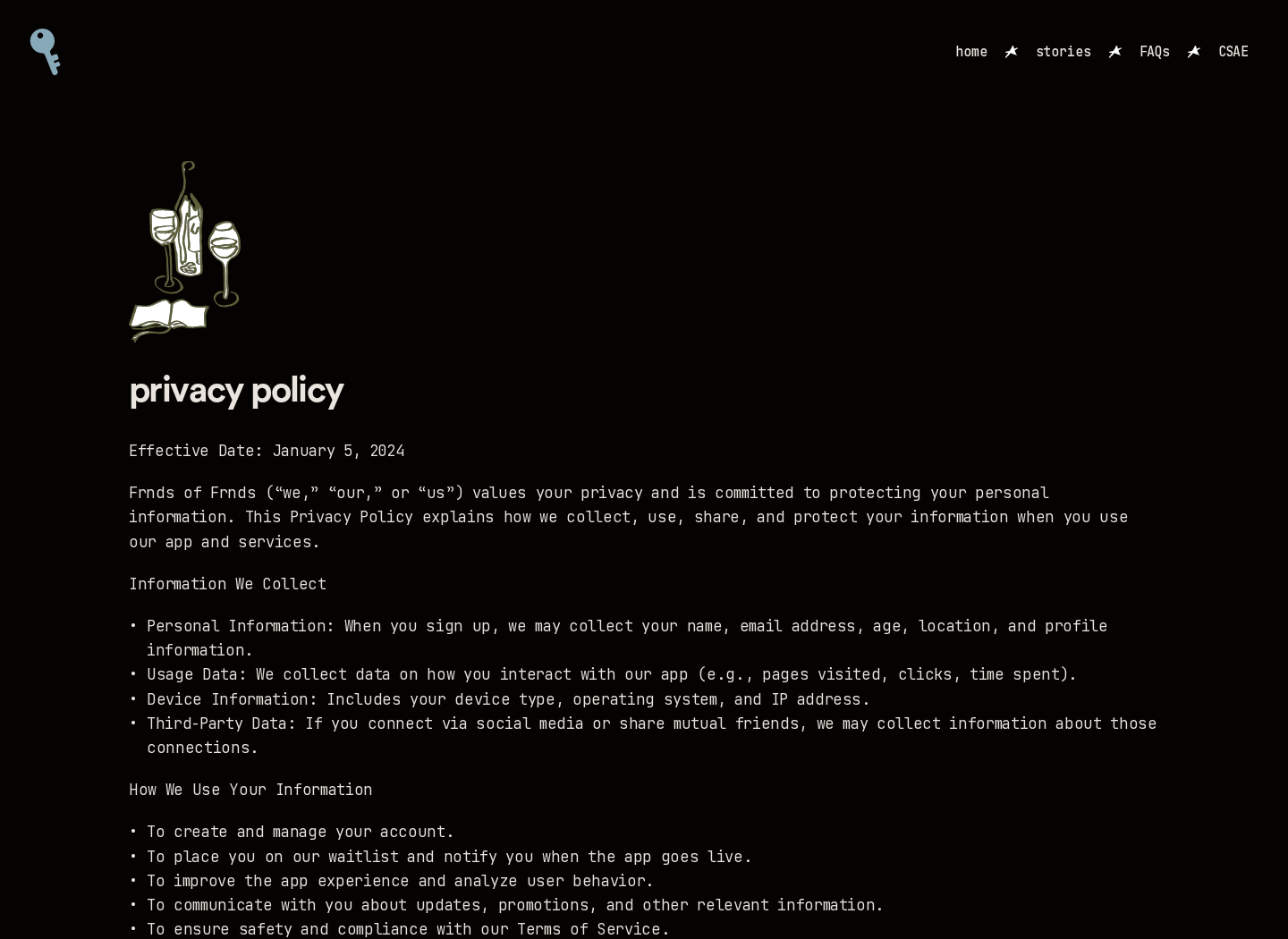
The website privacy policy says Frnds of Frnds may collect name, email, age, location, profile information, usage activity, device information, and IP address.
It also mentions third-party information when users connect social media or share mutual friends.
The policy says data may support account management, analytics, safety, updates, promotions, and a waitlist.
References to a future launch and waitlist appear outdated beside a live App Store listing. That suggests the website policy has not kept pace.
For deletion or access requests, the policy directs users to sellis@frndsoffrnds.com.
How Scammers Abuse Frnds of Frnds Invitations
The steps below describe a copycat impersonation campaign. They do not describe how the official Frnds of Frnds referral system normally operates.
Step 1: A copied social invitation creates curiosity
The recipient sees a message implying that someone within their real social circle wants a connection.
The wording avoids naming that person immediately. Curiosity becomes the reason to open the link.
In the fraudulent version, the sender deliberately withholds useful context so curiosity becomes the reason to visit an unverified destination.
Step 2: The link borrows trust from a real application
A copied message may use “Frnds of Frnds,” mutual contacts, dating, or recommendation language from the official service.
Because the real application exists, a quick search appears to confirm the text.
That search confirms only the brand. It does not authenticate the specific sender or destination URL.
Step 3: A lookalike page requests information
A fraudulent destination may ask for an Apple password, email login, telephone verification, identity document, photograph, or payment card.
The official app may legitimately request profile information after installation. A browser page should not collect unrelated account passwords.
Close any page demanding urgent verification or payment merely to reveal who invited you.
Step 4: Contact permission expands the data exposed
A user who installs the genuine app may be asked to grant contact access so mutual connections can work.
That choice affects other people whose details exist in the address book, not only the person joining.
Review the operating system’s permission screen and consider whether limited contact selection is available.
Step 5: Paid features appear after account creation
The App Store lists credits and extra matches as in-app purchases. Costs can begin after the user has invested time building a profile.
A copycat may imitate those purchases through an external checkout, removing Apple’s payment protections.
Buy application features only through the official app and verify every displayed price before confirming.
Step 6: A fake match can move the conversation elsewhere
Even a genuine dating platform can contain malicious users. Mutual-contact framing should not eliminate ordinary dating-scam caution.
A fraudster may build trust, request another messaging application, invent an emergency, promote cryptocurrency, or ask for travel money.
No introduction method guarantees another user’s identity, intentions, or financial honesty.
Step 7: Personal data supports follow-up targeting
Names, numbers, locations, contacts, photographs, and relationship context can make later messages more convincing.
A malicious operator may refer to genuine acquaintances or neighborhoods to create false familiarity.
Limit every permission and remove the account if the service no longer provides enough value for that exposure.
How to Verify the Invitation Safely
Do not press the text link first. Open the Apple App Store independently and search for “Frnds of Frnds.”
Confirm that the provider is Frnds LLC and compare the official developer website with the message destination.
Inspect the link without visiting it when your messaging application provides a preview.
The official public website uses frndsoffrnds.com. Lookalike spelling, added words, unusual country domains, or shortened links require caution.
A redirect can hide the final domain. If the message uses a shortener, there is no need to investigate by clicking.
Ask the suspected friend directly whether they invited you. Use a telephone number already saved, not any new contact supplied in the text.
Check whether the invitation asks for payment before identifying the sender. That would be a strong warning sign.
Never enter Apple, Google, email, or social-media credentials into a page opened from an unexpected dating text.
Privacy Questions Worth Asking
Mutual-friend matching cannot work without some relationship data. The important issue is how much information the application needs and retains.
Ask whether your entire address book uploads or matching occurs through privacy-preserving identifiers.
Check whether non-users receive notifications automatically and whether the inviting member sees who responded.
Find out how contacts are deleted when a user closes their account.
Review location settings. Precise location is more sensitive than city-level matching and may not be necessary continuously.
Consider what “sensitive information” covers in the App Store disclosure. Dating profiles can reveal orientation, preferences, religion, or other intimate details.
Use profile photographs that do not expose a home, workplace badge, vehicle plate, school, or children’s faces.
Keep conversations inside the official application until the other person has been reasonably verified.
Company, Support, and Data-Handling Checks
Apple identifies the provider as Frnds LLC
The App Store names Frnds LLC as the developer and lists Frnds of Frnds, Inc. in the copyright notice.
The difference may reflect related business naming, but the public website does not clearly explain the relationship.
Users should know which entity controls data, processes purchases, and responds to legal privacy requests.
The public website lacks a business address
The homepage offers a contact form but does not prominently display a headquarters or mailing address.
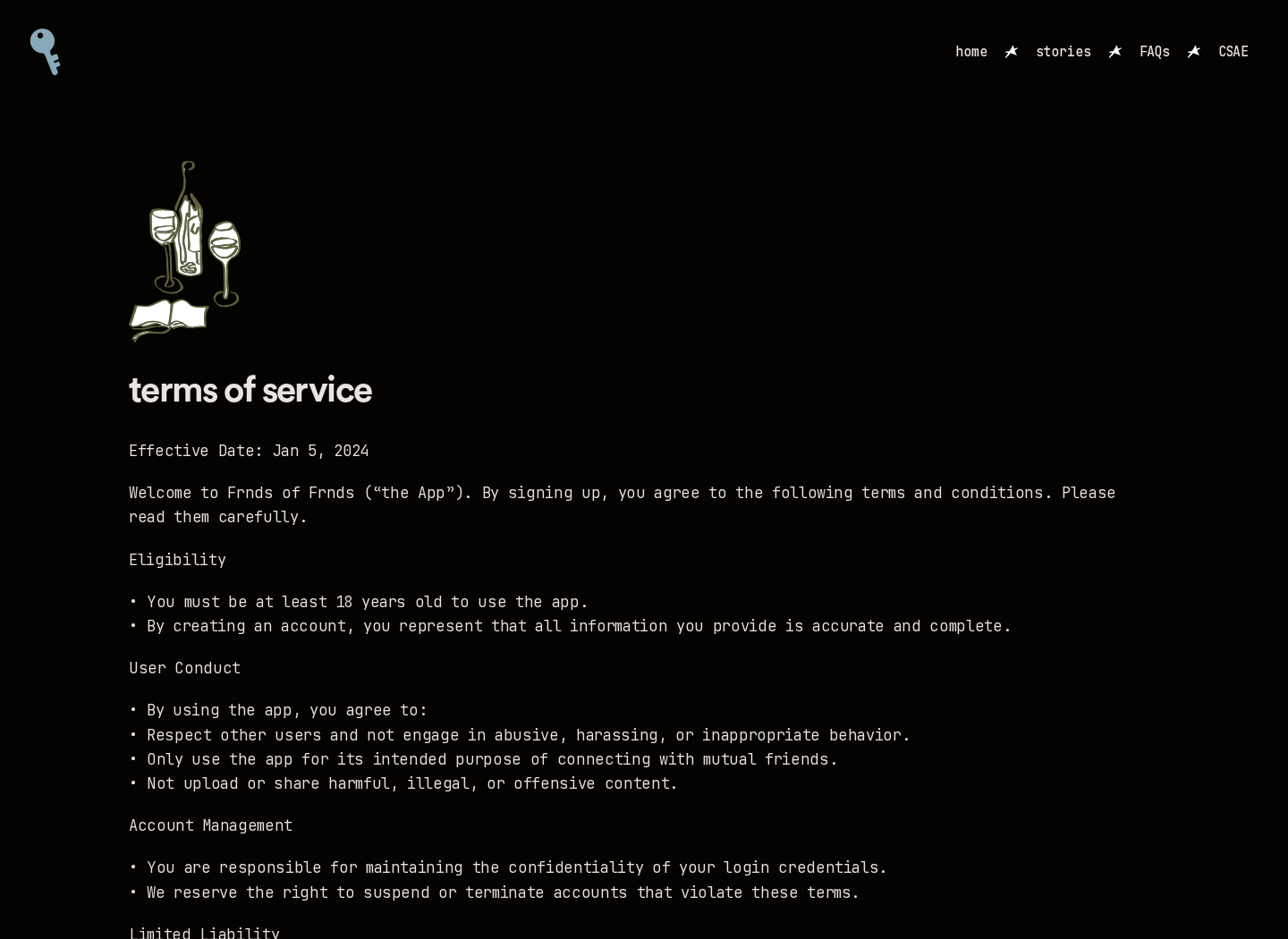
The terms also do not name a governing jurisdiction or registered-office location.
That is a transparency weakness for a service handling location, contacts, photographs, and sensitive dating information.
Support routes are fragmented
The privacy policy gives sellis@frndsoffrnds.com for data requests, while the homepage primarily presents a general web form.
We did not find a prominent support telephone number. Keep copies of deletion or billing requests and note when they were submitted.
In-app purchase disputes may also require Apple’s official purchase history and refund process.
Data processors replace a physical supply chain
This is a digital service, so warehouses and parcel origins are irrelevant. The equivalent traceability questions concern hosting, processors, analytics, and data retention.
The policy refers broadly to service providers for hosting, analytics, and email without naming them.
Users must therefore decide whether the available explanation justifies sharing contacts and dating-profile information.
Dating Safety Beyond the Link
A mutual acquaintance can provide context, but it is not a background check.
Ask the mutual friend what they actually know. A name appearing in someone’s contacts may represent only a brief or outdated connection.
Use reverse-image searching when a profile photograph feels overly polished or inconsistent.
Video chat before meeting, but never display documents, financial applications, or private account screens.
Meet in a public place, arrange your own transportation, and tell someone where you will be.
Do not send money, cryptocurrency, gift cards, account codes, or identity documents to a match.
Be especially cautious when someone quickly claims intense feelings and then introduces an emergency or investment opportunity.
Report suspicious profiles through the application and preserve messages before blocking the account.
What to Do if You Clicked a Fake Frnds of Frnds Invitation
- Stop interacting with the link. Close the page, do not reply, and record the sender, full URL, message time, redirects, and requested information.
- Secure exposed accounts. Change any password entered on the page from a clean device. End unknown sessions and enable multi-factor authentication.
- Remove dangerous access. Revoke unnecessary contact and location permissions. Delete suspicious profiles or applications installed outside the official store.
- Protect financial accounts. Contact the card issuer about unauthorized charges and review Apple purchase history for unfamiliar credits or match purchases.
- Warn affected contacts. If your address book was exposed or your account sent invites, tell people not to trust unexpected messages from you.
- Scan the device. Use Malwarebytes when a link downloaded a profile, package, extension, or unknown application, or when the browser now redirects unexpectedly.
- Block malicious advertising. AdGuard can reduce harmful links and tracking pages, although it cannot identify a dishonest dating match for you.
- Report the incident. Notify the carrier, Apple, the official developer, and relevant fraud authorities with screenshots and financial evidence.
Frequently Asked Questions
Is Frnds of Frnds a real app?
Yes. It has an official website and an Apple App Store listing under Frnds LLC. That does not authenticate every text using its name.
Why did I receive an invitation from someone unnamed?
A current user may have referred a contact, entered a wrong number, or granted address-book access. A copycat message is also possible.
Should I click the invitation link?
Do not begin with the link. Find the official App Store listing independently and ask likely friends through an existing conversation.
Does the app collect contacts?
Apple’s developer-supplied privacy disclosure says contacts may be collected, linked to identity, and used for personalization and app functionality.
Does Frnds of Frnds cost money?
The download is free, but Apple lists optional credit packages and extra matches as in-app purchases.
Can a mutual-friend match still be a scammer?
Yes. Social proximity is not identity verification. Never send money or sensitive documents, and verify people before meeting or moving conversations elsewhere.
The Bottom Line
Frnds of Frnds appears to be a functioning dating app whose referral model can explain a surprising text.
We found no evidence that the official service operates the impersonation scam described here. The risk comes from copycats abusing its name and referral concept.
Unsolicited links still deserve independent verification. Protect your contacts, examine permissions, and remember that a familiar social connection is not a security guarantee.








