

The call often arrives at exactly the right moment. You have a timeshare you rarely use, the annual fees keep rising, and a confident stranger says a buyer is already waiting.
Or perhaps the promise is different: pay one retainer and a specialist will make the contract disappear. A timeshare resale scam can make either pitch sound like relief, which is precisely why it deserves a closer look.
Overview
The offer begins with information that feels private
A timeshare resale scam usually targets an owner rather than a random consumer. The caller may know the resort name, location, purchase year, or an approximate ownership value. Those details make the approach feel like a genuine business inquiry.
That information is not proof of a buyer. Ownership records, old marketing lists, leaked customer files, public complaints, and data brokers can all help a fraudster build a convincing profile before making contact.
The supposed solution changes, but the advance fee remains
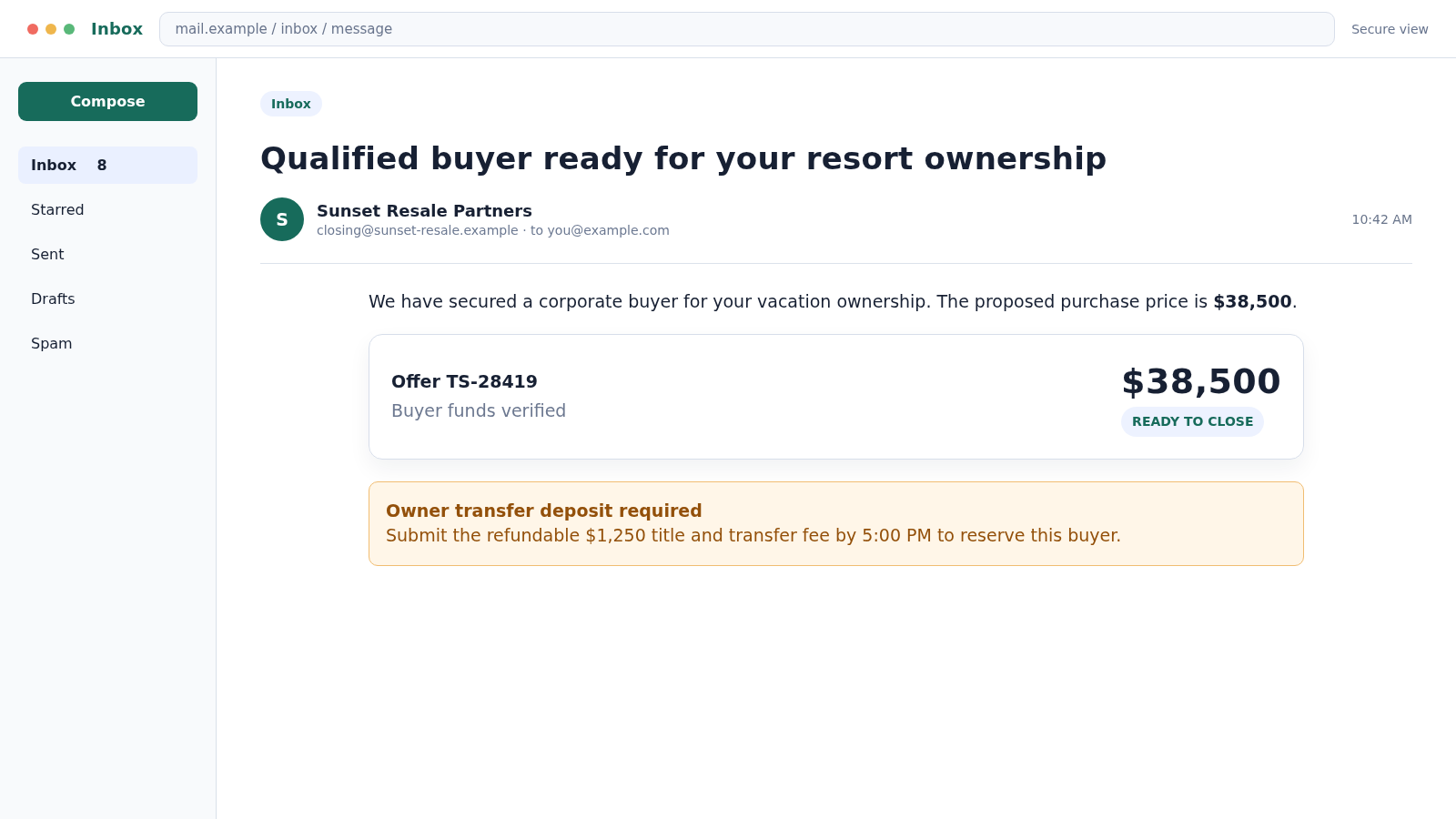
One version features a corporate buyer willing to pay an unusually attractive price. Another features an exit firm that promises to cancel the contract, erase maintenance obligations, or recover money from an earlier resale company.
The story leads to the same pressure point: the owner must pay before anything verifiable happens. The charge may be described as escrow, tax, title search, transfer, registration, legal, advertising, or government clearance.
A difficult real problem gives the scam its power
Timeshares can be hard to sell, and leaving a contract may require patience, paperwork, and direct negotiation. Scammers exploit that frustration by offering speed, certainty, and a price that the ordinary resale market cannot support.
Watch for this combination of warning signs:
- An unsolicited call, text, or email from a reseller or exit specialist.
- A buyer who is supposedly ready before seeing the ownership documents.
- A guaranteed sale, guaranteed cancellation, or guaranteed recovery.
- An upfront payment before a buyer, escrow account, or legal filing can be independently verified.
- Instructions to wire money, send cryptocurrency, buy gift cards, or pay a new fee to a foreign account.
- Pressure to keep the transaction confidential or act before a short deadline.
Why Timeshare Owners Are Such Valuable Targets
The owner already has a financial relationship that can be researched. A scammer does not need to invent an interest in travel or property. The timeshare itself supplies a believable reason to discuss money, contracts, title records, and maintenance charges.
Many owners have also searched online for resale or cancellation help. A form submitted to an untrustworthy lead-generation site can circulate among call centers for years. One inquiry may trigger repeated approaches under different company names.
Older adults are frequently targeted because they may have owned the property for a long time, paid substantial fees, and now want to simplify their finances. The approach can feel personal, but the caller may be reading from a carefully prepared lead sheet.
The Federal Trade Commission warns that anyone promising a fast sale or big return should be treated with caution. The real resale market is crowded, and no outside caller can honestly guarantee a buyer or contract release.
How the Timeshare Resale Scam Works
Step 1: The caller identifies an owner who wants relief
The first contact may mention your resort by name or refer to a request you supposedly made months earlier. If you never requested help, the caller may claim that market demand has suddenly made your property valuable.
Some operations buy lists of timeshare owners. Others collect leads through social ads, search ads, fake review sites, or forms that promise a free resale valuation. The initial message is designed to make the contact feel expected.
Step 2: A ready buyer or guaranteed exit is introduced
In the resale version, an agent says a buyer has cash, financing, or corporate approval. The proposed price may be close to what you originally paid, even when comparable listings sell for very little.
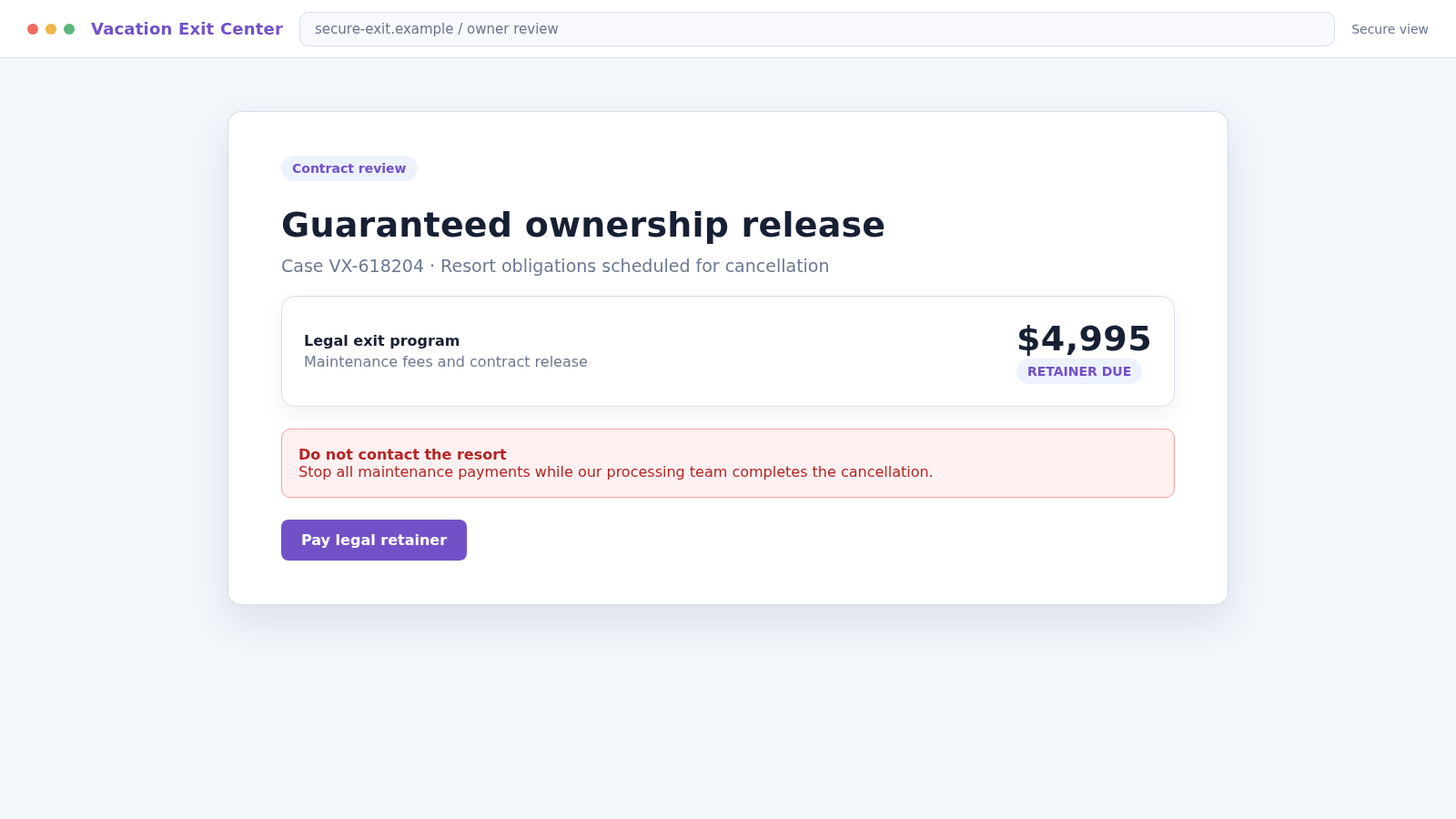
In the exit version, the company claims its attorneys found a contract defect or special cancellation route. It may promise a clean release, a refund of past fees, and protection from future maintenance charges.
Step 3: Professional-looking paperwork creates confidence
The owner receives contracts, escrow instructions, title forms, invoices, or government-looking certificates. These documents may include logos, license numbers, seals, and real addresses copied from legitimate firms.
A document can look polished while every important claim inside it is false. The supposed buyer, broker, lawyer, title company, and escrow officer may all be controlled by the same group using separate phone numbers.
Step 4: The first fee is made to sound routine
The scammer asks for a manageable amount to begin the process. It may be called a listing deposit, transfer tax, ownership verification, document certification, or refundable escrow contribution.
The explanation is carefully framed so the payment seems temporary. You may be told that the buyer will reimburse it at closing or that the money remains protected in escrow. The account, however, is not independently controlled.
Step 5: New obstacles produce larger demands
After the first payment, a tax office, bank, notary, or compliance department suddenly finds another issue. Each problem requires another payment, and every payment is described as the final one.
Victims may be sent account screenshots showing sale proceeds waiting for release. The balance is only a graphic. It cannot be withdrawn because no buyer, closing, or funded escrow exists behind the screen.
Step 6: The owner is pushed away from independent checks
The agent may say the buyer will withdraw if you contact the resort, your bank, or another broker. Some exit firms instruct owners to stop paying maintenance fees or ignore correspondence while the cancellation is supposedly processed.
Stopping legitimate payments without reliable legal advice can create late fees, collection activity, and credit damage. A scammer benefits when you become more isolated and financially committed to the promised solution.
Step 7: The operation disappears or invents a final crisis
Once the victim refuses another fee, calls go unanswered and websites vanish. In other cases, the supposed closing officer claims funds were seized, the buyer died, or a regulator froze the transaction.
These stories give the fraudster one last chance to collect money. They also delay the victim from contacting the bank while a transfer might still be traced or recalled.
Step 8: A recovery company contacts the same victim
Weeks later, a new caller may know exactly how much was lost. The caller claims to be a lawyer, regulator, investigator, or recovery specialist who has located the stolen funds.
This is often a second-stage scam using the original victim list. The promised refund requires an upfront retainer, bond, tax, or release fee. Paying it normally creates another loss rather than recovering the first one.
Company, Address, and Fulfillment Checks
A brand name is not a licensed brokerage
Search the exact company and agent through the real estate regulator where the property is located. Confirm the license using the regulator’s own website, then call the number in that record rather than the number in the unsolicited message.
A registration for a general business does not automatically authorize real estate brokerage, escrow, or legal services. Check what the license actually permits and whether the named person works there.
An impressive address may be borrowed
A downtown office, resort address, or government building on a letterhead can be copied in seconds. Search the suite independently and ask the building manager whether the company is a current tenant.
Foreign transactions deserve extra care. A real-looking office in another country does not prove that a tax authority, notary, or escrow account is involved.
Support channels may all lead to one call center
Call the resort, developer, title company, and purported buyer through independently found numbers. If every party routes back to the same agent or uses matching email language, the appearance of separate oversight is probably manufactured.
Do not treat a responsive agent as proof. Scam call centers can answer quickly while legitimate questions about licensing, fees, and escrow ownership remain unanswered.
The transaction must be traceable from buyer to closing
Ask for the buyer’s verifiable identity, written offer, proof of funds, broker license, escrow institution, fee schedule, and cancellation terms. A legitimate process should survive independent confirmation.
Never rely on a screenshot of an account balance. Confirm the escrow institution directly and ask your own attorney to review the agreement before sending money or signing away ownership rights.
How to Check a Timeshare Resale or Exit Offer Safely
Start with the developer or resort management company. Ask about an official surrender, deed-back, hardship, resale, or owner-transition program. This conversation may reveal options that do not require an unfamiliar middleman.
Next, compare the promised price with real completed sales, not optimistic listings. A caller offering a price dramatically above the secondary market needs a credible explanation and independent proof of funds.
Read every contract slowly. Look for nonrefundable marketing fees, vague services, automatic renewals, arbitration clauses, authority to contact the resort, and promises that appear only in conversation but not in writing.
Never sign a power of attorney or deed based solely on a phone presentation. Those documents can affect ownership and legal rights even when the promised service never happens.
Ask a trusted person to review the offer with you. A fresh reader often notices mismatched names, unexplained fees, and impossible deadlines that are easy to miss during a pressured call.
What to Do if You Have Fallen Victim to This Scam
- Stop all new payments and contact. Tell the company in writing that you dispute the transaction and do not authorize further charges. Do not pay a final release, refund, tax, or recovery fee.
- Call the payment provider immediately. Ask your bank, card issuer, wire service, or payment app for its fraud department. Request a chargeback, transfer recall, or beneficiary freeze where possible, and keep the case number.
- Protect the real timeshare account. Contact the resort or developer through a verified number. Ask whether any ownership changes, authorizations, or account instructions were submitted in your name.
- Do not stop legitimate fees blindly. If a scammer told you to stop paying, speak with the resort and a qualified consumer or real estate attorney. Get advice about the contract before allowing a separate dispute to damage your credit.
- Preserve the complete evidence trail. Save contracts, emails, call logs, caller numbers, payment receipts, bank details, websites, ads, and screenshots. Write a timeline while names and conversations are still fresh.
- Secure accounts and devices. Change reused passwords and enable multifactor authentication. If you downloaded documents, installed remote-access software, or entered credentials on a linked site, scan the device with Malwarebytes to check for malicious software and unwanted access tools.
- Reduce exposure to follow-up traps. AdGuard can block many malicious advertising domains, trackers, and known scam pages that lead owners into fraudulent resale forms. It cannot validate a company, so independent checks are still essential.
- Report the operation. Submit the details to ReportFraud.ftc.gov, your state attorney general, the real estate regulator where the property is located, and local police if money or identity documents were taken.
- Watch for identity misuse. If you shared a Social Security number, passport, driver’s license, or banking details, place a fraud alert or credit freeze and monitor statements for new accounts or unauthorized withdrawals.
- Reject recovery callers. Investigators and regulators do not demand a private upfront fee to release recovered money. Anyone who knows your loss and guarantees a refund should be treated as a possible continuation of the same scam.
Frequently Asked Questions
Is every timeshare resale company a scam?
No. Legitimate licensed brokers exist, but an unsolicited promise of a ready buyer, guaranteed price, or fast sale combined with an upfront fee is a major warning sign. Verify licensing and the buyer independently.
Can a company really guarantee that my timeshare contract will be canceled?
No outside company can honestly guarantee how a resort will respond or how a legal dispute will end. A legitimate adviser should explain limits, costs, risks, and alternatives in writing.
Why does the caller know my resort and ownership details?
Owner information can come from public records, purchased lead lists, old marketing databases, leaked files, or forms you completed online. Accurate details do not prove the caller represents a buyer.
Should I stop paying maintenance fees while an exit firm works?
Not without qualified legal advice based on your contract. Stopping payment can create fees, collection activity, and credit damage even if the exit company promised otherwise.
Can my bank recover a wire transfer or card payment?
Sometimes, especially when reported quickly. Contact the fraud department immediately, provide the beneficiary and transaction details, and ask for every available recall or dispute option.
What is the safest first step if I want to leave a timeshare?
Contact the developer or resort management company directly and ask about surrender, deed-back, hardship, or official resale options. Have an independent attorney review any complex proposal before you pay.
The Bottom Line
The timeshare resale scam sells certainty where the real market offers none. A ready buyer, guaranteed exit, and refundable upfront fee can be three parts of the same carefully staged fiction.
Slow the process down and verify every participant through an independent channel. A genuine transaction can tolerate questions. A scam usually cannot survive them.








