

You sign the papers, hand over a down payment, and drive home in the car. Days later, the dealership calls with bad news: the financing was never final.
The vehicle is already part of daily life, and the new offer is worse. A spot delivery scam uses that exact moment to make an expensive decision feel unavoidable.
Overview
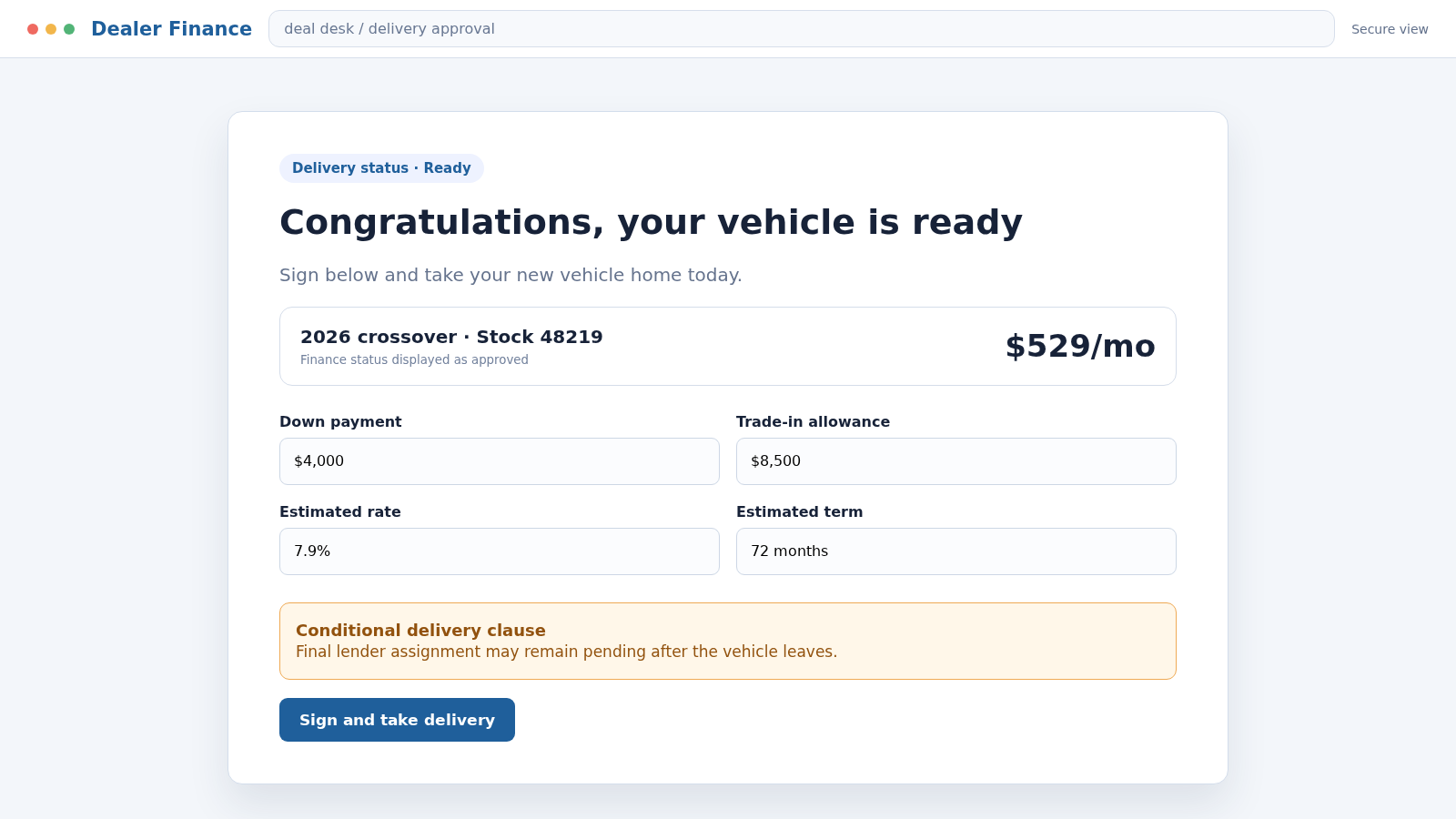
The buyer leaves before third-party financing is complete
Spot delivery, also called conditional delivery, occurs when a dealership lets a buyer take a vehicle before a lender has given final approval.
The paperwork may allow the dealer to cancel or renegotiate if financing cannot be assigned.
Conditional delivery is not automatically illegal or fraudulent.
The problem becomes a spot delivery scam, often called yo-yo financing, when a dealer misrepresents approval, hides the condition, or uses the later callback to force materially worse terms.
The callback changes the price of keeping a car you already use
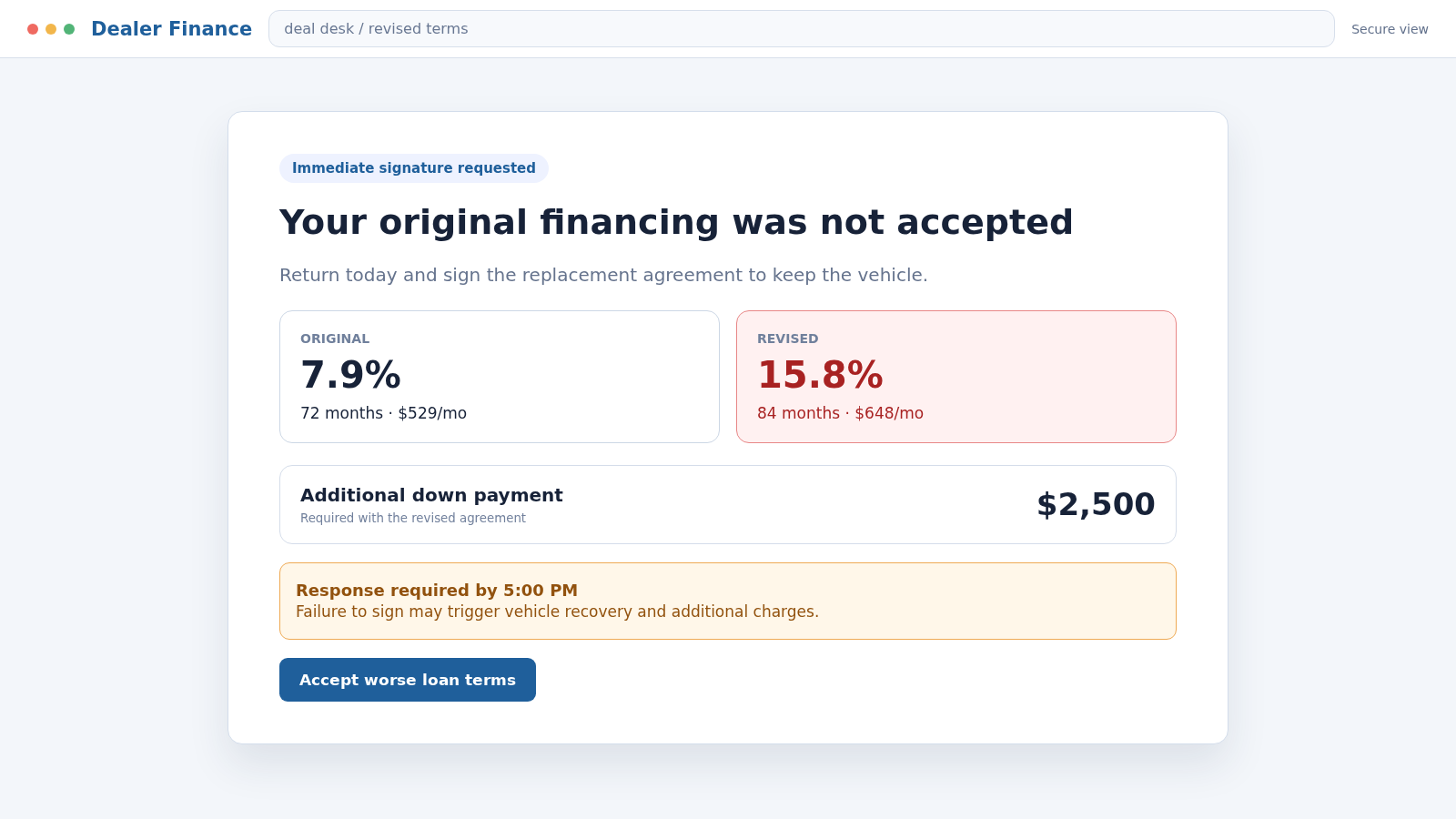
The dealer may say the lender rejected the application and that the buyer must return immediately.
The replacement contract can carry a higher interest rate, longer term, larger down payment, extra products, or a less favorable trade-in value.
By then, the buyer may have transferred insurance, shown the car to family, relied on it for work, or stopped shopping elsewhere.
That practical and emotional investment strengthens the dealer’s leverage.
Deceptive versions use confusion, threats, and missing paperwork
Warning patterns include:
- A salesperson repeatedly says financing is final when the contract says otherwise
- The buyer is rushed through documents late at night or on a weekend
- Copies of signed contracts are withheld or incomplete
- The lender and final annual percentage rate are not clearly identified
- The callback demands immediate signature on more expensive terms
- The dealer threatens arrest, repossession, or a stolen-vehicle report
- A trade-in or down payment is not promptly returned when the deal unwinds
The details of the contract and state law matter.
Buyers should document what was represented and seek qualified local advice rather than assuming every conditional deal has the same legal outcome.
Spot Delivery Is Not the Same as Final Loan Approval
A retail installment contract may be signed at the dealership while the dealer still plans to assign it to a bank or finance company.
If assignment is genuinely conditional, the agreement may contain a spot-delivery or financing-contingency clause.
The Consumer Financial Protection Bureau warns against taking the car before financing is final.
A later callback can bring a higher rate, longer term, larger down payment, or several worse terms.
The key question is not whether the customer drove away.
It is what the written agreement says, what the dealer represented, whether the stated condition actually failed, and what happens when the original deal cannot be completed.
A buyer should leave with copies of every signed document. Verbal assurances such as “you are all set” are difficult to evaluate later when the paper says approval remains conditional.
Warning Signs Before You Take the Car
- The finance office avoids saying whether the lender has funded the deal.
- The lender’s name is blank, unknown, or described as still pending.
- A document is labeled conditional delivery, bailment, or spot delivery.
- The dealership asks you to sign forms with blank fields.
- You are discouraged from reading or photographing documents.
- Numbers on the sales worksheet do not match the final contract.
- A temporary payment estimate replaces a disclosed annual percentage rate.
- The dealer wants possession of the trade-in before financing is final.
- The purchase happens when lenders cannot easily be contacted.
- The salesperson says the contract is final but refuses to confirm that in writing.
Any conditional language deserves a pause.
Ask what exact event permits cancellation, how long the dealer has, and how the down payment, trade-in, mileage, and insurance are handled if the deal ends.
How the Spot Delivery Scam Works
Step 1: The buyer negotiates a car and financing terms
The customer chooses a vehicle, discusses monthly payment, trade-in, and down payment, then completes a credit application. The conversation focuses heavily on getting the car home that day.
A monthly payment can hide the full structure. The term length, interest rate, financed amount, add-ons, and trade-in allowance determine whether the deal is actually affordable.
Step 2: Conditional language is minimized or obscured
The dealer presents a stack of forms and may describe them as routine. A financing condition can appear in a separate agreement or clause that receives little attention.
In a deceptive sale, staff verbally describe the buyer as fully approved even though the documents preserve the dealer’s ability to unwind or change the financing.
Step 3: The dealership sends the buyer home with the vehicle
Taking possession makes the transaction feel complete. The buyer changes routines, transfers belongings, tells others about the purchase, and may allow the trade-in to remain with the dealer.
The longer the car is used, the harder returning it feels.
This is the first half of the yo-yo: the customer is allowed to move away from the bargaining table.
Step 4: The original lender allegedly rejects or changes the deal
Days or weeks later, the finance office says the application was not approved at the expected terms.
That can be a real financing problem, but the buyer should ask for written details and compare them with the contract.
A dishonest dealer may have known the original structure was unlikely to be funded or may use an unverified rejection as leverage.
The buyer is usually given little time to investigate.
Step 5: A worse replacement contract is presented as the only solution
The new deal may raise the annual percentage rate, add months or years, require more cash, lower the trade-in allowance, or include warranties and products the buyer rejected earlier.
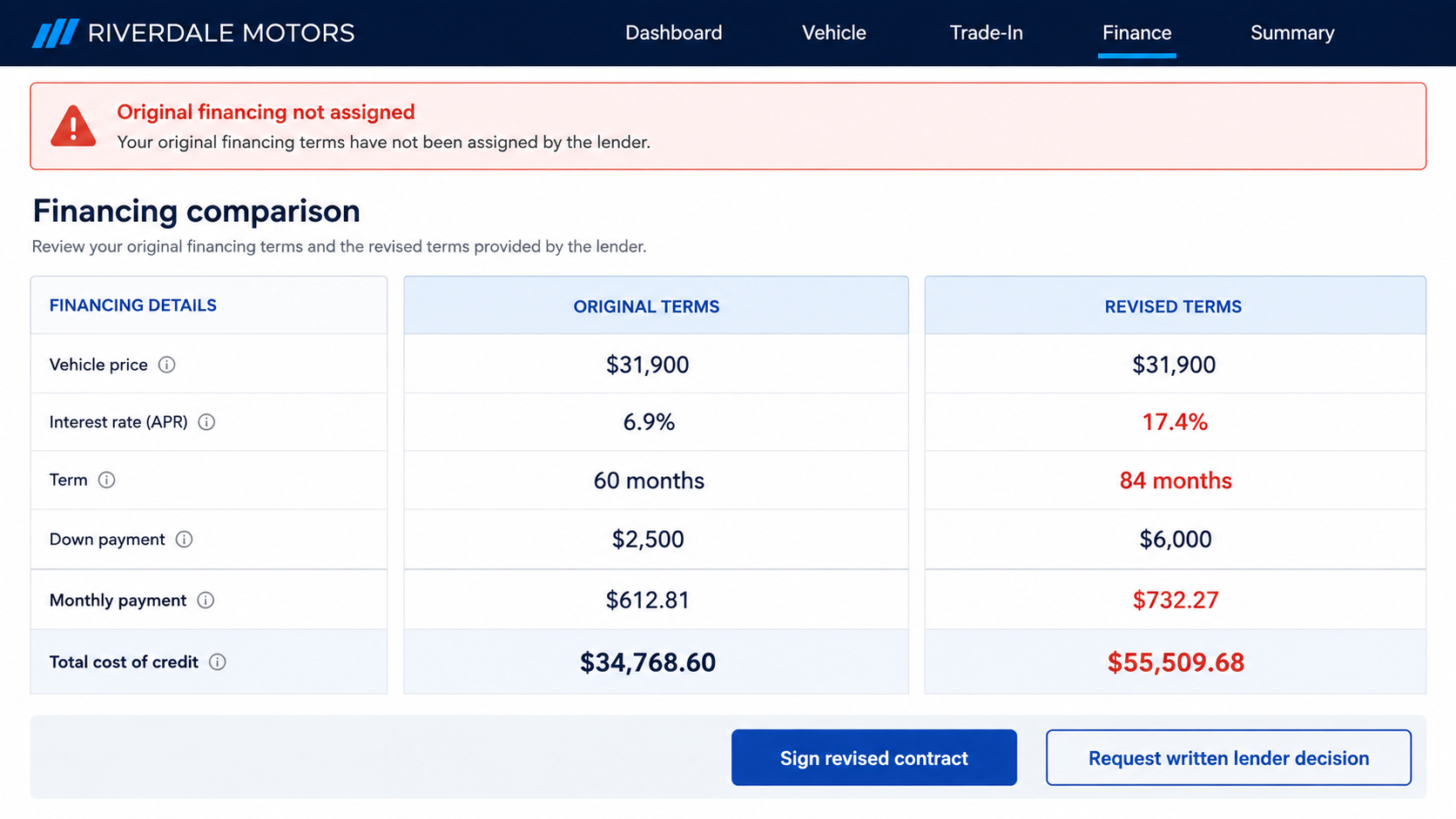
The salesperson often keeps the discussion on the monthly payment. Extending the loan can make the payment look similar while significantly increasing the total cost.
Step 6: Threats discourage the buyer from leaving or seeking advice
The dealer may demand an immediate return, threaten repossession, claim the car will be reported stolen, or say the buyer will owe large mileage and use charges.
Not every threat reflects the actual contract or law.
Pressure prevents the buyer from calling the named lender, reading the agreement, arranging independent financing, or consulting a consumer attorney.
Step 7: The trade-in and down payment become leverage
A dealer may say the trade-in has already been sold or that the deposit cannot be refunded.
The buyer then feels forced to accept the replacement loan to avoid losing both transportation and prior value.
Documents, title status, and state law determine the parties’ rights. This is why the original contract, trade-in paperwork, receipts, and communications must be preserved.
Step 8: The new loan locks in the higher cost
Once the replacement contract is signed, the dealer argues that the buyer voluntarily accepted the new terms. Challenging the transaction becomes more difficult because two sets of documents now exist.
The financial harm can continue for years through higher interest, negative equity, unnecessary add-ons, and a longer repayment period.
A side-by-side comparison can expose the pressure clearly. The vehicle remains the same while the rate, term, down payment, and total cost move sharply.
Company, Address, and Fulfillment Checks
Confirm the dealership’s exact legal identity and license
Record the legal business name, physical location, dealer license number, and the names of the salesperson and finance manager. A dealership brand may differ from the company on the contract.
Check the state motor vehicle or dealer licensing authority for the license and complaint route. Online reviews can identify patterns, but official records and documents carry more weight.
Identify the actual lender and funding status
Ask which lender approved the application, the approval reference, and whether funding is final. Call the lender using a number found independently, not a number written on a loose note.
A dealer saying “the bank changed its mind” should be able to identify the bank and explain what condition failed.
Do not rely on a verbal summary when the financing controls the cost of the entire purchase.
Reconcile every number across every document
Compare the cash price, taxes, fees, down payment, trade-in credit, financed amount, annual percentage rate, term, payment, and total of payments. Photograph or copy each page before leaving.
Reject blank spaces and unexplained add-ons. A product described as free may be financed into the balance, where it also accumulates interest.
Define delivery, cancellation, and return obligations
Read what happens if financing is not approved. The agreement should address the return deadline, mileage, damage, deposit, trade-in, and any right to cancel.
Do not assume the vehicle’s physical delivery proves the sale is unconditional. Likewise, do not assume a dealer can impose any new term it wants simply because a condition exists.
Questions to Ask in the Finance Office
- Is the financing final and funded right now?
- Which lender owns or will receive the contract?
- Is any part of delivery conditional?
- What exact clause allows the deal to be canceled?
- How long does the dealership have to notify me?
- What happens to my down payment and trade-in if financing fails?
- Can I take unsigned copies home before accepting?
- What is the annual percentage rate and total of payments?
- Which optional products are included in the amount financed?
- Will you confirm the final funding status in writing?
A trustworthy finance manager should be able to answer without turning the question into an argument.
If final approval is unavailable, leaving the car until funding is complete may be the cleanest protection.
What to Do When the Dealer Calls You Back
Do not agree to new terms during the call. Ask for the claimed rejection, complete replacement offer, and deadline in writing, then compare them with your signed documents.
Contact the lender named in the original paperwork through an independently verified number. Ask whether it received the application and whether it rejected, counteroffered, or never reviewed it.
Calculate the new total cost, not only the monthly payment. A modest-looking payment can conceal a longer term, more interest, or a larger amount financed.
If the dispute involves threats, a retained trade-in, or conflicting contracts, speak with a consumer-law attorney or local legal aid.
Rules vary by state, and individualized legal advice may materially change the response.
What to Do if You Have Fallen Victim to This Scam
- Do not sign replacement documents immediately. Tell the dealer you need the complete offer and reason for the change in writing. A same-hour deadline is a pressure tactic.
- Gather every original record. Preserve the sales contract, conditional-delivery agreement, credit application, trade-in documents, receipts, advertisements, texts, emails, and voicemail.
- Write a timeline. Record what staff said about approval, when each document was signed, when you took the car, and what the callback demanded.
- Verify with the lender. Use a phone number from the lender’s official website. Ask whether the application was submitted, approved, rejected, or counteroffered.
- Compare total loan costs. List the annual percentage rate, term, amount financed, monthly payment, total of payments, down payment, trade-in credit, and add-ons for both offers.
- Protect your trade-in and deposit. Ask in writing where the trade-in is and how the full down payment will be returned if the original agreement is canceled.
- Do not hide or damage the delivered car. Keep it insured and preserve its condition while obtaining advice. Document mileage and condition with dated photos.
- Contact a qualified local adviser. A consumer attorney, legal aid office, or state consumer agency can interpret the contract and local dealer laws.
- File complaints with appropriate regulators. Depending on the facts, this may include the state attorney general, motor vehicle dealer regulator, and the Consumer Financial Protection Bureau.
- Review your credit reports. Check which lenders received applications and dispute inquiries or accounts that were not authorized. Preserve copies before changes occur.
- Scan digital paperwork if a suspicious link or file was used. If the dealer message led to an unexpected download or remote session, run a full Malwarebytes scan.
-
Block malicious advertising and follow-up links.
AdGuard can help block many deceptive ads and phishing destinations, though it cannot resolve a contract dispute.
Frequently Asked Questions
Is every spot delivery a scam?
No. Conditional financing can be disclosed and used lawfully. It becomes concerning when approval is misrepresented, conditions are hidden, or the callback is used deceptively to force worse terms.
Can the dealer raise my interest rate after I take the car?
If financing was genuinely conditional, the dealer may present a new offer when the original cannot be funded.
You do not have to accept the new offer, but the contract and state law determine the unwind process.
Should I return the car immediately?
Do not ignore a legitimate contractual obligation, but do not act only on a threatening call.
Read the agreement, request written details, keep the car insured, and obtain local legal guidance promptly.
What happens to my down payment and trade-in?
The documents and local law control the result. Demand a written accounting and preserve trade-in records.
Seek help quickly if the dealer refuses to return property after the deal is canceled.
Why does the dealer focus on the monthly payment?
A longer term can keep a payment near the original amount while increasing total interest and negative equity. Compare the annual percentage rate, term, amount financed, and total of payments.
Can I prevent yo-yo financing?
Independent preapproval helps. You can also wait until the lender has given final approval, read every conditional clause, refuse blank forms, and leave with copies of all signed documents.
The Bottom Line
A spot delivery scam exploits the gap between driving away and final financing.
The buyer feels committed to the car, then receives a rushed choice between worse terms and a difficult return.
Confirm funding before taking delivery whenever possible. If the callback comes, verify the lender’s story, compare total costs, preserve every document, and seek local advice.

Join the discussion
0 commentsShare your experience or ask a question about this article.
Discussion
Start the conversation
Have a question or something useful to share? Add the first comment.