

The offer sounds technical enough to discourage ordinary questions. A promoter says a special federal tax credit can be purchased at a discount, supported by tribal sovereignty, private agreements, and legal opinions.
The arithmetic is deliberately attractive. Pay less today, claim a larger credit later, and reduce a tax bill or create a refund. Urgency arrives before the buyer has time to find the law that supposedly makes it possible.
There is one problem that changes the entire transaction. The federal credit being sold does not exist.
Overview
What promoters are selling
The schemes advertise products called “Tribal Tax Credits,” “Native American Tax Credits,” “Sovereign Tribal Tax Credits,” or similar names. Buyers may be told that the credits can reduce federal tax liabilities or produce refunds.
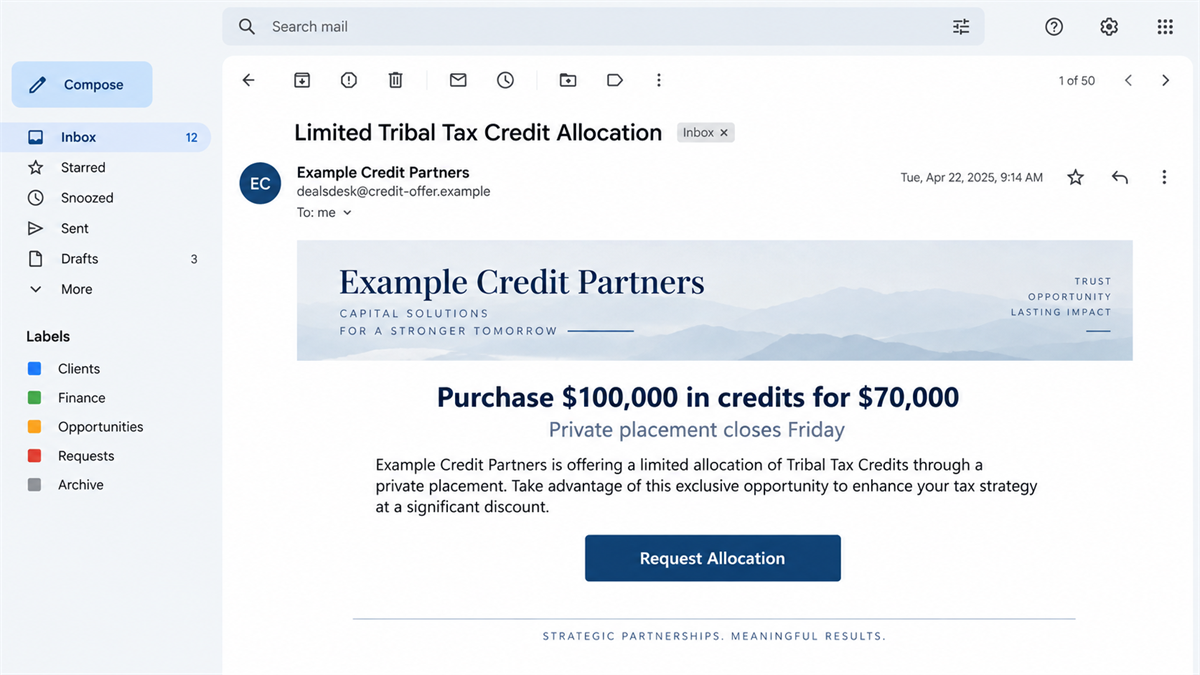
The promoter may offer the supposed credit for less than its stated face value. A business might be told it can pay $70,000 for a $100,000 tax benefit, for example, while the seller charges fees for documents or arranging the transfer.
What the IRS has confirmed
The Internal Revenue Service issued a September 18, 2026 warning stating that these federal Tribal Tax Credits do not exist. The IRS says taxpayers who claim them may face civil and criminal penalties.
This is not a disagreement about whether a real credit applies to a difficult set of facts. The agency says the product itself is fabricated and that the legal theories used to sell it do not create the promised credit.
How the pitch borrows credibility
Promoters may cite tribal ownership, sovereign status, executive orders, sections of the Internal Revenue Code, private interagency agreements, transferable credit rules, or the New Markets Tax Credit.
- Specific clean-energy credits can be transferable, but that does not create a Tribal Tax Credit.
- The New Markets Tax Credit has no relationship to the product being promoted.
- Tribal ownership does not automatically generate a federal credit for sale.
- An executive order or code citation should be verifiable in a public official source.
- Acceptance of a filed return does not mean the IRS approved every item claimed on it.
The Complexity Is Part of the Persuasion
A fabricated tax product is easier to sell when the explanation sounds too specialized for the buyer to challenge. The promoter can surround a simple claim with legal language, organizational charts, opinion letters, and references to real programs.
Real terms are mixed with a false conclusion. Transferable credits exist in limited circumstances. Tribal governments have distinct legal status. The tax code contains incentives connected to investment and development. None of those facts proves the existence of the product being offered.
A buyer may be told that the arrangement is confidential or known only to specialists. A nondisclosure agreement can make the secrecy feel professional. In reality, secrecy prevents the buyer from asking an independent tax adviser, the named law firm, or the IRS whether the credit exists.
The official IRS warning about fake Tribal Tax Credits identifies limited availability claims, unverifiable legal opinions, hidden agreements, and requests for nondisclosure as red flags.
The cultural framing can also make the scheme more harmful. A promoter may imply that questioning the product means questioning tribal sovereignty. The IRS warning does not do that. It distinguishes legitimate tribal communities and lawful tax rules from a federal credit that promoters invented.
How the Fake Tribal Tax Credit Scam Works
Step 1: A promoter finds a taxpayer with a large bill
The target may be an individual, business owner, tax professional, investor, or member of a tribal community. The approach can arrive through a referral, seminar, direct email, professional network, or private sales conversation.
The pitch is tailored to the expected tax liability. A large bill makes the promised discount feel more valuable and gives the promoter room to charge a substantial arrangement fee.
Step 2: The credit is presented as scarce
The seller may say that only a limited allocation remains, that another buyer is waiting, or that paperwork must be completed before a filing deadline. Scarcity discourages the target from seeking independent advice.
The credit may be described as a social or economic opportunity connected to tribal development. That story adds moral pressure to the financial incentive.
Step 3: Real law is arranged around a false product
Documents may mention transferable tax credits, the New Markets Tax Credit, tribal sovereignty, executive orders, or sections of the tax code. The references can be real while the claimed connection is false.
A long memorandum is not proof. The decisive question is whether federal law creates the exact credit being sold and permits the exact taxpayer to acquire and claim it.
Step 4: A legal opinion replaces independent verification
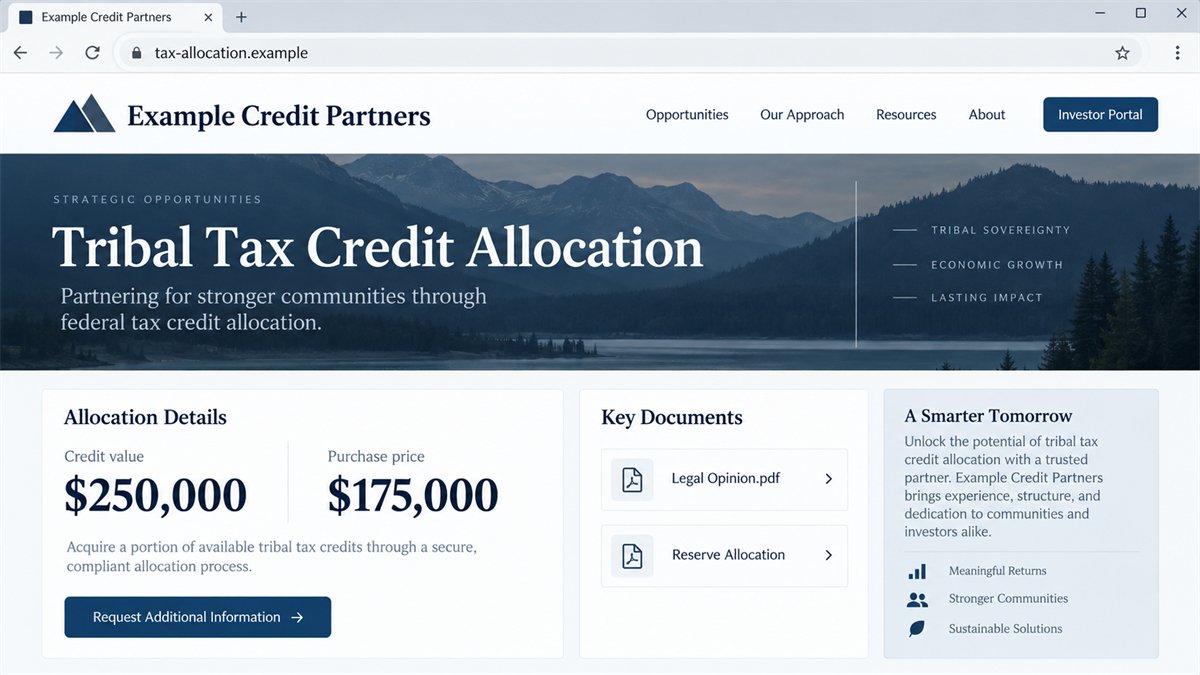
The promoter may provide a document bearing a law firm’s name or an attorney’s signature. Buyers can be told that the opinion protects them or proves the IRS must honor the claim.
The IRS warns that some legal opinions may be unverifiable. Contact the identified attorney through contact information obtained independently. Even a genuine opinion is not a guarantee that a return position is correct.
Step 5: The buyer pays for the credit and paperwork
Money may be described as the purchase price, placement fee, administrative charge, legal fee, or document-preparation cost. The recipient may not match the organization described in the presentation.
The buyer may also sign a nondisclosure agreement. That contract can make it harder to discuss the arrangement with a regular accountant, auditor, business partner, or tribal authority.
Step 6: The false claim creates real tax exposure
The promoter may prepare documents for a return or instruct a tax professional how to report the credit. A refund or accepted electronic filing can then be used as “proof” for future customers.
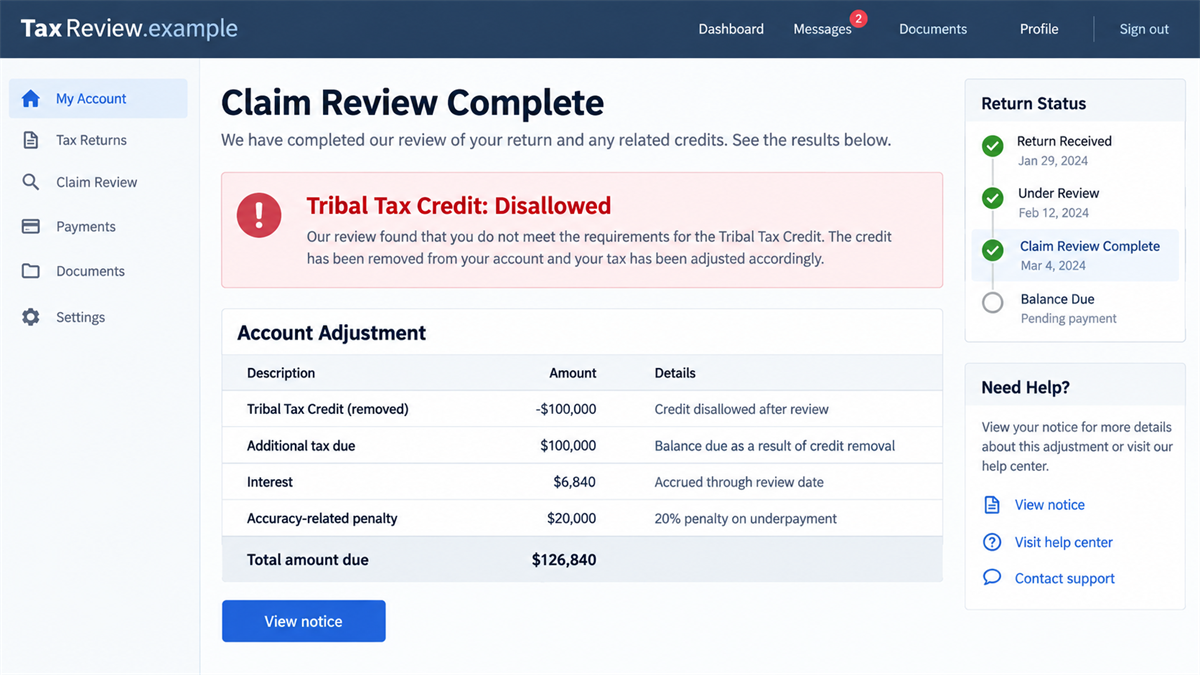
IRS acceptance only confirms that a return entered the system. It does not establish that every claim was examined or allowed. A later audit can disallow the credit, assess tax, add interest and penalties, and investigate the conduct behind the filing.
Why an Accepted Return Proves Very Little
Tax systems process enormous numbers of returns. Many claims are not examined before a refund is issued or a return is marked accepted. Promoters exploit the gap between processing and substantive approval.
A screenshot showing an accepted return is not an IRS legal determination. It does not validate the credit for the person in the screenshot, and it certainly does not validate it for the next buyer.
Ask for the statutory provision that creates the exact credit. Then ask an independent, qualified tax professional to verify it using official law and guidance. Do not let the promoter select the only adviser permitted to explain the product.
MalwareTips has also documented scams built around supposed IRS money, including the fake third-round economic impact payment offer. In both cases, tax language is used to make unexpected money or tax relief feel official.
Promoters may surround the offer with purchase agreements, opinion letters, tribal resolutions, invoices, or confidentiality clauses. The quantity of paperwork can make the buyer feel that someone else has already completed the difficult legal analysis.
But a contract can document a transaction that never created a valid federal tax benefit. A legal-looking document does not force the IRS to recognize a credit that Congress did not establish.
Buyers should also notice who is allowed to answer questions. If every concern is routed back to the seller’s chosen lawyer or tax preparer, the review is not independent.
A qualified tax professional should receive the complete documents, identify the exact Code section, and explain how the buyer became eligible. They should be free to contact the IRS or another independent authority without permission from the promoter.
Secrecy is another warning. Legitimate tax planning can involve private records, but a demand not to discuss the credit with an outside adviser protects the sales pitch, not the taxpayer.
Red Flags in a Tribal Tax Credit Offer
The IRS has identified several specific warning signs. A serious proposal should become clearer under independent scrutiny, not more secretive.
- The credit is sold for substantially less than its stated value.
- The promoter says only a small allocation remains.
- The legal basis depends on a government agreement that is not public.
- The seller cites tribal ownership as if it automatically creates a federal credit.
- The materials misuse transferable clean-energy credit rules.
- The New Markets Tax Credit is mentioned without a valid connection.
- A legal opinion cannot be confirmed with the named attorney or firm.
- The buyer must sign a nondisclosure agreement before receiving basic details.
- A previously accepted return is offered as the main proof.
- The promoter discourages contact with the IRS or an independent tax professional.
Company and Checkout Checks
Identify every promoter and intermediary
Record the legal names of the seller, document preparer, payment recipient, referring adviser, and any organization said to issue the credit. Search business and professional registries independently.
Verify the claimed legal authority
Ask for the exact statute, regulation, published IRS guidance, or public agreement. Do not accept a private presentation that merely quotes real legal terms. The IRS says no federal Tribal Tax Credit exists.
Contact the named law firm yourself
Use a phone number or website found independently, not the details in the sales packet. Ask whether the attorney prepared the document, whether it remains current, and whether it addresses the exact proposed transaction.
Trace the payment and return position
Understand who receives each fee and who will sign the tax return. Refuse any arrangement that hides the payment recipient, changes the description on an invoice, or asks a preparer to claim a position they cannot independently support.
What to Do if You Have Fallen Victim to This Scam
- Stop further payments. Do not buy another allocation, pay for an amended opinion, or send a fee to protect the original transaction.
- Preserve the complete sales record. Save emails, presentations, agreements, invoices, wire details, legal opinions, tax forms, chat messages, and the names of everyone involved.
- Speak with an independent tax professional. Choose someone who did not sell, refer, or prepare the purported credit. Ask them to review the return position and filing deadlines.
- Correct a filed return promptly if advised. An attorney, enrolled agent, or CPA can explain whether an amended return or other disclosure is appropriate. Do not rely on the promoter to fix the claim.
- Contact the payment provider. If the sale involved fraud or misrepresentation, ask the bank or card issuer what recall, dispute, or recipient-reporting options remain.
- Report the promotion. The IRS directs people to Form 14242 for suspected abusive tax promotions or preparers. Other suspected tax fraud can be reported through IRS.gov.
- Secure any exposed accounts. If documents were uploaded to an unfamiliar portal, change reused passwords and monitor financial and business accounts.
- Scan suspicious files. If the packet included software, unusual attachments, or a login tool, run a security scan. Malwarebytes can help identify malicious documents, credential stealers, and related threats.
AdGuard can reduce exposure to malicious ads and known scam pages if the offer arrived online. It cannot evaluate a tax theory, so a qualified independent adviser and official IRS guidance remain the essential checks.
Questions to Ask Before Buying Any Tax Credit
Ask what federal law creates the credit, which taxpayers can claim it, and whether a sale or transfer is permitted. Demand official public authority for every answer.
Ask who issued the credit and how ownership is recorded. A chain of private certificates does not create a federal tax attribute.
Ask whether your existing tax professional can review everything before a payment or nondisclosure agreement. A legitimate arrangement should survive independent professional review.
Ask what happens if the IRS disallows the claim. A refund promise from a thinly capitalized promoter is not protection against tax, interest, penalties, audit costs, or criminal exposure.
Frequently Asked Questions
Do federal Tribal Tax Credits exist?
No. The IRS says the “Tribal Tax Credits,” “Native American Tax Credits,” and similar products being promoted do not exist under federal law.
Can tribal sovereignty create a credit for sale?
Not by itself. The IRS states that tribal ownership or sovereign status does not create the federal credit described by these promoters.
What if the promoter cites transferable credits?
Certain clean-energy credits can be transferred under specific rules. Those provisions do not create a general Tribal Tax Credit.
Does an accepted tax return prove the credit is valid?
No. Acceptance means the return was received and processed. It does not mean the IRS examined and approved every claim.
Could the buyer face penalties?
Yes. The IRS warns that taxpayers who claim these nonexistent credits may face civil and criminal penalties, depending on the facts.
How can the scheme be reported?
The IRS points to Form 14242 for suspected abusive tax promotions or preparers and its online reporting options for other tax fraud.
The Bottom Line
The name sounds specialized, but the answer is simple: the IRS says the federal Tribal Tax Credits being sold by promoters do not exist.
Do not pay for the credit, sign secrecy documents, or place it on a return based on the seller’s opinion. If a claim has already been purchased or filed, preserve the record and obtain independent tax advice immediately.








