

A laboratory mouse study rarely becomes a viral beauty promise overnight, but deoxyribose serum advertisements have made that leap with remarkable confidence.
The products look scientific, the bottles appear interchangeable, and the wording suggests bald areas can be reversed through a simple daily application.
Overview
What These Ads Are Selling
Deoxyribose Scalp Serum is not one clearly defined product from one clearly defined manufacturer. Similar bottles appear across multiple online stores under shifting labels.
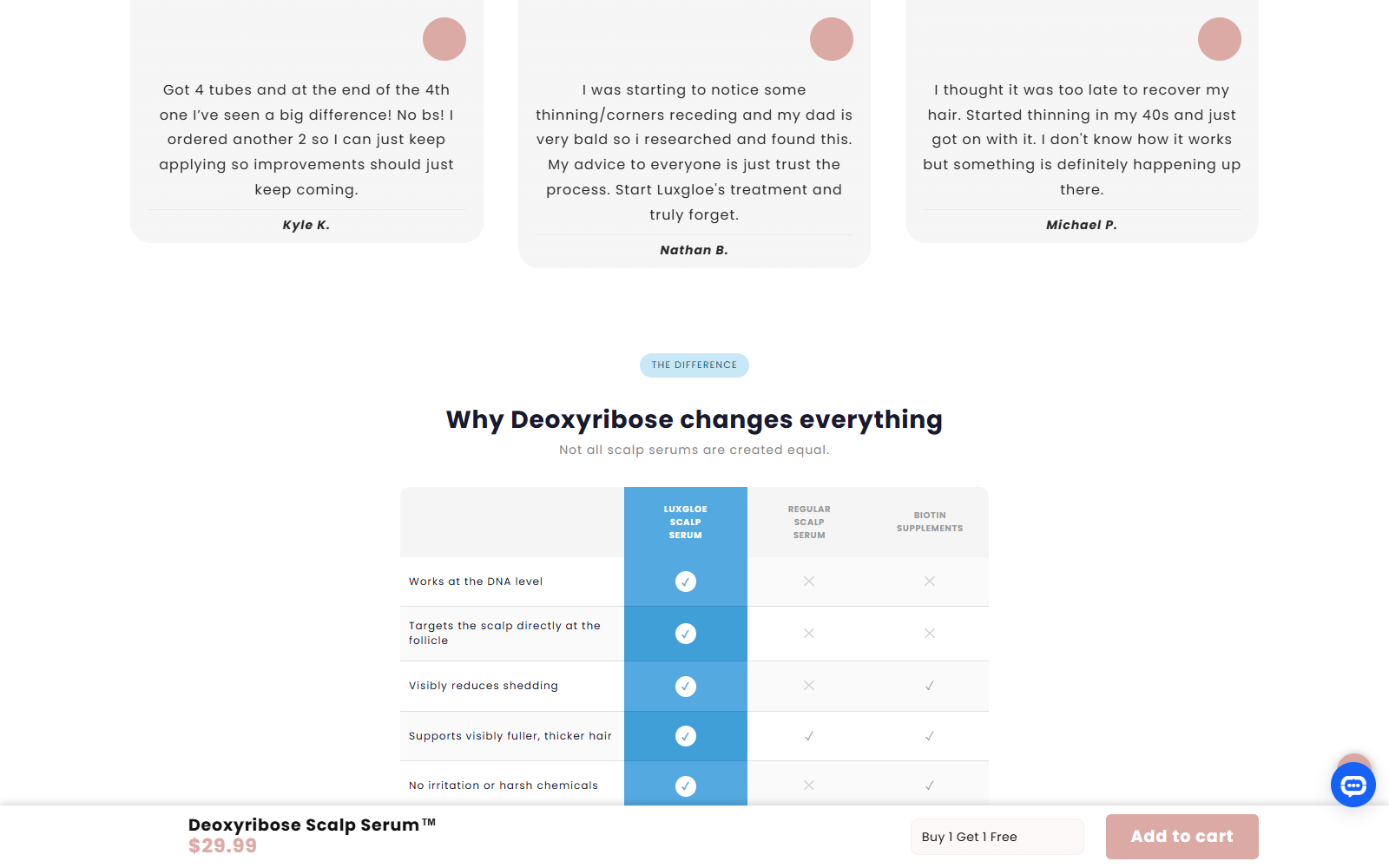
The pages promise thicker hair, renewed follicles, restored bald spots, and growth linked to a sugar molecule called deoxyribose.
Some sellers use phrases such as DNA-level action or clinical formulation. Others lean on large review counts, before-and-after pictures, and steep discounts.
The campaign appears to borrow credibility from a genuine 2024 mouse study, then stretch those early findings into confident human product claims.
The Warning Signs
The scientific starting point is real, but the commercial conclusion is much larger than the study supports.
- The cited research involved mice, not a completed human hair-regrowth trial.
- The study tested a specific 2-deoxy-D-ribose hydrogel, not every serum sold online.
- Multiple sellers use similar bottles and nearly identical benefits.
- Finished-product ingredient amounts and testing are often unclear.
- Review totals are presented without transparent verification methods.
- At least one marketplace listing offers monthly subscribe-and-save billing.
- Customer feedback includes product-mismatch and false-advertising complaints.
A customer can therefore buy something very different from the experimental material, dose, or application method used in the original research.
Our Assessment
Deoxyribose is an interesting research lead, not an established cure for human baldness. The distinction is central to evaluating these advertisements.
We found no basis for treating the rotating retail serums as clinically proven equivalents of the experimental hydrogel.
The risk varies by storefront. One may sell a one-time bottle, another may promote bundles, while another explicitly offers a monthly subscription.
Do not assume all sellers share the same terms. Verify the precise page, merchant, formula, and billing choice shown at checkout.
What the 2024 Study Actually Tested
The Research Used a Mouse Model
The study appeared in Frontiers in Pharmacology and examined 2-deoxy-D-ribose in a testosterone-induced alopecia model involving mice.
Animal models help researchers explore biological possibilities. They do not automatically establish safety, dose, effectiveness, or cosmetic outcomes in humans.
Mouse skin, hair cycles, metabolism, and controlled laboratory conditions differ from daily use on a person’s scalp.
A useful result can justify more research without justifying a retail claim that a bottle regrows human hair.
The Tested Material Was a Specific Hydrogel
The researchers did not evaluate every commercial liquid containing the word deoxyribose. They prepared and tested a particular hydrogel formulation.
Vehicle composition matters because it affects stability, contact, release, absorption, and local response.
A storefront serum may use different ingredients, concentration, preservation, packaging, and manufacturing conditions. Similar naming does not establish equivalence.
The Study Did Not Validate “DNA-Level” Marketing
Deoxyribose is a sugar related to biological molecules, but that fact does not prove a cosmetic serum safely rewrites or repairs DNA.
DNA-level language is memorable because it implies deep, fundamental action. It can also mislead shoppers about what the research demonstrated.
The mouse study explored hair-growth effects and blood-vessel-related mechanisms. It did not prove that retail drops alter human DNA to reverse baldness.
Human Evidence Remains the Missing Bridge
A convincing human trial would define participants, diagnoses, formula, concentration, controls, duration, endpoints, adverse effects, and statistical methods.
It would distinguish androgenetic hair loss from autoimmune, nutritional, scarring, hormonal, medication-related, and temporary causes.
The retail pages reviewed did not provide that bridge. They moved directly from emerging science to purchasing language.
How the Deoxyribose Serum Campaign Works
Step 1: A Real Study Supplies the Hook
Marketers begin with a genuine scientific paper, which makes the story more durable than a completely invented discovery.
Readers searching the ingredient can find legitimate research. That search result may feel like confirmation of the advertised finished product.
The crucial question is narrower: did the study test this exact bottle, manufacturer, concentration, and customer population?
Step 2: Mouse Results Become Human Certainty
Words such as may, model, experimental, and preliminary disappear as the commercial copy becomes more direct.
A possible research pathway becomes a claim to regrow bald spots, awaken dormant follicles, or restore density.
This conversion is persuasive because consumers usually see the conclusion without reading the paper’s methods and limitations.
Step 3: Scientific Vocabulary Decorates the Bottle
DNA, follicles, vascular support, clinical formulation, and cellular action create an advanced appearance.
Those terms may describe concepts, but they do not disclose the product’s active amount, purity, stability, or demonstrated outcome.
The more technical the advertisement sounds, the more important it becomes to locate simple facts on the actual label.
Step 4: Lookalike Stores Multiply the Offer
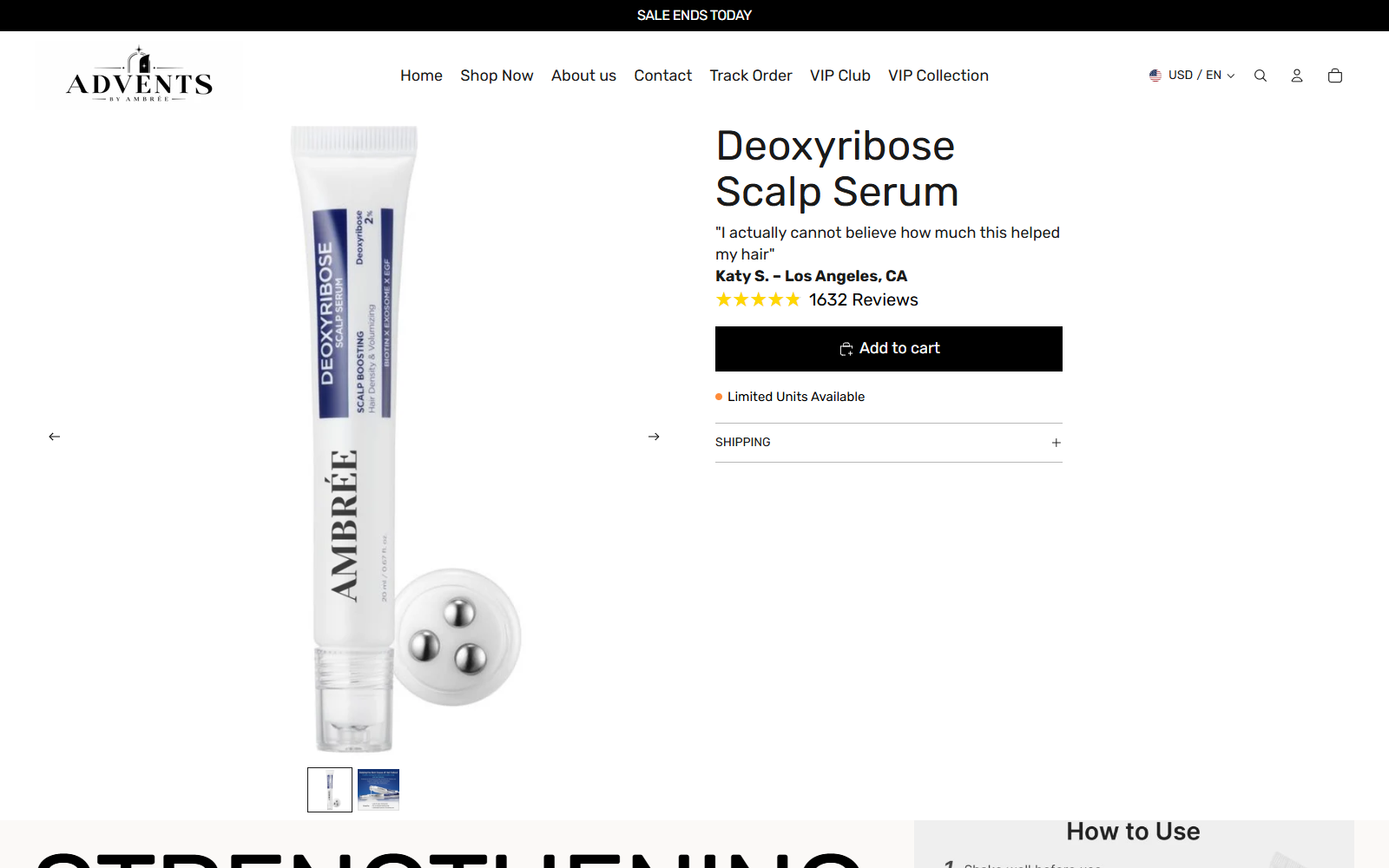
Louxlue, Ambrée, Aparthy, and other sellers display similar concepts and packaging. The campaign is broader than a single domain.
A disappearing page does not end the promotion. The same bottle image can reappear under another store, discount, or review total.
This is why an article focused only on one temporary website would miss the larger pattern.
Step 5: Before-and-After Imagery Replaces Measurement
Hair photographs can differ through lighting, angle, styling, fiber products, haircut, moisture, or image editing.
Unless the seller documents standardized conditions and participant history, a dramatic pair of pictures is weak evidence.
An authentic clinical assessment would also account for normal hair cycling and concurrent treatments.
Step 6: Discounts and Review Counts Create Momentum
Buy-one-get-one offers, 70% reductions, large review numbers, and limited availability encourage immediate ordering.
The customer may buy several bottles before confirming ingredients, seller identity, tolerance, or return rights.
Review counters deserve the same questions as the science: who submitted them, which formulation was used, and were purchases verified?
Step 7: Some Sellers Add Recurring Billing
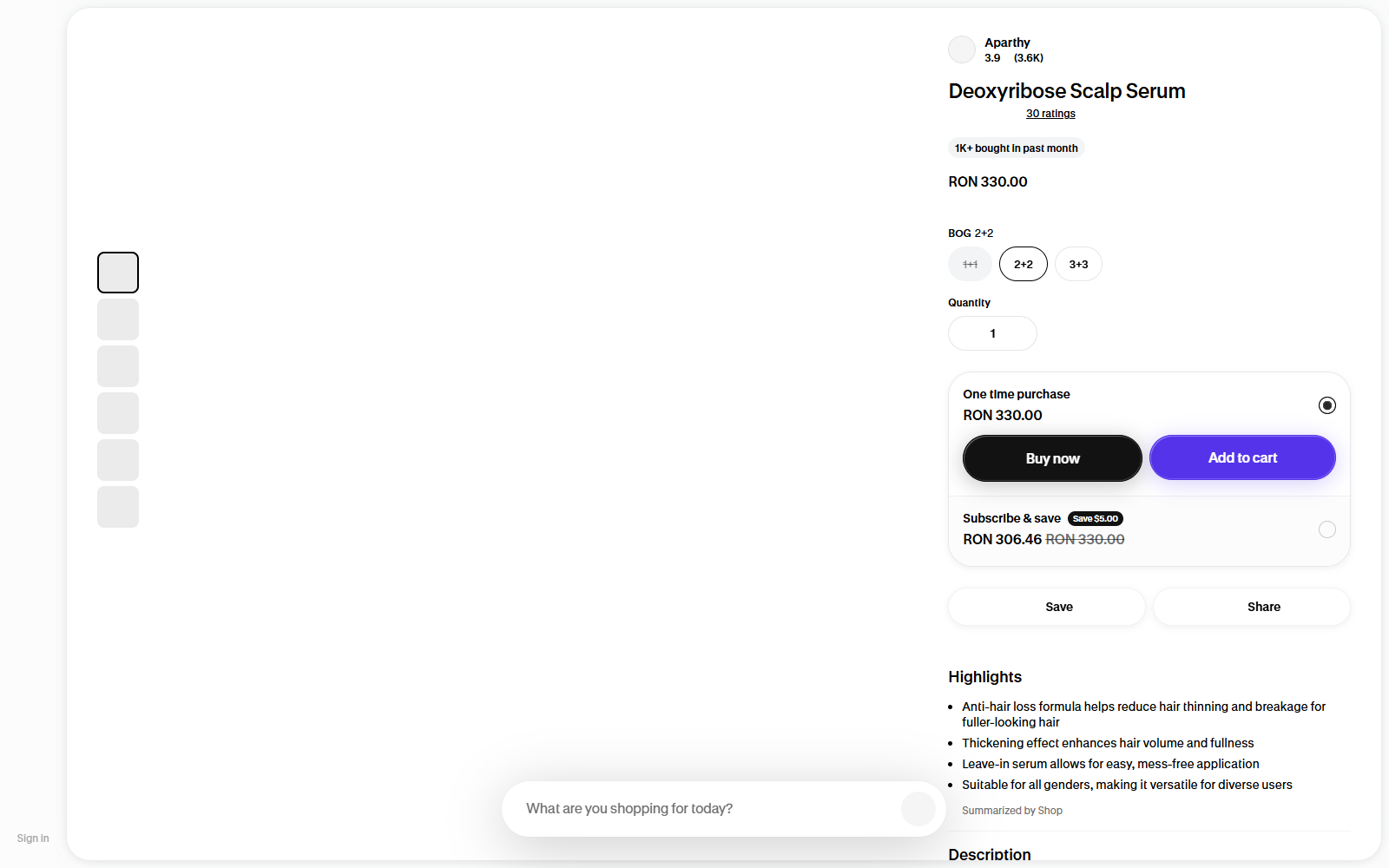
An Aparthy Shop listing displayed a monthly subscribe-and-save option alongside a one-time purchase.
That proves recurring billing exists in at least one version of the offer. It does not prove every deoxyribose seller enrolls customers automatically.
Subscription language can be easy to overlook when the shopper is focused on a discount. Inspect the selected option immediately before payment.
Step 8: Returns Depend on the Individual Store
Because multiple merchants sell similar products, there is no universal refund policy or customer-service route.
One store’s promise cannot be used against another merchant. Save the exact domain, checkout, receipt, company name, and policy attached to your order.
Company, Address, and Fulfillment Checks
The Brand Name May Not Identify the Manufacturer
A store can place its own label on a generic cosmetic product while using another company for manufacturing and fulfillment.
Look for a responsible-person name, physical address, batch code, country of origin, ingredient list, and manufacturer contact on the bottle.
If the packaging only repeats the storefront brand, traceability may be limited when a reaction occurs.
Repeated Bottle Designs Suggest a Supply Chain
Similar applicators, color schemes, and sales copy across unrelated domains can indicate a widely sourced or private-label item.
That does not automatically make the contents dangerous. It means claims from one seller should not be assumed to validate another seller’s batch.
Compare ingredient panels and lot information, not only front-label artwork.
Addresses Can Belong to Fulfillment Services
A return location may be a warehouse, mailbox, residential property, or unrelated office rather than the formula’s manufacturer.
Search the address and ask what function occurs there. A parcel-handling center cannot necessarily answer technical safety questions.
Never send a return to an address copied from another deoxyribose store. Obtain authorization from your own merchant.
Support Must Identify the Exact Formula
Ask for the deoxyribose concentration, full ingredient list, stability information, intended use, contraindications, and evidence specific to the sold formulation.
A response linking only to the mouse study does not answer whether the retail serum matches the experimental hydrogel.
Also ask who handles adverse-event reports. A company selling a biologically framed cosmetic should have a clear process.
Subscription and Checkout Risks
One-Time and Monthly Choices Can Look Similar
Subscribe-and-save designs usually emphasize a lower price, while the renewal frequency appears in smaller text.
Confirm the selected option after any coupon, bundle change, or page refresh. Checkout scripts can preserve a prior choice.
A Discount Is Not Worth an Unwanted Renewal
Calculate the annual cost of a monthly plan before accepting the first-order reduction.
If cancellation requires an account, create access immediately and confirm that the order appears with the expected billing schedule.
Cancellation and Refunds Are Separate
Canceling future shipments may not refund the first order. Returning one bottle may not terminate the subscription.
Request both actions explicitly and obtain written confirmation for each.
Card Replacements May Not Stop Every Merchant
Some recurring-payment systems can receive updated card information through account-updater services.
Ask the issuer to block the merchant’s recurring authority, not merely replace the physical card.
Health Risks Behind a Cosmetic Promise
Scalp Irritation Can Worsen Hair Shedding
Fragrance, preservatives, solvents, botanicals, or unknown concentrations can cause redness, itching, swelling, flaking, or contact dermatitis.
Stop using the product after a concerning reaction. Repeated application to irritated skin can make evaluation more difficult.
Hair Loss Needs the Correct Diagnosis
Different patterns require different approaches. Scarring alopecia can permanently damage follicles and deserves timely specialist attention.
Sudden shedding may follow illness, childbirth, nutritional deficiency, medication, endocrine changes, or significant stress.
A viral serum can delay diagnosis while the customer waits for a promised transformation.
Patch Testing Has Limits
A small test can reveal some immediate irritation, but it does not prove long-term safety, effectiveness, or absence of delayed allergy.
Follow the actual label and seek professional advice for sensitive skin, pregnancy, scalp disease, or multiple topical treatments.
Do Not Combine Products Blindly
Layering minoxidil, prescription treatments, essential oils, acids, and experimental serums can increase irritation or alter absorption.
Tell a dermatologist everything being applied, including products marketed as natural.
How to Verify a Hair-Growth Claim
Match the Product to the Study
Compare exact formula, concentration, dose, vehicle, application schedule, population, and duration. A shared ingredient name is not enough.
Look for Human Outcomes
Meaningful trials should report hair counts or standardized density measurements, not only testimonials and selected photographs.
Check Safety Reporting
Reliable evidence includes dropouts and adverse events. A page claiming universal success without side effects should increase skepticism.
Consider Established Options
A dermatologist can discuss diagnosis-specific treatments, realistic timelines, monitoring, and the strengths and limits of available evidence.
What to Do if You Have Fallen Victim to This Scam
With rotating storefronts, correctly identifying your merchant is the essential first move.
- Stop after a serious reaction. Wash as directed, preserve the bottle, and seek medical help for swelling, blistering, breathing difficulty, or severe symptoms.
- Identify the exact seller. Record the domain, merchant name, order number, card descriptor, product label, lot, and return address.
- Save the scientific claims. Capture DNA wording, bald-spot promises, study references, review counts, discounts, and before-and-after images.
- Check billing frequency. Review checkout emails and account settings for monthly subscribe-and-save or other recurring terms.
- Cancel future shipments separately. Ask for written subscription cancellation and a distinct answer about refunding the current order.
- Contact the payment provider promptly. Explain unauthorized renewals, non-delivery, product mismatch, or refusal to honor written policies.
- Document the received formula. Photograph the sealed parcel, ingredients, bottle, applicator, batch details, and differences from the advertisement.
- Secure the browser. Run Malwarebytes if redirects, downloads, extensions, or notification prompts accompanied the sales page.
- Block repeat promotion. AdGuard can reduce tracking and deceptive advertisements, but it cannot diagnose hair loss or stop an existing subscription.
- Report deceptive claims. Send evidence to marketplaces, advertising networks, consumer authorities, and cosmetic regulators where appropriate.
Do not discard packaging while a charge dispute or adverse-event report is open. The lot number may connect your experience to a specific production run.
If hair loss continues, arrange a proper evaluation. Recovering money matters, but identifying a treatable cause matters more.
Frequently Asked Questions
Did deoxyribose regrow hair in a study?
A 2024 study reported promising results using a specific 2-deoxy-D-ribose hydrogel in a mouse alopecia model.
Does that prove retail serums work on people?
No. Animal findings do not validate every commercial formula, concentration, manufacturer, or human marketing claim.
What does “works at DNA level” mean?
The phrase is promotional and can imply more than the study showed. It does not prove that a serum repairs DNA or reverses baldness.
Are all deoxyribose serums subscriptions?
No. One reviewed listing offered monthly billing, while other stores displayed ordinary product purchases. Check your exact checkout selection.
Why do so many websites sell similar bottles?
The pattern is consistent with private-label or widely sourced products marketed by separate storefronts. Similar appearance does not guarantee identical contents.
Should I try it before seeing a dermatologist?
Persistent, sudden, patchy, painful, or scarring hair loss deserves professional evaluation before experimenting with an inadequately documented serum.
The Bottom Line
Deoxyribose research is interesting, but the advertisements skip the hardest step: proving that a particular retail bottle safely regrows human hair.
Mouse data, scientific vocabulary, lookalike stores, dramatic imagery, and occasional subscription pricing create a campaign much stronger than the available finished-product evidence.
Verify the precise formula and merchant, avoid recurring billing you did not intend, and do not let a viral research headline delay proper diagnosis.








