

A set of low-priced dentures can look like an easy escape from dental bills, uncomfortable appointments, and the embarrassment of missing teeth.
HazyGalaxy wraps that hope in a confident offer, but the details behind its fit, reviews, delivery, and refund rules tell a more complicated story.
Overview
What HazyGalaxy Is Selling
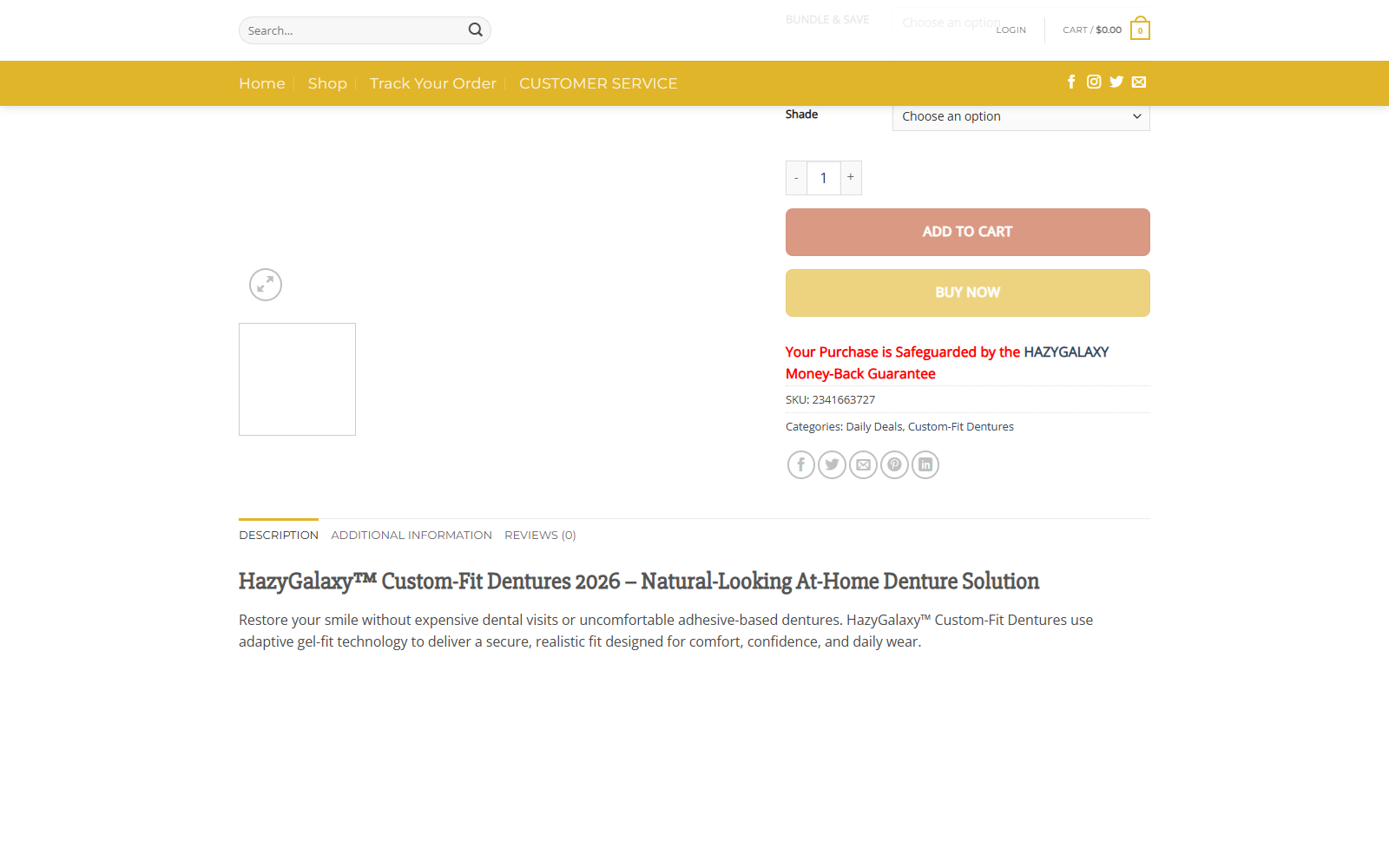
HazyGalaxy advertises an at-home denture set that supposedly creates a natural-looking smile without expensive dental visits or traditional adhesives.
The page describes an adaptive gel-fit system and presents several shade options. Prices reviewed ranged from $29.50 to $59.50.
Its description suggests buyers can fit the product themselves, wear it daily, speak confidently, and eat foods such as steak, apples, and corn.
Those are ambitious promises for an inexpensive mail-order product that is not fitted through a dentist or supported by individual oral measurements.
Why the Offer Raises Concerns
The website combines urgent discount language with broad functional claims, limited seller transparency, restrictive cancellation wording, and weak independent customer feedback.
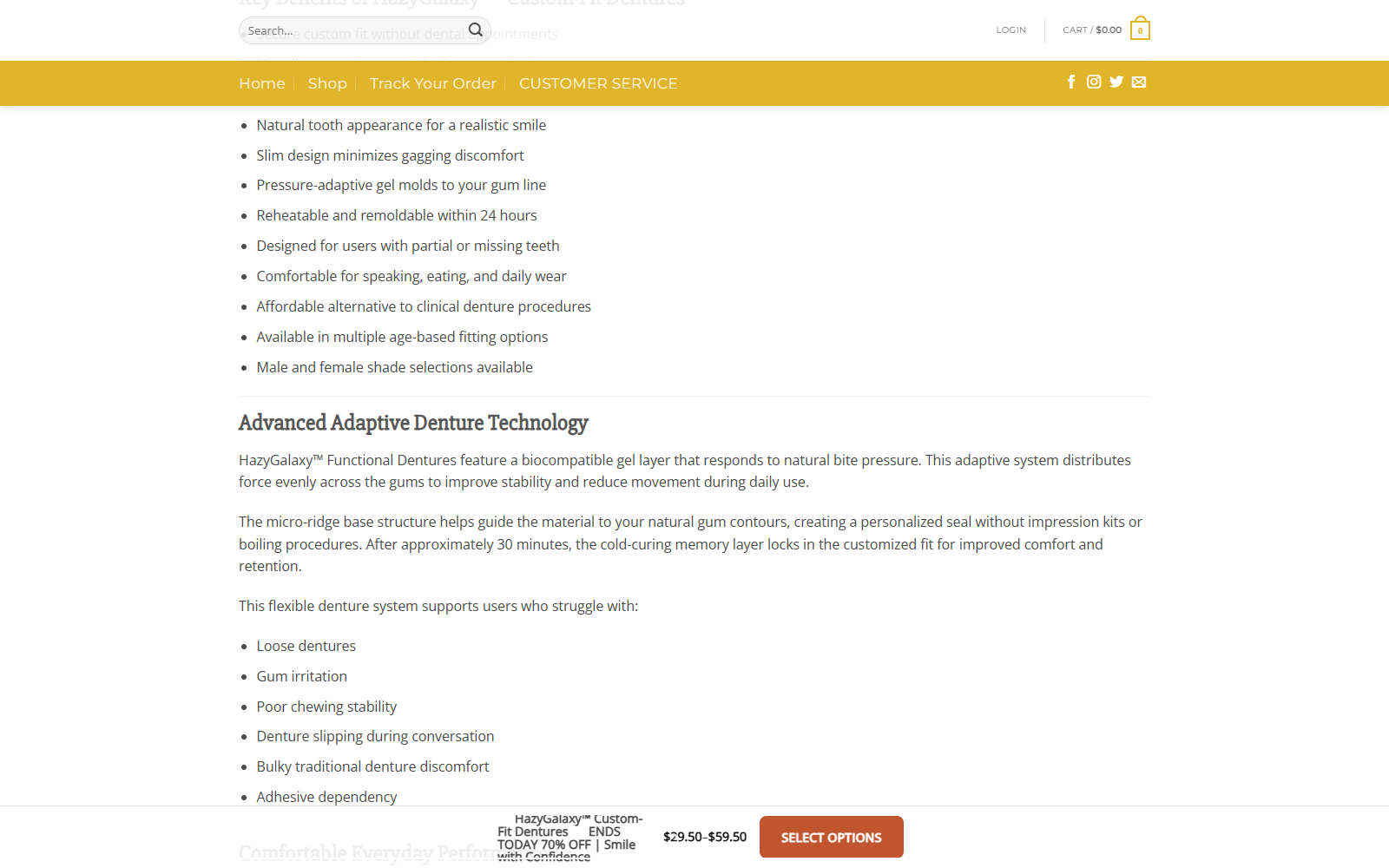
- The page advertises 70% off and says the offer ends today.
- The product claims to adapt securely without professional fitting.
- The store shows no onsite reviews for the item.
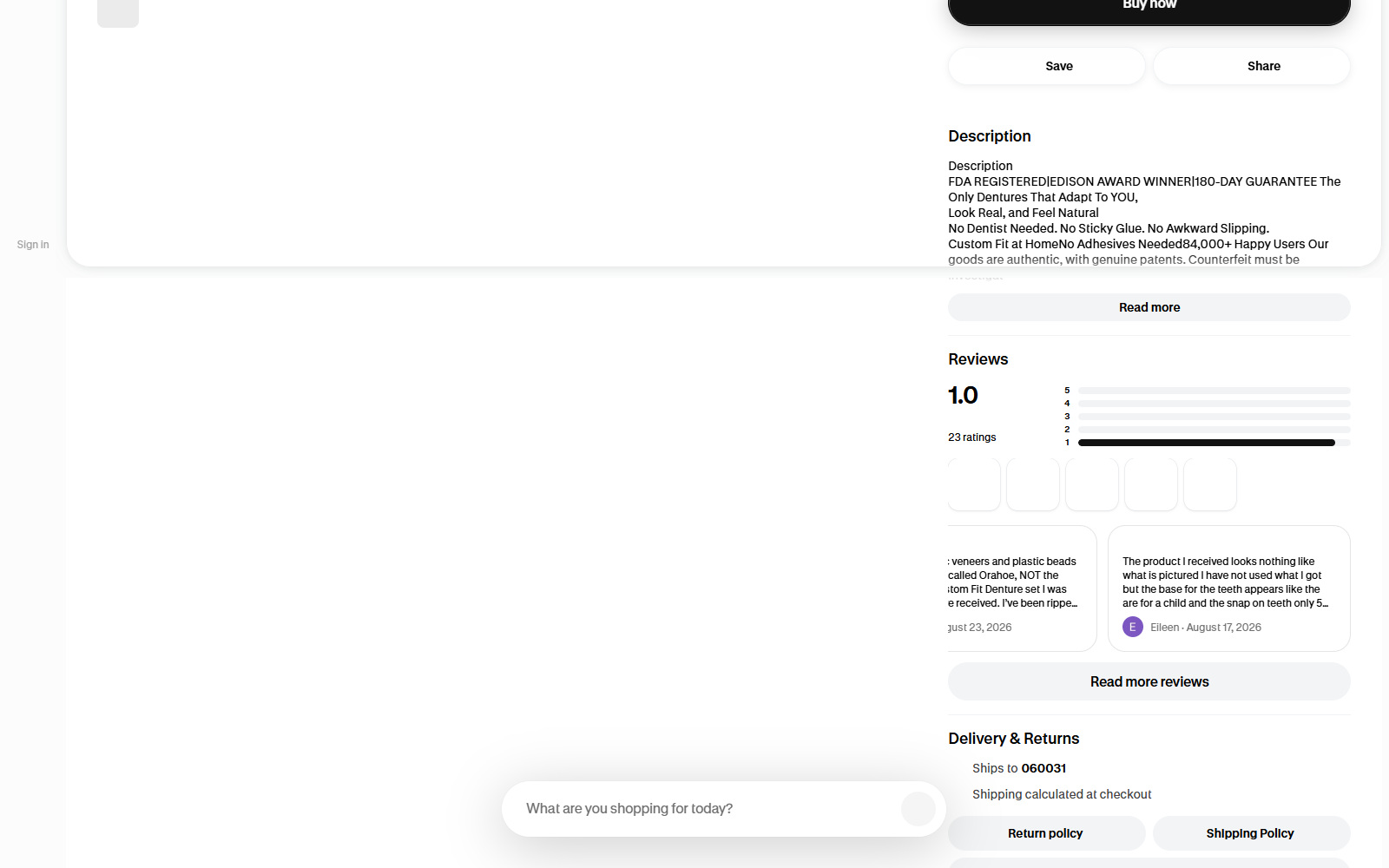
- A separate Shop listing displayed a 1.0 rating from 23 ratings.
- Reported complaints describe plastic veneers or beads unlike the advertisement.
- The policies say orders cannot be canceled after placement.
- Return eligibility is narrow, time-limited, and customer-funded.
This does not prove that every parcel is empty or every buyer receives the same item. It does show a high-risk purchase with serious expectation gaps.
Our Verdict
HazyGalaxy dentures should not be treated as a substitute for professionally assessed dentures. Fit, bite alignment, gum health, and underlying disease require individual evaluation.
The product may function as a temporary cosmetic cover for some users. The sales page goes further by presenting it as a practical daily denture solution.
That gap matters because a poorly fitting device can cause sore areas, unstable chewing, altered speech, and delayed treatment for oral problems.
Combined with negative feedback and difficult return terms, the offer is not one we would consider low risk.
What the Denture Claims Leave Out
A Mouth Is Not a Standard Mold
Denture fit depends on gum contours, remaining teeth, jaw relationships, healing, saliva, muscle movement, and how upper and lower surfaces meet.
A generic heat-softened material cannot assess those factors. It may feel tight in one area while rocking, rubbing, or creating pressure elsewhere.
The words custom fit imply personalization. Here, the customization appears to be performed by the customer using the supplied material, not by a dental laboratory.
That is a major difference. A home-adjusted cosmetic appliance should not inherit the expectations people associate with professionally made dentures.
Eating Claims Need Particular Caution
The page mentions foods that require meaningful biting and chewing force. Stability during a staged product demonstration does not prove safe performance during normal meals.
A loose appliance can shift unexpectedly. Food may collect beneath it, gums may become irritated, and the bite can feel uneven.
New pain, bleeding, ulcers, swelling, bad taste, or difficulty swallowing should not be dismissed as a normal adjustment.
The American Dental Association advises professional evaluation when dentures fit poorly. Persistent problems can require adjustment, repair, or replacement.
Cosmetic Improvement Is Not Dental Treatment
A whiter or fuller-looking smile can create an immediate emotional benefit. That visual change does not treat decay, infection, gum disease, or bone loss.
Covering a painful area can hide a symptom while the underlying problem progresses. An inexpensive appliance should never postpone urgent dental care.
People considering the product should ask a simple question: is the goal a brief photograph, or dependable speaking and chewing throughout the day?
The more functional the goal becomes, the more important professional assessment, precise fit, and follow-up support become.
How the HazyGalaxy Denture Funnel Works
Step 1: The Ad Starts With an Expensive Problem
Dental care can be difficult to access, and dentures can involve appointments, impressions, adjustments, and substantial cost.
The advertisement offers a shortcut. It presents a product that can supposedly restore confidence at home for less than many routine dental visits.
That message targets a real vulnerability. Buyers may feel embarrassed, financially stretched, or tired of waiting for care.
Step 2: “Custom-Fit” Reframes a Generic Product
The phrase suggests a device made for one person’s mouth. The page instead describes a buyer-managed gel-fitting process.
This linguistic shift is powerful. A mass-produced item sounds individualized without the seller providing clinical assessment or a laboratory-made appliance.
Shoppers may imagine conventional denture quality at a fraction of the price, even though the production and fitting processes are fundamentally different.
Step 3: Dramatic Use Cases Raise Expectations
Claims about steak, apples, corn, comfortable speech, and daily wear move the product beyond a simple cosmetic cover.
Specific examples help buyers picture ordinary life returning. They also increase the risk of disappointment when stability or fit is inadequate.
The page does not provide meaningful clinical data showing how many users can safely perform those activities with the advertised product.
Step 4: The Discount Creates a Deadline
A 70% reduction and ends-today message suggest that careful comparison could mean losing the deal.
Recurring countdown language is common in direct-response sales funnels. The relevant question is whether the deadline actually changes across visits.
Buyers should never rush a dental decision because a webpage says time is running out. Oral health does not become less important during a sale.
Step 5: The Checkout Becomes Difficult to Reverse
HazyGalaxy’s delivery wording says customers cannot cancel after placing an order. That removes an important correction window for accidental or impulsive purchases.
A customer who notices the wrong shade, quantity, address, or total may have to wait for delivery before seeking a remedy.
Once shipped, the dispute moves from cancellation to return eligibility, where more conditions and costs can apply.
Step 6: The Refund Rules Narrow the Promise
The policy reviewed allows returns within 14 days and limits accepted reasons. It places return shipping responsibility on the customer.
Original shipping charges are not refundable. The store also uses seven-day money-back language elsewhere, creating uncertainty about the operative period.
Conflicting timeframes are not a minor detail. A buyer may follow the larger promise and discover that the seller applies a shorter window.
Step 7: Negative Feedback Appears Outside the Store
The product page showed zero onsite reviews. A Shop listing displayed a 1.0 rating from 23 ratings at the time checked.
Some reviewers said the received item looked unlike the advertisement or resembled plastic veneers and moldable beads.
Customer reviews are not laboratory evidence, and individual experiences vary. Still, a concentrated mismatch pattern deserves attention before purchase.
Company, Address, and Fulfillment Checks
The Legal Identity Is Thinly Presented
The terms name HAZYGALAXY LLC. However, the pages reviewed did not provide the kind of prominent, complete company profile expected from an established dental supplier.
Buyers should be able to identify the contracting entity, registration jurisdiction, physical service address, and person responsible for complaints.
A brand name and email form are not equivalent to transparent legal accountability, especially when the product is intended for the mouth.
The About Story Needs Verification
The site describes itself as an online shopping company with eight years of experience, while visible copyright information referenced 2026.
A copyright year does not prove when a company began, so this difference is not conclusive. It does justify asking for verifiable operating history.
Look for archived pages, consistent contact details, established reviews, and company records. Marketing biography should not be accepted solely because it appears onsite.
Cross-Border Shipping Affects Remedies
The terms state that orders may ship from China and the United States. The actual origin can influence delivery time, customs issues, and return expense.
A domestic-looking checkout does not guarantee a domestic seller or local returns. Confirm the dispatch and return countries before payment.
For low-priced products, international postage can approach the refund amount. That can make a formal return economically pointless.
Support Should Answer Product-Specific Questions
Before ordering, ask whether the appliance is intended for chewing, how it is sized, which materials touch the gums, and where returns go.
Also request the full ingredients or material composition, cleaning instructions, allergy warnings, and a written explanation of the fitting process.
A seller offering an oral product should respond clearly. Generic reassurance without technical details is not adequate safety information.
Understanding the Review Pattern
Onsite Silence and External Complaints Tell Different Stories
The product page’s empty review section does not prove a new product or a bad product. It simply provides no useful buyer history.
The separate marketplace feedback is more troubling because the rating was extremely low and complaints focused on the product received.
When reviews conflict with promotional images, prioritize detailed photographs, order-specific descriptions, and repeated themes over vague praise or isolated anger.
“Looks Nothing Like the Picture” Has Several Possible Causes
A merchant may use idealized photography, ship a different variation, change suppliers, or rely on customers to complete a complicated fitting step.
Each explanation has different implications, but none helps a buyer who expected the pictured item and received an unusable substitute.
Document the unopened parcel, label, packaging, parts, and fitting material. Photographs taken before modification can become important evidence.
Do Not Destroy Evidence While Testing
Heat-fitting, trimming, soaking, or wearing the item may change its condition and affect return eligibility.
Read the entire policy before beginning. Ask whether fitting is considered use and whether unsuccessful molding remains refundable.
If the seller will not answer, decide whether testing is worth losing a potential dispute argument.
Health and Safety Considerations
Stop When the Appliance Hurts
Pressure spots can progress from mild irritation to open sores. Remove the product if it causes pain, bleeding, numbness, swelling, or persistent rubbing.
Do not grind or reshape a device aggressively without appropriate guidance. Small changes can alter the bite and create new pressure areas.
Keep the Product Clean and Dry
Oral appliances collect food residue and microorganisms. Follow verified material-specific instructions rather than assuming boiling water or household cleaners are safe.
An unknown plastic can deform under heat or react with harsh chemicals. The seller should provide clear cleaning and storage directions.
Seek Care for Underlying Problems
Loose teeth, infection, severe pain, facial swelling, fever, unexplained bleeding, or difficulty swallowing require prompt professional attention.
No cosmetic denture cover can diagnose those conditions. Delaying care can make treatment more complex and expensive.
Use Temporary Products Temporarily
If a dental professional considers a nonprescription device acceptable for a short event, understand the exact limits of that use.
Daily eating, overnight wear, and long-term pressure introduce different risks than briefly wearing a cosmetic appliance for a photograph.
How to Check Similar Mail-Order Dentures
Demand Material Information
Look for precise polymer names, allergen warnings, manufacturing standards, and instructions. “Medical grade” without supporting documentation is not enough.
Ask Who Designed and Manufactured It
A transparent seller should identify the manufacturer or responsible supplier, not only the storefront. Lot details and packaging information improve traceability.
Compare Policies Before Prices
The cheapest option can become expensive if it causes injury, cannot be returned, or must be replaced immediately.
Read cancellation, fitting, hygiene, return, and shipping clauses before considering any countdown discount.
Consult a Dentist When Function Matters
If you need reliable chewing, speech, or long-term wear, professional evaluation is the safer path.
Ask about lower-cost clinics, dental schools, payment plans, public programs, or staged treatment rather than gambling on an unsupported device.
What to Do if You Have Fallen Victim to This Scam
When an oral appliance disappoints, protect your mouth before pursuing the financial remedy.
- Stop using an unsafe appliance. Remove it if it shifts, hurts, cuts tissue, changes your bite, or creates swallowing concerns.
- Photograph everything immediately. Capture the unopened parcel, shipping label, packaging, components, color, dimensions, and differences from the advertisement.
- Save the original offer. Keep screenshots of price, fitting promises, eating claims, guarantee, checkout total, delivery terms, and return policy.
- Request a written resolution. Describe the mismatch precisely and ask for cancellation, refund authorization, and the complete return address.
- Protect return eligibility. Do not mold, cut, heat, or wear the item until the seller confirms how testing affects the refund.
- Contact the payment provider. Explain non-delivery, material misrepresentation, an unauthorized amount, or refusal to follow the written policy.
- Seek dental help when needed. New sores, swelling, infection signs, severe pain, or swallowing problems require professional evaluation.
- Check device security. Run Malwarebytes if the sales journey caused suspicious downloads, redirects, notifications, or browser changes.
- Block repeat ad exposure. AdGuard can reduce deceptive ads and tracking, but it cannot verify that an oral product is safe.
- Report the listing. Send documented product mismatches to the marketplace, advertising platform, and relevant consumer-protection authority.
Keep your account factual and chronological. Banks and platforms can evaluate a clear mismatch more easily than a general statement that the item feels cheap.
If returning internationally, compare tracked postage with the likely recovery. Ask the payment provider whether physical return is required for the dispute.
Frequently Asked Questions
Are HazyGalaxy dentures real dentures?
They are marketed as at-home dentures, but the fitting method and low price differ substantially from professionally assessed, custom-manufactured dental prostheses.
Can they be used to eat steak?
The seller makes strong eating claims. We found no persuasive clinical evidence proving that this generic appliance safely handles demanding foods for typical buyers.
Why is the external rating important?
A 1.0 rating from 23 ratings is not definitive proof, but repeated complaints about receiving a different-looking product are highly relevant.
Can an order be canceled?
The reviewed delivery policy says customers cannot cancel after ordering. Contact support immediately and document the request anyway.
What is the return deadline?
The policies reviewed contained 14-day and seven-day language. Obtain the applicable deadline in writing because that inconsistency could affect a refund.
Should I use them for missing teeth?
Consult a dentist, especially when chewing and daily wear are involved. A poorly fitting appliance can hide disease and injure oral tissue.
The Bottom Line
HazyGalaxy turns a difficult dental problem into a fast, inexpensive online purchase. The promise is emotionally compelling, but the practical evidence is weak.
Broad custom-fit and eating claims, severe external review concerns, unclear operating details, and restrictive policies create a poor risk-to-reward balance.
Do not mistake a cosmetic mail-order appliance for individualized dental care. Verify the materials, refund terms, and seller before buying, and prioritize professional help for functional needs.

Join the discussion
0 commentsShare your experience or ask a question about this article.
Discussion
Start the conversation
Have a question or something useful to share? Add the first comment.