

The invitation sounds ordinary enough: join a group for stock ideas, watch a few market discussions, and decide for yourself what to do.
Then the conversation changes direction. Understanding that turn can save much more than the price of a bad tip.
Overview
From share tips to a fake crypto balance
Scamwatch warned in May 2026 about fake crypto trading platforms promoted inside messaging groups that began as share-trading or stock-tip communities.
The starting point is often a social media ad or post. An invitation promises market insights from a recognizable expert, or someone posing as one.
After joining, members are directed toward a crypto platform that appears to show real trades and profit. Scamwatch says the displayed trading data is fake.
The money is not being invested
In the reported pattern, deposits go to scammers. A rising account balance is a screen display, not proof of assets or executed trades.
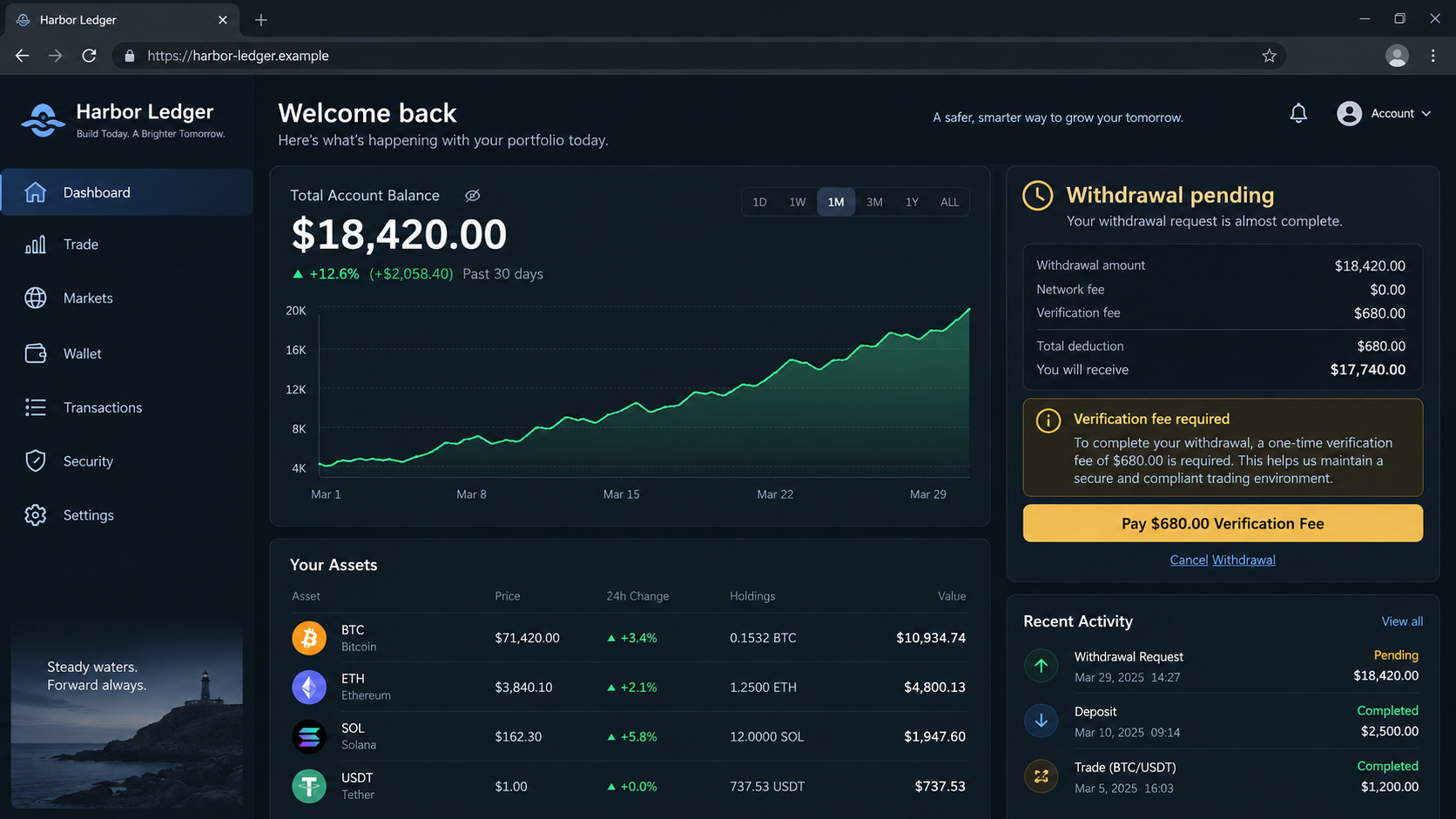
When a victim tries to withdraw, the platform demands another fee to release the assets. Paying that fee does not unlock money that was never there.
This is not a warning about all crypto platforms or all investing groups. It is a specific social-to-chat-to-fake-platform route documented by Scamwatch.
The fastest safety check
Before sending funds, identify the legal operator, independently verify the platform, and check relevant registration or licensing in your jurisdiction.
For Australians, Scamwatch points to AUSTRAC’s searchable register for virtual asset service providers. Registration alone is not a guarantee of investment safety.
- Be wary of a stock-tip group that abruptly promotes crypto.
- Do not treat screenshots of profits as proof of trades.
- Reject requests to pay a fee to withdraw your own funds.
- Verify the platform outside the group and its links.
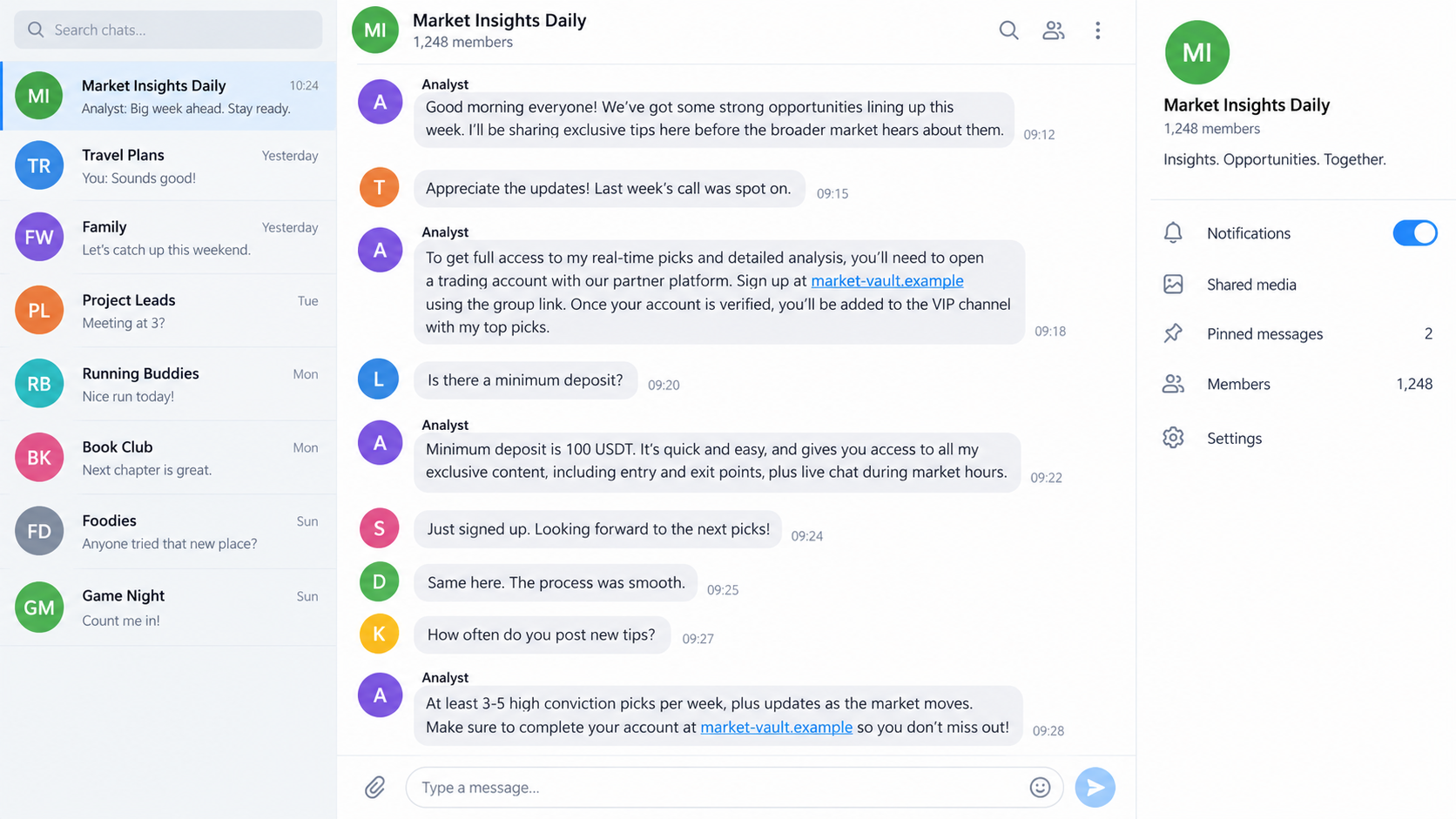
The screenshot above is a fictional illustration. No real group name or live investment URL is needed to understand the tactic.
How the Stock Tips Group Crypto Scam Works
Step 1: Meet the target where they already look for ideas
Many people browse social feeds for market commentary. A sponsored post promising daily share ideas can blend into that normal habit.
The ad may not mention crypto at all. That is important because someone wary of crypto scams may still feel comfortable entering a stock discussion.
Scamwatch says the first contact can be an ad or social post. The promise is trading advice, not immediately an invitation to wire money.
Step 2: Move the discussion into a messaging group
The link leads to a chat app. A group feels social, and new members can see messages from apparently enthusiastic participants.
Those other accounts may be part of the operation. You cannot verify a stranger’s identity or investment results from a chat avatar and a screenshot.
Administrators may set a rhythm: morning market notes, a few successful predictions, and polite replies to basic questions. Trust builds gradually.
The group can make skepticism feel impolite. Nobody wants to be the only member asking whether the supposed analyst is actually who they claim to be.
Step 3: Borrow an expert’s identity
Scamwatch says scammers impersonate well-known figures or experts while offering recommendations. A name, headshot, and biography can be copied into a profile.
The real person may have no connection to the group. Search for their verified website or public channel and compare the invitation details.
Watch for the shift from general information to instructions that benefit a single unknown platform. That shift reveals where the group wants your money to go.
Step 4: Introduce a private crypto platform
The group presents a website or app as the place to act on exclusive opportunities. Registration may seem easy, and the interface looks familiar.
Some victims are told to move funds from a legitimate exchange or bank into the new platform. Once sent, those funds may be difficult to recover.
A professionally designed dashboard does not establish that a trading engine exists. Screens can display any balance the operator chooses.
Do not rely on testimonials posted inside the same group that supplied the link. They are not independent evidence of custody or withdrawals.
Step 5: Manufacture gains to invite larger deposits
The account may show steady profits and completed trades. Scamwatch says the numbers in these fake platforms do not represent actual trading.
A small initial deposit can feel safer than a large one. Apparent success then encourages the person to add more money or recruit someone close to them.
The site may update in real time, but movement on a chart is not proof. The operator controls the screen and can invent transaction history.
Step 6: Turn withdrawal into another payment
When the victim asks for their money, the platform introduces a release fee. It may be labeled tax, verification, liquidity, or compliance.
Scamwatch’s warning is clear: those extra payments also go to scammers, and the claimed assets are not released.
Paying one fee can lead to another. An account manager may promise the next payment is the last, but the underlying balance remains fictional.
At this stage, stop sending money. A genuine service should not require an unexplained transfer to an unrelated destination before you can access your own funds.
What the Fake Dashboard Is Really Showing
An investment dashboard is a user interface, not a bank statement. Without trustworthy custody and transaction records, numbers on a page are only claims.
A fake platform can display the same portfolio chart to different victims with different balances. It can also hide withdrawal controls until another payment arrives.
Look for a verifiable legal entity, registered business details, independent regulatory records, and withdrawal terms that make sense before investing.
Even those details can be copied. Verify them using the regulator’s website and independently found contact information, not just documents supplied by the group.
The second image shows a fictional trading dashboard with a withdrawal fee. It illustrates the mechanism and is not an actual victim account.
Why the Stock-Tip Introduction Matters
A person looking for share analysis may already understand that markets are risky. That does not prepare them for an entirely fabricated trading website.
The group changes the category without clearly saying so. Stock commentary becomes a sales funnel for an off-platform crypto product.
This creates a false continuity. If the group’s earlier tips sounded plausible, members may assume the platform is part of the same credible service.
It is not enough to ask whether the analyst’s market observations were occasionally correct. The key question is who controls the deposit address and withdrawal process.
A reputable investment decision can survive a pause for due diligence. Urgency to deposit before a limited window closes is a warning sign.
How to Check a Platform Without Asking the Group
Identify the actual operator
Find the legal company name in the terms, not just the product name in a logo. Look for a jurisdiction, business registration, and usable support address.
Search that name independently. Be alert to copied registration numbers or references to unrelated companies.
If the site claims a regulator authorized it, check the regulator’s own register. A screenshot of a certificate inside the group is not enough.
Inspect the money movement
Before depositing, ask where funds go and who has custody. A request to send crypto to an individual wallet raises a different risk from regulated account funding.
Check whether withdrawal terms are public, specific, and consistent. A fee announced only after you request a payout is especially suspicious.
Do not test a questionable platform by risking more money. A small successful withdrawal, if one occurs, would not prove future larger withdrawals will work.
Check the people separately
A famous investor’s name in the chat is easy to imitate. Look for the group’s link on the person’s verified website or official account.
If you cannot establish that connection, assume the profile is unverified. Group administrators cannot authenticate themselves by simply telling you they are genuine.
Common Excuses When You Try to Leave
- “Your profit is frozen until you pay a tax.”
- “Compliance requires a fresh deposit to verify your wallet.”
- “The group manager can arrange an exception for a small fee.”
- “Withdrawing now would forfeit your bonus or trading tier.”
Each excuse keeps the victim engaged and may solicit another transfer. Document it, but do not pay to test whether the promise is sincere.
Beware of a later “recovery specialist” who claims to know how to retrieve the balance. That may be a second attempt to collect money.
Why a Busy Chat Room Feels Like Evidence
In a crowded group, members see many voices apparently reacting to the same tip. It can feel as though dozens of people have independently checked the platform.
They usually have not. The group owner can add controlled accounts, remove skeptics, and spotlight only favorable messages.
A screenshot of a successful withdrawal may also be staged. It proves only that an image was shared, not that a real customer received money.
Some victims are persuaded by the absence of overt pressure at first. The chat may run for days before anyone mentions the crypto platform.
That slow approach is still compatible with a scam. The transition from conversation to deposit is the point where independent checks become essential.
Why the first apparent gain is so persuasive
Seeing a balance grow after a small deposit feels like personal proof. The victim has taken an action and watched a positive result appear.
But the site controls the result displayed. A fabricated gain can be cheaper for the attacker than an expensive advertisement, because it invites a bigger deposit.
Ask whether you can independently identify the trades, custody, and operator. A beautiful chart cannot answer those questions.
Protecting a Friend Who Is Still in the Group
Someone who has already deposited may defend the platform because their account shows a profit. Calling them foolish often makes the conversation harder.
Start with one concrete question: have they withdrawn their own money without paying any new charge? Then show the Scamwatch warning about this exact pattern.
Encourage a pause on additional transfers while they verify the operator and speak to their bank or exchange. They do not need to settle every detail first.
If the person is embarrassed, offer to help document transactions or report the group. Practical support is more useful than a debate about investment judgment.
After the Platform Goes Silent
The group may disappear, rename itself, or claim a technical outage when withdrawal demands are challenged. Save what you can while the messages remain visible.
Record the exact website address and any wallet destinations. Similar-looking domains can later appear, and precise records help investigators distinguish them.
Watch for contact from someone claiming to be a regulator, lawyer, or recovery team. If they ask for a fee first, verify them separately.
Scammers may reuse your phone number or email for another pitch. A new name and logo do not erase the connection to the original group.
Reporting helps build the larger picture, even if an individual transfer cannot be recovered. Your timeline may connect accounts, adverts, and destinations seen by other victims.
What To Do If You Fell Victim
- Stop deposits and withdrawal fees. Do not send a verification payment, tax, or unlock charge. Tell trusted family members not to fund the account for you.
- Preserve the trail. Save the ad, group name, administrator profiles, chat messages, platform URL, wallet addresses, transaction hashes, bank receipts, and dashboard screenshots.
- Call your bank or exchange promptly. Explain where funds went and ask about a transfer recall, card dispute, account protection, or tracing information. Recovery is uncertain, but speed helps.
- Protect connected accounts. Change passwords entered on the platform, enable multifactor authentication, revoke unnecessary app access, and watch for unusual account activity.
- Check the device if software was installed. Remove unfamiliar apps and run an updated Malwarebytes scan. Review browser notifications and consider AdGuard if scam ads or redirects persist.
- Report the platform and group. Australians can report through Scamwatch; elsewhere, use local fraud authorities and the relevant messaging platform’s abuse channel.
Do not measure the loss by the dashboard balance. The most reliable figure is the money you actually sent, including later fees.
Frequently Asked Questions
Are all stock-tip groups fraudulent?
No. This warning concerns groups that impersonate experts and direct members to fake crypto platforms. Verify each group and investment opportunity independently.
Can a fake platform show real-time prices?
Yes. A site can display public market data while inventing your personal trades and account balance. Live prices do not prove your funds are invested.
Will paying the withdrawal fee release my profits?
In Scamwatch’s reported pattern, the extra fee also goes to scammers and no assets are released. Do not pay another charge based on that promise.
Does AUSTRAC registration guarantee a platform is safe?
No. It is one useful verification point for Australians, not an endorsement of returns, custody, or honesty. Check the exact entity and other evidence too.
Should I warn other members of the chat?
You can report the group to the platform and share factual warnings with people you know. Avoid sending new personal details or arguing with administrators.
Can crypto transfers be reversed?
Many cannot be reversed like a card charge. Contact your exchange and bank quickly, preserve transaction details, and report the incident without paying a recovery firm.
The Bottom Line
The stock tips group crypto scam begins with familiar market chatter and ends at a platform where the profits exist only on a screen.
Verify the people and the operator outside the group. If withdrawals require new money, stop, save the evidence, and seek help promptly.








