

The app shows another gain, and the group chat is full of congratulations. Someone you trust says this is how ordinary people finally get ahead.
The MTFE scam deserves a closer look than that encouraging screen. Before judging an investment by its displayed balance, follow where the money and authority actually sit.
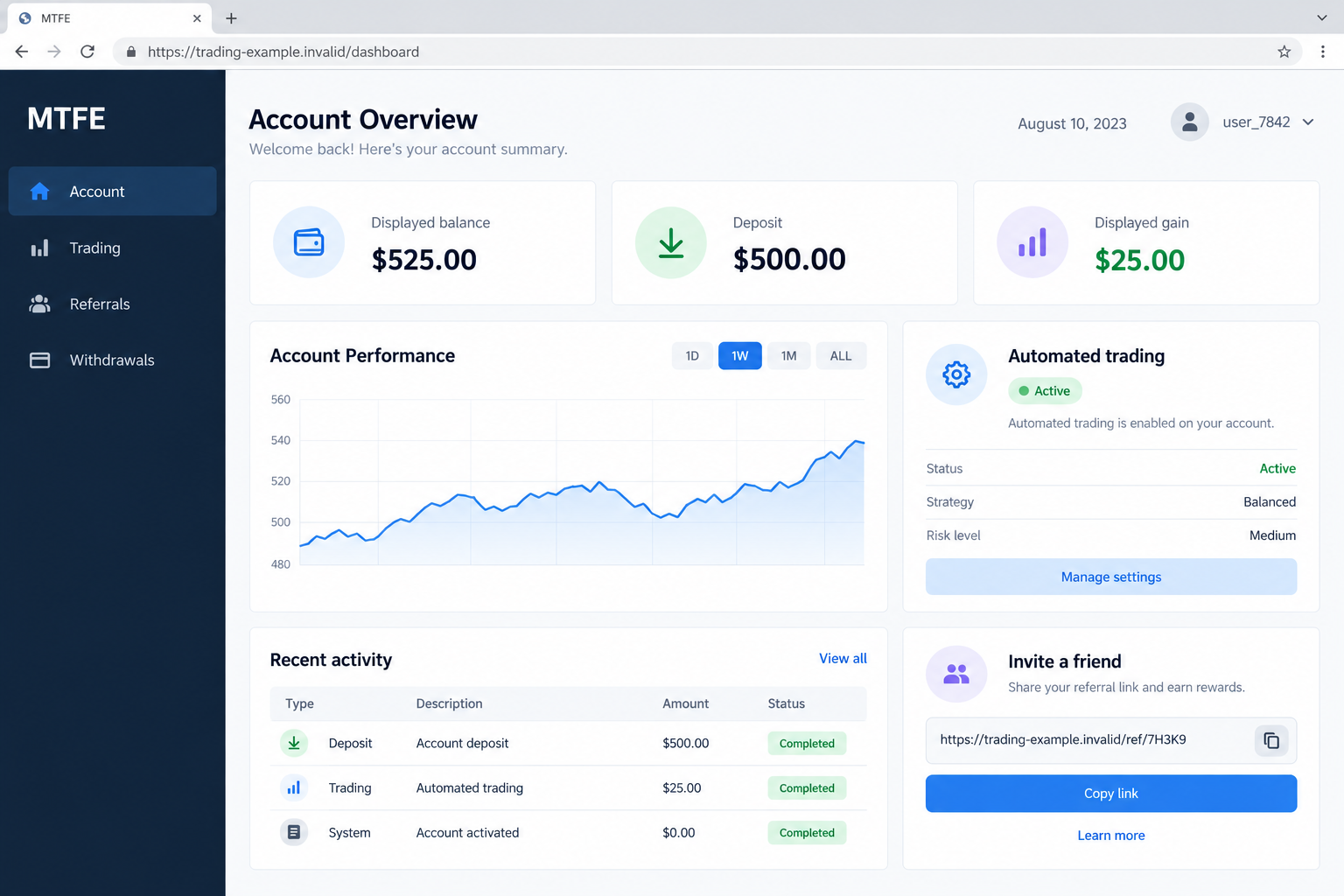
Overview
MTFE is named in an official prohibited-scheme finding
The Central Bank of Sri Lanka’s August 5, 2026 notice lists MTFE App and several MTFE groups among prohibited schemes.
The listed names include MTFE SL Group, MTFE Success Lanka, and MTFE DSCC Group. This is an official finding, not merely an unfavorable online review.
The finding concerns the schemes identified by that regulator in Sri Lanka. It does not establish every individual allegation, global loss estimate, or later same-name website’s identity.
Do not send more money to a pitch associated with the named scheme. A polished account page cannot outweigh the regulator’s published warning.
The trading-app story and the collapse are historical
Reporting published in August 2023 described automated-trading claims, WhatsApp promotion, referral incentives, withdrawal difficulties, and negative displayed balances after the platform’s collapse.
Those are dated reported details, not behavior we newly captured in a working app. The official 2026 prohibited-scheme list provides the stronger present reference.
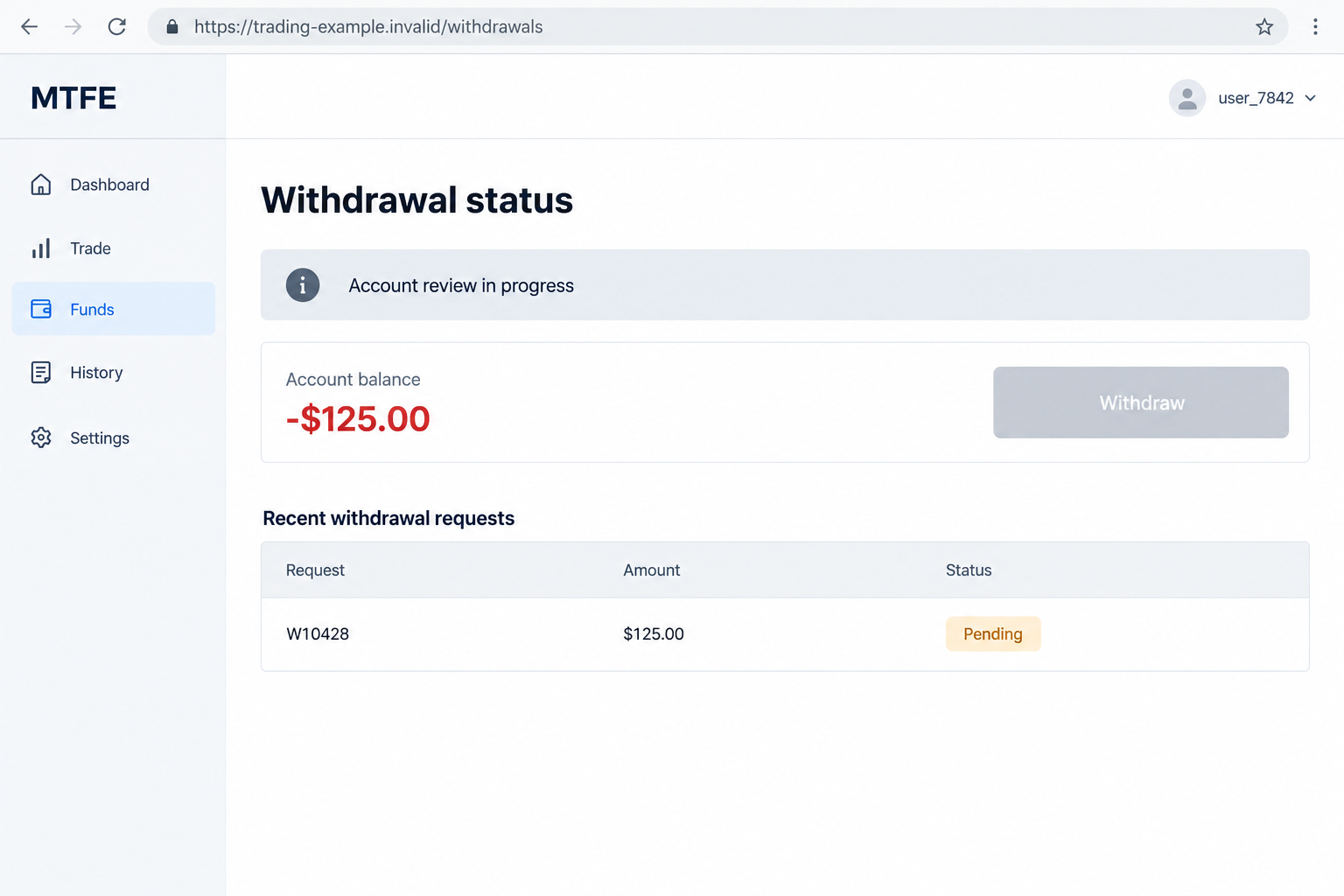
The illustrations use fictional accounts, amounts, and addresses. They show the difference between an encouraging dashboard and inaccessible funds without pretending to document a particular depositor.
No recovery guarantee, current operator identity, or individual criminal conviction is claimed here. The practical concern is the scheme and the evidence behind its financial promises.
Four questions matter more than the promised return
An investment pitch needs answers that remain meaningful after the group chat closes. Ask about the actual business, authorization, payment recipient, and withdrawal rights.
- Which legal entity holds or receives the money?
- What investment activity is it authorized to provide in your location?
- Can independent records substantiate the displayed trading result?
- Do payments depend on genuine revenue or continued recruitment and deposits?
- What happens when you request your money back?
- Does a quoted registration number prove the specific approval being claimed?
If the answers come only from the promoter, they still need checking. Trust in a friend is not a substitute for evidence about the operation.
Why a Trading Dashboard Can Feel Like Proof
A balance is a claim until it is independently supported
A changing number gives the impression of something happening behind the screen. It can make a financial promise feel measurable before its underlying activity is clear.
Yet a display cannot establish where funds are held, whether trades occurred, or how a withdrawal will be paid. Those are separate questions.
Numbers can be genuine, mistaken, incomplete, or fabricated. The sensible response is to demand records rather than deciding from the screen’s visual confidence.
The same distinction applies to an earnings screenshot shared by another participant. It shows what that person presented, not a complete independent account of the business.
Technology language can distract from ordinary financial questions
Terms such as automated trading can make a process sound too specialized to question. A prospective customer may feel embarrassed asking how the money is actually earned.
There is no need to master an algorithm before asking who receives your deposit. Technical language does not remove the need for clear ownership and authorization.
A real tool can be described dishonestly, and an impressive interface can conceal a weak business explanation. Neither sophistication nor simplicity settles the fraud question.
In this case, the regulator’s named finding matters more than speculation about what software could do. Do not make the screen the final witness.
How the MTFE Scam Works
Step 1: The opportunity is introduced as a financial shortcut
The historical reporting describes a trading platform promoted through participant networks. The appeal was an apparently accessible way to obtain returns without conducting the trading yourself.
A shortcut can sound attractive when ordinary investing feels complicated. That feeling does not explain the business model or establish that the advertised activity is genuine.
Separate the invitation from the evidence. Someone’s enthusiasm may be sincere while their understanding of the operation remains incomplete.
Before joining any such offer, identify the provider and check the regulator directly. Do not let joining a chat become the first step toward an unexamined deposit.
Step 2: Shared confidence makes an unsupported claim feel established
A participant group can turn scattered success stories into apparent consensus. Each approving message makes it harder to feel comfortable being the person who asks questions.
That consensus may repeat the same promotional information. Ten people quoting one claim do not provide ten independent examinations of it.
Ask what the participants can verify beyond their own displayed balances. A useful answer should distinguish money received from figures still inside the app.
If questions are treated as disloyalty, pause. An investment decision should survive reasonable requests for records without becoming a test of belonging.
Step 3: Deposits and account displays create commitment
Once money enters an operation, the customer has something to protect. A reassuring display can encourage continued confidence before an independent withdrawal or account record is understood.
This is why entry and exit both matter. An easy deposit process says little about who controls the funds afterward.
Keep your payment evidence outside the platform: dates, recipients, transaction references, and any agreement. The dashboard should not be your only record of what happened.
A small initial payment also does not justify a larger one automatically. Evaluate each decision against verified information, not the amount already committed.
Step 4: Referral incentives can extend the reach
Referral benefits were among the features described in the dated reporting. They matter because recruiting can move a financial pitch through existing relationships.
A recommendation from a relative may feel different from an advertisement. The underlying provider still needs the same independent checks.
Do not assume a referral payment proves the operation earns legitimate trading income. It answers only whether a payment or credited reward occurred.
Before inviting others, consider what you can substantiate. Passing along a promise you cannot verify can expose another household to the same uncertainty.
Step 5: A withdrawal problem reveals what the display did not prove
Difficulty accessing funds changes the question. The issue is no longer how encouraging the account looks, but whether the customer can obtain money under clear, verifiable terms.
An explanation involving maintenance, reviews, or market conditions needs evidence. Its technical wording does not establish that the explanation is true.
The second illustration shows a fictional pending withdrawal and negative display. It is not a recovered MTFE record or proof of a particular person’s loss.
Do not pay an unfamiliar charge merely because a screen says it is necessary. Ask for the contractual basis and independently check the party requesting money.
Step 6: The aftermath can expose customers to another scam
People searching for lost funds may encounter strangers claiming privileged access, special tracing tools, or a connection to an investigator.
Those claims deserve a fresh identity check. Knowledge of the platform’s name does not establish that a person can recover anything.
Keep recovery efforts with verifiable providers, regulators, and appropriate authorities. Do not send a new payment to satisfy a stranger’s promise about the old loss.
An honest investigation may not provide a quick answer. That uncertainty is still safer than funding an unverified offer dressed as a solution.
Company, Address, Support, and Registration Checks
Find the legal entity behind the app name
An app label is not a complete legal identity. The relevant entity should match the agreement, payment records, claimed authorization, and documents supplied to customers.
The regulator lists several MTFE names. Preserve the particular name on your records rather than assuming every reference describes an identical legal entity.
This article does not claim a newly verified operator or address. Where identity remains unclear, tell investigators what your documents show and what could not be established.
A corporate address is not investment authorization
An address can help identify a business, but it cannot by itself prove that the business may offer the financial activity being advertised.
The same applies to company registration. Corporate existence and permission to provide an investment service are different checks.
Do not infer a location is fake merely because it appears shared or remote. Ask instead which entity uses it and which official records support that connection.
A support conversation cannot certify a payout
Replies from an operator can be useful evidence of what was promised. They are not independent confirmation that funds are held or a withdrawal will complete.
Preserve explanations, deadlines, and requested fees in writing. Compare them with the agreement and payment records instead of relying on verbal assurances.
If the original channel stops responding, do not accept an unsolicited replacement agent automatically. Verify the new person’s identity and authority separately.
Trace the payment to the actual recipient
Your transfer record may identify a person, company, bank account, exchange, or wallet. That recipient is more useful than an app logo when documenting the loss.
Keep transaction hashes and destination addresses when crypto was involved. Do not describe tracing as impossible merely because recovery is uncertain.
Share records through appropriate private channels. Investigators need accurate details, but public comments should not expose credentials, identity documents, or wallet recovery information.
What a Registration Number Does and Does Not Mean
Check the authority’s own explanation
FINTRAC explains that money-services-business registration does not constitute endorsement or licensing of the business. A quoted number must not be treated as investment approval.
This does not mean registration is worthless or that the agency is illegitimate. It means the claim must fit the actual purpose of the record.
Ask what activity the relevant regulator permits and where that permission applies. A document for one purpose cannot silently answer a different licensing question.
No current MTFE registration status was independently confirmed for this article. The official Sri Lankan prohibited-scheme finding is the decisive evidence used here.
A negative screen is not a complete financial explanation
A displayed loss does not independently prove the trades, accounting, or legal obligation behind it. Request records rather than treating the number as an instruction.
Do not assume a negative figure automatically means you must deposit more. A genuine obligation needs a verifiable basis, not pressure inside a chat.
Equally, do not decide every financial loss is fraud from the number alone. Here, the official scheme finding is stronger than an argument about interface arithmetic.
If someone demands payment of an alleged debt, obtain qualified local advice when needed. Do not let an anonymous recovery account make that legal judgment for you.
What to Do if You Have Fallen Victim to This Scam
-
Stop adding money or recruiting others. Do not make a new deposit to rescue the displayed balance, meet a supposed withdrawal condition, or satisfy a promoter.
Save the relevant request first. If you previously recommended the offer, tell those people about the official warning without speculating about their account status.
Keep the response factual. The goal is to prevent further exposure, not to argue inside a promotional group until someone admits wrongdoing.
-
Build an evidence file outside the platform. Collect payment receipts, transaction hashes, account screenshots, agreements, registration claims, promoter contacts, and withdrawal correspondence.
Record the sequence of events with dates. Separate actual payments from credited figures and amounts described by another person.
Do not risk another login or download to collect every missing item. Preserve what you safely have and identify gaps honestly.
-
Notify the services that handled the funds. Tell your bank, payment provider, or exchange about the particular transaction and suspected scheme.
Ask whether a hold, review, dispute, or other remedy is available. The answer depends on the method and circumstances; there is no universal reversal process.
The FTC’s recovery guidance recommends prompt contact with the service involved. Acting quickly helps preserve options without guaranteeing repayment.
-
Report through appropriate authorities. Use the regulator or law-enforcement channels relevant to your location and the parties involved.
Include the exact entity names and references on your documents. The Sri Lankan finding does not replace a complete report about your own payments.
Keep case numbers and dated responses. They can help coordinate follow-up without sending the same private evidence to unverified intermediaries.
-
Secure any separate account or device exposure. Replace credentials you disclosed or reused. Protect the email account associated with financial and recovery messages.
If the interaction involved installed software or remote access, end that access and check the device with Malwarebytes or another reputable product.
For malicious advertising or browser redirects, review permissions and consider AdGuard. These tools do not retrieve a deposit or validate a trading account.
-
Decline paid recovery shortcuts. Verify anyone who contacts you claiming to be an investigator, regulator, lawyer, or platform representative.
The FTC warns about recovery scams targeting people already harmed. An upfront payment and a guaranteed result deserve particular caution.
Continue through verifiable channels and seek support from someone you trust. A financial loss should not force you into making the next decision alone.
Frequently Asked Questions
Is the MTFE warning based only on customer complaints?
No. The Central Bank of Sri Lanka’s August 2026 notice explicitly lists MTFE App and named MTFE groups as prohibited schemes.
Does this article describe a newly captured trading app?
No. The trading narrative includes dated 2023 reporting, while the regulator finding was checked separately. Screens here are fictional illustrations.
Does FINTRAC registration mean an investment is approved?
No. FINTRAC says registration is not endorsement or licensing. Check the actual activity, entity, jurisdiction, and relevant regulator instead.
Can an earnings screenshot prove the business trades legitimately?
It cannot independently prove executed trades, custody, or withdrawal rights. A display needs supporting records rather than confidence supplied by its appearance.
Should I pay more to clear a negative app balance?
Do not pay solely because an unverified screen or contact demands it. Request a verifiable basis and seek qualified advice about any genuine disputed obligation.
Can somebody guarantee recovery of an MTFE payment?
No reliable universal guarantee exists. Ask the providers and authorities involved about available options, and reject unverified strangers demanding another payment.
The Bottom Line
The MTFE scam warning rests on a named regulator finding, not simply an alarming balance. Trading language and registration claims must be checked against actual authority.
Do not put more money into the named scheme. Preserve your records, contact involved providers, and pursue reporting through verifiable channels rather than paid recovery promises.








