

A jar of batana oil can sound like a small purchase when thinning hair is already taking up too much of your attention.
DoctorTruth adds confident promises and discounted packs to that familiar hope. Before ordering, it’s worth slowing down at the details around the jar.
Overview
The product is an oil, not an established hair-loss treatment
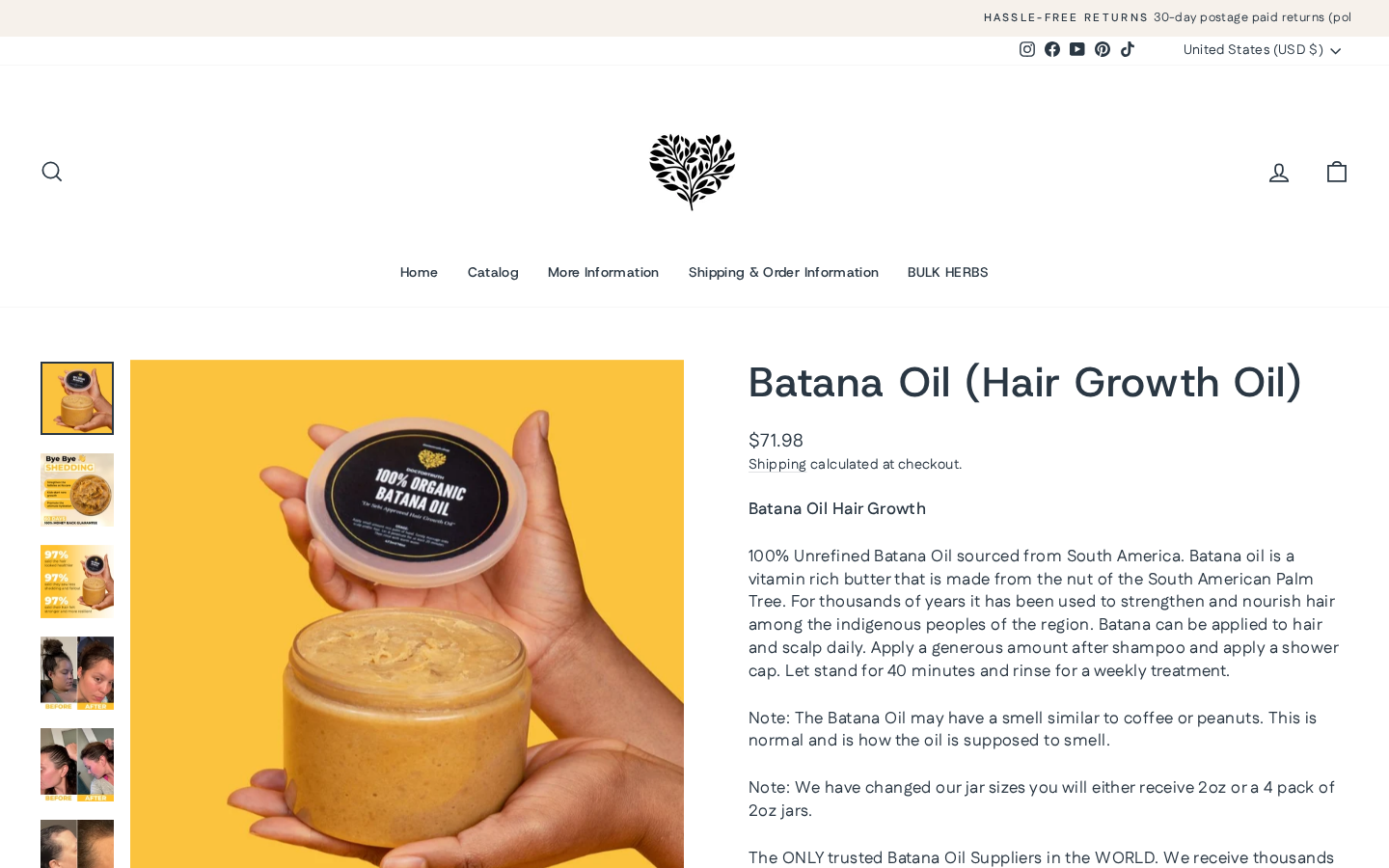
DoctorTruth sells batana oil for hair and scalp care. The listing describes unrefined oil and presents it under a hair-growth product name.
An oil can be part of a conditioning routine. That does not make the seller’s particular jar a proven treatment for the underlying cause of thinning.
Someone hoping to restore a receding hairline needs evidence about regrowth, not just a photograph of smoother hair or a traditional-use story.
The pack labels and displayed price disagree
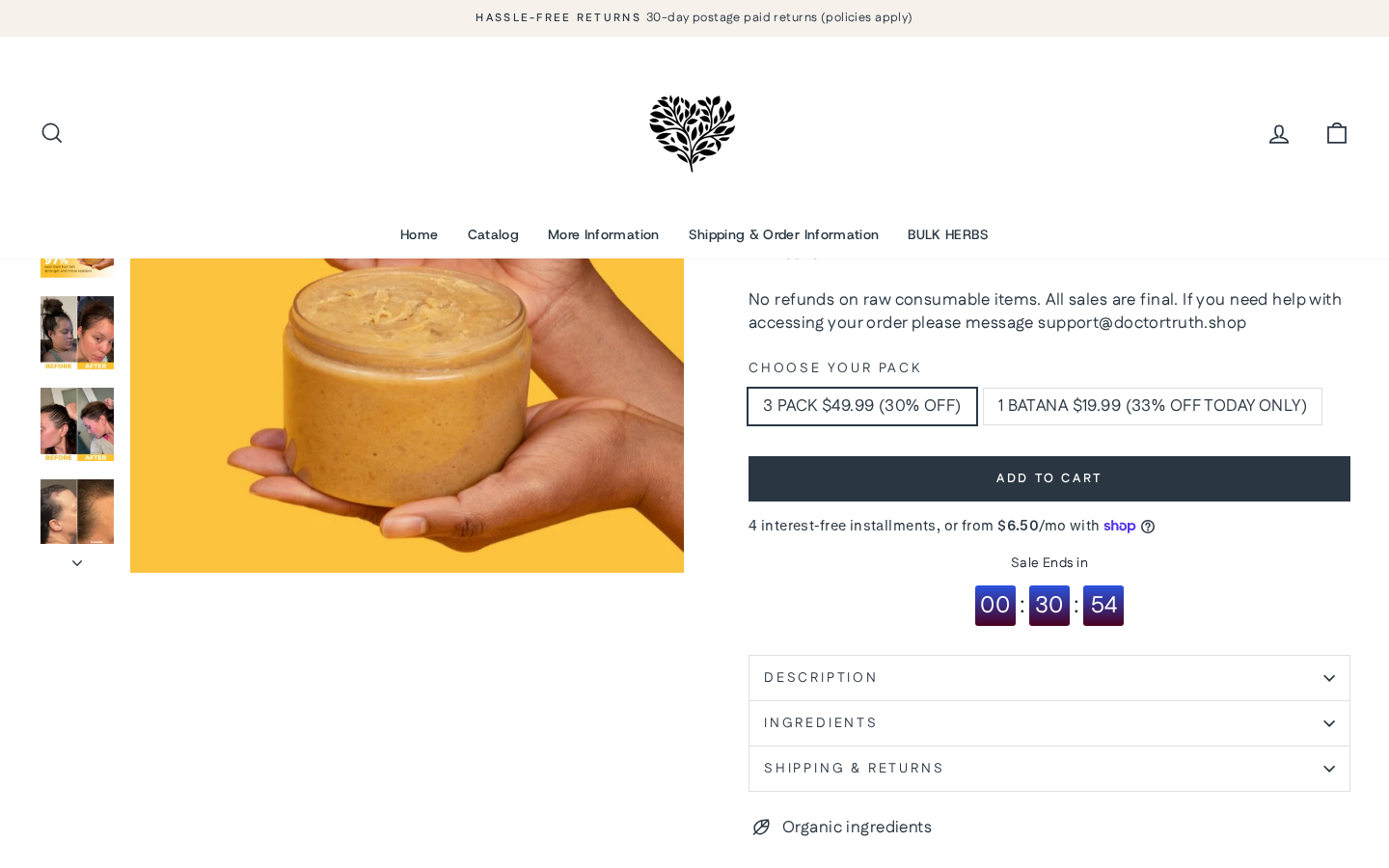
The product page’s selected three-pack label advertises $49.99. The main displayed price for that selection is $71.98.
That is a $21.99 difference before any other charges. A customer should not have to infer which amount the seller intends to honor.
The description also discusses different jar sizes and a four-jar arrangement. Buyers need one clear specification for the pack they are selecting.
Returns deserve attention before the seal is broken
A site-wide banner promotes 30-day postage-paid returns, with a policies qualification. The Batana Oil listing says raw consumable purchases are final.
- The promotional pack amount is not the same as the main price.
- The jar-count explanation needs reconciling with the selected pack.
- The general returns banner is not an unconditional guarantee for this oil.
- The hair-growth presentation does not supply a finished-product clinical trial.
These problems justify a firm buying warning. They do not, by themselves, prove stolen payments, a hidden subscription, or counterfeit contents.
The Price Problem Is Bigger Than a Discount Badge
Read the amount, not just the pack’s name
A pack label containing a price can look like the price itself. On this listing, the name and the amount displayed above it don’t agree.
If you expected $49.99 and saw $71.98 later, you would reasonably wonder whether the discount failed or whether the label was outdated.
The seller may have an explanation, but the page doesn’t reconcile the figures beside the offer. That explanation should come before payment.
Compare the current selection, cart subtotal, shipping, and final total. Do not rely on a countdown or percentage badge to explain the arithmetic.
A customer who knowingly authorizes a higher total may face a different dispute from someone charged more than the amount they approved.
Keep those situations separate. The discrepancy is documented; this review did not place an order or observe a post-payment price change.
The number of jars needs its own answer
The description mentions 2 oz jars and a four-pack totaling 8 oz, while the selected offer is called a three-pack.
That leaves more than a packaging question. Value depends on the amount of oil delivered, not simply the word pack.
Ask the seller to confirm the selected SKU, exact jar count, ounces per jar, and total ounces in that purchase.
A written specification also helps if the shipment differs. Without it, a buyer may struggle to explain whether the parcel was incomplete or merely differently packaged.
Separate packaging for another product is not evidence of a quantity scam. The listing acknowledges that some items can arrive separately.
However, a separate-shipment explanation should include tracking for the missing item. It should not become an open-ended reason to stop asking where an order is.
What Batana Oil Can and Cannot Tell You About Hair Growth
Better-looking hair and new growth are different outcomes
Hair can look fuller when existing strands are less frizzy or better conditioned. That appearance doesn’t necessarily mean new hairs have grown.
Likewise, less breakage can help someone retain length without treating a condition that is making follicles produce thinner hairs.
Those distinctions matter because a shopper may interpret a conditioning benefit as proof that the same jar can reverse a receding hairline.
A useful regrowth study would track new hair using this oil, not another formula, in people with the kind of hair loss being advertised.
The DoctorTruth listing does not provide that clinical documentation. Traditional use and customer images are not substitutes for a controlled comparison.
Hair loss has more than one cause
The American Academy of Dermatology explains that treatment starts with identifying why the hair is falling out.
Depending on the situation, a dermatologist may need medical history, an examination, or additional tests. Not everyone needs the same treatment.
This is why an oil-first approach can become costly even when the jar arrives. Repeated purchases may delay finding the problem that actually needs attention.
Don’t wait through several reorder cycles if thinning is progressing, appearing in patches, or accompanied by a sore or irritated scalp.
Bring the product and its claims to a qualified clinician. The goal is a useful diagnosis, not a contest between conventional care and a natural product.
The seller’s name is not a medical qualification
DoctorTruth sounds authoritative. Its own information page, however, says the website team members are not medical doctors.
Don’t read the brand name as a doctor’s recommendation. It doesn’t identify a licensed clinician who has assessed your hair loss.
The same information page promotes a broad alkaline-diet explanation of disease. That is not clinical evidence for this Batana Oil product.
Keep the purchase decision tied to the exact jar, the promised benefit, and credible supporting documentation. A general health philosophy doesn’t settle those questions.
How the DoctorTruth Batana Oil Offer Works
Step 1: Attach the jar to the hope of regrowth
The product title places hair growth front and center. That framing reaches someone who wants more than softer or shinier hair.
The natural and unrefined descriptions can make the purchase feel gentle and straightforward. They don’t explain whether the product addresses your particular condition.
A prospective buyer should distinguish a cosmetic goal from a treatment goal before considering the discount.
Step 2: Make the pack feel urgent and inexpensive
The selector adds percentage reductions and a today-only message. A countdown beside the buying controls encourages a quick decision.
A short sales window is not a reason to accept conflicting prices. The discrepancy remains a problem even when the displayed timer is running down.
Pause on the chosen pack and write down the amount you expect to pay. Compare that with the figure shown for the selection.
Step 3: Leave the customer to reconcile quantity and shipping
The listing combines different packaging references with several delivery statements. The order-information page asks buyers to allow 7–14 days, depending on location.
Processing time, dispatch time, and transit time are different stages. A promise that something ships quickly is not a guaranteed arrival date.
Ask when the chosen stock will be dispatched and what tracking will show. An estimated delivery range is more useful than an unexplained fast-shipping banner.
For a mixed order, confirm whether the oil travels separately. Keep each tracking number associated with the item it is supposed to contain.
Step 4: Apply a product-specific final-sale restriction
The reassuring return banner stays visible above the site. Further down, the oil’s description states that raw consumable items cannot be refunded.
The wording is easy to miss if you focus on the jar photograph and pack discount. Yet it can matter more than either after delivery.
The next screenshot shows the pack labels near the final-sale warning. Those details belong in the purchase decision, not only in a later refund argument.
DoctorTruth Company, Support, and Supply-Chain Checks
A brand needs an accountable seller
The inspected storefront identifies itself as DoctorTruth and provides an email for orders. Its product and information pages do not clearly name an incorporated seller.
Before ordering, ask who will issue the invoice and appear on the payment statement. Keep that answer with the order confirmation.
This missing identification is not proof that the business is fictitious. It is a practical gap when a customer needs to pursue a disputed purchase.
A return destination must be supplied, not guessed
The inspected Batana Oil page does not give a complete authorized return address. A buyer should not mail the jar to an address found through an unrelated search.
If the seller accepts a return, obtain the full destination and any required reference in writing. Check whether postage is prepaid for that specific purchase.
A dispatch address printed on a parcel may belong to a logistics handler. It isn’t automatically the place that processes refunds.
The published support route is specific
DoctorTruth directs order questions to support@doctortruth.shop and its listed Instagram account. The order-information page says it will not message from other email addresses.
Use that published channel, not a stranger who appears under a complaint offering help. Provide an order reference, but never a password or complete card number.
No support call or message was sent for this review. There is therefore no basis here to claim that the email never answers.
An existing customer can keep a dated record of their own requests. Actual responses are more useful in a dispute than assumptions about customer service.
Origin and purity need product documentation
The listing describes South American sourcing. That is the seller’s claim, not an independently authenticated origin for a delivered jar.
A meaningful traceability record would identify the responsible supplier, batch, ingredients, and any relevant purity testing. A picture of brown oil cannot establish those facts.
The page also contains a nut-and-seed allergy warning. Read the actual package information and discuss a relevant allergy with a clinician before use.
If the seller changes the source or packaging, the batch information should still identify what was delivered. Traceability needs paperwork, not a reassuring product photograph.
The Return Banner Does Not Make This a Risk-Free Trial
A shopper may read postage-paid returns and assume the seller welcomes a trial. The qualification about applicable policies is important, but it doesn’t resolve the conflicting presentation.
Ask a concrete question: If I purchase this exact Batana Oil pack and am dissatisfied, can I return it, and in what condition?
The answer should address an unopened jar, an opened jar, incorrect contents, damage, and the promised return postage separately.
A merchant’s voluntary final-sale policy is also different from applicable rights concerning misdescribed or defective goods. Those rights depend on jurisdiction and circumstances.
That doesn’t guarantee a refund. It does mean a buyer should describe the actual problem rather than accepting a generic final-sale reply as the entire answer.
There is no verified refill enrollment in the inspected offer. An email newsletter, a pack of several jars, and a recurring billing plan are different things.
If your own receipt contains subscription terms, save them and address that specific arrangement. Don’t infer recurring charges simply because the product is marketed for repeated use.
What to Do If You Ordered DoctorTruth Batana Oil
-
Preserve the offer you relied on. Save the pack label, main price, returns banner, product-specific restriction, and your final order summary.
Record the purchase date and selected quantity. These details explain whether your complaint concerns price, packaging, delivery, or a benefit that wasn’t supported.
-
Request cancellation while the order is unshipped. Email the published support address with your order number and ask for an explicit cancellation confirmation.
Don’t assume that sending the request has stopped dispatch. If the merchant says the parcel already shipped, ask for the tracking number and return options.
-
Inspect the parcel without immediately using the oil. Photograph the jars, seals, label, shipment packaging, and total quantity delivered.
If a promised item is missing, ask whether there is a second parcel. Require item-specific tracking rather than an indefinite instruction to wait.
-
State the refund problem precisely. Explain the difference between the price label and charge, or the difference between the promised contents and shipment.
For a dissatisfaction return, include the banner that suggested postage-paid returns. Ask the seller to explain which policy applies to this exact order.
Obtain authorization and a complete address before posting anything back. Keep the shipping receipt, tracking, and photograph of the package.
-
Take persistent hair loss to a dermatologist. Bring the product label and describe when the thinning began and whether the scalp has changed.
If application causes irritation, stop using it and seek appropriate advice. Buying more jars is not a way to investigate an adverse reaction.
-
Ask your payment provider about an unresolved dispute. Supply the receipt, conflicting offer details, communications, and any tracking or delivery evidence.
Be accurate about what you authorized. For eligible US credit-card errors, written notice has a deadline measured from the relevant statement.
Seek the issuer’s instructions promptly. Keep any merchant refund confirmation until the credit actually appears, and avoid paying someone who promises guaranteed recovery.
Frequently Asked Questions
Is DoctorTruth Batana Oil a proven regrowth treatment?
The inspected listing does not supply a clinical trial establishing regrowth from this product. Conditioning existing hair is a different benefit from treating hair loss.
Why does the three-pack show two different prices?
Its label advertises $49.99 while the main selected price shows $71.98. The seller needs to reconcile the discrepancy before a buyer authorizes payment.
Does the 30-day banner cover an opened jar?
Don’t assume so. The Batana Oil description calls raw consumable purchases final. Ask for the exact eligibility conditions in writing before opening or ordering.
Are DoctorTruth team members medical doctors?
The information page says its website team members are not medical doctors. A brand name alone cannot establish medical credentials.
Is there a confirmed automatic-refill trap?
No automatic-refill enrollment was established from the inspected offer. Check your own order confirmation for recurring terms rather than assuming every multijar pack is a subscription.
Should I order this Batana Oil offer?
No. Conflicting pack pricing, unclear quantity presentation, and restrictive return wording make this offer a poor choice, especially if you expect proven hair regrowth.
The Bottom Line
Do not buy DoctorTruth Batana Oil through this offer. The advertised pack price and displayed amount disagree, while the return presentation leaves a costly qualification.
If you’ve paid, save the purchase evidence and request cancellation or a specific refund explanation. Ask your payment provider for help if the dispute remains unresolved.
For thinning hair, arrange a proper assessment instead of relying on the jar’s name. The right next step is finding the cause, not another discounted pack.








