

A handmade copper bracelet can be an appealing purchase, especially when the story behind it feels personal. Mae & Rose Jewels leans into that feeling.
If its closing-sale pages have caught your attention, pause before choosing a piece. There is more to evaluate here than how the jewelry looks.
Overview
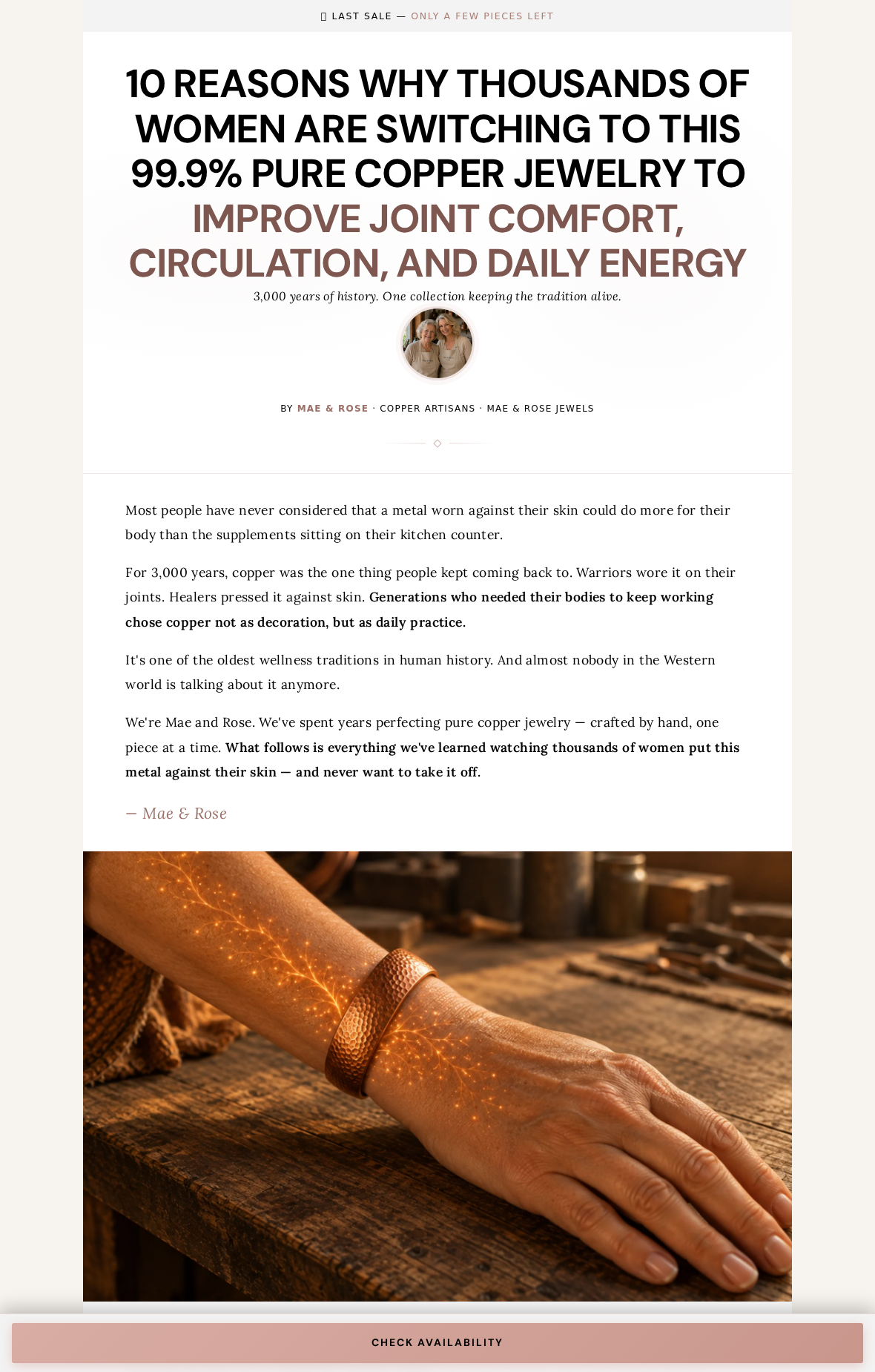
The jewelry offer at maeroseboutique.com
Mae & Rose Jewels sells rings, earrings, bracelets, and necklaces through maeroseboutique.com. Its copper collection is promoted through artisan stories and a final-sale narrative.
The promotion says pieces are handmade from 99.9% pure copper. A separate seller-hosted feature describes a retiring workshop releasing its remaining jewelry at large discounts.
This investigation concerns that jewelry offer and that domain. Other shops using similar Mae and Rose names should not be blamed for its claims or policies.
The pitch goes beyond decorative jewelry
One promotional page links wearing copper jewelry with joint comfort, circulation, energy, and mental clarity. It also tells older women they may have an unnoticed copper deficiency.
That is not merely a statement that copper is a necessary nutrient. It turns general nutritional information into a reason to buy something worn against the skin.
The missing connection is clinical evidence that this jewelry produces the advertised health outcomes. Stories about traditions and satisfied customers do not supply that evidence.
Guarantees and sale conditions need to agree
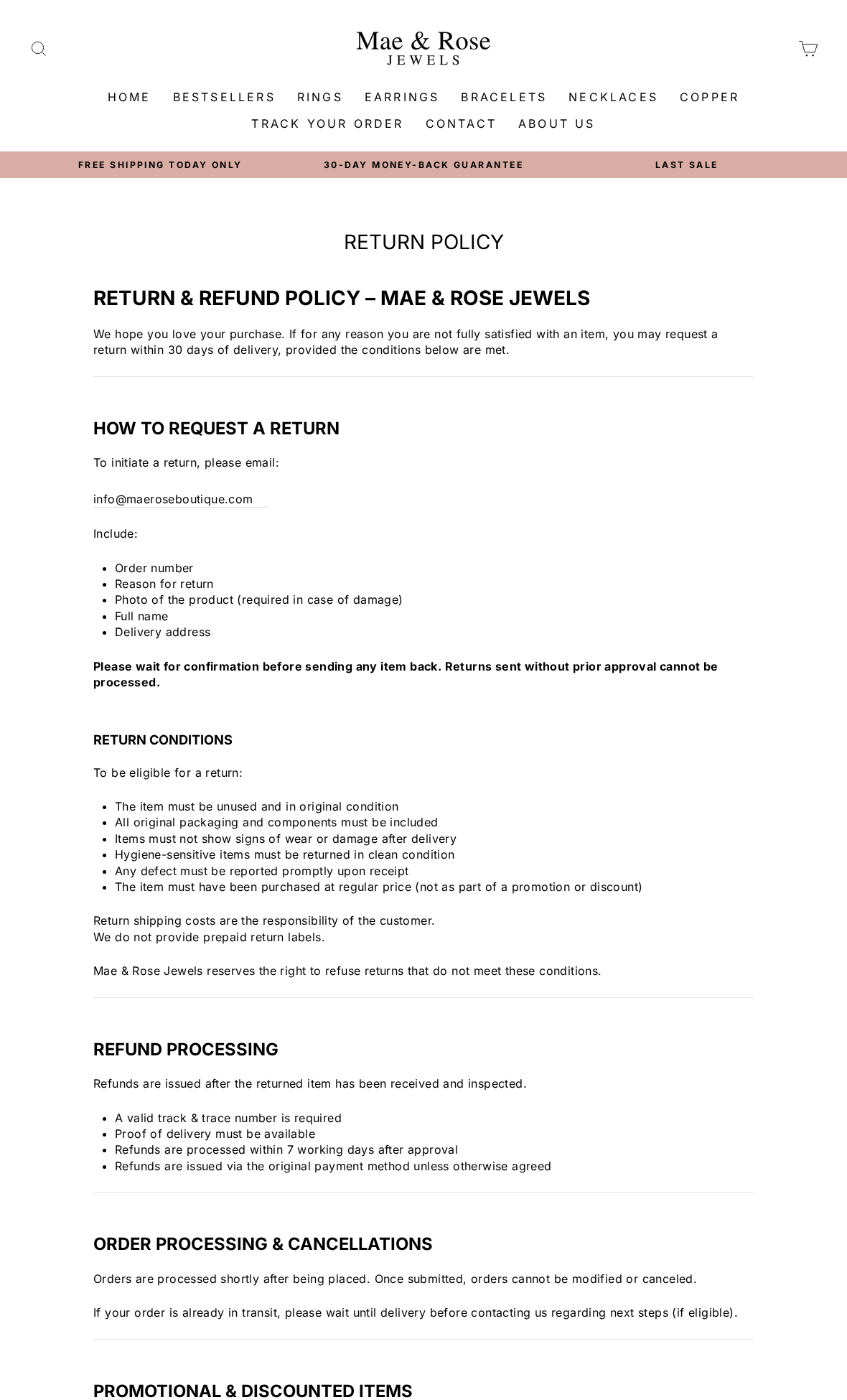
The storefront displays a 30-day money-back promise. Its return policy, however, excludes ordinary returns for promotional and discounted purchases, except for items arriving defective or damaged.
The copper promotion also offers a special magnet-test guarantee. Buyers need to know how that specific promise interacts with the shop’s final-sale conditions.
- The health pitch is much broader than a decorative-jewelry description.
- A magnet test cannot establish 99.9% copper purity.
- The news-style feature is seller-hosted advertising, not independent reporting.
- Discounted purchases are excluded from standard returns under the published policy.
- The available evidence does not authenticate a workshop, manufacturing location, or every delivered piece.
How the Mae & Rose Copper Offer Works
Step 1: A retirement story makes the purchase feel personal
The closing-sale feature presents two artisans winding down a workshop. Rather than selling a generic bracelet, it invites you to preserve something handmade and meaningful.
The page uses a newspaper-like layout under the name The New York News. Its styling gives the story the feel of a feature about a small business.
Importantly, the page discloses advertising and a paid partnership at the top. Its closing note also identifies the content as a promotional feature.
Those disclosures matter. This should not be described as a secretly disguised New York Times article or proof that a real newspaper endorsed the seller.
The useful distinction is still clear: the story appears on the merchant’s own domain. It is promotional material, not independent verification of the workshop.
Step 2: Familiar health worries become a copper-sales argument
The copper page addresses fatigue, stiff joints, cold hands, and brain fog. These are recognizable concerns that can make the message feel unusually relevant.
It suggests deficiency rather than aging explains such symptoms and promotes continuous absorption through the skin. That is an unsupported shortcut from symptoms to a purchase.
The NIH Office of Dietary Supplements says most people obtain enough copper from food and that deficiency is rare in the United States.
A website cannot establish your copper status from your age and a list of common complaints. Wearing a bracelet is not a substitute for evaluating persistent symptoms.
There is also no established clinical basis here for treating this particular jewelry as a measured way to correct a nutritional deficiency.
Step 3: Pure-metal language stands in for product evidence
The collection’s claimed 99.9% purity gives the jewelry a premium identity. The promotion contrasts it with cheaper pieces supposedly made from coated base metals.
Material purity and medical effectiveness are different questions. Even independently verified pure copper would not automatically establish a benefit for joints, circulation, or memory.
The seller’s handmade description likewise needs manufacturing evidence if it justifies the price. A story and workshop photograph alone cannot authenticate how each piece was produced.
Ask for product-specific material documentation rather than accepting repeated purity language. The information should identify the exact item, not only the collection in general.
You should not have to buy first to discover whether the material description can be supported. A premium claim deserves something more concrete than reassurance.
Step 4: The magnet guarantee appears to make authenticity simple
The promotion says a magnet sticking to the jewelry triggers a full refund while the buyer keeps the piece. That sounds like an easy home check.
But the reverse claim is unreliable. A metal’s failure to attract a magnet does not prove it is pure copper, let alone establish a precise purity percentage.
Many other materials are also not strongly attracted to an ordinary magnet. A nonmagnetic result does not rule out an alloy or a plated nonmagnetic base.
A magnetic response may raise questions about the piece or a component. It still requires care when interpreting clasps, fasteners, and separate decorative parts.
Save the special guarantee exactly as advertised. Do not confuse a simple screening observation with an independent compositional analysis.
Step 5: The closing discount changes the return position
The retirement story encourages a prompt purchase before the remaining collection disappears. Discounts make buying more than one piece feel like a sensible opportunity.
Yet the return policy says ordinary eligibility requires a regular-price purchase. Sale, clearance, promotional, and discounted items are generally treated as final sale.
Arriving defective or damaged is an exception. Mere disappointment with appearance, comfort, or perceived health effects may not fall within the retailer’s ordinary sale-return procedure.
This is the point where the offer’s reassurance needs scrutiny. A broad money-back banner and a restrictive discount policy should not leave customers guessing.
Before paying, obtain written confirmation of which refund promise governs the particular sale item. If the answer is unclear, do not complete the order.
Why the Health Claims Do Not Justify Buying
A nutrient’s role is not a bracelet’s proven effect
Copper has important functions in the body. That basic fact does not establish that copper jewelry delivers a useful dose or produces a clinical improvement.
The sales argument skips several questions: how much enters the body, whether that amount changes copper status, and whether an outcome improves compared with a control.
Without those answers, references to energy and circulation borrow credibility from nutrition rather than demonstrate the product’s effect. The difference is crucial for a health-motivated buyer.
Skin contact, a green mark, or a warmer wrist should not be treated as evidence that a deficiency has been corrected or a disease improved.
Controlled research matters more than testimonials
A randomized controlled trial involving people with rheumatoid arthritis found no meaningful therapeutic benefit from copper bracelets beyond placebo for the measured outcomes.
That study did not test Mae & Rose jewelry. It is relevant evidence about the broader idea that wearing copper treats arthritis symptoms.
A customer story cannot overcome the need for comparable product evidence. Symptoms fluctuate, treatments change, and people may feel better for reasons unrelated to a bracelet.
Buy decorative jewelry because you want the design, not because a testimonial suggests it will improve memory, circulation, or persistent joint pain.
A closing disclaimer does not erase the earlier pitch
The news-style feature says the jewelry is decorative and is not intended to diagnose, treat, cure, or prevent disease. That is a useful distinction.
It also makes the health-focused copper promotion harder to reconcile. Shoppers are still being encouraged to connect jewelry with symptoms and bodily improvement.
Read the overall impression, not only a disclaimer at the bottom. The unsupported health appeal remains a poor reason to spend money.
Business Identity, Workshop, and Returns
The disclosed business name is a trading identity
The terms identify Mae & Rose Jewels. The linked privacy page uses Mae & Rose Boutique and gives info@maeroseboutique.com as its contact.
These names do not independently establish a registered company or identify the two people featured in the promotional story. The legal counterparty remains insufficiently clear.
Ask which entity issues the receipt and accepts responsibility for returns. Do not assume a familiar artisan narrative supplies that legal information.
The workshop story is not a verified address
The promotional feature evokes a small workshop, while the terms specify Netherlands law. Neither statement provides a usable, independently authenticated workshop or return address.
A governing-law clause does not tell you where a parcel was manufactured or shipped. The customer needs an actual return destination and the costs involved.
The reviewed material does not prove Chinese mass production. It also does not substantiate the seller’s specific handmade-production story with traceable manufacturing records.
Published support details are not a refund performance record
The footer lists customer-service hours and promises a reply within 24 hours. The email is visible, but no independent support test establishes its performance here.
For returns, the policy requests an order number, explanation, customer details, and photographs where damage is involved. Prior approval is required before posting a parcel.
A helpful reply should settle the sale exclusion and special magnet guarantee. Repeating the money-back slogan without answering those points is not enough.
Customer reports need attribution, not exaggeration
A BBB Scam Tracker submission describes a buyer’s dispute over claimed copper pieces, damaged goods, and a refused sale refund.
That is a customer allegation, not a laboratory result or BBB finding that every piece is counterfeit. It should not be presented as either.
The retailer’s published claims and final-sale wording provide the stronger basis for this warning. A complaint adds context but cannot establish all buyers’ experiences.
What to Do if You Bought Mae & Rose Jewelry
- Keep the promises that influenced your order.
Save the collection description, claimed material, closing-sale promotion, and magnet guarantee. Include the return policy and the exact discounted price you paid.
Identify whether the issue is an incorrect item, damage, a material-description problem, or a refused guarantee. Each requires different supporting evidence.
- Document the delivered jewelry carefully.
Photograph the packaging, item, fasteners, markings, and visible defects. Preserve the receipt and listing for the exact design rather than another piece.
If you perform the advertised magnet check, record which component responds. Avoid destroying the item or claiming an exact metal composition from a home test.
- Ask for the promised remedy directly.
Write to info@maeroseboutique.com with your order number and evidence. Quote the specific guarantee you are invoking, without sending unnecessary financial or identity documents.
If the seller cites final-sale rules, ask how that refusal fits the separate promise. Request its decision in writing and keep the correspondence.
- Clarify postage before returning anything.
Obtain authorization, the recipient, and the full return destination. The standard policy makes the customer responsible for return postage and requires tracking.
A refund-and-keep magnet guarantee describes a different remedy. Do not pay postage unnecessarily before the seller explains which procedure it requires.
- Use your payment protection before deadlines expire.
Explain the actual dispute to your card issuer or payment service. Provide the description, guarantee, photographs, order confirmation, and refusal or unanswered requests.
Do not assume a merchant’s final-sale wording determines every payment-provider remedy. Ask about your transaction’s deadlines and the evidence required for assessment.
- Separate the purchase problem from health concerns.
Do not delay evaluation of persistent joint pain, fatigue, circulation symptoms, or memory changes while waiting for jewelry to help.
Discuss those symptoms with an appropriate clinician. A bracelet’s advertised purity cannot diagnose a deficiency, and the sales page should not direct medical decisions.
Frequently Asked Questions
Is Mae & Rose Jewels a confirmed scam?
The evidence establishes concerning health marketing and a conflict between broad reassurance and discounted-item return conditions. It does not establish criminal fraud across every order.
The buying recommendation is still negative for this health-focused closing offer. Unproved medical benefits and restrictive sale terms do not merit a purchase recommendation.
Can copper jewelry relieve arthritis or improve memory?
No convincing product-specific evidence is supplied here for those outcomes. Controlled copper-bracelet research in rheumatoid arthritis found no meaningful benefit beyond placebo.
Decorative jewelry is not a replacement for symptom assessment or treatment. Claims about a nutrient’s importance do not prove benefits from wearing the metal.
Does a magnet prove the jewelry is pure copper?
No. A nonmagnetic result does not establish copper composition or 99.9% purity. Other metals and alloys can also fail to attract an ordinary magnet.
A magnetic component may be useful evidence for the seller’s stated guarantee, but accurate material identification requires a more appropriate assessment.
Is The New York News feature independent journalism?
The feature sits on maeroseboutique.com and labels itself advertising and a paid partnership. Its final note also calls it promotional content.
Read it as part of the seller’s pitch, not as independent authentication of the artisans, workshop, medical claims, or product composition.
Can discounted Mae & Rose jewelry be returned?
The standard policy treats promotional and discounted items as final sale, with an exception for arriving defective or damaged. The special magnet guarantee needs separate clarification.
Preserve whichever promises were displayed during your purchase. Applicable rights and payment-provider remedies depend on the circumstances, not just a sale banner.
Are all similarly named Mae and Rose shops connected?
No connection is established merely by similar names. This review concerns Mae & Rose Jewels at maeroseboutique.com and the claims published there.
Check the exact domain and receipt before applying these findings to an order. Clothing shops or other jewelers may be unrelated businesses.
The Bottom Line
Do not buy Mae & Rose’s copper closing offer for health benefits. The medical pitch is unsupported, and the sale-return restrictions undermine the broad reassurance.
If you already ordered, document the item’s description and guarantee, request the appropriate remedy, and escalate an unresolved purchase before your payment-protection deadline closes.








