

When every shoe presses against the same painful bump, an adjustable brace promising a quick fix is easy to notice. BuniCure knows that frustration well.
Its offer deserves a closer look before you plan your recovery around it, especially if the guarantee makes ordering feel like an easy decision.
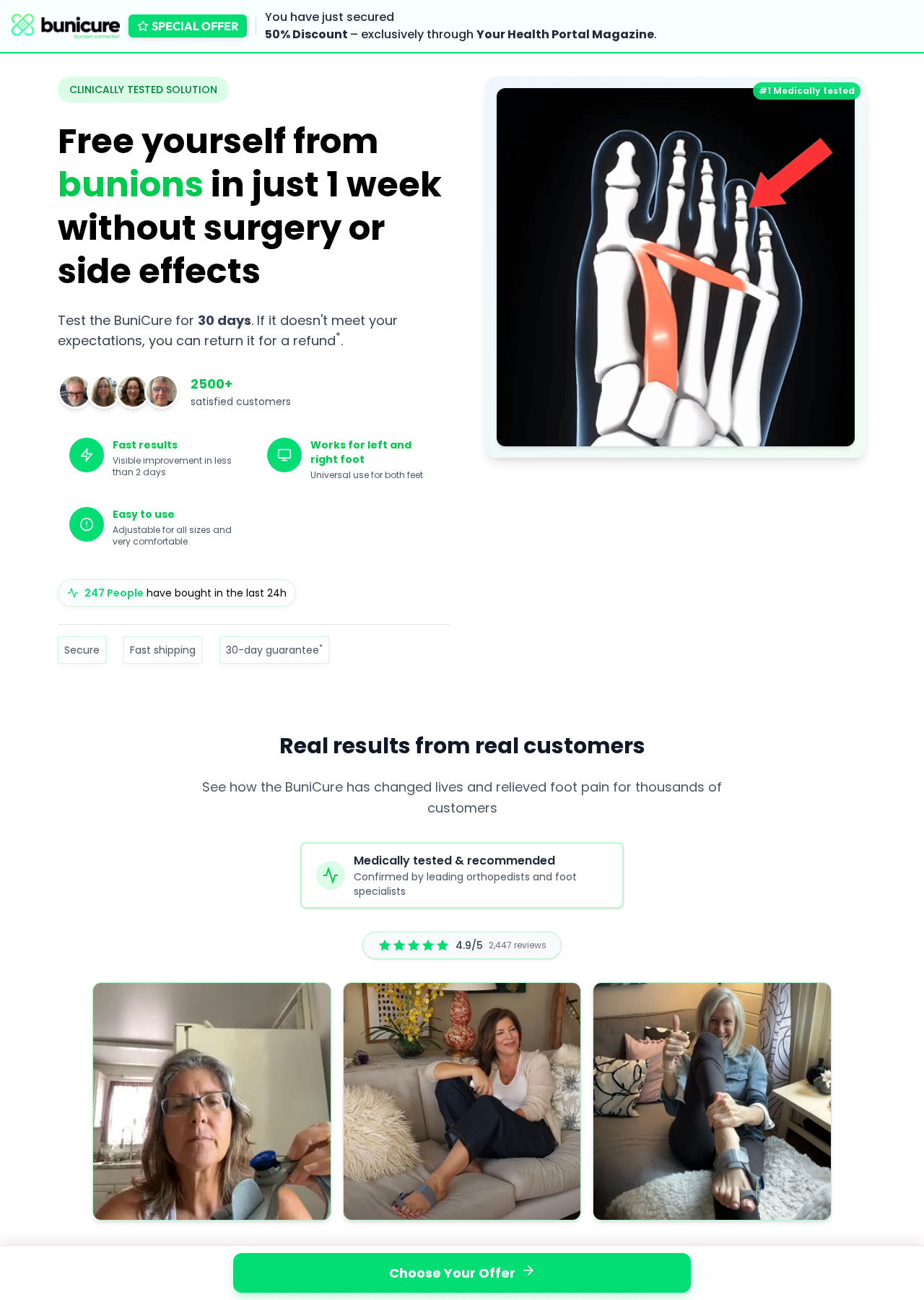
Overview
A Real Type of Device With a Much Bigger Promise
BuniCure is presented as an adjustable bunion corrector. A dial changes the pressure applied around the big toe, while straps hold the device in place.
Toe braces are a genuine product category. That does not mean a particular brace can permanently correct a bunion within the timeframe in its advertisement.
The inspected BuniCure page goes well beyond describing temporary support. It promises freedom from bunions within one week, without surgery or side effects.
The Claims Worth Separating
- Feeling more comfortable while wearing a support is different from permanently changing a bony deformity.
- A pictured physician is not a published study of the advertised device.
- A comparison with surgery does not make the two options medically interchangeable.
- A trial-style guarantee can still involve eligibility restrictions, postage, and deductions.
- The seller’s recommended two-device package is not an individualized treatment recommendation.
Where This Investigation Draws the Line
The concern is the advertised result and purchase terms, not the mere existence of toe supports. No purchased BuniCure device was physically tested.
The offer does not establish a hidden subscription or prove every customer receives nothing. Those would be separate allegations requiring their own evidence.
What it does provide is a strong reason not to buy this product expecting a guaranteed one-week correction of your foot.
Relieving Pressure Is Not the Same as Fixing a Bunion
A bunion is not simply a toe pointing in an inconvenient direction. The underlying joint and bone alignment matter, along with symptoms and individual anatomy.
The American Academy of Orthopaedic Surgeons explains that night splints may ease discomfort but have not been shown to permanently fix bunions.
That does not mean every painful foot needs surgery. It means a temporary change in position or comfort should not be sold as equivalent to lasting correction.
Imagine taking off a support and seeing the toe sit differently for a moment. A photograph of that moment cannot establish what happens weeks later.
To demonstrate permanent correction, evidence would need meaningful follow-up, defined measurements, and information about who was treated. Pleasant before-and-after imagery cannot supply those details.
The BuniCure headline compresses all those questions into a single week. That is exactly the point where buyers should slow down.
Someone with pain needs a realistic expectation, not a countdown. Disappointment is costly enough without postponing a proper assessment because an advertisement promised certainty.
How the BuniCure Offer Persuades Buyers
Step 1: Present the Discount as a Special Health Recommendation
The page opens with a supposedly exclusive discount connected to a health-magazine-style name. That makes the offer feel recommended before any evidence is examined.
A health-themed introduction can resemble editorial advice, but the page remains a sales pitch. Its purpose is to move readers toward an order.
Ask what supports the recommendation. An impressive heading and a magazine-style reference do not show that an independent medical organization evaluated the product.
You should be able to separate the business selling the brace from any independent source assessing it. When that distinction blurs, trust can be misplaced.
Step 2: Make a Fast Result Sound Like the Normal Outcome
The headline promises a one-week transformation, while nearby copy suggests visible improvement within two days. Those are strong expectations for a structural foot problem.
Other sections describe immediate relief and lasting alignment benefits. Together, they encourage a reader to expect much more than a comfortable support.
Yet the page does not establish that every type or severity of bunion responds that way. A universal promise is particularly questionable for individualized health problems.
A useful product description would distinguish possible comfort benefits, fitting limits, and realistic uncertainty. It would not turn the most appealing outcome into an implied guarantee.
Step 3: Borrow Authority From Doctors and a Surgery Comparison
The site presents named orthopedic endorsements and places BuniCure beside surgery and customized insoles. The brace is portrayed as inexpensive, immediate, and without risk.
One featured physician is also described as founder and CEO. That is a financial connection readers should notice, not an independent endorsement to accept unquestioningly.
The displayed names were not independently authenticated for this article. We are not declaring those people fictitious or accusing a specific real physician of misconduct.
The stronger, supportable criticism is the comparison itself. Different interventions serve different circumstances, and a sales table cannot determine which option suits your foot.
Step 4: Steer the Purchase Toward a Two-Piece Set
The inspected offer displayed two BuniCure devices for $62.91, alongside a crossed-out $139.82 and a 50% discount label.
Those displayed amounts imply approximately 55% off the comparison price, not exactly 50%. That inconsistency does not prove what the historical selling price was.
More importantly, the page invokes a general recommendation to treat both feet. That is a reason to sell two devices, not a diagnosis of your needs.
Buying additional supports should follow an actual reason to use them. A lower per-piece price does not make an unsuitable device appropriate.
Step 5: Use the Guarantee to Make the Decision Feel Reversible
A 30-day promise makes the experiment sound simple: try it, then return it if the result disappoints. The linked legal terms add important conditions.
Those conditions include the return window, the item’s state, customer-paid shipping, and possible exclusions for certain personal-care goods. The process is not costless by default.
Once you have worn a foot-care device, eligibility matters enormously. Clarify that point before treating the offer as a free medical experiment.
The promise and the practical return procedure should fit together. If they do not, the risk has been shifted back onto the buyer.
The Refund Terms Behind the Guarantee
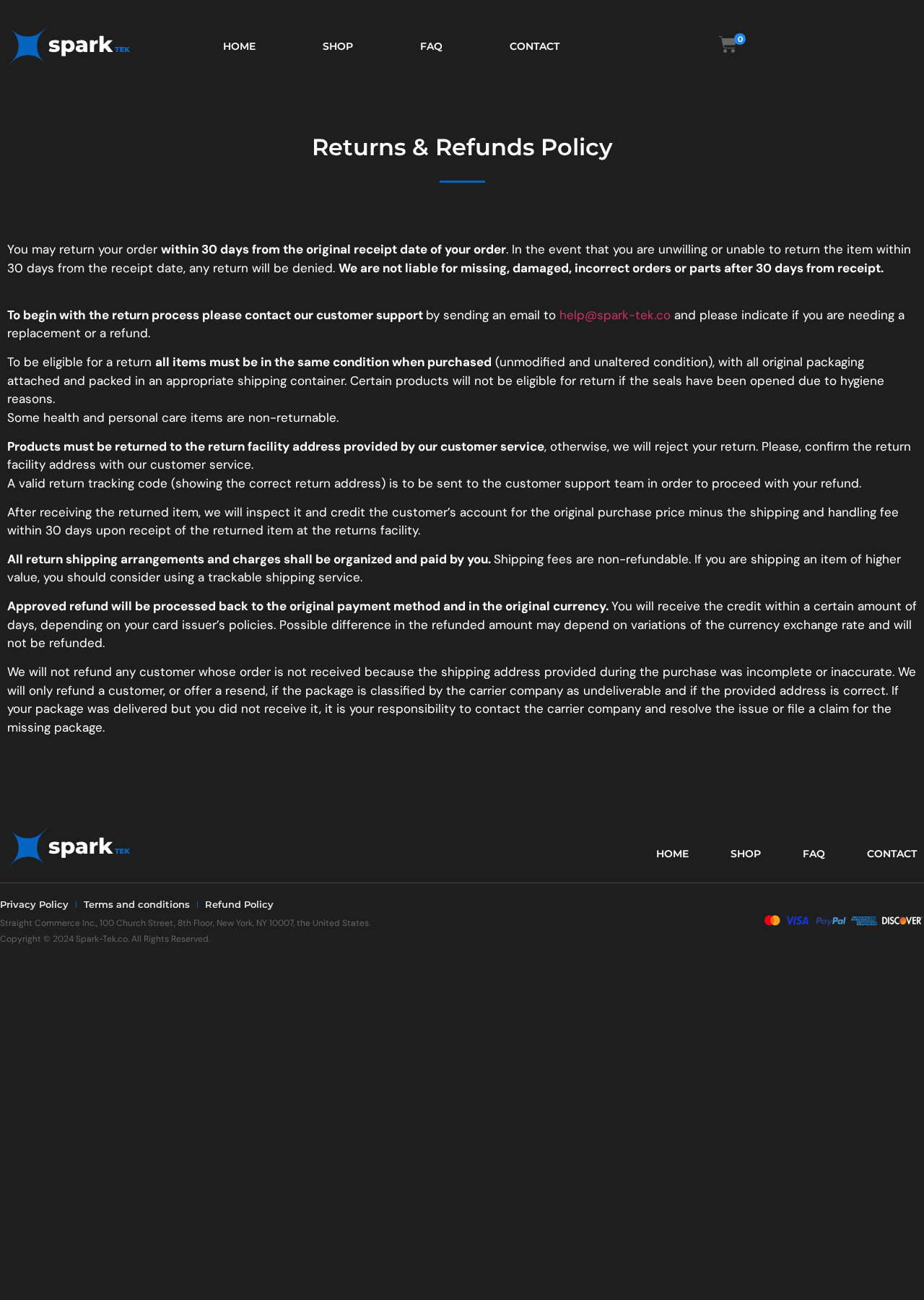
BuniCure’s footer links to Spark-Tek policies rather than a detailed refund explanation on the offer itself. Following those links changes the picture.
The return policy requires customers to act within 30 days of receiving the order. Items must meet stated condition and packaging requirements.
It also says some opened health or personal-care products cannot be returned for hygiene reasons. It does not clearly resolve every worn BuniCure scenario.
That is a question to settle before opening the package, not after several weeks of trying the brace. Ask for a product-specific answer in writing.
Returns must go to the facility supplied by support, with valid tracking. Sending the item to a convenient address on the website may not count.
The buyer pays return shipping. The terms additionally describe a €5 handling deduction, or its applicable local-currency equivalent, as well as nonrefundable shipping charges.
A successful return therefore may not recover everything spent. Calculate the possible postage and deductions before deciding whether a trial makes financial sense.
Published store terms do not settle every consumer-rights question. If a dispute arises, seek advice applicable to your location rather than assuming the policy is definitive.
Check the Fit Before Believing the Transformation
The offer’s own FAQ says the brace is intended for barefoot use at home rather than ordinary shoes. That limits what its comfort story means.
If your main problem is pressure inside work shoes, a device you cannot wear in them may not address the moment you most need help.
That is worth understanding before a testimonial about favorite shoes creates a broader expectation. Ask what improvement is claimed while wearing the device and after removal.
Also distinguish a universal left-or-right design from an individually suitable fit. Those are not the same assurance, particularly when feet differ in shape and sensitivity.
Do not increase tension to chase a faster result. A mechanical adjustment is not a progress scale, and pain is not evidence that correction is succeeding.
Bring the product description to a qualified professional if you are considering it. A useful discussion starts with your symptoms, footwear, and goals.
Then decide whether a support has a sensible role. That approach avoids the advertisement’s false choice between buying this brace immediately and resigning yourself to surgery.
Company, Address, and Support Checks
The Business Named in the Linked Terms
The linked terms identify Straight Commerce Inc. They also refer to an Ihealthpro webshop, while the page branding says Spark-Tek and the original offer says BuniCure.
Different trading names can be legitimate. Here, the practical problem is that customers must work across those names to identify the party handling their order.
Before paying, the invoice, checkout, and applicable policies should make that relationship clear. A product logo alone does not answer who owes you a refund.
A New York Address Is Not a Return Authorization
The terms list Regus, 100 Church Street, eighth floor, New York, NY 10007. That is the address stated in the merchant’s documentation.
It does not establish a factory, a medical research facility, or the correct returns warehouse. The policy specifically requires a separate support-provided return destination.
Do not interpret an office address as proof that a brace was designed, tested, or manufactured there. Those are different facts.
The Published Phone Numbers Need Order-Specific Context
The contact page lists +1 424-250-4182, while the terms provide a UK support number, +44 800 072 9935.
No test call was placed. Their appearance on different policy pages does not establish that either number is fake, unanswered, or dedicated exclusively to BuniCure.
Use the contact route attached to your confirmation and retain a written record. Ask support to identify the product and order before sharing anything unnecessary.
What the Research Does Not Establish
This investigation does not determine the device’s manufacturing country, inspect delivered quality, or establish a criminal operation. It examines an accessible offer and its linked terms.
That limitation does not rescue the one-week promise. The seller still needs evidence matching the result it advertises and a clear explanation of trial eligibility.
Until those questions are answered, paying for a supposedly definitive correction is not a sensible way to manage a painful foot.
What to Do if You Already Bought BuniCure
-
Do not force your foot to match the advertisement. Stop using a device that causes increasing pain, numbness, skin injury, or another concerning reaction.
Arrange appropriate professional advice, especially if an existing condition affects circulation, sensation, healing, or the safety of pressure-based supports.
-
Record the product before changing anything. Photograph the package, brace, instructions, seals, and any damage. Keep all parts together.
A clear record helps distinguish a fit problem, an advertised-result complaint, and an item that arrived defective or different from its description.
-
Save the specific promise you relied on. Preserve the one-week headline, displayed price, guarantee, order confirmation, and linked policy pages.
Do not depend on a live advertisement remaining unchanged. Your complaint is stronger when it includes what was actually offered at purchase.
-
Contact support before the return deadline. State the delivery date, order reference, requested remedy, and whether the brace has been opened or worn.
Ask for written confirmation of eligibility, the authorized return address, any handling deduction, and responsibility for postage before shipping it.
-
Track any authorized return. Photograph the packed contents and retain the postage receipt and tracking number. Send the required tracking details to support.
Monitor the parcel and the promised refund separately. Delivery back to a warehouse is useful evidence, but it is not proof that repayment occurred.
-
Raise an unresolved dispute with accurate records. Ask your payment provider about its process and deadlines if the merchant does not honor the documented arrangement.
Describe the actual issue rather than claiming card theft if you authorized the purchase. Keep medical decisions separate from the billing dispute.
Frequently Asked Questions
Can BuniCure permanently fix a bunion in one week?
The inspected offer does not establish that result. A brace holding a toe in position or easing discomfort is not evidence of permanent correction.
Do not organize your care around a one-week sales promise. Get advice based on your symptoms and the condition of your foot.
Does this mean all bunion braces are useless?
No. Some supports may help with comfort for some people. The issue is treating that possible benefit as proof of a rapid, lasting structural correction.
Is BuniCure a confirmed subscription scam?
No recurring-payment mechanism was established in the offer examined. Check your own order for the quantity, total, and any separate continuing-payment agreement.
Can I return a brace after wearing it?
The sales page promotes a trial, but linked policies contain condition requirements and hygiene exclusions. Obtain a written answer specifically covering an opened or worn BuniCure.
Will I get all my money back?
Do not assume so. The linked terms describe customer-paid return postage, nonrefundable shipping, and a handling deduction. Your circumstances and applicable consumer protections also matter.
Should I mail it to the New York address?
Not without authorization. The policy requires the return facility address supplied by customer support, plus tracking. An office listing is not automatically a returns destination.
The Bottom Line
Do not buy BuniCure expecting guaranteed freedom from bunions within one week. The advertising outruns the evidence, and the return process is less simple than the pitch.
If you already bought it, protect your foot first, preserve the purchase record, and request a clear return decision before the deadline passes.

Join the discussion
0 commentsShare your experience or ask a question about this article.
Community experiences
Did this happen to you?
Your experience could help someone recognize the same scam. Submit a private report for our team to review.
I experienced this tooReports are reviewed before publication. Sharing publicly is always your choice.
Discussion
Start the conversation
Have a question or something useful to share? Add the first comment.