

A beautifully paneled room can make an inexpensive listing look like the answer to a renovation budget. Wallcrafts.shop leans heavily on that appeal.
Before measuring your walls or ordering a stack of panels, check how its prices, branding, and return promises fit together. Several details deserve your attention.
Overview
A Wall-Panel Store With More Than One Name
The domain is Wallcrafts.shop, the header displays Mayfair Studio, and the footer refers to WallCraft. The products are decorative and acoustic-style wall panels.
The storefront targets UK buyers with pound pricing, domestic delivery promises, room photography, and claims of many satisfied customers.
This investigation concerns that exact website. It does not accuse unrelated businesses with similar names or establish that an established panel manufacturer operates it.
The Visible Problems Are Specific
- Homepage discount labels do not match the arithmetic of several displayed price pairs.
- A product detail page uses a different comparison price for the same advertised panel.
- The largest bundle is labeled best value despite a higher unit price than the middle package.
- A satisfaction-style guarantee sits alongside an unopened-product return requirement.
- Customer-contact and return-contact details do not use the same domain as the storefront.
What the Findings Mean for a Buyer
These inconsistencies are reason to hold your payment, not an invitation to guess which version is correct. The merchant should resolve them before accepting an order.
They do not establish that every panel is counterfeit, every parcel comes from China, or every transaction fails. No test purchase was made.
You can make a firm buying decision without inventing those allegations. A renovation order needs dependable specifications, a clear seller, and usable return terms.
The Discount Math Does Not Match the Labels
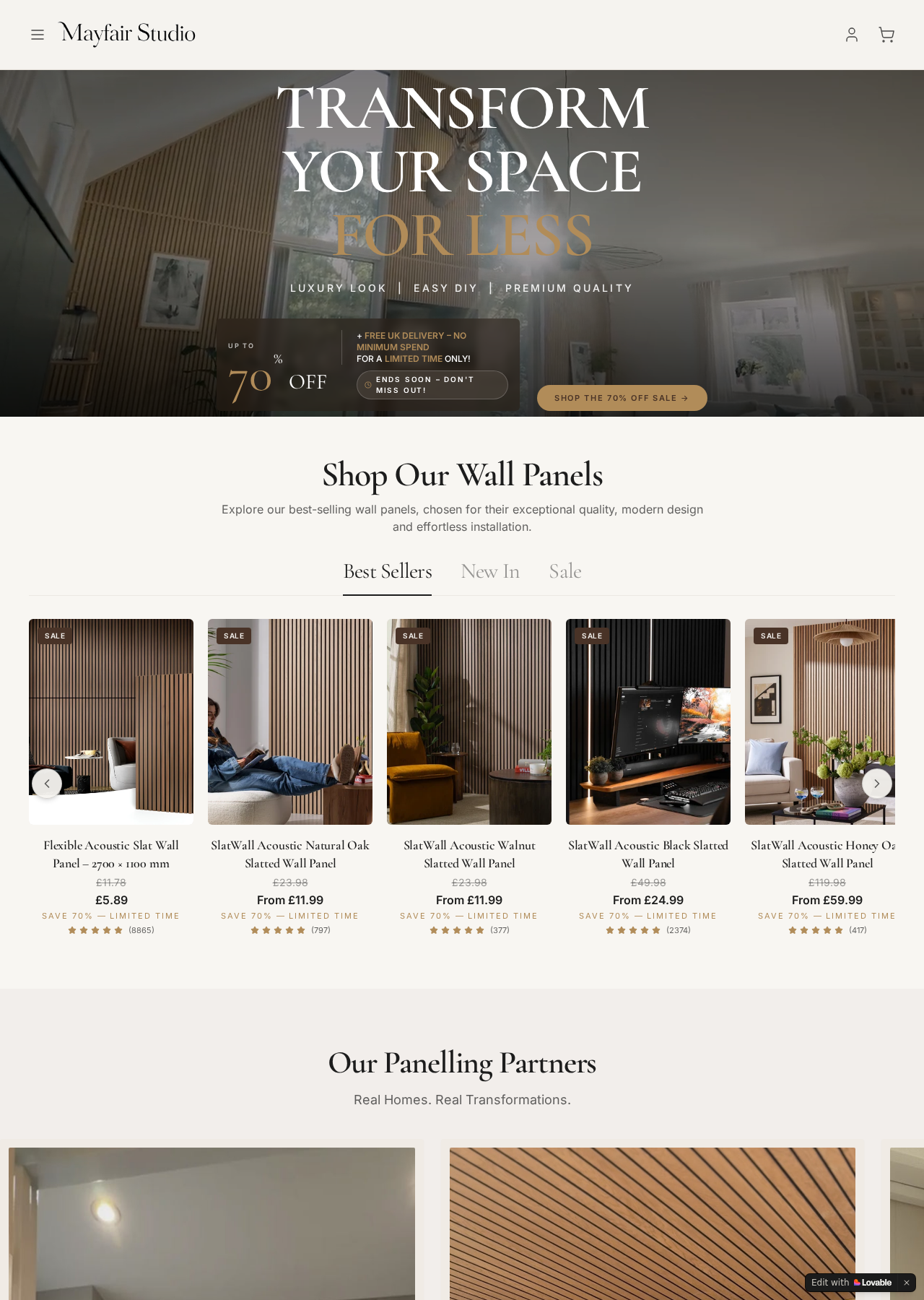
On the inspected homepage, a flexible panel was shown at £5.89 against a crossed-out £11.78. The accompanying label claimed a 70% saving.
Those two amounts describe a 50% reduction. Paying half the displayed comparison price is not the same as paying 30% of it.
The natural-oak card repeated the pattern: £11.99 against £23.98, again with a 70% label. Other cards also displayed half-price pairs.
This is not an argument about whether the panels are cheap enough. It is a straightforward problem with how the saving is presented.
A crossed-out amount is itself only a claim about a comparison price. It does not independently establish what the item normally sold for.
That matters because an impressive discount can distract from the actual decision: what precisely will arrive, in what quantity, and for how much?
Compare the final product and delivered price with a seller offering clear dimensions and returns. Do not compare discount badges as though they certify value.
How the Wallcrafts Offer Moves Buyers Toward Larger Orders
Step 1: Sell the Finished Room Before Defining the Item
The homepage leads with an attractive interior and an affordable transformation story. It is easy to imagine the same finish across your own wall.
But a room photograph is not a packing list. It cannot tell you the backing thickness, surface material, finish quality, or coverage included in one unit.
For wall panels, those details determine both cost and suitability. A thin decorative covering is not automatically interchangeable with a substantial acoustic panel.
Do not calculate a project from photography alone. Start with a written specification that identifies exactly which material and dimensions the seller promises to deliver.
Step 2: Anchor the Decision to a Large Percentage Saving
The sale language makes acting quickly feel financially sensible. A buyer can start worrying about missing the reduction before checking the price calculation.
Here, the mismatch is visible without specialist knowledge. The homepage’s two-price examples can be checked with ordinary arithmetic.
When the percentage does not match, do not invent a missing explanation on the merchant’s behalf. Request the applicable regular price and actual saving.
A retailer correcting a genuine error should be able to state the offer plainly. Until then, the badge is not a trustworthy shopping guide.
Step 3: Change the Price Context on the Product Page
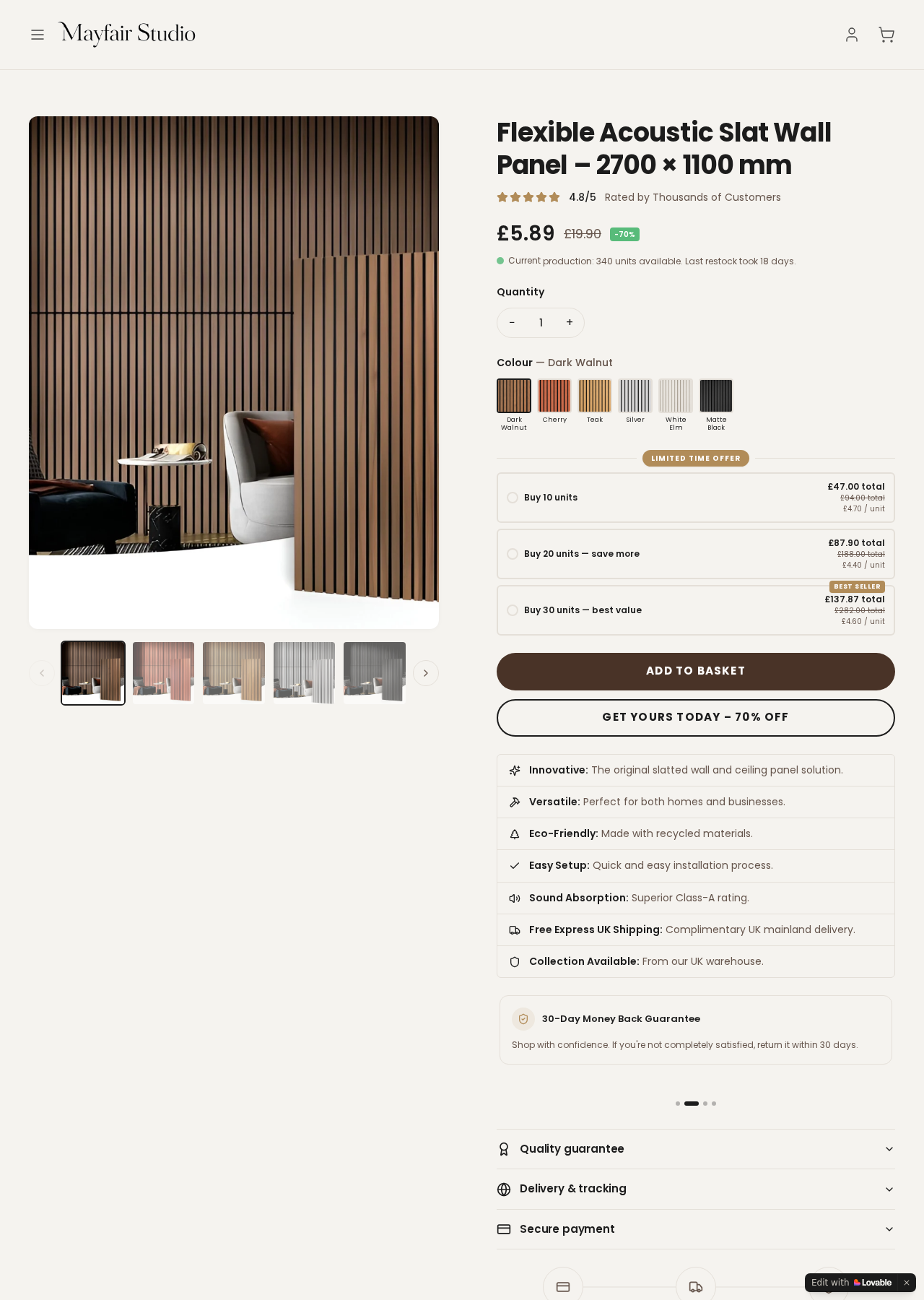
The flexible-panel detail page kept the £5.89 selling price but displayed £19.90 as the comparison amount, rather than the homepage’s £11.78.
Against £19.90, the reduction is approximately 70%. That does not fix the contradictory comparison shown earlier in the same shopping journey.
A buyer should not need to decide which reference amount makes the discount defensible. Consistent product pricing is the merchant’s responsibility.
The detail page also labels the panel 2700 × 1100 mm. Confirm that this identifies one shipped panel, not an image arrangement or a different package.
Step 4: Use Bundle Labels to Encourage a Bigger Basket
The inspected package choices included 10 units for £47.00, 20 for £87.90, and 30 for £137.87.
That works out to £4.70, approximately £4.40, and approximately £4.60 per unit. The 20-unit package has the lowest unit price of those three.
Nevertheless, the 30-unit package was presented as best value. Buying more therefore did not produce the lowest displayed unit cost.
This is why the actual total matters more than a promotional label. Order quantities should follow your measured requirements, not the store’s preferred package.
Step 5: Ease Doubts With Delivery and Satisfaction Promises
The product page advertises free express UK delivery and a 30-day money-back guarantee. Those promises can make an uncertain purchase feel easy to reverse.
The separate return page adds an unopened-product condition. That is important if you expect to inspect, fit, trim, or install the panels before deciding.
Ask what happens after opening the packaging or discovering a material mismatch. A general satisfaction badge does not answer those practical questions.
Do not schedule an installer or remove existing finishes based only on the delivery illustration. Confirm the actual goods and condition first.
What the Product Page Actually Shows
The page uses acoustic-performance language as well as decorative room imagery. That can influence buyers who want reduced echo, not merely a different appearance.
An acoustic rating needs a test context. The construction, backing, mounting method, and tested assembly affect what a performance claim means.
A photograph of wood-effect slats does not establish those properties. Ask for the actual product specification and the report behind any stated classification.
Likewise, a claim about recycled materials does not identify the visible surface or its durability. Obtain the material description rather than inferring solid wood.
Color choice is another practical issue. A screen image can show a general tone, but it cannot guarantee a match with existing furniture or flooring.
For a substantial project, a properly identified sample can be more useful than a larger promotional bundle. Confirm that any sample matches the shipped product.
The storefront also displays review counts and customer reassurance. Those are retailer-presented statements, not a record of independent testing performed for this article.
None of these details requires assuming the photographs are AI-generated. The problem is the missing bridge between an attractive presentation and a dependable order.
Check the Coverage Before Spending More
The advertised 2700 × 1100 mm dimensions correspond to 2.97 square meters for one full rectangular panel. That is arithmetic based on the listing, not delivery verification.
It makes the meaning of one unit especially important. A sample, a narrow section, and a full-size panel would produce very different project costs.
Ask the seller to confirm the shipped size and package count together. Do not accept a room photograph as an answer to that question.
Measure the actual wall, including openings, corners, and cuts. A low unit price can distract from how much usable material your particular installation requires.
Check whether joining several pieces creates visible seams and whether the finish continues consistently between packages. These are practical questions, not proof of a defect.
For a curved installation, obtain the permitted bending specification. Flexible in a product name should not be interpreted as suitable for every radius or surface.
Finally, settle inspection and return eligibility before ordering a project quantity. An unopened-only return rule is a poor foundation for guessing at a whole-room purchase.
A dependable seller should answer these basic questions without requiring you to commit to the largest bundle first.
Seller Identity, Contact Routes, and Returns
The Trading Names Need a Clear Explanation
Mayfair Studio, WallCraft, and Wallcrafts.shop appear within one storefront. Multiple names can reflect trading arrangements, but those arrangements need to be understandable to customers.
The inspected terms page provides a brief website-use statement and a WallCraft ownership assertion. It does not supply a detailed legal seller identification there.
Before ordering, obtain the legal business name and the party responsible for your invoice. Do not treat a stylish header as that information.
The Contact and Return Emails Differ
The contact page lists wallcrafts1@outlook.com. The return page directs customers to returns@wallcraft.co.uk for a prepaid return label.
Neither address was tested through correspondence. The mismatch does not prove either inbox is fake, but the seller should explain which route handles your purchase.
An email address on another domain does not establish ownership of that domain or its connection to your order. Seek an order-specific written response.
The Return Promise Has an Important Boundary
The dedicated return page allows 30 days from delivery for unopened products. It promises a prepaid label and processing after the returned goods are received.
The product guarantee sounds broader because it invites dissatisfied buyers to return the item. Ask how that promise applies after ordinary inspection.
Do not cut, glue, or install disputed panels while that question remains unresolved. Altering them may complicate an already unclear return request.
A UK Delivery Claim Is Not Manufacturing Evidence
The store refers to UK delivery and warehouse collection. Those claims do not establish where the panels were produced, or independently verify a collection facility.
This investigation did not inspect a warehouse, order goods, or verify dispatch origin. It therefore does not label the products Chinese-made or describe confirmed non-delivery.
The recommendation rests on the price contradictions, unclear seller presentation, and return ambiguity that can actually be documented.
What to Do if You Already Ordered
-
Check the quantity and product description immediately. Compare your confirmation with the listing, including dimensions, finish, number of units, and total charged.
If you intended one panel but authorized a bundle, request a change promptly. Preserve the original confirmation rather than relying on the current basket display.
-
Save the contradictory offers. Keep screenshots of the homepage, product page, bundle prices, guarantee, contact details, and return policy.
Include the full domain and date in your private records. Similar trading names can make an otherwise simple payment complaint harder to explain.
-
Request concrete dispatch information. Ask for the carrier, tracking reference, shipped quantity, and expected delivery date. A general progress illustration is not shipment confirmation.
Delay installation bookings until the panels arrive and you can check them. Avoid turning a questionable order into a larger renovation expense.
-
Inspect and document the delivery carefully. Photograph the outer packaging, labels, visible damage, quantity, and materials before discarding anything.
Do not install goods that appear different from the description. Notify support promptly and ask how to inspect them without prejudicing the return request.
-
Get return instructions in writing. State whether the goods are unopened, opened for inspection, damaged, or not as described.
Request the promised label and authorized destination. Keep tracking and proof of handover if you return the parcel, then check the actual refund.
-
Escalate a documented unresolved problem. Contact your payment provider about its dispute procedure if goods do not arrive or the merchant fails to resolve a substantiated issue.
Use the business and transaction details from your receipt. Explain the facts accurately and ask about applicable deadlines rather than waiting indefinitely for reassuring replies.
Frequently Asked Questions
Is Wallcrafts.shop a confirmed scam store?
The inspected pages show significant buyer-risk problems, but this investigation does not establish that every transaction is fraudulent or that the store never supplies goods.
Our recommendation is not to order while the pricing, legal seller, and practical return conditions remain unresolved.
Why does the 70% discount matter?
Several homepage price pairs show a 50% reduction, despite a 70% label. The product detail page then uses a different comparison amount.
Those inconsistencies undermine the saving claim. They do not independently establish a genuine previous selling price.
Is the 30-unit bundle really the best value?
Not by the displayed unit prices inspected. The 20-unit package cost approximately £4.40 per unit, compared with approximately £4.60 for 30 units.
Does Mayfair Studio prove this is an established UK company?
No. It is the branding displayed on this site. Obtain the legal seller identity rather than assuming a connection to another similarly named business.
Can I return panels after installing them?
Do not assume so. The return page specifies unopened products. Seek written instructions before cutting, attaching, or installing anything you may need to send back.
Does this prove the panels are cheap imports?
No manufacturing origin or delivered quality was established. The documented warning concerns the actual offer, not an unsupported claim about where a future parcel will originate.
The Bottom Line
Do not buy from Wallcrafts.shop while these contradictions remain unresolved. A wall-panel order needs more dependable information than this storefront currently provides.
If you already paid, verify the quantity, preserve the offer, and pursue delivery or a documented refund before committing further money to the project.

Join the discussion
0 commentsShare your experience or ask a question about this article.
Reader experiences
How was your shopping experience?
Ordered from wallcrafts.shop? Share your experience with ordering, delivery or refunds.
Share your experienceRatings appear after moderation and reflect readers’ experiences, not an editorial verdict.
Have firsthand experience?
Your review can help the next reader.
Discussion
Start the conversation
Have a question or something useful to share? Add the first comment.