

A pair of discounted shorts is supposed to be an easy purchase. Ulerra’s storefront offers plenty of choices, clean product photographs, and prices that encourage another look.
What happens after ordering matters just as much as how the clothes look. Several details in this store’s policies deserve attention before anything goes into your cart.
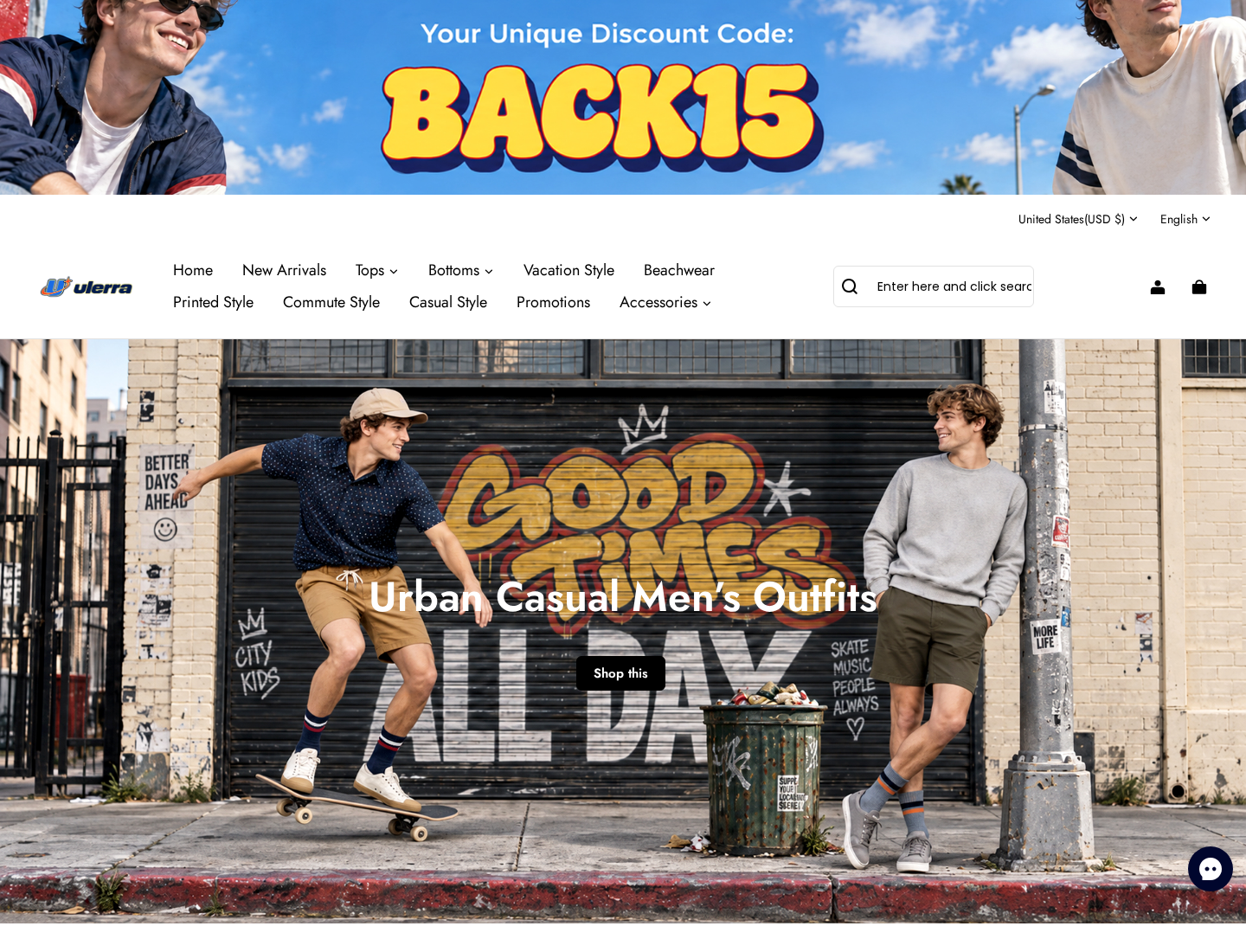
Overview
What Ulerra Is Offering
Ulerra.com sells men’s clothing and accessories, including shirts, shorts, trousers, underwear, and socks. Many listings display a reduced price beside a crossed-out reference amount.
The storefront describes an accessible everyday wardrobe. Its policies, however, place tight conditions on returns and on complaints about parcels marked delivered.
This report examines those actual conditions. It does not assume that a low price proves counterfeit clothing or that every customer fails to receive an order.
The Rules That Change the Buying Decision
- Change-of-mind returns must be requested within seven days of delivery.
- Sale and promotional items are excluded from ordinary returns and exchanges.
- The return policy allows a defect exception that the shorter terms wording does not clearly repeat.
- Missing parcels marked delivered must be reported within 24 hours, with proof of nonreceipt.
- Quoted delivery takes seven to twenty business days after dispatch, not after ordering.
A Cautious Verdict Without Invented Allegations
The current terms identify a company and a Denver address, and the site publishes a support email. Calling it completely anonymous would therefore be inaccurate.
No test order was placed, no garment was examined, and no support response was tested. The findings come from the store’s own sales and policy pages.
The warning rests on documented purchasing restrictions and unclear remedies. Those can make a seemingly modest clothing order a poor risk without proving an outright fake store.
Why Ulerra’s Sale Terms Matter
A discount usually draws attention to what you save. Here, it should also draw attention to what return options you may lose.
The Ulerra return policy excludes sale items and promotional products from refunds and exchanges unless a defect is confirmed.
Meanwhile, many visible storefront items carry savings labels. A customer browsing reduced products may therefore be choosing from stock with restricted ordinary return eligibility.
A pair of shorts being the wrong style or an unwelcome fit is not necessarily the same issue as a demonstrable defect.
The distinction matters for online clothing because you cannot assess fabric, construction, or fit in person before paying.
The FTC’s online-shopping guidance specifically advises checking sale-item refund rules. A discount does not guarantee a flexible return policy.
This is also why the advertised reduction alone cannot prove a scam. The more useful question is whether the order remains sensible after accounting for its restrictions.
How the Ulerra Offer Works
Step 1: Product Choices and Savings Encourage a Quick Decision
The storefront organizes clothing into familiar categories and displays product pictures, prices, and percentage reductions. It resembles an ordinary fashion shopping journey.
For example, one shorts listing priced in USD showed $28.39 beside a $32.59 reference price and a 13% savings label.
That arithmetic broadly describes the displayed reduction. It does not establish whether the reference price was a genuine previous selling price.
There is no need to invent a fake-discount finding. The documented concern comes later, when a reduced item meets the sale-return exclusion.
Step 2: The Low Ticket Price Can Hide the Real Cost of a Mistake
Before paying, the buyer needs the garment measurements, material description, shipping charge, and return eligibility. A standard size letter does not answer all those questions.
If the purchase qualifies only as a change of mind, the policy places return postage on the customer and requires a request within seven days.
Original shipping is generally not refunded for that type of return. The price of trying the garment can therefore exceed the amount left visible on the product card.
For a discounted product, the first issue is even simpler: the seller may say an ordinary return is unavailable at all.
Step 3: Dispatch and Delivery Run on Separate Timetables
The shipping policy says most orders ship within 24 business hours after payment confirmation.
It then allows seven to twenty business days for delivery after dispatch. The policy expressly distinguishes that period from the date the order was placed.
That is not the same as a next-day arrival promise. Weekends, preparation time, and stated exceptions can extend the calendar time a buyer experiences.
Tracking also needs interpretation. A label created for a parcel is not necessarily proof that a carrier has received or delivered it.
Ask for the dispatch date and carrier progress if an order stalls. Compare the response with the specific timetable you were shown.
Step 4: A Delivered Scan Starts an Exceptionally Short Complaint Window
Both shipping and return materials tell buyers to report a missing parcel within 24 hours of delivery confirmation.
The return page additionally asks for valid proof of nonreceipt and says later claims may not be accepted.
A buyer may be at work, away overnight, or unable to check a shared delivery area immediately. Missing that window should not be a normal shopping expectation.
The policy does not clearly explain what evidence proves that something never arrived. A delivery scan and actual receipt are not always the same event.
This is a published restriction, not evidence that the store has fabricated tracking. The practical problem is the burden it places on a missing-parcel customer.
Step 5: The Complaint Must Fit a Narrow Return Category
For defective, damaged, poor-quality, or misdescribed goods, the return page provides a 30-day request period and says the seller covers return shipping.
That is a meaningful promise and should not be omitted. However, the same policy applies unused, unworn, unwashed, and resale-condition requirements broadly.
Some defects only become apparent during normal use. The policy does not clearly explain how those conditions apply when the problem itself prevents resale.
The shorter terms page also states the sale exclusion more absolutely. Buyers should request a written answer about the specific fault and item rather than guessing.
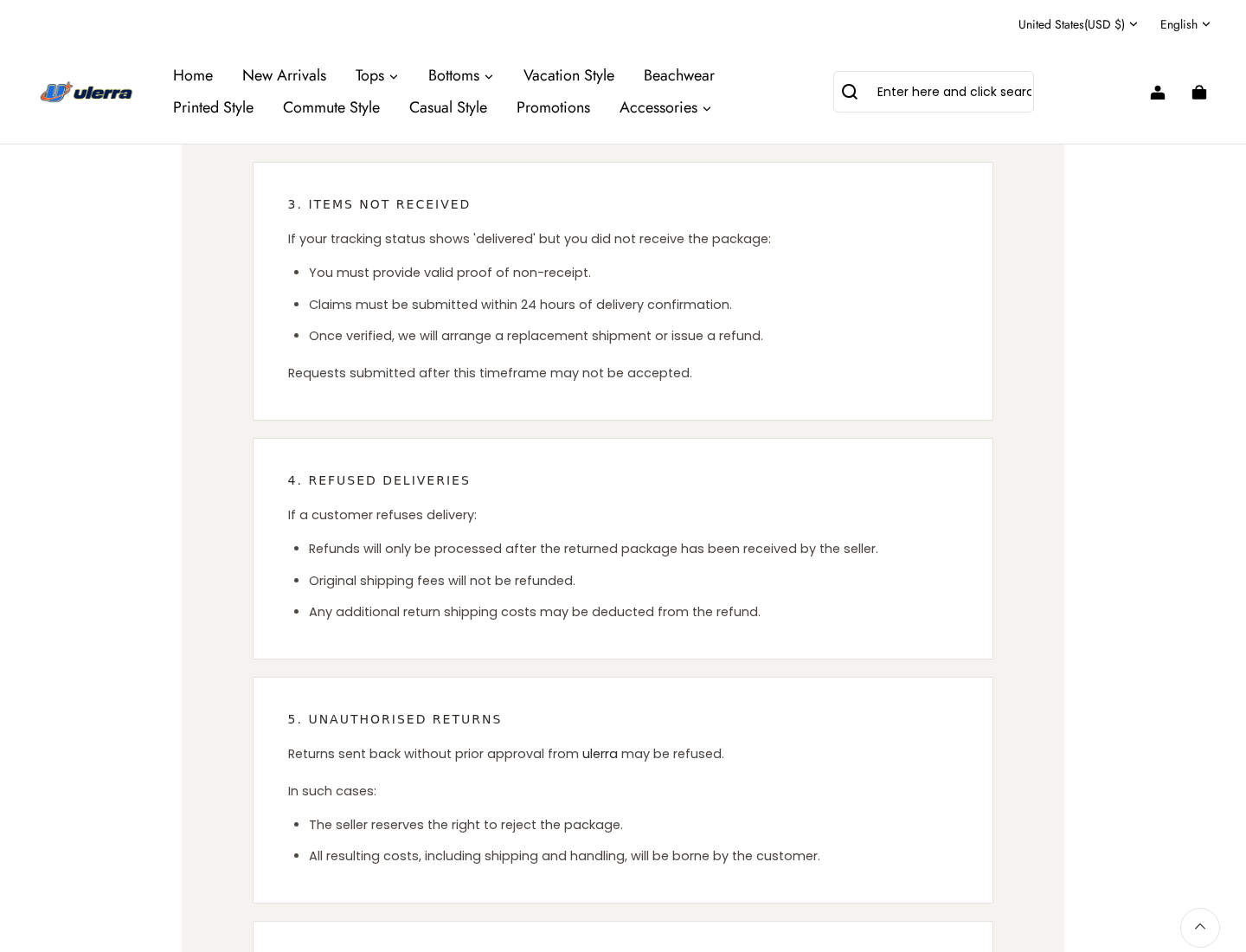
The Missing-Parcel Rule Deserves Particular Attention
A 24-hour reporting rule can create pressure precisely when a customer needs time to investigate. The seller’s stated email response target is one to two business days.
That does not necessarily mean a customer must receive a reply within 24 hours. The policy refers to submitting the claim, so retain the original sending timestamp.
Still, the mismatch makes a clear paper trail important. Do not wait for a support reply before documenting the carrier’s scan and reporting nonreceipt.
Ask the carrier for available delivery details, including a photograph or confirmation of the delivery location. Keep a reference number if it opens an investigation.
Never create false evidence or claim a received parcel is missing. State which checks you completed and what you genuinely know.
If you notice the problem after the seller’s window, contact it anyway and ask your payment provider about your options. A store policy is not every available remedy.
Ulerra Company, Address, and Customer Support
The Terms Name a Specific Company
The terms of service identify AJAZ GANESH TRADING INC. That is more information than a brand name alone.
The company’s registration and its authority over this exact storefront were not independently authenticated for this report. The wording should be treated as the seller’s disclosure.
Compare it with the invoice and payment descriptor if you ordered. An unexplained mismatch is a reason to ask who is responsible for the transaction.
The Denver Address Is Not a Verified Return Warehouse
The published company address is 1652 N Franklin St, Denver, CO 80218. The pages reviewed do not establish it as the place customers should mail garments.
Its actual role was not independently verified. It would be unsupported to call it a fake address, an unrelated business, or a confirmed fulfillment center.
The return policy requires prior approval. Obtain the authorized destination in writing rather than posting clothing to the only street address you can find.
Support Promises Need a Record, Not an Assumption
The contact page lists message@ulerra.com and says email responses should take one to two business days. It also advertises round-the-clock online chat.
No email was sent and no chat was started during this review. Their existence is documented; actual responsiveness was not tested.
For a complaint, use the order number, item name, dates, and requested remedy. Save chat transcripts as well as emails if you choose to contact support.
The Same Company Name Appears in Other Store Coverage
MalwareTips has previously documented the same company name in articles about PackageApparelCo and Veyaioen. Those are different storefront investigations, not existing coverage of Ulerra.
A repeated disclosure warrants comparing receipts and policies. It does not, by itself, prove that all the sites share ownership, staff, warehouses, or deceptive conduct.
Nor does the current policy establish where the clothing is made. Product origin and actual quality require evidence beyond a company address or generic style photographs.
What to Do If You Ordered From Ulerra
-
Save the exact listing and policy. Record the selected size, measurements, fabric description, sale status, price, shipping promise, and payment confirmation.
-
Track the actual dispatch. Retain the carrier name and tracking number. If progress stops, ask when the parcel was handed to the carrier.
-
Report a missing delivered parcel immediately. Send a timestamped message as soon as you notice. Identify the scan and say clearly that you have not received it.
-
Inspect clothing before washing or extended wear. Photograph labels, seams, damage, and measurements. Keep packaging while you decide whether the order matches its description.
-
Describe the correct kind of problem. Separate a fit preference from a defect, wrong item, or false description. Ask which policy covers the actual issue.
-
Get approval before returning anything. Request the destination, postage responsibility, and expected refund amount. Do not assume refusing delivery will produce a full refund.
-
Use your payment provider if unresolved. Supply the order, listing, correspondence, and delivery evidence. Ask about its own dispute deadline without waiting for repeated seller extensions.
For a genuine defect, point to the policy’s promise that the seller covers return shipping. Ask how that will be provided before paying for an international parcel.
If the garment was discounted, ask support to address the defect exception specifically. A generic statement that sale items are final does not answer the published wording.
Refund processing is described as three to five business days after receipt and inspection. Keep the carrier delivery record and ask when inspection was completed.
If a response offers credit rather than the remedy you requested, decide whether that actually resolves the problem. Credit requires another purchase relationship with the same store.
What Would Make This Offer Easier to Trust?
Until those details are clear, avoid using a large basket as a test order. Several discounted garments can multiply the amount affected by the same return exclusion.
Also distinguish a store’s promotional voucher from a refund. A code for a future purchase does not restore money paid for an unresolved earlier order.
If support proposes one, ask whether accepting it closes the complaint. Keep the answer before agreeing to any settlement.
Clearer terms would connect each product’s sale status to its return eligibility before payment. Shoppers should not need to reconcile two policies afterward.
The store could also explain how it handles faults discovered during ordinary use, rather than applying resale conditions without a clear exception.
A missing-parcel process should define useful evidence and allow a reasonable investigation period. Customers cannot always prove a negative within one day.
Finally, a verifiable operator record and clear return origin would help buyers understand cross-border costs. A Denver address alone does not answer the logistics question.
These are concrete transparency issues, not a demand that every small shop look like a large retailer. They directly affect whether a buyer can recover from a problem.
Frequently Asked Questions
Is Ulerra a Confirmed Fake Store?
This investigation does not establish that. It documents restrictive policies and unresolved accountability questions, rather than verified nondelivery or a physical test of counterfeit goods.
Can Sale Items Be Returned to Ulerra?
The return page excludes ordinary sale returns but allows a confirmed-defect exception. The terms use broader exclusion wording. Ask for a written answer covering your particular item.
How Long Is the Change-of-Mind Window?
The seller says requests must be made within seven days of delivery, subject to eligibility and condition requirements. That does not mean every discounted garment qualifies.
What If Tracking Says Delivered but Nothing Arrived?
Report it immediately and keep the timestamp. The seller specifies 24 hours and proof of nonreceipt. Also contact the carrier and preserve available delivery details.
Does the Store Ship From Its Denver Address?
That was not established. The address appears as a company address, not a verified dispatch point or an authorized destination for customer returns.
Is There Evidence of an Automatic Subscription?
No recurring clothing plan or hidden refill enrollment was established in the reviewed materials. Unexpected charges should still be investigated using the receipt and payment-provider records.
The Bottom Line
Do not order from Ulerra while these restrictions remain unclear. Sale-return exclusions and a 24-hour missing-parcel rule make the apparent savings a poor tradeoff.
If you already bought something, document the order and report problems promptly. Request the specific remedy in writing, then involve your payment provider if the seller does not resolve it.

Join the discussion
0 commentsShare your experience or ask a question about this article.
Discussion
Start the conversation
Have a question or something useful to share? Add the first comment.