

The ad shows a soft otter rising and falling as if it is breathing. A glowing heart, gentle sounds, and a $10 price promise comfort for stress, anxiety, and sleepless nights.
The anxiety relief otter scam does not begin with an obviously dangerous product. It begins with a tender idea, then asks the buyer to trust medical-sounding promises and a seller whose address, phone number, and billing practices may not hold up.
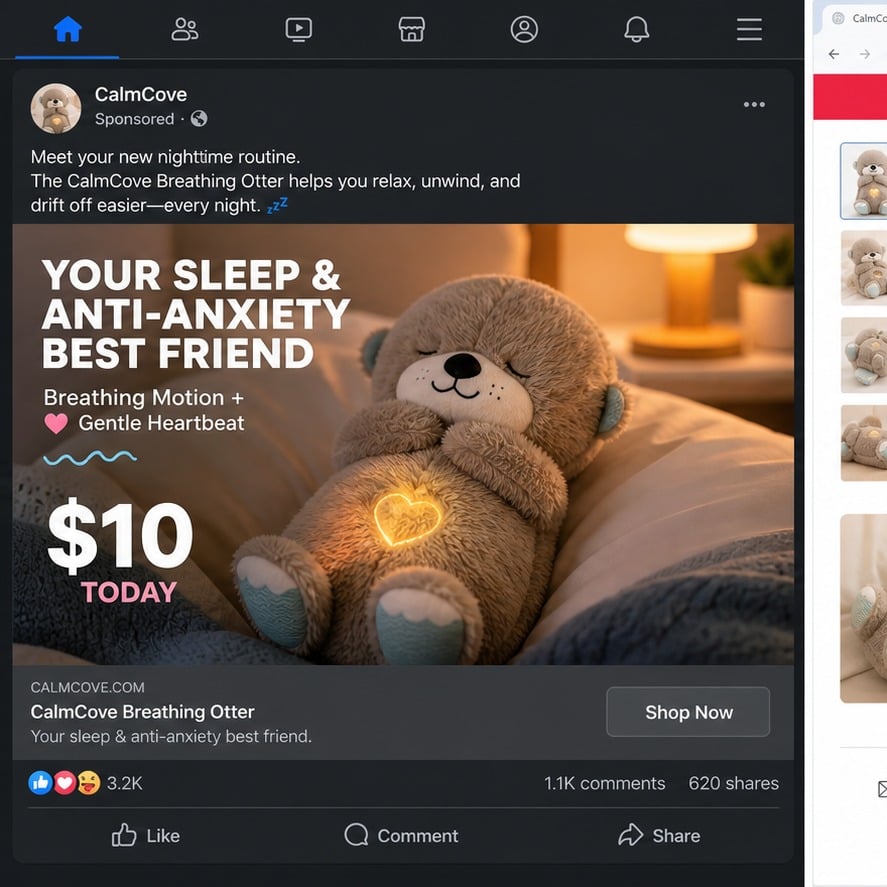
Breathing plush toys can be ordinary comfort products. The scam risk appears when an anonymous store turns that comfort into unsupported treatment claims, copies videos, hides its supply chain, or charges beyond the amount a buyer knowingly approved.
A low price makes the first order feel disposable, but the checkout collects a complete identity and payment method. Some historical complaints connected with this type of seller described additional card charges and difficulty obtaining help.
The store name can change while the same otter photos, heartbeat story, countdown, fake reviews, and incomplete support details move to a fresh domain.
Overview
The emotional promise is stronger than the product evidence
The ad describes the plush as a sleep and anti-anxiety best friend. It may claim that synchronized breathing, a heartbeat, weight, or calming sounds align the user with a natural human rhythm.
Those phrases can sound clinical without identifying a medical device clearance, published study, qualified clinician, or tested outcome for the exact product being sold.
A comforting toy may help someone relax, but it should not be presented as a substitute for diagnosis, therapy, medication guidance, or urgent mental-health care.
The $10 offer can hide the real transaction risk
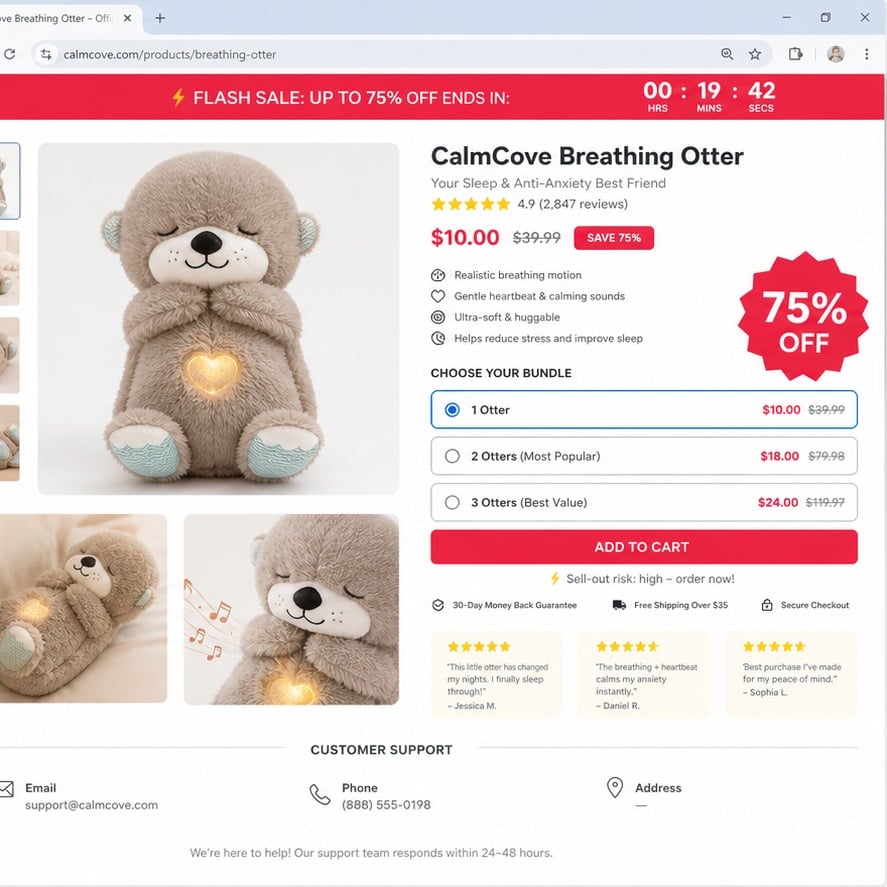
A dramatic 75% discount and countdown focus attention on the small initial price. Bundles, shipping charges, memberships, protection plans, or later transactions may receive less visual attention.
Historical complaints connected with one breathing-otter seller described multiple unexpected card charges. That does not prove every current otter store uses the same billing path, but it makes the checkout terms essential.
The buyer should confirm the quantity, total, recurring-billing language, merchant name, and cancellation process before entering card details. A screenshot is more reliable than memory after the page changes.
The seller details can collapse under basic checks
One documented campaign displayed an address written as Redwood, California, at a street that could not be matched to Redwood City. Its social page also listed a number using the fictional 555 exchange.
Those are not small typographical issues when a company wants payment and promises returns. A buyer needs a real legal entity, working support, and a return location capable of receiving the product.
The store also redirected between similar domains and had earlier versions with poor complaint histories. Domain rotation can preserve the product page while distancing the newest checkout from older reviews.
- A social ad uses sleep, stress, and anxiety language to create an emotional need.
- The toy's breathing and heartbeat become unsupported therapeutic claims.
- A $10 price and countdown discourage seller verification.
- The checkout may promote bundles or collect payment under another merchant name.
- Address, phone, and support details may be fake, incomplete, or unrelated.
- The same plush and videos can rotate across domains after complaints appear.
The Breathing Otter Campaign and Its Seller Trail
A campaign documented in late 2024 promoted a Relief Otter or Sleepy Otter through Facebook and Instagram ads. The toy was described as a weighted companion with breathing motion, heartbeat sounds, and anti-anxiety benefits.
The ads directed shoppers through MushPlushies.com, which redirected to another version of the store. Earlier related domains had already accumulated poor consumer feedback.
The store published a U.S. mailing address that did not match the stated California city and street. Its social page displayed a 555 phone number, a numbering pattern widely used for fictional examples.
Shipping terms allowed a long delivery window, which suggested the product could be fulfilled from outside the U.S. The website did not clearly establish a factory, importer, or product-testing record for the exact toy.
Public complaint pages for an earlier related domain showed very low ratings and numerous complaints. Reports included allegations of additional card charges, delayed or unsatisfactory products, and difficulty resolving issues.
Those complaints should be attributed to the seller versions involved, not to every breathing plush sold online. The broader lesson is to verify the merchant and billing terms, not judge only the toy's appearance.
Why the Anti-Anxiety Language Needs Careful Reading
Words such as calming, soothing, comforting, and bedtime companion can describe a consumer toy. Claims to treat anxiety, improve a disorder, regulate physiology, or replace care move into a much more serious area.
A product page should explain what the motion and sound functions actually do, how they are powered, whether the mechanism is removable, and which ages or health conditions require caution.
The seller should not imply that a plush toy has been clinically proven merely because testimonials say users slept better. Testimonials do not establish typical outcomes, diagnose a condition, or substitute for controlled evidence.
The product also needs ordinary safety information. Buyers should know the battery type, charging method, materials, cleaning instructions, small-part risks, overheating precautions, and whether the item has been subject to recalls.
A copied product video cannot answer those questions. It may show another manufacturer's toy, a prototype, or an edited scene that differs from the shipped item.
Anyone experiencing severe anxiety, panic, persistent insomnia, or thoughts of self-harm should seek appropriate professional or emergency help. A social-media toy ad is not a care plan.
How the Anxiety Relief Otter Scam Works
Step 1: A comforting video targets a real emotional need
The ad appears during late-night scrolling and shows a soft toy breathing on a bed. Music, warm light, and phrases about finally sleeping create an immediate emotional response.
The viewer may be shopping for a child, partner, friend, or personal relief from stress. That caring motivation makes the pitch feel less like an ordinary product advertisement.
The post can collect thousands of reactions even when the store page is new. Engagement does not verify who owns the product footage or fulfills orders.
Step 2: Medical-sounding language upgrades the toy
The narration connects the toy's motion with human breathing and claims the heartbeat calms the nervous system. The wording suggests a mechanism without presenting evidence for the exact item.
Terms such as weighted, therapeutic, anti-anxiety, sensory, and sleep support may appear together. The page rarely defines what was tested or which claims are simply advertising descriptions.
A fictional expert, generic wellness article, or testimonial can reinforce the story. None establishes that the seller has clinical data or regulatory authorization.
Step 3: A very low price removes hesitation
The toy is offered for $10 or another steeply discounted amount. A timer and sell-out warning tell the shopper that delaying means losing the chance.
The small price can discourage research because the buyer feels the possible loss is limited. The checkout still receives the same valuable identity and card information as a larger purchase.
Shipping charges or bundles may raise the total. Always check the last payment screen rather than the price inside the social post.
Step 4: The store creates instant social proof
The product page displays near-perfect ratings, emotional reviews, low-stock notices, and recent-purchase pop-ups. The operator controls all of these elements.
Review portraits may be stock photos, AI-generated faces, or unrelated customers. Search exact review sentences to see whether they appear on other stores.
A return badge and secure-checkout icon can be added without a working support team. The real test is whether the policy identifies a legal company and practical return address.
Step 5: The payment path can add more than one charge
A store may offer a second otter, a warranty, shipping protection, or a membership during checkout. Buttons can make acceptance easier to see than refusal.
Some consumers tied to an earlier seller reported unexpected additional card charges. Current buyers should not assume the same outcome, but should read every checkbox and save the final authorization screen.
The card descriptor may use a company name unrelated to the toy. Record it immediately so later transactions can be recognized.
Step 6: Long shipping and weak support exhaust the buyer
Delivery estimates can stretch across several weeks. Support may blame international transit, customs, high demand, or an address problem while providing little carrier-verifiable detail.
If a toy arrives, it may be smaller, thinner, noisier, or mechanically different from the advertisement. The breathing function and materials may not match the product page.
Refund requests can meet generic replies, partial credits, or an expensive overseas return. The buyer should not wait past card-dispute deadlines while support repeats the same script.
Step 7: The otter reappears under a new store name
The product is generic enough to move across multiple storefronts. An operator can copy the photos, rename the toy, and replace the domain without changing the emotional pitch.
Older complaints may then look irrelevant because they mention a different store. Searching the images, address, phone number, review text, and merchant descriptor can reveal the relationship.
The durable warning is not one plush brand. It is the combination of therapeutic promises, implausible discount, unverifiable company, copied media, and unclear billing.
Company, Address, and Fulfillment Checks
The cute product name is not the legal merchant
The name printed above the otter may differ from the company in the terms, card statement, receipt, and package. Write down every identity before ordering.
A real seller should explain whether it designed the toy, imports it, or simply resells a private-label product. Vague global-store language does not answer that question.
If the merchant cannot identify who handles product safety and warranty claims, the buyer has no accountable party when the mechanism fails or billing changes.
A fake address destroys the return promise
One earlier seller printed a California address that did not match the named city or street. A map search should be routine before trusting a return guarantee.
Another address may belong to a fulfillment center, mailbox, home, or unrelated business. None automatically proves where the company operates or where the toy was made.
Do not mail a return to an address copied from a package without authorization. Confirm in writing which entity will receive it and issue the refund.
A 555 number is not customer support
The earlier social page displayed a phone number using 555, a pattern commonly reserved for fictional use. That should have prevented the page from presenting itself as a reachable U.S. retailer.
Call or email before purchasing and ask a product-specific question. An unanswered line, generic auto-reply, or agent who cannot identify the exact store is not meaningful support.
After payment, keep requests concise and written. If the seller continually changes the subject instead of confirming cancellation, involve the payment provider.
The toy and electronics supply chain must be traceable
Breathing plush toys may be mass-produced in China or other manufacturing hubs. Country alone is not a safety verdict, but the maker, importer, battery, mechanism, materials, age grade, and compliance information should be identifiable.
A hidden factory and missing importer leave buyers unable to check recalls, allergens, small parts, charger compatibility, or replacement instructions. That uncertainty matters when a powered toy is used in bed.
Stop using the item if it overheats, smells unusual, exposes wiring, leaks battery material, or has loose parts. Keep powered toys away from infants and follow verified age and charging guidance.
Comfort Product, Medical Device, or Marketing Story?
A breathing plush can be pleasant without being a treatment. Consumers can judge softness, sound, motion, durability, and return value without accepting claims about curing anxiety or regulating the body.
The problem is not that someone feels calmer while holding a toy. The problem is a seller converting that personal possibility into a universal therapeutic promise without reliable evidence.
Look for precise language. Helps some users relax is different from treats anxiety. A store that moves between those statements depending on the page is using ambiguity to expand the sales claim.
Parents and caregivers should verify age suitability, battery access, seams, cords, sound levels, cleaning, and sleep-environment guidance. A glowing testimonial cannot replace those checks.
Finally, separate the product decision from the merchant decision. A similar toy from a known retailer with clear returns may be acceptable even when the anonymous $10 social-ad store is not.
Warning Signs to Watch For
- A plush toy is presented as an anti-anxiety or sleep treatment without evidence.
- The social ad offers the product for $10 with a resettable countdown.
- The store redirects among similar domains or hides the advertised page from direct visitors.
- The mailing address cannot be matched to the stated city and street.
- The support number uses 555 or belongs to an unrelated service.
- Review text and product videos appear on other stores under different names.
- The checkout does not clearly disclose bundles, memberships, or future billing.
- The seller cannot name the manufacturer, importer, battery, or product safety contact.
A comforting product should come with unusually clear safety and seller information, not less. If the emotional story is detailed but the company, billing, and supply chain remain vague, step away from the checkout.
What to Do if You Have Fallen Victim to This Scam
- Save the ad, checkout, and therapeutic claims. Capture the product video, price, bundle choice, final total, seller name, address, phone, return policy, and every statement about anxiety or sleep before the store changes.
- Cancel the order and future billing in writing. Tell the seller you withdraw authorization for the order, add-ons, memberships, and repeat charges. Ask for a cancellation number and the exact refund amount.
- Contact the card issuer about extra or misleading charges. Explain the amount you knowingly approved and identify any duplicate, recurring, or unfamiliar merchant transactions. Ask about replacement and dispute deadlines.
- Document the toy before use or return. Photograph the sealed package, label, unboxing, size, mechanism, battery compartment, materials tag, instructions, and defects. Keep the original packaging while the dispute is open.
- Stop using a product that appears unsafe. Do not charge or place the toy in a bed if it overheats, exposes wiring, has a damaged battery, or lacks age guidance. Seek local product-safety advice when necessary.
- Use appropriate care for anxiety or persistent insomnia. A plush toy does not replace a licensed clinician. Seek professional help for symptoms that are severe, worsening, or interfering with daily life, and use emergency services for immediate danger.
- Run Malwarebytes if the store installed software. A toy checkout should not require an app from outside an official store, browser extension, or downloaded payment tool. If you installed one, scan the device with Malwarebytes and remove detections.
- Use AdGuard to reduce repeat scam advertising. AdGuard can block many malicious ads, tracking redirects, and known disposable stores. Still verify any seller because a newly created domain may not yet be blocked.
- Report the seller and ignore recovery approaches. Report the ad to the platform and the billing issue to the FTC. Do not pay someone who contacts you claiming to recover the charge or track the store for a fee.
Frequently Asked Questions
Do breathing otter toys really treat anxiety?
A toy may feel comforting, but that does not establish treatment of an anxiety disorder. Look for evidence tied to the exact product and seek qualified care for medical concerns.
Is every breathing plush toy a scam?
No. The warning concerns deceptive claims, anonymous sellers, copied media, bad contact details, and unclear billing. Similar toys can be sold through accountable retailers.
Why is a 555 phone number suspicious?
Many 555 numbers are reserved for fictional use. A retailer publishing one as customer support may not offer a real path for cancellations or returns.
What if the toy arrived but looks different?
Photograph the mismatch, stop using it if safety information is missing, contact the seller in writing, and ask the card issuer about a merchandise-not-as-described dispute.
Can the seller charge me again after one purchase?
A later charge requires authorization, but unclear checkboxes or memberships can cause disputes. Review the checkout record and statements, and report transactions you did not approve.
Should I mail the toy back immediately?
Wait for written return authorization and confirm the address with the seller and card issuer. Keep tracking and proof if a return is required.
The Bottom Line
The anxiety relief otter scam wraps a questionable store and billing path in a comforting product story. The toy may look harmless, but the merchant still needs a real identity, working support, honest claims, and traceable safety information.
Do not let a $10 timer make those checks feel unnecessary. Verify the address, number, company, final total, recurring terms, manufacturer, and return destination before paying.
If you already ordered, preserve the evidence, watch statements, and act quickly on unexpected charges. Comfort should not require surrendering control of your card or trusting a company that cannot be found.

Join the discussion
0 commentsShare your experience or ask a question about this article.
Discussion
Start the conversation
Have a question or something useful to share? Add the first comment.