

Toenail fungus is stubborn, slow, and embarrassing for many people. A pen promising visible improvement in weeks can feel far easier than another appointment.
Okita builds its offer around speed, scientific language, and a risk-free guarantee. Several details on its own pages deserve much closer attention.
Overview
Okita sells a real topical pen through an active promotional page
The Okita offer presents a brush-style pen containing a liquid intended for nails. Instructions tell users to apply it regularly and allow it to dry.
A physical product can therefore arrive. That fact does not establish that the formula eliminates nail fungus or performs better than approved treatments.
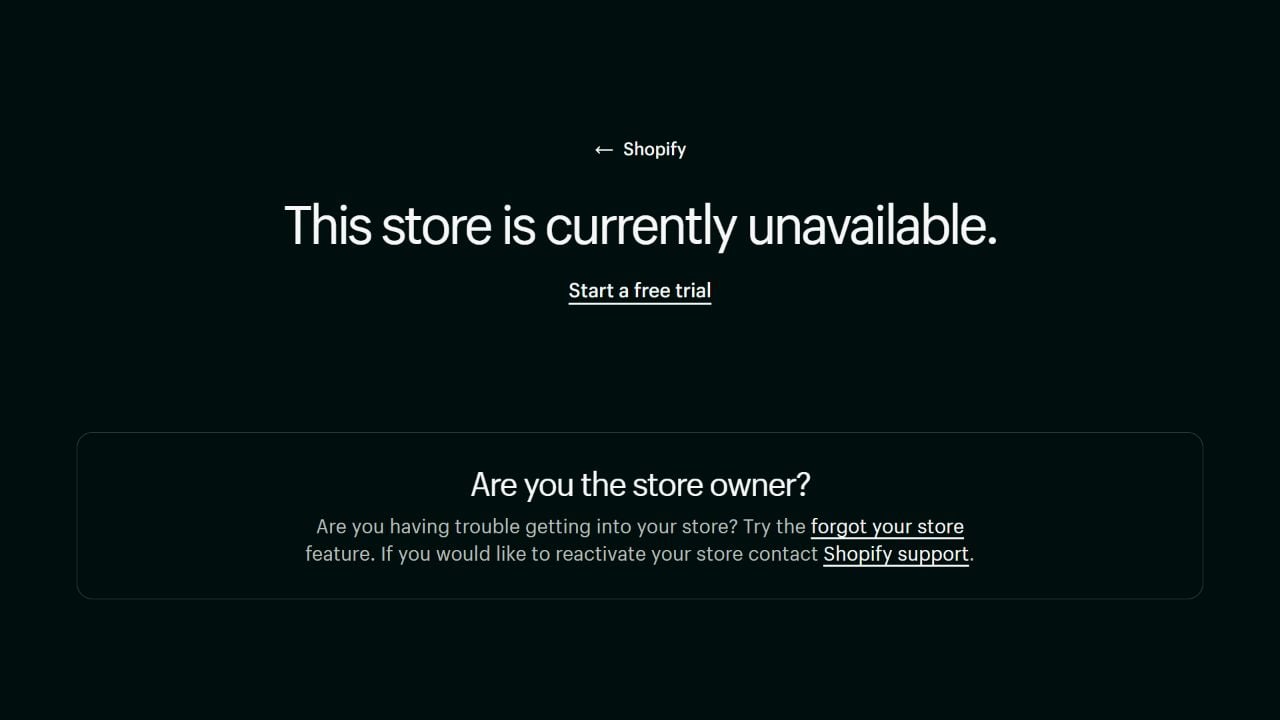
The main Shopify storefront is currently unavailable, while a separate promotional subdomain remains active and accepts visitors into the sales funnel.
The page makes drug-like treatment claims
Okita says the pen kills fungus on contact, treats resistant infections, eliminates bacteria, repairs damaged nails, and produces lasting results.
Those are not merely cosmetic claims. The FDA explains that products intended to treat nail fungus are drugs under U.S. law.
A 2026 FDA warning letter also states that topical antifungal products labeled for nail use are not generally recognized as safe and effective without appropriate approval.
The guarantee conflicts with the seller’s terms
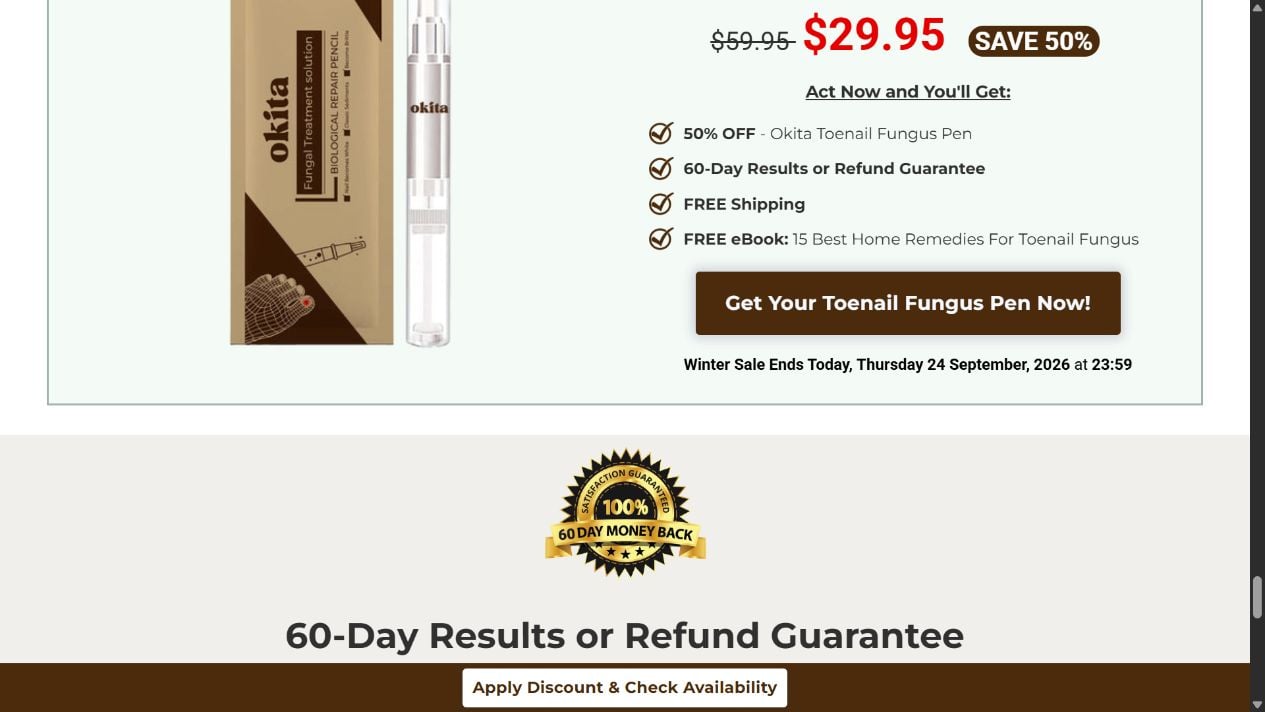
The promotional page advertises a 60-day results-or-refund guarantee and describes the purchase as carrying “zero risks.”
Okita’s indexed Terms of Service say customers who order during a sale are subject to final sale with no returns.
The same sales page displays a seasonal promotion and 50% discount. That contradiction could materially affect a buyer’s refund expectations.
- A separate promotional page remains online.
- The primary storefront is currently unavailable.
- The product makes explicit antifungal treatment claims.
- “FDA cleared,” “registered,” and “approved” appear inconsistently.
- The guarantee and final-sale language conflict.
- The terms identify a Hong Kong company.
Is the Okita Fungus Relief Pen a Scam?
The strongest evidence supports a warning about misleading medical marketing and contradictory commercial terms, not a claim that no product exists.
Okita displays a physical pen, directions, ingredient names, contact details, a telephone number, and a named company in its legal terms.
However, the page promises that the formula eradicates resistant nail fungus while shifting between “FDA cleared,” “FDA registered,” and “FDA approved.”
Those phrases have different meanings. Registration does not prove effectiveness, and the page does not identify an approval number for this exact formula.
The refund conflict is equally important. A buyer sees a 60-day guarantee, while the terms say promotional purchases are final sale.
The store architecture adds uncertainty. The main product store currently shows “Store unavailable,” but the sales subdomain continues promoting the item.
Our conclusion is that Okita presents a real product through an offer containing serious claim, status, and refund contradictions.
Why Toenail Fungus Claims Require Strong Evidence
Onychomycosis is a fungal infection of the nail. Thick, yellow, brittle nails can also have other causes, including injury, psoriasis, or circulation problems.
Appearance alone does not always confirm fungus. Clinicians may examine the nail or obtain a sample before recommending treatment.
Nails grow slowly. Even effective treatment may require months before healthy nail growth replaces damaged material.
A promise that a diseased nail will slide away or become clear almost overnight should therefore trigger skepticism.
Topical treatments have difficulty penetrating the nail plate. Prescription options and oral medicines have different effectiveness, risks, interactions, and monitoring needs.
The FDA states that a nail product intended to treat fungus is regulated as a drug. Cosmetic wording cannot erase a therapeutic claim.
The Okita page does not provide a published trial of its finished formula showing confirmed infections, laboratory testing, comparison treatment, and long-term cure rates.
How the Okita Fungus Pen Offer Works
Step 1: The advertisement begins with embarrassment and urgency
The page emphasizes discolored, cracked, thick nails and the discomfort of wearing open shoes around other people.
It then suggests that common products failed because the infection has become resistant, making Okita appear like the breakthrough option.
This emotional framing can push a visitor toward purchase before confirming whether the nail problem is fungal.
Step 2: Scientific language turns a simple pen into a breakthrough
Okita names Laurocapram and Phellodendron, describes transdermal technology, and says the formula reaches deep beneath the nail.
Named ingredients can sound authoritative, but an ingredient story is not evidence that the complete retail formula cures onychomycosis.
The page also says its routine boosts the effect fivefold. It does not show the study, sample, comparator, or measured endpoint behind that number.
Step 3: Regulatory phrases create the impression of official validation
One section calls the pen FDA cleared. Another calls it FDA registered and GMP certified. The FAQ calls it FDA approved.
A manufacturing facility can be registered without the FDA approving every product. Compliance language does not substitute for product-specific authorization.
The page should identify a verifiable application, clearance, or approval number if it wants buyers to rely on that status.
Step 4: Testimonials make implausibly rapid outcomes feel normal
One testimonial says an infected nail slid off after less than a day, revealing a healthy nail underneath.
Another describes months of use, while the page elsewhere promises visible results in two weeks and average disappearance within three weeks.
These stories are inconsistent with the slow pace of nail growth. They should not guide medical expectations.
Step 5: A large discount and deadline encourage immediate payment
The offer shows an original price of $59.95 and a sale price of $29.95, described as 50% off.
A banner says the sale ends on the current date. Repeating daily deadlines can create artificial scarcity rather than a genuine one-time event.
The checkout may also encourage multiple pens by stating that at least three are recommended for lasting results.
Step 6: The refund promise meets restrictive legal wording
The page promises a full refund if results do not appear within the trial. It supplies email and telephone contact details.
The Terms of Service say sale orders are final and not returnable. The site does not clearly explain which statement controls.
A consumer should obtain written confirmation before ordering. If support cannot reconcile the conflict, the guarantee should not be treated as reliable.
The FDA Language Is Especially Problematic
“FDA registered” commonly refers to a facility or listing obligation. It does not mean the agency tested and endorsed a product’s effectiveness.
“FDA cleared” usually concerns certain medical devices that demonstrate substantial equivalence through a defined pathway. Okita is marketed as a topical liquid.
“FDA approved” carries another meaning and generally requires agency review for the relevant product category.
Using all three terms for one pen creates confusion. The sales page does not provide the identifier needed to verify any product-specific status.
The FDA has warned other sellers that topical nail-fungus treatment claims can create unapproved drug problems.
That general regulatory fact does not prove enforcement against Okita. It does show why the page’s claims require concrete authorization, not slogans.
The Ingredients and Safety Information Are Incomplete
The sales story highlights two ingredients but does not present a clear, complete Drug Facts panel in the visible offer.
Buyers need active ingredients, concentrations, inactive ingredients, warnings, contraindications, directions, manufacturer, lot code, and expiration information.
Applying unknown liquids around damaged nails can cause irritation, allergy, or delayed care. People with diabetes or poor circulation face additional foot risks.
A dark streak, painful nail, swelling, drainage, or rapidly changing lesion should not be self-treated from an advertisement.
Pregnant people, children, and users taking multiple medicines should seek professional advice before using an unverified therapeutic product.
“Natural” does not mean safe, sterile, effective, or appropriate for every nail condition.
The page alternates between killing bacteria and treating fungus. Bacteria and fungi are different organisms, so one result cannot prove the other.
It also claims no side effects while recommending repeated application. Any active topical formula can create irritation or sensitivity in some users.
Photographs of clearer nails cannot establish microbiological cure. Lighting, polish, filing, growth, and editing can change appearance dramatically.
What a Credible Nail-Fungus Offer Should Show
A trustworthy therapeutic page should identify every active ingredient, its concentration, intended use, warnings, and the company responsible for the drug labeling.
Clinical evidence should involve confirmed fungal infection, not only cosmetic photographs. It should report both appearance and laboratory-confirmed cure rates.
The seller should explain treatment duration realistically. A healthy-looking nail generally emerges through growth, not an overnight transformation.
Regulatory claims should use one accurate term and link to an official record. Switching among approved, cleared, and registered is not acceptable clarification.
Finally, the return policy should match the promotion. A risk-free trial and final-sale clause cannot both guide the same discounted order without explanation.
Company, Address, and Fulfillment Checks
The terms name XF Agencija E Limited
Okita’s indexed Terms of Service identify XF Agencija E Limited and say legal disputes are governed by Hong Kong law.
Hong Kong corporate records show a company with that name incorporated in 2021. Registration establishes an entity, not product effectiveness.
The terms do not publish a clear customer-facing street address
The legal page provides the brand name and support email but does not prominently give a U.S. headquarters or approved returns facility.
Customers should not guess a return destination. An unauthorized parcel may be refused or excluded from a refund.
The promotional page provides phone and email support
The active funnel lists info@okita-us.com and +1 212-444-3144. Buyers should test those channels before purchase and save the response.
A U.S. telephone number does not establish that the company, warehouse, or manufacturer is located in the United States.
The storefront and fulfillment path are fragmented
The main Shopify store is unavailable, while the promotional subdomain remains active. That separation can complicate order lookup, policies, and after-sale support.
The page says orders ship from a warehouse but does not clearly identify the manufacturer or production location for the formula.
What to Check Before Ordering Okita
Ask for the complete Drug Facts or ingredient panel, including concentrations, manufacturer, production country, lot testing, expiration, and safety warnings.
Request the FDA application, clearance, approval, or listing number associated with the exact pen. Verify it through an official database.
Ask support to reconcile the 60-day guarantee with the clause saying promotional sales are final.
Confirm the return country, address, authorization process, shipping responsibility, and whether opening the pen makes it ineligible.
Compare the delivered quantity carefully. The page recommends multiple pens and may present bundles beside the single-unit offer.
Do not delay diagnosis for a persistent nail problem. A clinician can help distinguish fungus from other nail disease.
Use a credit card with dispute rights and preserve the offer before paying. The main store’s unavailable status makes documentation especially important.
What to Do if You Have Fallen Victim to This Scam
- Save the conflicting promises. Capture the 60-day guarantee, sale banner, final-sale clause, FDA language, order total, and all checkout screens.
- Stop if irritation develops. Wash the area as directed, preserve the packaging, and seek medical advice for pain, swelling, rash, drainage, or worsening symptoms.
- Contact support in writing. Email info@okita-us.com with the order number, delivery date, problem, requested remedy, and guarantee deadline.
- Request precise return instructions. Ask for authorization, destination, recipient, eligible amount, postage responsibility, and any product-condition requirements.
- Do not send an unapproved parcel. The product page warns against unconfirmed returns. Use tracking and retain proof of weight and delivery.
- Challenge contradictions factually. Place the refund promise beside any refusal based on the sale clause. Ask which term applied when payment was accepted.
- Contact the payment provider when justified. Report non-delivery, wrong goods, unauthorized quantity, or a documented guarantee refusal accurately.
- Report misleading health claims. Consumers can submit concerns to the FDA, FTC, or relevant national regulator with screenshots and product details.
- Protect the ordering device. Scan with Malwarebytes after suspicious redirects. AdGuard can block dangerous ads, intrusive pop-ups, and tracking links.
Frequently Asked Questions
Is the Okita Fungus Relief Pen a real product?
Yes, it is presented as a physical topical pen. The concerns involve treatment claims, regulatory wording, store availability, and refund contradictions.
Is Okita FDA approved?
The page uses approved, cleared, and registered inconsistently. We found no product-specific identifier on the offer that verifies approval for the exact formula.
Can a nail fungus pen work in two weeks?
Visible symptoms may change, but nails grow slowly. A two-week improvement claim does not establish that the infection is eradicated or cured.
Why is the main Okita store unavailable?
The Shopify storefront displayed an unavailable message during our check. We cannot determine the reason solely from that screen.
Does Okita really offer a 60-day refund?
The promotion says yes, but the terms say sale orders are final. Obtain written clarification because the two statements conflict.
Who is named behind the Okita website?
The indexed legal terms identify XF Agencija E Limited, a Hong Kong company, and provide an email address for support.
The Bottom Line
Okita appears to sell a real topical pen, but the marketing makes aggressive medical claims without presenting clear product-specific regulatory evidence.
The unavailable main store and conflict between a 60-day guarantee and final-sale terms create additional commercial risk.
Do not rely on the sales page to diagnose nail fungus. Verify the formula and refund terms, and seek professional care for persistent nail changes.

Join the discussion
0 commentsShare your experience or ask a question about this article.
Discussion
Start the conversation
Have a question or something useful to share? Add the first comment.