

Zelleria presents inexpensive sneakers as something more meaningful than ordinary footwear, wrapping a familiar shoe in confident health language and deep discounts.
The offer deserves a close reading because the strongest promises, the store identity, and the practical return rules do not fit together as neatly as advertised.
Overview
The product is real, but the orthopedic story lacks named evidence
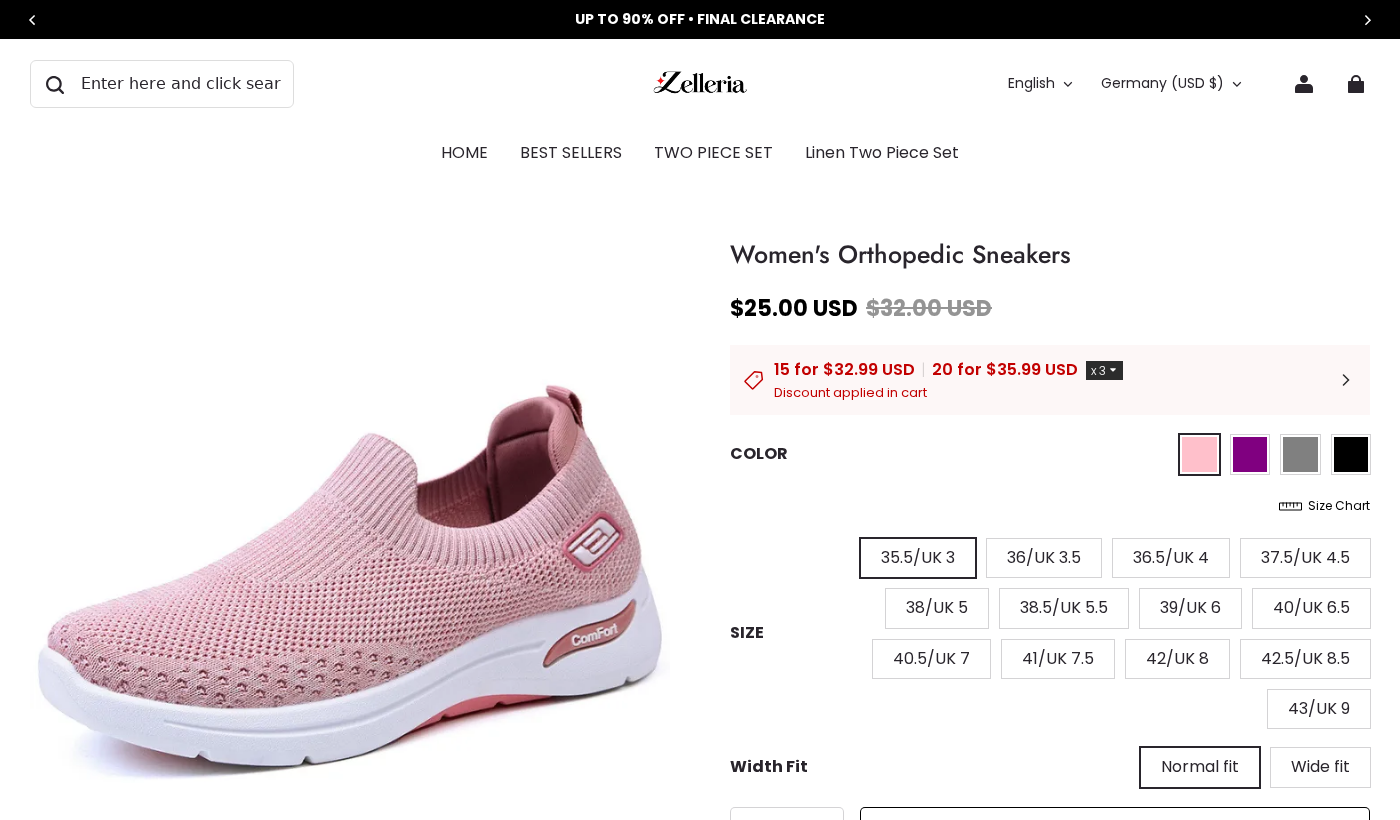
Zelleria sells a physical sneaker through a functioning online store rather than promoting an imaginary prize or nonexistent service.
Its page says professional podiatrists and shoemakers designed the shoe, yet it does not identify those professionals or publish their qualifications.
The store promises posture correction, muscle-balance improvement, arch support, and relief for flat feet and plantar fasciitis.
Those are specific health-related outcomes, not ordinary descriptions of color, cushioning, width, or fashion.
No clinical study, medical-device listing, technical report, or model-specific test was displayed beside the claims we reviewed.
Distinctive marketing language appears on unrelated shoe stores
A particularly unusual sentence says the shoes move angled toes back to their original position and realign skeletal positioning.
Searches for that wording lead to unrelated retailers selling similarly styled orthotic sneakers under different names.
That duplication suggests reusable supplier copy rather than evidence created specifically for a Zelleria design.
Copied language does not prove the delivered shoes are unusable, but it weakens the impression of proprietary podiatric development.
A genuine medical benefit still requires product-specific evidence, regardless of how often a sentence appears online.
The return message changes depending on where the shopper reads
The product page uses reassuring language including free returns and a 30-day satisfaction message.
Another guarantee passage narrows damage or defect reporting to 15 days, while the formal Return Policy allows applications within 14 days.
The formal policy also makes customers responsible for postage when a return results from their own decision.
Customers must obtain instructions and are told not to send the purchase back to the manufacturer.
Those differences matter because footwear fit problems often become clear only after delivery and careful indoor testing.
- Zelleria.com was registered on April 20, 2026, giving the store a limited public history.
- The featured sneakers were advertised for $25 against a crossed-out $32 reference price.
- The page claims professional podiatrist involvement without naming any podiatrist.
- Posture, skeletal alignment, plantar fasciitis, and muscle-balance claims lack visible product-specific substantiation.
- Distinctive sales copy appears on unrelated stores offering comparable generic footwear.
- The product page, guarantee text, and formal Return Policy describe different timeframes.
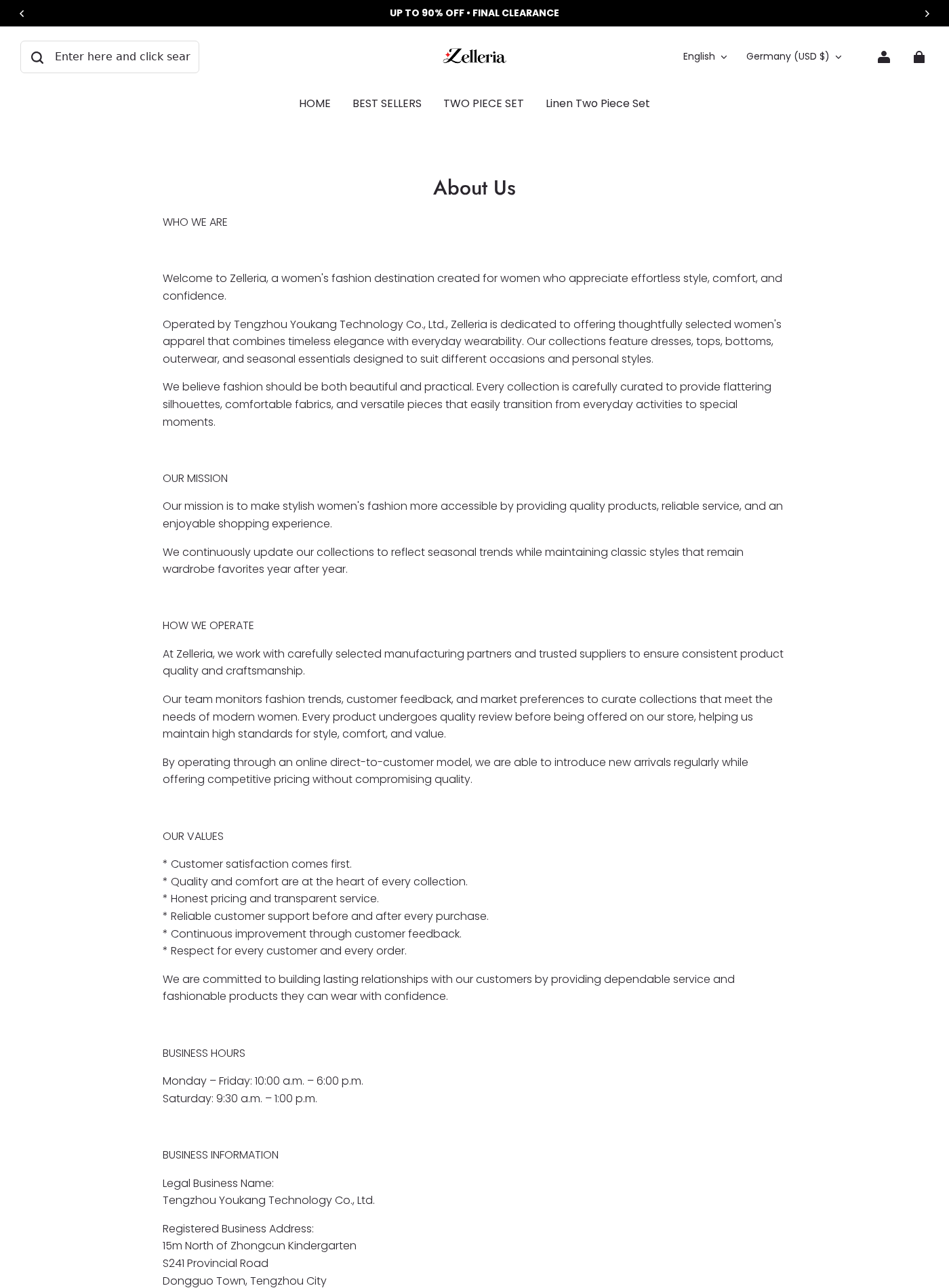
- The About page identifies Tengzhou Youkang Technology Co., Ltd. in Shandong, China.
- The Terms use a separate Outlook address, while the Return Policy uses service@zelleria.com.
How the Zelleria Orthopedic Shoe Sales Funnel Works
Step 1: A clearance advertisement reframes an inexpensive sneaker as treatment-like footwear
The shopper first sees a low price, final-clearance language, and a shoe described with medical-sounding benefits rather than ordinary comfort features.
Pain, long working hours, flat feet, poor posture, and joint pressure are emotionally powerful problems for anyone whose feet already hurt.
The advertisement compresses those separate conditions into one simple purchase, making the shoe feel like a low-cost intervention.
That framing can discourage shoppers from asking whether their pain has been diagnosed or whether one design suits their anatomy.
Save the advertisement because its promise may be more specific than the wording later used by customer service.
Step 2: The landing page uses authority language without showing the authority
Zelleria says professional podiatrists helped design the sneakers, but the page does not name a clinician or medical organization.
There is no biography, registration number, disclosed consulting relationship, or explanation of the design process.
The phrase works as borrowed credibility because most readers cannot verify the unnamed expert before checkout.
A professional endorsement should be traceable to a real person who reviewed the exact shoe, not merely a footwear category.
Without that trail, shoppers should treat the statement as advertising and evaluate construction independently.
Step 3: Generic supplier copy makes broad biomechanical promises feel product-specific
The page says angled toes move back and the skeleton realigns, language found on other unrelated retail pages.
Repeating supplier text can make a mass-market shoe sound like a unique therapeutic system.
The page does not show pressure mapping, gait analysis, wear testing, material density, or a comparison with established footwear.
Before-and-after style explanations can feel scientific while avoiding the measurements needed to evaluate them.
A copied claim becomes no more reliable when paired with a different brand name or product photograph.
Step 4: Price anchoring and bundle choices move attention away from fit
A crossed-out reference price makes $25 appear unusually favorable before the customer knows the shoe quality or ordinary market value.
The quantity area displayed unusual higher-count options, including 15 and 20 units, that make little sense for a first footwear purchase.
Such configuration errors can come from a reused store template, but they still undermine confidence in checkout accuracy.
Footwear should be tested one pair at a time because width, toe box, support, and sole stiffness differ between wearers.
Review the final cart for quantity, color, size, shipping, currency, and optional charges before authorizing payment.
Step 5: The order moves through a direct-to-consumer supply chain in China
Zelleria says Tengzhou Youkang Technology operates the store and works with selected manufacturing partners and suppliers.
That disclosure indicates a sourcing model rather than a named orthopedic-shoe manufacturer with a documented clinical program.
An overseas supply chain is not automatically deceptive, but quality control, sizing, delivery, and returns require clear accountability.
The factory, shoe model, material specifications, and inspection standard are not prominently identified on the sales page reviewed.
Keep the parcel label and invoice because they may reveal fulfillment entities absent from the storefront.
Step 6: The customer discovers which return promise actually controls the order
A dissatisfied buyer may remember free returns or a 30-day assurance shown near the product description.
The formal policy instead requires a request within 14 days, unused condition, original packaging, proof of purchase, and prior contact.
It says customers pay return shipping for consumer-caused returns, while seller-caused mistakes should not create that charge.
The return address is not published in the policy, preventing advance calculation of tracked international postage.
The practical value of the guarantee therefore depends on fast support and a destination supplied after the sale.
What the Orthopedic Claims Actually Prove
Comfort language and medical outcome claims are not interchangeable
A soft insole, wide toe box, or flexible upper may feel comfortable without correcting posture or treating a foot condition.
Plantar fasciitis, neuropathy, arthritis, tendon injuries, and structural deformities can produce overlapping symptoms but require different management.
A seller cannot establish treatment effectiveness by describing cushioning or showing a diagram of improved alignment.
Product-specific trials should identify participants, comparison footwear, outcome measures, duration, limitations, and conflicts of interest.
Zelleria did not present that level of evidence on the product material reviewed.
The Facebook feedback score is seller-presented social proof
The page displays a Facebook Official Customer Feedback Score of 4.5 out of 5 and claims weaker pages cannot advertise.
That explanation is not a substitute for a transparent review profile containing identifiable dates, purchases, and negative feedback.
Advertising eligibility does not validate an orthopedic claim, confirm product durability, or prove that returns are easy.
Shoppers should search independent reviews using the exact product image and wording, not only the Zelleria name.
Look for detailed accounts of sizing, delivery, materials, support responses, and refund outcomes.
A shoe cannot be selected safely from marketing language alone
Buyers need a sizing chart with foot measurements, width information, heel height, sole flexibility, materials, weight, and removable-insole details.
People with diabetes, reduced sensation, circulation problems, ulcers, severe deformity, or recent injury need additional caution.
Poorly fitting footwear can create pressure, friction, instability, or delayed recognition of skin damage.
Persistent pain, weakness, numbness, swelling, or balance changes deserve assessment by a qualified healthcare professional.
Do not replace prescribed footwear or orthotics based solely on a discounted online advertisement.
Return and Checkout Contradictions Buyers Should Notice
The page presents three different clocks
One sales message suggests a 30-day satisfaction period, another mentions 15 days for damaged or defective items, and the formal policy states 14 days.
Those periods may address different situations, but the page does not explain their boundaries with enough precision.
A reasonable shopper could misunderstand which deadline controls fit, preference, defect, damage, or wrong-item complaints.
Save each promise before ordering and ask support to confirm the applicable window in writing.
When policies conflict, act under the shortest deadline while preserving the longer promise for a dispute.
Free returns do not necessarily mean free return postage
The formal policy says the consumer pays shipping when the return results from the consumer rather than the seller.
That can include size dissatisfaction, color preference, comfort, or a change of mind unless support accepts a product mismatch.
The policy does not show the warehouse address, country, carrier rules, or likely tracked-postage expense.
A $25 shoe can become uneconomical to return when postage approaches the purchase price.
Ask whether Zelleria supplies a prepaid label and whether original shipping is refundable before assuming free returns.
Final clearance language can conflict with ordinary expectations
The homepage announces discounts up to 90% and final clearance while the formal policy still describes returns.
The policy does not clearly state that every clearance item is final sale, but promotional language can create confusion during a dispute.
Capture the exact product page and policy active on the purchase date rather than relying on later wording.
Do not remove tags, discard packaging, or wear the shoes outdoors until fit and condition are documented.
Request clarification immediately if the confirmation labels the purchase nonreturnable despite the displayed policy.
Company, Address, and Fulfillment Checks
The disclosed operator is a Chinese technology company
Zelleria names Tengzhou Youkang Technology Co., Ltd. as its legal business on the About page.
The registered address is near Zhongcun Kindergarten on S241 Provincial Road in Dongguo Town, Shandong, China.
A detailed address is more useful than no operator disclosure, but it does not identify a shoe factory or clinical team.
The company name also describes technology, while the site presents itself as a women’s fashion destination.
Buyers should request registration details and the contracting seller name shown on the invoice.
The disclosed address should not be assumed to accept returns
The Return Policy tells customers not to send purchases back to the manufacturer and provides no public warehouse destination.
A registered office can receive legal correspondence without operating a customer returns department.
Sending shoes to the About page address without authorization could produce refusal, loss, or no connection to the refund request.
Obtain the recipient, complete address, telephone number, authorization code, and customs wording from support.
Use tracked shipping only after confirming who pays and what refund amount remains recoverable.
Different email addresses appear across the policies
The Return Policy directs refund questions to service@zelleria.com, a domain-based address connected to the store.
The Terms direct legal questions to zelleriaa@outlook.com, a free consumer mailbox with an extra letter in the name.
Multiple mailboxes can be legitimate, but unexplained separation makes it easier for responsibility to bounce between channels.
Copy both addresses on significant complaints and keep delivery records, replies, and timestamps.
A telephone number was not prominently provided in the pages reviewed.
The site describes suppliers but not the actual shoe manufacturer
Zelleria says it works with manufacturing partners and trusted suppliers and reviews products before listing them.
It does not prominently identify who produced this sneaker, where that factory operates, or which quality standard applies.
That missing chain matters when the sales message makes podiatric and biomechanical claims rather than simple fashion claims.
Inspect the delivered label for country of origin, materials, size standard, importer, model, and care instructions.
If those details conflict with the page, photograph them before contacting support.
What to Do if You Have Fallen Victim to This Scam
- Stop wearing a painful or unsafe pair. Remove shoes causing numbness, blisters, instability, swelling, skin damage, or worsening pain, and seek appropriate medical advice.
- Document the complete order. Save the advertisement, health claims, sizing chart, cart, payment, confirmation, tracking, guarantee, formal policy, and every support message.
- Record the shoes before outdoor use. Photograph soles, labels, stitching, dimensions, materials, packaging, defects, and the parcel sender while preserving original condition.
- Contact Zelleria immediately. State the order number, delivery date, objective problem, requested resolution, and the shortest displayed return deadline.
- Quote the promise you relied upon. Attach the 30-day, 15-day, 14-day, or free-return wording that applied to your situation.
- Obtain written return authorization. Confirm the destination, recipient, carrier, tracking requirement, customs declaration, postage responsibility, and expected refund amount.
- Do not mail to an unconfirmed address. The business location, parcel sender, and manufacturer may not process customer refunds.
- Escalate a material mismatch. If the seller refuses a valid claim, ask the card issuer or payment service about buyer-protection deadlines.
- Report dangerous or misleading claims. Provide evidence to the relevant consumer-protection or product-safety authority in your country.
- Protect your device. Inspect the ordering device with Malwarebytes after unfamiliar downloads. Configure AdGuard to limit aggressive retail advertising and trackers.
How to Buy Comfort Footwear Without Buying the Story
Start with the foot problem, not the advertisement
Measure both feet late in the day and identify length, width, arch needs, toe pressure, and any medical restrictions.
Ask a clinician or trained fitter which features matter for the specific diagnosis rather than searching for one universal orthopedic shoe.
Translate needs into specifications such as toe-box width, heel counter, fastening, sole rigidity, cushioning, and removable insoles.
Then compare several established models with transparent sizing and return options.
A clear requirement makes dramatic posture language much less persuasive.
Reverse-search the photograph and distinctive sentence
Upload the product image to a reverse-image service and search the unusual skeletal-alignment sentence in quotation marks.
Matching listings can reveal generic origins, ordinary market prices, reused reviews, alternate names, and better documented sellers.
Compare the sole pattern, upper, stitching, color options, and size chart because photos can be mirrored or lightly edited.
If many brands claim exclusive design, ask which one can document its manufacturer and testing.
Generic sourcing is not automatically unacceptable, but proprietary medical storytelling should not inflate trust.
Calculate the return before testing the discount
Ask support for the return country and a sample tracked-postage cost before submitting an order.
Confirm whether fit dissatisfaction counts as a consumer return and whether sale pricing changes eligibility.
Use a payment method with dispute rights and avoid buying multiple sizes from an unfamiliar overseas store.
Keep packaging intact and test footwear indoors on a clean surface while documenting comfort and fit.
A cheap first price is not a bargain when return costs make the purchase effectively final.
Frequently Asked Questions
Is Zelleria a scam?
We found a functioning store and a disclosed operator, not proof that every order is fraudulent.
The unsupported medical claims, copied wording, young domain, and conflicting return messages justify caution.
Are Zelleria shoes really orthopedic?
The store uses orthopedic language but does not present named podiatrists or product-specific clinical evidence.
Treat the shoes as unverified comfort footwear unless independent documentation supports the exact model.
Who operates Zelleria?
The About page names Tengzhou Youkang Technology Co., Ltd. in Shandong, China.
The page does not identify the manufacturer of the featured sneaker.
Does Zelleria offer free returns?
The product page uses reassuring return language, but the formal policy says customers pay postage for consumer-caused returns.
Ask for a prepaid-label confirmation before relying on the word free.
How long do Zelleria returns take?
The site presents 30-day, 15-day, and 14-day messages for different circumstances.
Act within 14 days and preserve the longer promise shown when you ordered.
What should I do if the shoes hurt?
Stop wearing them, document their condition, and contact the seller before the shortest deadline.
Seek professional advice for persistent pain, numbness, swelling, wounds, or balance problems.
The Bottom Line
Zelleria sells actual shoes, but its strongest orthopedic story is not backed by visible product-specific clinical evidence or named experts.
Copied biomechanical language, a recently registered domain, unusual quantity options, and inconsistent return windows make the offer harder to trust.
Treat the sneakers as unknown comfort footwear, verify the specifications, calculate the return cost, and avoid replacing medical care with advertising.

Join the discussion
0 commentsShare your experience or ask a question about this article.
Discussion
Start the conversation
Have a question or something useful to share? Add the first comment.