

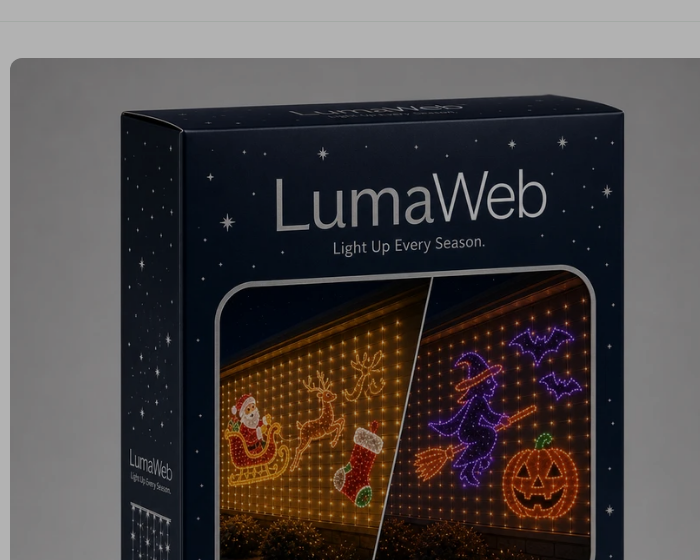
LumaWeb turns a familiar curtain light into a holiday showpiece, promising quick installation, vivid patterns, outdoor use, and easy control from one compact package.
The product idea is believable. The harder question is whether the newly created seller provides enough evidence and protection to justify ordering from it.
Overview
The LED curtain is plausible, but the LumaWeb performance claims remain unverified
LumaWeb sells programmable curtain-style lights in several sizes, with patterns intended for holidays, windows, porches, patios, and interior walls.
The page claims weatherproof construction, installation within minutes, remote-controlled scenes, and bulbs rated for more than 30,000 hours.
Similar decorative lighting exists widely, so nothing about the basic concept requires impossible technology.
However, the reviewed page does not show a specific IP rating, named manufacturer, model number, conformity documentation, or independent lifespan test.
A plausible category should not be confused with verified performance for one particular product and seller.
The store displayed hundreds of reviews almost immediately after registration
Public domain records date lumaweb.shop to September 1, 2026, giving the site only weeks of observable history during this review.
The product page displayed 851 reviews, a 4.9/5 score, 225+ customers, and a claim of 100+ orders within 24 hours.
Those figures may come from imported reviews, an earlier operation, a supplier feed, or seller-created content, but the site does not explain their origin.
The customer portraits and testimonials sit inside LumaWeb’s own storefront rather than an independent review system with visible verification rules.
Until the source is documented, shoppers should treat the impressive totals as promotional claims.
The refund policy is visibly unfinished where buyers need it most
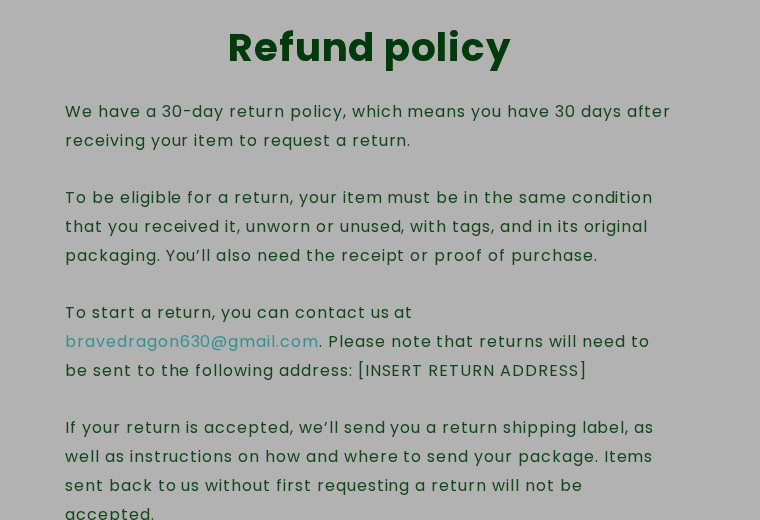
LumaWeb promises a 30-day return period, yet the live policy still says returns go to “[INSERT RETURN ADDRESS].”
That placeholder means customers cannot know the destination, country, postage cost, customs process, or responsible recipient before ordering.
The same policy says sale items cannot be returned, while the storefront repeatedly announces a 40% flash sale.
A free Gmail address appears as the primary support channel, with no clearly disclosed legal entity, physical office, or telephone number.
Those omissions create a much larger concern than whether the LED curtain itself can illuminate.
- Lumaweb.shop was registered on September 1, 2026.
- The product page displayed 851 reviews despite the domain being only weeks old.
- One unit was advertised at €49.99, with larger bundles using progressive discounts.
- Shipping protection and a 30-day warranty appeared as separate €4.99 add-ons.
- A €19.99 mystery box was also offered beside the main purchase options.
- The return policy still contains the literal placeholder [INSERT RETURN ADDRESS].
- The policy excludes sale items while the site promotes an ongoing 40% flash sale.
- No named legal company, street address, or support telephone number was clearly disclosed on the reviewed pages.
How the LumaWeb LED Lights Sales Funnel Works
Step 1: A striking seasonal video makes an ordinary product feel exclusive
Animated Halloween, Christmas, and decorative patterns create an immediate visual payoff that performs well in short social advertisements.
The message contrasts tangled strings and repetitive decorations with a neat curtain that supposedly installs in minutes.
Because viewers can understand the effect instantly, they may click before asking which hardware, controller, application, or pattern library is actually included.
The LumaWeb name and packaging make the item appear proprietary even though programmable LED curtains are an established product category.
Reverse-search the photographs and compare specifications before paying a premium for branding.
Step 2: The landing page stacks popularity signals around the checkout
The page displays a 4.9/5 rating, 851 reviews, customer portraits, 225+ customers, and more than 100 recent orders.
None of those numbers is independently confirmed merely because it appears beside a Shopify purchase button.
Recent-order counters can be static text, theme features, application-generated messages, or genuine sales feeds; the implementation is not explained.
A young store needs especially clear review provenance because its public domain history cannot naturally support years of brand-specific feedback.
Read the complete negative-rating distribution and independent discussions rather than relying on a seller-curated carousel.
Step 3: Bundle pricing nudges the buyer toward several untested sets
The one-unit option was shown at €49.99, while two, three, and four-unit bundles advertised larger nominal savings.
A customer still testing brightness, durability, waterproofing, controller quality, and seller responsiveness assumes unnecessary risk by multiplying quantity.
The page also offers different dimensions and light counts, so an incorrect selection may not fit the intended wall or window.
Measure the actual space, inspect plug type and voltage, and confirm whether each bundle contains controllers, clips, and power supplies.
Screenshot the final variant and quantity because visual bundle cards can be misread quickly on a phone.
Step 4: Optional-looking add-ons can quietly increase the total
The reviewed product page placed Shipping Protection and a 30-Day Warranty beside the order, each priced at €4.99.
Their switches appeared active in the captured page, while a €19.99 Mystery Box had its own separate toggle.
A one-unit order can therefore grow before shipping or taxes if the customer does not inspect every line.
A paid warranty is particularly confusing when the store already presents a general 30-day return policy and statutory rights may apply.
Remove unwanted extras, save the cart, and verify the charged amount before completing authentication.
Step 5: The buyer receives marketing specifications without engineering documentation
LumaWeb says the lights withstand rain, snow, and outdoor temperatures year-round, yet the page does not prominently state a specific IP classification.
It advertises more than 30,000 operating hours without identifying the laboratory, test conditions, failure definition, controller rating, or replaceable components.
Even durable LED chips can be undermined by a weak power supply, connector corrosion, cable strain, controller failure, or water ingress.
Check electrical certifications appropriate to your country and never expose connectors beyond their documented protection level.
Stop using the set if plugs overheat, insulation cracks, water enters components, or the controller smells burned.
Step 6: A return attempt reaches an address that was never completed
The policy tells customers to contact bravedragon630@gmail.com and says accepted returns receive instructions and a shipping label.
However, the published destination remains a template marker instead of a usable address.
The policy also requires unused condition, tags, original packaging, proof of purchase, and prior authorization.
Its exclusion for sale items may conflict with the flash-sale framing applied throughout the storefront.
A buyer can therefore discover that the headline return window offers no predictable route for the discounted item purchased.
What LumaWeb Claims, and What the Page Does Not Prove
“Weatherproof” needs an actual rating and protected components
Outdoor lighting should identify which parts resist water, the applicable IP rating, temperature limits, cable construction, and safe installation instructions.
A curtain can have sealed LEDs while its plug, controller, extension joint, or power adapter still requires a dry location.
LumaWeb’s broad year-round language does not explain those distinctions on the reviewed sales section.
Never interpret a rain photograph as electrical certification or permission to immerse components.
Use a protected outlet with appropriate residual-current protection and follow the local electrical-safety guidance.
A 30,000-hour LED rating is not a lifetime promise for the complete set
LED packages commonly receive long theoretical ratings, but a finished decorative system contains several other failure points.
Heat, moisture, voltage instability, cheap drivers, damaged insulation, connector quality, and frequent bending can shorten practical service life.
The LumaWeb page does not link a model-specific test report showing how the entire product reached its stated figure.
Treat the number as a seller specification until a named manufacturer or laboratory supports it.
A real warranty should explain the remedy when only one strand, controller, or adapter fails.
The control method is described more broadly than it is documented
The page says users can choose designs from a device and also refers to a remote-controlled receiver with built-in scenes.
Those are not identical capabilities, and the reviewed content does not clearly identify the application, required permissions, connectivity, or supported operating systems.
Buyers should confirm whether patterns are fixed, editable, downloadable, or controlled only through a small remote.
Ask whether an account, Bluetooth, Wi-Fi, location permission, or cloud service is required.
A connected-light application should have a named developer and a current privacy policy before installation.
Why the Checkout and Refund Terms Matter More Than the Light Show
The add-ons blur protection that should already be explained
Shipping protection may cover loss or damage, but LumaWeb does not place a complete coverage contract beside the visible switch.
The paid 30-day warranty similarly overlaps with the refund period without making the additional benefit immediately obvious.
Buyers should ask who provides each service, which events qualify, how claims are filed, and whether ordinary legal rights remain unchanged.
An unexplained toggle should never be treated as necessary merely because the default state looks active.
Check the itemized receipt for every optional charge and request removal before shipment if it was not intentionally chosen.
The sale-item exclusion may swallow the advertised return policy
LumaWeb repeatedly promotes a 40% flash sale, while the refund policy says sale items cannot be returned.
If that exclusion covers the main LED product, the visible 30-day promise may apply to little or none of the promoted inventory.
A merchant should disclose final-sale status directly beside the purchase button rather than relying on distant generic language.
Ask whether the exact size and bundle are returnable after opening and testing for defects.
Save the answer because sale messaging and policy text can be edited later.
The missing destination prevents an honest return-cost calculation
The literal [INSERT RETURN ADDRESS] text shows the template was published without completing a core operational field.
Until an address is supplied, nobody can determine postage, customs requirements, delivery time, tracking availability, or whether the recipient exists.
A promise to provide instructions later puts all information and timing control with the merchant after payment.
Do not send goods to a Gmail search result, parcel label, or unrelated business without written authorization.
When a seller cannot publish a functioning refund procedure, choosing another retailer is the safer decision.
Company, Address, and Fulfillment Checks
The storefront does not clearly name its legal operator
LumaWeb appears as a brand throughout the site, but the reviewed pages do not identify a registered company accepting the transaction.
The Terms use the brand name without supplying a company number, jurisdiction, officer, or complete business address.
Shopify powers the storefront, yet Shopify is the platform provider rather than the merchant selling the lights.
Ask which legal entity appears on the invoice and card statement before entering payment details.
A logo and functioning checkout cannot replace a traceable seller.
A Gmail address is the principal disclosed support route
The privacy and refund pages direct questions to bravedragon630@gmail.com rather than an address under the lumaweb.shop domain.
Free email services are legitimate tools, but they provide less organizational continuity and do not identify a legal company.
No prominent support telephone number was found on the pages reviewed, despite contact fields appearing in the footer.
Send a pre-purchase question about the operator and return destination to test whether a human provides a specific answer.
Preserve both the message and full headers if a dispute later develops.
The return destination is an unedited placeholder
The policy does not merely omit an address; it displays an instruction to insert one.
That is strong evidence the merchant did not finish reviewing a standard ecommerce template before accepting orders.
Customers cannot know whether goods return domestically, within Europe, or to an overseas warehouse.
Do not pay return postage until support supplies a complete destination and confirms reimbursement eligibility.
Use tracked delivery and retain the parcel weight and customs documents if a return is approved.
Manufacturing and fulfillment remain unidentified
The page does not prominently name the factory, electrical-product manufacturer, importer, or entity responsible for conformity and recalls.
Product packaging may reveal a model and responsible economic operator, but buyers should not need delivery to obtain basic safety documentation.
An unknown fulfillment center may dispatch parcels while lacking authority to approve replacements or refunds.
Compare the delivered label with the online specifications and local regulator databases before outdoor use.
Missing manufacturer information matters more for electrical goods than for ordinary decorative artwork.
What to Do if You Have Fallen Victim to This Scam
- Save the order page now. Capture the selected size, quantity, review total, weatherproof claim, lifespan claim, add-on switches, discount, cart total, and return language.
- Inspect the receipt. Check for Shipping Protection, 30-Day Warranty, Mystery Box, extra quantities, unexpected postage, currency conversion, or any charge not deliberately selected.
- Record the unboxing. Film the sealed package, shipping label, product model, plug, controller, wiring, instructions, included clips, damage, and first controlled power test.
- Disconnect unsafe lights. Stop using the product after overheating, sparking, damaged insulation, water entry, burning smells, erratic controls, or exposed conductors.
- Contact the merchant in writing. Explain the objective mismatch or defect, quote the saved promise, request a specific remedy, and set a reasonable response deadline.
- Obtain a complete return authorization. Demand the country, street address, recipient, label, tracking rules, customs wording, deadline, deductions, and refund timing.
- Do not trust the placeholder. Never mail a parcel to an inferred address or an unrelated entity found through a search engine.
- Dispute material misrepresentation promptly. Provide the card issuer or payment service with the advertisement, checkout, policy placeholder, correspondence, tracking, and product evidence.
- Monitor future activity. Enable transaction alerts and report duplicate or unauthorized charges, especially if optional add-ons appeared without informed consent.
- Check the device used for payment. Scan with Malwarebytes if the purchase journey opened questionable redirects or files. AdGuard can suppress deceptive pop-ups and ad networks.
How to Buy Programmable Lights More Safely
Compare technical specifications, not staged seasonal scenes
Match width, height, light count, cable length, plug type, voltage, wattage, controller, color capability, animation method, and mounting hardware.
Look for a clear IP rating that identifies the tested level of dust and water protection.
Confirm whether the power adapter and connectors share that rating or must remain under cover.
Independent buyer photographs often reveal wire spacing, brightness, color accuracy, and real scale better than edited advertisements.
Choose a seller that names the manufacturer and provides a downloadable manual before purchase.
Audit every cart toggle before authentication
Read the cart line by line on the final page, not only the large total displayed near the payment button.
Remove protection, warranty, mystery merchandise, donations, tips, subscriptions, or bundle upgrades that were not intentionally selected.
Confirm that the unit count matches the description rather than the number of light strands inside one set.
Screenshot the final cart and the successful confirmation with a visible timestamp.
If the receipt changes the order, request correction immediately while cancellation may still be possible.
Read the refund exclusions as if something will go wrong
Check whether opening, testing, outdoor installation, sale pricing, discarded packaging, or an incorrect size eliminates eligibility.
Request the return country and exact address before paying, then estimate insured postage for the parcel dimensions.
Ask what the paid warranty adds beyond defect rights and whether shipping protection is required for lost parcels.
A trustworthy merchant should answer without hiding the destination until after a complaint.
Purchase elsewhere when the remedy costs more than the product or depends on an unfinished template.
Frequently Asked Questions
Is LumaWeb LED lights a confirmed scam?
We found serious store and policy risks, but not proof that every order fails or every light is fake.
The new domain and unfinished returns process justify waiting.
When was lumaweb.shop registered?
Public domain data shows September 1, 2026.
That short history matters because the storefront already displays 851 product reviews and heavy recent-order messaging.
Are the LumaWeb reviews trustworthy?
The ratings and portraits appear inside the seller-controlled website, without clear independent verification.
Treat them as marketing until their source and moderation process are documented.
Are LumaWeb lights really weatherproof?
The seller says they are suitable for rain, snow, and year-round outdoor use.
The reviewed page did not prominently provide a specific IP rating or model-level test report.
Does LumaWeb provide a return address?
No usable destination appeared in the live policy we captured.
The page still showed [INSERT RETURN ADDRESS], requiring customers to rely on later email instructions.
Why did the checkout show extra protection products?
The page separately offered €4.99 Shipping Protection, a €4.99 warranty, and a €19.99 Mystery Box.
Check each switch because optional products can increase the total.
The Bottom Line
LumaWeb sells a believable type of decorative lighting, but a believable product does not automatically make a trustworthy transaction.
A weeks-old domain, unexplained review totals, unclear technical documentation, active-looking add-ons, and an unfinished return address create avoidable buyer risk.
Wait for independent history and completed policies, or purchase comparable lights from a retailer that identifies the manufacturer and provides a usable return route.

Join the discussion
0 commentsShare your experience or ask a question about this article.
Discussion
Start the conversation
Have a question or something useful to share? Add the first comment.